
36 Results for "

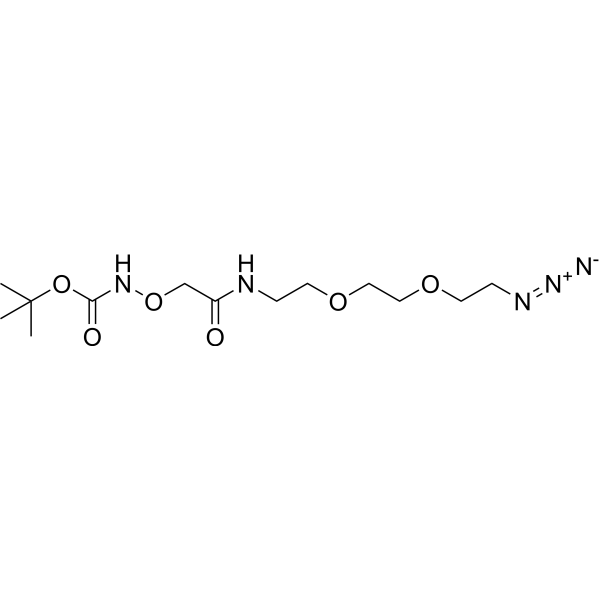
Bocaminooxyacetamide-PEG2-Azido

" in MedChemExpress (MCE) Product Catalog:
Products (36)

36 Results for "Bocaminooxyacetamide-PEG2-Azido" in MCE Product Catalog:

Cat. No.: HY-136099
CAS No.: 2706128-82-5
Target:  

ADC Linkers

Research Areas:  

Cancer

Bocaminooxyacetamide-PEG2-Azido is a cleavable 2 unit PEG ADC linker used in the synthesis of antibody-drug conjugates (ADCs) . Bocaminooxyacetamide-PEG2-Azido is a click chemistry reagent, it contains an Azide group and can undergo copper-catalyzed azide-alkyne cycloaddition reaction (CuAAc) with molecules containing Alkyne groups. It can also undergo strain-promoted alkyne-azide cycloaddition (SPAAC) reactions with molecules containing DBCO or BCN groups.
loading...
    loading...
4
4 Cited Publications
Cat. No.: HY-P2336A
Target:  

Melanocortin Receptor

Research Areas:  

Cancer

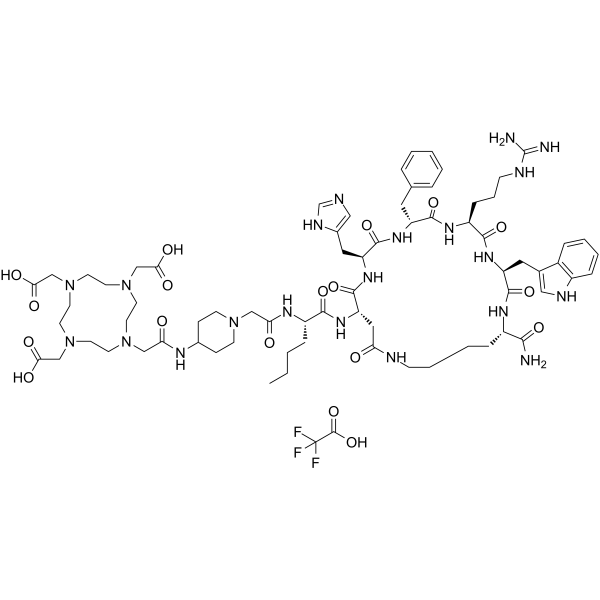
CCZ01048 TFA, a α-MSH analogue, exhibits high binding affinity to melanocortin 1 receptor (MC1R) with a Ki of 0.31 nM. CCZ01048 TFA shows rapid internalization into B16F10 melanoma cells and high in vivo stability. CCZ01048 TFA is a promising candidate for PET imaging of malignant melanoma .
loading...
    loading...
1
1 Cited Publications
Cat. No.: HY-105055
CAS No.: 77327-05-0
Purity:  99.95%
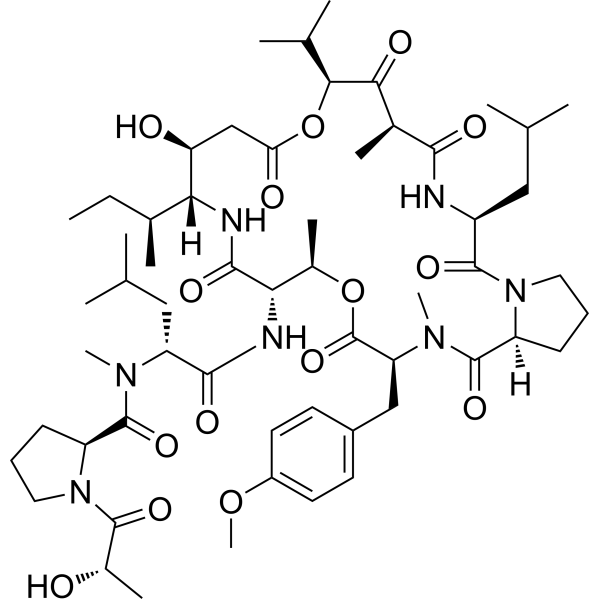
Didemnin B is a depsipeptide extracted from the marine tunicate Trididemnin cyanophorum. Didemnin B can be used for the research of cancer .
loading...
    loading...
1
1 Cited Publications
Cat. No.: HY-P1103
CAS No.: 1030384-98-5
Target:  

CXCR

Research Areas:  

Cancer

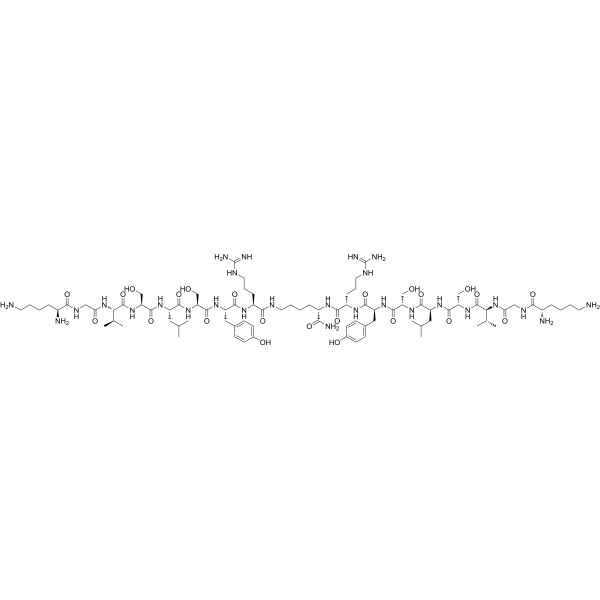
CTCE-9908 is a potent and selective CXCR4 antagonist. CTCE-9908 induces mitotic catastrophe, cytotoxicity and inhibits migration in CXCR4-expressing ovarian cancer cells [2].
loading...
    loading...
Cat. No.: HY-P4070
CAS No.: 1188379-43-2
Target:  

Insulin Receptor

Research Areas:  

Metabolic Disease

Insulin icodec is an Insulin (HY-P0035) analog that strongly but reversibly binds to albumin. Insulin icodec has long plasma half-life. Insulin icodec modulates insulin receptor activity, controls blood glucose levels, reduces HbA1c levels, and binds reversibly to human serum albumin. Insulin icodec can be used for the research of type 2 diabetes mellitus [2].
loading...
    loading...
Cat. No.: HY-172320
CAS No.: 2919596-13-5
Target:  

PD-1/PD-L1

Research Areas:  

Cancer

BMS-986238 is an orally active macrocyclic peptide PD-L1 inhibitor. BMS-986238 can be used in the research of tumors such as solid tumors and lymphomas [2].
loading...
    loading...
Cat. No.: HY-P5362
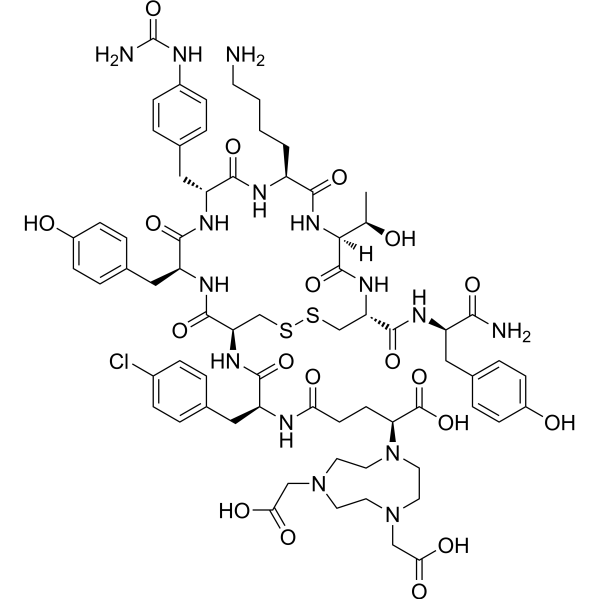
NODAGA-LM3 is a ligand that can cross the blood-brain barrier and targets somatostatin receptor SSTR2 with high affinity (IC50 = 1.3 nM). NODAGA-LM3 does not trigger the internalization of SSTR2 and can inhibit agonist-induced internalization processes. NODAGA-LM3 shows low uptake in normal tissues such as the liver and spleen, but high uptake in the lungs and blood pool. 68Ga-labeled NODAGA-LM3 can serve as a PET imaging agent for well-differentiated neuroendocrine tumors, and is applied in studies related to small cell lung cancer and well-differentiated neuroendocrine tumors [2].
loading...
    loading...
Cat. No.: HY-P10392AF
Target:  

Wnt β-catenin

Research Areas:  

Cancer

fStAx-35R TFA is the hydrocarbon-stapled peptide. fStAx-35R TFA inhibits Wnt/β-catenin signaling pathway by disrupting the β-catenin-TCF interaction. fStAx-35R TFA can be used in cancer research .
loading...
    loading...
Cat. No.: HY-P10896
CAS No.: 1446005-10-2
Target:  

Bombesin Receptor

Research Areas:  

Cancer

NOTA-P2-RM26 is an antagonist of Bombesin (HY-P0195) analogs, and the gastrin-releasing peptide receptor (GRPR/BB2) is a molecular target for prostate cancer visualization. NOTA-P2-RM26 is labeled with 111In and 68Ga for prostate cancer imaging studies using PET and SPECT/CT .
loading...
    loading...
Cat. No.: HY-P10341
CAS No.: 1345835-12-2
Target:  

GCGR

Research Areas:  

Metabolic Disease

ZP3022 is a dual agonist of glucagon-like peptide-1 (GLP-1) and gastrin that has the ability to sustainably improve glycemic control. Additionally, ZP3022 can effectively increase β-cell mass, promote β-cell proliferation, and enhance the function of pancreatic islets. ZP3022 can be used in anti-diabetic research .
loading...
    loading...
Cat. No.: HY-P4757
CAS No.: 108081-77-2
Target:  

Parasite

Research Areas:  

Others

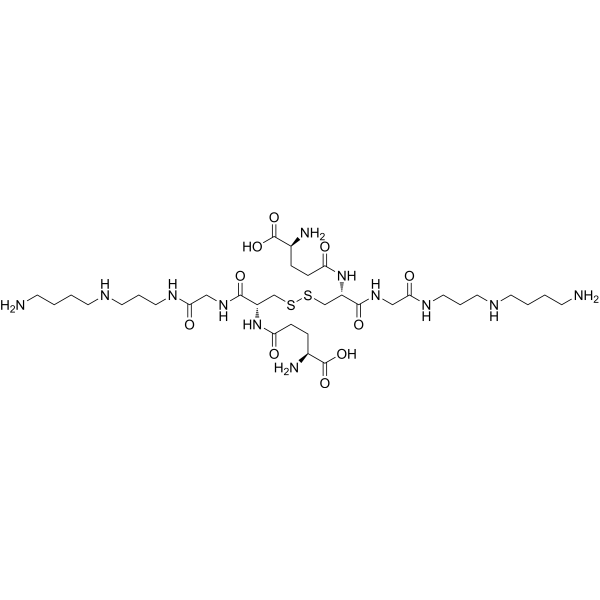
N1-Glutathionyl-spermidine disulfide is a substrate of trypanothione reductase .
loading...
    loading...
Cat. No.: HY-P5025
CAS No.: 1392269-21-4
Synonyms: Azido-c(RGDyK)
Target:  

Drug Intermediate

Research Areas:  

Others

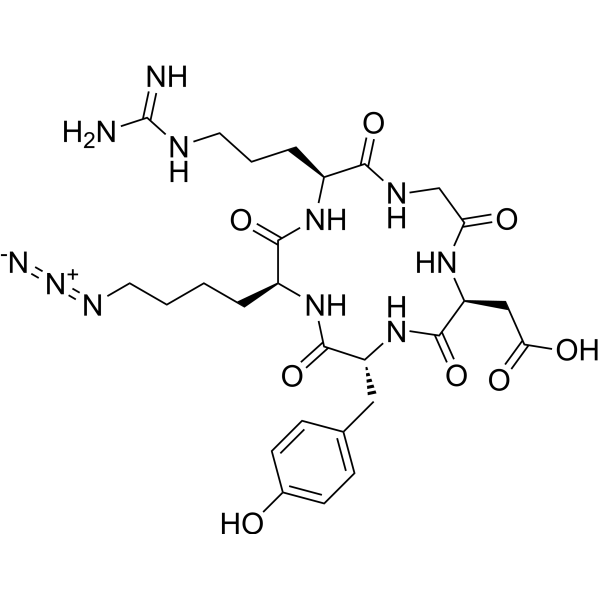
Cyclo(Arg-Gly-Asp-D-Tyr-ε-azido-Nle) (Azido-c(RGDyK)) is a polypeptide composed of arginine, glycine, aspartic acid, and tyrosine that can be used for Synthesis of [ 18F]FPyKYNE-c(RGDyK) .
loading...
    loading...
Cat. No.: HY-P1103A
Target:  

CXCR

Research Areas:  

Cancer

CTCE-9908 TFA is a potent and selective CXCR4 antagonist. CTCE-9908 TFA induces mitotic catastrophe, cytotoxicity and inhibits migration in CXCR4-expressing ovarian cancer cells [2].
loading...
    loading...
Cat. No.: HY-P11004
Target:  

Bacterial Antibiotic

Research Areas:  

Infection

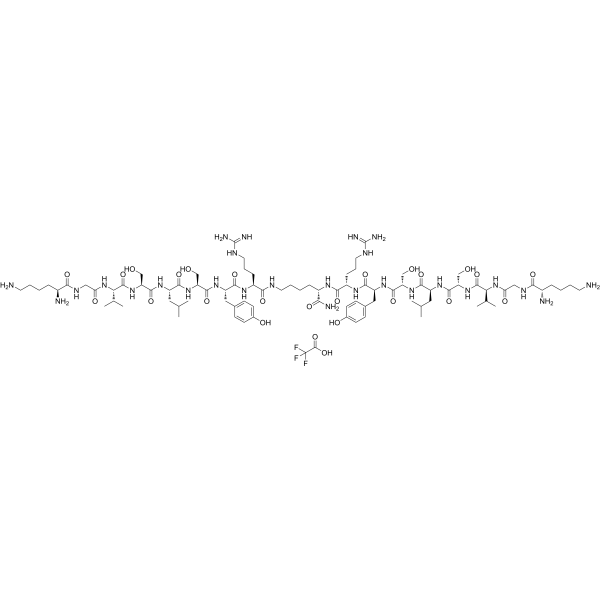
A3-APO is an antimicrobial peptide. A3-APO has a significant antimicrobial activity by a dual mode of action with both membrane disintegration and intracellular target inhibition. A3-APO can deactivate bacterial toxins and increase the expression of anti-inflammatory cytokines (such as IL-4 and IL-10), without antimicrobial resistance. A3-APO accelerates burn wounds healing in mice infection model of Acinetobacter baumannii and Staphylococcus aureus .
loading...
    loading...
Cat. No.: HY-169232
Target:  

PROTACs PD-1/PD-L1

Research Areas:  

Cancer

PCC16 chloride is a dual PROTAC degrader targeting DHHC3 and PD-L1, with a DC50 of 0.103 μM for PD-L1 degradation. PCC16 chloride induces DHHC3 degradation via the ubiquitin-proteasome pathway by recruiting the CRBN E3 ubiquitin ligase (E3 ubiquitin ligase). By targeting DHHC3-which is essential for PD-L1 palmitoylation and membrane stability-PCC16 chloride reduces PD-L1 levels, decreases PD-L1 membrane retention time, and impairs its immunosuppressive function. PCC16 chloride enhances anti-tumor immunity by disrupting PD-L1-mediated immunosuppression. PCC16 chloride can be used in the research of immune checkpoint blockade-resistant cancers [2].
loading...
    loading...
Cat. No.: HY-P10472
CAS No.: 134457-28-6
Target:  

GnRH Receptor

Research Areas:  

Endocrinology

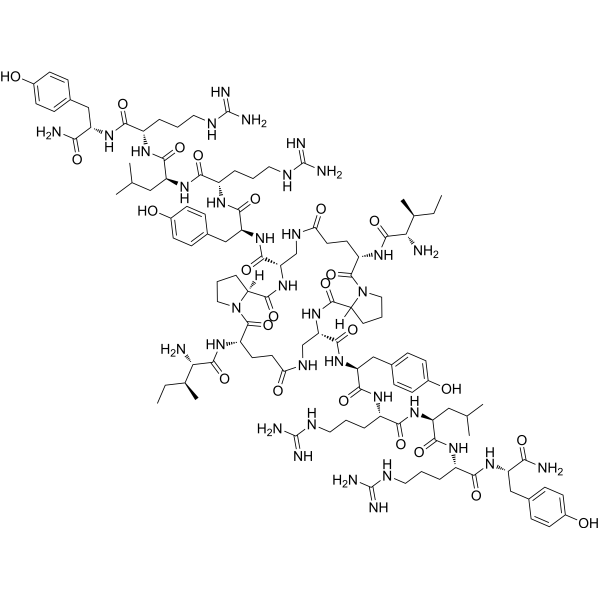
Azaline B is an antagonist for gonadotropin-releasing hormone (GnRH) with IC50 of 1.37 nM, Azaline B can be used in research of sex hormone-related pathological states, ovulation induction and male contraception .
loading...
    loading...
Cat. No.: HY-P11293
CAS No.: 1309855-53-5
Target:  

Melanocortin Receptor

Research Areas:  

Cancer

DOTA-GGNle-CycMSHhex is a melanocortin-1 receptor (MC1R)-targeting peptide that can be radionuclide-labeled for melanoma imaging .
loading...
    loading...
Cat. No.: HY-P1321
CAS No.: 158859-98-4
Synonyms: 1229U91; GW1229
Research Areas:  

Neurological Disease

GR231118, an analogue of the C-terminus of neuropeptide Y, is a potent , competitive and relative seletive antagonist at human neuropeptide Y Y receptor with a pKi of 10.4. GR231118 a potent agonist at the human neuropeptide Y Y4 receptor (pEC50=8.6; pKi=9.6) and a weak agonist at the human and rat neuropeptide YY2 and Y5 receptors. GR231118 also has high affinity for the mouse neuropeptide Y Y6 receptor (pKi= 8.8) .
loading...
    loading...
Cat. No.: HY-P11243
Target:  

Ephrin Receptor

Research Areas:  

Neurological Disease

EphA4 agonist compound 23 is a novel EphA4 agonist peptide mimic. EphA4 agonist compound 23 exhibits high affinity, high selectivity, and significant receptor activation ability. EphA4 agonist compound 23 is commonly used in the study of neurodegenerative diseases .
loading...
    loading...
Cat. No.: HY-P2434
CAS No.: 846569-60-6
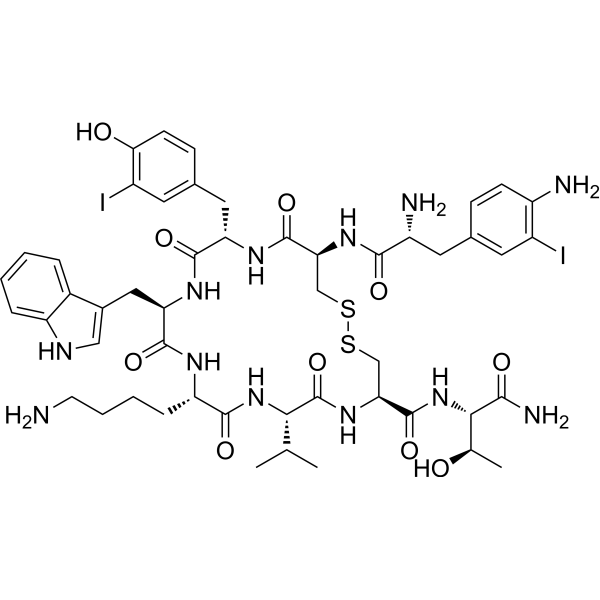
AP102 is a dual SSTR2/SSTR5-specific somatostatin analog (SSA). AP102 is a disulfide-bridged octapeptide SSA containing synthetic iodinated amino acids. AP102 binds with subnanomolar affinity to SSTR2 and SSTR5 (IC50: 0.63 and 0.65 nM, respectively). AP102 does not bind to SSTR1 or SSTR3. AP102 can be used for acromegaly and neuroendocrine tumors research .
loading...
    loading...

