11 Results for "

Carbonic anhydrase/AChE

" in MedChemExpress (MCE) Product Catalog:
Products (11)

11 Results for "Carbonic anhydrase/AChE" in MCE Product Catalog:

Cat. No.: HY-161142
CAS No.: 3029817-10-2
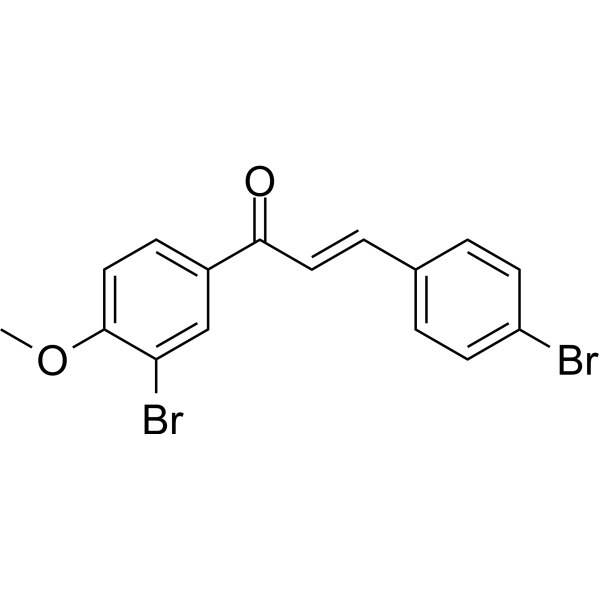
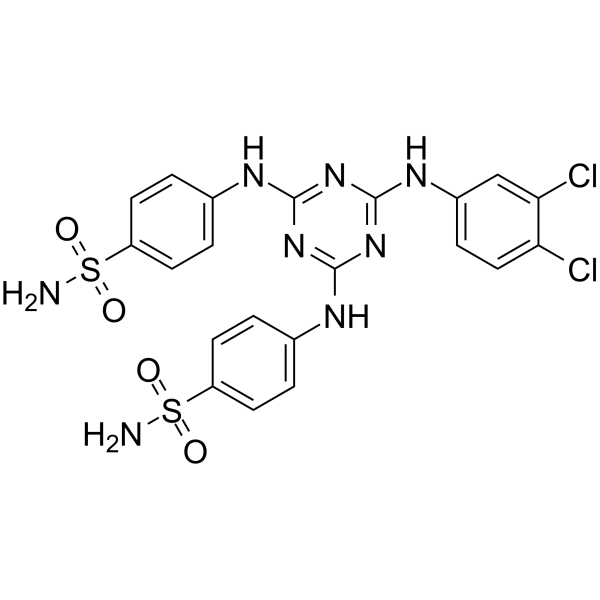
Carbonic anhydrase/AChE-IN-1 (compound 16) is a carbonic anhydrase and AChE inhibitor with Kis of 24.42 nM, 19.95 nM, and 5.07 nM for hCA I, hCA II, and AChE, respectively .
loading...
    loading...
Cat. No.: HY-161143
CAS No.: 3029817-13-5
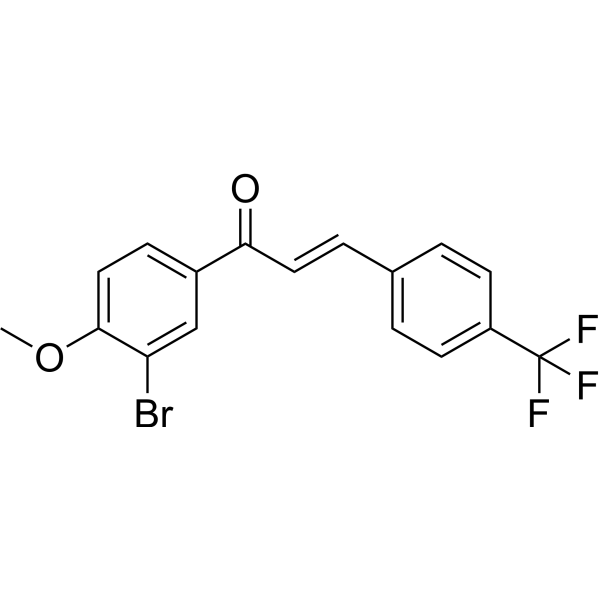
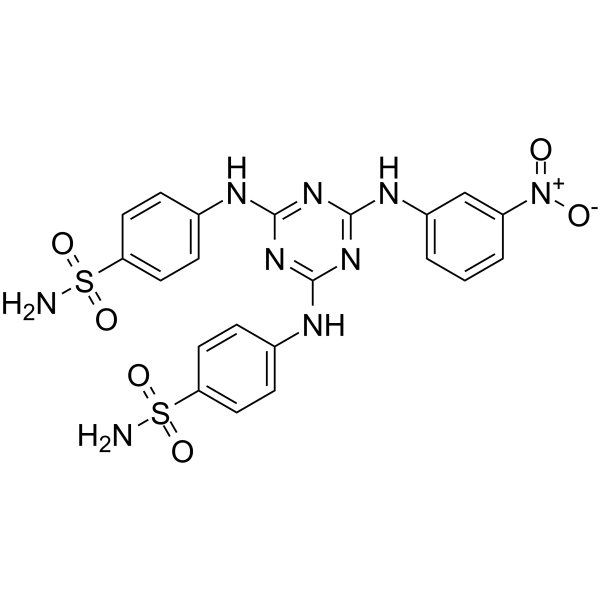
Carbonic anhydrase/AChE-IN-2 (compound 19) is a selective acetylcholinesterase (AChE) and carbonic anhydrase (CA) inhibitor, with Ei of 5.07 nM, 24.42 nM and 19.95 nM for AChE, hCAI and hCAII, respectively .
loading...
    loading...
Cat. No.: HY-170560
CAS No.: 155140-19-5
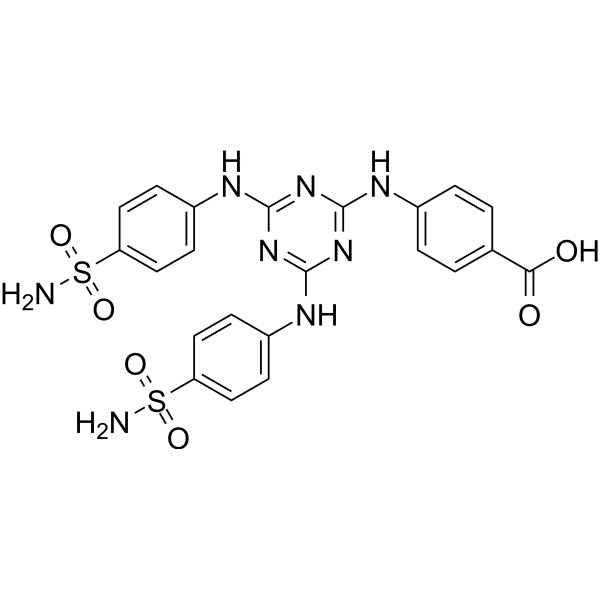
AChE/hCA I-IN-1 (Compound L3) is the inhibitor for acetylcholinesterase (AChE) and carbonic anhydrase (CA), that inhibits AChE, hCA I and hCA II with IC50 of 302, 265 and 283 nM, respectively .
loading...
    loading...
Cat. No.: HY-147952
CAS No.: 2428389-65-3
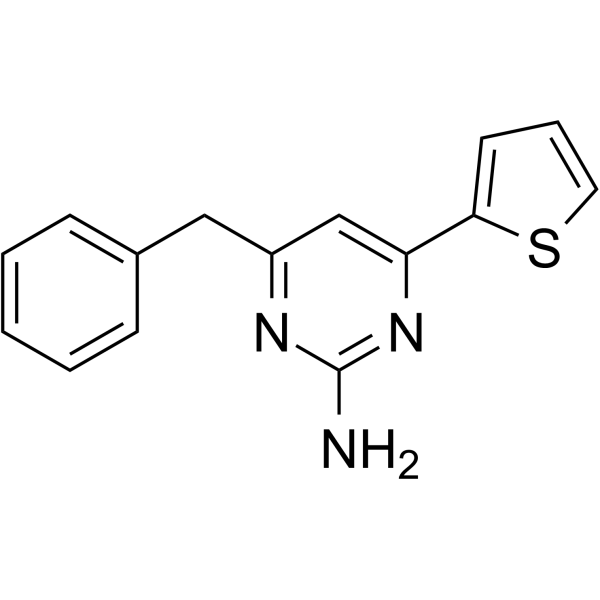
AChE-IN-20 (compound M26) is a potent AChE inhibitor with IC50 value of 397.32 nM and with Ki value of 335.76 nM. AChE-IN-20 shows inhibition potency against hCA I , hCA II and α-GLY with IC50 values of 84.14, 69.24 and 52.08 nM and with Ki values of 97.86, 76.23 and 57.93 nM, respectively .
loading...
    loading...
Cat. No.: HY-169162
hBChE-IN-3 (compound 30) is a combination of carbonic anhydrase (CA) activator and cholinesterase (ChE) inhibitor with IC50 values of 7.4 and 1.9 nM for AchE and BchE, respectively. hBChE-IN-3 can be used in the study of neurodegeneration and psychiatric disorders .
loading...
    loading...
Cat. No.: HY-169962
CAS No.: 3054159-56-4
hCA I-IN-4 (Compound 14) is the inhibitor for carbonic anhydrase and cholinesterase, that inhibits hCA I, hCA II, AChE, and BChE with Ki of 29.94 nM, 17.72 nM, 21.21 nM, and 7.65 nMrespectively. hCA I-IN-4 exhibits cytotoxicity in BT-549 with IC50 of 16.59 μM .
loading...
    loading...
Cat. No.: HY-149012
CAS No.: 2049681-10-7
AChE/hCA I/II-IN-1 (Compound 6) is a potent inhibitor of AChE/Hca with IC50 values of 22.21, 60.79 and 66.64 nM for AChE, Hca Ⅰ and Hca Ⅱ. AChE/hCA I/II-IN-1 can be used for the rsearch for glaucoma, Alzheimer's disease, diabetes .
loading...
    loading...
Cat. No.: HY-161507
CAS No.: 3036136-18-9
CAI/II-IN-8 (Compound 8) is a hydrazide derivative based on 4-hydroxybenzaldehyde. CAI/II-IN-8 primarily targets human carbonic anhydrase isomerase I (hCA I) and II (hCA II) for inhibition (IC50 = 21.35 ± 0.39 nM (CA I); 7.12 ± 0.12 nM (CA II)). CAI/II-IN-8 inhibits AChE and BChE as well(IC50 = 46.27 ±0.75 nM (AChE); 43.38 ± 0.83 nM (BChE)). . .
loading...
    loading...
Cat. No.: HY-162521
Target:  

Bacterial Fungal

Research Areas:  

Infection

Antibacterial agent 215 (Compound 3b) is an inhibitor for carbonic anhydrase (CA), with Ki of 17.61, 5.14 and 43.74 nM, for hCA I, hCA II and AChE, respectively. Antibacterial agent 215 exhibits anti-tuberculosis, with MIC of 62.5 µg/ml against M. tuberculosis. Antibacterial agent 215 exhibits antifungal activities against Candida spp. strains ATCC 14053, ATCC 1369, and ATCC 15126, with MICs of 125 µg/ml .
loading...
    loading...
Cat. No.: HY-147955
CAS No.: 2428389-67-5
CAI/II-IN-5 (compound MZ8) is a potent hCA I and hCA II (human carbonic anhydrase isoenzymes I and II) inhibitor, with IC50 values of 37.88 and 45.23 nM, respectively. CAI/II-IN-5 also shows inhibition profile against α-Glycosidase and AChE, with IC50 values of 48.98 and 420.14 nM, respectively. CAI/II-IN-5 can be used for the research of many diseases such as diabetes, Alzheimer’s disease, heart failure, ulcer, and epilepsy .
loading...
    loading...
Cat. No.: HY-147954
CAS No.: 2428389-66-4
α-Glycosidase-IN-1 (compound MZ7) is a potent α-GLY (α-Glycosidase) inhibitor, with an IC50 of 44.72 nM and a KI of 41.74 nM. α-Glycosidase-IN-1 also shows inhibition profile against human carbonic anhydrase isoenzymes I and II (hCA I and hCA II), and acetylcholinesterase (AChE), with IC50 values of 104.87, 100.04, and 654.87 nM, respectively. α-Glycosidase-IN-1 can be used for the research of many diseases such as diabetes, Alzheimer’s disease, heart failure, ulcer, and epilepsy .
loading...
    loading...
  • 1

