
8 Results for "

Cell cycle analysis

" in MedChemExpress (MCE) Product Catalog:
Products (8)

8 Results for "Cell cycle analysis" in MCE Product Catalog:

30
30 Cited Publications
Cat. No.: HY-K1071

MCE Cell Cycle and Apoptosis Analysis Kit (PI staining) provides a convenient method to detect cell cycle and cell apoptosis.


loading...
    loading...
Cat. No.: HY-N6614
CAS No.: 15572-79-9
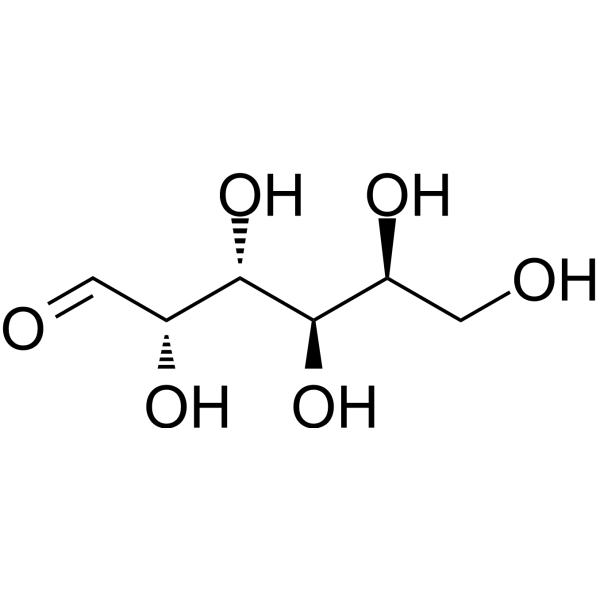
L-Galactose is a key intermediate in the de novo synthesis of vitamin C (L-ascorbic acid) in plants. It is converted into L-ascorbic acid by participating in the VTC2 cycle and enzymatic steps, exerting antioxidant activities, maintaining cell structure, and participating in the carbon flow distribution of photosynthesis. L-Galactose can be used to study the analysis of the synthesis pathway of vitamin C in plant physiology .
loading...
    loading...
Cat. No.: HY-139621
CAS No.: 2916559-62-9
Research Areas:  

Cancer

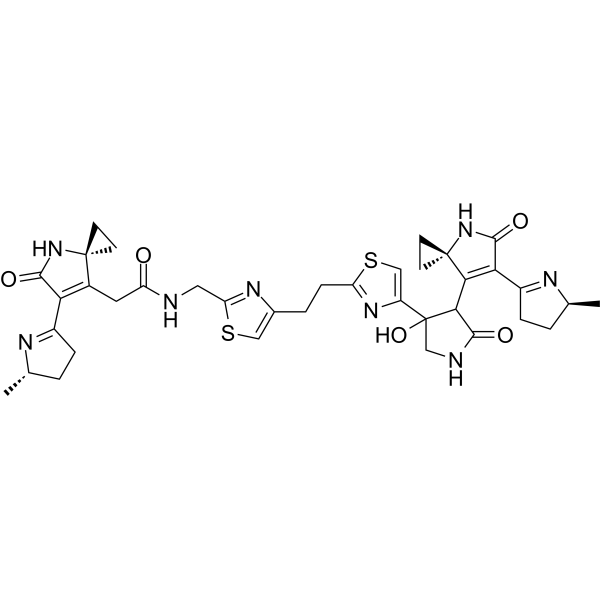
Colibactin 742 is a covalently binding DNA-damaging agent targeting DNA, with an IC50 of 5.2 μM against human cervical cancer cells (HeLa). Colibactin 742 covalently binds to DNA, forming interstrand crosslinks (ICLs), activating the Fanconi anemia DNA repair pathway, inducing γH2AX and FANCD2 foci formation and cell cycle arrest, while exacerbating mismatch repair deficiency (MMRd)-related mutations. Colibactin 742 can mimic the genotoxicity of natural Colibactin while avoiding its instability, and is mainly used in colorectal cancer (CRC) related research, including microbial tumorigenesis mechanisms, DNA damage repair pathways, and mutation signature analysis .
loading...
    loading...
Cat. No.: HY-W131302
CAS No.: 5657-17-0
Synonyms: N,N-Ethylenediglycine
Target:  

Endogenous Metabolite

Research Areas:  

Cancer

Ethylenediaminediacetic acid (N,N-Ethylenediglycine) is an important ligand that enhances the antiproliferative activity of metal complexes. The complexes formed by ethylenediacetic acid and metal ions exhibited significant antiproliferative properties in MCF-7 cancer cell line. The metal complexes of ethylenediacetic acid were able to interact with DNA and were studied by CD and EPR spectroscopy techniques. Ethylenediaminediacetic acid and its metal complexes were able to induce cell cycle arrest at the G(0)/G(1) phase. The crystal structure analysis of ethylenediacetic acid provided important structural information for understanding its biological activity .
loading...
    loading...
Cat. No.: HY-170932
Target:  

EGFR COX Apoptosis

Research Areas:  

Cancer

EGFR/COX-2-IN-1 is an EGFR/COX-2 inhibitor. EGFR/COX-2-IN-1 inhibits EGFR WT, EGFR T790M, COX-1 and COX-2 with IC50s of 0.12, 0.076, 20.1 and 1.52 μM respectively. EGFR/COX-2-IN-1 inhibits and with IC50s of , respectively. EGFR/COX-2-IN-1 inhibits MCF-7, HT-29 and A-549 with IC50s of 1.20, 5.14 and 14.81 μM, respectively. EGFR/COX-2-IN-1 displays Apoptosis induction by up-regulating Bax and down-regulating Bcl-2 protein levels. EGFR/COX-2-IN-1 results in a significant increase in the percentage of cells at the G2/M in MFC-7 cells. EGFR/COX-2-IN-1 exhibits broad-spectrum antitumor effects .
loading...
    loading...
Cat. No.: HY-147826
CAS No.: 2699877-43-3
Target:  

EGFR Apoptosis

Research Areas:  

Cancer

EGFR-IN-60 (Compound 7d) shows obvious inhibition of EGFR WT, EGFR T790M, EGFR L858R and JAK3 with IC50s of 83, 26, 53, and 69 nM, respectively. EGFR-IN-60 potently inhibits the growth of H1975 cells harboring EGFR T790M mutation (IC50=1.32 µM) over A431 cells overexpressing EGFR WT (IC50=4.96 µM). EGFR-IN-60 exhibits good oral absorption, potent and safe antitumor activity. EGFR-IN-60 induces cell death through apoptosis supported by increased Bax/Bcl-2 ratio .
loading...
    loading...
Cat. No.: HY-180823
Research Areas:  

Cancer

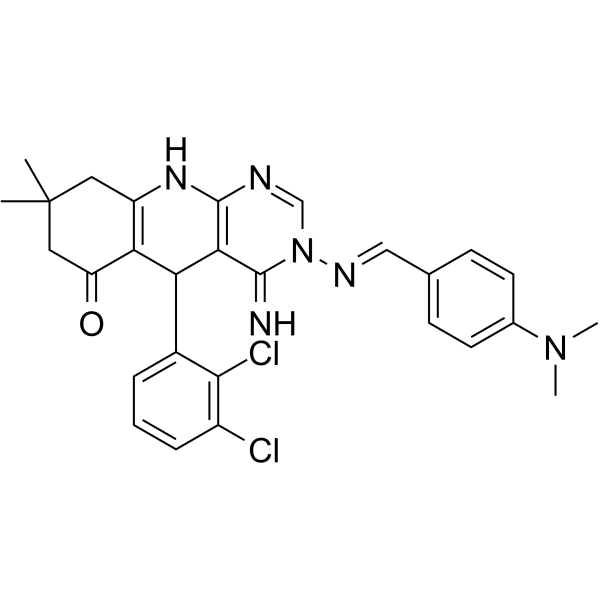
Topoisomerase II/EGFR-IN-2 (Compound 3) is an inhibitor of Topoisomerase IIα (IC50 = 0.122 μM) and EGFR-TK WT (IC50 = 16.8 μM). Topoisomerase II/EGFR-IN-2 inhibits the proliferation of HeLa and HepG2 cells, inducing cell cycle arrest and apoptosis. Topoisomerase II/EGFR-IN-2 upregulates caspase-3 and Bax, and downregulates Bcl-2. Topoisomerase II/EGFR-IN-2 can be used to study liver cancer and cervical cancer .
loading...
    loading...
Cat. No.: HY-L252
75 compounds

Carbohydrate metabolism serves as a central hub for energy supply and biosynthesis in living organisms and plays a critical role in the onset and progression of various diseases. In recent years, studies have shown that tumor cells reprogram their energy metabolism through aerobic glycolysis (the Warburg effect) to support rapid proliferation. Immune cells also rely on specific carbohydrate metabolic pathways to regulate their activation and differentiation states, while disorders such as diabetes and metabolic syndrome arise directly from dysregulation of carbohydrate metabolism. In addition, enzymes and key metabolic nodes involved in carbohydrate metabolism have become important targets for drug discovery, and therapeutic strategies targeting glycolysis, the pentose phosphate pathway, and energy metabolism are continuously advancing the treatment of cancer and metabolic diseases. Therefore, systematic analysis of carbohydrate metabolic networks and their associated metabolites is of great significance for elucidating disease mechanisms and developing novel therapeutic approaches.

The MCE Carbohydrate Metabolism Metabolite Library is constructed based on classical carbohydrate metabolic pathways and contains 75 metabolites. It systematically integrates key metabolic networks, including glycolysis, the pentose phosphate pathway, the tricarboxylic acid (TCA) cycle, monosaccharide metabolism, and sugar acid interconversions. The library comprehensively covers core metabolic nodes from glucose uptake and utilization to energy production and biosynthesis, while also incorporating important upstream and downstream intermediates. It enables accurate representation of intracellular metabolic flux dynamics and is well suited for applications such as metabolic flux analysis, target validation, and mechanistic studies. Furthermore, it provides robust support for multi-omics integration and the development of precision intervention strategies.

