28 Results for "

DNA radiosensitizer

" in MedChemExpress (MCE) Product Catalog:
Products (28)

28 Results for "DNA radiosensitizer" in MCE Product Catalog:

115
115 Publications Verification
Cat. No.: HY-10231
CAS No.: 685898-44-6
Purity:  ≥98.0%
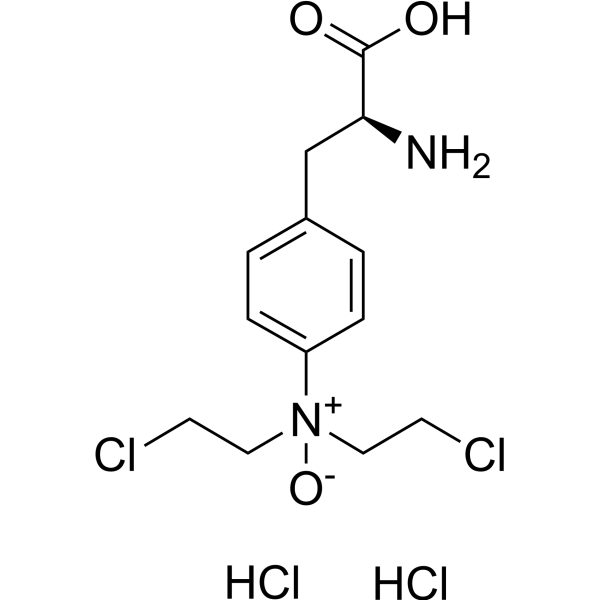
PX-478 is a multifunctional HIF-1α inhibitor with properties including radiosensitization, autophagy activation, and lipid accumulation inhibition. PX-478 also blocks hypoxia-induced VEGF production and regulates β-cell phenotypes under hypoxic conditions. PX-478 induces cell cycle arrest and DNA damage, restores autophagic function, reduces foam cell formation, and maintains glucose homeostasis. PX-478 is widely used in research on related diseases such as human tumors (e.g., prostate cancer), type 2 diabetes, and atherosclerosis .
loading...
    loading...
13
13 Cited Publications
Cat. No.: HY-109566
CAS No.: 2089288-03-7
Purity:  99.22%
Synonyms: AZD1390
Research Areas:  

Cancer

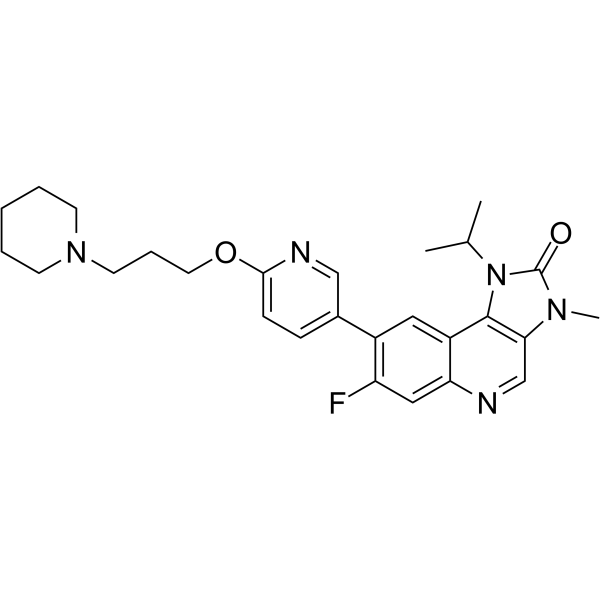
Elrelesertib (AZD1390) is an orally active, brain-penetrant ATM kinase inhibitor with IC50 values of 0.78 nM. Elrelesertib blocks ATM-dependent DNA damage response, inhibits ATM autophosphorylation and downstream Chk2, Rad50 phosphorylation, and accumulates at DNA breaks. Elrelesertib acts as a radiosensitizer, induces apoptosis, genomic instability, G2-M cell cycle arrest, ROS elevation, and mitochondrial membrane potential alteration. Elrelesertib has low efflux liability against P-gp and BCRP. Elrelesertib can be used for the research of central nervous system malignancies, glioblastoma multiforme, glioma, lung cancer brain metastases, and breast cancer .
loading...
    loading...
3
3 Cited Publications
Cat. No.: HY-103241
CAS No.: 293762-45-5
Purity:  99.10%
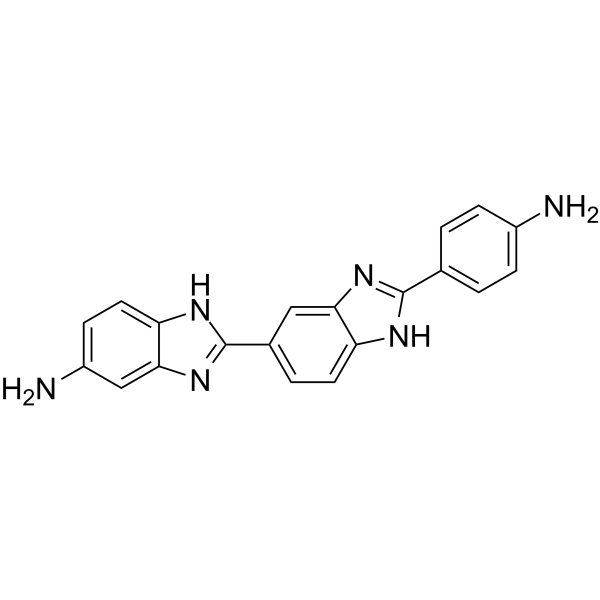
Ro 90-7501 is an amyloid β42 (Aβ42) fibril assembly inhibitor that reduces 42-induced cytotoxicity (EC50 of 2 μM). Ro 90-7501 inhibits ATM phosphorylation and DNA repair. RO 90-7501 selectively enhances toll-like receptor 3 (TLR3) and RIG-I-like receptor (RLR) ligand-induced IFN-β gene expression and antiviral response . Ro 90-7501 also inhibits protein phosphatase 5 (PP5) in a TPR-dependent manner . Ro 90-7501 has significant radiosensitizing effects on cervical cancer cells .
loading...
    loading...
2
2 Cited Publications
Cat. No.: HY-W009163
CAS No.: 957-75-5
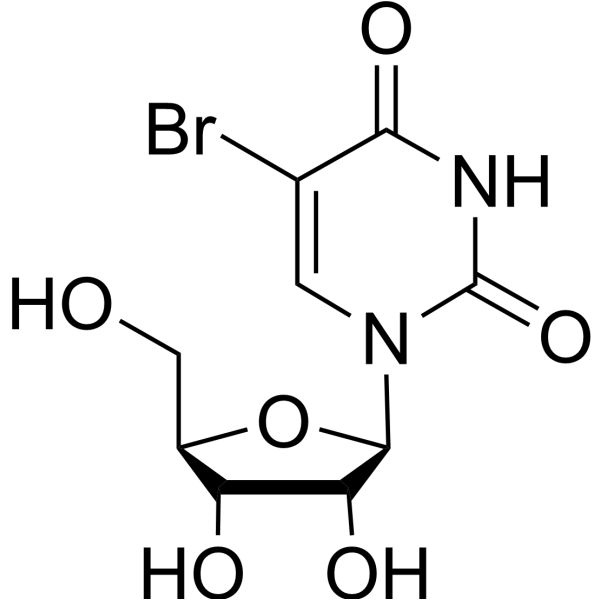
5-Bromouridine is a brominated uridine nucleoside. The triphosphate form of 5-Bromouridine, 5BrdUTP, can substitute for TTP as a substrate for DNA polymerase and be incorporated into nascent DNA strands, rendering the resulting 5-bromouridine-labeled DNA photosensitive to 300 nm UV irradiation; upon UV irradiation, the 5BrdU signal decreases and dU is generated, accompanied by DNA strand breaks and cross-link formation. 5-Bromouridine is useful for studies on nucleoside structure and halogenated nucleoside-labeled nucleic acids .
loading...
    loading...
1
1 Cited Publications
Cat. No.: HY-160799
CAS No.: 2412367-83-8
Research Areas:  

Cancer

HA-9104 is a potent and selective inhibitor of cullin-5 neddylation via virtually targeting the V30 pocket of UBE2F. HA-9104 binds to UBE2F, reduces its protein levels, and consequently inhibits cullin-5 neddylation. HA-9104 has potent growth suppression and radiosensitizing activities via targeting the UBE2F-CRL5 axis and causing DNA damage, leading to induction of apoptosis and G2/M arrest in lung and pancreatic cancer cells .
loading...
    loading...
Cat. No.: HY-108692
CAS No.: 78473-71-9
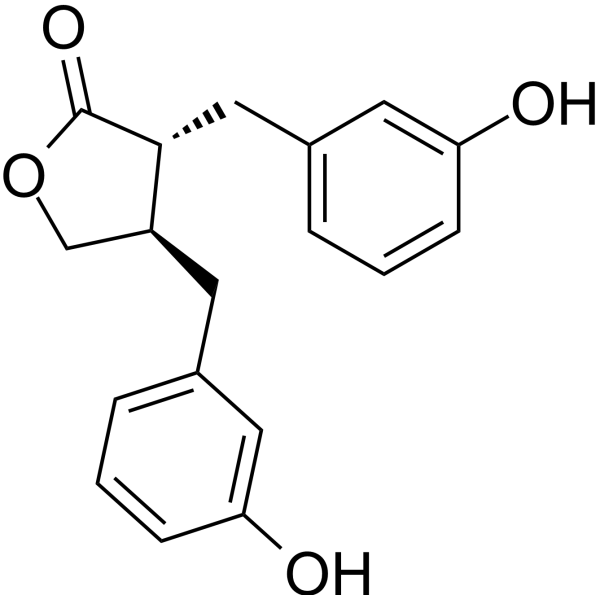
Enterolactone is a bioactive phenolic metabolite known as a mammalian lignan derived from dietary lignans. Enterolactone has estrogenic properties and anti-breast cancer activity . Enterolactone is a radiosensitizer for human breast cancer cell lines through impaired DNA repair and increased apoptosis .
loading...
    loading...
Cat. No.: HY-152147
CAS No.: 2770263-77-7
Purity:  99.38%
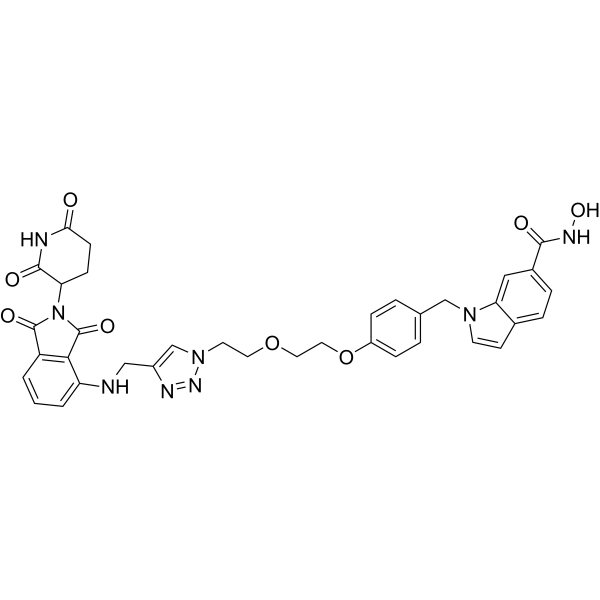
SZUH280 is a selective HDAC8 PROTAC degrader with a DC50 of 0.58 μM. SZUH280 recruits the CRBN E3 ubiquitin ligase to mediate polyubiquitination and proteasomal degradation of HDAC8, and exhibits higher selectivity for HDAC8 over other HDAC family members. SZUH280 induces apoptosis and G2/M cell cycle arrest in cancer cells. SZUH280 impairs DNA damage repair and promotes radiosensitization in cancer cells. SZUH280 inhibits the proliferation of cancer cells. SZUH280 is used in research related to lung cancer and breast cancer .
loading...
    loading...
Cat. No.: HY-164279
CAS No.: 1207615-74-4
Target:  

DNA/RNA Synthesis

Research Areas:  

Cancer

YTR107 is a radiation sensitizer. YTR107 binds to nucleophosmin1 (NPM1) and inhibits pentamer formation. YTR107 inhibits recruitment of nucleophosmin to sites of DNA damage, suppresses repair of DNA double strand breaks, and enhances radiosensitization .
loading...
    loading...
Cat. No.: HY-168574
CAS No.: 3059333-98-8
Target:  

PROTACs Sirtuin Apoptosis

Research Areas:  

Cancer

SZU-B6 is an orally active SIRT6 PROTAC degrader with DC50 values of 45 nM in SK-HEP-1 cells and 154 nM in Huh-7 cells, respectively. SZU-B6 mediates proteasome-dependent degradation of SIRT6 by recruiting the CRBN E3 ubiquitin ligase. SZU-B6 impairs DNA damage repair and promotes radiosensitization of cancer cells. SZU-B6 induces cell cycle arrest and apoptosis in cancer cells. SZU-B6 inhibits the proliferation of liver cancer cells. SZU-B6 suppresses the tumor growth of hepatocellular carcinoma and intrahepatic cholangiocarcinoma in mice. SZU-B6 can be used in research related to hepatocellular carcinoma and intrahepatic cholangiocarcinoma .
loading...
    loading...
Cat. No.: HY-16055
CAS No.: 220913-32-6
Synonyms: AR-67; DB 67
Research Areas:  

Cancer

Silatecan (AR-67) is a blood-brain barrier-permeable derivative of Camptothecin (HY-16560), DNA topoisomerase I inhibitor, an anticancer agent, and a radiosensitizer. Silatecan potently radiosensitizes wild-type p53 gliomas. Silatecan can be used in research related to glioma, leukemia, non-small cell lung cancer, colon cancer, ovarian cancer, renal cancer, prostate cancer, breast cancer, cervical cancer, gastric cancer, nasopharyngeal cancer, and uterine cancer .
loading...
    loading...
Cat. No.: HY-W076740
CAS No.: 6974-78-3
Synonyms: 8-Bromo-9H-purin-6-amine
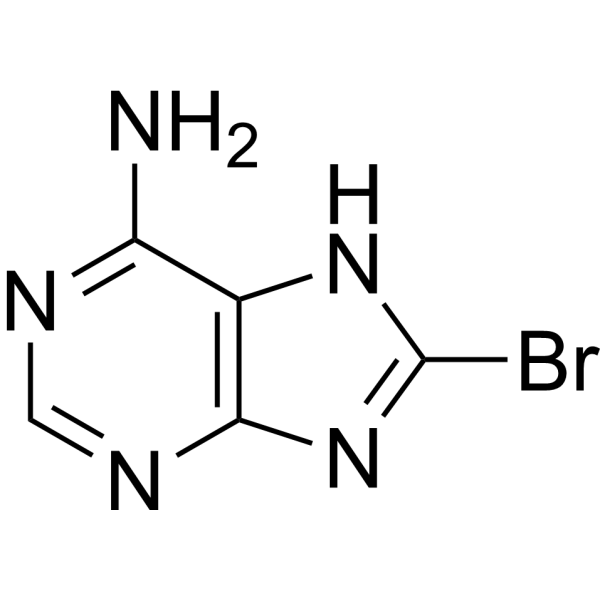
8-Bromoadenine (8-Bromo-9H-purin-6-amine) is a DNA radiosensitizer that inhibits DNA single-strand break repair in cells. 8-Bromoadenine is a brominated derivative of adenine, and radioactive adenine can be prepared by replacing bromine with deuterium .
loading...
    loading...
Cat. No.: HY-108692R
CAS No.: 78473-71-9
Enterolactone (Standard) is the analytical standard of Enterolactone. This product is intended for research and analytical applications. Enterolactone is a bioactive phenolic metabolite known as a mammalian lignan derived from dietary lignans. Enterolactone has estrogenic properties and anti-breast cancer activity . Enterolactone is a radiosensitizer for human breast cancer cell lines through impaired DNA repair and increased apoptosis .
loading...
    loading...
Cat. No.: HY-176217
Research Areas:  

Cancer

dA-NHbenzylOCF3 is a DNA-targeted radiosensitizer that enhances the sensitivity of tumor cells to X-rays via the dissociative electron attachment (DEA) mechanism. dA-NHbenzylOCF3 shows low cytotoxicity to normal cells and mainly localizes to the cytoplasm and nucleus after entering cells. dA-NHbenzylOCF3 exerts its radiosensitizing effect by inducing cell cycle arrest at the radiation-sensitive G2/M phase. dA-NHbenzylOCF3 can be used for radiosensitization research on malignant tumors such as prostate cancer and breast cancer .
loading...
    loading...
Cat. No.: HY-178503
Target:  

Apoptosis

Research Areas:  

Cancer

dA-NHbenzylSCF 3 is a radiosensitizer. dA-NHbenzylSCF 3 has low toxicity to cancer cells and normal cells, but can significantly enhance cancer cell death in the presence of ionizing radiation (IR). dA-NHbenzylSCF 3 promotes cell apoptosis by capturing electrons and inducing DNA double strand breaks (DSBs). dA-NHbenzylSCF 3 is often used in the research of cancer, such as prostate cancer and breast cancer .
loading...
    loading...
Cat. No.: HY-162692
CAS No.: 2766001-96-9
Target:  

DNA-PK

Research Areas:  

Cancer

DNA-PK-IN-14 (compound 78) is a potent, selective DNA-PK inhibitor with an IC50 value of 7.95 nM. DNA-PK-IN-14 has oral activity and has the potential to be a radiosensitizer for cancer treatment .
loading...
    loading...
Cat. No.: HY-16459
CAS No.: 173357-17-0
Synonyms: Sodium glycididazole
Target:  

Apoptosis

Research Areas:  

Cancer

Glycididazole sodium (Sodium glycididazole) is a radiosensitizer. Glycididazole sodium increases the sensitivity of nasopharyngeal carcinoma cells to radiation, through increaased DNA damage and enhanced apoptosis in NPC cells
loading...
    loading...
Cat. No.: HY-117249
CAS No.: 104958-90-9
Synonyms: AK-2123
Target:  

Apoptosis Caspase

Research Areas:  

Cancer

Sanazole (AK-2123) is a hypoxic cell radiosensitizer. Sanazole enhances radiation-induced DNA strand breaks. In mouse fibroblast tumors, Sanazole increases nuclear condensation and fragmentation, as well as elevates caspase-3 activity, thereby enhancing radiation-induced apoptosis .
loading...
    loading...
Cat. No.: HY-108692S
CAS No.: 104411-11-2
Purity:  ≥95.0%
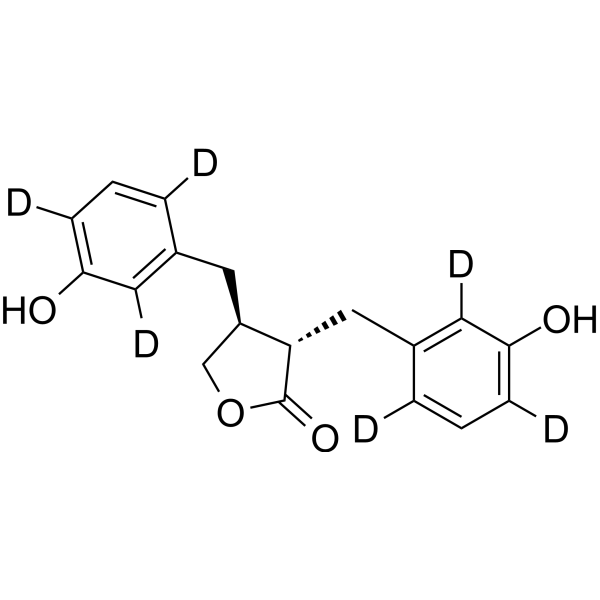
Enterolactone-d6 is the deuterium labeled Enterolactone. Enterolactone is a bioactive phenolic metabolite known as a mammalian lignan derived from dietary lignans. Enterolactone has estrogenic properties and anti-breast cancer activity . Enterolactone is a radiosensitizer for human breast cancer cell lines through impaired DNA repair and increased apoptosis .
loading...
    loading...
Cat. No.: HY-W778286
CAS No.: 918502-72-4
Enterolactone- 13C3 is the 13C-labeled Enterolactone (HY-108692). Enterolactone is a bioactive phenolic metabolite known as a mammalian lignan derived from dietary lignans. Enterolactone has estrogenic properties and anti-breast cancer activity . Enterolactone is a radiosensitizer for human breast cancer cell lines through impaired DNA repair and increased apoptosis .
loading...
    loading...
Cat. No.: HY-176481
Target:  

Autophagy Apoptosis

Research Areas:  

Cancer

ML-20, Malabaricone C (HY-N8518) analogue, is a autophagy inhibitor and radiosensitizer. ML-20 inhibits cell growth, induces cell apoptosis . ML-20 induces DNA double-strand breaks, loss of mitochondrial membrane potential (MMP), and lysosomal membrane permeabilization (LMP). ML-20 induces endoplasmic reticulum stress and concurrent inhibition of autophagy flux due to LMP .
loading...
    loading...

