1. Search Result
Search Result
Results for "

DNA-protein cross-links

" in MedChemExpress (MCE) Product Catalog:

12

Inhibitors & Agonists

1

Fluorescent Dyes

3

Biochemical Assay Reagents

2

Isotope-Labeled Compounds

Cat. No. Product Name Target Research Areas Chemical Structure
  • HY-17371
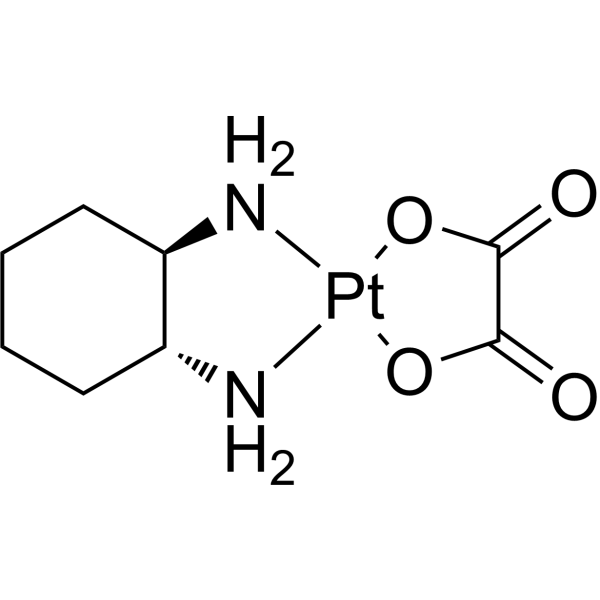
    Oxaliplatin
    215+ Cited Publications

    DNA/RNA Synthesis Apoptosis Inflammation/Immunology Cancer
    Oxaliplatin is a DNA synthesis inhibitor. Oxaliplatin causes DNA crosslinking damage, prevents DNA replication and transcription and induces apoptosis. Oxaliplatin can be used for cancer research .
    Oxaliplatin
  • HY-17371R

    Reference Standards DNA/RNA Synthesis Apoptosis Cancer
    Oxaliplatin (Standard) is the analytical standard of Oxaliplatin. This product is intended for research and analytical applications. Oxaliplatin is a DNA synthesis inhibitor. Oxaliplatin causes DNA crosslinking damage, prevents DNA replication and transcription and induces apoptosis. Oxaliplatin can be used for cancer research .
    Oxaliplatin (Standard)
  • HY-Y1155

    HMPA

    Environmental Pollutants DNA Alkylator/Crosslinker Biochemical Assay Reagents Cytochrome P450 Inflammation/Immunology Endocrinology Cancer
    Hexamethylphosphoramide is an orally active polar aprotic solvent, flame retardant additive, and carcinogen. Hexamethylphosphoramide undergoes cytochrome P-450-mediated N-demethylation to Formaldehyde. Hexamethylphosphoramide induces DNA-protein crosslinks. Hexamethylphosphoramide has been linked to nasal tumors (squamous cell carcinoma, adenoid squamous cell carcinoma), squamous metaplasia, rhinitis, tracheitis, and reversible and irreversible infertility .
    Hexamethylphosphoramide
  • HY-W075885

    trans-platinumdiamminedichloride

    DNA Alkylator/Crosslinker Others
    trans-Platinum(II)diammine dichloride (trans-platinumdiamminedichloride) is a geometric isomer of Cisplatin (HY-17394). Trans-Platinum(II)diammine dichloride is a DNA cross-linking agent that induces significant DNA cross-link damage while exhibiting low cytotoxicity. Trans-Platinum(II)diammine dichloride is useful for studying DNA-protein cross-links .
    trans-Platinum(II)diammine dichloride
  • HY-D2353

    DNA/RNA Synthesis Cancer
    Biotin-PEG3-benzophenone is biotin-labeled Benzophenone (HY-Y0546). Benzophenone is an endogenous metabolite and a photosensitizer that has been implicated in photosensitive damage to DNA. Benzophenone causes nucleobase oxidation, formation of cyclobutane-pyrimidine dimers, single-strand breaks, DNA-protein cross-links or abasic sites, different pathologies that may occur in nucleosides, oligonucleotides or DNA .
    Biotin-PEG3-benzophenone
  • HY-17371A

    DNA/RNA Synthesis Apoptosis Cancer
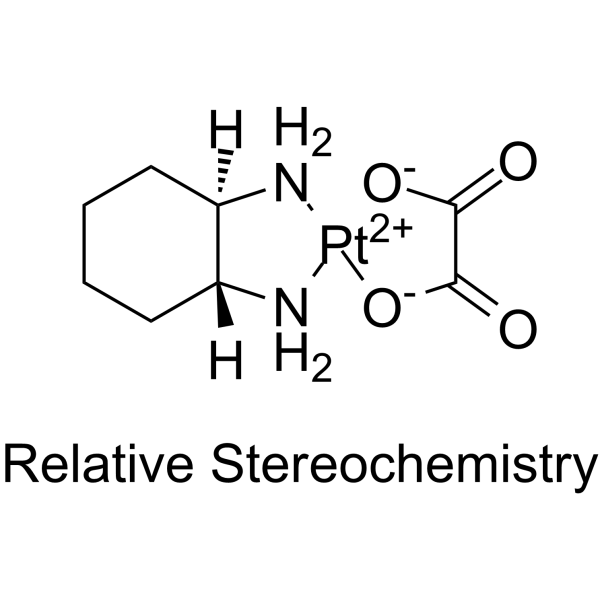
    (rel)-Oxaliplatin is a DNA synthesis inhibitor. (rel)-Oxaliplatin causes DNA crosslinking damage, prevents DNA replication and transcription and induces apoptosis. (rel)-Oxaliplatin can be used for cancer research .
    (rel)-Oxaliplatin
  • HY-17371S

    Isotope-Labeled Compounds Apoptosis DNA/RNA Synthesis Cancer
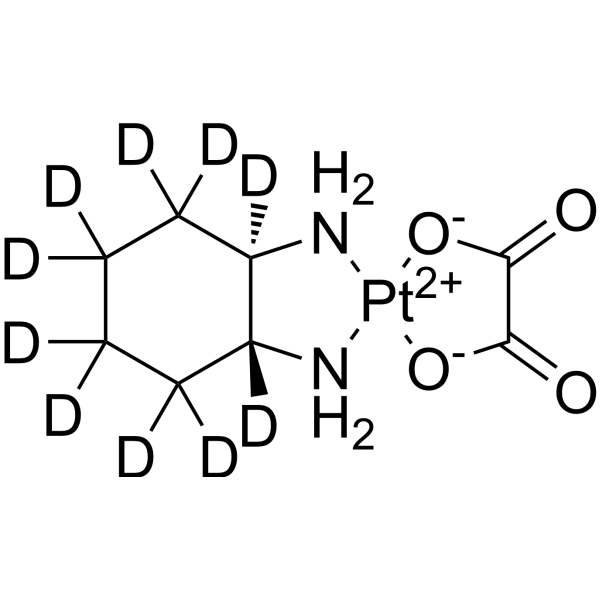
    Oxaliplatin-d10 is a deuterium labeled Oxaliplatin (HY-17371). Oxaliplatin is a DNA synthesis inhibitor. Oxaliplatin causes DNA crosslinking damage, prevents DNA replication and transcription and induces apoptosis. Oxaliplatin can be used for cancer research .
    Oxaliplatin-d10
  • HY-121234

    Bacterial DNA/RNA Synthesis Infection
    Botryodiplodin is a mycotoxin isolated from Penicillium roqueforti. Botryodiplodin inhibits the growth of some Gram-positive and Gram-negative bacteria and can also induce DNA-protein cross-links in mammalian cells, inhibiting the synthesis of DNA, RNA, and protein .
    Botryodiplodin
  • HY-106109

    DNA Alkylator/Crosslinker DNA/RNA Synthesis Cancer
    FK 973 is a dihydrobenzoxazine anticancer agent. FK 973 selectively inhibits DNA synthesis and can form DNA cross-links through cytoplasmic activation. FK 973 exhibits significant antitumor activity in various animal tumor models and human tumor xenografts, with relatively weak myelosuppressive effects. FK 973 is sensitive to neural tumor cells. FK 973 can be used for DNA-targeted antitumor research .
    FK 973
  • HY-Y1155S

    Isotope-Labeled Compounds Biochemical Assay Reagents Cytochrome P450 DNA Alkylator/Crosslinker Inflammation/Immunology Endocrinology Cancer
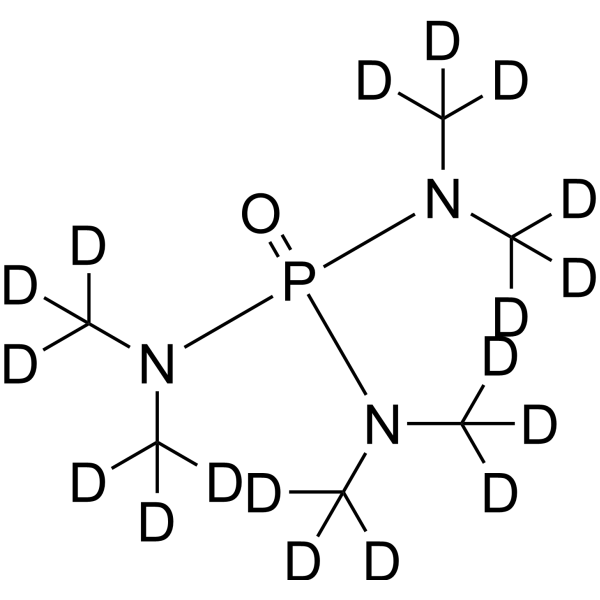
    Hexamethylphosphoramide-d18 is the deuterium labeled Hexamethylphosphoramide (HY-Y1155). Hexamethylphosphoramide is an orally active polar aprotic solvent, flame retardant additive, and carcinogen. Hexamethylphosphoramide undergoes cytochrome P-450-mediated N-demethylation to Formaldehyde. Hexamethylphosphoramide induces DNA-protein crosslinks. Hexamethylphosphoramide has been linked to nasal tumors (squamous cell carcinoma, adenoid squamous cell carcinoma), squamous metaplasia, rhinitis, tracheitis, and reversible and irreversible infertility .
    Hexamethylphosphoramide-d18
  • HY-W075885R

    trans-platinumdiamminedichloride (Standard)

    Biochemical Assay Reagents Reference Standards Others
    trans-Platinum(II)diammine dichloride (trans-platinumdiamminedichloride) (Standard) is an analytical standard for trans-Platinum(II)diammine dichloride (HY-W075885). This product is intended for research and analytical applications. trans-Platinum(II)diammine dichloride is a geometric isomer of Cisplatin (HY-17394). trans-Platinum(II)diammine dichloride is a DNA cross-linking agent that induces significant DNA cross-link damage but exhibits low cytotoxicity. trans-Platinum(II)diammine dichloride can be used to study DNA-protein cross-links.
    trans-Platinum(II)diammine dichloride (Standard)
  • HY-132974

    NSC-686288

    Aryl Hydrocarbon Receptor Reactive Oxygen Species (ROS) DNA Alkylator/Crosslinker DNA/RNA Synthesis Caspase Apoptosis HIF/HIF Prolyl-Hydroxylase Cancer
    Aminoflavone is an anti-tumor agent. Aminoflavone inhibits the expression of ITGA6/SOX2 by activating the AhR-miR-125b-2-3p axis, thereby targeting breast cancer stem cells. Aminoflavone induces an increase in intracellular ROS, increases the level of oxidative DNA damage marker 8-oxodG and DNA-protein cross-links. Aminoflavone causes S-phase arrest, activates caspase-3/8/9 and induces apoptosis (apoptosis). Aminoflavone inhibits HIF-1α expression in a manner independent of AhR. Aminoflavone can be used for the study of breast cancer .
    Aminoflavone

Inquiry Online

Your information is safe with us. * Required Fields.

Salutation


Country or Region *

Applicant Name *


Organization Name *

Department *


Email Address *


Product Name *

Cat. No.


Requested quantity *

Phone Number *


Remarks

Inquiry Online

Inquiry Information

Product Name:
Cat. No.:
Quantity:
MCE Japan Authorized Agent:

