1. Search Result
Search Result
Results for "

Danio rerio

" in MedChemExpress (MCE) Product Catalog:
Cat. No. Product Name Target Research Areas Chemical Structure
  • HY-W679754

    PFTrDA

    Biochemical Assay Reagents Cytochrome P450 Metabolic Disease
    Pentacosafluorotridecanoic Acid (PFTrDA) is a long-chain perfluoroalkyl carboxylic acid with strong endocrine-disrupting activity. Pentacosafluorotridecanoic Acid exhibits estrogenic effects and disrupts vtg1 transcription as well as sex hormone homeostasis in male Danio rerio. Pentacosafluorotridecanoic Acid disturbs steroidogenesis and HPG axis function in a sex-dependent pattern. Pentacosafluorotridecanoic Acid inhibits CYP17A and CYP11A1 to reduce testosterone and increase E2/T ratio in H295R cells. Pentacosafluorotridecanoic Acid triggers gender-specific immunomodulation after prenatal exposure. Pentacosafluorotridecanoic Acid correlates with lower eczema risk in female infants. Pentacosafluorotridecanoic Acid can be used for the research of endocrine disruption and eczema .
    Pentacosafluorotridecanoic Acid
  • HY-144779

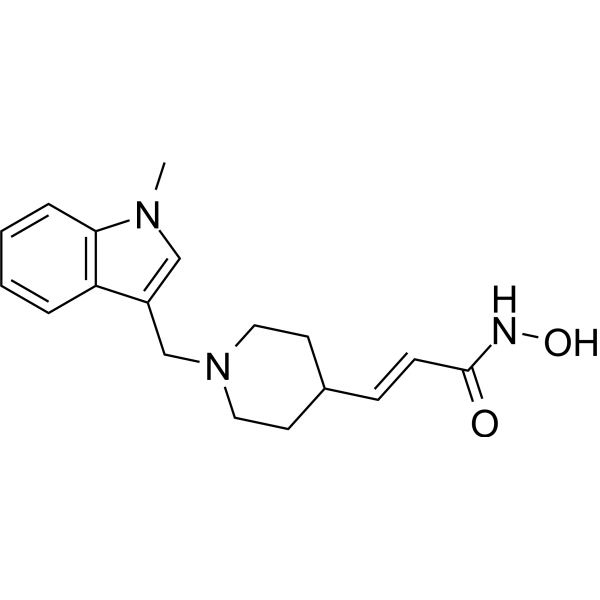
    HDAC Autophagy Cancer
    HDAC10-IN-1 (compound 13b) is a potent and highly selective HDAC10 inhibitor, with an IC50 of 58 nM. HDAC10-IN-1 modulates autophagy in aggressive FLT3-ITD positive acute myeloid leukemia cells .
    HDAC10-IN-1
  • HY-144782A

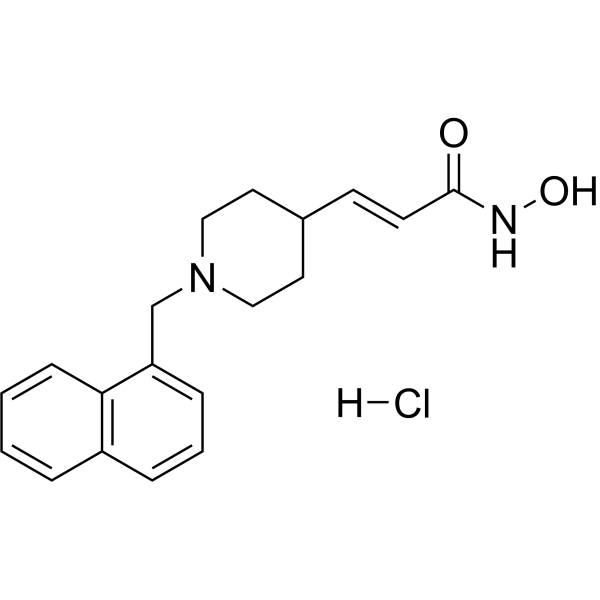
    HDAC Autophagy Cancer
    HDAC10-IN-2 hydrochloride (compound 10c) is a potent and highly selective HDAC10 inhibitor, with an IC50 of 20 nM. HDAC10-IN-2 hydrochloride modulates autophagy in aggressive FLT3-ITD positive acute myeloid leukemia cells .
    HDAC10-IN-2 hydrochloride
  • HY-175273

    PROTACs FLT3 HSP ERK STAT Akt Apoptosis Cancer
    MA191 is a FLT3 PROTAC degrader. MA191 abrogates FLT3 inhibitor resistance from rebound activation of mitogen-activated kinases. MA191 mediates rapid FLT3-ITD degradation through a mechanism requiring VHL, neddylation, and BIM. MA191 reduces FLT3-ITD levels before inducing apoptosis. MA191 halts AML cell proliferation in Danio rerio. MA191 can be used for the study of acute myeloid leukemia (AML) (Pink: FLT3 ligand: (HY-175311), Blue: E3 ligase CRBN Ligand (HY-112078), Black: Linker, E3 ligase ligand-linker conjugate (HY-175312)) .
    MA191
  • HY-144782

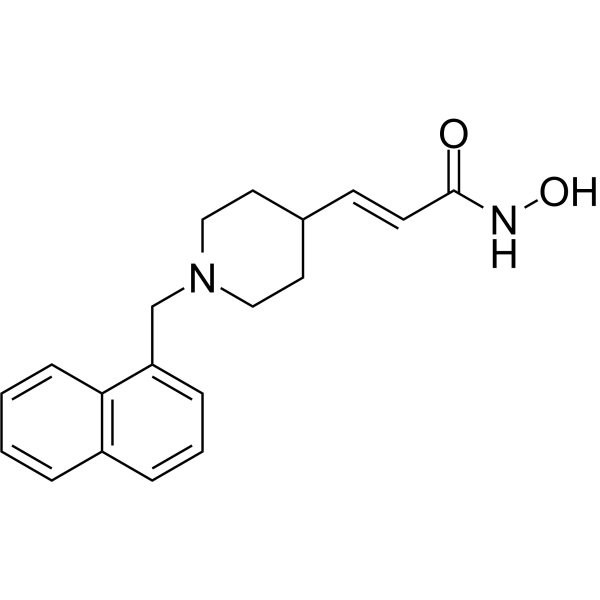
    HDAC Autophagy Cancer
    HDAC10-IN-2 (compound 10c) is a potent and highly selective HDAC10 inhibitor, with an IC50 of 20 nM. HDAC10-IN-2 modulates autophagy in aggressive FLT3-ITD positive acute myeloid leukemia cells .
    HDAC10-IN-2
  • HY-163560

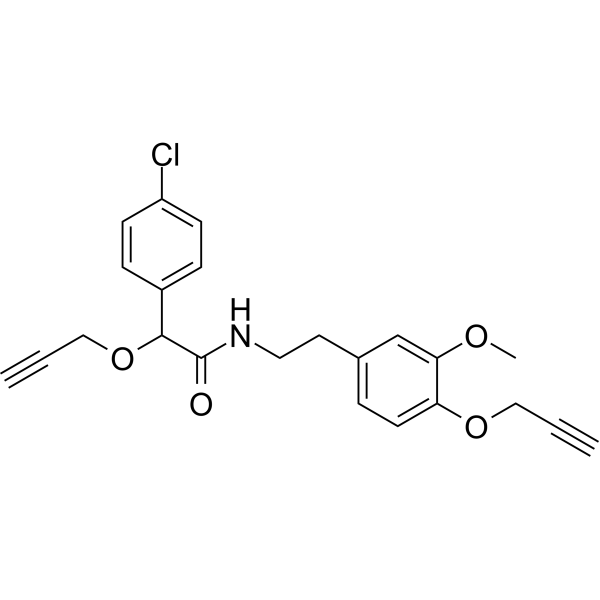
    Parasite Others
    Insecticidal agent 10 (Compound 8c) is an inhibitor for chitinase, which inhibits OfChi-h and OfChtI with IC50 of 1.51 and 9.21 nM, respectively. Insecticidal agent 10 inhibits growth of Ostrinia furnacalis with LC50 of 22.14 mg/L .
    Insecticidal agent 10
  • HY-W679754R

    PFTrDA (Standard)

    Reference Standards Biochemical Assay Reagents Cytochrome P450 Metabolic Disease
    Pentacosafluorotridecanoic Acid (Standard) is the analytical standard of Pentacosafluorotridecanoic Acid (PFTrDA) (HY-W679754). This product is intended for research and analytical applications.Pentacosafluorotridecanoic Acid is a long-chain perfluoroalkyl carboxylic acid with strong endocrine-disrupting activity. Pentacosafluorotridecanoic Acid exhibits estrogenic effects and disrupts vtg1 transcription as well as sex hormone homeostasis in male Danio rerio. Pentacosafluorotridecanoic Acid disturbs steroidogenesis and HPG axis function in a sex-dependent pattern. Pentacosafluorotridecanoic Acid inhibits CYP17A and CYP11A1 to reduce testosterone and increase E2/T ratio in H295R cells. Pentacosafluorotridecanoic Acid triggers gender-specific immunomodulation after prenatal exposure. Pentacosafluorotridecanoic Acid correlates with lower eczema risk in female infants. Pentacosafluorotridecanoic Acid can be used for the research of endocrine disruption and eczema .
    Pentacosafluorotridecanoic Acid (Standard)
  • HY-W008927

    Fungal Reactive Oxygen Species (ROS) DNA/RNA Synthesis Apoptosis Infection
    Fluoxastrobin is a fungicide. By binding to NAD-dependent epimerase/dehydratase, Fluoxastrobin interferes with electron transport, reduces ATP production and inhibits mycelial growth, thereby effectively controlling foliar diseases of tea plants. Fluoxastrobin induces oxidative stress by increasing ROS levels and lipid peroxidation, causes DNA damage and promotes apoptosis; meanwhile, it shows high acute toxicity to Danio rerio embryos and larvae. Fluoxastrobin can be used in research related to tea foliar diseases (including tea red leaf spot and tea gray leaf spot) .
    Fluoxastrobin
  • HY-W1115537

    HPPD Herbicide Others
    Flusulfinam is a HPPD inhibitor and herbicide, with an IC50 of 0.0181 μM against Arabidopsis thaliana HPPD. Flusulfinam inhibits the catalytic activity of recombinant Arabidopsis thaliana HPPD. Flusulfinam exhibits potent herbicidal activity against barnyard grass (Echinochloa crus-galli). Flusulfinam inhibits the growth of Digitaria sanguinalis .
    Flusulfinam

Inquiry Online

Your information is safe with us. * Required Fields.

Salutation


Country or Region *

Applicant Name *


Organization Name *

Department *


Email Address *


Product Name *

Cat. No.


Requested quantity *

Phone Number *


Remarks

Inquiry Online

Inquiry Information

Product Name:
Cat. No.:
Quantity:
MCE Japan Authorized Agent:

