20 Results for "

H3K9 acetylation

" in MedChemExpress (MCE) Product Catalog:
Products (20)

20 Results for "H3K9 acetylation" in MCE Product Catalog:

34
34 Publications Verification
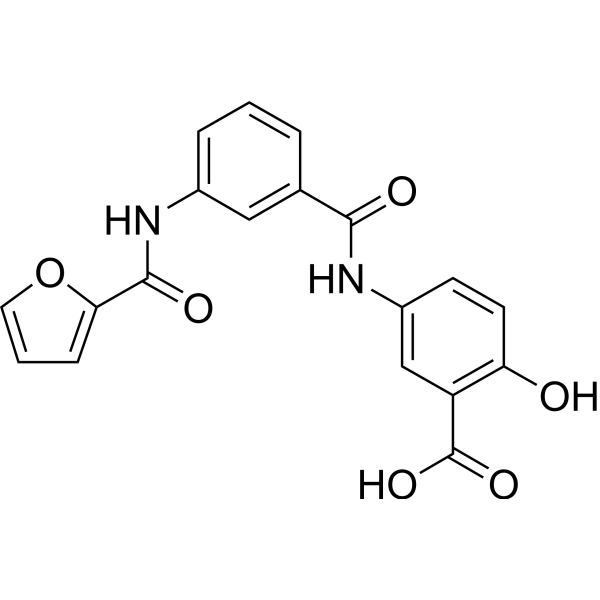
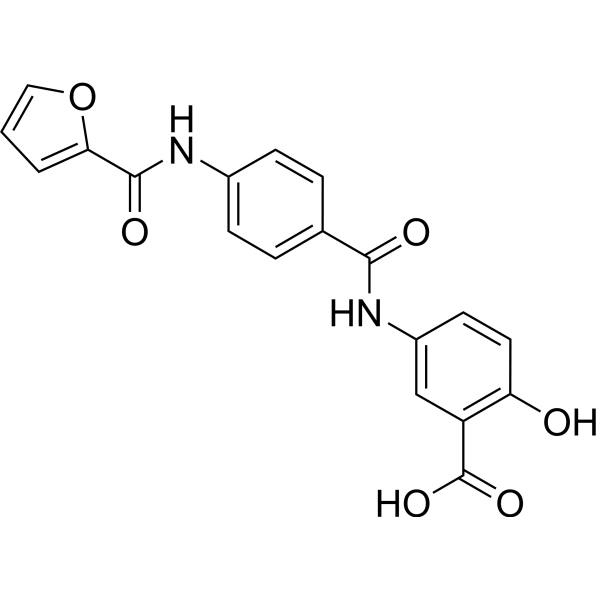
Cat. No.: HY-107454
CAS No.: 887686-02-4
Purity:  98.63%
OSS_128167 is a potent selective sirtuin 6 (SIRT6) inhibitor with IC50s of 89 μM, 1578 μM and 751 μM for SIRT6, SIRT1 and SIRT2, respectively. OSS_128167 has anti-HBV activity that inhibits HBV transcription and replication. OSS_128167 has anti-cancer, anti-inflammation and anti-viral effects .
loading...
    loading...
2
2 Cited Publications
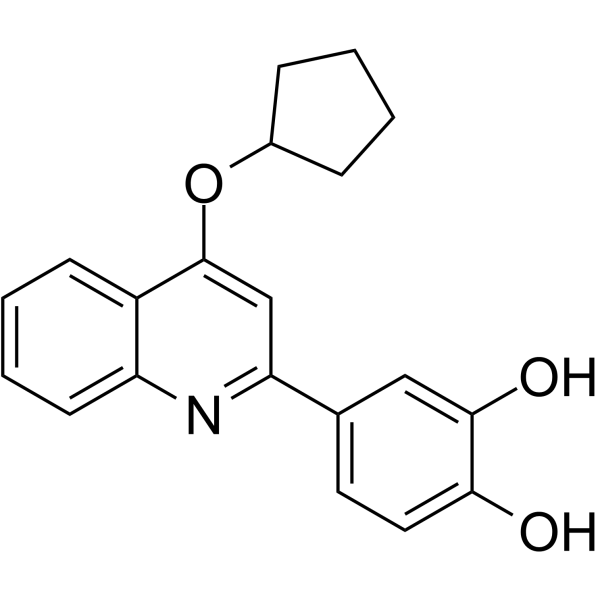
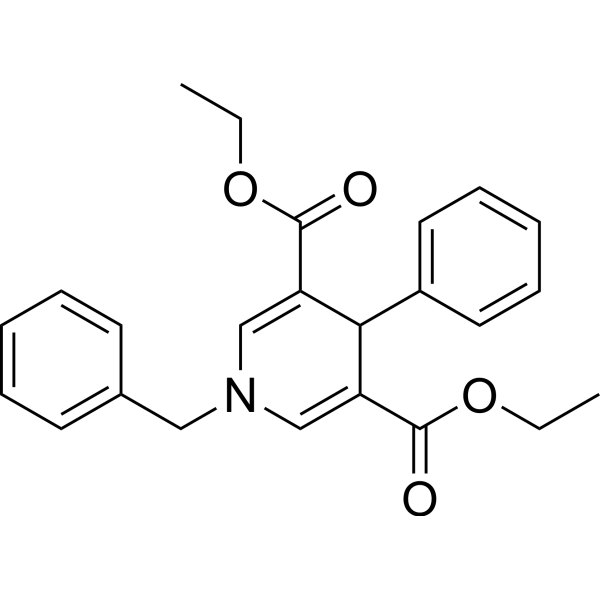
Cat. No.: HY-135981
CAS No.: 1353224-53-9
Purity:  98.30%
CMS-121 is a quinolone derivative and an orally active acetyl-CoA carboxylase 1 (ACC1) inhibitor. CMS-121 protects HT22 cells against ischemia and oxidative damage with EC50 values of 7 nM and 200 nM, respectively. CMS-121 has strong neuroprotective, anti-inflammatory, antioxidative and renoprotective activities .
loading...
    loading...
1
1 Cited Publications
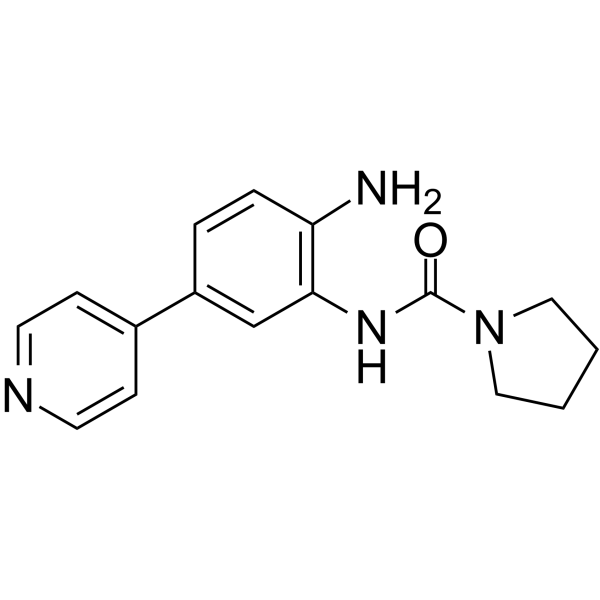
Cat. No.: HY-117709
CAS No.: 1404562-17-9
Purity:  98.90%
Target:  

HDAC

Research Areas:  

Neurological Disease

BRD6688 is a selective HDAC2 inhibitor. BRD6688 increases H4K12 and H3K9 histone acetylation in primary mouse neuronal cells. BRD6688 crosses the blood brain barrier and rescues the memory defects associated with p25 induced neurodegeneration in contextual fear conditioning in a CK-p25 mouse model .
loading...
    loading...
1
1 Cited Publications
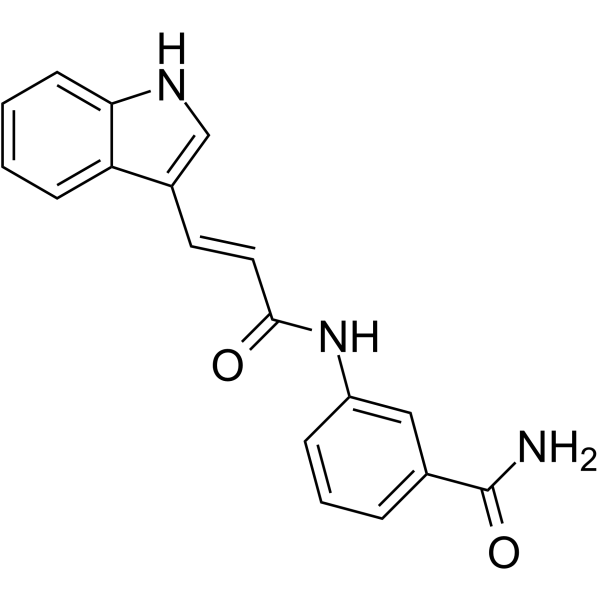
Cat. No.: HY-12310
CAS No.: 1418131-46-0
Purity:  ≥98.0%
RSC133 is a dual inhibitor of DNA methyltransferase 1 and histone deacetylase 1 inhibitor. RSC133 promotes cell proliferation, up-regulates H3K9 histone acetylation, down-regulates p53, p21, p16/INK4A, and ablates pro-senescence phenotypes .
loading...
    loading...
Cat. No.: HY-159099
CAS No.: 2654011-51-3
Purity:  99.15%
WIZ degrader 9 is an orally active molecular glue degrader of the WIZ transcription factor. As a molecular glue, WIZ degrader 9 recruits WIZ to the cereblon E3 ubiquitin ligase complex via its ZF7 domain, driving proteasome-dependent degradation of WIZ. WIZ degrader 9 induces hemoglobin production, reduces the level of H3K9 dimethylation across the whole genome and at the β-globin locus, upregulates the transcription of γ-globin and BGLT3, and increases the level of histone H3K9 acetylation in the promoter region of HBG1/2. WIZ degrader 9 effectively induces fetal hemoglobin production in both mice and cynomolgus monkeys. WIZ degrader 9 can be used for research on sickle cell disease .
loading...
    loading...
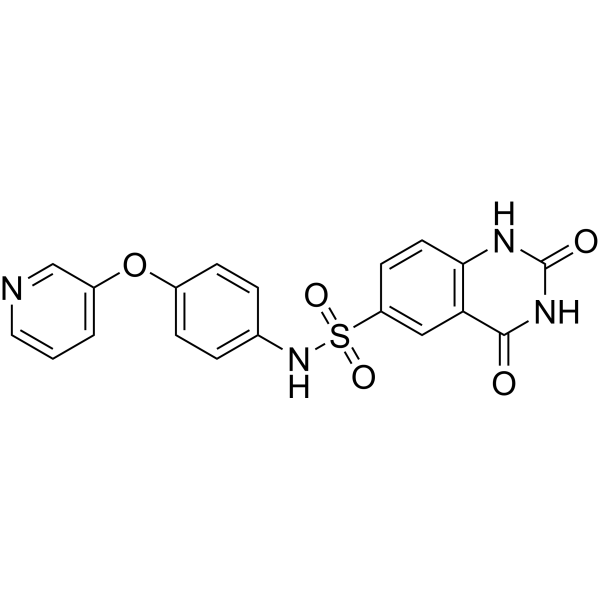
Cat. No.: HY-103721
CAS No.: 891002-11-2
Purity:  99.85%
Target:  

Sirtuin

SIRT6-IN-2 (Compound 5) is a selective and competitive SIRT6 inhibitor (IC50: 34 μM). SIRT6-IN-2 increases acetylation of H3K9 and increases glucose uptake in cultured cells. SIRT6-IN-2 also reduces T cell proliferation. SIRT6-IN-2 has immunosuppressive and chemosensitizing effects .
loading...
    loading...
Cat. No.: HY-123194
CAS No.: 1214468-35-5
Purity:  99.79%
Research Areas:  

Metabolic Disease

SIRT2/6-IN-1 (Compound 5) is a SIRT6/SIRT2 inhibitor, with IC50s of 106 μM and 114 μM. SIRT2/6-IN-1 increases H3K9 acetylation, increases glucose uptake and reduces TNF-α secretion in cells .
loading...
    loading...
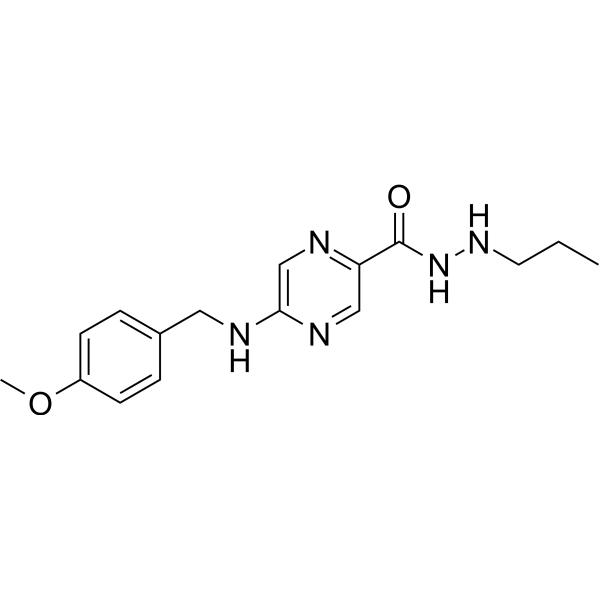
Cat. No.: HY-156096
CAS No.: 3033039-28-7
HDAC3-IN-2 (compound 4i) is a pyrazinyl hydrazide-based HDAC3 inhibitor (IC50: 14 nM) that efficiently targets triple-negative breast cancer cells. HDAC3-IN-2 is cytotoxic with an IC50 of 0.55 μM against 4T1 and an IC50 of 0.74 μM against MDA-MB-231. HDAC3-IN-2 has anti-tumor efficacy in vivo in tumor-bearing mouse models, selectively increasing the acetylation levels of H3K9, H3K27 and H4K12, increasing the contents of apoptosis-related caspase-3, caspase-7 and cytochrome c, and reducing Proliferation-related Bcl-2, CD44, EGFR, and Ki-67 levels .
loading...
    loading...
Cat. No.: HY-W025074
CAS No.: 120533-76-8
Research Areas:  

Cancer

BML-278 is a SIRT1 activator (EC150: 1 μM). BML-278 increases H3K9 methylation and inhibits H3K9 acetylation in both the paternal and maternal pronucleus. BML-278 improves early embryonic development. BML-278 arrests the cell cycle at the G1/S phase, and reduces senescence in primary human mesenchymal cells. BML-278 reduces tubulin acetylation in U937 cells. BML-278 also increases mitochondrial density in murine C2C12 myoblasts .
loading...
    loading...
Cat. No.: HY-178336
CAS No.: 3109965-54-7
AC-340 is a potent hybrid VDR agonist/HDAC inhibitor. AC-340 superinduces VDR target genes (e.g., CYP24A1) and inhibits HDAC6 (IC50 = 0.37 μM) with ~10-fold selectivity over HDAC2. AC-340 induces VDR hyperagonism by causing widespread protein hyperacetylation (e.g., tubulin and H3K9/K27), which leads to elevated H3K27 acetylation on VDR target genes. AC-340 can be used for melanoma cancer research .
loading...
    loading...
Cat. No.: HY-176866
CAS No.: 2222756-46-7
Target:  

HDAC

Research Areas:  

Neurological Disease

Rodin-A is an orally active, brain-penetrant and selective histone deacetylase (HDAC)-co-repressor of repressor element-1 silencing transcription factor (CoREST) complex inhibitor with an IC50 value of 1.80 μM for the CoREST complex, 0.15 μM for HDAC1, and 0.43 μM for HDAC2. Rodin-A increases the acetylation level of histone H3K9, upregulates the expression of neuron-related genes, thereby promoting the increase in dendritic spine density, the colocalization of synaptic proteins (SV2A and PSD95), and the improvement of hippocampal long-term potentiation (LTP), exerting synaptic protection and repair activity. Rodin-A is promising for research of neurodegenerative diseases related to synaptic dysfunction, especially Alzheimer’s disease .
loading...
    loading...
Cat. No.: HY-117583A
CAS No.: 1628784-54-2
Research Areas:  

Neurological Disease

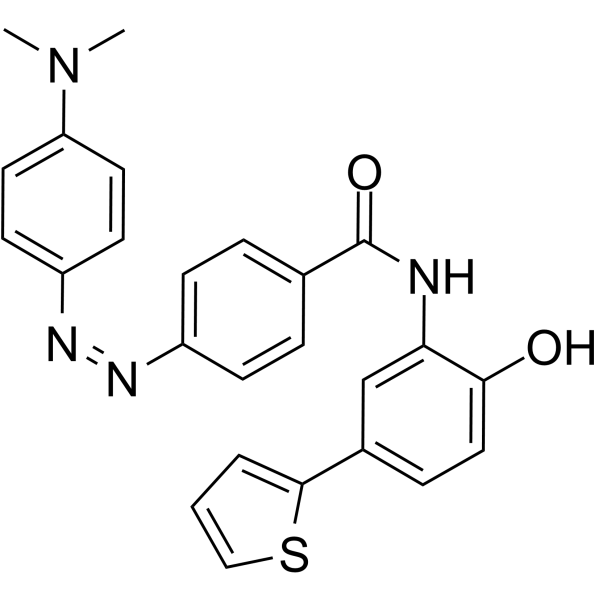
BG47 is a prototypical histone deacetylases HDAC1 and HDAC2 selective, optoepigenetic probe. BG47 can bind to and competitively inhibits the deacetylase activity of HDAC targets upon a light-induced trans-to-cis isomerization, and increases Histone Methyltransferase H3K9 acetylation. BG47 can be used for neurological disease research .
loading...
    loading...
Cat. No.: HY-117583
Purity:  98.02%
Research Areas:  

Neurological Disease

cis-BG47 is an cis-isomer of BG47, BG47 is a prototypical histone deacetylases HDAC1 and HDAC2 selective, optoepigenetic probe. BG47 can bind to and competitively inhibits the deacetylase activity of HDAC targets upon a light-induced trans-to-cis isomerization, and increases Histone Methyltransferase H3K9 acetylation. cis-BG47 can be used for neurological disease research .
loading...
    loading...
Cat. No.: HY-176867
Target:  

HDAC

Research Areas:  

Neurological Disease

Rodin-B is a selective histone deacetylase (HDAC)-co-repressor of repressor element-1 silencing transcription factor (CoREST) complex inhibitor with an IC50 value of 0.50 μM for the CoREST complex, 0.27 μM for HDAC1, and 0.28 μM for HDAC2. Rodin-B increases the acetylation level of histone H3K9, upregulates the expression of neuron-related genes, thereby promoting the increase in dendritic spine density, the colocalization of synaptic proteins (SV2A and PSD95), and the improvement of hippocampal long-term potentiation (LTP), exerting synaptic protection and repair activity. Rodin-B is promising for research of neurodegenerative diseases related to synaptic dysfunction, especially Alzheimer’s disease .
loading...
    loading...
Cat. No.: HY-103721R
CAS No.: 891002-11-2
SIRT6-IN-2 (Standard) is the analytical standard of SIRT6-IN-2 (HY-103721). This product is intended for research and analytical applications. SIRT6-IN-2 (Compound 5) is a selective and competitive SIRT6 inhibitor (IC50: 34 μM). SIRT6-IN-2 increases acetylation of H3K9 and increases glucose uptake in cultured cells. SIRT6-IN-2 also reduces T cell proliferation. SIRT6-IN-2 has immunosuppressive and chemosensitizing effects .
loading...
    loading...
Cat. No.: HY-181009
CAS No.: 3124773-51-6
Target:  

HDAC Apoptosis Autophagy

Research Areas:  

Cancer

HDAC-IN-98 is a HDAC1, HDAC2, HDAC3 inhibitor (one of the most selective class I HDAC inhibitors) with human IC50 values of 41.2 nM, 52.5 nM, and 74.3 nM respectively. HDAC-IN-98 induces H3K9 acetylation, p21 upregulation, G2/M arrest, cell apoptosis, has strong antiproliferative effects in colorectal cancer cells, low toxicity in healthy colon epithelium, modulates short-term in vitro effects via autophagy, and shows strong antitumor efficacy in vivo in the chorioallantoic membrane model (CAM) assay. HDAC-IN-98 can be used for the research of colorectal cancer .
loading...
    loading...
Cat. No.: HY-151812
CAS No.: 2999742-92-4
Purity:  98.03%
CBP/p300-IN-20 is a potent and selective p300/CBP inhibitor, with a pIC50 of 10.1 for p300. CBP/p300-IN-20 can be used for the research of cancer .
loading...
    loading...
Cat. No.: HY-183560
CAS No.: 1228571-33-2
Target:  

HDAC Apoptosis

Research Areas:  

Cancer

HDAC6-IN-82 is a selective HDAC6 inhibitor with an IC50 of 4.9 nM against HDAC6. HDAC6-IN-82 inhibits HDAC1 (112 nM), HDAC2 (737 nM), HDAC3 (623 nM), HDAC8 (1140 nM), HDAC10 (91.4 nM) and HDAC11 (219 nM). HDAC6-IN-82 reduces cancer cell viability, induces cell cycle arrest, triggers apoptosis, and increases the acetylation levels of H3K9 and α-tubulin. HDAC6-IN-82 can be used in cancer-related research such as leukemia .
loading...
    loading...
Cat. No.: HY-107454R
CAS No.: 887686-02-4
OSS_128167 (Standard) is the analytical standard of OSS_128167 (HY-107454). This product is intended for research and analytical applications. OSS_128167 is a potent selective sirtuin 6 (SIRT6) inhibitor with IC50s of 89 μM, 1578 μM and 751 μM for SIRT6, SIRT1 and SIRT2, respectively. OSS_128167 has anti-HBV activity that inhibits HBV transcription and replication. OSS_128167 has anti-cancer, anti-inflammation and anti-viral effects .
loading...
    loading...
Cat. No.: HY-187168
CAS No.: 2407654-72-0
Research Areas:  

Cancer

KAT2A degrader-1 is a molecular glue degrader targeting KAT2A, with a DC50 of 89 nM in Kelly cells. KAT2A degrader-1 recruits KAT2A to cereblon (CRBN) in a degron-independent manner, forms a ternary complex with KAT2A and CRBN, and drives the polyubiquitination and proteasome-dependent degradation of KAT2A. KAT2A degrader-1 reduces the level of histone H3 lysine 9 acetylation (H3K9Ac). KAT2A degrader-1 induces antiproliferative effects in acute myeloid leukemia cells, while enhancing KAT2A-CRBN dimerization activity and eliminating the targeting effect on GSPT1. KAT2A degrader-1 can be used for research related to acute myeloid leukemia .
loading...
    loading...
  • 1

