223 Results for "

HBV Inhibitor

" in MedChemExpress (MCE) Product Catalog:
Products (223)

223 Results for "HBV Inhibitor" in MCE Product Catalog:

  • Targets Recommended:
97
97 Publications Verification
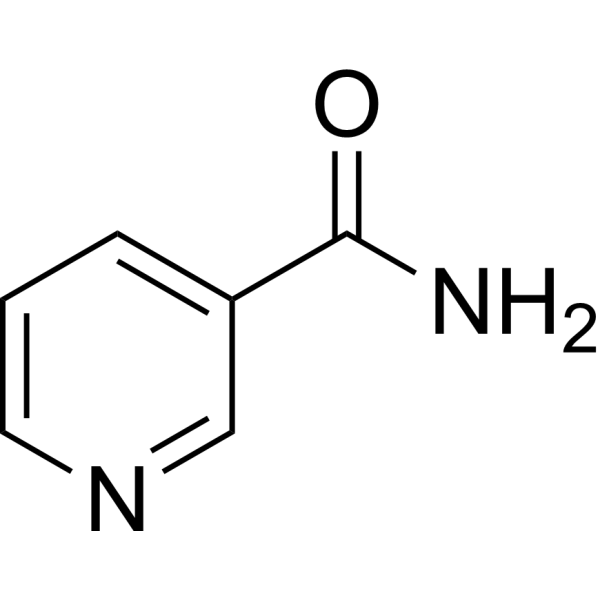
Cat. No.: HY-B0150
CAS No.: 98-92-0
Synonyms: Niacinamide; Nicotinic acid amide
Nicotinamide is a form of vitamin B3 or niacin. Nicotinamide Hydrochloride inhibits SIRT2 activity (IC50: 2 μM). Nicotinamide also inhibits SIRT1. Nicotinamide increases cellular NAD+, ATP, ROS levels. Nicotinamide inhibits tumor growth and improves survival. Nicotinamide also has anti-HBV activity .
loading...
    loading...
34
34 Cited Publications
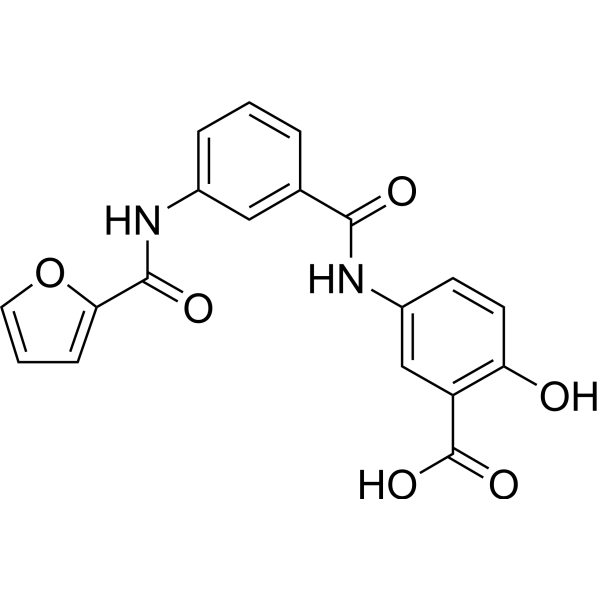
Cat. No.: HY-107454
CAS No.: 887686-02-4
Purity:  98.63%
OSS_128167 is a potent selective sirtuin 6 (SIRT6) inhibitor with IC50s of 89 μM, 1578 μM and 751 μM for SIRT6, SIRT1 and SIRT2, respectively. OSS_128167 has anti-HBV activity that inhibits HBV transcription and replication. OSS_128167 has anti-cancer, anti-inflammation and anti-viral effects .
loading...
    loading...
22
22 Cited Publications
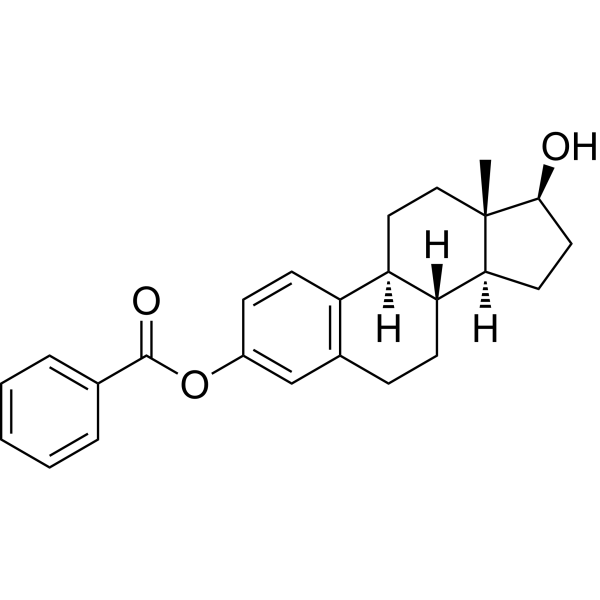
Cat. No.: HY-B1192
CAS No.: 50-50-0
Synonyms: β-Estradiol 3-benzoate; 17β-Estradiol 3-benzoate
Estradiol benzoate (β-Estradiol 3-benzoate) is a HBx protein inhibitor and inhibits androgen and hepatitis B virus (HBV) transcription, replication. Estradiol benzoate shows antifertility effects, anti- Toxoplasma gondii activity and can improve memory behavior of Ovariectomy (Ovx) female mice .
loading...
    loading...
20
20 Cited Publications
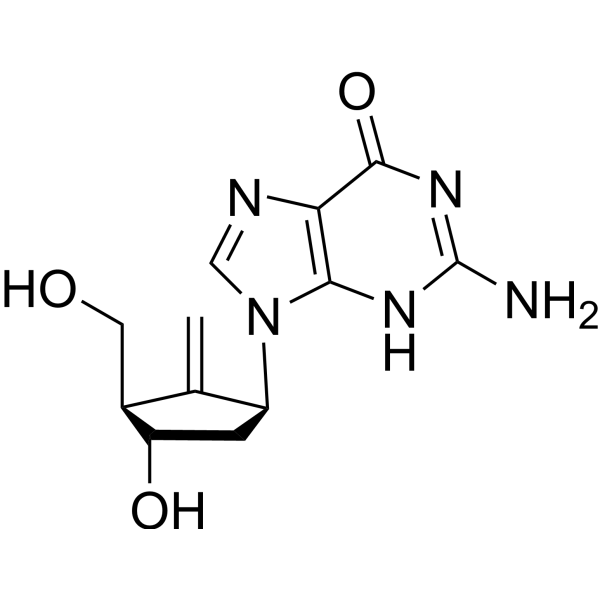
Cat. No.: HY-13623
CAS No.: 142217-69-4
Purity:  99.98%
Synonyms: BMS200475; SQ34676
Target:  

HBV

Research Areas:  

Infection Cancer

Entecavir (SQ 34676; BMS 200475) is a potent and selective inhibitor of HBV, with an EC50 of 3.75 nM in HepG2 cell.
loading...
    loading...
20
20 Cited Publications
Cat. No.: HY-13623A
CAS No.: 209216-23-9
Purity:  99.85%
Synonyms: BMS200475 monohydrate; SQ34676 monohydrate
Target:  

HBV

Research Areas:  

Infection Cancer

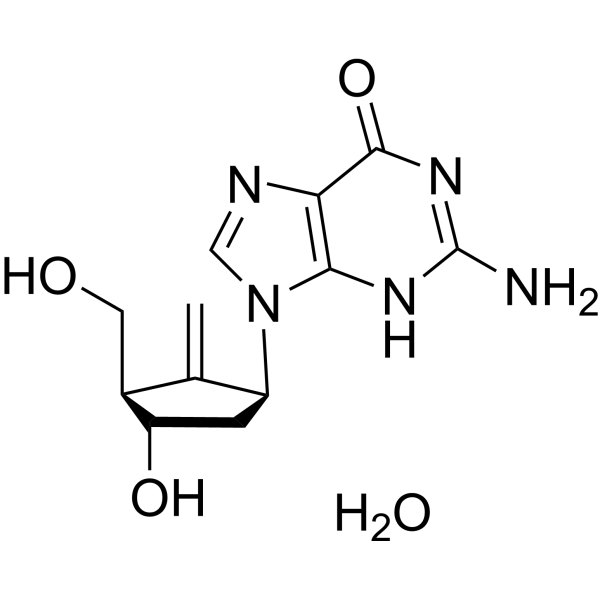
Entecavir monohydrate (BMS200475 monohydrate; SQ34676 monohydrate) is a potent and selective inhibitor of HBV, with an EC50 of 3.75 nM in HepG2 cell.
loading...
    loading...
18
18 Cited Publications
Cat. No.: HY-N0054
CAS No.: 484-12-8
Synonyms: Osthol; NSC 31868
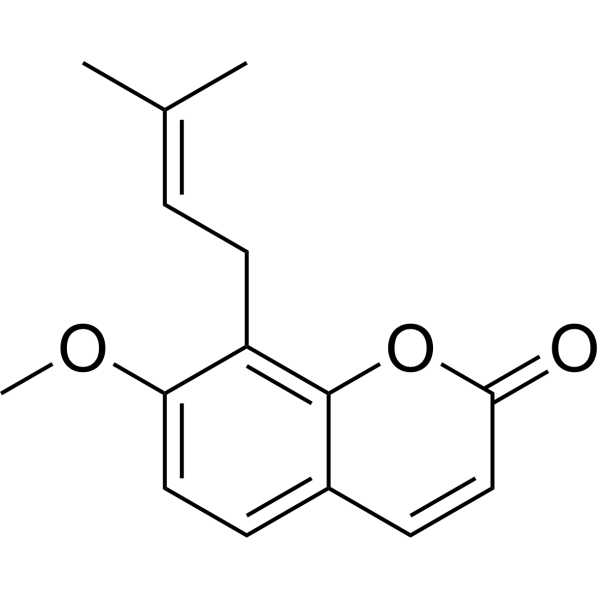
Osthole (Osthol) is a natural antihistamine alternative. Osthole may be a potential inhibitor of histamine H1 receptor activity. Osthole also suppresses the secretion of HBV in cells.
loading...
    loading...
17
17 Cited Publications
Cat. No.: HY-N0063
CAS No.: 65995-63-3
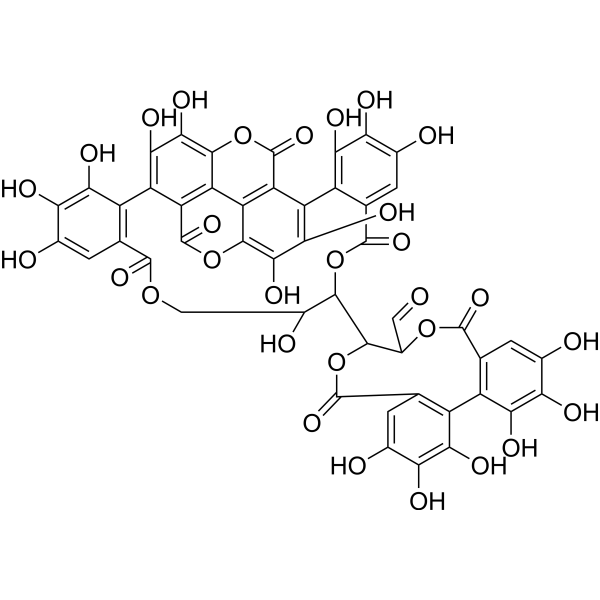
Punicalagin is a polyphenol ingredient isolated from Pomegranate (Punica granatum L.) or the leaves of Terminalia catappa L.. Punicalagin is a reversible and non-competitive 3CL pro inhibitor and inhibits SARS-CoV-2 replication in vitro. Punicalagin is an anti-hepatitis B virus (HBV) agent and has antioxidant, anti-inflammatory, and anticancer effects. Punicalagin has the potential for the research of COVID-19 .
loading...
    loading...
14
14 Cited Publications
Cat. No.: HY-100029
CAS No.: 298708-81-3
Purity:  99.24%
Target:  

HBV

Research Areas:  

Infection

BAY 41-4109 is a potent inhibitor of human hepatitis B virus (HBV) with an IC50 of 53 nM.
loading...
    loading...
13
13 Cited Publications
Cat. No.: HY-12687
CAS No.: 173903-47-4
Purity:  98.10%
Synonyms: TIZ
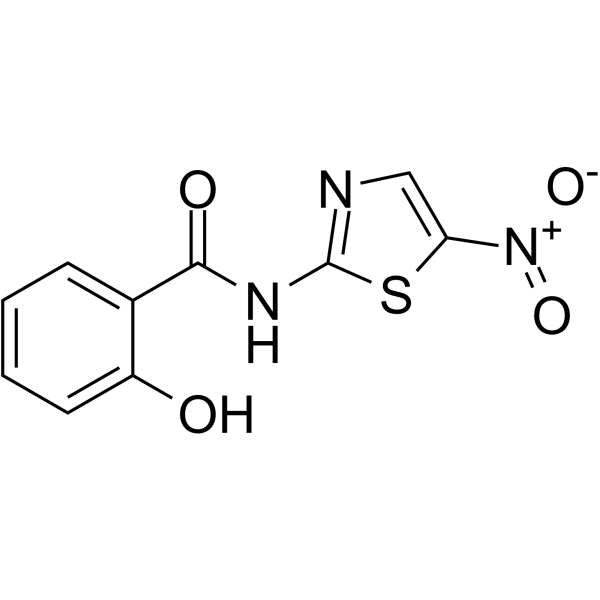
Tizoxanide (TIZ) is the active metabolite of Nitazoxanide, which is a thiazolide anti-infective compound against anaerobic bacteria, protozoa, and a range of viruses. Tizoxanide (TIZ) has anti-HIV-1 activities and potent inhibition of both HBV and HCV replication with values EC50 of 0.46μM and 0.15 μM, respectively. Tizoxanide also exerts anti-inflammatory effects by inhibiting the production of pro-inflammatory cytokines and suppressing of the activation of the NF-κB and the MAPK signaling pathways in LPS-treated macrophage cells .
loading...
    loading...
10
10 Cited Publications
Cat. No.: HY-13910
CAS No.: 147127-20-6
Purity:  99.92%
Synonyms: GS 1278; PMPA
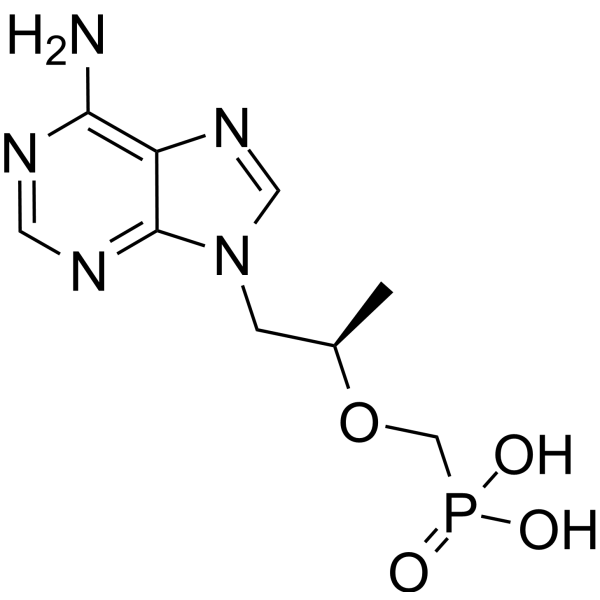
Tenofovir (GS 1278; PMPA) is a nucleotide reverse transcriptase inhibitor to treat HIV and chronic Hepatitis B (HBV) .
loading...
    loading...
10
10 Cited Publications
Cat. No.: HY-117650A
CAS No.: 2072057-17-9
Purity:  99.85%
Synonyms: RO 7020322; (S)-RO0321
Target:  

HBV

Research Areas:  

Infection

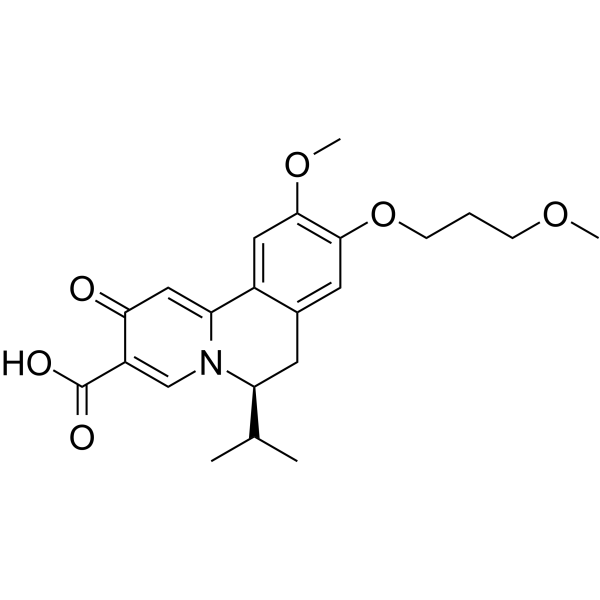
RG7834 (RO 7020322) is a highly selective and orally bioavailable HBV inhibitor, potently inhibits HBV antigens (both HBsAg and HBeAg) and HBV DNA, with IC50s of 2.8, 2.6, and 3.2 nM, respectively, in dHepaRG Cells .
loading...
    loading...
10
10 Cited Publications
Cat. No.: HY-13910A
CAS No.: 206184-49-8
Purity:  ≥98.0%
Synonyms: GS 1278 hydrate; PMPA hydrate
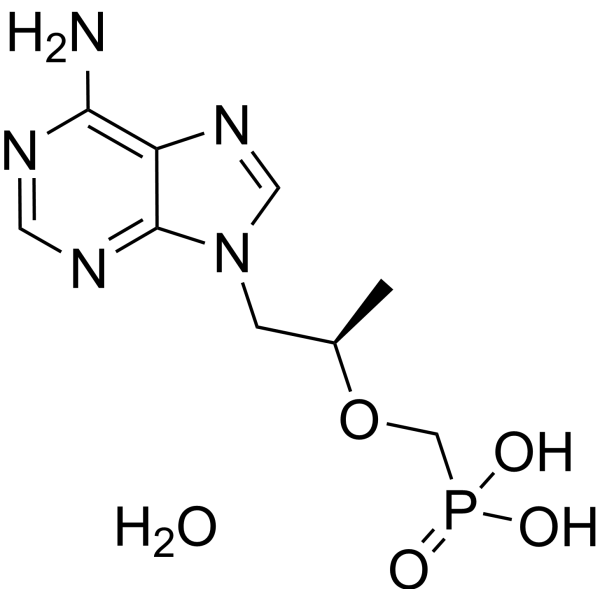
Tenofovir hydrate (GS 1278 hydrate; PMPA hydrate) is a nucleotide reverse transcriptase inhibitor to treat HIV and chronic Hepatitis B (HBV) .
loading...
    loading...
9
9 Cited Publications
Cat. No.: HY-B1464
CAS No.: 123-03-5
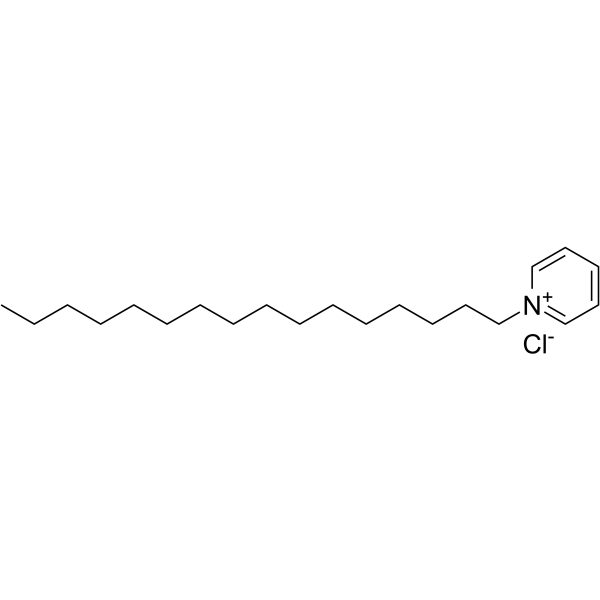
Cetylpyridinium chloride, a cationic quaternary ammonium compound, is an anti-bacterial agent with broad-spectrum activity. Cetylpyridinium chloride is an effective anti-HBV capsid assembly inhibitor with an IC50 of 2.5 μM. Cetylpyridinium chloride is used in pesticides and various types of mouthwashes, and other personal care products .
loading...
    loading...
8
8 Cited Publications
Cat. No.: HY-P3465
CAS No.: 2012558-47-1
Synonyms: Myrcludex B
Target:  

HBV

Research Areas:  

Infection

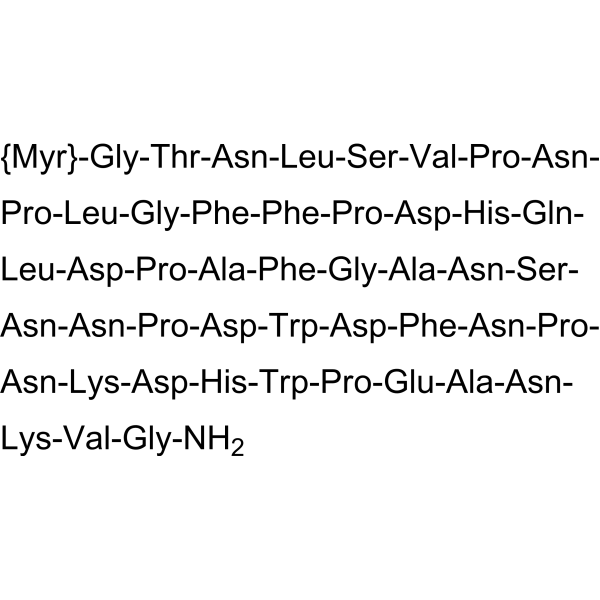
Bulevirtide (Myrcludex B) is a NTCP inhibitor, a linear lipopeptide of 47 amino acids. Bulevirtide inhibits HBV and HDV entry into liver cells, blocks HBV infection in hepatocytes, and participates in HBV transcriptional suppression. Bulevirtide can be used in HDV infection and compensated cirrhosis research .
loading...
    loading...
7
7 Cited Publications
Cat. No.: HY-108917
CAS No.: 1092970-12-1
Purity:  99.79%
Synonyms: GLS4
Target:  

HBV

Research Areas:  

Infection

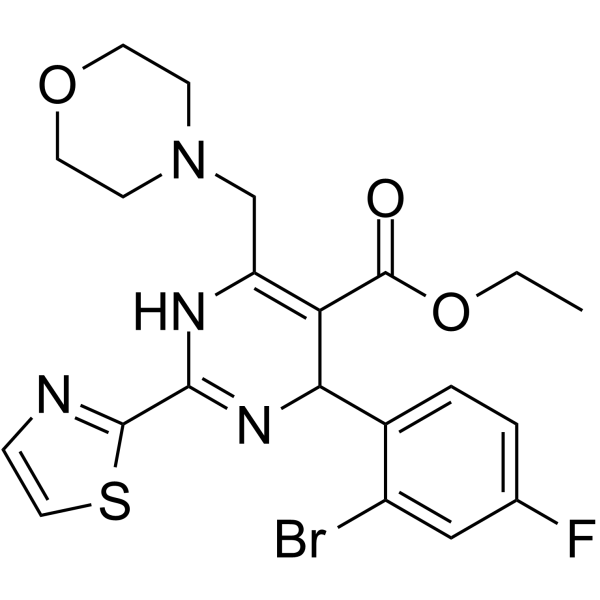
Morphothiadin is a potent inhibitor on the replication of both wild-type and adefovir (HY-B1826)-resistant HBV with an IC50 of 12 nM.
loading...
    loading...
6
6 Cited Publications
Cat. No.: HY-19314
CAS No.: 1011529-10-4
Synonyms: RO-0622; FNC
Research Areas:  

Infection

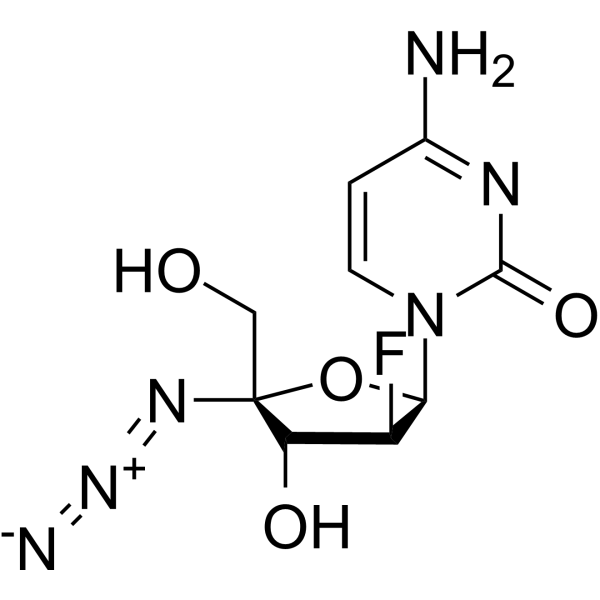
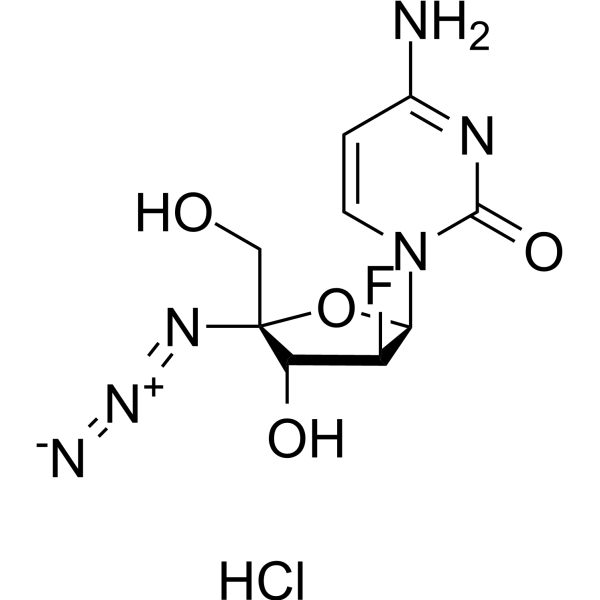
Azvudine (RO-0622) is a potent nucleoside reverse transcriptase inhibitor (NRTI), with antiviral activity on HIV, HBV and HCV. Azvudine exerts highly potent inhibition on HIV-1 (EC50s ranging from 0.03 to 6.92 nM) and HIV-2 (EC50s ranging from 0.018 to 0.025 nM). Azvudine inhibits NRTI-resistant viral strains . Azvudine is a click chemistry reagent, it contains an Azide group and can undergo copper-catalyzed azide-alkyne cycloaddition reaction (CuAAc) with molecules containing Alkyne groups. It can also undergo strain-promoted alkyne-azide cycloaddition (SPAAC) reactions with molecules containing DBCO or BCN groups.
loading...
    loading...
6
6 Cited Publications
Cat. No.: HY-19314A
CAS No.: 1333126-31-0
Synonyms: RO-0622 hydrochloride; FNC hydrochloride
Research Areas:  

Infection

Azvudine (RO-0622) hydrochloride is a potent nucleoside reverse transcriptase inhibitor (NRTI), with antiviral activity on HIV, HBV and HCV. Azvudine hydrochloride exerts highly potent inhibition on HIV-1 (EC50s ranging from 0.03 to 6.92 nM) and HIV-2 (EC50s ranging from 0.018 to 0.025 nM). Azvudine hydrochloride inhibits NRTI-resistant viral strains . Azvudine (hydrochloride) is a click chemistry reagent, it contains an Azide group and can undergo copper-catalyzed azide-alkyne cycloaddition reaction (CuAAc) with molecules containing Alkyne groups. It can also undergo strain-promoted alkyne-azide cycloaddition (SPAAC) reactions with molecules containing DBCO or BCN groups.
loading...
    loading...
6
6 Cited Publications
Cat. No.: HY-113308
CAS No.: 516-90-5
Purity:  98.06%
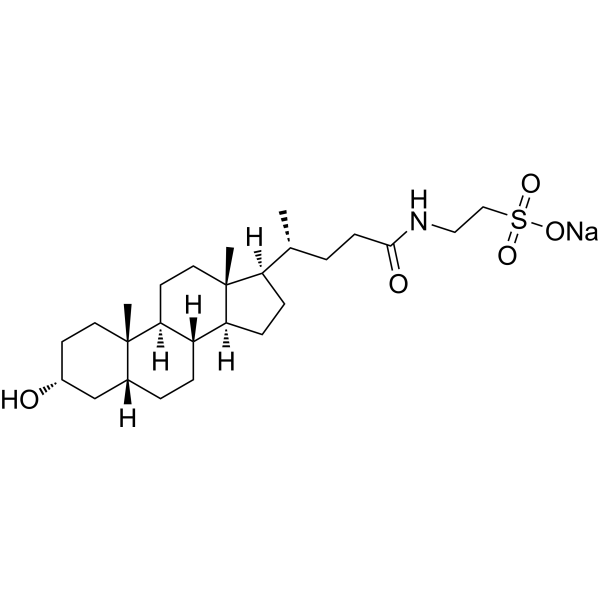
Taurolithocholic acid is an orally active bile acid and antiviral agent. Taurolithocholic acid upregulates FADS2 by activating the TGR5-PI3K/AKT-SREBP2 signaling axis, inhibits SFTSV-induced ferroptosis (Ferroptosis), viral replication and viral entry of HBV/HDV, while reducing the release of IL-1β, lipid ROS and LDH. While exerting antiviral protective effects, Taurolithocholic acid also stimulates the recycling of hepatocellular membrane transporters, impairs canalicular bile acid secretion function, and induces hepatocyte cholestasis, apoptosis and acute hepatocellular injury. Taurolithocholic acid serves as an experimental model compound for hepatocellular cholestasis. At concentrations ≤200 μM, Taurolithocholic acid shows no cytotoxicity and does not activate the interferon pathway. Taurolithocholic acid not only protects mice from lethal SFTSV infection but also is suitable for studies related to severe fever with thrombocytopenia syndrome and cholestasis .
loading...
    loading...
6
6 Cited Publications
Cat. No.: HY-113308A
CAS No.: 6042-32-6
Purity:  99.81%
Taurolithocholic acid sodium salt is an orally active bile acid and antiviral agent. Taurolithocholic acid sodium salt upregulates FADS2 by activating the TGR5-PI3K/AKT-SREBP2 signaling axis, inhibits SFTSV-induced ferroptosis, viral replication and viral entry of HBV/HDV, while reducing the release of IL-1β, lipid ROS and LDH. While exerting antiviral protective effects, Taurolithocholic acid sodium salt also stimulates the recycling of hepatocellular membrane transporters, impairs canalicular bile acid secretion function, and induces hepatocyte cholestasis, apoptosis and acute hepatocellular injury. Taurolithocholic acid sodium salt serves as an experimental model compound for hepatocellular cholestasis. At concentrations ≤200 μM, Taurolithocholic acid sodium salt shows no cytotoxicity and does not activate the interferon pathway. Taurolithocholic acid sodium salt not only protects mice from lethal SFTSV infection but also is suitable for studies related to severe fever with thrombocytopenia syndrome and cholestasis .
loading...
    loading...
4
4 Cited Publications
Cat. No.: HY-N0699
CAS No.: 2034-69-7
Synonyms: Dephnoretin; Thymelol
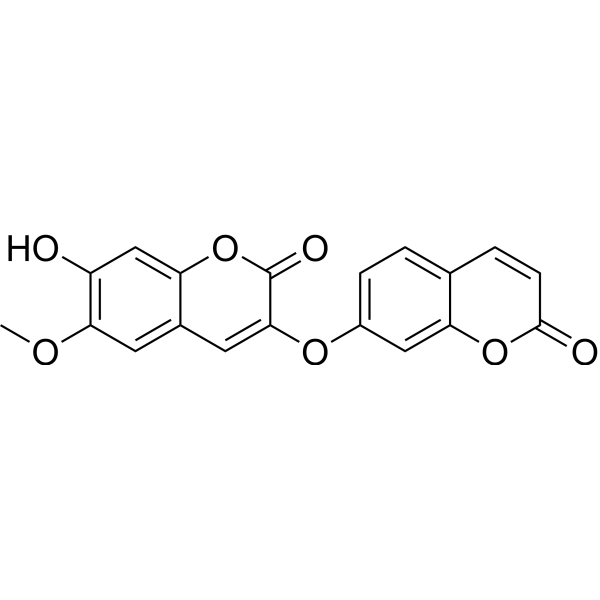
Daphnoretin (Dephnoretin; Thymelol) is a protein kinase C (PKC) activator that inhibits the expression of hepatitis B virus (HBV) surface antigen (HBsAg) and exhibits antiviral activity. Daphnoretin exerts its antitumor effects by inhibiting the activation of the PI3K/AKT signaling pathway and triggers the mitochondrial apoptosis pathway. Daphnoretin alleviates chondrocyte apoptosis and inflammatory responses by inhibiting endoplasmic reticulum stress and activation of the NLRP3 inflammasome. Daphnoretin regulates the differentiation and maturation of dendritic cells, inhibits their immunostimulatory function by downregulating the phosphorylation level of JNK, and thus exerts a protective effect in skin graft rejection .
loading...
    loading...

