1. Search Result
Search Result
Results for "

HDAC2 inhibitor

" in MedChemExpress (MCE) Product Catalog:

169

Inhibitors & Agonists

3

Fluorescent Dyes

3

Biochemical Assay Reagents

2

Peptides

11

Natural
Products

9

Isotope-Labeled Compounds

2

GMP Molecules

Targets Recommended:
Cat. No. Product Name Target Research Areas Chemical Structure
  • HY-10221
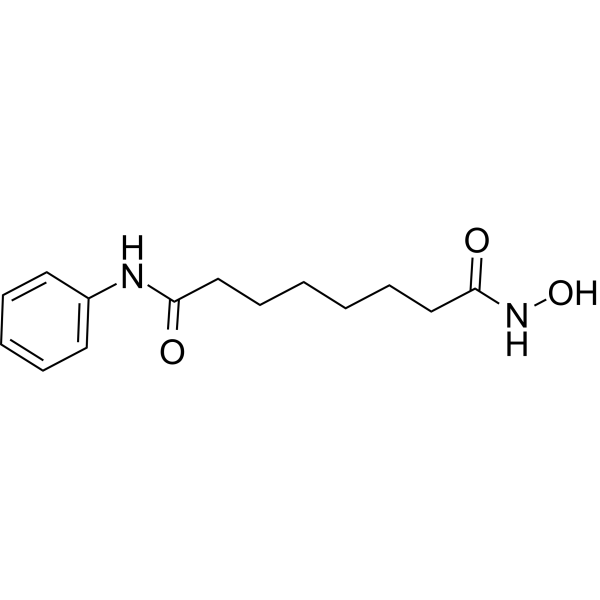
    Vorinostat
    Maximum Cited Publications
    159 Publications Verification

    SAHA; Suberoylanilide hydroxamic acid

    HDAC Autophagy Mitophagy Filovirus Apoptosis HPV Infection Cancer
    Vorinostat (SAHA) is a potent and orally active pan-inhibitor of HDAC1, HDAC2 and HDAC3 (Class I), HDAC6 and HDAC7 (Class II) and HDAC11 (Class IV), with ID50 values of 10 nM and 20 nM for HDAC1 and HDAC3, respectively. Vorinostat induces cell apoptosis . Vorinostat is also an effective inhibitor of human papillomaviruse (HPV)-18 DNA amplification .
    Vorinostat
  • HY-12163
    Entinostat
    85+ Cited Publications

    MS-275; SNDX-275

    HDAC Autophagy Apoptosis Cancer
    Entinostat is an oral and selective class I HDAC inhibitor, with IC50s of 243 nM, 453 nM, and 248 nM for HDAC1, HDAC2, and HDAC3, respectively.
    Entinostat
  • HY-10585
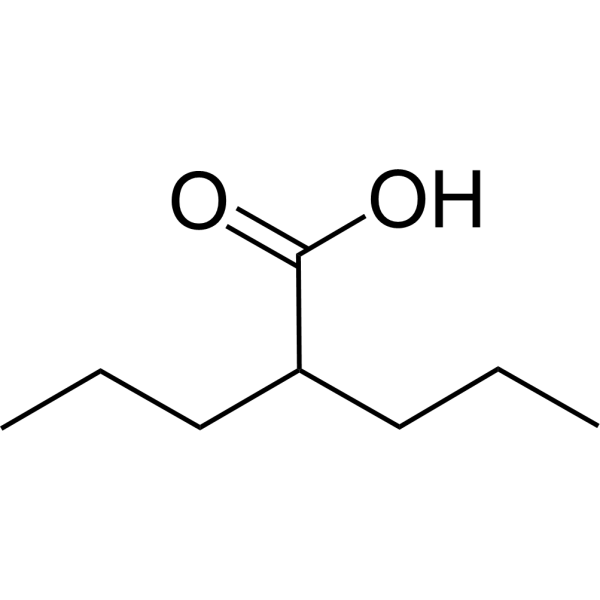
    Valproic acid
    Maximum Cited Publications
    65 Publications Verification

    VPA; 2-Propylpentanoic acid; Dipropylacetic acid

    Organoid HDAC Autophagy Mitophagy HIV Notch Apoptosis Endogenous Metabolite Infection Neurological Disease Metabolic Disease Inflammation/Immunology Cancer
    Valproic acid (VPA) is an orally active HDAC inhibitor, with IC50 in the range of 0.5 and 2 mM. Valproic acid inhibits HDAC1 (IC50, 400 μM), and induces proteasomal degradation of HDAC2. Valproic acid activates Notch1 signaling and inhibits proliferation in small cell lung cancer (SCLC) cells. Valproic acid is used in the epilepsy, bipolar disorder, metabolic disease, HIV infection and prevention of migraine headaches .
    Valproic acid
  • HY-15149
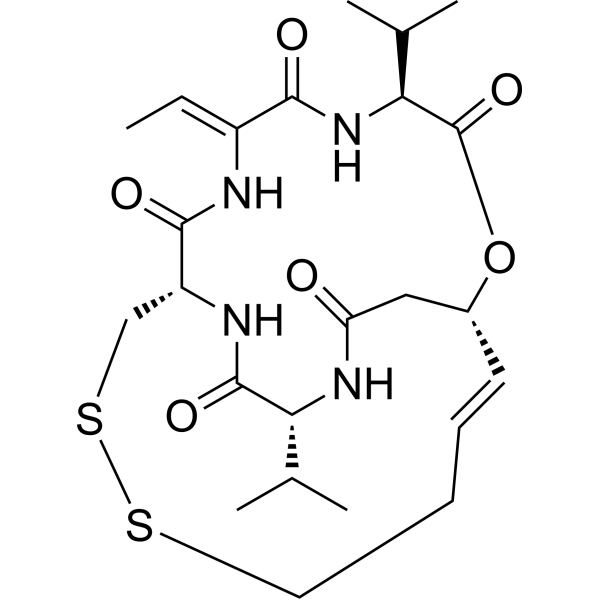
    Romidepsin
    65+ Cited Publications

    FK 228; FR 901228; NSC 630176

    HDAC Apoptosis Cancer
    Romidepsin (FK 228) is a Histone deacetylase (HDAC) inhibitor with anti-tumor activities. Romidepsin (FK 228) inhibits HDAC1, HDAC2, HDAC4, and HDAC6 with IC50s of 36 nM, 47 nM, 510 nM and 1.4 μM, respectively . Romidepsin (FK 228) is produced by Chromobacterium violaceum, induces cell G2/M phase arrest and apoptosis .
    Romidepsin
  • HY-10585A
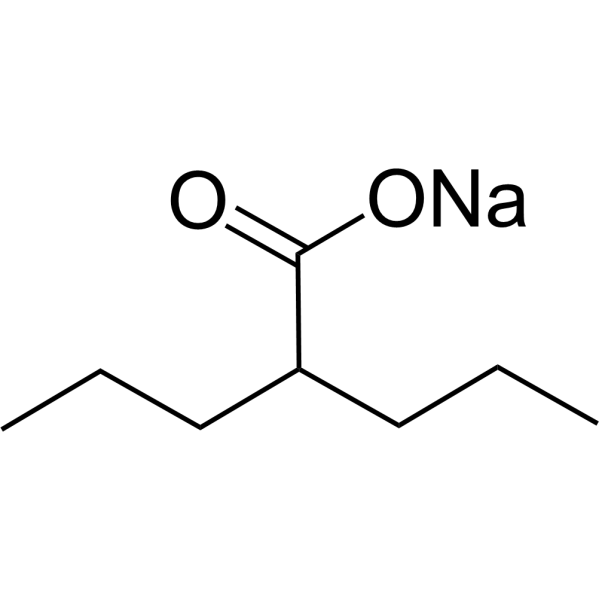
    Valproic acid sodium
    Maximum Cited Publications
    65 Publications Verification

    Sodium Valproate; VPA sodium; 2-Propylpentanoic acid sodium

    Organoid HDAC Autophagy Mitophagy HIV Notch Apoptosis Endogenous Metabolite Infection Neurological Disease Metabolic Disease Cancer
    Valproic acid (Sodium Valproate) sodium is an orally active HDAC inhibitor, with IC50 in the range of 0.5 and 2 mM, also inhibits HDAC1 (IC50, 400 μM), and induces proteasomal degradation of HDAC2. Valproic acid sodium activates Notch1 signaling and inhibits proliferation in small cell lung cancer (SCLC) cells. Valproic acid sodium is used in the treatment of epilepsy, bipolar disorder, metabolic disease, HIV infection and prevention of migraine headaches .
    Valproic acid sodium
  • HY-16026
    Ricolinostat
    40+ Cited Publications

    ACY-1215; Rocilinostat

    HDAC Apoptosis Cancer
    Ricolinostat (ACY-1215) is a potent and selective HDAC6 inhibitor, with an IC50 of 5 nM. ACY-1215 also inhibits HDAC1, HDAC2, and HDAC3 with IC50s of 58, 48, and 51 nM, respectively.
    Ricolinostat
  • HY-15433
    Quisinostat
    15+ Cited Publications

    JNJ-26481585

    HDAC Autophagy Inflammation/Immunology Cancer
    Quisinostat (JNJ-26481585) is a potent and orally active pan-HDAC inhibitor (HDACi), with IC50 values ranging from 0.11 nM to 0.64 nM for HDAC1, HDAC2, HDAC4, HDAC10 and HDAC11. Quisinostat has a broad spectrum antitumoral activity . Quisinostat can induce autophagy in neuroblastoma cells .
    Quisinostat
  • HY-12164
    Mocetinostat
    20+ Cited Publications

    MGCD0103

    HDAC Autophagy Apoptosis Cancer
    Mocetinostat (MGCD0103) is a potent, orally active and isotype-selective HDAC (Class I/IV) inhibitor with IC50s of 0.15, 0.29, 1.66 and 0.59 μM for HDAC1, HDAC2, HDAC3 and HDAC11, respectively. Mocetinostat shows no inhibition on HDAC4, HDAC5, HDAC6, HDAC7, or HDAC8.
    Mocetinostat
  • HY-13522
    Fimepinostat
    10+ Cited Publications

    CUDC-907

    PI3K HDAC Apoptosis Cancer
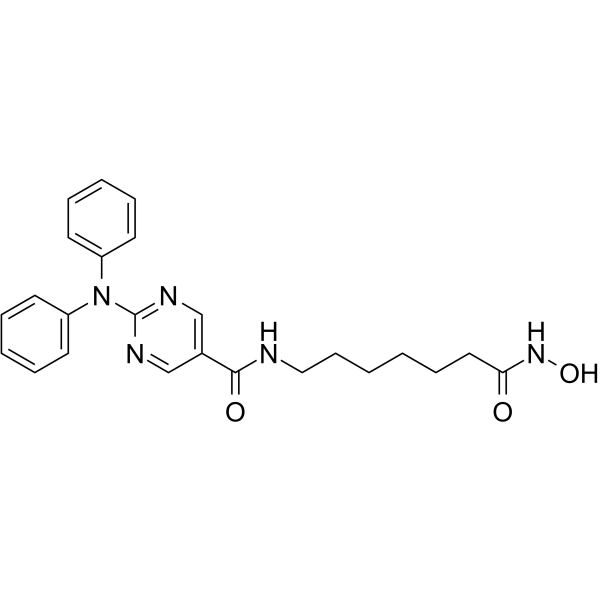
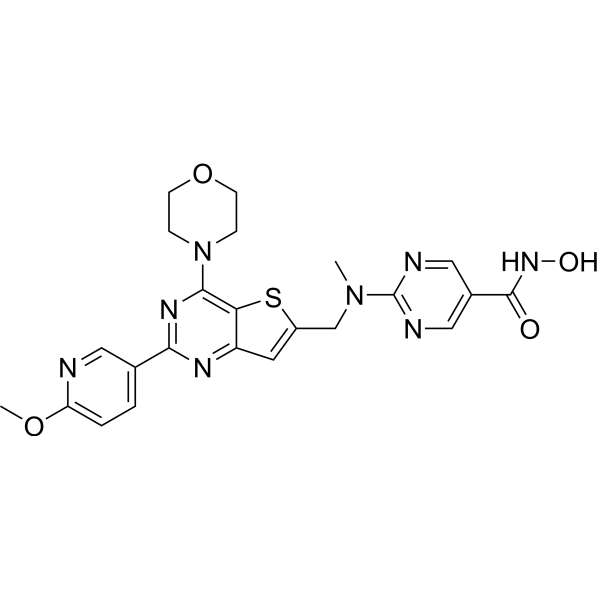
    Fimepinostat (CUDC-907) potently inhibits class I PI3Ks as well as classes I and II HDAC enzymes with an IC50 of 19/54/39 nM and 1.7/5.0/1.8/2.8 nM for PI3Kα/PI3Kβ/PI3Kδ and HDAC1/HDAC2/HDAC3/HDAC10 , respectively.
    Fimepinostat
  • HY-18998
    LMK-235
    25+ Cited Publications

    HDAC Cancer
    LMK-235 is a potent and selective HDAC4/5 inhibitor, inhibits HDAC5, HDAC4, HDAC6, HDAC1, HDAC2, HDAC11 and HDAC8, with IC50s of 4.22 nM, 11.9 nM, 55.7 nM, 320 nM, 881 nM, 852 nM and 1278 nM, respectively, and is used in cancer research.
    LMK-235
  • HY-N0931
    Santacruzamate A
    15+ Cited Publications

    CAY-10683

    HDAC Amyloid-β Neurological Disease Cancer
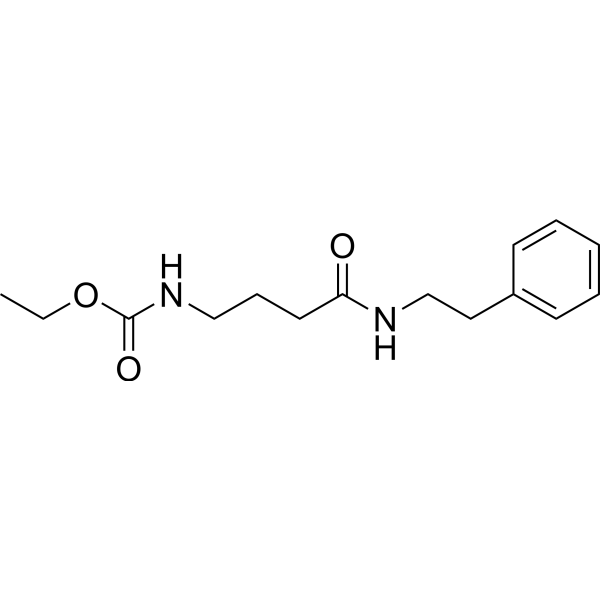
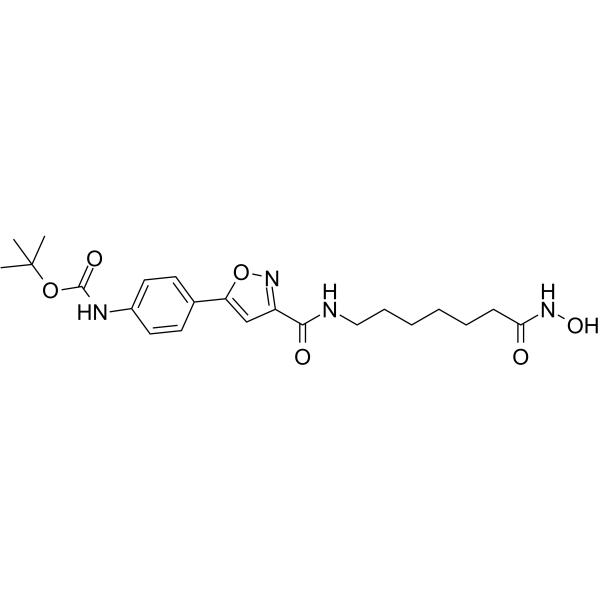
    Santacruzamate A (CAY-10683, STA) is a potent and selective HDAC2 inhibitor with an IC50 of 119 pM. STA also exerts neuroprotective property against amyloid-β protein fragment 25–35. STA can be used for cancer and neurological disease research .
    Santacruzamate A
  • HY-100719
    BRD-6929
    3 Publications Verification

    HDAC HIV Infection Cardiovascular Disease
    BRD-6929 is a potent, selective brain-penetrant inhibitor of class I histone deacetylase HDAC1 and HDAC2 inhibitor with IC50 of 1 nM and 8 nM, respectively. BRD-6929 shows high-affinity to HDAC1 and HDAC2 with Ki of 0.2 and 1.5 nM, respectively. BRD-6929 can be used for mood-related behavioral model research .
    BRD-6929
  • HY-15994
    Citarinostat
    3 Publications Verification

    ACY241

    HDAC Cancer
    Citarinostat (ACY241) is a second generation potent, orally active and high-selective HDAC6 inhibitor with an IC50 of 2.6 nM (IC50s of 35 nM, 45 nM, 46 nM and 137 nM for HDAC1, HDAC2, HDAC3 and HDAC8, respectively). Citarinostat has anticancer effects .
    Citarinostat
  • HY-16012A
    Domatinostat
    3 Publications Verification

    4SC-202 free base

    HDAC Apoptosis Cancer
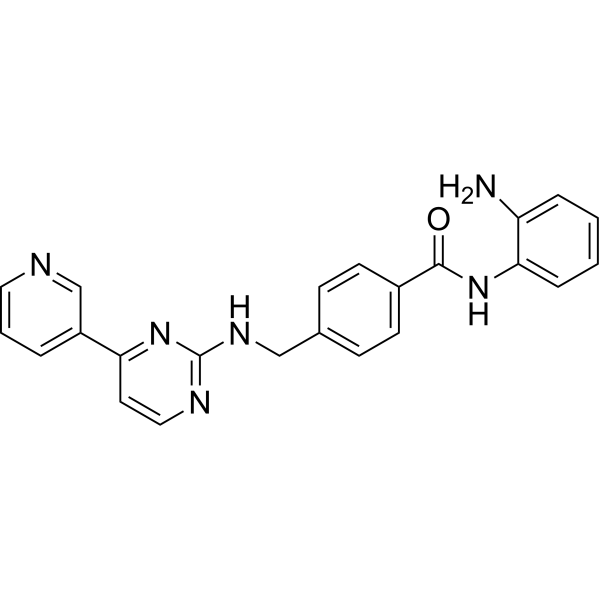
    Domatinostat (4SC-202 free base) is a selective class I HDAC inhibitor with IC50 of 1.20 μM, 1.12 μM, and 0.57 μM for HDAC1, HDAC2, and HDAC3, respectively. It also displays inhibitory activity against Lysine specific demethylase 1 (LSD1).
    Domatinostat
  • HY-N7036
    Rhamnetin
    1 Publications Verification

    Phospholipase HDAC Apoptosis Neurological Disease Inflammation/Immunology Cancer
    Rhamnetin is a quercetin derivative found in Coriandrum sativum, inhibits secretory phospholipase A2 and histone deacetylase 2 (HDAC2). Rhamnetin exhibits antitumor, antioxidant and anti-inflammatory activity .
    Rhamnetin
  • HY-19327
    ACY-738
    5 Publications Verification

    HDAC Cancer
    ACY-738 is a potent, selective and orally-bioavailable HDAC6 inhibitor, with an IC50 of 1.7 nM; ACY-738 also inhibits HDAC1, HDAC2, and HDAC3, with IC50s of 94, 128, and 218 nM.
    ACY-738
  • HY-111400

    HDAC Cancer
    SR-4370 is an inhibitor of HDAC, with IC50s of 0.13 μM, 0.58 μM, 0.006 μM, 2.3 μM, and 3.4 μM for HDAC1, HDAC2, HDAC3, HDAC8, and HDAC6, respectively.
    SR-4370
  • HY-104008
    ACY-957
    2 Publications Verification

    HDAC Others
    ACY-957 is an orally active and selective inhibitor of HDAC1 and HDAC2, with IC50s of 7 nM, 18 nM, and 1300 nM against HDAC1/2/3, respectively, and shows no inhibition on HDAC4/5/6/7/8/9 .
    ACY-957
  • HY-18613
    CAY10603
    5+ Cited Publications

    BML-281

    HDAC Cancer
    CAY10603 (BML-281) is a potent and selective HDAC6 inhibitor, with an IC50 of 2 pM; CAY10603 (BML-281) also inhibits HDAC1, HDAC2, HDAC3, HDAC8, HDAC10, with IC50s of 271, 252, 0.42, 6851, 90.7 nM.
    CAY10603
  • HY-16012
    Domatinostat tosylate
    3 Publications Verification

    4SC-202

    HDAC Apoptosis Cancer
    Domatinostat tosylate (4SC-202) is a selective class I HDAC inhibitor with IC50 of 1.20 μM, 1.12 μM, and 0.57 μM for HDAC1, HDAC2, and HDAC3, respectively. It also displays inhibitory activity against Lysine specific demethylase 1 (LSD1).
    Domatinostat tosylate
  • HY-15433A
    Quisinostat dihydrochloride
    15+ Cited Publications

    JNJ-26481585 dihydrochloride

    HDAC Autophagy Inflammation/Immunology Cancer
    Quisinostat dihydrochloride (JNJ-26481585 dihydrochloride) is an orally active, potent pan-HDAC inhibitor with IC50s of 0.11 nM, 0.33 nM, 0.64 nM, 0.46 nM, and 0.37 nM for HDAC1, HDAC2, HDAC4, HDAC10 and HDAC11, respectively. Quisinostat dihydrochloride has a broad spectrum antitumoral activity. Quisinostat dihydrochloride can induce autophagy in neuroblastoma cells .
    Quisinostat dihydrochloride
  • HY-100748
    Zabadinostat
    3 Publications Verification

    CXD101

    HDAC Cancer
    Zabadinostat (CXD101) is a potent, selective and orally active class I HDAC inhibitor with IC50s of 63 nM, 570 nM and 550 nM for HDAC1, HDAC2 and HDAC3, respectively. Zabadinostat has no activity against HDAC class II. Zabadinostat has antitumor activity .
    Zabadinostat
  • HY-101780
    Tinostamustine
    4 Publications Verification

    EDO-S101; NL-101

    HDAC Cancer
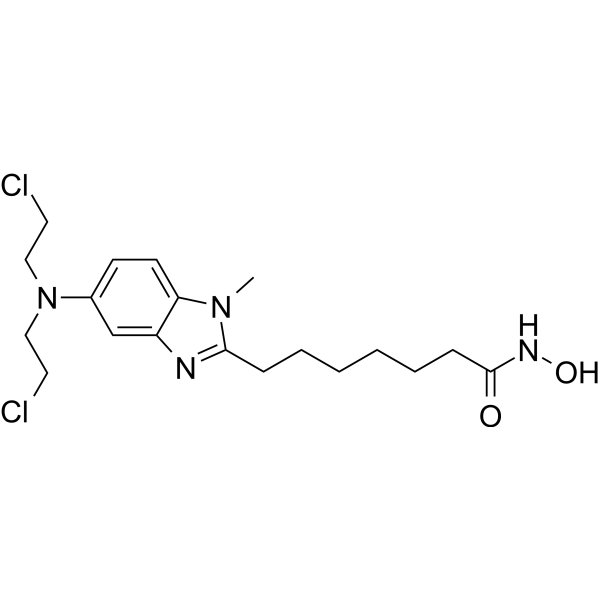
    Tinostamustine (EDO-S101) is a pan HDAC inhibitor; inhibits HDAC6, HDAC1, HDAC2 and HDAC3 with IC50 values of 6 nM, 9 nM, 9 nM and 25 nM, respectively .
    Tinostamustine
  • HY-18700
    BRD73954
    4 Publications Verification

    HDAC Cancer
    BRD73954 is a potent HDAC inhibitor and selectively inhibiting both HDAC6 and HDAC8 with IC50 values of 0.0036, 0.12, 9, 12, 23 µM for HDAC6, HDAC8, HDAC2, HDAC1 and HDAC3, respectively. BRD73954 decreases the levels of HDAC6, associated with upregulation of Ac-Tubulin .
    BRD73954
  • HY-110264

    HDAC Apoptosis Neurological Disease Cancer
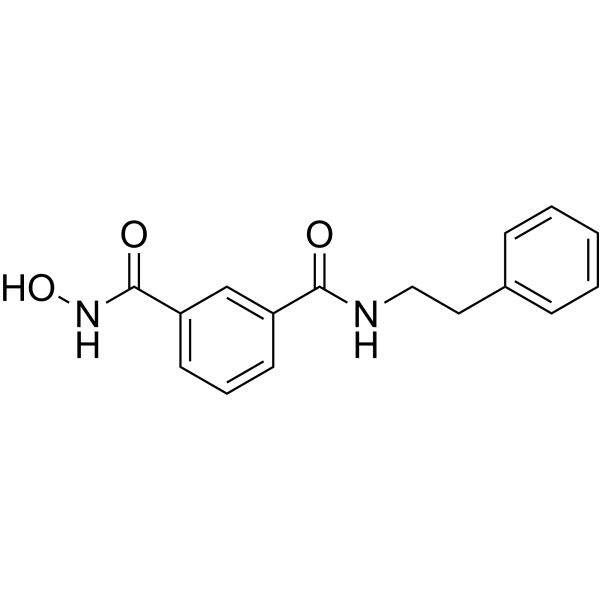
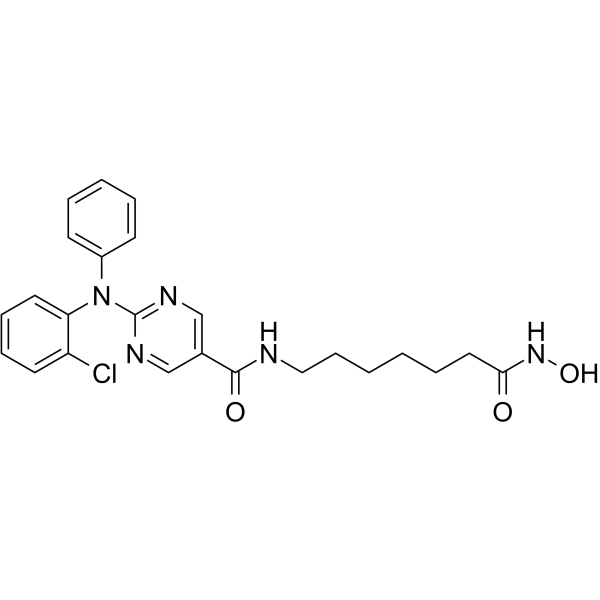
    MI-192 is a selective HDAC2 and HDAC3 inhibitor with IC50s of 30 nM and 16 nM, respectively. MI-192 is more selective for HDAC2/3 than other HDAC isomers.MI-192 induces myeloid leukaemic cells apoptosis. Anticaner and neuroprotective activities .
    MI-192
  • HY-18712
    BG45
    4 Publications Verification

    HDAC Apoptosis Caspase Cancer
    BG45 is a potent HDAC3 inhibitor with IC50 values of 0.289, 2, 2.2 and ﹥20 μM for HDAC3, HDAC1, HDAC2 and HDAC6, respectively. BG45 selectively targets multiple myeloma (MM) cells and induces caspase-dependent apoptosis .
    BG45
  • HY-117709

    HDAC Neurological Disease
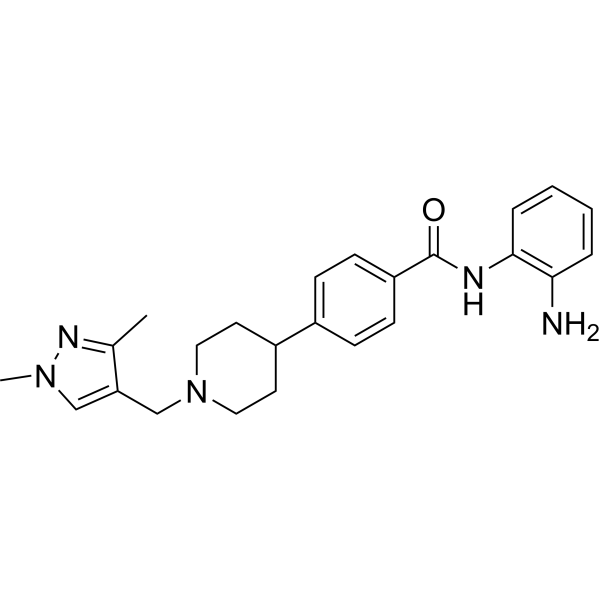
    BRD6688 is a selective HDAC2 inhibitor. BRD6688 increases H4K12 and H3K9 histone acetylation in primary mouse neuronal cells. BRD6688 crosses the blood brain barrier and rescues the memory defects associated with p25 induced neurodegeneration in contextual fear conditioning in a CK-p25 mouse model .
    BRD6688
  • HY-10585S
    Valproic acid-d4
    1 Publications Verification

    VPA-d4; 2-Propylpentanoic acid-d4

    HDAC Autophagy Mitophagy HIV Notch Endogenous Metabolite Cancer
    Valproic acid-d4 is the deuterium labeled Valproic acid. Valproic acid (VPA; 2-Propylpentanoic Acid) is an HDAC inhibitor, with IC50 in the range of 0.5 and 2 mM, also inhibits HDAC1 (IC50, 400 μM), and induces proteasomal degradation of HDAC2. Valproic acid activates Notch1 signaling and inhibits proliferation in small cell lung cancer (SCLC) cells. Valproic acid sodium salt is used in the treatment of epilepsy, bipolar disorder and prevention of migraine headaches .
    Valproic acid-d4
  • HY-10585S1

    VPA-d6; 2-Propylpentanoic acid-d6

    HDAC Autophagy Mitophagy HIV Notch Endogenous Metabolite Cancer
    Valproic acid-d6 is the deuterium labeled Valproic acid. Valproic acid (VPA; 2-Propylpentanoic Acid) is an HDAC inhibitor, with IC50 in the range of 0.5 and 2 mM, also inhibits HDAC1 (IC50, 400 μM), and induces proteasomal degradation of HDAC2. Valproic acid activates Notch1 signaling and inhibits proliferation in small cell lung cancer (SCLC) cells. Valproic acid sodium salt is used in the treatment of epilepsy, bipolar disorder and prevention of migraine headaches .
    Valproic acid-d6
  • HY-164050
    HDAC2-IN-2
    1 Publications Verification

    HDAC Cancer
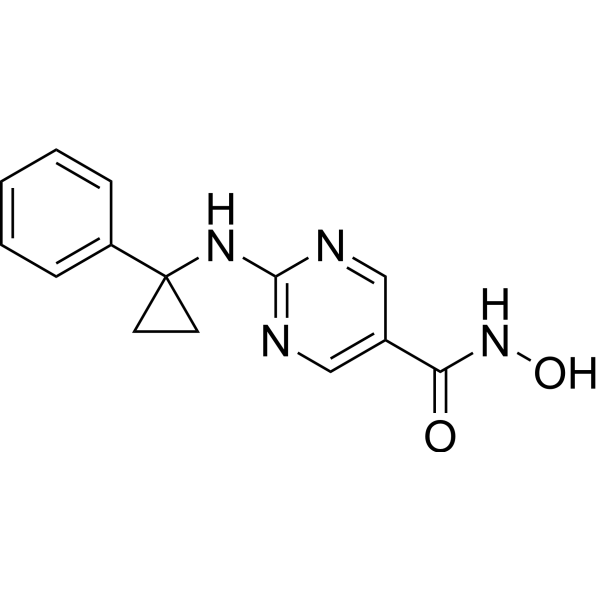
    HDAC2-IN-2 (compound 124) is an inhibitor of HDAC2 with Kd value of 0.1-1 μM .
    HDAC2-IN-2
  • HY-102083

    HDAC Neurological Disease
    BRD4884 is a potent and brain-penetrant HDAC inhibitor with IC50 values of 29 nM, 62 nM, and 1090 nM for HDAC1, HDAC2, and HDAC3, respectively. BRD4884 can be used for the study of cognitive impairment .
    BRD4884
  • HY-156422

    HDAC Neurological Disease Cancer
    KPZ560 is a potent inhibitor of HDAC1 and HDAC2, with IC50s of 12 nM and 68 nM, respectively. KPZ560 can increase in the spine density of granule neuron dendrites of mice and inhibitor cell growth of breast cancer cell line MCF .
    KPZ560
  • HY-152174

    HDAC Cancer
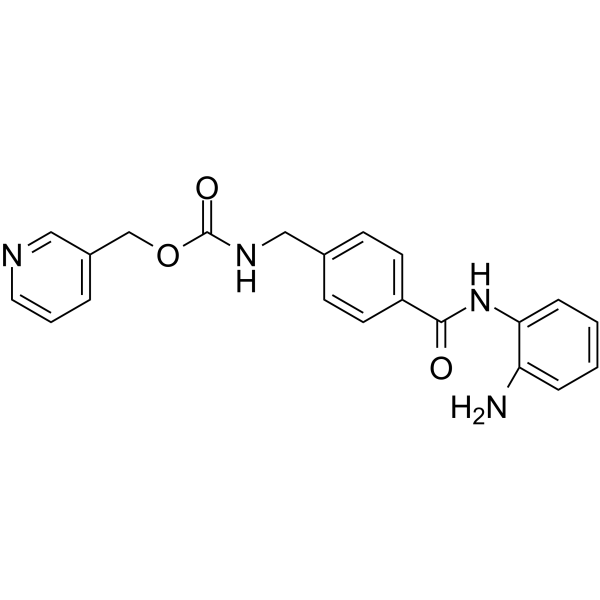
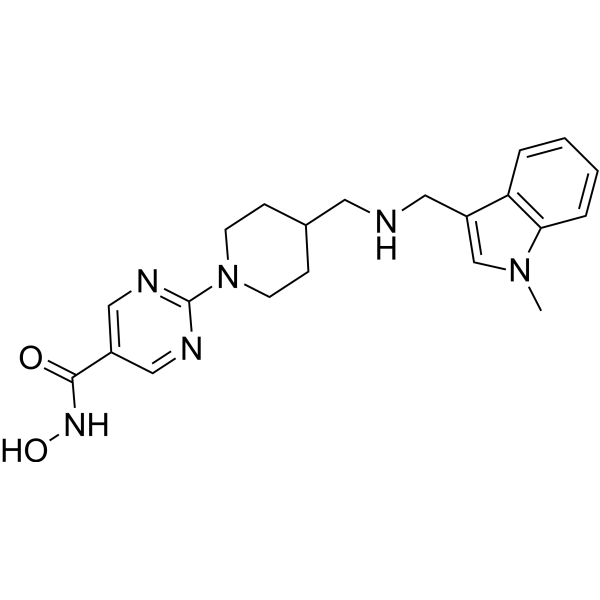
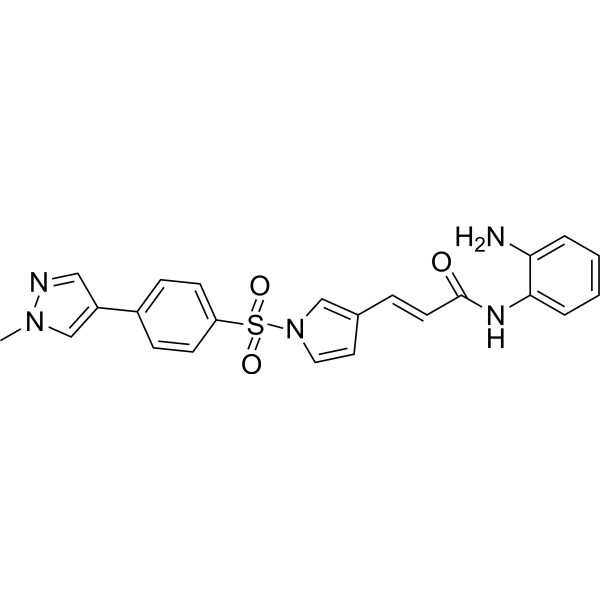
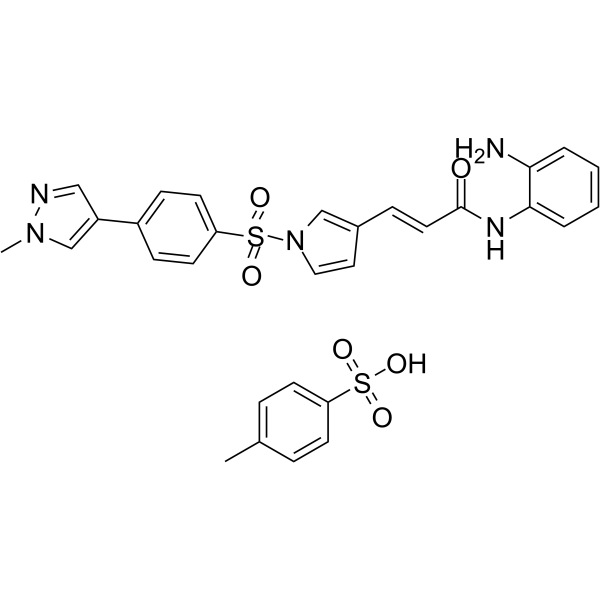
    HDAC-IN-52 is a pyridine-containing HDAC inhibitor, with IC50s of 0.189, 0.227, 0.440 and 0.446 μM for HDAC1, HDAC2, HDAC3, and HDAC10, respectively. HDAC-IN-52 can be used for the research of cancer .
    HDAC-IN-52
  • HY-10585S2

    VPA-d15; 2-Propylpentanoic acid-d15

    HDAC Autophagy Mitophagy HIV Notch Endogenous Metabolite Cancer
    Valproic acid-d15 is the deuterium labeled Valproic acid. Valproic acid (VPA; 2-Propylpentanoic Acid) is an HDAC inhibitor, with IC50 in the range of 0.5 and 2 mM, also inhibits HDAC1 (IC50, 400 μM), and induces proteasomal degradation of HDAC2. Valproic acid activates Notch1 signaling and inhibits proliferation in small cell lung cancer (SCLC) cells. Valproic acid sodium salt is used in the treatment of epilepsy, bipolar disorder and prevention of migraine headaches .
    Valproic acid-d15
  • HY-124337

    HDAC Cancer
    BG48 is a potent HDAC inhibitor. BG48 inhibits the enzymatic activity of HDAC1 and HDAC2 .
    BG48
  • HY-172394

    HDAC ADAMTS Apoptosis Bcl-2 Family Cyclin G-associated Kinase (GAK) Cancer
    ZSNI-21 is a ADAM17/HDAC2 inhibitor with ADAM17 IC50 0.939 μM and HDAC2 IC50 0.844 μM. ZSNI-21 regulates the expression of apoptosis-related proteins (Bax, Bcl-2) and Cyclin D1, and induces apoptosis.. ZSNI-21 can be used for the research of hepatocellular carcinoma, breast cancer, and non-small cell lung cancer .
    ZSNI-21
  • HY-12163S

    MS-275-d4; SNDX-275-d4

    Apoptosis Autophagy HDAC Cancer
    Entinostat-d4 is the deuterium labeled Entinostat . Entinostat is an oral and selective class I HDAC inhibitor, with IC50s of 243 nM, 453 nM, and 248 nM for HDAC1, HDAC2, and HDAC3, respectively .
    Entinostat-d4
  • HY-162086

    HDAC Cancer
    HDAC-IN-68 (Compound 29) is a potent HDAC inhibitor that disrupts microtubule structure and inhibits tumor growth. HDAC-IN-68 significantly inhibits class I HDACs (HDAC1, HDAC2, HDAC3) with IC50 values of 5.1, 11.5 and 8.8 nM, respectively .
    HDAC-IN-68
  • HY-161050

    HDAC Apoptosis Cancer
    YSR734 (Compound 21) is a covalent HDAC inhibitor with IC50 values of 110 nM, 154 nM, and 143 nM for HDAC1, HDAC2, and HDAC3, respectively. YSR734 can induce apoptosis in leukemia cells. YSR734 can induce myoblast differentiation and is used in the study of Duchenne muscular dystrophy .
    YSR734
  • HY-10585S4

    VPA-d4-1; 2-Propylpentanoic acid-d4-1

    Isotope-Labeled Compounds HDAC Autophagy Mitophagy HIV Notch Endogenous Metabolite Cancer
    Valproic acid-d4-1 is the deuterium labeled Valproic acid. Valproic acid (VPA; 2-Propylpentanoic Acid) is an HDAC inhibitor, with IC50 in the range of 0.5 and 2 mM, also inhibits HDAC1 (IC50, 400 μM), and induces proteasomal degradation of HDAC2. Valproic acid activates Notch1 signaling and inhibits proliferation in small cell lung cancer (SCLC) cells. Valproic acid sodium salt is used in the treatment of epilepsy, bipolar disorder and prevention of migraine headaches .
    Valproic acid-d4-1
  • HY-149819

    HDAC CDK Cancer
    CDK/HDAC-IN-3 is an orally active HDACs/CDKs dual inhibitor. CDK/HDAC-IN-3 has potent and selective inhibition of CDK9, CDK12, CDK13, HDAC1, HDAC2 and HDAC3 with IC50 values of 98.32 nM, 98.85 nM, 100 nM, 62.12 nM, 93.28nM and 82.87 nM. CDK/HDAC-IN-3 can be used for the acute myeloid leukemia (AML) .
    CDK/HDAC-IN-3
  • HY-10585B

    Sodium Valproate (2:1); VPA sodium (2:1); 2-Propylpentanoic acid sodium (2:1)

    HDAC Autophagy Mitophagy HIV Notch Apoptosis Endogenous Metabolite Infection Neurological Disease Metabolic Disease Cancer
    Valproic acid (VPA) sodium (2:1) is an orally active HDAC inhibitor, with IC50 in the range of 0.5 and 2 mM, also inhibits HDAC1 (IC50, 400 μM), and induces proteasomal degradation of HDAC2. Valproic acid sodium (2:1) activates Notch1 signaling and inhibits proliferation in small cell lung cancer (SCLC) cells. Valproic acid sodium (2:1) is used in the treatment of epilepsy, bipolar disorder, metabolic disease, HIV infection and prevention of migraine headaches .
    Valproic acid sodium (2:1)
  • HY-157388

    Histone Methyltransferase HDAC Cancer
    CARM1/HDAC2-IN-1 (compound CH-1) is a dual inhibitor against CARM1 and HDAC2, with IC50 values of 3.71 nM and 4.07 nM, respectively. CARM1/HDAC2-IN-1 possesses antitumor activity .
    CARM1/HDAC2-IN-1
  • HY-139650

    HDAC Cancer
    HDAC1/2-IN-3 is a HDAC1 and HDAC2 inhibitor with IC50 values 0-5 and 5-10 nM, respectively.
    HDAC1/2-IN-3
  • HY-155840

    HDAC Apoptosis Cancer
    KH16 is a potent and low nanomolar HDAC inhibitor. KH16 is against class I HDACs HDAC1, HDAC2, and HDAC3, with IC50 values ranging from 6 to 34 nM. KH16 induces cell apoptosis and is against tumor cells with various gene expression patterns .
    KH16
  • HY-15433B

    JNJ26481585 hydrochloride

    HDAC Autophagy Cancer
    Quisinostat (JNJ-26481585) hydrochloride is a potent and orally active pan-HDAC inhibitor (HDACi), with IC50 values ranging from 0.11 nM to 0.64 nM for HDAC1, HDAC2, HDAC4, HDAC10 and HDAC11. Quisinostat hydrochloride has a broad spectrum antitumoral activity. Quisinostat hydrochloride can induce autophagy in neuroblastoma cells .
    Quisinostat hydrochloride
  • HY-175513

    HDAC Apoptosis Cancer
    ZWZH-21 is a selective and orally active HDAC1/2 dual inhibitor with IC50 values of 34 nM for HDAC1 and 41 nM for HDAC2. ZWZH-21 can inhibit HCT116 and SW480 cells growth with IC50 values of 0.524 μM and 1.063 μM, respectively. ZWZH-21 can inhibit proliferation and migration and induces apoptosis in multiple colorectal cancer cells. ZWZH-21 can be used for the research of cancer, such as colorectal cancer .
    ZWZH-21
  • HY-146153

    HDAC Cancer
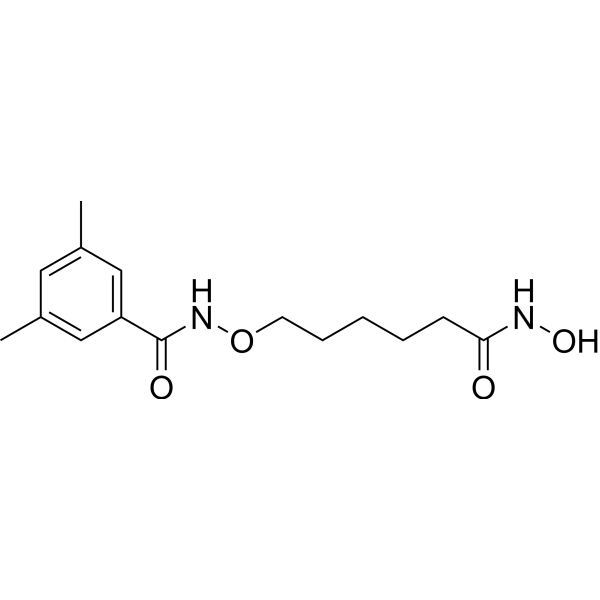
    HDAC-IN-40 is a potent alkoxyamide-based HDAC inhibitor with Ki values of 60 nM and 30 nM for HDAC2 and HDAC6, respectively. HDAC-IN-40 had antitumor effects .
    HDAC-IN-40
  • HY-174398

    GSK-3 HDAC Tau Protein Neurological Disease
    GSK-3β/HDAC-IN-2 is a potent inhibitor of GSK-3β (IC50 = 0.04 μM), HDAC2 (IC50 = 1.05 μM, Ki = 0.070 μM) and HDAC6 (IC50 = 1.52 μM, Ki = 0.017 μM). GSK-3β/HDAC-IN-2 inhibits HDAC2 and HDAC6 activities and blocks tau hyperphosphorylation. GSK-3β/HDAC-IN-2 exerts neuroprotective effects and shows no significant toxicity. GSK-3β/HDAC-IN-2 can be used in the research of Alzheimer's disease.
    GSK-3β/HDAC-IN-2
  • HY-16026R

    ACY-1215 (Standard); Rocilinostat (Standard)

    HDAC Apoptosis Reference Standards Cancer
    Ricolinostat (Standard) is the analytical standard of Ricolinostat. This product is intended for research and analytical applications. Ricolinostat (ACY-1215) is a potent and selective HDAC6 inhibitor, with an IC50 of 5 nM. ACY-1215 also inhibits HDAC1, HDAC2, and HDAC3 with IC50s of 58, 48, and 51 nM, respectively.
    Ricolinostat (Standard)

Inquiry Online

Your information is safe with us. * Required Fields.

Salutation


Country or Region *

Applicant Name *


Organization Name *

Department *


Email Address *


Product Name *

Cat. No.


Requested quantity *

Phone Number *


Remarks

Inquiry Online

Inquiry Information

Product Name:
Cat. No.:
Quantity:
MCE Japan Authorized Agent:

