
12 Results for "

HeLa epithelial cells

" in MedChemExpress (MCE) Product Catalog:
Products (12)

12 Results for "HeLa epithelial cells" in MCE Product Catalog:

2
2 Cited Publications
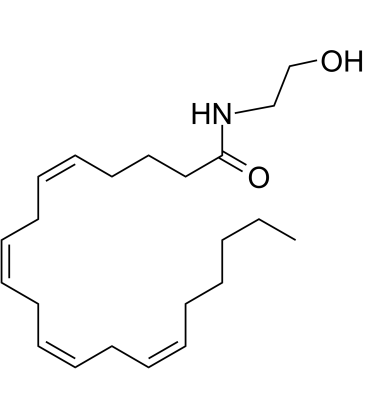
Cat. No.: HY-10863
CAS No.: 94421-68-8
Purity:  ≥98.0%
Synonyms: AEA; Arachidonoyl ethanolamide
Anandamide is an endocannabinoid. Anandamide modulates both neuronal and immune functions through two protein-coupled cannabinoid receptors (CB1 and CB2). Anandamide can activate numerous other receptors like PPARS, TRPV1, and GPR18/GPR55. Anandamide also has potential anti-fungal and anti-inflammatory activities. Anandamide can be used for the research of Alzheimer’s disease (AD) and ulcerative colitis .
loading...
    loading...
1
1 Cited Publications
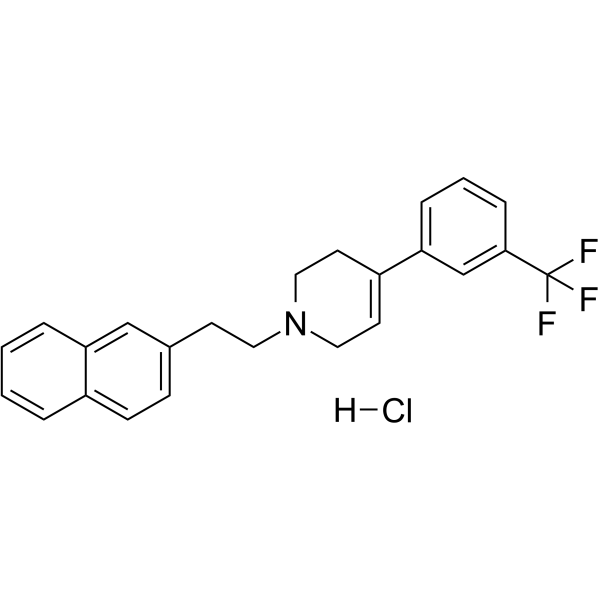
Cat. No.: HY-14604
CAS No.: 90494-79-4
Purity:  98.57%
Synonyms: SR57746A; SR57746 hydrochloride
Xaliproden (SR57746) hydrochloride (SR57746A) is an orally active, highly selective 5-HT1A receptor agonist. Xaliproden hydrochloride activates pertussis toxin-sensitive G protein-coupled signaling cascades, as well as the PKC, ERK1/ERK2, Akt and p21 Ras/MEK-1 pathways. Xaliproden hydrochloride also downregulates the JNK/p66/c-Jun signaling pathway, induces phosphorylation of the shc adaptor protein, regulates extracellular dopamine and 5-HT levels, and induces [ 35S]GTPγS labeling in rat brain structures rich in 5-HT1A receptors. Xaliproden hydrochloride exerts neurotrophic, neuroprotective, renoprotective, anti-inflammatory, anti-apoptotic, anti-fibrotic and analgesic effects. Xaliproden hydrochloride also enhances NGF-induced neurite outgrowth, promotes motor neuron survival, attenuates renal tubular injury and inhibits chemotherapy-induced mechanical allodynia, without activating or altering NGF-induced TrkA receptor activation. Xaliproden hydrochloride can be used in the research of motor neuron disease, diabetic nephropathy, chemotherapy-induced peripheral neuropathy, amyotrophic lateral sclerosis, Alzheimer's disease, acute tonic nociceptive pain, inflammatory pain, depression and anxiety .
loading...
    loading...
1
1 Cited Publications
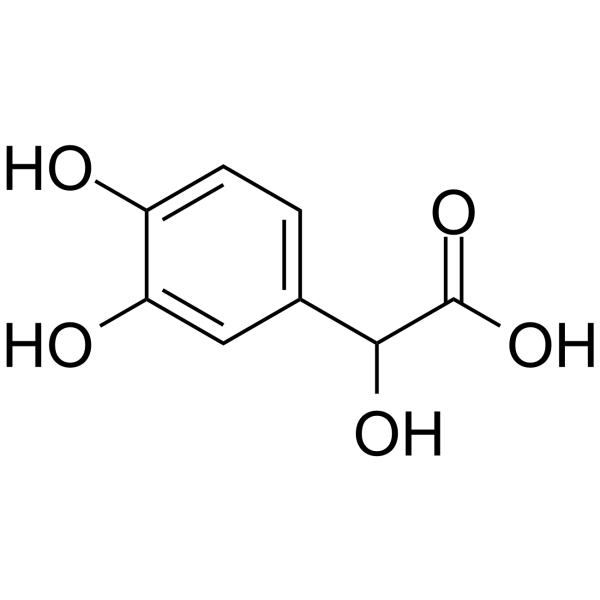
Cat. No.: HY-113474
CAS No.: 775-01-9
Purity:  98.56%
3,4‑Dihydroxymandelic acid is a metabolite of Norepinephrine (HY-13715) with free radical scavenging and antioxidant activities. 3,4-Dihydroxymandelic acid acts as a chemoattractant for enterohaemorrhagic Escherichia coli (EHEC), regulates virulence gene expression and bacterial adhesion to intestinal epithelial cells in a QseC-dependent manner, and targets EHEC to preferred infection sites. 3,4‑Dihydroxymandelic acid can be used in studies related to oxidative stress and enterohaemorrhagic Escherichia coli infection .
loading...
    loading...
1
1 Cited Publications
Cat. No.: HY-159059
Purity:  41.20%
Ganoderma Lucidum/Reishi Extract is a Ganoderma lucidum extract. Ganoderma Lucidum/Reishi Extract reduces the expression of c-Myc, BCL-2, BCL-XL, TERT, PDGFB, eIF4G, Survivin, β-catenin, and eIF4E. Ganoderma Lucidum/Reishi Extract downregulates the gene expression of MMP-9. Ganoderma Lucidum/Reishi Extract upregulates the expression of IL8. Ganoderma Lucidum/Reishi Extract is applicable to the research of inflammatory breast cancer. Ganoderma Lucidum is used in the research of various diseases, such as allergy, arthritis, hypertension, neurasthenia, inflammation, and cancer .
loading...
    loading...
Cat. No.: HY-P5423
CAS No.: 107658-43-5
Target:  

Exosomes Liposome

Research Areas:  

Cancer

GALA is a pH-responsive amphipathic peptide consisting of 30 amino acids, which acts as a lung endothelium-targeting ligand. GALA undergoes a conformational transition from random coil to α-helix in an acidic environment at pH 5.0, thereby inducing endosomal membrane destabilization and fusion. GALA-modified liposomes traverse lung endothelial cells via clathrin-dependent endocytosis and transcytosis, and specifically accumulate in the lungs after intravenous injection. GALA significantly promotes the cytosolic release of cargos carried by exosomes, plasmids and liposomes, effectively enhances gene transfection efficiency, and drives gene knockdown of functional macromolecules (such as siRNA) in alveolar epithelial cells (with no significant cytotoxicity at effective concentrations). GALA serves as a critical tool for studies on lung cancer metastasis (e.g., melanoma lung metastasis) and lung-targeted drug delivery systems .
loading...
    loading...
Cat. No.: HY-170704
CAS No.: 1480940-53-1
Target:  

Liposome

Research Areas:  

Metabolic Disease Cancer

DSPE-PEG2000-TCO is a click chemistry coupling partner. DSPE-PEG2000-TCO undergoes a reverse electron-demand Diels-Alder click reaction to form a covalent linkage with tetrazine-modified Cetuximab (HY-P9905). DSPE-PEG2000-TCO maintains the stability of lipid nanoparticles (LNPs) and has high mRNA encapsulation efficiency, which supports cellular uptake and mRNA transfection. DSPE-PEG2000-TCO is used to prepare EGFR-targeted and APN-targeted mRNA-loaded LNPs, mediating receptor-dependent endocytosis, mRNA delivery, and intestinal epithelial transcytosis .
loading...
    loading...
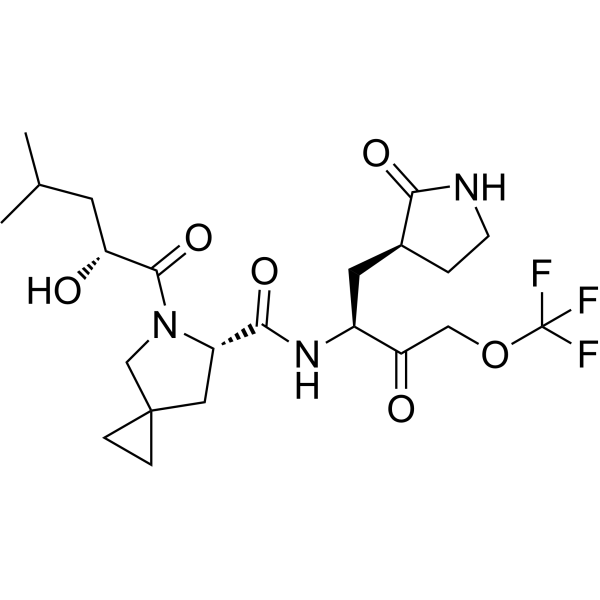
Cat. No.: HY-149767
CAS No.: 2882934-64-5
Target:  

SARS-CoV

Research Areas:  

Infection

CMX990 is a SARS-CoV-2 3CL protease inhibitor. The EC90s for inhibiting SARS-CoV-2 were 9.6 nM and 101 nM in human bronchial epithelial cells (HBECs) and HeLa-ACE2 cells, respectively. CMX990 has good ADME and pharmacokinetic properties .
loading...
    loading...
Cat. No.: HY-W653885
rac 3,4-Dihydroxymandelic Acid-d3 is the deuterated-labeled 3,4-Dihydroxymandelic acid (HY-113474). 3,4‑Dihydroxymandelic acid is a metabolite of Norepinephrine (HY-13715) with free radical scavenging and antioxidant activities. 3,4-Dihydroxymandelic acid acts as a chemoattractant for enterohaemorrhagic Escherichia coli (EHEC), regulates virulence gene expression and bacterial adhesion to intestinal epithelial cells in a QseC-dependent manner, and targets EHEC to preferred infection sites. 3,4‑Dihydroxymandelic acid can be used in studies related to oxidative stress and enterohaemorrhagic Escherichia coli infection .
loading...
    loading...
Cat. No.: HY-113474R
CAS No.: 775-01-9
3,4-Dihydroxymandelic acid (Standard) is the analytical standard of 3,4-Dihydroxymandelic acid (HY-113474). This product is intended for research and analytical applications. 3,4‑Dihydroxymandelic acid is a metabolite of Norepinephrine (HY-13715) with free radical scavenging and antioxidant activities. 3,4-Dihydroxymandelic acid acts as a chemoattractant for enterohaemorrhagic Escherichia coli (EHEC), regulates virulence gene expression and bacterial adhesion to intestinal epithelial cells in a QseC-dependent manner, and targets EHEC to preferred infection sites. 3,4‑Dihydroxymandelic acid can be used in studies related to oxidative stress and enterohaemorrhagic Escherichia coli infection .
loading...
    loading...
Cat. No.: HY-W587782
CAS No.: 14409-72-4
Research Areas:  

Infection

Nonoxynol-9 is a nonionic detergent. Nonoxynol-9 inhibits SOD activity. Nonoxynol-9 exhibits activity against diverse microbes and pathogens. Nonoxynol-9 can be used for the research of HIV infection .
loading...
    loading...
Cat. No.: HY-182510
CAS No.: 69819-42-7
Research Areas:  

Cancer

NTZ-24 is a selective STAT3 pathway inhibitor. NTZ-24 suppresses STAT3 phosphorylation at Tyr705, blocks STAT3-DNA interaction, and downregulates the levels of STAT3 downstream target proteins. NTZ-24 induces cell-cycle arrest and promotes apoptosis in cancer cells. NTZ-24 exerts significant antiproliferative activity against HeLa cells (IC50 = 3.3 μM). NTZ-24 can be used for the research of cervical cancer .
loading...
    loading...
Cat. No.: HY-184249
CAS No.: 1145869-35-7
Target:  

RSV DNA/RNA Synthesis

Research Areas:  

Infection

4'-C-Azido-2'-deoxy-2'-fluorocytidine is an antiviral agent. 4'-C-Azido-2'-deoxy-2'-fluorocytidine potently inhibits RNA synthesis of crude RSV RNP complexes with an IC50 of 0.1 μM. 4'-C-Azido-2'-deoxy-2'-fluorocytidine inhibits RSV replication in a subgenomic RSV replicon system. 4'-C-Azido-2'-deoxy-2'-fluorocytidine can be used for the research of respiratory syncytial virus (RSV) infection .
loading...
    loading...
  • 1

