

Search Result
Results for "
Immunohistochemistry
" in MedChemExpress (MCE) Product Catalog:
5
Biochemical Assay Reagents
| Cat. No. |
Product Name |
Target |
Research Areas |
Chemical Structure |
-
- HY-B1610N
-
|
|
Biochemical Assay Reagents
|
Others
|
|
Sodium Citrate Buffer, 0.1M, pH 4.0 is an acidic, aqueous buffer solution. Sodium Citrate Buffer, 0.1M, pH 4.0 resists pH fluctuations, chelates metal ions, and regulates the redox potential of the system. Sodium Citrate Buffer, 0.1M, pH 4.0 is widely used in molecular biology, immunohistochemistry (IHC), and biochemistry .
|
-
-
- HY-D1840
-
|
|
Biochemical Assay Reagents
|
Others
|
|
Tyramide Amplification Buffer is a ready-to-use buffer primarily intended for immunostaining of cells and tissues by the technique of tyramide signal amplification (TSA). Tyramide Amplification Buffer enables the reaction between tyramide-labeled antibodies and fluorescently labeled tyramide substitutes (tyramide) using peroxidase, resulting in a highly amplified fluorescent signal. Tyramide Amplification Buffer can be used for signal enhancement in detection methods such as immunofluorescence (IF), immunohistochemistry (IHC), or in situ hybridization (FISH) .
|
-
-
- HY-B1610M
-
|
|
Biochemical Assay Reagents
|
Others
|
|
Sodium Citrate Buffer, 0.5M, pH 6.5 is a commonly used buffer composed of citric acid and sodium citrate. Sodium Citrate Buffer, 0.5M, pH 6.5 is widely used in molecular biology, immunohistochemistry (IHC), and biochemistry .
|
-
-
- HY-B1610J
-
|
|
Biochemical Assay Reagents
|
Cancer
|
|
Sodium Citrate Buffer, 0.5M, pH 5.0 is a commonly used buffer composed of citric acid and sodium citrate. Sodium Citrate Buffer, 0.5M, pH 5.0 is widely used in molecular biology, immunohistochemistry (IHC), and biochemistry .
|
-
-
- HY-D0025
-
|
|
Fluorescent Dye
Drug Intermediate
|
Others
|
|
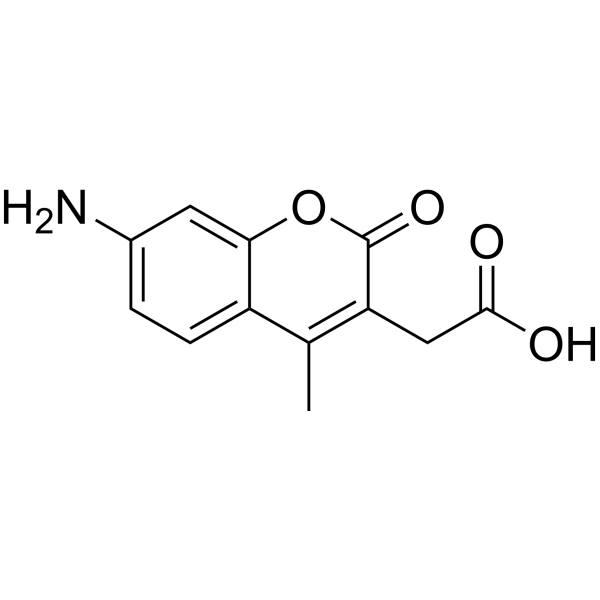
7-Amino-4-methylcoumarin-3-acetic acid (AMCA) serves as the parent structure of coumarin-based blue fluorescent dyes, and its activated form AMCA-NHS can directly conjugate with proteins (Ex/Em ≈ 350/440-460).
|
-
-
- HY-P990301
-
|
|
Amyloid-β
|
Neurological Disease
|
|
Anti-Human/Mouse/Rat Amyloid-beta Antibody (MOAB-2) is a mouse-derived IgG2b λ type antibody inhibitor, targeting to Amyloid-beta. Anti-Human/Mouse/Rat Amyloid-beta Antibody (MOAB-2) recognizes unaggregated, oligomeric or fibrillar forms of Aβ42 and unaggregated Aβ40. Anti-Human/Mouse/Rat Amyloid-beta Antibody (MOAB-2) is selective for human Aβ42 over Aβ40, but not amyloid precursor protein (APP). Anti-Human/Mouse/Rat Amyloid-beta Antibody (MOAB-2) can immunostain human or rat and mouse tissue. Anti-Human/Mouse/Rat Amyloid-beta Antibody (MOAB-2) can be used for detections of western blot, immunohistochemistry, immunofluorescence, immunoprecipitation and ELISA .
|
-
-
- HY-D2875
-
|
|
Fluorescent Dye
|
Others
|
|
5-FITC tyramide is a green fluorescent dye composed of FITC (HY-66019) and tyramide (Ex=488 nm, Em=525 nm). 5-FITC tyramide is utilized as reporter fluorescent substrate of horseradish peroxidase (HRP)-catalyzed deposition for tyramide signal amplification (TSA). 5-FITC tyramide can be used for multiplex immunohistochemistry (mIHC) .
|
-
-
- HY-DY3004
-
|
|
Biochemical Assay Reagents
|
Others
|
|
Frozen Section Embedding Medium is a water-soluble mixture of polyethylene glycol and polyvinyl alcohol, widely used in immunohistochemistry experiments. Frozen Section Embedding Medium supports tissue during frozen sectioning, increasing tissue continuity and reducing wrinkling and fragmentation.
|
-
-
- HY-D2874
-
|
|
Fluorescent Dye
|
Others
|
|
6-AF488 tyramide is a bright, green fluorescent dye (Ex=496 nm, Em=524 nm). 6-AF488 tyramide is utilized as reporter fluorescent substrate of horseradish peroxidase (HRP)-catalyzed deposition for tyramide signal amplification (TSA). 5-FITC tyramide can be used for multiplex immunohistochemistry (mIHC) .
|
-
-
- HY-D2872
-
|
|
Fluorescent Dye
|
Others
|
|
5-AF594 tyramide is a red fluorescent dye (Ex=590 nm, Em=618 nm). 5-AF594 tyramide is utilized as reporter fluorescent substrate of horseradish peroxidase (HRP)-catalyzed deposition for tyramide signal amplification (TSA). 5-AF594 tyramide can be used for multiplex immunohistochemistry (mIHC) .
|
-
-
- HY-P990811
-
|
|
Influenza Virus
|
Infection
|
|
Anti-Influenza A virus NP Antibody (H16-L10-4R5 (HB-65)) is mouse-derived IgG2a κ type antibody inhibitor, targeting to influenza virus nucleoprotein. Anti-Influenza A virus NP Antibody (H16-L10-4R5 (HB-65)) reacts with influenza virus nucleoprotein (NP). Anti-Influenza A virus NP Antibody (H16-L10-4R5 (HB-65)) can induce passive immunity to influenza A virus. Anti-Influenza A virus NP Antibody (H16-L10-4R5 (HB-65)) can be used for the detections of western blot, flow cytometry and immunohistochemistry in Influenza A virus infection .
|
-
-
- HY-W142395
-
|
|
DNA Stain
|
Others
|
|
6-TAMRA free acid is a fluorophore widely used in the preparation of fluorescent antibodies and avidin derivatives for immunohistochemistry.
|
-
-
- HY-D2776
-
|
|
Biochemical Assay Reagents
|
Others
|
|
Primary antibody and secondary antibody eluent, specially for mIHC experiments is an eluent used for mIHC (multiple immunohistochemistry).
|
-
-
- HY-P990856
-
|
|
Transferrin Receptor
|
Cancer
|
|
Anti-CD71 Antibody (OKT-9) is a kind of mouse IgG1 κ chimeric antibody, targeting to human CD71. Anti-CD71 Antibody (OKT-9) can recognize CD71 also known as Transferrin receptor protein 1 (TfR1). Anti-CD71 Antibody (OKT-9) can be used for the detections of immunohistochemistry, immunofluorescence and flow cytometry in cancer, such as leukemia and lymphoma .
|
-
-
- HY-P990002
-
|
|
c-Kit
|
Inflammation/Immunology
Cancer
|
|
Anti-Mouse CD117/c-Kit Antibody (2B8) is an IgG2b antibody, targeting to mouse CD117/c-Kit. Anti-Mouse CD117/c-Kit Antibody (2B8) reacts with mouse c-Kit (also known as CD117), which is expressed on hematopoietic progenitor cells, mast cells, and acute myeloid leukemia (AML) cells. Anti-Mouse CD117/c-Kit Antibody (2B8) can be used for the detection of flow cytometry, immunofluorescence and immunohistochemistry in cancer and inflammation .
|
-
-
- HY-D2873
-
|
Sulfo Cy7(Et) tyramide
|
Fluorescent Dye
|
Others
|
|
Sulfo Cy7 tyramide, a red fluorescent dye (Ex=740 nm, Em=770 nm), is utilized as reporter fluorescent substrate of horseradish peroxidase (HRP)-catalyzed deposition for tyramide signal amplification (TSA). Sulfo Cy7 tyramide can be used for multiplex Immunohistochemistry (mIHC) .
|
-
-
- HY-D2205
-
|
Cy7 TSA
|
Fluorescent Dye
|
Others
|
|
Cy7 tyramide, a red fluorescent dye, is utilized as reporter fluorescent substrate for horseradish peroxidase (HRP)-catalyzed deposition that is signal amplification technique in immunoassay and in situ hybridization of nucleic acids.
|
-
-
- HY-P990275
-
|
|
Transmembrane Glycoprotein
|
Cancer
|
|
Anti-Mouse CD326/EpCAM Antibody (G8.8) is a rat-derived IgG2a κ type antibody inhibitor, targeting to mouse CD326/EpCAM. Anti-Mouse CD326/EpCAM Antibody (G8.8) reacts with CD326 also known as EpCAM (Epithelial Cell Adhesion Molecule). Anti-Mouse CD326/EpCAM Antibody (G8.8) can be used for cancer research, such as lung carcinoma and colorectal carcinoma. Anti-Mouse CD326/EpCAM Antibody (G8.8) can be used for detections of western blot, immunohistochemistry, immunofluorescence and flow cytometry .
|
-
-
- HY-P11110
-
|
|
PD-1/PD-L1
|
Cancer
|
|
RK-10 is a PD-L1 binding peptide. RK-10 conjugated with Cy5 (HY-D0821) or Biotin (HY-B0511) can used to detect PD-L1 expressing tumors with flow cytometry or immunohistochemistry. RK-10 can be used for cancers like NSCLC, breast cancer, squamous cell carcinoma and melanoma detection research .
|
-
-
- HY-P990274
-
|
|
Transmembrane Glycoprotein
|
Others
|
|
Anti-Canine CD34 Antibody (1H6) is a mouse-derived IgG1 κ type antibody inhibitor, targeting to canine CD34. Anti-Canine CD34 Antibody (1H6) reacts with canine CD34. Anti-Canine CD34 Antibody (1H6) can be used for the separation and identification of CD34 + cells. Anti-Canine CD34 Antibody (1H6) can be used for detections of western blot, immunohistochemistry and flow cytometry .
|
-
-
- HY-P990862
-
|
|
Transmembrane Glycoprotein
|
Cancer
|
|
Anti-CD326/EpCAM Antibody (Ber-EP4) is a kind of mouse IgG1 κ chimeric antibody, targeting to human CD326/EpCAM. Anti-CD326/EpCAM Antibody (Ber-EP4) reacts with human CD326 also known as EpCAM (Epithelial Cell Adhesion Molecule). Anti-CD326/EpCAM Antibody (Ber-EP4) is useful to distinguish between cells of mesothelial and epithelial origin. Anti-CD326/EpCAM Antibody (Ber-EP4) can be used for the detections of immunohistochemistry, immunofluorescence and flow cytometry in cancer, such as colon cancer .
|
-
-
- HY-P990826
-
|
|
YB-1
|
Others
|
|
Anti-YB-1 Antibody (21A3) is a mouse-derived IgG1 chimeric antibody inhibitor, targeting to human YB-1. Anti-YB-1 Antibody (21A3) reacts with human Y-box binding protein 1 (YB-1). Anti-YB-1 Antibody (21A3) can be used for the detections of immunohistochemistry, western blot and flow cytometry .
|
-
-
- HY-156104
-
|
|
PROTACs
CaMK
|
Neurological Disease
|
|
CaMKIIα-PHOTAC is a photochemically targeted chimera (PHOTAC) targeting Ca2+/calmodulin-dependent protein kinase II α (CaMKIIα). Molecules such as PHOTAC can catalyze the ubiquitination and degradation of target proteins through the endogenous proteasome under specific wavelengths of light. CaMKIIα-PHOTAC reduces synaptic function under light conditions, and it attenuates the intensity of evoked field excitatory postsynaptic potentials in the mouse hippocampus in response to physiological stimuli. CaMKIIα-PHOTAC plays a critical role in maintaining long-term potentiation and memory capacity in subcellular dendritic domains .
|
-
-
- HY-P990810
-
|
|
Arenavirus
|
Infection
|
|
Anti-LCMV Nucleoprotein Antibody (VL-4) is rat-derived IgG2a κ type antibody inhibitor, targeting to LCMV nucleoprotein. Anti-LCMV Nucleoprotein Antibody (VL-4) reacts with lymphocytic choriomeningitis virus (LCMV) nucleoprotein. Anti-LCMV Nucleoprotein Antibody (VL-4) stain LCMV-infected cell internally with no surface staining. Anti-LCMV Nucleoprotein Antibody (VL-4) can be used for the detections of immunohistochemistry and flow cytometry in LCMV infection .
|
-
-
- HY-P990849
-
|
|
c-Fms
|
Others
|
|
Anti-CSF1R/CD115 Antibody (2-4A5-4) is a kind of rat IgG1 κ chimeric antibody inhibitor, targeting to human CSF1R/CD115. Anti-CSF1R/CD115 Antibody (2-4A5-4) can neutralize colony stimulating factor 1 receptor (CSF1R), also known as CD115. Anti-CSF1R/CD115 Antibody (2-4A5-4) can be used for the detections of immunohistochemistry, functional assays and flow cytometry .
|
-
-
- HY-P990854
-
|
|
Transmembrane Glycoprotein
|
Cancer
|
|
Anti-CEACAM1/3/5/6/8 Antibody (6G5j) is a kind of mouse IgG1 κ chimeric antibody, targeting to human CEACAM1/3/5/6/8. Anti-CEACAM1/3/5/6/8 Antibody (6G5j) reacts with an antigen epitope shared by human carcinoembryonic antigen-related cell adhesion molecule (CEACAM) 1, 3, 5, 6, and 8. Anti-CEACAM1/3/5/6/8 Antibody (6G5j) can be used for the detections of western blot, ELISA, immunofluorescence immunohistochemistry and flow cytometry in cancer .
|
-
-
- HY-P990834
-
|
|
Transmembrane Glycoprotein
|
Cancer
|
|
Anti-MAGEC2/CT10 Antibody (LX-CT10.5) is a kind of mouse IgG2a κ chimeric antibody, targeting to human MAGEC2/CT10. Anti-MAGEC2/CT10 Antibody (LX-CT10.5) reacts with human melanoma-associated antigen C2 (MAGEC2), also known as CT10. Anti-MAGEC2/CT10 Antibody (LX-CT10.5) can be used for identifying MAGEC2 expressing cells in immunohistochemistry, immunofluorescence and western blot studies .
|
-
-
- HY-182606
-
|
|
Biochemical Assay Reagents
|
Others
|
|
Citric acid-Sodium citrate powder (10 mM, pH 6.0) is a pre-formulated powder made from citric acid and sodium citrate, which can be used to prepare antigen retrieval solutions in immunohistochemistry (IHC).
|
-
-
- HY-B1610Q
-
|
|
Biochemical Assay Reagents
|
Others
|
|
Sodium Citrate Buffer, 0.01 M, pH 6.0 is a commonly used buffer composed of citric acid and sodium citrate. Sodium Citrate Buffer, 0.01 M, pH 6.0 is widely used in?molecular biology, immunohistochemistry (IHC), and biochemistry
|
-
| Cat. No. |
Product Name |
Type |
-
- HY-D1840
-
|
|
Fluorescent Dyes
|
|
Tyramide Amplification Buffer is a ready-to-use buffer primarily intended for immunostaining of cells and tissues by the technique of tyramide signal amplification (TSA). Tyramide Amplification Buffer enables the reaction between tyramide-labeled antibodies and fluorescently labeled tyramide substitutes (tyramide) using peroxidase, resulting in a highly amplified fluorescent signal. Tyramide Amplification Buffer can be used for signal enhancement in detection methods such as immunofluorescence (IF), immunohistochemistry (IHC), or in situ hybridization (FISH) .
|
-
- HY-D0025
-
|
|
Fluorescent Dyes
|
|
7-Amino-4-methylcoumarin-3-acetic acid (AMCA) serves as the parent structure of coumarin-based blue fluorescent dyes, and its activated form AMCA-NHS can directly conjugate with proteins (Ex/Em ≈ 350/440-460).
|
-
- HY-D2875
-
|
|
Fluorescent Dyes
|
|
5-FITC tyramide is a green fluorescent dye composed of FITC (HY-66019) and tyramide (Ex=488 nm, Em=525 nm). 5-FITC tyramide is utilized as reporter fluorescent substrate of horseradish peroxidase (HRP)-catalyzed deposition for tyramide signal amplification (TSA). 5-FITC tyramide can be used for multiplex immunohistochemistry (mIHC) .
|
-
- HY-DY3004
-
|
|
Fluorescent Dyes
|
|
Frozen Section Embedding Medium is a water-soluble mixture of polyethylene glycol and polyvinyl alcohol, widely used in immunohistochemistry experiments. Frozen Section Embedding Medium supports tissue during frozen sectioning, increasing tissue continuity and reducing wrinkling and fragmentation.
|
-
- HY-D2874
-
|
|
Fluorescent Dyes
|
|
6-AF488 tyramide is a bright, green fluorescent dye (Ex=496 nm, Em=524 nm). 6-AF488 tyramide is utilized as reporter fluorescent substrate of horseradish peroxidase (HRP)-catalyzed deposition for tyramide signal amplification (TSA). 5-FITC tyramide can be used for multiplex immunohistochemistry (mIHC) .
|
-
- HY-D2872
-
|
|
Fluorescent Dyes
|
|
5-AF594 tyramide is a red fluorescent dye (Ex=590 nm, Em=618 nm). 5-AF594 tyramide is utilized as reporter fluorescent substrate of horseradish peroxidase (HRP)-catalyzed deposition for tyramide signal amplification (TSA). 5-AF594 tyramide can be used for multiplex immunohistochemistry (mIHC) .
|
-
- HY-W142395
-
|
|
Fluorescent Dyes
|
|
6-TAMRA free acid is a fluorophore widely used in the preparation of fluorescent antibodies and avidin derivatives for immunohistochemistry.
|
-
- HY-D2776
-
|
|
Fluorescent Dyes
|
|
Primary antibody and secondary antibody eluent, specially for mIHC experiments is an eluent used for mIHC (multiple immunohistochemistry).
|
-
- HY-D2873
-
|
Sulfo Cy7(Et) tyramide
|
Fluorescent Dyes
|
|
Sulfo Cy7 tyramide, a red fluorescent dye (Ex=740 nm, Em=770 nm), is utilized as reporter fluorescent substrate of horseradish peroxidase (HRP)-catalyzed deposition for tyramide signal amplification (TSA). Sulfo Cy7 tyramide can be used for multiplex Immunohistochemistry (mIHC) .
|
-
- HY-D2205
-
|
Cy7 TSA
|
Fluorescent Dyes
|
|
Cy7 tyramide, a red fluorescent dye, is utilized as reporter fluorescent substrate for horseradish peroxidase (HRP)-catalyzed deposition that is signal amplification technique in immunoassay and in situ hybridization of nucleic acids.
|
-
- HY-D2913
-
|
|
Fluorescent Dyes
|
|
Multiplex immunohistochemistry (mIHC) Antibody diluent is a special antibody dilution solution for multiplex immunohistochemistry .
|
| Cat. No. |
Product Name |
Type |
-
- HY-B1610N
-
|
|
Biochemical Assay Reagents
|
|
Sodium Citrate Buffer, 0.1M, pH 4.0 is an acidic, aqueous buffer solution. Sodium Citrate Buffer, 0.1M, pH 4.0 resists pH fluctuations, chelates metal ions, and regulates the redox potential of the system. Sodium Citrate Buffer, 0.1M, pH 4.0 is widely used in molecular biology, immunohistochemistry (IHC), and biochemistry .
|
-
- HY-B1610M
-
|
|
Biochemical Assay Reagents
|
|
Sodium Citrate Buffer, 0.5M, pH 6.5 is a commonly used buffer composed of citric acid and sodium citrate. Sodium Citrate Buffer, 0.5M, pH 6.5 is widely used in molecular biology, immunohistochemistry (IHC), and biochemistry .
|
-
- HY-B1610J
-
|
|
Biochemical Assay Reagents
|
|
Sodium Citrate Buffer, 0.5M, pH 5.0 is a commonly used buffer composed of citric acid and sodium citrate. Sodium Citrate Buffer, 0.5M, pH 5.0 is widely used in molecular biology, immunohistochemistry (IHC), and biochemistry .
|
-
- HY-182606
-
|
|
Biochemical Assay Reagents
|
|
Citric acid-Sodium citrate powder (10 mM, pH 6.0) is a pre-formulated powder made from citric acid and sodium citrate, which can be used to prepare antigen retrieval solutions in immunohistochemistry (IHC).
|
-
- HY-B1610Q
-
|
|
Biochemical Assay Reagents
|
|
Sodium Citrate Buffer, 0.01 M, pH 6.0 is a commonly used buffer composed of citric acid and sodium citrate. Sodium Citrate Buffer, 0.01 M, pH 6.0 is widely used in?molecular biology, immunohistochemistry (IHC), and biochemistry
|
| Cat. No. |
Product Name |
Target |
Research Area |
-
- HY-P11110
-
|
|
PD-1/PD-L1
|
Cancer
|
|
RK-10 is a PD-L1 binding peptide. RK-10 conjugated with Cy5 (HY-D0821) or Biotin (HY-B0511) can used to detect PD-L1 expressing tumors with flow cytometry or immunohistochemistry. RK-10 can be used for cancers like NSCLC, breast cancer, squamous cell carcinoma and melanoma detection research .
|
-
- HY-K2008
-
|
|
|
MCE Antibody Dilution Buffer (for Immunohistochemistry, IHC) is specifically designed for the dilution and preparation of primary and secondary antibodies in IHC.
|
-
- HY-K1107
-
|
|
|
MCE DAB Peroxidase Substrate Kit (Purple-Blue Color) can be used for staining and color development detection in experiments such as immunohistochemistry of cells or tissues, in situ hybridization, Western blotting, and for visualizing endogenous HRP in cells or tissues.
|
-
- HY-KD1004A
-
|
|
|
Multiplex immunohistochemistry is also known as Tyramide Signal Amplification (TSA, Tyramide dignal amplification). It has been used for more than 20 years as an enzymatic assay for high-density in situ labelling of target proteins or nucleic acids by horseradish peroxidase (HRP). The method is based on multiple cis-immunostaining with tyramide signal amplification, which allows the detection of multiple target sites in cell or tissue samples in situ, and elucidation of their interaction mechanism through the study of the combination and positional relationship of these target sites.
|
| Cat. No. |
Product Name |
Target |
Research Area |
Image |
-
- HY-P99977
-
|
|
Inhibitory Antibodies
|
Inflammation/Immunology
|
|
Mouse IgG1 kappa, Isotype Control is a negative control reagent/isotype control for mouse-derived IgG1κ antibodies. Mouse IgG1 kappa, Isotype Control, by maintaining the same immunoglobulin structure (including isotype, light chain, etc.) as the specific mouse IgG1κ subtype primary antibody, eliminates false positive signals caused by non-specific binding in immunological experiments, thus playing a core role in verifying the specificity of the experiment. Mouse IgG1 kappa, Isotype Control can be applied to immunolocalization experiments in the field of cell biology, such as immunofluorescence staining and immunohistochemistry, assisting in research on protein subcellular localization and cell structure analysis, ensuring the reliability of experimental results .
|
-
(5)
-
- HY-P99978
-
|
|
Inhibitory Antibodies
|
Inflammation/Immunology
|
|
Mouse IgG2a kappa, Isotype Control is a negative control reagent/isotype control for mouse-derived IgG2aκ antibodies. Mouse IgG2a kappa, Isotype Control maintains the same immunoglobulin structure (including isotype, light chain, etc.) as the specific mouse IgG2aκ subtype primary antibody, thus eliminating false positive signals caused by non-specific adsorption in immunological experiments and playing a core role in verifying experimental specificity. Mouse IgG2a kappa, Isotype Control can be applied to immunolocalization experiments such as immunofluorescence staining and immunohistochemistry in the field of cell biology, assisting in protein subcellular localization, cell structure analysis, and other research to ensure the reliability of experimental results .
|
-
(5)
-
- HY-P990301
-
|
|
Amyloid-β
|
Neurological Disease
|
|
Anti-Human/Mouse/Rat Amyloid-beta Antibody (MOAB-2) is a mouse-derived IgG2b λ type antibody inhibitor, targeting to Amyloid-beta. Anti-Human/Mouse/Rat Amyloid-beta Antibody (MOAB-2) recognizes unaggregated, oligomeric or fibrillar forms of Aβ42 and unaggregated Aβ40. Anti-Human/Mouse/Rat Amyloid-beta Antibody (MOAB-2) is selective for human Aβ42 over Aβ40, but not amyloid precursor protein (APP). Anti-Human/Mouse/Rat Amyloid-beta Antibody (MOAB-2) can immunostain human or rat and mouse tissue. Anti-Human/Mouse/Rat Amyloid-beta Antibody (MOAB-2) can be used for detections of western blot, immunohistochemistry, immunofluorescence, immunoprecipitation and ELISA .
|
-
(5)
-
- HY-P990811
-
|
|
Influenza Virus
|
Infection
|
|
Anti-Influenza A virus NP Antibody (H16-L10-4R5 (HB-65)) is mouse-derived IgG2a κ type antibody inhibitor, targeting to influenza virus nucleoprotein. Anti-Influenza A virus NP Antibody (H16-L10-4R5 (HB-65)) reacts with influenza virus nucleoprotein (NP). Anti-Influenza A virus NP Antibody (H16-L10-4R5 (HB-65)) can induce passive immunity to influenza A virus. Anti-Influenza A virus NP Antibody (H16-L10-4R5 (HB-65)) can be used for the detections of western blot, flow cytometry and immunohistochemistry in Influenza A virus infection .
|
-
(5)
-
- HY-P990856
-
|
|
Transferrin Receptor
|
Cancer
|
|
Anti-CD71 Antibody (OKT-9) is a kind of mouse IgG1 κ chimeric antibody, targeting to human CD71. Anti-CD71 Antibody (OKT-9) can recognize CD71 also known as Transferrin receptor protein 1 (TfR1). Anti-CD71 Antibody (OKT-9) can be used for the detections of immunohistochemistry, immunofluorescence and flow cytometry in cancer, such as leukemia and lymphoma .
|
-
(5)
-
- HY-P990872
-
|
|
Inhibitory Antibodies
|
Cancer
|
|
Anti-CA19-9 Antibody (1116-NS-19-9) is a kind of mouse IgG1 κ chimeric antibody, targeting to human CA19-9. Anti-CA19-9 Antibody (1116-NS-19-9) reacts with carbohydrate antigen 19-9 (CA19-9), which is overexpressed in certain cancers, such as gastric and pancreatic cancer. Anti-CA19-9 Antibody (1116-NS-19-9) can be used for the detections of immunohistochemistry, immunofluorescence and flow cytometry .
|
-
(5)
-
- HY-P990002
-
|
|
c-Kit
|
Inflammation/Immunology
Cancer
|
|
Anti-Mouse CD117/c-Kit Antibody (2B8) is an IgG2b antibody, targeting to mouse CD117/c-Kit. Anti-Mouse CD117/c-Kit Antibody (2B8) reacts with mouse c-Kit (also known as CD117), which is expressed on hematopoietic progenitor cells, mast cells, and acute myeloid leukemia (AML) cells. Anti-Mouse CD117/c-Kit Antibody (2B8) can be used for the detection of flow cytometry, immunofluorescence and immunohistochemistry in cancer and inflammation .
|
-
(5)
-
- HY-P990275
-
|
|
Transmembrane Glycoprotein
|
Cancer
|
|
Anti-Mouse CD326/EpCAM Antibody (G8.8) is a rat-derived IgG2a κ type antibody inhibitor, targeting to mouse CD326/EpCAM. Anti-Mouse CD326/EpCAM Antibody (G8.8) reacts with CD326 also known as EpCAM (Epithelial Cell Adhesion Molecule). Anti-Mouse CD326/EpCAM Antibody (G8.8) can be used for cancer research, such as lung carcinoma and colorectal carcinoma. Anti-Mouse CD326/EpCAM Antibody (G8.8) can be used for detections of western blot, immunohistochemistry, immunofluorescence and flow cytometry .
|
-
(5)
-
- HY-P990274
-
|
|
Transmembrane Glycoprotein
|
Others
|
|
Anti-Canine CD34 Antibody (1H6) is a mouse-derived IgG1 κ type antibody inhibitor, targeting to canine CD34. Anti-Canine CD34 Antibody (1H6) reacts with canine CD34. Anti-Canine CD34 Antibody (1H6) can be used for the separation and identification of CD34 + cells. Anti-Canine CD34 Antibody (1H6) can be used for detections of western blot, immunohistochemistry and flow cytometry .
|
-
(5)
-
- HY-P990862
-
|
|
Transmembrane Glycoprotein
|
Cancer
|
|
Anti-CD326/EpCAM Antibody (Ber-EP4) is a kind of mouse IgG1 κ chimeric antibody, targeting to human CD326/EpCAM. Anti-CD326/EpCAM Antibody (Ber-EP4) reacts with human CD326 also known as EpCAM (Epithelial Cell Adhesion Molecule). Anti-CD326/EpCAM Antibody (Ber-EP4) is useful to distinguish between cells of mesothelial and epithelial origin. Anti-CD326/EpCAM Antibody (Ber-EP4) can be used for the detections of immunohistochemistry, immunofluorescence and flow cytometry in cancer, such as colon cancer .
|
-
(5)
-
- HY-P990174
-
|
|
Inhibitory Antibodies
|
Others
|
|
Anti-Mouse Pan-endothelial Cell Antigen/MECA-32 Antibody (MECA-32) is an anti-mouse Pan-endothelial Cell Antigen/MECA-32 IgG2a monoclonal antibody. Anti-Mouse Pan-endothelial Cell Antigen/MECA-32 Antibody (MECA-32) can label endothelial cells. Anti-Mouse Pan-endothelial Cell Antigen/MECA-32 Antibody (MECA-32) is often used for immunohistochemistry, delivery of siRNA and immunofluorescence .
|
-
(5)
-
- HY-P990826
-
|
|
YB-1
|
Others
|
|
Anti-YB-1 Antibody (21A3) is a mouse-derived IgG1 chimeric antibody inhibitor, targeting to human YB-1. Anti-YB-1 Antibody (21A3) reacts with human Y-box binding protein 1 (YB-1). Anti-YB-1 Antibody (21A3) can be used for the detections of immunohistochemistry, western blot and flow cytometry .
|
-
(5)
-
- HY-P990810
-
|
|
Arenavirus
|
Infection
|
|
Anti-LCMV Nucleoprotein Antibody (VL-4) is rat-derived IgG2a κ type antibody inhibitor, targeting to LCMV nucleoprotein. Anti-LCMV Nucleoprotein Antibody (VL-4) reacts with lymphocytic choriomeningitis virus (LCMV) nucleoprotein. Anti-LCMV Nucleoprotein Antibody (VL-4) stain LCMV-infected cell internally with no surface staining. Anti-LCMV Nucleoprotein Antibody (VL-4) can be used for the detections of immunohistochemistry and flow cytometry in LCMV infection .
|
-
(5)
-
- HY-P990849
-
|
|
c-Fms
|
Others
|
|
Anti-CSF1R/CD115 Antibody (2-4A5-4) is a kind of rat IgG1 κ chimeric antibody inhibitor, targeting to human CSF1R/CD115. Anti-CSF1R/CD115 Antibody (2-4A5-4) can neutralize colony stimulating factor 1 receptor (CSF1R), also known as CD115. Anti-CSF1R/CD115 Antibody (2-4A5-4) can be used for the detections of immunohistochemistry, functional assays and flow cytometry .
|
-
(5)
-
- HY-P990854
-
|
|
Transmembrane Glycoprotein
|
Cancer
|
|
Anti-CEACAM1/3/5/6/8 Antibody (6G5j) is a kind of mouse IgG1 κ chimeric antibody, targeting to human CEACAM1/3/5/6/8. Anti-CEACAM1/3/5/6/8 Antibody (6G5j) reacts with an antigen epitope shared by human carcinoembryonic antigen-related cell adhesion molecule (CEACAM) 1, 3, 5, 6, and 8. Anti-CEACAM1/3/5/6/8 Antibody (6G5j) can be used for the detections of western blot, ELISA, immunofluorescence immunohistochemistry and flow cytometry in cancer .
|
-
(5)
-
- HY-P990834
-
|
|
Transmembrane Glycoprotein
|
Cancer
|
|
Anti-MAGEC2/CT10 Antibody (LX-CT10.5) is a kind of mouse IgG2a κ chimeric antibody, targeting to human MAGEC2/CT10. Anti-MAGEC2/CT10 Antibody (LX-CT10.5) reacts with human melanoma-associated antigen C2 (MAGEC2), also known as CT10. Anti-MAGEC2/CT10 Antibody (LX-CT10.5) can be used for identifying MAGEC2 expressing cells in immunohistochemistry, immunofluorescence and western blot studies .
|
-
(5)
-
- HY-P992414
-
|
|
Inhibitory Antibodies
|
Cancer
|
|
MS17-38 is a monoclonal antibody targeting PODXL-v2. MS17-38 binds to a specific conformational epitope of PODXL-v2 on gastric cancer cells, modulates target function, inhibits gastric cancer cell growth and migration, and blocks tumor growth and lung metastasis. MS17-38 can be used for the research of gastric cancer .
|
-
(5)
Your information is safe with us. * Required Fields.
Inquiry Information
- Product Name:
- Cat. No.:
- Quantity:
- MCE Japan Authorized Agent:

