1. Search Result
Search Result
Results for "

Infectious skin diseases

" in MedChemExpress (MCE) Product Catalog:

8

Inhibitors & Agonists

1

Peptides

2

Natural
Products

Cat. No. Product Name Target Research Areas Chemical Structure
  • HY-B0256
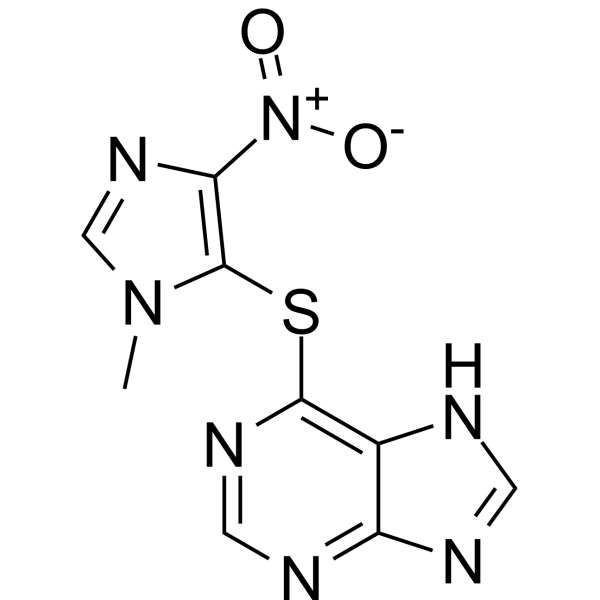
    Azathioprine
    5+ Cited Publications

    BW 57-322

    Apoptosis Inflammation/Immunology Cancer
    Azathioprine (BW 57-322) is an orally active immunosuppressive agent. Azathioprine can be converted in vivo to the active metabolite 6-mercaptopurine (6-MP). Azathioprine has myelosuppressive effects and induces apoptosis .
    Azathioprine
  • HY-142026

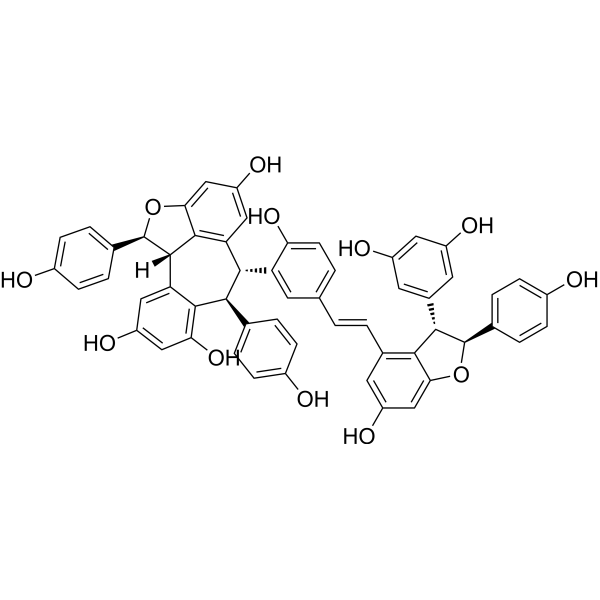
    (+)-Vitisin A

    Caspase ERK NF-κB Influenza Virus PAK LDLR PPAR PCSK9 Androgen Receptor Keap1-Nrf2 Monoamine Oxidase Cholinesterase (ChE) IKK Wnt β-catenin Reactive Oxygen Species (ROS) Apoptosis Cuproptosis Infection Neurological Disease Metabolic Disease Inflammation/Immunology Cancer
    Vitisin A ((+)-Vitisin A) is an orally active natural product with multiple pharmacological activities including anti-inflammatory, anti-tumor, anti-oxidant, anti-pathogenic microorganism, hypoglycemic and lipid-regulating, anti-osteoporotic, neuroprotective and cardiovascular protective effects. Vitisin A exhibits inhibitory effects on human AChE and MAO-B with IC50 values of 1.29 µM and 4.94 µM, respectively. Vitisin A inhibits the ERK, MAPK, NF-κB, STAT1, HMGCR and TRAF6 pathways, downregulates the related phosphorylation and protein expression, while activates the Nrf2/HO-1 pathway and upregulates p21 expression. Vitisin A induces tumor cell apoptosis and cell cycle arrest, inhibits adipogenesis and lipid accumulation, while alleviates oxidative stress, suppresses inflammatory responses, blocks hepatic fibrosis, Cuproptosis and cholesterol synthesis, and increases the expression levels of central BDNF and TrkB. Vitisin A can be used in the research of tumors, infectious diseases, metabolic diseases, bone and joint diseases, liver diseases, skin injuries, as well as neurodegenerative and cognitive dysfunction-related diseases .
    Vitisin A
  • HY-B0256R

    BW 57-322 (Standard)

    Reference Standards Apoptosis Inflammation/Immunology Cancer
    Azathioprine (Standard) is the analytical standard of Azathioprine. This product is intended for research and analytical applications. Azathioprine (BW 57-322) is an orally active immunosuppressive agent. Azathioprine can be converted in vivo to the active metabolite 6-mercaptopurine (6-MP). Azathioprine has myelosuppressive effects and induces apoptosis .
    Azathioprine (Standard)
  • HY-B0226A

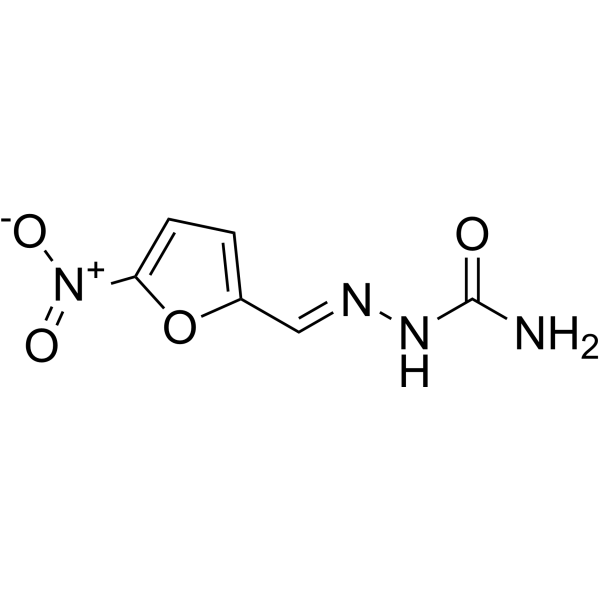
    (E)-Nitrofural

    Bacterial Parasite Infection
    (E)-Nitrofurazone ((E)-Nitrofural) is a topical broad-spectrum antibacterial agent effective against both Gram-negative and Gram-positive bacteria. (E)-Nitrofurazone also possesses antiprotozoal and antiparasitic activities. (E)-Nitrofurazone is commonly used in the research of superficial wounds, burns, skin infections, pyoderma, infectious skin diseases, trypanosomiasis, and acute bacillary dysentery .
    (E)-Nitrofurazone
  • HY-W050154R

    Reference Standards Parasite Tyrosinase NF-κB CDK Infection Inflammation/Immunology Cancer
    Kojic acid (Standard) is the analytical standard of Kojic acid. This product is intended for research and analytical applications. Kojic acid is a substance produced by Aspergillus oryzae, with various biological activities including antitumor, insecticidal, antibacterial, antioxidant, and radioprotective effects. Kojic acid exhibits tyrosinase inhibition activity by capturing copper ions that bind to the active site of tyrosinase, preventing its activation. Tyrosinase is a key enzyme in the biosynthesis of melanin, so kojic acid can block melanin production. Additionally, kojic acid shows potential inhibition of NF-κB activity in human keratinocytes, which may also be related to the anti-melanogenic effect induced by kojic acid. Kojic acid is effective when administered orally and can also be absorbed transdermally. Nano-carrier systems prepared with kojic acid demonstrate effective delivery of anticancer drugs. Kojic acid holds promise for research in cancer, infectious diseases, and skin whitening among other fields .
    Kojic acid (Standard)
  • HY-174985

    Bacterial Infection
    Anti-MRSA agent 32 (Compound 26) is an orally active and selective SaClpP (Staphylococcus aureus ClpP protease) activator with an EC50 value of 0.98 μM. Anti-MRSA agent 32 activates SaClpP to abnormally degrade bacterial proteins, inhibiting the proliferation of Staphylococcus aureus. Anti-MRSA agent 32 promotes wound healing in a murine skin infection model. Anti-MRSA agent 32 is promising for research of infectious diseases such as methicillin-resistant Staphylococcus aureus (MRSA) infections .
    Anti-MRSA agent 32
  • HY-B0256A

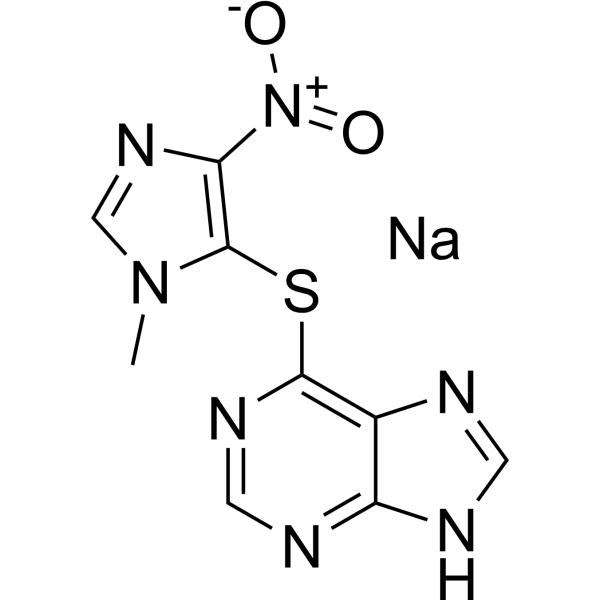
    BW 57-322 sodium

    Apoptosis Neurological Disease Inflammation/Immunology Endocrinology Cancer
    Azathioprine (BW 57-322) sodium is an orally active immunosuppressive agent. Azathioprine can be converted in vivo to the active metabolite 6-mercaptopurine (6-MP). Azathioprine has myelosuppressive effects and induces apoptosis .
    Azathioprine sodium
  • HY-P11616

    Bacterial TNF Receptor Infection
    WK2 is an antibacterial agent. WK2 reduces serum TNF-α production induced by Bacterial infection. WK2 reduces wound size and promotes tissue repair in a skin wound infection model. WK2 exerts anti-inflammatory effects in a pneumonia model. WK2 can be used for research on infectious diseases such as pneumonia caused by bacterial infection .
    WK2

Inquiry Online

Your information is safe with us. * Required Fields.

Salutation


Country or Region *

Applicant Name *


Organization Name *

Department *


Email Address *


Product Name *

Cat. No.


Requested quantity *

Phone Number *


Remarks

Inquiry Online

Inquiry Information

Product Name:
Cat. No.:
Quantity:
MCE Japan Authorized Agent:

