21 Results for "

Jeko-1 cell

" in MedChemExpress (MCE) Product Catalog:
Products (21)

21 Results for "Jeko-1 cell" in MCE Product Catalog:

Cat. No.: HY-136250
CAS No.: 2349356-09-6
Purity:  99.76%
Target:  

PROTACs CDK

Research Areas:  

Cancer

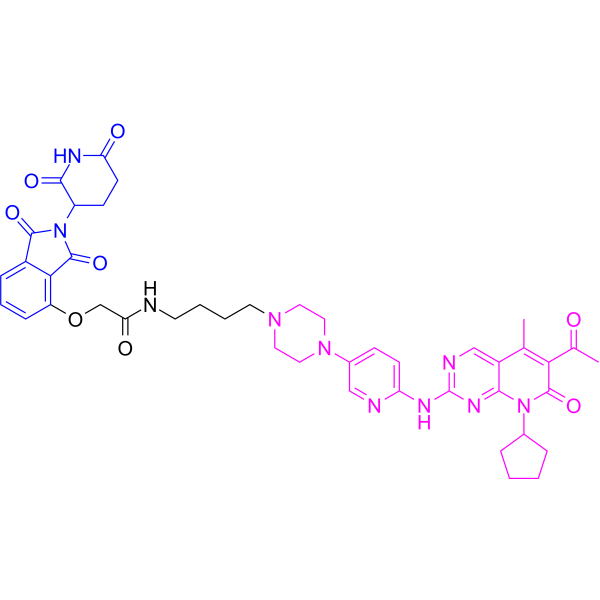
BSJ-03-204 is a PROTAC linking a Cereblon ligand to a CDK ligand, serving as a potent and selective dual degrader of CDK4/6. BSJ-03-204 exhibits IC50 values of 26.9 nM and 10.4 nM against CDK4/D1 and CDK6/D1, respectively. BSJ-03-204 can be utilized for cancer-related research .
loading...
    loading...
Cat. No.: HY-N6744
CAS No.: 50335-03-0
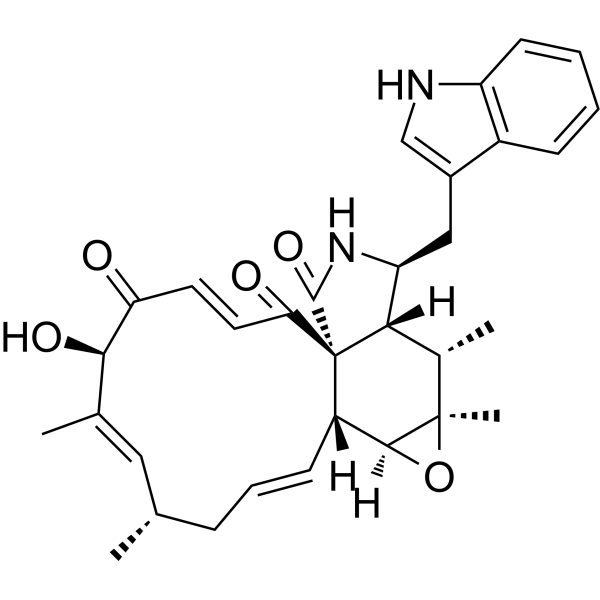
Chaetoglobosin A is a secondary metabolite and nematicide. Chaetoglobosin A is produced by Penicillium aquamarinium. Chaetoglobosin A targets Filamentous actin in cells, thereby inducing cell cycle arrest, and inhibiting membrane ruffle formation and cell migration. Chaetoglobosin A preferentially induces Apoptosis in chronic lymphocytic leukemia cells. Chaetoglobosin A induces dose- and time-dependent death in J2 larvae of the southern root-knot nematode (Meloidogyne incognita). Chaetoglobosin A can be used in studies related to root-knot nematode disease and chronic lymphocytic leukemia .
loading...
    loading...
Cat. No.: HY-154860
CAS No.: 2642231-19-2
Purity:  97.38%
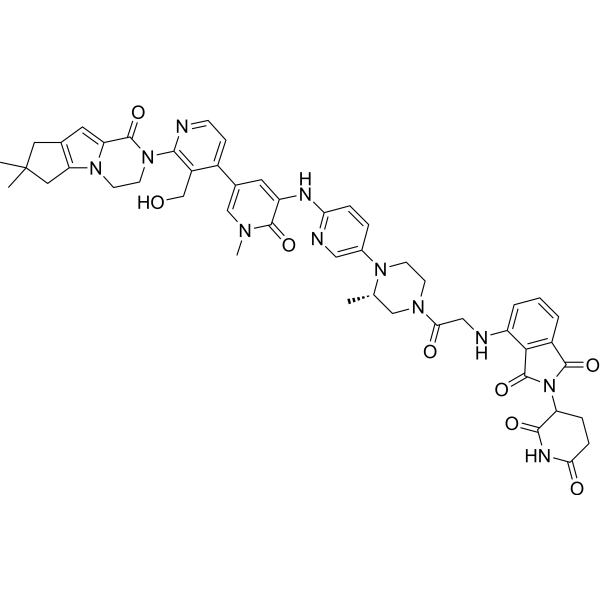
PTD10 is a selective and potent BTK PROTAC degrader (DC50 = 0.5 nM, KD = 2.28 nM). PTD10 can recruit cereblon (CRBN) E3 ligase and form a ternary complex with BTK, thereby mediating the ubiquitination and proteasome-dependent degradation of BTK. PTD10 inhibits cancer cells proliferation, and induces cell apoptosis via activation of the caspase-dependent pathway and mitochondrial pathway. PTD10 potently inhibits the BCR, AKT and NF-κB signaling pathway. PTD10 can be used for researches of B-cell malignancies and autoimmune disease .
loading...
    loading...
Cat. No.: HY-W338346
CAS No.: 2016-36-6
Salicylate choline is an orally active derivative of Aspirin (acetylsalicylic acid) (HY-14654). Salicylate choline significantly reduces IL-1β, IL-6, TNF-α and IL-10 levels in cells. Salicylate choline enhances the anti-tumor activity of the CRM1 inhibitor Selinexor (KPT-330) (HY-17536) through inducing S-phase cell cycle arrest and impairing DNA damage repair. Salicylate choline combined with Selinexor demonstrates excellent anti-tumor efficacy in mice xenograft model harboring JeKo-1 cells. Salicylate choline can be used for the study of rheumatic diseases, inflammation and cancer .
loading...
    loading...
Cat. No.: HY-136250A
Purity:  99.87%
Target:  

PROTACs CDK

Research Areas:  

Cancer

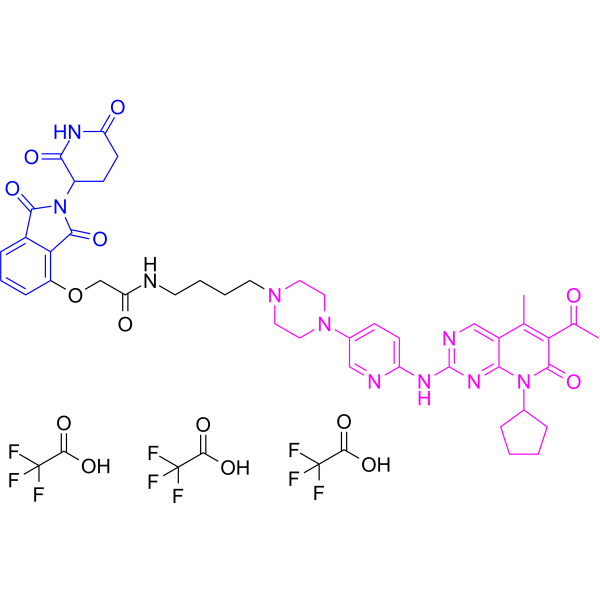
BSJ-03-204 triTFA is a PROTAC connected by ligands for Cereblon and CDK. BSJ-03-204 triTFA is a potent and selective Palbociclib-based CDK4/6 dual degrader (PROTAC), with IC50s of 26.9 nM and 10.4 nM for CDK4/D1 and CDK6/D1, respectively. BSJ-03-204 triTFA does not induce IKZF1/3 degradation and has anti-cancer activity .
loading...
    loading...
Cat. No.: HY-149669
CAS No.: 3053430-96-6
Purity:  99.29%
Research Areas:  

Cancer

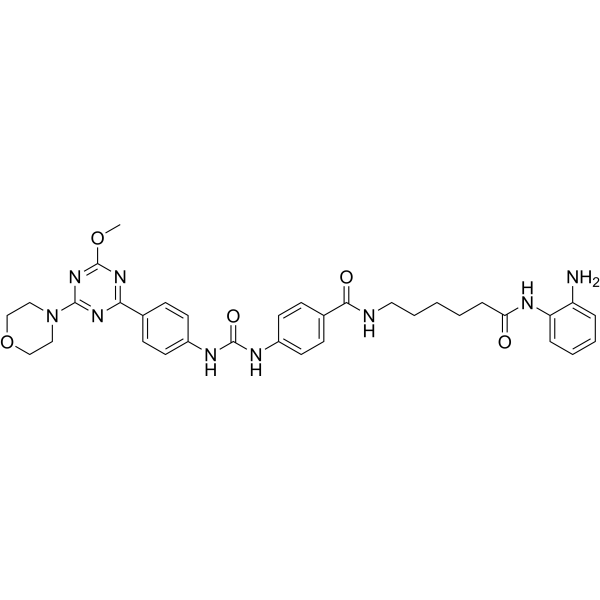
PH14 is a PI3Kα/HDAC3 inhibitor, with an IC50 value of 20.3 nM against PI3Kα and 24.5 nM against HDAC3. PH14 blocks the phosphorylation of AKT, inhibits the PI3K/AKT signaling pathway, increases the level of acetylated histone H3, promotes apoptosis, and exerts antiproliferative activity against tumor cells. PH14 can be used in the research of mantle cell lymphoma, myeloma, acute promyelocytic leukemia, and breast cancer .
loading...
    loading...
Cat. No.: HY-163856
CAS No.: 3040999-70-7
Research Areas:  

Cancer

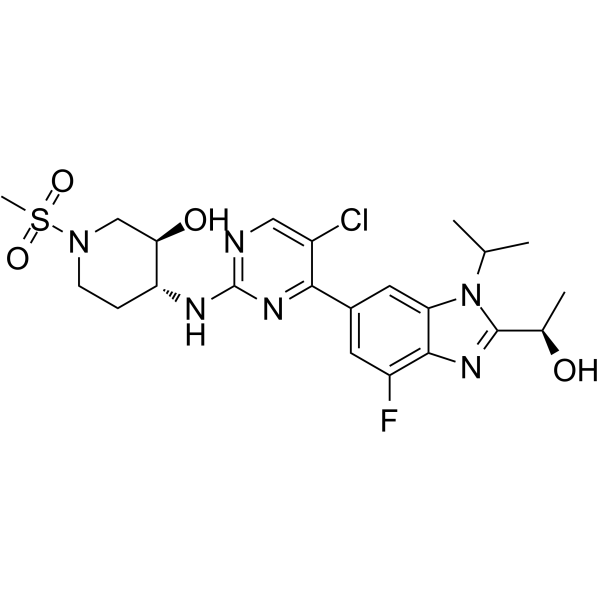
CDK7-IN-30 (Compound 22) is a CDK7 inhibitor (IC50 = 7.21 nM) that effectively inhibits the phosphorylation of RNA Polymerase II and CDK2. CDK7-IN-30 CDK7-IN-30 can induce cell apoptosis and has anti-cancer activity and can be used in cancer research .
loading...
    loading...
Cat. No.: HY-155072
CAS No.: 3049086-75-8
Target:  

PROTACs Btk

Research Areas:  

Cancer

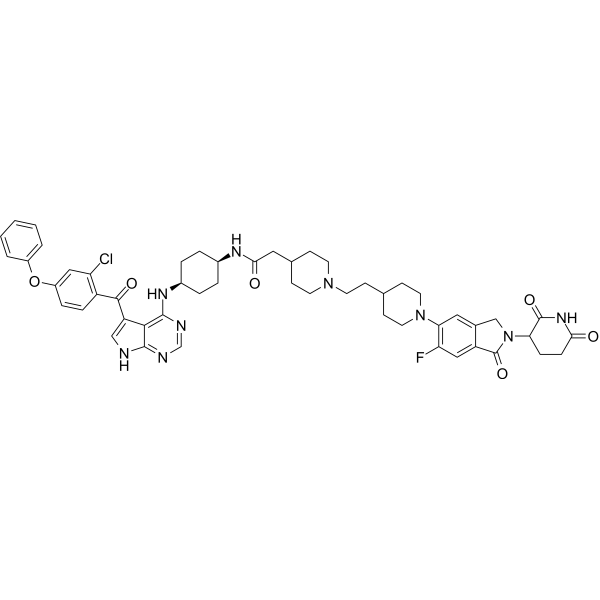
PROTAC BTK degraders-5(compound 3e) is a selective BTK PROTAC degrader with a DC50 value of 7.0 nM in JeKo-1 cells. PROTAC BTK degraders-5 has no off-target effect on degrading CRBN neosubstates. PROTAC BTK degraders-5 has anti-proliferation effect on various lymphoma tumor cells and can be used in chronic lymphoid malignancies research .
loading...
    loading...
Cat. No.: HY-173125
Target:  

PROTACs Btk

Research Areas:  

Cancer

FDU73 is a potent and selective BTK PROTAC degrader with a DC50 value of 2.9 nM (JeKo-1). FDU73 degrades BTK via the ubiquitin-proteasome system. FDU73 exerts antiproliferative effects on cancer cells. FDU73 can be used for the research of B-cell malignancies .
loading...
    loading...
Cat. No.: HY-174396
CAS No.: 3075011-99-0
PI3Kδ/HDAC6-IN-1 (Compound 22E) is an orally active and dual inhibitor of PI3Kδ and HDAC6 with IC50 values of 2.4 nM and 6.2 nM, respectively. PI3Kδ/HDAC6-IN-1 exhibits potent antiproliferative effects on non-Hodgkin lymphoma (NHL) cells and possesses in vivo antitumor activity without significant toxicity. PI3Kδ/HDAC6-IN-1 arrests the cell cycle at the G0/G1 phase and induces apoptosis. PI3Kδ/HDAC6-IN-1 blocks the PI3K/AKT/mTOR signaling pathway and increases the acetylation levels of α-tubulin and histone H3 .
loading...
    loading...
Cat. No.: HY-179077
CAS No.: 2416130-49-7
Research Areas:  

Cancer

PROTAC BTK/IKZF1/3 Degrader-1 is an orally active PROTAC-IMiD bifunctional protein degrader that selectively degrades BTK, IKZF1 and IKZF3. PROTAC BTK/IKZF1/3 Degrader-1 recruits the CRBN E3 ubiquitin ligase to form a ternary complex, mediating ubiquitination and proteasome-dependent degradation of target proteins, with no obvious degrading effect on GSPT1. PROTAC BTK/IKZF1/3 Degrader-1 inhibits cancer cell proliferation, induces cancer cell apoptosis, and suppresses tumor growth. PROTAC BTK/IKZF1/3 Degrader-1 can be used for the research of diffuse large B-cell lymphoma .
loading...
    loading...
Cat. No.: HY-172889
CAS No.: 3085191-45-0
Target:  

PI3K HDAC Apoptosis mTOR Akt

Research Areas:  

Cancer

PI3K/HDAC-IN-4 (Compound 31f) is a PI3K/HDAC dual inhibitor (IC50: 0.2μM). PI3K/HDAC-IN-4 shows high selectivity for HDAC1-3 (IC50 values of 75.5 nM, 70.9 nM, and 1.9 nM, respectively). PI3K/HDAC-IN-4 is a potent PIK3 inhibitor with IC50 values of 2.5 nM, 80.5 nM, 10.0 nM, and 57.2 nM for PI3Kα, β, δ, and γ, respectively. PI3K/HDAC-IN-4 significantly induces tumor cell apoptosis by simultaneously inhibiting the PI3K/AKT/mTOR signaling pathway and HDAC1-3. PI3K/HDAC-IN-4 exhibits potent antiproliferative activity in a variety of tumor cell lines (e.g., MV4-11, Jeko-1, HL60, and MCF-7, with IC50 values of 0.2, 0.9, 0.8, and 1.5 μM, respectively). PI3K/HDAC-IN-4 can be used in the study of lymphoma and leukemia .
loading...
    loading...
Cat. No.: HY-156016
Target:  

HDAC

Research Areas:  

Cancer

HDAC/CD13-IN-1 (Compound 12) is a HDAC/CD13 inhibitor (IC50: 0.34 μM for hCD13, 0.53 μM for porcine CD13, 0.03, 0.06, 0.02 μM for HDAC1/2/3). HDAC/CD13-IN-1 inhibits MV4-11, K562, Jeko-1, and HL60 cell proliferation (IC50: 0.25-2.04 μM). HDAC/CD13-IN-1 induces cancer cell apoptosis. HDAC/CD13-IN-1 has anti-metastasis and anti-invasion efficacy .
loading...
    loading...
Cat. No.: HY-139449
CAS No.: 2380321-50-4
Target:  

CDK

Research Areas:  

Cancer

CDK4/6-IN-5 is a potent CDK4 and CDK6 inhibitor with Kis of 0.2 and 4.4 nM for CDK4/Cyclin D1 and CDK6/Cyclin D3, respectively . (from patent WO2019207463A1 example A93).
loading...
    loading...
Cat. No.: HY-147754
CAS No.: 2243136-03-8
Target:  

Btk JAK

Research Areas:  

Inflammation/Immunology

JAK3/BTK-IN-6 (compound 14h) is a potent BTK and JAK3 dual inhibitor, with IC50 values of 0.6 and 0.4 nM, respectively. JAK3/BTK-IN-6 shows good metabolic stability in human liver microsome. JAK3/BTK-IN-6 can be used for hematological and immune diseases research .
loading...
    loading...
Cat. No.: HY-181086
CAS No.: 2864394-30-7
Research Areas:  

Cancer

FLT3/HDAC-IN-3 is a dual inhibitor of FLT3 and HDAC. FLT3/HDAC-IN-3 potently inhibits FLT3 (IC50 = 14 nM), HDAC1 (IC50 = 27 nM), HDAC6 (IC50 = 20 nM), and FLT3 D853Y (IC50 = 55 nM), exhibits weak activity against HDAC8, and shows no activity against HDAC4. FLT3/HDAC-IN-3 possesses kinase selectivity, plasma stability, and stability in human liver microsomes. FLT3/HDAC-IN-3 demonstrates anti-proliferative effects in a variety of hematological malignancy cell lines. FLT3/HDAC-IN-3 shows efficacy in the Jeko-1 xenograft model without observed significant toxicity. FLT3/HDAC-IN-3 can be used in the study of hematological malignancies .
loading...
    loading...
Cat. No.: HY-184270
Research Areas:  

Cancer

YM1240 is an orally active dual EZH2/HDAC inhibitor with human EZH2 IC50 0.342 μM and human HDAC IC50 0.12 μM. YM1240 inhibits EZH2 pathway to reduce H3K27me3 levels, inhibits HDAC pathway to increase H3K9ac and H4ac levels. YM1240 suppresses proliferation, induces apoptosis, induces cell cycle arrest in lymphoma cells. YM1240 exhibits antitumor efficacy in lymphoma xenograft models. YM1240 can be used for the research of lymphoma .
loading...
    loading...
Cat. No.: HY-183770
Research Areas:  

Cancer

LCI40 is an orally active dual PI3K/BRD4 inhibitor (PI3Kα IC50 = 0.071 μM, PI3Kβ IC50 = 0.17 μM, PI3Kγ IC50 = 0.66 μM, PI3Kδ IC50 = 0.072 μM, BRD4 BD1 IC50 = 0.19 μM, and BRD4 BD2 IC50 = 1.88 μM. LCI40 inhibits phosphorylation of pAKT (S473) and suppresses c-MYC levels in mantle cell lymphoma cells. LCI40 displays immunomodulatory capacity with minimal toxicity to normal mouse immune cells. LCI40 can be used for the research of mantle cell lymphoma .
loading...
    loading...
Cat. No.: HY-P992376
Synonyms: NBE-002 Antibody

Target:  

ROR

Research Areas:  

Cancer

huXBR1-402 (NBE-002 Antibody) is a high-affinity (Kd=5.8 nM) humanized chimeric rabbit/human monoclonal antibody that targets ROR1. huXBR1-402 specifically binds to the Ig/Fz domain epitope of human ROR1, directly inhibits the proliferation of ROR1-positive tumor cells and induces apoptosis of leukemia cells (apoptosis) .
loading...
    loading...
Cat. No.: HY-177109
CAS No.: 2765612-38-0
Research Areas:  

Cancer

BL20-MMAE is an antibody-drug conjugate targeting ROR1, which is formed by conjugating an anti-ROR1 antibody with the Auristatin payload MMAE (HY-15162) via a BL20 linker .
loading...
    loading...

