Search Result
Results for "
Jurkat cell
" in MedChemExpress (MCE) Product Catalog:
1
Biochemical Assay Reagents
5
Isotope-Labeled Compounds
| Cat. No. |
Product Name |
Target |
Research Areas |
Chemical Structure |
-
- HY-15760
-
-
-
- HY-19344
-
|
SAR 1118; SHP-606
|
Integrin
|
Inflammation/Immunology
|
|
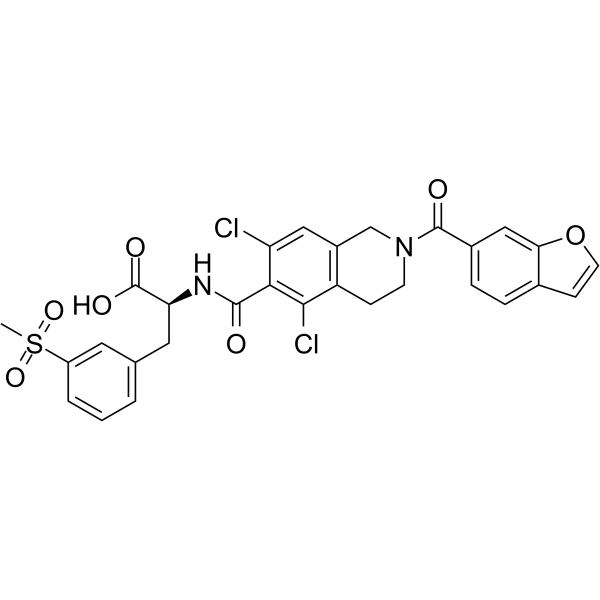
Lifitegrast (SAR 1118) is a potent integrin antagonist. Lifitegrast blocks the binding of intercellular adhesion molecule 1 (ICAM-1) to lymphocyte function-associated antigen 1 (LFA-1), interrupting the T cell-mediated inflammatory cycle. Lifitegrast inhibits Jurkat T cell attachment to ICAM-1 with an IC50 of 2.98 nM. Lifitegrast can be used for researching dry eye disease .
|
-
-
- HY-108691
-
|
|
Itk
Btk
CXCR
PD-1/PD-L1
LAG-3
|
Cancer
|
|
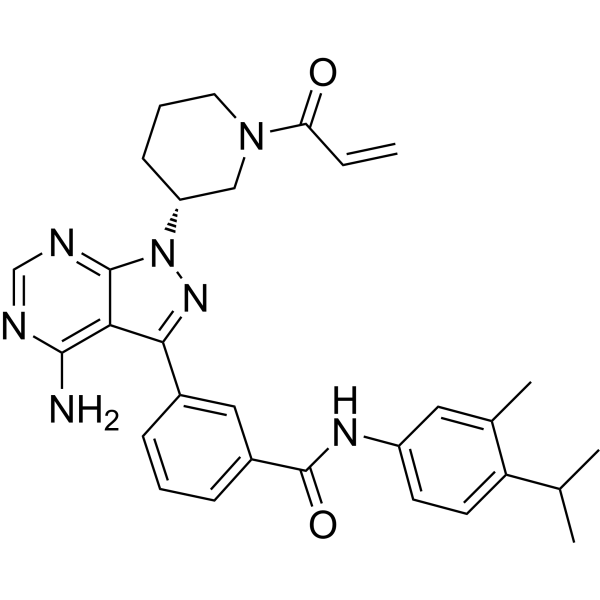
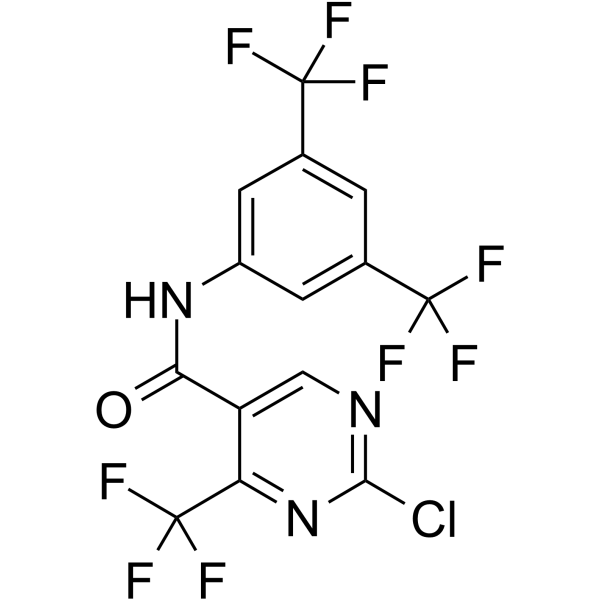
PF-06465469 is a covalent inhibitor of ITK with an IC50 of 2 nM. PF-06465469 also inhibits BTK. PF-06465469 inhibits cell migration in response to CXCL12. PF-06465469 decreases PD-1 and LAG-3 expression. PF-06465469 can be used to study leukemia and T-cell lymphoma .
|
-
-
- HY-144998
-
|
|
IKZF Family
Molecular Glues
|
Inflammation/Immunology
Cancer
|
|
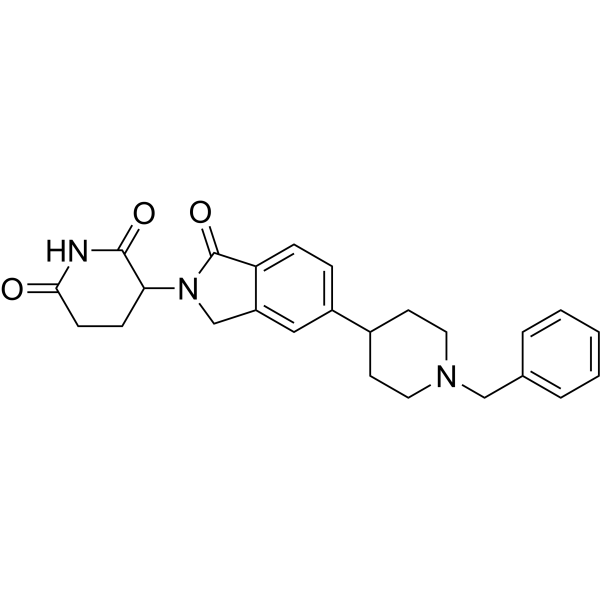
NVP-DKY709 is an orally active and selective IKZF2 molecular glue degrader with the Dmax and DC50 of 53% and 4 nM, respectively. In addition, NVP-DKY709 can degrade IKZF4 (DC50: 13 nM) and SALL4 (DC50: 2 nM). NVP-DKY709 exerts anti-tumor activity by binding with CRBN to change conformation and recruit and degrade IKZF2 .
|
-
-
- HY-12546
-
-
-
- HY-19344A
-
|
SAR 1118 sodium; SHP-606 sodium
|
Integrin
|
Inflammation/Immunology
|
|
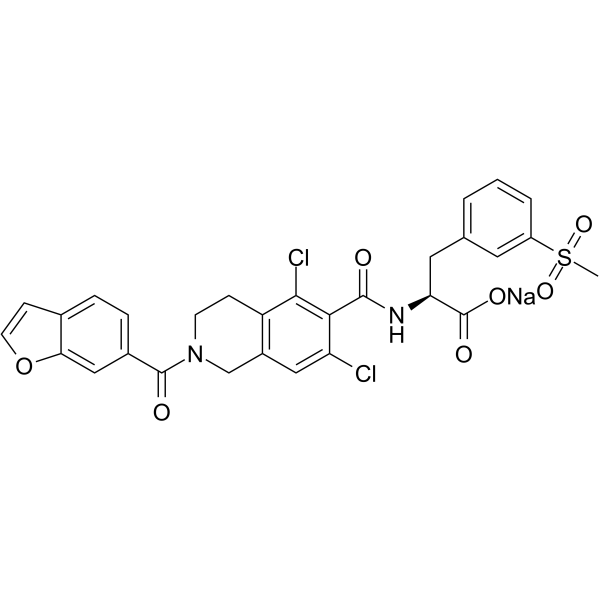
Lifitegrast (SAR 1118) sodium is a potent integrin antagonist. Lifitegrast sodium blocks the binding of intercellular adhesion molecule 1 (ICAM-1) to lymphocyte function-associated antigen 1 (LFA-1), interrupting the T cell-mediated inflammatory cycle. Lifitegrast sodium inhibits Jurkat T cell attachment to ICAM-1 with an IC50 of 2.98 nM. Lifitegrast sodium can be used for researching dry eye disease .
|
-
-
- HY-136339
-
|
|
E1/E2/E3 Enzyme
Interleukin Related
|
Inflammation/Immunology
Cancer
|
|
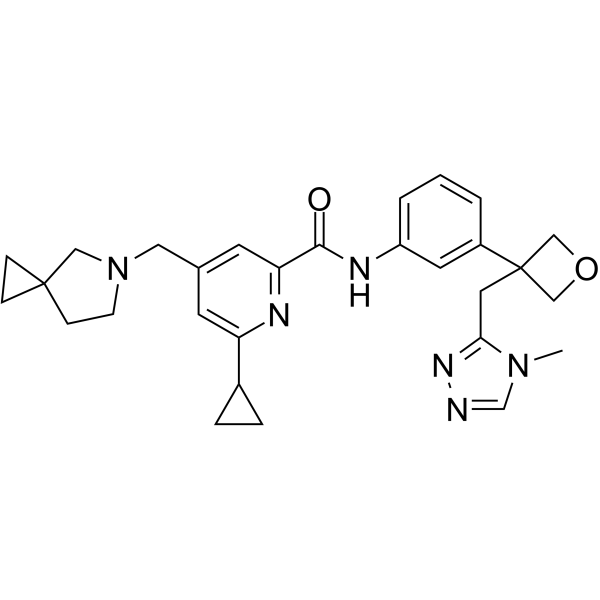
Cbl-b-IN-1 (Example 519) is an inhibitor of Cbl-b, with an IC50 of less than 100 nM. Cbl-b-IN-1 can promote the secretion of cytokines such as IL-2, IFN-γ, and TNF-α, facilitate T cell activation, and enhance the TCR signaling pathway. Cbl-b-IN-1 can be used in research on immunomodulation .
|
-
-
- HY-145322
-
|
|
Casein Kinase
Molecular Glues
|
Cancer
|
|
TMX-4116 is a casein kinase 1α (CK1α) degrader. TMX-4116 shows the degradation preference for CK1α with DC50s less than 200 nM in MOLT4, Jurkat, and MM.1S cells. TMX-4116 can be used for the research of multiple myeloma .
|
-
-
- HY-110177
-
|
|
NF-κB
|
Inflammation/Immunology
|
|
SP-100030 is a potent NF-κB and activator protein-1 (AP-1) double inhibitor (IC50s=50 and 50 nM, respectively). SP-100030 inhibits IL-2, IL-8, and TNF-alpha production in Jurkat and other T cell lines. SP-100030 decreases murine collagen-induced arthritis (CIA) .
|
-
-
- HY-14622
-
|
|
RIP kinase
|
Cancer
|
|
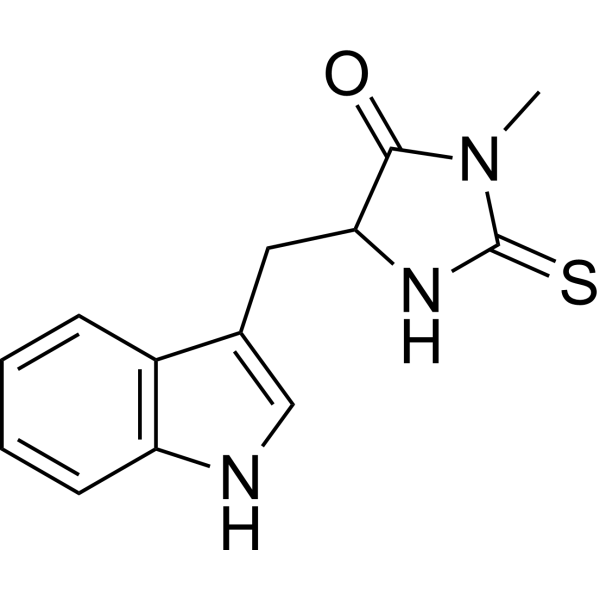
Necrostatin 2 is a potent necroptosis inhibitor. EC50 for inhibition of necroptosis in FADD-deficient Jurkat T cells treated with TNF-α is 0.05 μM. Necrostatin 2 is also a RIPK1 inhibitor.
|
-
-
- HY-148847
-
|
|
MAP4K
|
Cancer
|
|
HPK1-IN-32 is a potent and selective HPK1 inhibitor with an IC50 of 65 nM. HPK1-IN-32 can be used for the research of HPK1 related disorders or diseases .
|
-
-
- HY-100712
-
DPO-1
1 Publications Verification
|
Potassium Channel
Calcium Channel
NOD-like Receptor (NLR)
Interleukin Related
|
Cardiovascular Disease
Inflammation/Immunology
|
|
DPO-1 is a potent Kv1.5 and Kv1.3 (EC50 = 3.1 μM) channels inhibitor with potential immunomodulatory and anti-inflammatory effects. DPO-1 reduces Kv1.3 current density, blunts Ca 2+ influx in Ca 2+-depleted Jurkat cells, and inhibits IL-2 secretion in activated Jurkat cells. DPO-1 inhibits Uric acid sodium (HY-B2130A) (MSU)-induced NLRP3 inflammasome activation by blocking Kv1.5-mediated K + efflux. DPO-1 can be used for the study of immunologic disorders and atrial fibrillation .
|
-
-
- HY-163786
-
|
|
PROTACs
CDK
Apoptosis
|
Cancer
|
|
PROTAC CDK4/6 degrader 1 is a CDK4/CDK6 PROTAC degrader, with DC50 values of 10.5 nM and 2.5 nM, respectively. PROTAC CDK4/6 degrader 1 inhibits the proliferation of Jurkat cells (IC50 = 0.18 μM), arrests the cell cycle at the G1 phase, and induces apoptosis. PROTAC CDK4/6 degrader 1 can be used for cancer research.
|
-
-
- HY-145776
-
-
-
- HY-145321
-
|
|
Phosphodiesterase (PDE)
Molecular Glues
|
Cancer
|
|
TMX-4100 is a selective phosphodiesterase 6D (PDE6D) degrader. TMX-4100 shows a high degradation preference for PDE6D with the DC50 values less than 200 nM in MOLT4, Jurkat, and MM.1S cells. TMX-4100 can be used for the research of multiple myeloma .
|
-
-
- HY-150879
-
|
|
PD-1/PD-L1
Ligands for Target Protein for PROTAC
|
Cancer
|
|
BMS-37 is a PD-1/PD-L1 immune checkpoint inhibitor with an IC50 towards the PD-L1/PD-1 complex in the range of 18 to 200 nM. BMS-37 shows unspecific toxicity against modified Jurkat T cells with an EC50 between 3 and 6 µM. BMS-37 can be used for the study of the PD-L1-induced exhaustion of T-cells or as PD-L1 ligand to synthesize PROTAC molecules .
|
-
-
- HY-110052
-
TBCA
1 Publications Verification
|
Casein Kinase
|
Cancer
|
|
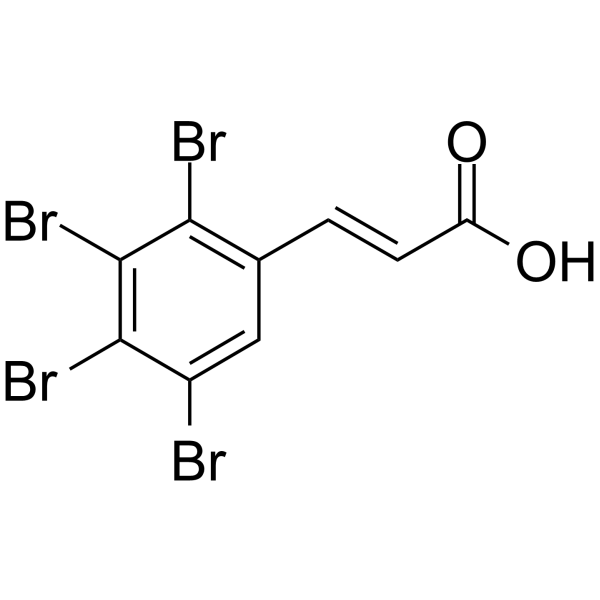
TBCA is a highly selective CK2 (casein kinase II) inhibitor with an IC50 of 110 nM and a Ki of 77 nM. TBCA shows selectivity for CK2 over CK1, DYRK1A and a panel of 27 other kinases .
|
-
-
- HY-N3119
-
|
|
Apoptosis
|
Cancer
|
|
Paeoniflorigenone, isolated as an active ingredient from the root of moutan cortex, induces apoptosis selectively in the cancer cell lines and exhibits antiproliferative effect .
|
-
-
- HY-141877
-
MS4322
1 Publications Verification
YS43-22
|
PROTACs
Histone Methyltransferase
|
Cancer
|
MS4322 (YS43-22) is a specific PRMT5 PROTAC degrader. MS4322 reduces the PRMT5 protein level with a DC50 of 1.1 μM in MCF-7 cells. MS4322 inhibits the methyltransferase activity of PRMT5 with an IC50 of 18 nM. MS4322 promotes ubiquitination and degradation of PRMT5. MS4322 can be used for the research of breast cancer, lung cancer, and hepatocellular cancer. (Pink: PRMT5 ligand (HY-173092); Blue: E3 ligase ligand HY-112078); Black: linker (HY-124780); E3+linker (HY-173093 )) .
|
-
-
- HY-153161
-
|
|
Caspase
Apoptosis
|
Cancer
|
|
CASP8-IN-1 (Compound 63-R) is a selective inhibitor for caspase 8 (CASP8), with an IC50 of 0.7 μM. CASP8-IN-1 inhibits FasL-induced apoptosis in cell Jurkat .
|
-
-
- HY-151369
-
|
|
RIP kinase
|
Cardiovascular Disease
Neurological Disease
Metabolic Disease
Inflammation/Immunology
|
|
AV123 (compound 12) is a non-cytotoxic RIPK1 inhibitor (IC50=12.12 µM). AV123 blocks the TNF-α-induced necroptotic (EC50=1.7 μM) but not the apoptotic cell death. AV123 can be used in the study of necrotic chronic conditions such as ischemia-reperfusion injury of the brain, heart and kidney, inflammatory diseases, neurodegenerative diseases and infectious diseases .
|
-
-
- HY-173357
-
|
|
PROTACs
JAK
STAT
|
Inflammation/Immunology
|
|
TYD-68 is a highly efficient and selective CRBN-recruited TYK2 PROTAC degrader with a DC50 value of 0.42 nM. TYD-68 significantly inhibits IL-12 and IFN-α-induced STAT4 and STAT1 phosphorylation, thereby blocking TYK2-dependent signaling pathways.
TYD-68 can be used in the study of psoriasis. (Pink: Target protein ligand (HY-173359); Black: Linker (HY-W007732B); Blue: E3 ligase ligand (HY-14658); E3 ligase ligand + Linker (HY-173358)) .
|
-
-
- HY-174830
-
|
|
PD-1/PD-L1
|
Cancer
|
|
GJ19 is a PD-L1 inhibitor with an IC50 of 32.06 nM. GJ19 can effectively bind to human/murine PD-L1 protein with Kd values of 171 and 290 nM, respectively. GJ19 concentration-dependently promotes HepG2 cell mortality in a co-culture model of HepG2/hPD-L1 and Jurkat T/hPD-1 cells. GJ19 effectively suppresses tumor growth in a B16-F10 melanoma mouse model. GJ19 can be used for the study of tumor immunotherapy .
|
-
-
- HY-155101
-
|
|
PD-1/PD-L1
|
Cancer
|
|
PD-L1-IN-3 (Compound 4a) is a compound that targets PD-1/PD-L1, the IC50 value and EC50 value is 4.97nM and 2.70 μM for inhibit PD-L1 and Jurkat T cells, respectively. PD-L1-IN-3 can bind PD-L1 dimer to prevent PD-1 binding to PD-L1, therefore blocking PD-1 signaling. PD-L1-IN-3 can be used for lung cancer and melanoma diseases research .
|
-
-
- HY-14622B
-
|
|
RIP kinase
|
Cardiovascular Disease
Neurological Disease
|
|
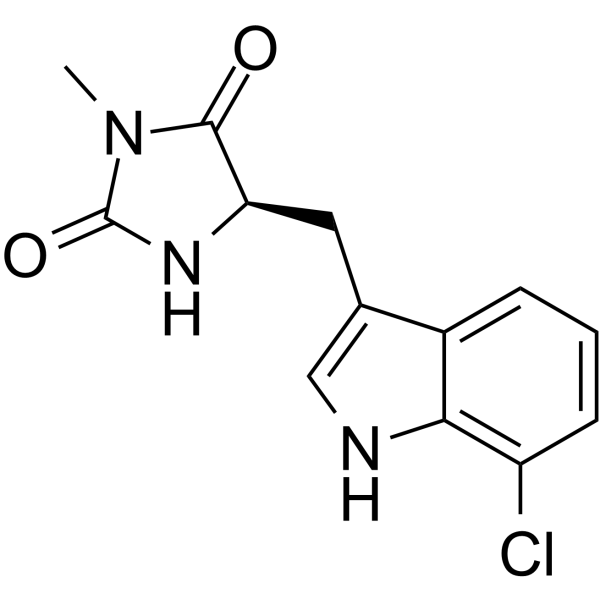
Necrostatin 2 S enantiomer is the S enantiomer of Necrostatin 2 (HY-14622). Necrostatin 2 S enantiomer inhibits TNF-α-induced necroptosis in Jurkat T cells. Necrostatin 2 S enantiomer can be used for the research of ischemic brain injury (stroke) .
|
-
-
- HY-P5640
-
|
|
Bacterial
Parasite
|
Infection
|
|
Tritrpticin is a porcine-derived antimicrobial peptide with properties such as membrane disruption and hemolysis. Tritrpticin disrupts the cell membranes of bacteria, fungi and Jurkat T cell leukemia cells and induces their death. Tritrpticin also enhances the efficacy of Metronidazole (HY-B0318) against *Trichomonas vaginalis*, reduces plasma endotoxin and inflammatory cytokine levels, restricts bacterial growth in blood and visceral tissues, decreases the mortality rate of septic shock in rats and enhances the therapeutic effect of ertapenem. Tritrpticin exhibits selective cytotoxicity against Jurkat T cell leukemia cells, while showing low toxicity to normal peripheral blood mononuclear cells and red blood cells, and can serve as a template for antimicrobial peptide design. Tritrpticin can be applied to research related to bacterial infections, fungal infections, trichomoniasis, septic shock and leukemia .
|
-
-
- HY-P10815
-
|
|
Apoptosis
Calcium Channel
|
Others
|
|
IP3RCYT is an IP3R inhibitory peptide, which can inhibit the binding of cytochrome C to IP3R with an IC50 about 100 nM. IP3RCYT regulates calcium signaling within cells. P3RCYT inhibits apoptosis in HeLa and Jurkat cells treated with Staurosporine (HY-15141) or Membrane-bound Fas ligand (FasL) .
|
-
-
- HY-W033813
-
|
|
Caspase
Apoptosis
|
Cancer
|
|
Caspase-3/7 inhibitor I is a potent and reversible inhibitor of caspase-3 and caspase-7, with Kis of 60 and 170 nM, respectively. Caspase-3/7 inhibitor I can inhibit apoptosis in Camptothecin (HY-16560)-treated Jurkat cells and in chondrocytes .
|
-
-
- HY-169093
-
|
|
PROTACs
Epigenetic Reader Domain
Apoptosis
|
Cancer
|
|
MS41 is a selective eleven-nineteen leukemia (ENL) PROTAC degrader, with DC50s of 3.50 nM (MV4;11), 2.84 nM (SEMK2), 3.03 nM (Jurkat), and 26.58 nM (KASUMI1), respectively. MS41 effectively inhibits the growth of ENL-dependent leukemia cells, induces G1 cell cycle arrest and increases apoptosis. MS41 reduces the chromatin occupancy of ENL-associated transcription elongation machinery, and suppresses oncogenic gene expression and leukemia progression. Red: ENL ligand (HY-169094). Black: linker (HY-W105744). Blue: VHL ligand (HY-112078) .
|
-
-
- HY-148933
-
-
-
- HY-15760R
-
|
Nec-1 (Standard)
|
RIP kinase
Autophagy
Indoleamine 2,3-Dioxygenase (IDO)
Ferroptosis
Reference Standards
|
Cancer
|
|
Necrostatin-1 (Standard) is the analytical standard of Necrostatin-1. This product is intended for research and analytical applications. Necrostatin-1 (Nec-1) is a potent and cross the blood-brain barrier necroptosis inhibitor with an EC50 of 490 nM in Jurkat cells. Necrostatin-1 inhibits RIP1 kinase (EC50=182 nM). Necrostatin-1 is also an IDO inhibitor .
|
-
-
- HY-179234
-
|
|
PROTACs
RIP kinase
Apoptosis
Caspase
PARP
|
Cancer
|
|
LD5097 is a highly effective and selective PROTAC degrader targeting RIPK1. LD5097 can rapidly and efficiently downregulate RIPK1 and significantly enhance TNFα-mediated apoptosis in Jurkat cells. LD5097 significantly increases the levels of cleaved caspase-3/7 and PARP. LD5097 can be used for the study of acute T-lymphoblastic leukemia .
|
-
-
- HY-118917
-
|
|
IMPDH
|
Inflammation/Immunology
|
|
VX-148 is an orally active immunosuppressant, which is a non-competitive inosine-5'-monophosphate dehydrogenase (IMPDH) inhibitor with Ki values for IMPDH Ⅱ and IMPDH Ⅰ of 6 and 14 nM respectively. VX-148 can significantly inhibit the proliferation of human peripheral blood mononuclear cells (PBMC) stimulated by T-cell mitogen (PHA) or B-cell mitogen (SPAS). VX-148 has high selectivity for lymphocytes (such as L1210, Jurkat T cells, and Raji B cells), but has no significant toxicity to non-lymphoid cells. VX-148 can inhibit antibody responses in mouse models and significantly prolong the survival time of transplanted skin in allogeneic skin transplantation models. VX-148 can be used in the research of autoimmune diseases (such as rheumatoid arthritis, psoriasis) and organ transplantation anti-rejection .
|
-
-
- HY-175261
-
|
|
CDK
Wee1
Checkpoint Kinase (Chk)
|
Cancer
|
|
DHI1 is an anti-leukemia agent with high selectivity for Jurkat (IC50 = 21.83 μM) and HL-60 (IC50 = 19.14 μM) leukemia cells and has low toxicity to non-cancerous cells. DHI1 can induce G2/M phase cell arrest in Jurkat and HL-60 leukemia cells, as well as S phase arrest in HL-60 cells, and has significant effects on cell cycle signaling molecules Wee1, cyclin B1, cdc2 on Tyr15, and Chk1. DHI1 inhibits the migration and invasion of Jurkat and HL-60 cells by disrupting cytoskeletal actin filaments. DHI1 can be used to study hematological malignancies .
|
-
-
- HY-P3083
-
|
|
PKC
|
Inflammation/Immunology
|
|
N-Myristoyl-Lys-Arg-Thr-Leu-Arg is a protein kinase C (PKC) inhibitor with an IC50 value of 75 μM. N-Myristoyl-Lys-Arg-Thr-Leu-Arg inhibits IL-2 receptor induction and IL-2 production in the human leukemic cell line Jurkat .
|
-
-
- HY-19344R
-
|
SAR 1118 (Standard); SHP-606 (Standard)
|
Reference Standards
Integrin
|
Inflammation/Immunology
|
|
Lifitegrast (Standard) is the analytical standard of Lifitegrast. This product is intended for research and analytical applications. Lifitegrast (SAR 1118) is a potent integrin antagonist. Lifitegrast blocks the binding of intercellular adhesion molecule 1 (ICAM-1) to lymphocyte function-associated antigen 1 (LFA-1), interrupting the T cell-mediated inflammatory cycle. Lifitegrast inhibits Jurkat T cell attachment to ICAM-1 with an IC50 of 2.98 nM. Lifitegrast can be used for researching dry eye disease .
|
-
-
- HY-109151
-
|
E6007
|
Integrin
|
Inflammation/Immunology
|
|
Milategrast is useful as cell adhesion inhibitor or cell infiltration inhibitor. Milategrast in vitro inhibites the adhesion of Jurkat cells to human fibronectin with an IC50 of <5 μM .
|
-
-
- HY-115756
-
|
|
Others
|
Others
|
|
4-Maleimidosalicylic acid is a polar maleimide, and does not suppress IL-2 production in JURKAT T cells .
|
-
-
- HY-N6681
-
|
|
Caspase
Bacterial
Apoptosis
Antibiotic
|
Infection
|
|
15-acetoxyscirpenol, one of acetoxyscirpenol moiety mycotoxins (ASMs), strongly induces apoptosis and inhibits Jurkat T cell growth in a dose-dependent manner by activating other caspases independent of caspase-3 .
|
-
-
- HY-151066
-
|
|
PD-1/PD-L1
|
Cancer
|
|
BMS-1233 is an orally active inhibitor for programmed cell death-ligand 1 (PD-L1), with IC50 of 14.5 nM. BMS-1233 promotes cell death of HepG2 in a Jurkat T cell and HepG2 cell co-culture model, exhibits antitumor activity against melanoma in mouse model .
|
-
-
- HY-163787
-
|
|
CDK
|
Cancer
|
|
YY173 is a dual inhibitor for CDK4 and CDK6 with IC50 of 7.7 and 88 nM. YY173 inhibits the proliferation of cell Jurkat with an IC50 of 1.46 μM. YY173 can be used for synthesis of PROTAC CDK4/6 degrader 1 (HY-163786) .
|
-
-
- HY-114648
-
|
|
Bacterial
|
Infection
Cancer
|
|
AJI-9561 is a benzoxazole derivative produced by Streptomyces sp. AJI-9561 exhibits cytotoxicity and antibacterial activity. AJI-9561 inhibits the proliferation of Jurkat T cells and mouse P388 leukemia cells, with its IC50 being 0.88 and 1.63 μM respectively. AJI-9561 can be used for research on anti-cancer and antibacterial properties .
|
-
-
- HY-157838
-
|
|
MAP4K
|
Cancer
|
|
HMC-B17 is a selective, orally bioavailable HPK1 inhibitor (IC50 = 1.39 nM) that potentiates anti-PD-L1 efficacy. HMC-B17 potently enhances the IL-2 secretion in Jurkat cells (EC50 = 11.56 nM). HMC-B17 can be used for the research of cancer .
|
-
-
- HY-P991393
-
|
|
Transmembrane Glycoprotein
IFNAR
TNF Receptor
|
Cancer
|
|
ASP8374 is a human IgG4 monoclonal antibody (mAb) targeting TIGIT. ASP8374 increases IL-2 production in Jurkat cells and IFN-γ and TNF-α production in human PBMCs. ASP8374 can be used in advanced solid tumors research. Recommended isotype control: Human IgG4 kappa, Isotype Control (HY-P99003) .
|
-
-
- HY-146671
-
|
|
Itk
|
Cancer
|
|
ITK inhibitor 5 (compound 27) is a potent and selective ITK inhibitor with IC50s of 5.6, 25 nM for ITK, BTK, respectively .
|
-
-
- HY-178485
-
|
|
PI3K
HDAC
Akt
Histone Methyltransferase
|
Cancer
|
|
SJY26 is a PI3K/HDAC dual-target inhibitor with IC50s of 0.59 nM (PI3Kα and PI3Kδ), 2.02 nM (PI3Kγ), 12.69 nM (PI3Kβ) and 114 nM (HDAC1). SJY26 exhibits potent broad-spectrum anti-proliferative activity, and is particularly sensitive to Jurkat and PC9R cells. SJY26 inhibited the migration of PC9R cells, arrested the cell cycle and induced cell apoptosis. SJY26 reduces AKT phosphorylation, and decreases histone H3 deacetylation (Ac-H3). SJY26 can be used for the studies of non-small cell lung cancer and leukemia .
|
-
-
- HY-177786
-
|
|
Molecular Glues
CDK
|
Cancer
|
|
CDK12 ligand-3 is a molecular glucose degrading agent that targets the CDK12 protein (DC50 = 35 nM). CDK12 ligand-3 degrades CDK12, CDK13 and their regulatory subunit Cyclin K in a concentration dependent manner, and inhibits RNA polymerase II CTD (Ser2) phosphorylation. CDK12 ligand-3 exhibits potent anti proliferative activity against Jurkat cells. CDK12 ligand-3 can be used for research on cancers such as leukemia .
|
-
-
- HY-135078
-
|
NSC 270912
|
DNA/RNA Synthesis
|
Others
|
|
2,5-Deoxyfructosazine is a pyrazine derivative that can be found in cured tobacco and is used as a flavoring agent in the food and tobacco industry. Pyrazines, including 2,5-deoxyfructosazine, can be produced either by pyrolytic decomposition of natural compounds or by the reaction of sugars with alcoholic ammonia. 2,5-Deoxyfructosazine is also formed by the breakdown of D-glucosamine at neutral pH. Like glucosamine, 2,5-deoxyfructosazine has DNA strand breakage activity and strongly inhibits IL-2 production by Jurkat cells stimulated with phytohemagglutinin (IC50=~1.25 mM).
|
-
-
- HY-12521
-
|
|
CRAC Channel
|
Inflammation/Immunology
|
|
GSK-5498A is a selective CARC channel inhibitor (IC50: 1 μM). GSK-5498A inhibits mediators release from mast cells and pro-inflammatory cytokines release from T cells. GSK-5498A can be used in the research of inflammatory disorders .
|
-
-
- HY-W048444
-
|
|
Endogenous Metabolite
|
Metabolic Disease
|
|
Diaminobiotin is a biotin analog. Diaminobiotin can increase the transcriptional activity of IL-2 and IL-2R genes in Jurkat cells. Diaminobiotin does not affect the abundance of holocarboxylase and the activity of propionyl-CoA carboxylase in Jurkat cells .
|
-
- HY-155396
-
|
|
PROTACs
HDAC
|
Cancer
|
|
PRO-HD1 is a PROTAC HDAC6 degrader. PRO-HD1 degrades HDAC6 in A549 cells, and inhibits proliferation of Jurkat cells (IC50: 5.8 μM) .
|
-
- HY-149206
-
|
|
MAP4K
|
Cancer
|
|
HPK1-IN-33 (compound 21) is a potent Hematopoietic Progenitor Kinase 1 (HPK1) inhibitor with a Ki value of 1.7 nM. HPK1-IN-33 inhibits the produce of IL-2 with EC50s of 286, >10000 nM in Jurkat WT and Jurkat HPK1 KO cells, respectively .
|
-
- HY-P5870
-
|
|
Potassium Channel
|
Inflammation/Immunology
|
|
KTX-Sp2 is a potassium channel toxin. KTX-Sp2 effectively blocks three types of exogenous voltage-gated potassium channels: Kv1.1, Kv1.2 and Kv1.3. Ktx-Sp2 inhibits endogenous Kv1.3 and suppresses Ca 2+ signaling in Jurkat T cells. Ktx-Sp2 inhibits IL-2 secretion from activated Jurkat T cells .
|
-
- HY-112335
-
|
|
Src
Interleukin Related
|
Cancer
|
|
Lck Inhibitor III (compound 12h) is a potent Lck inhibitor, with an IC50 of 867 nM. Lck Inhibitor III inhibits IL-2 synthesis in Jurkat cells, with an IC50 of 1.270 μM .
|
-
- HY-153702
-
|
|
JAK
|
Cancer
|
|
JAK-IN-27 (compound 1) is an orally active and potent JAKS family kinase inhibitor with IC50s of 3.0 nM (TYK2), 7.7 nM (JAK1), 629.6 nM (JAK3), respectively. JAK-IN-27 inhibits IFN-α2B-induced phosphorylation of STAT3 in Jurkat cells (IC50=23.7 nM) .
|
-
- HY-153701
-
|
|
JAK
|
Cancer
|
|
JAK-IN-26 (compound 2) is an orally active JAK inhibitor with good pharmacokinetic characteristics. JAK-IN-26 inhibits IFN-α2B-induced phosphorylation of STAT3 in Jurkat cells (IC50=17.2 nM) .
|
-
- HY-172873
-
|
|
HDAC
Caspase
Apoptosis
|
Cancer
|
|
HDSI-18 is an orally active HDAC6 selective inhibitor (IC50: 1.6 nM). HDSI-18 is cytotoxic to K562, MV4-11, MOLM-13, THP-1, and Jurkat cells (IC50: 0.48, 0.58, 0.91, 1.79, and 4.31 μM, respectively). HDSI-18 activates Caspase-3, induces mitochondrial depolarization and apoptosis, and has antitumor activity .
|
-
- HY-156085
-
|
|
PD-1/PD-L1
|
Cancer
|
|
LP23 is a non-arylmethylamine PD-1/PD-L1 inhibitor (IC50: 16.7 nM) with anti-tumor activity. LP23 restores immune cell function in HepG2/Jurkat T cells and promotes HepG2 cell death. LP23 is active in vivo in the B16-F10 tumor model (TGI=88.6% at 30 mg/kg) .
|
-
- HY-176051
-
|
RgE
|
GLUT
|
Cancer
|
|
Rapaglutin E (RgE) is a glucose transporter (GLUT) inhibitor. Rapaglutin E exhibits dose-dependent inhibition of [ 3H]-2DG uptake in A549, Jurkat T, PANC10.05, and RBC, with IC50 values 8.9 nM, 3.1 nM, 35.5 nM, 74.2 nM. Rapaglutin E inhibits cell proliferation in A549, PANC10.05, HeLa, Jurkat T, and HEK293T cells .
|
-
- HY-172110
-
|
|
EGFR
Akt
p38 MAPK
ERK
Apoptosis
|
Cancer
|
|
Apoptosis inducer 35 (Compound 6) is a multi-targeted inhibitor, that reduces the expressions of EGFR, AKT, ERK and P38-MAPKα. Apoptosis inducer 35 inhibits the proliferation of cancer cell A549 and Jurkat, arrests the cell cycle at S phase, and induces apoptosis .
|
-
- HY-170814
-
|
|
G-quadruplex
|
Cancer
|
|
G-quadruplex ligand 3 (Compound 16) is a G-quadruplex ligand with anticancer effects that chelate iron. G-quadruplex ligand 3 stabilizes G-quadruplexes in human leukemia Jurkat cells. G-quadruplex ligand 3 localizes in the cell nucleus, serving as a fluorescent nuclear tracer for the labile iron pool .
|
-
- HY-W965550
-
|
|
Apoptosis
|
Cancer
|
|
Apoptosis inducer 40 is an apoptosis inducer. Apoptosis inducer 40 exhibits potent cytotoxic effects against jurkat and NB4 cells with IC50 values of 4.5 μM and 3.6μM. Apoptosis inducer 40 induces apoptosis and arrests cell cycle. Apoptosis inducer 40 can be used for the research of cancer, such as acute myeloid leukemia (AML) .
|
-
- HY-168628
-
|
|
Epigenetic Reader Domain
|
Cancer
|
|
BET-IN-27 (compound 6C) is an oral BET inhibitor with the IC50 values of 3.3 nM (BRD4-BD2)、3.4 nM (BRD4-BD1)、4.1 nM (BRD2-BD1)、20.4 nM (BRD3-BD1) and 42.0 nM (BRDT-BD1), respectively. BET-IN-27 shows anti-proliferative activity .
|
-
- HY-117782
-
|
|
Others
|
Cancer
|
|
Anticancer agent 236 (compound JP-8g) is a broad-spectrum anticancer agent that has toxic effects on several cancer cell lines with IC50 values of 6.925 μM (MDA), 6.296 μM (U937), 6.548 μM (Jurkat), 6.373 μM (Hela), and 10.381 μM (EJ) .
|
-
- HY-P11019
-
|
|
CXCR
Calcium Channel
|
Cancer
|
|
IS4 is a selective CXCR4 competitive antagonist, with an IC50 of 0.65 nM in THP-1 cells and 38.75 nM in Jurkat cells. IS4 is stable in serum and non-cytotoxic. IS4 competitively binds to CXCR4 with CXCL12, thereby inhibiting CXCL12-induced intracellular Ca 2+ release and cancer cell migration. IS4 can be used in the research on the prevention of metastasis of breast cancer, prostate cancer, leukemia, and other diseases .
|
-
- HY-19344S2
-
|
|
Isotope-Labeled Compounds
Integrin
|
Inflammation/Immunology
|
|
Lifitegrast-d4-1 is deuterium labeled Lifitegrast. Lifitegrast (SAR 1118) is a potent integrin antagonist. Lifitegrast blocks the binding of intercellular adhesion molecule 1 (ICAM-1) to lymphocyte function-associated antigen 1 (LFA-1), interrupting the T cell-mediated inflammatory cycle. Lifitegrast inhibits Jurkat T cell attachment to ICAM-1 with an IC50 of 2.98 nM. Lifitegrast can be used for researching dry eye disease .
|
-
- HY-149232
-
|
|
MAP4K
|
Cancer
|
|
HPK1-IN-35 is a potent and selective HPK1 inhibitor with an IC50 value of 3.5 nM. HPK1-IN-35 decreases the expression of p-SLP76 and promotes IL-2 secretion .
|
-
- HY-144672
-
-
- HY-123802
-
|
|
Integrin
|
Cancer
|
|
BIO7662 is a specific α4β1 antagonist. BIO7662 can be used to study α4β1 integrin-ligand interactions .
|
-
- HY-158371
-
|
|
HDAC
Casein Kinase
|
Cancer
|
|
HDAC/CK2-IN-1 (compound 38) is a HDAC1 (IC50 = 1.46 μM), HDAC6 (IC50 = 0.66 μM), and CK2 (IC50 = 3.67 μM) inhibitor. HDAC/CK2-IN-1 exhibits promising antproliferative activity against Jurkat, MCF-7, HCT-116, and HL-60 cell lines .
|
-
- HY-163844
-
|
|
PD-1/PD-L1
|
Inflammation/Immunology
Cancer
|
|
PD-1/PD-L1-IN-49 (compound 1c) is a potent inhibitor of PD-1/PD-L1, with the IC50 of 77 nM. PD-1/PD-L1-IN-49 activates Jurkat T cells, reflecting successful blockade of the PD-1/PD-L1 immune checkpoint .
|
-
- HY-172107
-
|
|
MAP4K
Interleukin Related
|
Inflammation/Immunology
Cancer
|
|
HPK1-IN-56 (Compound A29) is a HPK1 inhibitor (IC50: 2.70 nM). HPK1-IN-56 inhibits downstream p-SLP76 (IC50: 8.1 nM in Jurkat T cells). HPK1-IN-56 induces the production of IL-2 in human PBMCs. HPK1-IN-56 has anticancer effect, enhances T-cell killing ability and the antitumor efficacy of anti-PD-1 antibody .
|
-
- HY-172875
-
|
|
MAP4K
Interleukin Related
|
Inflammation/Immunology
Cancer
|
|
HPK1-IN-58 (Compound 26) is an inhibitor of HPK1 (IC50: 2.6 nM) and SLP76 (IC50: 20 nM). HPK1-IN-58 enhances IL-2 secretion and reverses PGE2-induced immunosuppression. HPK1-IN-58 can be used in anti-tumor immunity research .
|
-
- HY-178459
-
|
|
PROTACs
MAP4K
|
Cancer
|
|
PROTAC HPK1 Degrader-6 (314) is a highly efficient and effective PROTAC degrader targeting HPK1 (IC50 < 50 nM). PROTAC HPK1 Degrader-6 can be used for the study of leukemia. Red: HPK1 ligand (HY-179196); Blue: E3 ligase CRBN ligand (HY-179197) .
|
-
- HY-179062
-
|
|
Apoptosis
|
Cancer
|
Anticancer agent 280 (Compound 65) is an anti-cancer agent targeting triple-negative breast cancer (TNBC). Anticancer agent 280 exhibits IC50 values of Anticancer agent 280 for MDA-MB-231, MDA-MB-231/LM2-4, Jurkat, and MCF-7 of 7.1, 11.65, 6.99, and 21.51 μM respectively. Anticancer agent 280 can cause significant arrest of cells in the S phase and induce cell apoptosis. Anticancer agent 280 can be used for the study of TNBC .
|
-
- HY-116692
-
|
|
Apoptosis
Caspase
Mitochondrial Metabolism
PARP
DNA/RNA Synthesis
|
|
|
Apoptosis inducer 34 (Compound 4) is a small molecule compound that induces apoptosis by directly activating the intrinsic apoptotic pathway. Apoptosis inducer 34 promotes Apaf-1 oligomerization to form mature apoptosomes, thereby activating caspase-9 and caspase-3. It significantly activates the apoptotic pathway in Jurkat cells by enhancing the cytochrome c-dependent apoptotic signaling pathway, inducing PARP cleavage and chromosomal DNA fragmentation. Furthermore, Apoptosis inducer 34 exhibits low toxicity to normal cells, demonstrating potential for selective targeting of cancer cells. Apoptosis inducer 34 is a promising candidate for studying cancer related to apoptotic pathways .
|
-
- HY-108352
-
|
VCE 004
|
Topoisomerase
|
Cancer
|
|
HU 331 (HU 331) is a highly specific Topoisomerase II inhibitor with anticancer activity. HU 331 has shown promising inhibitory effects on human cancer cell lines in vitro and human tumor xenografts in nude mice in vivo .
|
-
- HY-162643
-
|
|
PD-1/PD-L1
PARP
|
Cancer
|
|
Antitumor agent-169 (Compound B3) is a dual inhibitor PD-1/PD-L1 interaction and PARP7, with IC50s of 0.426 μM and 2.50 nM. Antitumor agent-169 exhibits an affinity to human PD-L1, with Ki of 20.2 nM. Antitumor agent-169 restores the T cell function, increases IFN-γ secretion. Antitumor agent-169 inhibits cell viability of MDA-MB-231 and Jurkat T, exhibits antitumor efficacy against melanoma in mouse model and good pharmacokinetic characteristics .
|
-
- HY-179070
-
|
|
Apoptosis
|
Cancer
|
Anticancer agent 280 TFA (Compound 65) is an anti-cancer agent targeting triple-negative breast cancer (TNBC). Anticancer agent 280 TFA exhibits IC50 values of Anticancer agent 280 TFA for MDA-MB-231, MDA-MB-231/LM2-4, Jurkat, and MCF-7 of 7.1, 11.65, 6.99, and 21.51 μM respectively. Anticancer agent 280 TFA can cause significant arrest of cells in the S phase and induce cell apoptosis. Anticancer agent 280 TFA can be used for the study of TNBC .
|
-
- HY-168770
-
|
|
RIP kinase
TNF Receptor
Apoptosis
|
Cardiovascular Disease
|
|
Cl-Necrostatin-1 is a RIPK1 inhibitor. Cl-Necrostatin-1 can also inhibit TNF-α-induced necroptosis in Jurkat cells deficient in Fas-associated death domain protein (FADD; EC50 = 180 nM), a modification that prevents caspase activation in response to death-domain receptor signaling. Cl-Necrostatin-1 can also reduce infarct size in a mouse model of middle cerebral artery occlusion (MCAO). Cl-Necrostatin-1 is used for research in cardiovascular and cerebrovascular diseases .
|
-
- HY-146389
-
|
|
MDM-2/p53
P-glycoprotein
|
Cancer
|
|
Anticancer agent 50 (compound 6) is a potent ABCB1 efflux pump modulator. Anticancer agent 50 shows cytotoxic effects and antiproliferative effects. Anticancer agent 50 decreases the expression of cyclin D1 and induces p53 expression. Anticancer agent 50 has the potential for the research of T-lymphoma .
|
-
- HY-161335
-
|
|
MAP4K
Interleukin Related
IFNAR
|
Cancer
|
|
HPK1-IN-43 (compound 9f) is a HPK1 kinase inhibitor with the IC50 value of 0.32 nM. HPK1-IN-43 inhibits the phosphorylation of the downstream protein SLP-76 and enhances the secretion of interleukin-2 (IL-2) and interferon-γ (IFN-γ). HPK1-IN-43 can be used in cancer research .
|
-
- HY-175547
-
|
|
PROTACs
MAP4K
ERK
Interleukin Related
IFNAR
|
Inflammation/Immunology
Cancer
|
|
PROTAC HPK1 Degrader-5 is a potent and orally active HPK1 PROTAC degrader (DC50 = 5.0 nM; Dmax ≥ 99%). PROTAC HPK1 Degrader-5 significantly inhibits SLP76 phosphorylation and enhanced ERK pathway activation through degrading HPK1, thereby stimulating IL-2 and IFN-γ release. PROTAC HPK1 Degrader-5 exhibits the ability to overcome the immunosuppressive effects imposed by PGE2, NECA or TGF-β. PROTAC HPK1 Degrader-5 alone efficaciously inhibits tumor growth in an MC38 syngeneic mouse model. PROTAC HPK1 Degrader-5 can be used for the study of tumor (such as colorectal cancer) immunotherapy (Pink: Target protein ligand (HY-175549); Blue: E3 ligand (HY-W023573); Black: Linker; E3 ligand + Linker (HY-175551)) .
|
-
- HY-182765
-
|
|
Molecular Glues
|
Inflammation/Immunology
|
|
VAV1 degrader-4 is a VAV1 molecular glue degrader with a DC50 value of 3.93 nM for VAV1 in Jurkat cells. VAV1 degrader-4 can dose-dependently inhibit the production of IL-2. VAV1 degrader-4 can be used for research on autoimmune diseases .
|
-
- HY-100712R
-
|
|
Potassium Channel
Reference Standards
Calcium Channel
NOD-like Receptor (NLR)
Interleukin Related
|
Cardiovascular Disease
Inflammation/Immunology
|
|
DPO-1 (Standard) is the analytical standard of DPO-1 (HY-100712). This product is intended for research and analytical applications. DPO-1 is a potent Kv1.5 and Kv1.3 (EC50 = 3.1 μM) channels inhibitor with potential immunomodulatory and anti-inflammatory effects. DPO-1 reduces Kv1.3 current density, blunts Ca2+ influx in Ca2+-depleted Jurkat cells, and inhibits IL-2 secretion in activated Jurkat cells. DPO-1 inhibits Uric acid sodium (HY-B2130A) (MSU)-induced NLRP3 inflammasome activation by blocking Kv1.5-mediated K+ efflux. DPO-1 can be used for the study of immunologic disorders and atrial fibrillation .
|
-
- HY-N17413
-
|
|
Bacterial
Na+/K+ ATPase
NF-κB
Nuclear Factor of activated T Cells (NFAT)
|
Cardiovascular Disease
Infection
Inflammation/Immunology
|
|
(-)-γ-Cuparenol is a sesquiterpene compound with an IC50 of 23.6 μg/mL against porcine Na +/K +-ATPase. (-)-γ-Cuparenol reduces phytohemagglutinin (PHA)-induced activation of NF-AT and NF-κB in Jurkat cells. (-)-γ-Cuparenol inhibits the growth of Gram-positive bacteria and some Gram-negative bacteria. (-)-γ-Cuparenol exhibits weak inhibitory activity against Candida albicans. (-)-γ-Cuparenol is applicable for research related to immunoregulation, cardiovascular diseases and bacterial infections .
|
-
- HY-182799
-
|
|
PROTACs
Molecular Glues
IKZF Family
|
Cancer
|
|
IBA-12 is a IKZF2 molecular glue/PROTAC degrader with a DC50 of 276.2 nM (Jurkat cells) and 461.8 nM (Mino cells), and an IC50 of 179.9 nM. IBA-12 binds to the canonical tryptophan triad pocket of CRBN to form a ternary complex with IKZF2. IBA-12 induces IKZF2 degradation mediated by the CRBN-dependent ubiquitin-proteasome system, with no effect on other CRBN substrates. IBA-12 induces the production of interleukin-2 (IL-2) through degrading IKZF2. IBA-12 is applicable to cancer immunology research .
|
-
- HY-N1726
-
|
|
Others
|
Inflammation/Immunology
|
|
cis-Burchellin is a bioactive neolignan with anti-allergic activity. cis-Burchellin inhibits IL-2 production in Jurkat T-cells .
|
-
- HY-N0990
-
|
|
Others
|
Cancer
|
|
1,5,15-Trimethylmorindol is an anthraquinone isolated from the leaves of Morinda citrifolia. 1,5,15- trimethylmorindol (25 μg/mL) does not show significant cytotoxic activity on the human T-cell leukemia cell line, Jurkat, by itself but it shows cytotoxicity (IC50 14.5-15.0 μg/mL) when combined with 0.5-1.5 μg/mL of TRAIL in the cell proliferation assay .
|
-
- HY-19344S
-
|
SAR 1118-d4; SHP-606-d4
|
Isotope-Labeled Compounds
|
Inflammation/Immunology
|
|
Lifitegrast-d4 (SAR 1118-d4) is deuterium labeled Lifitegrast. Lifitegrast (SAR 1118) is a potent integrin antagonist. Lifitegrast blocks the binding of intercellular adhesion molecule 1 (ICAM-1) to lymphocyte function-associated antigen 1 (LFA-1), interrupting the T cell-mediated inflammatory cycle. Lifitegrast inhibits Jurkat T cell attachment to ICAM-1 with an IC50 of 2.98 nM. Lifitegrast can be used for researching dry eye disease .
|
-
- HY-19344S1
-
|
SAR 1118-d6; SHP-606-d6
|
Isotope-Labeled Compounds
|
Inflammation/Immunology
|
|
Lifitegrast-d6 (SAR 1118-d6) is deuterium labeled Lifitegrast. Lifitegrast (SAR 1118) is a potent integrin antagonist. Lifitegrast blocks the binding of intercellular adhesion molecule 1 (ICAM-1) to lymphocyte function-associated antigen 1 (LFA-1), interrupting the T cell-mediated inflammatory cycle. Lifitegrast inhibits Jurkat T cell attachment to ICAM-1 with an IC50 of 2.98 nM. Lifitegrast can be used for researching dry eye disease .
|
-
- HY-180782
-
|
|
DNA/RNA Synthesis
Reactive Oxygen Species (ROS)
Caspase
Apoptosis
|
Cancer
|
|
Triphenyltin(IV) diisopropyl dithiocarbamate (Compound OC2) is an anti-leukemia agent. Triphenyltin(IV) diisopropyl dithiocarbamate exhibits extremely strong cytotoxicity towards Jurkat cells, with an IC₅₀ value of 0.1 μM. Triphenyltin(IV) diisopropyl dithiocarbamate causes DNA damage, which subsequently leads to mitochondrial dysfunction, a large amount of ROS production, and ultimately results in the activation of the mitochondrial apoptosis pathway (involving the activation of Caspase-9/-3) and the G0/G1 phase cell cycle arrest, all of which jointly lead to the death of leukemia cells .
|
-
- HY-N15185
-
|
(-)-Pyrenophorin
|
Herbicide
|
Cancer
|
|
Pyrenophorin ((-)-Pyrenophorin) is a fungal metabolite that has been found in D. avenae and has phytotoxic activity. Pyrenophorin shows strong cytotoxicity against several cancer cell lines with IC50 values ranging from 0.07 to 7.8 μM .
|
-
- HY-108691R
-
|
|
Reference Standards
Itk
Btk
CXCR
PD-1/PD-L1
LAG-3
|
Cancer
|
|
PF-06465469 (Standard) is the analytical standard of PF-06465469 (HY-108691). This product is intended for research and analytical applications. PF-06465469 is a covalent inhibitor of ITK with an IC50 of 2 nM. PF-06465469 also inhibits BTK. PF-06465469 inhibits cell migration in response to CXCL12. PF-06465469 decreases PD-1 and LAG-3 expression. PF-06465469 can be used to study leukemia and T-cell lymphoma .
|
-
- HY-W269270
-
|
|
Drug Derivative
|
Cancer
|
|
1,3,5-Triphenyl-2-pyrazoline (Compound 12) is a pyrazoline derivative. 1,3,5-Triphenyl-2-pyrazoline exhibits weak cytotoxicity against K562 and Jurkat cells, with an IC50 of greater than 300 μM and 297.7 μM, respectively. 1,3,5-Triphenyl-2-pyrazoline has a predicted human intestinal absorption rate of 100% .
|
-
- HY-150879A
-
|
|
PD-1/PD-L1
|
Cancer
|
|
BMS-37 hydrochloride is a PD-1/PD-L1 immune checkpoint inhibitor with an IC50 towards the PD-L1/PD-1 complex in the range of 18 to 200 nM. BMS-37 hydrochloride shows unspecific toxicity against modified Jurkat T cells with an EC50 between 3 and 6 µM. BMS-37 hydrochloride can be used for the study of the PD-L1-induced exhaustion of T-cells or as PD-L1 ligand to synthesize PROTAC molecules .
|
-
- HY-179575
-
|
|
E1/E2/E3 Enzyme
Interleukin Related
|
Inflammation/Immunology
Cancer
|
|
Cbl-b-IN-29 is an orally active CBL-B inhibitor. Cbl-b-IN-29 binds to the CBL-B active pocket. Cbl-b-IN-29 induces Jurkat cell release IL-2 with an EC50 of 159 nM, effectively inhibiting the function of immune E3 ubiquitin ligase. Cbl-b-IN-29 demonstrates robust anti-tumor efficacy in vivo with good tolerability and no observed adverse reactions. Cbl-b-IN-29 can be used for cancer immunotherapy, colorectal cancer and immune-oncology combination research .
|
-
- HY-134844
-
|
SBI-0953294
|
HIV
IAP
NF-κB
|
Infection
|
|
Ciapavir (SBI-0953294) is a HIV-1 latency-reversing agent. Ciapavir reverses latent HIV-1 reservoir in vitro and in vivo without inducing systemic T cell activation or broad cytokine release. Ciapavir degrades cIAP1 and activates non-canonical NF-κB pathway. Ciapavir can be used for the research of HIV-1 infection .
|
-
- HY-179372
-
|
|
Microtubule/Tubulin
Apoptosis
|
Cancer
|
|
Tubulin polymerization-IN-84 inhibits tubulin polymerization by targeting the colchicine-binding pocket, with anIC50 = 10.9 μM. Tubulin polymerization-IN-84 shows antiproliferative activity against Jurkat, B16-F10, HCT116, and MDA-MB-231 cells (IC50 = 60 nM, 380 nM, 138 nM, and 1.054 μM). Tubulin polymerization-IN-84 induces G2/M-phase arrest and apoptosis in B16-F10 cells. Tubulin polymerization-IN-84 suppresses tumor growth in a B16-F10 melanoma model and potentiates anti-tumor immunity in combination with a PD-L1 mAb for the research of T-cell acute lymphoblastic leukemia, melanoma, colon cancer, and breast cancer.
|
-
- HY-182080
-
|
|
Microtubule/Tubulin
|
Inflammation/Immunology
|
|
EVs inducer-1 is a release inducer of immunostimulatory extracellular vesicles (EVs). EVs inducer-1 inhibits tubulin polymerization. EVs inducer-1 enhances the release of immunostimulatory EVs by antigen-presenting cells, increases the release of EV particles from dendritic cells, and elevates CD63 reporter gene activity. EVs inducer-1 inhibits the viability of proliferating cells. EVs inducer-1 is applicable for research related to immune regulation .
|
-
- HY-107780B
-
|
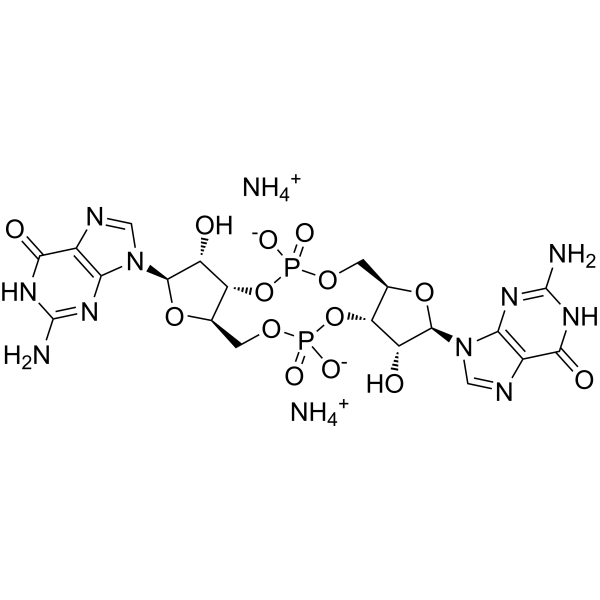
c-di-GMP diammonium; cyclic diguanylate diammonium; 5GP-5GP diammonium
|
STING
Endogenous Metabolite
|
Cancer
|
|
Cyclic-di-GMP diammonium is a STING agonist and a bacterial second messenger that coordinates different aspects of bacterial growth and behavior, including motility, virulence, biofilm formation, and cell cycle progression. Cyclic-di-GMP diammonium has anti-cancer cell proliferation activity and also induces elevated CD4 receptor expression and cell cycle arrest. Cyclic-di-GMP diammonium can be used in cancer research .
|
-
- HY-N8287
-
|
|
Microtubule/Tubulin
|
Cancer
|
|
Oxaline is a fungal alkaloid that can be isolated from Penicillium oxalicum. Oxaline inhibits tubulin polymerization, resulting in cell cycle arrest at the M phase .
|
-
- HY-107780A
-
|
c-di-GMP sodium; cyclic diguanylate sodium; 5GP-5GP sodium
|
STING
Endogenous Metabolite
|
Cancer
|
|
Cyclic-di-GMP sodium is a STING agonist and a bacterial second messenger that coordinates different aspects of bacterial growth and behavior, including motility, virulence, biofilm formation, and cell cycle progression. Cyclic-di-GMP sodium has anti-cancer cell proliferation activity and also induces elevated CD4 receptor expression and cell cycle arrest. Cyclic-di-GMP sodium can be used in cancer research .
|
-
- HY-110382
-
|
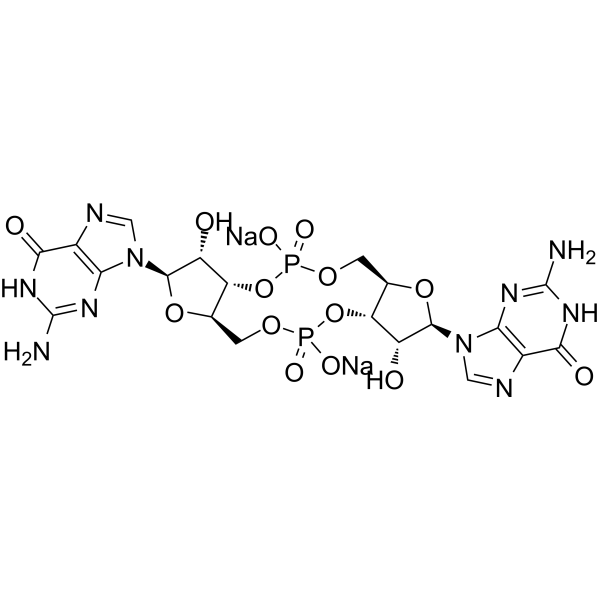
c-di-GMP disodium; cyclic diguanylate disodium; 5GP-5GP disodium
|
STING
Endogenous Metabolite
|
Cancer
|
|
Cyclic-di-GMP disodium is a STING agonist and a bacterial second messenger that coordinates different aspects of bacterial growth and behavior, including motility, virulence, biofilm formation, and cell cycle progression. Cyclic-di-GMP disodium has anti-cancer cell proliferation activity and also induces elevated CD4 receptor expression and cell cycle arrest. Cyclic-di-GMP disodium can be used in cancer research .
|
-
- HY-107780
-
|
c-di-GMP; cyclic diguanylate; 5GP-5GP
|
STING
Endogenous Metabolite
|
Cancer
|
|
Cyclic-di-GMP is a STING agonist and a bacterial second messenger that coordinates different aspects of bacterial growth and behavior, including motility, virulence, biofilm formation, and cell cycle progression. Cyclic-di-GMP has anti-cancer cell proliferation activity and also induces elevated CD4 receptor expression and cell cycle arrest. Cyclic-di-GMP can be used in cancer research .
|
-
- HY-171034
-
|
|
Interleukin Related
TNF Receptor
PAK
|
Inflammation/Immunology
|
|
PQA-18 is a unique PAK2 inhibitor (IC50: 10 nM). PQA-18 has immunosuppressing effects. PQA-18 suppresses IL2, IL4, IL6, and TNFα. PQA-18 inhibits the population of a subset of regulatory T cells and the immunoglobulin (Ig) production against T cell-dependent antigens as well as alleviates dermatitis in mice .
|
-
- HY-148174
-
|
|
DGK
|
Cancer
|
|
JNJ-3790339, a Ritanserin (HY-10791) analog, is a potent and selective diacylglycerol kinase (DGKα) inhibitor with an IC50 of 9.6 μM. JNJ-3790339 has induction of toxicity in malignant cells, and improves ability to upregulate T cell activation .
|
-
- HY-P991561
-
|
|
CD47
|
Cancer
|
|
AO-176 is a humanized anti-CD47 IgG2 monoclonal antibody. AO-176 induces tumor phagocytosis through blocking the CD47-SIRPα interaction. AO-176 preferentially binds to tumor versus normal cells and directly kills tumor by a cell autonomous mechanism not ADCC (antibody-dependent cell-mediated cytotoxicity). AO-176 demonstrates dose-dependent antitumor activity in tumor xenograft models. AO-176 can be used for the researches of cancer, such as lymphoma .
|
-
- HY-P99445
-
|
APG101; CAN008
|
TNF Receptor
|
Inflammation/Immunology
Cancer
|
|
Asunercept (APG101; CAN008) is a soluble CD95-Fc fusion protein (hIgG1) targeting CD95L. Asunercept disrupts CD95/CD95L signaling by selectively binding to CD95L. Asunercept can be used in the research of glioblastoma multiforme (GBM), myelodysplastic syndrome (MDS), and graft-versus-host disease (GvHD) .
|
-
- HY-14942A
-
|
RTA 744; WP 744; WP 769 hydrochloride
|
NF-κB
Apoptosis
Caspase
Drug Derivative
|
Neurological Disease
Cancer
|
|
Berubicin (RTA 744) hydrochloride is a Doxorubicin (HY-15142A) analog that can cross the blood-brain barrier. Berubicin hydrochloride inhibits P-gp and MRP1-mediated efflux and suppresses glioblastoma multiforme (GBM). Berubicin hydrochloride exerts toxic effects on leukemia cells by activating nuclear factor κB (NF-κB) and induces apoptosis in neuroblastoma cells. Berubicin hydrochloride can be used in the study of tumors related to the nervous system .
|
-
- HY-175354
-
|
|
PROTACs
Epigenetic Reader Domain
|
Cancer
|
|
PROTAC BET Degrader-13 (Compound 34) is a TRIM21-based PROTAC (TRIMTAC) degrader targeting BET. PROTAC BET Degrader-13 significantly degrades PML-eGFP-BRD4 fusion protein with a near-complete loss of EGFP+ nuclear puncta with an EC50 of 1.4 μM . Pink: BET ligand (HY-13030); Blue: E3 ligase ligand (HY-W1125585); Black: linker
|
-
- HY-185205
-
|
|
PI3K
Akt
|
Cancer
|
|
VVD-484 is a PI3K p110α inhibitor with an IC50 of 0.59 μM against human targets.,VVD-484, classified as a "silent ligand", forms a covalent bond with Cys242 of PI3K p110α without disrupting the p110α-KRAS G12C interaction. VVD-484 inhibits phosphorylation (S473) of AKT via a RAS-independent pathway. VVD-484 can be used in the research of HER2-overexpressing cancers .
|
-
- HY-181663
-
|
|
PD-1/PD-L1
JAK
|
Cancer
|
|
PJ27 is a dual PD-1/PD-L1/JAK1 inhibitor, with an IC50 of 414 nM against PD-1/PD-L1, an IC50 of 786 nM against JAK1, a Ka of 294 nM for human PD-1/PD-L1, and a Ka of 473 nM for murine PD-1/PD-L1. PJ27 promotes the infiltration of CD3 +CD8 + and CD3 +CD4 + cells into the tumor microenvironment and exerts a significant immune activation effect. PJ27 inhibits tumor growth in a dose-dependent manner in the LLC lung cancer mouse model. PJ27 is applicable to relevant research on lung cancer .
|
-
- HY-143461
-
|
|
Casein Kinase
|
Cancer
|
|
CK2 inhibitor 3 is a potent CK2 inhibitor with IC50 value of 280 nM. CK2 inhibitor 3 inhibits endocellular CK2, significantly affects viability of tumour cells and shows remarkable selectivity on a panel of 320 kinases .
|
-
- HY-174903
-
|
|
Itk
|
Inflammation/Immunology
|
|
ITK-IN-6 is a highly potent and selective ITK inhibitor (Kd = 387 nM). ITK-IN-6 directly binds to the ITK kinase domain. ITK-IN-6 blocks the release of pro-inflammatory cytokines and the activation and differentiation of Th2 and Th17 cells. ITK-IN-6 improves asthma progression by reducing inflammatory cell infiltration, mucus and IgE production. ITK-IN-6 significantly inhibits airway inflammation and is used in asthma research .
|
-
- HY-151426
-
|
|
Apoptosis
|
Cancer
|
|
Anticancer agent 83 is a potent anticancer agent, inhibits LOX IMVI cells growth with a GI50 value of 0.15 mM. Anticancer agent 83 reduces mitochondrial membrane potential and induces DNA damage to induces leukemia cells apoptosis .
|
-
- HY-156578
-
|
|
DGK
HIV
|
Infection
Cancer
|
|
DGKα-IN-8 (Example 51) is a DGKα inhibitor (IC50=22.491 nM; EC50=0.256 nM). DGKα-IN-8 can be used to study cancer, including solid tumors, and viral infections, such as HIV or hepatitis B virus infection .
|
-
- HY-14174
-
MRK-560
4 Publications Verification
|
γ-secretase
|
Neurological Disease
Cancer
|
|
MRK-560, a chemical probe, is an orally active, brain barrier-penetrated γ-Secretase inhibitor, reducing Aβ peptide in rat brain and cerebrospinal fluid. MRK-560 decreases mutant NOTCH1 processing by selectively inhibiting PSEN1. MRK-560 can be used in studies of Alzheimer's disease and T-cell acute lymphoblastic leukaemia (T-ALL) .
|
-
- HY-117513
-
|
|
Proteasome
Apoptosis
|
Cancer
|
|
CEP1612 is a dipeptidyl proteasome inhibitor with the IC50 of 60 nM. CEP1612 induces p21(WAF1)and p27(KIP1) expression and cell apoptosis. CEP1612 shows anticancer activity in vivo .
|
-
- HY-N11723
-
|
Katenarin
|
CCR
CXCR
p38 MAPK
JNK
Calcium Channel
|
Infection
Metabolic Disease
Inflammation/Immunology
|
|
Catenarin, an anthraquinone compound, inhibits CCR5- and CXCR4-mediated chemotaxis. Catenarin reduces the phosphorylation of mitogen-activated protein kinases (p38 and JNK) and their upstream kinases (MKK6 and MKK7), and calcium mobilization. Catenarin shows anti-inflammatory effect and suppresses leukocyte migration in the diabetes. Catenarin exhibits significant inhibitory effects against Gram-positive bacteria. Catenarin prevents type 1 diabetes (T1D) in nonobese diabetic mice [1][2].
|
-
- HY-181546
-
|
|
Btk
PERK
Syk
HMG Family
|
Cancer
|
|
Ibt-DOX is a BTK inhibitor with an IC50 of 2.89 nM. Ibt-DOX is also a targeted covalent activated chemotherapeutic agent composed of the targeting ligand Ibrutinib (HY-10997), Doxorubicin (DOX) (HY-15142A), α-MAA (HY-W017180), and a linker (HY-Y0892). Ibt-DOX specifically binds to BTK and releases DOX, synergistically achieving BTK inhibition and chemotherapeutic killing, significantly enhancing toxicity against B-cell lymphoma cells and greatly reducing the toxic side effects of DOX on BTK-negative cells. Ibt-DOX can be used in lymphoma-related research .
|
-
- HY-137325A
-
|
|
Calcium Channel
|
Metabolic Disease
|
|
2-Chloro-ATP sodium (2-Chloro ATP) is an adenine nucleotide and an analog of ATP. It is an antagonist of the purinergic P2Y1 receptor and inhibits intracellular calcium mobilization induced by ADP (HY-W010918) in Jurkat cells expressing the human receptor (Ki=2.3 μM). 2-Chloro-ATP sodium is an agonist of the purinergic P2X receptor and induces inward currents in HEK293 cells expressing human bladder smooth muscle or rat PC12 forms of the receptor (EC50=0.5 and 2.5 μM). 2-Chloro-ATP sodium induces relaxation of precontracted guinea pig cecal strips in a concentration-dependent manner. 2-Chloro-ATP sodium has been used to study the substrate specificity of cyclic nucleotide-dependent protein kinases such as protein kinase A (PKA) and PKG.
|
-
- HY-181653
-
|
|
PROTACs
E1/E2/E3 Enzyme
DNA/RNA Synthesis
JAK
STAT
Apoptosis
|
Cancer
|
|
PROTAC SKP2 Degrader-1 is a PROTAC degrader targeting SKP2, with a Kd value of 6.28 μM. PROTAC SKP2 Degrader-1 induces targeted degradation of SKP2 via the ubiquitin-proteasome system. PROTAC SKP2 Degrader-1 stabilizes the expression of SOCS1 and regulates the expression of immunoproteasomes through the JAK/STAT pathway, thereby inhibiting tumor cell proliferation. PROTAC SKP2 Degrader-1 is applicable for cancer-related research .
|
-
- HY-186198
-
|
Salirasib methoxymethyl ester
|
Ras
|
Others
|
|
FTS-MOM (Salirasib methoxymethyl ester), a Salirasib (FTS) (HY-14754) derivative, is a selective Rap1 inhibitor with selectivity over Ras. FTS-MOM inhibits GTP loading of Rap1 in quiescent and activated T cells. FTS-MOM inhibits Rap1-dependent T cell adhesion to ICAM-1 .
|
-
- HY-139702
-
|
|
Integrin
Apoptosis
Caspase
|
Cancer
|
|
α5β1 integrin agonist-1 is an α5β1 integrin agonist, with an EC50 of 1.5 nM. α5β1 integrin agonist-1 inhabits α4β1 integrin (IC50 = 2.99 μM) in Jurkat/VCAM-1 adhesion assayα5β1 integrin agonist-1 induces concentration-dependent apoptosis and activates the caspase 3/7 pathway in α5β1 integrin-expressing K562 cancer cells. α5β1 integrin agonist-1 can be used for the study of cancer .
|
-
- HY-W777675
-
|
NSC 270912-13C4
|
Isotope-Labeled Compounds
DNA/RNA Synthesis
|
Others
|
|
2,5-Deoxyfructosazine- 13C4 (NSC 270912- 13C4) is the 13C-labeled 2,5-Deoxyfructosazine (HY-135078). 2,5-Deoxyfructosazine is a pyrazine derivative that can be found in cured tobacco and is used as a flavoring agent in the food and tobacco industry. Pyrazines, including 2,5-deoxyfructosazine, can be produced either by pyrolytic decomposition of natural compounds or by the reaction of sugars with alcoholic ammonia. 2,5-Deoxyfructosazine is also formed by the breakdown of D-glucosamine at neutral pH. Like glucosamine, 2,5-deoxyfructosazine has DNA strand breakage activity and strongly inhibits IL-2 production by Jurkat cells stimulated with phytohemagglutinin (IC50=~1.25 mM).
|
-
- HY-124798
-
|
|
mTOR
|
Neurological Disease
Inflammation/Immunology
Cancer
|
Rheb inhibitor NR1 is a Rheb inhibitor with an IC50 of 2.1 µM in the Rheb-IVK assay. Rheb inhibitor NR1 can directly bind Rheb in the switch II domain and selectively inhibit the activation of mechanistic target of rapamycin complex 1 (mTORC1). Rheb inhibitor NR1 inhibits the phosphorylation of mTORC1 driven T389pS6K1 and increases the phosphorylation of S473pAKT in a dose-dependent manner. Rheb inhibitor NR1 does not influence mTORC2 activity .
(Rheb-IVK: Rheb-dependent mTORC1 kinase activity)
|
-
- HY-N7085
-
|
5,7-Dimethoxycoumarin; Limettin
|
Environmental Pollutants
ERK
p38 MAPK
JNK
|
Neurological Disease
Inflammation/Immunology
Cancer
|
|
Citropten (5, 7-dimethoxycoumarin) is one of the coumarin derivatives. Citropten is an effective oral anticancer agent. Citropten has anti-proliferative activity against A2058 and B16 melanoma cells. Citropten exerts anti-inflammatory effects through the NFκB and MAPK signaling pathways. Citropten acts as an antidepressant through heat shock protein-70, monoamine oxidase-A and inhibition of apoptosis .
|
-
- HY-P991149
-
|
YH32367; ABL105
|
TNF Receptor
|
Cancer
|
|
Nesfrotamig (YH32367; ABL105) is a bispecific activator targeting HER2 and 4-1BB. The Kd values of Nesfrotamig for human HER2 and human 4-1BB are 0.48 nM and 3.36 nM, respectively. By blocking tumor cell growth signals, activating HER2-dependent local 4-1BB in tumors to maintain T cell survival, and inducing NK cell-mediated antibody-dependent cellular cytotoxicity, Nesfrotamig enhances the cytotoxicity and tumor infiltration ability of immune cells. Nesfrotamig promotes the generation of tumor-specific memory T cells, drives T cell-mediated tumor lysis, exhibits significant anti-tumor efficacy against both HER2-positive and HER2-low-expressing tumors, and shows synergistic activity when combined with anti-PD-1 antibodies. In cynomolgus monkey studies, Nesfrotamig demonstrates good safety and is suitable for research related to HER2-positive and HER2-low-expressing tumors .
|
-
- HY-149773S
-
|
|
MAP4K
|
Inflammation/Immunology
Cancer
|
|
HPK1-IN-40 (compound 49) is a potent and selective HPK1 inhibitor with an IC50 of 0.9 nM. HPK1-IN-40 reinvigorates T-cell receptor (TCR) signaling, promoting T-cell function and cytokine production in T cells while having anti-cancer activity .
|
-
- HY-149917
-
|
|
PROTACs
Itk
|
Cancer
|
|
ITK degrader 1 is a highly selective degrader of interleukin-2-inducible T-cell kinase (ITK; DC50=3.6 nM in vivo in mice), with good plasma exposure levels. ITK degrader 1 induces rapid, and prolonged ITK degradation and suppresses IL-2 secretion (EC50=35.2 nM, Jurkat cells) stimulated by anti-CD3 antibodyin vivo. ITK degrader 1 consists of target protein ligand (red part) ITK ligand 1 (HY-168387), PROTAC linker (black part) Piperidine-C2-piperazine-Boc (HY-168388) and E3 ubiquitinase ligand (blue part) Thalidomide 5-fluoride (HY-W087383). E3 ubiquitinase and PROTAC linker can form Thalidomide-piperidine-C2-piperazine-Boc (HY-168389) .
|
-
- HY-P10838
-
|
|
PD-1/PD-L1
Apoptosis
|
Cancer
|
|
PL120131 is a PD-1 antagonist, can specifically blocking the interaction between PD-1 and PD-L1, thereby effectively inhibiting the PD-1-mediated apoptosis signaling pathway. PL120131 rescues lymphocytes from apoptosis, maintains the survival and activity of T cells, and induces cytotoxic T lymphocytes to exert killing effects and recognize macrophages and dendritic cells. PL120131 can be used in research related to breast cancer and various malignant tumors .
|
-
- HY-P11865
-
|
|
Caspase
Apoptosis
|
Cancer
|
|
Ac-ATS010-KE is a selective polypeptide inhibitor of caspase-3. Ac-ATS010-KE protects cells from FasL-induced apoptosis. The unmethylated form of Ac-ATS010-KE exhibits better cell viability than the fully methylated form. Ac-ATS010-KE can be used in research on cancers such as colorectal cancer and the development of caspase-3-targeted molecular probes .
|
-
- HY-182807
-
|
|
|
Others
|
|
CRBN ligand-899 is a CRBN ligand that can be used for the synthesis of PROTACs, such as IBA-12 (HY-182799) .
|
-
- HY-181708
-
-
- HY-181678
-
|
|
DNA-PK
HDAC
Apoptosis
Mitochondrial Metabolism
DNA/RNA Synthesis
|
Cancer
|
|
DNA-PK/HDAC6-IN-1 is a selcetive and orally active dual DNA-PK and HDAC6 inhibitor with IC50 values of 84.2 and 64.8 nM. DNA-PK/HDAC6-IN-1 suppresses cancer cells proliferation, induces cancer cell cycle G2/M arrest, apoptosis, and decreases the mitochondrial membrane potential. DNA-PK/HDAC6-IN-1 induces DNA damage and elevates γ-H2AX levels. DNA-PK/HDAC6-IN-1 exhibits antitumor efficacy in AML animal mouse model. DNA-PK/HDAC6-IN-1 can be used for the research of acute myeloid leukemia .
|
-
- HY-146672
-
|
|
Itk
|
Cancer
|
|
ITK inhibitor 6 (compound 43) is a potent and selective ITK inhibitor with IC50s of 4 nM, 133 nM, 320 nM, 2360 nM, 155 nM for ITK, BTK, JAK3, EGFR, LCK, respectively. ITK inhibitor 6 inhibits phosphorylation of PLCγ1 and ERK1/2. ITK inhibitor 6 shows antiproliferative activities .
|
-
- HY-181020
-
|
|
Phosphodiesterase (PDE)
p38 MAPK
Akt
mTOR
ERK
|
Cancer
|
|
Deltafluorine is a phosphodiesterase delta (PDEδ) inhibitor with an IC50 of 27 nM, a KD of 148 nM. Deltafluorine covalently modifies the specific glutamate residue p.E88 in the ligand binding site of PDEδ, interfering with its chaperone function. Deltafluorine inhibits signaling through the MAPK and Akt-mTOR pathway, reduces ERK1/2 expression. Deltafluorine reduces tumor volume in an autochthonous mouse model of Kras-driven lung adenocarcinoma. Deltafluorine can be used for the research of lung adenocarcinoma .
|
-
- HY-169318
-
-
- HY-136250A
-
|
|
PROTACs
CDK
|
Cancer
|
|
BSJ-03-204 triTFA is a PROTAC connected by ligands for Cereblon and CDK. BSJ-03-204 triTFA is a potent and selective Palbociclib-based CDK4/6 dual degrader (PROTAC), with IC50s of 26.9 nM and 10.4 nM for CDK4/D1 and CDK6/D1, respectively. BSJ-03-204 triTFA does not induce IKZF1/3 degradation and has anti-cancer activity .
|
-
- HY-136250
-
|
|
PROTACs
CDK
|
Cancer
|
|
BSJ-03-204 is a PROTAC connected by ligands for Cereblon and CDK. BSJ-03-204 is a potent and selective Palbociclib-based CDK4/6 dual degrader (PROTAC), with IC50s of 26.9 nM and 10.4 nM for CDK4/D1 and CDK6/D1, respectively. BSJ-03-204 does not induce IKZF1/3 degradation and has anti-cancer activity .
|
-
- HY-169317
-
-
- HY-176273
-
|
|
ROR
Interleukin Related
|
Inflammation/Immunology
|
|
RORγt inverse agonist 35 (Compound 22) is a RORγt inverse agonist with an IC50 of 1.51 μM. RORγt inverse agonist 35 significantly inhibits Th17 differentiation and proinflammatory properties in human CD4 + T cells. RORγt inverse agonist 35 can be used for research of Th17-driven autoimmune diseases, such as psoriasis, multiple sclerosis, and inflammatory bowel disease (IBD) .
|
-
- HY-176244
-
|
|
Histone Acetyltransferase
|
Cancer
|
|
KI-TOX-A3 is a TOX protein-protein interaction inhibitor that blocks the TOX-KAT7 protein-protein interaction with an IC50 of 0.51 μM. KI-TOX-A3 induces proteasomal degradation of TOX, restores KAT7-mediated H3K14 acetylation, reverses exhaustion of CD8 + T cells, and inhibits the proliferation of T cell acute lymphoblastic leukemia (T-ALL) cells. KI-TOX-A3 shows promise for use in studies of hematological malignancies such as T-ALL .
|
-
- HY-183639
-
|
|
Succinate Receptor 1
Apoptosis
|
Cancer
|
|
SUCNR1 antagonist-1 is an orally active SUCNR1 antagonist. SUCNR1 antagonist-1 forms stable, water-bridged hydrogen bonds with key residue Glu22 1.31 to stabilize binding conformation and modulates protein conformational flexibility. SUCNR1 antagonist-1 blocks succinate-mediated SUCNR1 signaling and induces cell apoptosis. SUCNR1 antagonist-1 can be used for the research of colorectal carcinoma .
|
-
- HY-159649
-
|
|
DGK
PERK
Interleukin Related
|
Inflammation/Immunology
Cancer
|
|
BMS-986408 is an orally active inhibitor of DGKα and DGKζ, with IC50 values of 0.0003 μM and 0.002 μM, respectively. BMS-986408 activates intratumoral T cell responses, enhances the priming and expansion of tumor-reactive T cells in tumor-draining lymph nodes, and functions as an immunostimulant. BMS-986408 can be used in the research of tumors .
|
-
- HY-N19427
-
|
|
NO Synthase
|
Inflammation/Immunology
Cancer
|
|
25S-Anguivioside XV (Compound 8) is a steroidal glycoside. 25S-Anguivioside XV is isolated from the unripe berries of Solanum nigrum L. 25S-Anguivioside XV inhibits LPS-induced NO production with an IC50 of 49.35 μM. 25S-Anguivioside XV exhibits antiproliferative activity against hepatoma cells .
|
-
- HY-P992487
-
|
|
Claudin
Fc Receptor (FcR)
Interleukin Related
|
Inflammation/Immunology
Cancer
|
|
ZL-1211 is an anti-CLDN18.2 monoclonal antibody. ZL-1211 exhibits enhanced binding affinity to CD16A. ZL-1211 induces ADCC-mediated cell lysis and triggers the production of IFNγ, TNFα and IL6. ZL-1211 promotes antibody-dependent cellular cytotoxicity. ZL-1211 exerts anti-tumor activity in a mouse xenograft model of gastric cancer. ZL-1211 can be used for the research of gastric cancer .
|
-
- HY-157469
-
|
NPD3064
|
HIV
|
Infection
|
|
TNT-i (NPD3064) is an inhibitor targeting M-Sec. TNT-i inhibits M-Sec-induced tunneling nanotube (TNT) formation reversibly. TNT-i reduces wild-type HIV-1 production in macrophages and M-Sec-expressing T cells. TNT-i shows low cytotoxic effects on macrophages and T cells. TNT-i can be used for the research of HIV-1 infection .
|
-
- HY-P992162
-
|
|
Orexin Receptor (OX Receptor)
Interleukin Related
|
Inflammation/Immunology
Cancer
|
|
23ME-00610 is a humanized effector-function-null IgG1 antibody targeting CD200R1, with a Kd of <0.1 nM for hCD200R1. 23ME-00610 blocks the binding of CD200 to CD200R1 and inhibits the recruitment of the downstream adaptor protein DOK2 to CD200R1. 23ME-00610 restores IL-2 production suppressed by CD200. 23ME-00610 induces cytokine production in cells. 23ME-00610 enhances cell-mediated tumor cell killing in vitro. 23ME-00610 can be used for melanoma research .
|
-
- HY-153793
-
|
DGKζ-IN-1
|
DGK
IFNAR
Interleukin Related
ERK
|
Cancer
|
|
Alcudacigib (ASP1570; DGKζ-IN-1) is an orally active diacylglycerol kinase ζ (DGKζ) inhibitor, with an IC50 of 4.7 nM against human DGKζ and an IC50 of 3.0 nM against mouse DGKζ. Alcudacigib selectively inhibits the kinase activity of DGKζ and induces proteasome-dependent degradation of DGKζ protein. Alcudacigib enhances the anti-tumor functions of T cells and NK cells. Alcudacigib can be used for the research of advanced/metastatic solid tumors .
|
-
- HY-175281
-
|
|
PROTACs
Src
Discoidin Domain Receptor
Bcr-Abl
Apoptosis
|
Cancer
|
|
SJ11646 is a Dasatinib (HY-10181)-based LCK PROTAC degrader with a DC50 of 0.00838 pM. SJ11646 has potent cytotoxicity against LCK-activated T-cell acute lymphoblastic leukemia (T-ALL) cells and primary leukemia samples with drastically prolonged suppression of LCK signaling, and induces T-ALL apoptosis. SJ11646 binds to 51 human kinases with a high affinity (particularly ABL1, KIT, and DDR1). SJ11646 has superior antileukemic efficacy in T-ALL mice model. . Pink: LCK ligand (HY-107447); Blue: CRBN ligase ligand (HY-163169); Black: linker (HY-76667)
|
-
- HY-159730
-
|
|
Aminotransferases (Transaminases)
|
Inflammation/Immunology
Cancer
|
|
ERG245 is a selective amino acid aminotransferase (BCAT1) inhibitor with a human IC50 of 0.5 nM. ERG245 enhances oxidative phosphorylation (OXPHOS) in CD8 + T cells by specifically inhibiting BCAT1 activity, thereby increasing the cytotoxicity of CD8 + T cells. ERG245 shows anti-inflammatory and anti-tumor activities. ERG245 can be used for the researches of cancer anf inflammation, such as colitis and colon cancer .
|
-
- HY-181096
-
|
|
PD-1/PD-L1
|
Inflammation/Immunology
Cancer
|
|
PD-L1-IN-9 is a PD-L1 inhibitor with an IC50 of 110.85 nM. PD-L1-IN-9 has a Kd of 319 nM for human PD-L1 and a Kd of 450 nM for murine PD-L1. PD-L1-IN-9 blocks the PD-1/PD-L1 interaction, restores T cell-mediated anti-tumor immunity, and induces PD-L1 degradation in tumor tissues. PD-L1-IN-9 exhibits anti-tumor activity and can be used in the research of tumors such as melanoma .
|
-
- HY-N11739
-
|
|
NF-κB
|
Inflammation/Immunology
|
|
Helenalin isobutyrate is an NF-κB (p65 subunit) inhibitor with anti-inflammatory activity. Helenalin isobutyrate irreversibly alkylates cysteine sulfhydryl groups in the p65 subunit to inhibit NF-κB complex DNA binding activity .
|
-
- HY-176535
-
|
BBC0115
|
Epigenetic Reader Domain
Interleukin Related
STAT
|
Inflammation/Immunology
|
|
KB-0118 (BBC0115) is an orally active BET bromodomain inhibitor. KB-0118 selective binds to BRD2 and BRD4 over BRD3, with Kd values of 36.7 μM for BRD2 BD1 and 47.4 μM for BRD4 BD1. KB-0118 inhibits pro-inflammatory cytokines, including TNF, IL-1β, and IL-23a and selectively suppresses Th17 cell differentiation. KB-0118 modulates Th17-driven inflammation occurs through epigenetic suppression of BRD4, confirmed by downregulation of STAT3 and BRD4 target genes. KB-0118 has immunomodulatory effects in inflammatory bowel disease (IBD) model.
|
-
- HY-185565
-
|
|
PD-1/PD-L1
CXCR
|
Cancer
|
|
PD-1/PD-L1-IN-63 is an orally active PD-1/PD-L1 inhibitor with an IC50 of 9.1 nM. PD-1/PD-L1-IN-63 blocks the PD-1/PD-L1 interaction, induces cancer cell death and inhibits tumor growth. PD-1/PD-L1-IN-63 can be used in the research of melanoma .
|
-
- HY-13305
-
|
|
HIV
HIV Integrase
Apoptosis
PARP
|
Infection
|
|
MK-2048 is a HIV-1 and HIV-1 integrase inhibitor. MK-2048 shows selective activity against HTLV-1-infected cells and retained potency against HIV-1 variants. MK-2048 induces apoptosis, inhibits cell growth, reduces proviral loads, and blocks HTLV-1 transmission and immortalization. MK-2048 can be used for the research of HIV-1 infection .
|
-
- HY-149760
-
|
|
PROTACs
Phosphatase
IFNAR
STAT
|
Cancer
|
|
PVD-06 is a selective PROTAC PTPN2 degrader with a DC50 of 217 nM (selectivity index >60-fold over PTP1B). PVD-06 induces PTPN2 degradation via a VHL-, ubiquitin, and proteasome-dependent pathway. PVD-06 can promote T cell activation and amplify IFN-γ-mediated anticancer activity. PVD-06 can be used to further investigate PTPN2 in diseases such as leukemia and melanoma . (Pink: PTPN2 ligand (HY-168691), Black: linker (HY-B0236), Blue: VHL ligand (HY-112078)).
|
-
- HY-NP134
-
|
|
Toll-like Receptor (TLR)
MyD88
NF-κB
Interleukin Related
IFNAR
|
Inflammation/Immunology
Cancer
|
|
Flagellin from S. typhimurium is a potent TLR5 agonist. Flagellin from S. typhimurium activates immune cells and inhibits the activity of melanoma cells. Flagellin from S. typhimurium activates the NF-κB pathway dependent on the TLR5/MyD88/TRAF6 signaling axis in cells. Flagellin from S. typhimurium induces a proinflammatory response in the primary chicken hepatocyte-nonparenchymal cell co-culture system by promoting IL-8 production, inhibiting IL-10 production, and increasing the IFN-γ/IL-10 ratio. Flagellin from S. typhimurium can be used for research on melanoma and inflammatory diseases .
|
-
- HY-172930
-
|
|
Molecular Glues
IKZF Family
Potassium Channel
|
Inflammation/Immunology
Cancer
|
|
PVTX-405 is a selective and oral active IKZF2 molecular glue degrader with a DC50 of 0.7 nM and a Dmax of 91%. PVTX-405 enhances degradation efficiency, significantly reduces off-target degradation, and alleviates hERG inhibition with IC50 of 48 µM. PVTX-405 significantly inhibits the growth of MC38 tumors, with greater synergistic anti-cancer efficacy in combination with immune checkpoint therapies (ICTs) (anti-PD1 or anti-LAG3) in the MC38 mouse tumor xenograft model using Crbn 391V C57BL/6 mice .
|
-
- HY-P10838A
-
|
|
PD-1/PD-L1
Apoptosis
|
Cancer
|
|
PL120131 acetate is a PD-1 antagonist, can specifically blocking the interaction between PD-1 and PD-L1, thereby effectively inhibiting the PD-1-mediated apoptosis signaling pathway. PL120131 acetate rescues lymphocytes from apoptosis, maintains the survival and activity of T cells, and induces cytotoxic T lymphocytes to exert killing effects and recognize macrophages and dendritic cells. PL120131 acetate can be used in research related to breast cancer and various malignant tumors .
|
-
- HY-134050
-
|
Apt-1
|
RIP kinase
Autophagy
Apoptosis
Beclin1
Necroptosis
|
Inflammation/Immunology
|
|
Apostatin-1 (Apt-1) is a potent TRADD inhibitor. Apostatin-1 can bind with TRADD-N (KD=2.17 μM), disrupting its binding to both TRADD-C and TRAF2. Apostatin-1 modulates the ubiquitination of RIPK1 and beclin 1. Apostatin-1 blocks apoptosis and restores cellular homeostasis by activating autophagy in cells with accumulated mutant tau, α-synuclein, or huntingtin .
|
-
- HY-155218
-
|
|
PROTACs
CDK
|
Cancer
|
|
TMX-2172 is a selective bivalent cereblon-recruiting PROTAC-based dual CDK2 and CDK5 degrader with IC50 values of 6.5 nM and 6.8 nM, respectively. TMX-2172 shows selectivity for CDK2 and CDK5 over other cell cycle CDKs (CDK1, CDK4, and CDK6) and transcriptional CDKs (CDK7 and CDK9). TMX-2172 inhibits CDK2/CDK5 enzymatic activity, induces their proteasomal degradation, reduces ASCL1 protein levels and half-life, induces cancer cell death, and exerts antiproliferative effects. TMX-2172 can be used for the research of ovarian cancer and small cell lung cancer .
|
-
- HY-174790
-
|
|
mRNA
|
Cancer
|
|
Firefly Luciferase mRNA is a reporter mRNA that can be transfected into cells to express firefly luciferase protein. Firefly Luciferase mRNA induces cytotoxicity in cancer cells at low concentrations. In cancer cells, the expression level of luciferase shows a non-linear relationship with the dose of Firefly Luciferase mRNA. When combined with the H2S-responsive bioluminescent probe (H-Luc), Firefly Luciferase mRNA enables bioluminescence-based detection of endogenous hydrogen sulfide in non-transgenic NAFLD cell models and NAFLD mouse models. Firefly Luciferase mRNA can be used in studies related to non-alcoholic fatty liver disease .
|
-
- HY-185492
-
-
- HY-183555
-
|
|
PROTACs
Epigenetic Reader Domain
|
Cancer
|
|
MS108 is a selective VHL-based eleven-nineteen leukemia protein (ENL) PROTAC degrader with DC50 of 0.6 nM. MS108 recruits VHL E3 ligase to induce ENL degradation in a VHL- and ubiquitin-proteasome system (UPS)-dependent manner. MS108 degrades the ENL paralog AF9, which shares a highly conserved YEATS domain with ENL. MS108 suppresses proliferation of cancer cells .
|
-
- HY-181648
-
|
|
Galectin
Apoptosis
|
Cancer
|
|
Gal-1-IN-1 is a potent and selective human galectin-1 (hGal-1) inhibitor with a Ki of 0.022 μM. Gal-1-IN-1 blocks hGal-1 binding to tumor cells and suppresses human galectin-1-induced pre-apoptosis state. Gal-1-IN-1 reduces hGal-1-expressing cancer cell viability. Gal-1-IN-1 can be used for the research of breast cancer .
|
-
- HY-148369
-
|
|
PROTACs
Deubiquitinase
Apoptosis
MDM-2/p53
|
Cancer
|
|
U7D-1 is a first-in-class potent and selective USP7 (ubiquitin-specific protease 7) PROTAC degrader, with a DC50 of 33 nM in RS4;11 cells. U7D-1 shows anticancer activity. U7D-1 induces apoptosis in Jeko-1 cells .
|
-
- HY-155175
-
|
|
Tim3
IFNAR
|
Cancer
|
|
TIM-3-IN-2 is a TIM-3 inhibitor. TIM-3-IN-2 blocks the interactions of TIM-3 with PtdSer, CEACAM1 and Gal-9, and inhibits the immunosuppressive function of TIM-3. TIM-3-IN-2 restores IFNγ release from peripheral blood mononuclear cells. TIM-3-IN-2 inhibits the proliferation of acute myeloid leukemia cells. TIM-3-IN-2 can be used for the research of acute myeloid leukemia .
|
-
- HY-173405
-
|
|
Ras
PI3K
Akt
|
Cancer
|
|
VVD-699 is a covalent blocker of the RAS-p110α interaction with oral activity. VVD-699 inhibits activation of PI3Kα (IC50: 104 nM in H358 cells) . VVD-699 inhibits phosphorylated AKT. VVD-699 can be used for the research of KRAS mutant/amplified cancer .
|
-
- HY-182048
-
|
|
PD-1/PD-L1
mTOR
|
Cancer
|
|
PD-1/PD-L1-IN-62 is a PD-L1 inhibitor and mTOR modulator. PD-1/PD-L1-IN-62 inhibits PD-L1 with an IC50 of 6.9 nM and abrogates immune suppression mediated by the PD-1/PD-L1 pathway. By inhibiting mTOR phosphorylation and downregulating the downstream target SREBP1, PD-1/PD-L1-IN-62 significantly reduces cholesterol and triglyceride levels to decrease lipid accumulation. PD-1/PD-L1-IN-62 promotes the infiltration of CD3 +CD8 + T cells into tumor tissues, thereby effectively inhibiting tumor growth. PD-1/PD-L1-IN-62 can be used for the research of hepatocellular carcinoma .
|
-
- HY-176812
-
|
|
Ras
PI3K
Akt
|
Cancer
|
|
VVD-849 is a RAS ligand. VVD-849 covalently binds to Cys242 in the RAS-binding domain of PI3K p110α and promotes RAS/PI3K interaction. VVD-849 partially inhibits pAKT (S473) in HER2-overexpressing tumors. VVD-849 can be used for the research of cancers such as breast cancer .
|
-
- HY-164548
-
|
|
HSP
Apoptosis
PI3K
Akt
NF-κB
|
Inflammation/Immunology
Cancer
|
|
WK88-1 is an apoptosis inducer and Hsp90 client protein inhibitor with antiproliferative and immunomodulatory activities. WK88-1 inhibits signaling pathways such as PI3K/Akt and NF-κB, and induces mitochondrial dysfunction and cell cycle arrest. WK88-1 effectively suppresses cancer cell migration and invasion, and reverses various EGFR mutations and resistance to Gefitinib (HY-50895). WK88-1 also regulates the differentiation of monocytes and dendritic cells, blocks the expression of multiple chemokines, inhibits immune cell migration and M1 marker transcription, and restores impaired endocytic activity. WK88-1 has been used in studies of breast cancer, non-small cell lung cancer with various EGFR mutations or Met amplification, and atherosclerosis and other related diseases .
|
-
- HY-P992439
-
|
|
CXCR
|
Cancer
|
|
PF-06747143 is recombinant anti-human antibody targeting CXCR4. PF-06747143 blocks CXCL12-induced calcium flux, F-actin polymerization, chemotaxis, cell migration, and leukemic cell bone marrow homing. PF-06747143 reduces tumor burden and improves survival in mouse models of hematologic malignancies. PF-06747143 can be used for the research of chronic lymphocytic leukemia, acute myeloid leukemia, and hematologic malignancies .
|
-
- HY-P1684
-
|
FOXP3 inhibitor P60
|
NF-κB
Nuclear Factor of activated T Cells (NFAT)
|
Infection
Inflammation/Immunology
Cancer
|
|
Peptide P60 is a FOXP3 inhibitor. Peptide P60 reduces the nuclear translocation of FOXP3 and impairs FOXP3-mediated inhibition of NF-κB and NFAT activity. Peptide P60 inhibits the immunosuppressive activity of regulatory T cells and restores the proliferation and activation of effector T cells. Peptide P60 induces lymphoproliferative autoimmune syndrome in neonatal ICR mice and reduces the number of CD4 +CD25 +Foxp3 + T cells in the spleen. Peptide P60 enhances the efficacy of AH1 (HY-P4193) peptide vaccine and recombinant adenovirus-based HCV NS3 vaccine in BALB/c mice, including protective effects against CT26 tumor implantation. Peptide P60 can be used in studies related to tumor immunity, viral infection and lymphoproliferative autoimmune syndrome .
|
-
- HY-174820
-
|
|
Necroptosis
RIP kinase
|
Inflammation/Immunology
Cancer
|
|
AZ'320 is an ATP-competitive necroptosis (EC50 of 4.9 μM) inhibitor and a RIPK1 (pKD of 5.45) inhibitor. AZ'320 inhibits necroptosis by inhibiting RIPK1 phosphorylation. AZ’320 prevents mortality of the mice and rescues temperature and body weight in SIRS mice models. AZ'320 can be used for researches of cancer and inflammation .
|
-
- HY-B0072
-
|
SDZ-ICS-930 free base
|
5-HT Receptor
nAChR
p38 MAPK
NF-κB
AP-1
Nuclear Factor of activated T Cells (NFAT)
JAK
|
Neurological Disease
Inflammation/Immunology
Cancer
|
|
Tropisetron is an orally active 5-HT3R antagonist (Ki = 5.3 nM) as well as being a potent and selective α7 nicotinic partial agonist (EC50 = 1.3 μM). Tropisetron prevents phosphorylation and activation of the p38 MAPK. Tropisetron inhibits both IL-2 gene transcription and IL-2 synthesis in stimulated T cells. Tropisetron inhibits the binding to DNA and the transcriptional activity of NFAT and AP-1. Tropisetron is anti-inflammatory and antiemetic. Tropisetron has antitumor and neuroprotective effects. Tropisetron can be studied in research for diseases including hemorrhagic cystitis, chronic joint inflammation, lung cancer and chronic cerebral hypoperfusion .
|
-
- HY-181869
-
|
|
PROTACs
Epigenetic Reader Domain
Apoptosis
|
Cancer
|
PROTAC BET Degrader-17 is a potent BET protein PROTAC degrader. By recruiting the VHL E3 ligase, PROTAC BET Degrader-17 specifically degrades BRD2, BRD3 (DC50=0.09 nM) and BRD4 (IC50=4.3 nM). PROTAC BET Degrader-17 exhibits strong anti-tumor activity in acute myeloid leukemia (AML) studies; it not only inhibits cancer cell proliferation, induces cell cycle arrest and apoptosis, but also effectively suppresses tumor growth in xenograft mouse models. PROTAC BET Degrader-17 can be used to explore targeted therapies for acute myeloid leukemia .
|
-
- HY-173011
-
|
|
PROTACs
Cyclophilin
HIV
HCV
|
Infection
|
|
RJS308 is a selective Cyclophilin A (CypA) PROTAC degrader. RJS308 induces ubiquitin-dependent CypA degradation by recruiting the VHL E3 ligase complex, and forms a ternary complex with CypA and VHL/elongin C/elongin B. RJS308 exhibits anti-HIV-1 and anti-HCV activities. RJS308 can be used in studies related to viral infections .
|
-
- HY-183887
-
|
|
PD-1/PD-L1
|
Cancer
|
|
PD-L1-IN-11 is a PD-L1 inhibitor with human PD-L1 IC50 and KD of 27.82 μM and 49.50 μM, respectively. PD-L1-IN-11 directly binds to PD-L1 via a dimer-locking mechanism, occluding the PD-1 interaction surface to disrupt PD-1/PD-L1 interaction. PD-L1-IN-11 can be used for the research of melanoma, colon carcinoma .
|
-
- HY-182047
-
|
|
PD-1/PD-L1
|
Cancer
|
|
PD-1/PD-L1-IN-61 is a PD-1/PD-L1 interaction inhibitor with a human IC50 of 5.3 nM. PD-1/PD-L1-IN-61 embeds into the hydrophobic pocket at the PD-L1 dimer interface, stabilizing binding through hydrogen bonds and π-π stacking with PD-L1 residues. PD-1/PD-L1-IN-61 acts as an immune activator, enhances immune-killing activity of peripheral blood mononuclear cells against cancer cells, restores T-cell immune function, and promotes IFN-γ secretion. PD-1/PD-L1-IN-61 can be used for the research of triple-negative breast cancer .
|
-
- HY-181920
-
|
|
PROTACs
Dengue Virus
|
Infection
|
|
RPG-01-132 is a DENV capsid protein PROTAC degrader, with a DC50 of 2.4 μM. RPG-01-132 blocks viral assembly, eliminates viral particles, and interferes with the non-structural functions of capsid protein. RPG-01-132 exhibits significant antiviral activity against all four DENV serotypes and the ST148 (HY-121663)-resistant DENV2 mutant strain. RPG-01-132 is applicable to research related to dengue virus infection .
|
-
- HY-P990980
-
|
CND-106; EMB-06
|
CD3
|
Inflammation/Immunology
Cancer
|
|
Cizutamig (CND-106) is a bispecific T-cell engager targeting BCMA and CD3. Cizutamig exhibits immunostimulatory and anti-tumor activities. Cizutamig can be used in research related to relapsed or refractory multiple myeloma and systemic lupus erythematosus .
|
-
- HY-175287
-
|
|
Integrin
|
Cancer
|
|
α5β1 integrin agonist-2 (Compound 2) is a selective α5β1 integrin agonist (EC50 = 45.98 nM). α5β1 integrin agonist-2 induces integrin activation. α5β1 integrin agonist-2 is applicable to the research of leukemia .
|
-
- HY-181507
-
|
|
CD28
IFNAR
TNF Receptor
Interleukin Related
|
Cancer
|
|
CD28-IN-3 is a CD28 inhibitor with an IC50 of 7.80 μM and a Kd of 52.45 μM. CD28-IN-3 selectively blocks the CD28-B7 interaction, thereby inhibiting CD28-mediated costimulation. CD28-IN-3 suppresses the production of proinflammatory cytokines IFN-γ, IL-2 and TNF-α. CD28-IN-3 can be used in the research of checkpoint-resistant cancers .
|
-
- HY-156659
-
|
|
Phosphatase
ERK
|
Inflammation/Immunology
|
|
NC1 is a selective non-competitive and allosteric lymphoid-specific tyrosine phosphatase (LYP) inhibitor, with a Ki value 4.3 μM. NC1 allosterically regulates LYP/PTPN22 activity by restricting WPD loop movement. NC1 inhibits LYP activity in lymphoid T cells and enhances T-cell receptor signaling. NC1 can be used for the research of autoimmune diseases .
|
-
- HY-168022
-
CAM2602
1 Publications Verification
|
Aurora Kinase
|
Cancer
|
|
CAM2602 is an orally active Aurora A-TPX2 protein−protein interaction inhibitor with a human Kd of 19 nM for Aurora A. CAM2602 increases the proportion of PH3 positive cells while reducing P-T288 Aurora A levels. CAM2602 arrests tumor xenograft growth in mice. CAM2602 can be used for the research of cancer, such as acute T cell leukemia .
|
-
- HY-176811
-
|
|
Ras
PI3K
Akt
|
Cancer
|
|
VVD-442 is an inhibitor targeting PI3Kα. VVD-442 covalently binds to Cys242 in the RAS-binding domain of PI3K p110α, induces conformational changes, and disrupts the interaction between PI3K p110α and RAS proteins. VVD-442 also blocks RAS-mediated PI3K activation. VVD-442 can be used in research related to RAS-mutant cancers and HER2-overexpressing cancers .
|
-
- HY-N0600
-
|
|
Interleukin Related
IFNAR
NF-κB
|
Inflammation/Immunology
|
|
Ginsenoside F3 is a saponin extracted from the leaves of Panax ginseng with immunoenhancing and antitumor immunostimulatory activities. Ginsenoside F3 upregulates RIPOR2 with a Kd value of 3.77 μM. Ginsenoside F3 enhances NF‑κB activation, upregulates T‑bet and downregulates GATA‑3, increases the production of IL‑2 and IFN‑γ, decreases the production of IL‑4 and IL‑10, reverses CD8⁺ T‑cell exhaustion, restores cytokine secretion, and enhances antitumor immunity in a mouse non‑small cell lung cancer model. Ginsenoside F3 can be used for the research of non-small cell lung cancer .
|
-
- HY-182374
-
|
|
Dipeptidyl Peptidase
Apoptosis
|
Cancer
|
|
AX8819 is a selective dipeptidyl peptidase II (DPP II) inhibitor with an IC50 of 0.88 nM. AX8819 induces caspase-dependent apoptosis. AX8819 exhibits low non-specific toxicity toward proliferating T cells. AX8819 can be used for the research of B cell chronic lymphocytic leukemia .
|
-
- HY-160258
-
|
GDP-Fucose-Am-Tz
|
Biochemical Assay Reagents
|
Others
|
|
GDP-Fucose-Tz (GDP-Fucose-Am-Tz) is a non-natural GDP-fucose analog bearing a Tetrazine group. As a precursor, GDP-Fucose-Tz enables the synthesis of GDP-fucose-ssDNA probes via inverse electron demand Diels-Alder reaction. GDP-Fucose-Tz participates in chemoenzymatic reactions to prepare GDP-fucose-Herceptin derivatives through conjugation with TCO-Herceptin .
|
-
- HY-181867
-
|
|
PROTACs
Epigenetic Reader Domain
Apoptosis
|
Cancer
|
|
PROTAC BET Degrader-16 (Compound A10) is a BET PROTAC degrader with a DC50 of 0.31 nM against BRD4, and it preferentially targets BRD4 over other BET family members. PROTAC BET Degrader-16 degrades BRD2, BRD3 and BRD4 via the ubiquitin-proteasome system, a process that requires target binding and recruitment of the CRBN E3 ligase. PROTAC BET Degrader-16 induces cell cycle arrest and promotes apoptosis. PROTAC BET Degrader-16 exerts anti-tumor activity against acute myeloid leukemia .
|
-
- HY-182035
-
|
|
HDAC
Apoptosis
|
Cancer
|
|
HDAC8-IN-16 is a selective histone deacetylase 8 (HDAC8) inhibitor with an IC50 of 0.16 μM. HDAC8-IN-16 induces cell apoptosis, triggers G2/M phase cell cycle arrest, and moderately inhibits cancer cell proliferation. HDAC8-IN-16 is applicable to relevant research on colorectal cancer .
|
-
- HY-182238
-
|
|
MAP4K
Interleukin Related
|
Cancer
|
|
HPK1-IN-69 is an orally active HPK1 inhibitor with an IC50 of 1.7 nM. HPK1-IN-69 inhibits the HPK1-mediated TCR signaling pathway, reduces the phosphorylation level of SLP76, and promotes the release of IL-2. HPK1-IN-69 exhibits in vivo anti-tumor activity in mouse models. HPK1-IN-69 can be used for the research of colorectal cancer and MC38 syngeneic tumors .
|
-
- HY-183077
-
|
|
Epigenetic Reader Domain
Molecular Glues
|
Cancer
|
|
BRD4 degrader-7 (Compound ZZ1) is a CTLH-dependent BRD4 degrader and c-Glue with a DC50 of 489 nM. BRD4 degrader-7 converts to a sulfinic acid derivative inside cells, interacts with the basic pocket of YPEL5, mediates the bridging of BRD4 BD1 to the YPEL5 subunit of the CTLH E3 ubiquitin ligase, and thereby promotes the formation of a ternary complex. BRD4 degrader-7 can be used in research on Ewing's sarcoma and leukemia .
|
-
- HY-182550
-
|
|
Dihydroorotate Dehydrogenase
|
Cancer
|
|
Indoluidin D is a selective dihydroorotate dehydrogenase (DHODH) inhibitor with a human DHODH IC50 of 210 nM. Indoluidin D selectively inhibits human DHODH activity, with induced effects rescuable by orotic acid. Indoluidin D promotes myeloid differentiation and inhibits cancer cell proliferation. Indoluidin D can be used for the research of acute promyelocytic leukemia .
|
-
- HY-182335
-
|
|
Itk
Trk Receptor
Interleukin Related
IFNAR
|
Inflammation/Immunology
|
|
PF-07245303 is a ITK/TRK inhibitor. PF-07245303 reduces the production of inflammatory cytokines such as IL-4 and IFNγ, and inhibits the phosphorylation of PLCγ1. PF-07245303 inhibits nerve growth factor-induced basophil activation and the phosphorylation of TRKA. PF-07245303 reduces oxazolone-induced ear swelling in mouse ear tissues. PF-07245303 is applicable to research related to atopic dermatitis .
|
-
- HY-P10102
-
Kp7-6
2 Publications Verification
|
Apoptosis
PERK
NF-κB
Caspase
JNK
|
Inflammation/Immunology
Cancer
|
|
Kp7-6 is a Fas mimetic peptide and also a Fas/FasL antagonist. Kp7-6 specifically binds to Fas and FasL, disrupts receptor complexes, and blocks downstream apoptosis signaling pathways. Kp7-6 inhibits the phosphorylation of ERK1-2, induces the phosphorylation of IκBα, and activates NF-κB. Kp7-6 inhibits the activation of caspase-8, caspase-3 and JNK, and suppresses human amylin-induced β-cell apoptosis. Kp7-6 inhibits FasL-induced lymphoid cytotoxicity and apoptosis. Kp7-6 reduces local tumor FasL expression, increases CD8 +Fas + T cell infiltration, and decreases tumor volume in pancreatic neuroendocrine tumor models. Kp7-6 prevents concanavalin A-induced liver injury in mice. Kp7-6 is applicable to research related to type 2 diabetes, concanavalin A-induced hepatitis and pancreatic neuroendocrine tumors .
|
-
- HY-142117
-
|
|
Calcium Channel
Chloride Channel
|
Others
|
|
Adenophostin A is an IP3 receptor (inositol 1,4,5-trisphosphate receptors) modulator and Ca 2+ releaser, with an IC50 of 1.3 nM, an EC50 of 1.4 nM, and a Ki of 0.18 nM in rats, and an IC50 of 0.95 nM in humans. Adenophostin A activates IP3 receptors, stimulates Ca 2+ release from intracellular stores and microsomes, inhibits the binding of [ 3H]IP3 to plasma membrane receptors, and activates chloride channels. Adenophostin A resists phosphorylation and dephosphorylation by IP3 metabolic enzymes to maintain its activity, and increases cytoplasmic [Ca 2+] levels via calcium mobilization from the endoplasmic reticulum of vascular smooth muscle cells. Adenophostin A is applicable to research related to hemorrhagic shock .
|
-
- HY-168654
-
|
|
Wee1
|
Cancer
|
|
WEE1 degrader 1 (Compound 10) is a CRBN-dependent molecular glue degrader of WEE1 and casein kinase 1α (CK1α) with sub-2 nM DC50 values for both targets. WEE1 degrader 1 can be used for the research of acute lymphoblastic leukemia, acute monocytic leukemia, acute promyelocytic leukemia, colorectal adenocarcinoma, diffuse large b cell lymphoma .
|
-
- HY-P2988B
-
|
|
Bacterial
HIV
|
Infection
|
|
Neuraminidase, arthrobacter ureafaciens is a neuraminidase derived from Arthrobacter ureafaciens. Neuraminidase, arthrobacter ureafaciens catalyzes the removal of sialic acid residues from cell surfaces and viral glycoconjugates. Neuraminidase, arthrobacter ureafaciens enhances HIV-1-mediated syncytium formation and promotes the viral binding and entry steps in the HIV-1 replication cycle .
|
-
- HY-P99884
-
|
PF-06801591
|
PD-1/PD-L1
|
Inflammation/Immunology
Cancer
|
|
Sasanlimab is a humanized IgG4 isotype anti-PD-1 antibody. Sasanlimab blocks PD-1 interaction with PD-L1/PD-L2, reverses PD-1-mediated inhibitory T-cell signaling, augments T-cell proliferation and cytokine production. Sasanlimab inhibits colon adenocarcinoma tumor growth, and accelerates graft-versus-host disease incidence via enhanced T-cell activity. Sasanlimab can be used for the research of cancer, such as bladder cancer and colon adenocarcinoma .
|
-
- HY-P991927
-
|
|
CD47
|
Cancer
|
|
ZL-1201 is a recombinant humanized monoclonal anti-CD47 IgG4 antibody. ZL-1201 disrupt the CD47-SIRPα interaction. ZL-1201 modulates the tumor microenvironment. ZL-1201 promotes tumor-associated macrophage phagocytic activity. ZL-1201 substantially enhances phagocytosis by M2 macrophages, but not by M1 macrophages. ZL-1201 in combination with both mAb and chemotherapy achieves the maximal antitumor effects in a variety of solid tumor models. ZL-1201 can be used in the study of lymphoma, breast cancer, ovarian cancer, head and neck squamous cell carcinoma, and gastric cancer .
|
-
- HY-N19727
-
|
|
Interleukin Related
IFNAR
TNF Receptor
Apoptosis
|
Infection
Cancer
|
|
Chamissonolide is a sesquiterpene lactone with cytotoxic, anti-inflammatory and trypanocidal activities. Chamissonolide reduces the mRNA levels of IL-2, IFN-γ, GM-CSF, iNOS and TNF-α, and upregulates the mRNA level of NF-ATc. Chamissonolide decreases the population of naturally occurring apoptotic cells. Chamissonolide can be used in research related to tumors, African trypanosomiasis and Chagas disease .
|
-
- HY-P992401
-
|
|
EGFR
CD3
PI3K
Akt
p38 MAPK
Caspase
Apoptosis
IFNAR
TNF Receptor
Interleukin Related
|
Cancer
|
|
M802 is an anti-HER2/CD3 bispecific antibody, with a Kd of 0.578 nM for human HER2 and a Kd of 71.2 nM for human CD3. M802 inhibits the PI3K/AKT and MAPK signaling pathways, suppresses tumor cell proliferation, activates caspase-3, and promotes tumor cell apoptosis (apoptosis). M802 recruits and activates CD3-positive immune cells, mediates cytotoxicity against HER2-positive tumor cells, and induces immune cells to secrete IFN-γ, TNF-α, IL-2 and IL-6. M802 exhibits anti-tumor efficacy in mice with gastric cancer xenografts. M802 can be used in research related to HER2-positive breast cancer, HER2-positive gastric cancer and other cancers. The recommended isotype control is human IgG1 kappa (HY-P99001) .
|
-
- HY-183539
-
|
|
DGK
Interleukin Related
|
Cancer
|
|
INCB191358 is a selective and orally active inhibitor of diacylglycerol kinase α/ζ/ι (DGKα/ζ/ι ) with IC50 values of 0.12, 0.36 and 0.36 nM. INCB191358 induces antigen-dependent T-cell activation, induces IL-2 production and enhances antitumor efficacy in combination with PD-1 blockade. INCB191358 can be used for the research of cancer, such as colon carcinoma .
|
-
- HY-125542
-
|
|
Apoptosis
JAK
STAT
ERK
PI3K
Akt
|
Cancer
|
|
DCZ3301 is an apoptosis inducer. DCZ3301 modulates JAK2/STAT3, ERK1/2, and PI3K/AKT pathways. DCZ3301 induces G2/M and M phase cell cycle arrest and inhibits cell proliferation and viability. DCZ3301 enhances DNA damage, inhibits DNA repair, and suppresses angiogenesis. DCZ3301 can be used for the research of diffuse large B-cell lymphoma, multiple myeloma and leukemia/lymphoma .
|
-
- HY-P990033
-
|
CC-95251; BMS-986351
|
CD47
|
Cancer
|
|
Anzurstobart is a CD47/SIRPα inhibitor with human SIRPα Kd of 0.0541 nM and human SIRPα IC50 of 100 nM. Anzurstobart binds SIRPα at a CD47-overlapping site, blocks CD47-SIRPα interactions, inhibits CD47-SIRPα axis signaling, and binds across 6 prevalent human SIRPα haplotypes. Anzurstobart binds SIRPγ and inhibits CD47-SIRPγ interactions. Anzurstobart can be used for the research of non-Hodgkin's lymphoma, colorectal cancer, squamous cell carcinoma of the head and neck, diffuse large B-cell lymphoma, and advanced solid and hematologic malignancies .
|
-
- HY-P990716
-
|
AZD7789
|
PD-1/PD-L1
Tim3
|
Inflammation/Immunology
|
|
Sabestomig (AZD7789) is a monovalent bispecific antibody targeting PD-1 and TIM-3. Sabestomig binds to PD-1 and an epitope in the TIM-3 IgV domain outside the phosphatidylserine-binding cleft, thereby precisely regulating immune responses. Sabestomig promotes IL-2 production, efferocytosis and cross-presentation of tumor antigens, and enhances the release of anti-tumor T cell cytokines, cytotoxicity, and secretion of IFN-γ. Sabestomig inhibits the growth of solid tumors, prolongs the duration of tumor suppression, and significantly enhances anti-tumor responses following anti-PD-1 therapy. Sabestomig has been used in studies related to non-small cell lung cancer and classical Hodgkin lymphoma .
|
-
- HY-111165
-
|
|
HSP
NF-κB
ERK
JNK
PDGFR
c-Myc
DNA/RNA Synthesis
Apoptosis
|
Inflammation/Immunology
Cancer
|
|
SNX-7081 is an Hsp90 inhibitor with Ki and IC50 values of 26 nM and 44 nM, respectively. SNX-7081 blocks the nuclear translocation of NF-κB, inhibits the production of pro-inflammatory cytokines, attenuates the ERK/JNK and PDGF signaling pathways, and suppresses LPS (HY-D1056)-induced nitric oxide production. SNX-7081 inhibits DNA repair, induces G2/M cell cycle arrest, and triggers apoptosis via downregulation of MYC/nucleolin and activation of Fas. SNX-7081 can be used in research related to rheumatoid arthritis and cancer .
|
-
- HY-N15339A
-
|
|
Sigma Receptor
|
Neurological Disease
|
|
Convolamine hydrochloride is a tropane alkaloid and a potent Sigma-1 receptor positive allosteric modulator with an IC50 value of 289 nM. Convolamine hydrochloride can be extracted from Convolvulus plauricalis. Convolamine hydrochloride exhibits cognitive-improving and neuroprotective properties. Convolamine hydrochloride can be used in research related to Wolfram syndrome and Alzheimer's disease .
|
-
- HY-P991924
-
-
- HY-149056
-
|
|
MAP4K
Interleukin Related
|
Cancer
|
|
GNE-6893 is an orally active, selective HPK1 inhibitor with a Ki < 0.02 nM. GNE-6893 enhances T cell receptor signaling in primary human T cells. GNE-6893 increases IL2 production in stimulated primary human T cells. GNE-6893 can be used for the research of chronic refractory cancers .
|
-
- HY-181932
-
|
|
MAP4K
|
Cancer
|
|
HDM2004 is a selective, orally active, blood-brain barrier-penetrant HPK1 inhibitor with an IC50 of 1.89 nM. HDM2004 exhibits anticancer activity against colon cancer. HDM2004 shows synergistic activity when combined with anti-PD-L1 in syngeneic mouse models. HDM2004 can be used for the research of colon cancer .
|
-
- HY-112448
-
|
|
Src
Interleukin Related
|
Inflammation/Immunology
|
|
Lck-IN-6 (Compound 12g) is a Lck inhibitor with an IC50 of 3 nM. Lck-IN-6 inhibits the production of IL-2. Lck-IN-6 can be used in the research of rheumatoid arthritis and inflammatory bowel disease .
|
-
- HY-185459
-
|
|
PARP
Epigenetic Reader Domain
|
Cancer
|
|
PCIP-1 is a PARP2 inhibitor. PCIP-1 recruits BET proteins to PARP2 to inhibit DNA repair, acts via event-driven pharmacology, and does not inhibit PARP-catalyzed PARylation. PCIP-1 inhibits DNA repair, thereby inducing synthetic lethality in homologous recombination-deficient cancer cells and increasing the sensitivity of PARP1-knockout cells. PCIP-1 can be used in the research of homologous recombination-deficient cancers, T-cell acute lymphoblastic leukemia, and BRCA-mutant cancers .
|
-
- HY-186178
-
|
|
CD38
|
Metabolic Disease
Inflammation/Immunology
|
|
CD38-IN-6 is an orally active CD38 inhibitor. CD38-IN-6 regulates NAD + metabolite levels in the liver of aged obese mice by increasing NAD + and NMN levels, and decreasing NAM and ADPR levels. CD38-IN-6 alleviates inflammatory responses in mice. CD38-IN-6 can be used for research related to obesity and inflammation .
|
-
- HY-N0660
-
|
|
Apoptosis
PARP
Caspase
AMPK
Autophagy
VEGFR
Keap1-Nrf2
STING
11β-HSD
Ferroptosis
PI3K
Akt
p38 MAPK
ERK
|
Neurological Disease
Metabolic Disease
Inflammation/Immunology
Cancer
|
|
Jujuboside B is a bioactive saponin component isolated from Ziziphi Spinosae Semen (sour jujube seed), with oral efficacy and blood-brain barrier permeability. Jujuboside B induces acute leukemia cell death and drives necroptosis apoptosis by activating the RIPK1/RIPK3/MLKL pathway. Jujuboside B upregulates the expression of NOXA, PARP and caspase-3, activates AMPK, inhibits the proliferation of breast cancer cells, and induces cell apoptosis and autophagy. Jujuboside B inhibits angiogenesis and tumor growth by blocking the VEGFR-2 signaling pathway. Jujuboside B alleviates liver injury in mice by regulating the Nrf2-STING signaling pathway . Jujuboside B alleviates liver injury by regulating anti-inflammatory responses and downregulating the expression of 11β-HSD2. Jujuboside B induces ferroptosis and overcomes radioresistance in non-small cell lung cancer via the PPARγ-ATF3-Gpx4 signaling pathway. Jujuboside B exerts inhibitory effects on platelet aggregation. Jujuboside B inhibits febrile seizures by suppressing the activity of AMPA receptors. Jujuboside B reverses chronic unpredictable mild stress-promoted tumor progression by blocking the PI3K/Akt and MAPK/ERK pathways and dephosphorylating CREB signaling. Jujuboside B is applicable to related studies on acute leukemia, breast cancer, PM2.5-induced lung injury, hepatotoxicity, liver injury, colorectal cancer, non-small cell lung cancer, thromboembolic diseases, cardiovascular diseases associated with high platelet aggregation, febrile seizures, and depressive-like phenotypes .
|
-
- HY-W011303
-
-
- HY-W011303R
-
|
4-Hydroxysphinganine (Standard)
|
Reference Standards
Apoptosis
Endogenous Metabolite
Fungal
Free Fatty Acid Receptor
|
Infection
Metabolic Disease
Inflammation/Immunology
Cancer
|
|
Phytosphingosine (Standard) is the analytical standard of Phytosphingosine. This product is intended for research and analytical applications. Phytosphingosine is a phospholipid with anti-inflammatory, antibacterial, and anti-cancer activities, which can induce apoptosis. Phytosphingosine is an immune regulator and can be used in the study of inflammatory skin diseases. Phytosphingosine is also an activator of GPR120 with an IC50 value of 33.4 μM and can be used in the study of type II diabetes[1][2][3][4].
|
-
- HY-P992212
-
|
|
L-Selectin
|
Inflammation/Immunology
|
|
Anti-CD62L Antibody (DREG-200) is a human monoclonal antibody targeting CD62L/L-selectin. Anti-CD62L Antibody (DREG-200) binds to residues 45, 46 and 47 of L-selectin, and blocks L-selectin-mediated interactions, neutrophil rolling, adhesion, aggregation, secondary anchoring, as well as leukocyte rolling on ligands. Anti-CD62L Antibody (DREG-200) reduces myocardial necrosis, coronary endothelial dysfunction, and neutrophil migration driven by neutrophil microparticles. Anti-CD62L Antibody (DREG-200) exerts cardioprotective effects in feline models. Anti-CD62L Antibody (DREG-200) can be used in studies related to myocardial ischemia-reperfusion injury. The recommended isotype control is Mouse IgG1 kappa (HY-P99977) .
|
-
- HY-180416
-
|
|
Antibiotic
|
Cancer
|
|
TMC-169 is a potent antibiotic of the Aspochalasin group that can be isolated from Aspergillus flavipes. TMC-169 exhibits anti-tumor activity against multiple cancer cells. TMC-169 can be used for the research of cancer, such as hematologic malignancies, non-small cell lung cancer, breast cancer, and glioma .
|
-
| Cat. No. |
Product Name |
Type |
-
- HY-W269270
-
|
|
Fluorescent Dyes
|
|
1,3,5-Triphenyl-2-pyrazoline (Compound 12) is a pyrazoline derivative. 1,3,5-Triphenyl-2-pyrazoline exhibits weak cytotoxicity against K562 and Jurkat cells, with an IC50 of greater than 300 μM and 297.7 μM, respectively. 1,3,5-Triphenyl-2-pyrazoline has a predicted human intestinal absorption rate of 100% .
|
| Cat. No. |
Product Name |
Type |
-
- HY-NP134
-
|
|
Biochemical Assay Reagents
|
|
Flagellin from S. typhimurium is a potent TLR5 agonist. Flagellin from S. typhimurium activates immune cells and inhibits the activity of melanoma cells. Flagellin from S. typhimurium activates the NF-κB pathway dependent on the TLR5/MyD88/TRAF6 signaling axis in cells. Flagellin from S. typhimurium induces a proinflammatory response in the primary chicken hepatocyte-nonparenchymal cell co-culture system by promoting IL-8 production, inhibiting IL-10 production, and increasing the IFN-γ/IL-10 ratio. Flagellin from S. typhimurium can be used for research on melanoma and inflammatory diseases .
|
| Cat. No. |
Product Name |
Target |
Research Area |
-
- HY-P10102
-
Kp7-6
2 Publications Verification
|
Apoptosis
PERK
NF-κB
Caspase
JNK
|
Inflammation/Immunology
Cancer
|
|
Kp7-6 is a Fas mimetic peptide and also a Fas/FasL antagonist. Kp7-6 specifically binds to Fas and FasL, disrupts receptor complexes, and blocks downstream apoptosis signaling pathways. Kp7-6 inhibits the phosphorylation of ERK1-2, induces the phosphorylation of IκBα, and activates NF-κB. Kp7-6 inhibits the activation of caspase-8, caspase-3 and JNK, and suppresses human amylin-induced β-cell apoptosis. Kp7-6 inhibits FasL-induced lymphoid cytotoxicity and apoptosis. Kp7-6 reduces local tumor FasL expression, increases CD8 +Fas + T cell infiltration, and decreases tumor volume in pancreatic neuroendocrine tumor models. Kp7-6 prevents concanavalin A-induced liver injury in mice. Kp7-6 is applicable to research related to type 2 diabetes, concanavalin A-induced hepatitis and pancreatic neuroendocrine tumors .
|
-
- HY-P1684
-
|
FOXP3 inhibitor P60
|
NF-κB
Nuclear Factor of activated T Cells (NFAT)
|
Infection
Inflammation/Immunology
Cancer
|
|
Peptide P60 is a FOXP3 inhibitor. Peptide P60 reduces the nuclear translocation of FOXP3 and impairs FOXP3-mediated inhibition of NF-κB and NFAT activity. Peptide P60 inhibits the immunosuppressive activity of regulatory T cells and restores the proliferation and activation of effector T cells. Peptide P60 induces lymphoproliferative autoimmune syndrome in neonatal ICR mice and reduces the number of CD4 +CD25 +Foxp3 + T cells in the spleen. Peptide P60 enhances the efficacy of AH1 (HY-P4193) peptide vaccine and recombinant adenovirus-based HCV NS3 vaccine in BALB/c mice, including protective effects against CT26 tumor implantation. Peptide P60 can be used in studies related to tumor immunity, viral infection and lymphoproliferative autoimmune syndrome .
|
-
- HY-P5640
-
|
|
Bacterial
Parasite
|
Infection
|
|
Tritrpticin is a porcine-derived antimicrobial peptide with properties such as membrane disruption and hemolysis. Tritrpticin disrupts the cell membranes of bacteria, fungi and Jurkat T cell leukemia cells and induces their death. Tritrpticin also enhances the efficacy of Metronidazole (HY-B0318) against *Trichomonas vaginalis*, reduces plasma endotoxin and inflammatory cytokine levels, restricts bacterial growth in blood and visceral tissues, decreases the mortality rate of septic shock in rats and enhances the therapeutic effect of ertapenem. Tritrpticin exhibits selective cytotoxicity against Jurkat T cell leukemia cells, while showing low toxicity to normal peripheral blood mononuclear cells and red blood cells, and can serve as a template for antimicrobial peptide design. Tritrpticin can be applied to research related to bacterial infections, fungal infections, trichomoniasis, septic shock and leukemia .
|
-
- HY-P10815
-
|
|
Apoptosis
Calcium Channel
|
Others
|
|
IP3RCYT is an IP3R inhibitory peptide, which can inhibit the binding of cytochrome C to IP3R with an IC50 about 100 nM. IP3RCYT regulates calcium signaling within cells. P3RCYT inhibits apoptosis in HeLa and Jurkat cells treated with Staurosporine (HY-15141) or Membrane-bound Fas ligand (FasL) .
|
-
- HY-P3083
-
|
|
PKC
|
Inflammation/Immunology
|
|
N-Myristoyl-Lys-Arg-Thr-Leu-Arg is a protein kinase C (PKC) inhibitor with an IC50 value of 75 μM. N-Myristoyl-Lys-Arg-Thr-Leu-Arg inhibits IL-2 receptor induction and IL-2 production in the human leukemic cell line Jurkat .
|
-
- HY-P5870
-
|
|
Potassium Channel
|
Inflammation/Immunology
|
|
KTX-Sp2 is a potassium channel toxin. KTX-Sp2 effectively blocks three types of exogenous voltage-gated potassium channels: Kv1.1, Kv1.2 and Kv1.3. Ktx-Sp2 inhibits endogenous Kv1.3 and suppresses Ca 2+ signaling in Jurkat T cells. Ktx-Sp2 inhibits IL-2 secretion from activated Jurkat T cells .
|
-
- HY-P11019
-
|
|
CXCR
Calcium Channel
|
Cancer
|
|
IS4 is a selective CXCR4 competitive antagonist, with an IC50 of 0.65 nM in THP-1 cells and 38.75 nM in Jurkat cells. IS4 is stable in serum and non-cytotoxic. IS4 competitively binds to CXCR4 with CXCL12, thereby inhibiting CXCL12-induced intracellular Ca 2+ release and cancer cell migration. IS4 can be used in the research on the prevention of metastasis of breast cancer, prostate cancer, leukemia, and other diseases .
|
-
- HY-P10838
-
|
|
PD-1/PD-L1
Apoptosis
|
Cancer
|
|
PL120131 is a PD-1 antagonist, can specifically blocking the interaction between PD-1 and PD-L1, thereby effectively inhibiting the PD-1-mediated apoptosis signaling pathway. PL120131 rescues lymphocytes from apoptosis, maintains the survival and activity of T cells, and induces cytotoxic T lymphocytes to exert killing effects and recognize macrophages and dendritic cells. PL120131 can be used in research related to breast cancer and various malignant tumors .
|
-
- HY-P11865
-
|
|
Caspase
Apoptosis
|
Cancer
|
|
Ac-ATS010-KE is a selective polypeptide inhibitor of caspase-3. Ac-ATS010-KE protects cells from FasL-induced apoptosis. The unmethylated form of Ac-ATS010-KE exhibits better cell viability than the fully methylated form. Ac-ATS010-KE can be used in research on cancers such as colorectal cancer and the development of caspase-3-targeted molecular probes .
|
-
- HY-P10838A
-
|
|
PD-1/PD-L1
Apoptosis
|
Cancer
|
|
PL120131 acetate is a PD-1 antagonist, can specifically blocking the interaction between PD-1 and PD-L1, thereby effectively inhibiting the PD-1-mediated apoptosis signaling pathway. PL120131 acetate rescues lymphocytes from apoptosis, maintains the survival and activity of T cells, and induces cytotoxic T lymphocytes to exert killing effects and recognize macrophages and dendritic cells. PL120131 acetate can be used in research related to breast cancer and various malignant tumors .
|
| Cat. No. |
Product Name |
Target |
Research Area |
Image |
-
- HY-P991149
-
|
YH32367; ABL105
|
TNF Receptor
|
Cancer
|
|
Nesfrotamig (YH32367; ABL105) is a bispecific activator targeting HER2 and 4-1BB. The Kd values of Nesfrotamig for human HER2 and human 4-1BB are 0.48 nM and 3.36 nM, respectively. By blocking tumor cell growth signals, activating HER2-dependent local 4-1BB in tumors to maintain T cell survival, and inducing NK cell-mediated antibody-dependent cellular cytotoxicity, Nesfrotamig enhances the cytotoxicity and tumor infiltration ability of immune cells. Nesfrotamig promotes the generation of tumor-specific memory T cells, drives T cell-mediated tumor lysis, exhibits significant anti-tumor efficacy against both HER2-positive and HER2-low-expressing tumors, and shows synergistic activity when combined with anti-PD-1 antibodies. In cynomolgus monkey studies, Nesfrotamig demonstrates good safety and is suitable for research related to HER2-positive and HER2-low-expressing tumors .
|
-
(5)
-
- HY-P990980
-
|
CND-106; EMB-06
|
CD3
|
Inflammation/Immunology
Cancer
|
|
Cizutamig (CND-106) is a bispecific T-cell engager targeting BCMA and CD3. Cizutamig exhibits immunostimulatory and anti-tumor activities. Cizutamig can be used in research related to relapsed or refractory multiple myeloma and systemic lupus erythematosus .
|
-
(5)
-
- HY-P99445
-
|
APG101; CAN008
|
TNF Receptor
|
Inflammation/Immunology
Cancer
|
|
Asunercept (APG101; CAN008) is a soluble CD95-Fc fusion protein (hIgG1) targeting CD95L. Asunercept disrupts CD95/CD95L signaling by selectively binding to CD95L. Asunercept can be used in the research of glioblastoma multiforme (GBM), myelodysplastic syndrome (MDS), and graft-versus-host disease (GvHD) .
|
-
(5)
-
- HY-P990033
-
|
CC-95251; BMS-986351
|
CD47
|
Cancer
|
|
Anzurstobart is a CD47/SIRPα inhibitor with human SIRPα Kd of 0.0541 nM and human SIRPα IC50 of 100 nM. Anzurstobart binds SIRPα at a CD47-overlapping site, blocks CD47-SIRPα interactions, inhibits CD47-SIRPα axis signaling, and binds across 6 prevalent human SIRPα haplotypes. Anzurstobart binds SIRPγ and inhibits CD47-SIRPγ interactions. Anzurstobart can be used for the research of non-Hodgkin's lymphoma, colorectal cancer, squamous cell carcinoma of the head and neck, diffuse large B-cell lymphoma, and advanced solid and hematologic malignancies .
|
-
(5)
-
- HY-P99884
-
|
PF-06801591
|
PD-1/PD-L1
|
Inflammation/Immunology
Cancer
|
|
Sasanlimab is a humanized IgG4 isotype anti-PD-1 antibody. Sasanlimab blocks PD-1 interaction with PD-L1/PD-L2, reverses PD-1-mediated inhibitory T-cell signaling, augments T-cell proliferation and cytokine production. Sasanlimab inhibits colon adenocarcinoma tumor growth, and accelerates graft-versus-host disease incidence via enhanced T-cell activity. Sasanlimab can be used for the research of cancer, such as bladder cancer and colon adenocarcinoma .
|
-
(5)
-
- HY-P991393
-
|
|
Transmembrane Glycoprotein
IFNAR
TNF Receptor
|
Cancer
|
|
ASP8374 is a human IgG4 monoclonal antibody (mAb) targeting TIGIT. ASP8374 increases IL-2 production in Jurkat cells and IFN-γ and TNF-α production in human PBMCs. ASP8374 can be used in advanced solid tumors research. Recommended isotype control: Human IgG4 kappa, Isotype Control (HY-P99003) .
|
-
(5)
-
- HY-P991561
-
|
|
CD47
|
Cancer
|
|
AO-176 is a humanized anti-CD47 IgG2 monoclonal antibody. AO-176 induces tumor phagocytosis through blocking the CD47-SIRPα interaction. AO-176 preferentially binds to tumor versus normal cells and directly kills tumor by a cell autonomous mechanism not ADCC (antibody-dependent cell-mediated cytotoxicity). AO-176 demonstrates dose-dependent antitumor activity in tumor xenograft models. AO-176 can be used for the researches of cancer, such as lymphoma .
|
-
(5)
-
- HY-P990716
-
|
AZD7789
|
PD-1/PD-L1
Tim3
|
Inflammation/Immunology
|
|
Sabestomig (AZD7789) is a monovalent bispecific antibody targeting PD-1 and TIM-3. Sabestomig binds to PD-1 and an epitope in the TIM-3 IgV domain outside the phosphatidylserine-binding cleft, thereby precisely regulating immune responses. Sabestomig promotes IL-2 production, efferocytosis and cross-presentation of tumor antigens, and enhances the release of anti-tumor T cell cytokines, cytotoxicity, and secretion of IFN-γ. Sabestomig inhibits the growth of solid tumors, prolongs the duration of tumor suppression, and significantly enhances anti-tumor responses following anti-PD-1 therapy. Sabestomig has been used in studies related to non-small cell lung cancer and classical Hodgkin lymphoma .
|
-
(5)
-
- HY-P992487
-
|
|
Claudin
Fc Receptor (FcR)
Interleukin Related
|
Inflammation/Immunology
Cancer
|
|
ZL-1211 is an anti-CLDN18.2 monoclonal antibody. ZL-1211 exhibits enhanced binding affinity to CD16A. ZL-1211 induces ADCC-mediated cell lysis and triggers the production of IFNγ, TNFα and IL6. ZL-1211 promotes antibody-dependent cellular cytotoxicity. ZL-1211 exerts anti-tumor activity in a mouse xenograft model of gastric cancer. ZL-1211 can be used for the research of gastric cancer .
|
-
(5)
-
- HY-P992162
-
|
|
Orexin Receptor (OX Receptor)
Interleukin Related
|
Inflammation/Immunology
Cancer
|
|
23ME-00610 is a humanized effector-function-null IgG1 antibody targeting CD200R1, with a Kd of <0.1 nM for hCD200R1. 23ME-00610 blocks the binding of CD200 to CD200R1 and inhibits the recruitment of the downstream adaptor protein DOK2 to CD200R1. 23ME-00610 restores IL-2 production suppressed by CD200. 23ME-00610 induces cytokine production in cells. 23ME-00610 enhances cell-mediated tumor cell killing in vitro. 23ME-00610 can be used for melanoma research .
|
-
(5)
-
- HY-P992439
-
|
|
CXCR
|
Cancer
|
|
PF-06747143 is recombinant anti-human antibody targeting CXCR4. PF-06747143 blocks CXCL12-induced calcium flux, F-actin polymerization, chemotaxis, cell migration, and leukemic cell bone marrow homing. PF-06747143 reduces tumor burden and improves survival in mouse models of hematologic malignancies. PF-06747143 can be used for the research of chronic lymphocytic leukemia, acute myeloid leukemia, and hematologic malignancies .
|
-
(5)
-
- HY-P991927
-
|
|
CD47
|
Cancer
|
|
ZL-1201 is a recombinant humanized monoclonal anti-CD47 IgG4 antibody. ZL-1201 disrupt the CD47-SIRPα interaction. ZL-1201 modulates the tumor microenvironment. ZL-1201 promotes tumor-associated macrophage phagocytic activity. ZL-1201 substantially enhances phagocytosis by M2 macrophages, but not by M1 macrophages. ZL-1201 in combination with both mAb and chemotherapy achieves the maximal antitumor effects in a variety of solid tumor models. ZL-1201 can be used in the study of lymphoma, breast cancer, ovarian cancer, head and neck squamous cell carcinoma, and gastric cancer .
|
-
(5)
-
- HY-P992401
-
|
|
EGFR
CD3
PI3K
Akt
p38 MAPK
Caspase
Apoptosis
IFNAR
TNF Receptor
Interleukin Related
|
Cancer
|
|
M802 is an anti-HER2/CD3 bispecific antibody, with a Kd of 0.578 nM for human HER2 and a Kd of 71.2 nM for human CD3. M802 inhibits the PI3K/AKT and MAPK signaling pathways, suppresses tumor cell proliferation, activates caspase-3, and promotes tumor cell apoptosis (apoptosis). M802 recruits and activates CD3-positive immune cells, mediates cytotoxicity against HER2-positive tumor cells, and induces immune cells to secrete IFN-γ, TNF-α, IL-2 and IL-6. M802 exhibits anti-tumor efficacy in mice with gastric cancer xenografts. M802 can be used in research related to HER2-positive breast cancer, HER2-positive gastric cancer and other cancers. The recommended isotype control is human IgG1 kappa (HY-P99001) .
|
-
(5)
-
- HY-P991924
-
-
(5)
-
- HY-P992212
-
|
|
L-Selectin
|
Inflammation/Immunology
|
|
Anti-CD62L Antibody (DREG-200) is a human monoclonal antibody targeting CD62L/L-selectin. Anti-CD62L Antibody (DREG-200) binds to residues 45, 46 and 47 of L-selectin, and blocks L-selectin-mediated interactions, neutrophil rolling, adhesion, aggregation, secondary anchoring, as well as leukocyte rolling on ligands. Anti-CD62L Antibody (DREG-200) reduces myocardial necrosis, coronary endothelial dysfunction, and neutrophil migration driven by neutrophil microparticles. Anti-CD62L Antibody (DREG-200) exerts cardioprotective effects in feline models. Anti-CD62L Antibody (DREG-200) can be used in studies related to myocardial ischemia-reperfusion injury. The recommended isotype control is Mouse IgG1 kappa (HY-P99977) .
|
-
(5)
| Cat. No. |
Product Name |
Category |
Target |
Chemical Structure |
-
- HY-W011303
-
-
-
- HY-110382
-
-
-
- HY-12546
-
-
-
- HY-N7085
-
-
-
- HY-N0660
-
|
|
Cardiovascular Disease
Triterpenes
Structural Classification
other families
Classification of Application Fields
Terpenoids
Plants
Disease Research Fields
Source Classification
|
Apoptosis
PARP
Caspase
AMPK
Autophagy
VEGFR
Keap1-Nrf2
STING
11β-HSD
Ferroptosis
PI3K
Akt
p38 MAPK
ERK
|
|
Jujuboside B is a bioactive saponin component isolated from Ziziphi Spinosae Semen (sour jujube seed), with oral efficacy and blood-brain barrier permeability. Jujuboside B induces acute leukemia cell death and drives necroptosis apoptosis by activating the RIPK1/RIPK3/MLKL pathway. Jujuboside B upregulates the expression of NOXA, PARP and caspase-3, activates AMPK, inhibits the proliferation of breast cancer cells, and induces cell apoptosis and autophagy. Jujuboside B inhibits angiogenesis and tumor growth by blocking the VEGFR-2 signaling pathway. Jujuboside B alleviates liver injury in mice by regulating the Nrf2-STING signaling pathway . Jujuboside B alleviates liver injury by regulating anti-inflammatory responses and downregulating the expression of 11β-HSD2. Jujuboside B induces ferroptosis and overcomes radioresistance in non-small cell lung cancer via the PPARγ-ATF3-Gpx4 signaling pathway. Jujuboside B exerts inhibitory effects on platelet aggregation. Jujuboside B inhibits febrile seizures by suppressing the activity of AMPA receptors. Jujuboside B reverses chronic unpredictable mild stress-promoted tumor progression by blocking the PI3K/Akt and MAPK/ERK pathways and dephosphorylating CREB signaling. Jujuboside B is applicable to related studies on acute leukemia, breast cancer, PM2.5-induced lung injury, hepatotoxicity, liver injury, colorectal cancer, non-small cell lung cancer, thromboembolic diseases, cardiovascular diseases associated with high platelet aggregation, febrile seizures, and depressive-like phenotypes .
|
-
-
- HY-N0600
-
-
-
- HY-N3119
-
-
-
- HY-107780
-
-
-
- HY-107780B
-
-
-
- HY-107780A
-
-
-
- HY-N6681
-
-
-
- HY-N8287
-
-
-
- HY-W011303R
-
-
-
- HY-N11723
-
|
Katenarin
|
Quinones
Microorganisms
Anthraquinones
Source Classification
|
CCR
CXCR
p38 MAPK
JNK
Calcium Channel
|
|
Catenarin, an anthraquinone compound, inhibits CCR5- and CXCR4-mediated chemotaxis. Catenarin reduces the phosphorylation of mitogen-activated protein kinases (p38 and JNK) and their upstream kinases (MKK6 and MKK7), and calcium mobilization. Catenarin shows anti-inflammatory effect and suppresses leukocyte migration in the diabetes. Catenarin exhibits significant inhibitory effects against Gram-positive bacteria. Catenarin prevents type 1 diabetes (T1D) in nonobese diabetic mice [1][2].
|
-
-
- HY-N17413
-
-
-
- HY-N1726
-
-
-
- HY-N0990
-
|
|
Anthraquinones
Morinda citrifolia Linn.
Rubiaceae
Plants
Source Classification
|
Others
|
|
1,5,15-Trimethylmorindol is an anthraquinone isolated from the leaves of Morinda citrifolia. 1,5,15- trimethylmorindol (25 μg/mL) does not show significant cytotoxic activity on the human T-cell leukemia cell line, Jurkat, by itself but it shows cytotoxicity (IC50 14.5-15.0 μg/mL) when combined with 0.5-1.5 μg/mL of TRAIL in the cell proliferation assay .
|
-
-
- HY-N15185
-
-
-
- HY-N19427
-
-
-
- HY-N11739
-
-
-
- HY-N19727
-
-
-
- HY-N15339A
-
|
|
Structural Classification
Alkaloids
Microorganisms
Tropane Alkaloids
Source Classification
|
Sigma Receptor
|
|
Convolamine hydrochloride is a tropane alkaloid and a potent Sigma-1 receptor positive allosteric modulator with an IC50 value of 289 nM. Convolamine hydrochloride can be extracted from Convolvulus plauricalis. Convolamine hydrochloride exhibits cognitive-improving and neuroprotective properties. Convolamine hydrochloride can be used in research related to Wolfram syndrome and Alzheimer's disease .
|
-
| Cat. No. |
Product Name |
Chemical Structure |
-
- HY-19344S2
-
|
|
|
Lifitegrast-d4-1 is deuterium labeled Lifitegrast. Lifitegrast (SAR 1118) is a potent integrin antagonist. Lifitegrast blocks the binding of intercellular adhesion molecule 1 (ICAM-1) to lymphocyte function-associated antigen 1 (LFA-1), interrupting the T cell-mediated inflammatory cycle. Lifitegrast inhibits Jurkat T cell attachment to ICAM-1 with an IC50 of 2.98 nM. Lifitegrast can be used for researching dry eye disease .
|
-
-
- HY-W777675
-
|
|
|
2,5-Deoxyfructosazine- 13C4 (NSC 270912- 13C4) is the 13C-labeled 2,5-Deoxyfructosazine (HY-135078). 2,5-Deoxyfructosazine is a pyrazine derivative that can be found in cured tobacco and is used as a flavoring agent in the food and tobacco industry. Pyrazines, including 2,5-deoxyfructosazine, can be produced either by pyrolytic decomposition of natural compounds or by the reaction of sugars with alcoholic ammonia. 2,5-Deoxyfructosazine is also formed by the breakdown of D-glucosamine at neutral pH. Like glucosamine, 2,5-deoxyfructosazine has DNA strand breakage activity and strongly inhibits IL-2 production by Jurkat cells stimulated with phytohemagglutinin (IC50=~1.25 mM).
|
-
-
- HY-149773S
-
|
|
|
HPK1-IN-40 (compound 49) is a potent and selective HPK1 inhibitor with an IC50 of 0.9 nM. HPK1-IN-40 reinvigorates T-cell receptor (TCR) signaling, promoting T-cell function and cytokine production in T cells while having anti-cancer activity .
|
-
-
- HY-19344S
-
|
|
|
Lifitegrast-d4 (SAR 1118-d4) is deuterium labeled Lifitegrast. Lifitegrast (SAR 1118) is a potent integrin antagonist. Lifitegrast blocks the binding of intercellular adhesion molecule 1 (ICAM-1) to lymphocyte function-associated antigen 1 (LFA-1), interrupting the T cell-mediated inflammatory cycle. Lifitegrast inhibits Jurkat T cell attachment to ICAM-1 with an IC50 of 2.98 nM. Lifitegrast can be used for researching dry eye disease .
|
-
-
- HY-19344S1
-
|
|
|
Lifitegrast-d6 (SAR 1118-d6) is deuterium labeled Lifitegrast. Lifitegrast (SAR 1118) is a potent integrin antagonist. Lifitegrast blocks the binding of intercellular adhesion molecule 1 (ICAM-1) to lymphocyte function-associated antigen 1 (LFA-1), interrupting the T cell-mediated inflammatory cycle. Lifitegrast inhibits Jurkat T cell attachment to ICAM-1 with an IC50 of 2.98 nM. Lifitegrast can be used for researching dry eye disease .
|
-
| Cat. No. |
Product Name |
|
Classification |
-
- HY-160258
-
|
GDP-Fucose-Am-Tz
|
|
Tetrazine
|
|
GDP-Fucose-Tz (GDP-Fucose-Am-Tz) is a non-natural GDP-fucose analog bearing a Tetrazine group. As a precursor, GDP-Fucose-Tz enables the synthesis of GDP-fucose-ssDNA probes via inverse electron demand Diels-Alder reaction. GDP-Fucose-Tz participates in chemoenzymatic reactions to prepare GDP-fucose-Herceptin derivatives through conjugation with TCO-Herceptin .
|
| Cat. No. |
Product Name |
|
Classification |
-
- HY-174790
-
|
|
|
mRNA
Reporter Genes
|
|
Firefly Luciferase mRNA is a reporter mRNA that can be transfected into cells to express firefly luciferase protein. Firefly Luciferase mRNA induces cytotoxicity in cancer cells at low concentrations. In cancer cells, the expression level of luciferase shows a non-linear relationship with the dose of Firefly Luciferase mRNA. When combined with the H2S-responsive bioluminescent probe (H-Luc), Firefly Luciferase mRNA enables bioluminescence-based detection of endogenous hydrogen sulfide in non-transgenic NAFLD cell models and NAFLD mouse models. Firefly Luciferase mRNA can be used in studies related to non-alcoholic fatty liver disease .
|
Your information is safe with us. * Required Fields.
Inquiry Information
- Product Name:
- Cat. No.:
- Quantity:
- MCE Japan Authorized Agent:

