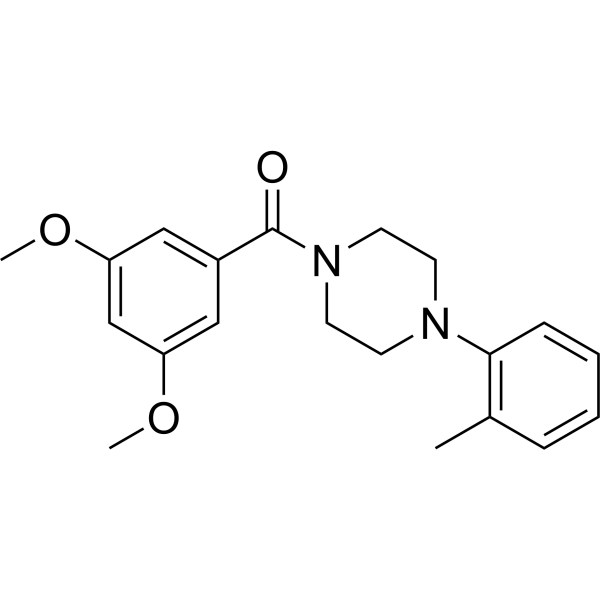
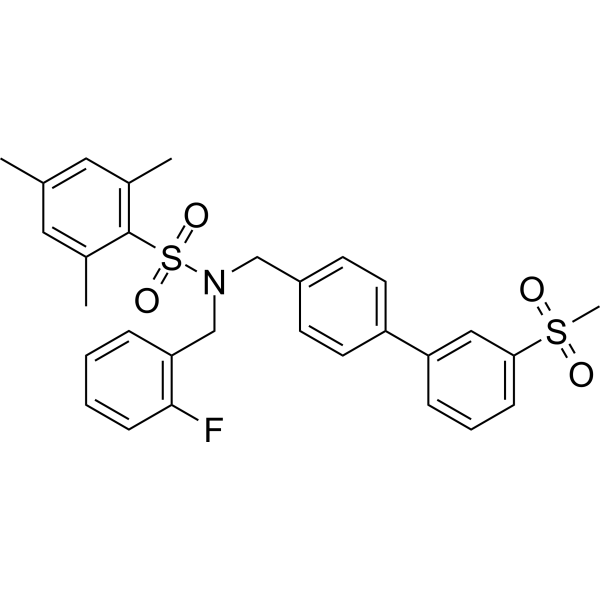
11 Results for "

LXR inverse agonist

" in MedChemExpress (MCE) Product Catalog:
Products (11)

11 Results for "LXR inverse agonist" in MCE Product Catalog:

50
50 Publications Verification
Cat. No.: HY-10626
CAS No.: 293754-55-9
Purity:  99.93%
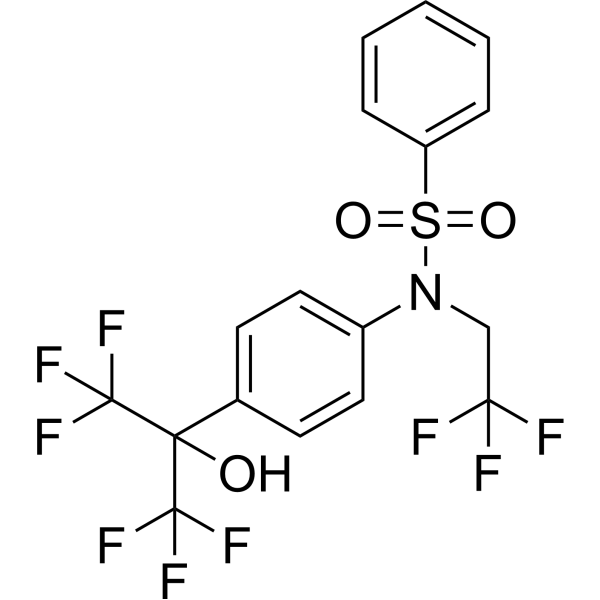
T0901317 is an orally active and highly selective LXR agonist with an EC50 of 20 nM for LXRα . T0901317 activates FXR with an EC50 of 5 μM . T0901317 is RORα and RORγ dual inverse agonist with Ki values of 132 nM and 51 nM, respectively . T0901317 induces apoptosis and inhibits the development of atherosclerosis in low-density lipoprotein (LDL) receptor-deficient mice .
loading...
    loading...
8
8 Cited Publications
Cat. No.: HY-16972
CAS No.: 1613028-81-1
Target:  

LXR

Research Areas:  

Cancer

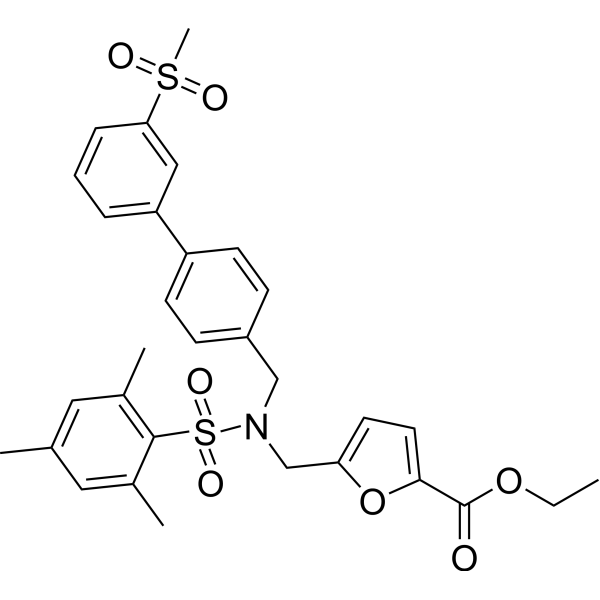
SR9243 is a liver-X-receptor (LXR) inverse agonist that induces LXR-corepressor interaction.
loading...
    loading...
3
3 Cited Publications
Cat. No.: HY-101442
CAS No.: 1416153-62-2
Purity:  99.89%
Target:  

LXR

Research Areas:  

Metabolic Disease

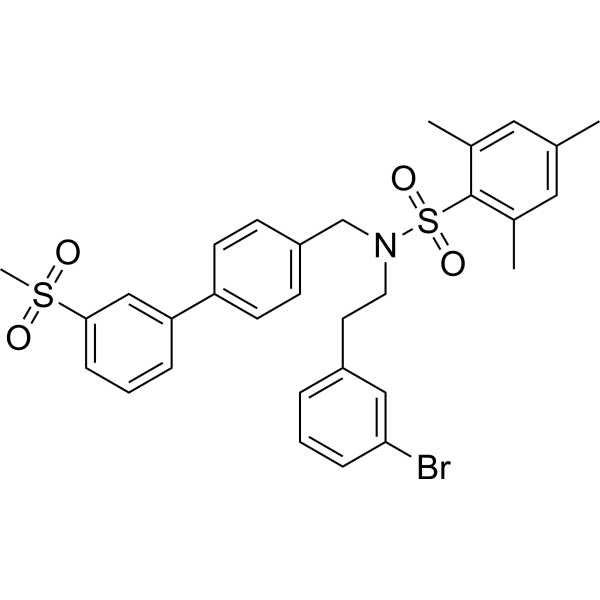
SR9238 is a synthetic liver X receptor (LXR) inverse agonist with IC50s of 214 nM and 43 nM for LXRα and LXRβ, respectively.
loading...
    loading...
Cat. No.: HY-160039
CAS No.: 927969-67-3
Target:  

LXR

Research Areas:  

Cancer

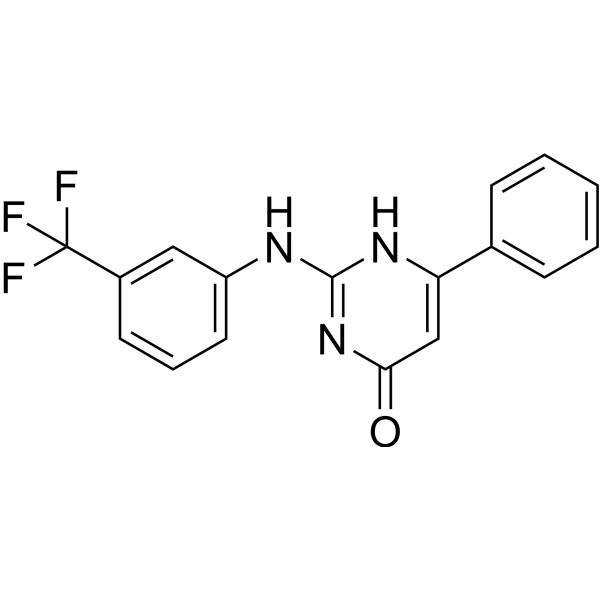
GAC0001E5 is an LXR inverse agonist. GAC0001E5 has antiproliferative activity and can be used in cancer research .
loading...
    loading...
Cat. No.: HY-160038
CAS No.: 929492-71-7
Target:  

LXR

Research Areas:  

Cancer

GAC0003A4 is an LXR inverse agonist that inhibits LXR transcriptional activity. GAC0003A4 also efficiently degrades LXRβ protein. GAC0003A4 has the potential to be used in advanced pancreatic cancer and other refractory malignancies .
loading...
    loading...
Cat. No.: HY-143259
CAS No.: 2893967-40-1
Purity:  99.86%
Target:  

LXR

Research Areas:  

Cancer

BE1218 is a liver X receptor (LXR) inverse agonist with IC50 values of 9 nM and 7 nM against LXRα and LXRβ, respectively .
loading...
    loading...
Cat. No.: HY-138007
CAS No.: 1414248-06-8
Target:  

ROR PPAR LXR

SR-1903 is an inverse agonist of RORγ and PPARγ (IC50 of ∼100 nM and 209 nM for RORγ and PPARγ, respectively) and a LXR agonist. SR-1903 exhibits anti-inflammatory and anti-diabetic efficacy in collagen-induced arthritis and diet-induced obesity mouse models .
loading...
    loading...
Cat. No.: HY-179278
Target:  

LXR

LXR agonist 4 is a selective LXR inverse agonist with IC50 values of 7.6 (LXRα) and 2.9 μM (LXRβ), respectively. LXR agonist 4 exhibits selectivity over RORα and FXR. LXR agonist 4 robustly suppresses SREBP1c expression without altering ABCA1 or APOE. LXR agonist 4 displays antilipogenic properties and resolves fatty acid-induced steatosis. LXR agonist 4 can be used for the research of atherosclerosis and metabolic dysfunction-associated steatotic liver disease (MASLD) .
loading...
    loading...
Cat. No.: HY-10626R
CAS No.: 293754-55-9
T0901317 (Standard) is the analytical standard of T0901317. This product is intended for research and analytical applications. T0901317 is an orally active and highly selective LXR agonist with an EC50 of 20 nM for LXRα . T0901317 activates FXR with an EC50 of 5 μM . T0901317 is RORα and RORγ dual inverse agonist with Ki values of 132 nM and 51 nM, respectively . T0901317 induces apoptosis and inhibits the development of atherosclerosis in low-density lipoprotein (LDL) receptor-deficient mice .
loading...
    loading...
Cat. No.: HY-101442R
CAS No.: 1416153-62-2
Target:  

Reference Standards LXR

Research Areas:  

Metabolic Disease

SR9238 (Standard) is the analytical standard of SR9238. This product is intended for research and analytical applications. SR9238 is a synthetic liver X receptor (LXR) inverse agonist with IC50s of 214 nM and 43 nM for LXRα and LXRβ, respectively.
loading...
    loading...
Cat. No.: HY-160126
CAS No.: 2154373-60-9
Target:  

LXR

Research Areas:  

Others

27-Norcholestenoic acid is an inverse agonist of LXRβ and LXRα that decreases basal luciferase activity and inhibits agonist-induced transactivation. 27-Norcholestenoic acid induces conformational changes in the AF-2 domain that favor corepressor over coactivator recruitment, thereby destabilizing the active receptor conformation. 27-Norcholestenoic acid downregulates FASN and SREBP-1a/c gene expression .
loading...
    loading...
  • 1

