



1. Search Result
Search Result
Pathways Recommended: Metabolic Enzyme/Protease
Results for "

Metabolic study

" in MedChemExpress (MCE) Product Catalog:

288

Inhibitors & Agonists

20

Screening Libraries

4

Fluorescent Dyes

8

Biochemical Assay Reagents

29

Peptides

2

Inhibitory Antibodies

68

Natural
Products

15

Isotope-Labeled Compounds

3

Click Chemistry

3

Oligonucleotides

1

GMP Molecules

Cat. No. Product Name Target Research Areas Chemical Structure
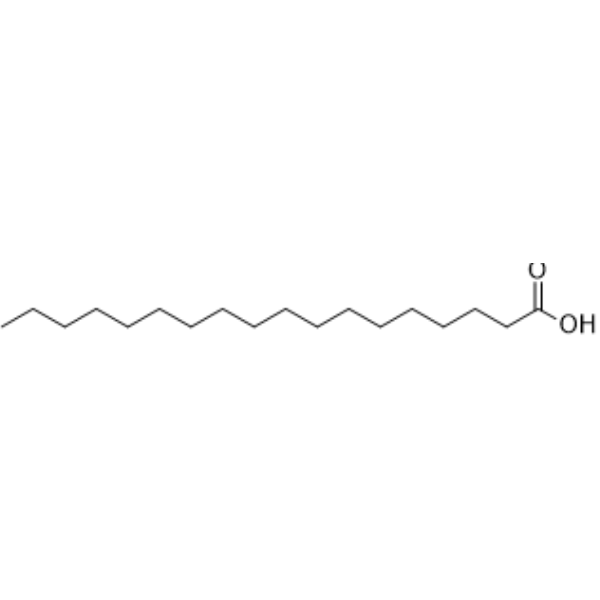
  • HY-B2219
    Stearic acid
    20+ Cited Publications

    Environmental Pollutants Endogenous Metabolite Apoptosis Cardiovascular Disease Metabolic Disease
    Stearic acid is an orally active long-chain dietary saturated fatty acid that can significantly reduce visceral fat by inducing apoptosis of preadipocytes. Stearic acid can be used in the study of cardiovascular and metabolic diseases .
    Stearic acid
  • HY-P4153

    MK-0616 chloride

    PCSK9 Cardiovascular Disease
    Enlicitide chloride is an orally active inhibitor for PCSK9 that blocks the interaction between LPL receptor and PSCK9, with an IC50 of 2.5 nM. Enlicitide chloride can be used in the study of cardiovascular diseases such as atherosclerosis, hypercholesterolemia, coronary heart disease, metabolic syndrome, acute coronary syndrome or related cardiovascular and cardiometabolic disorders .
    Enlicitide chloride
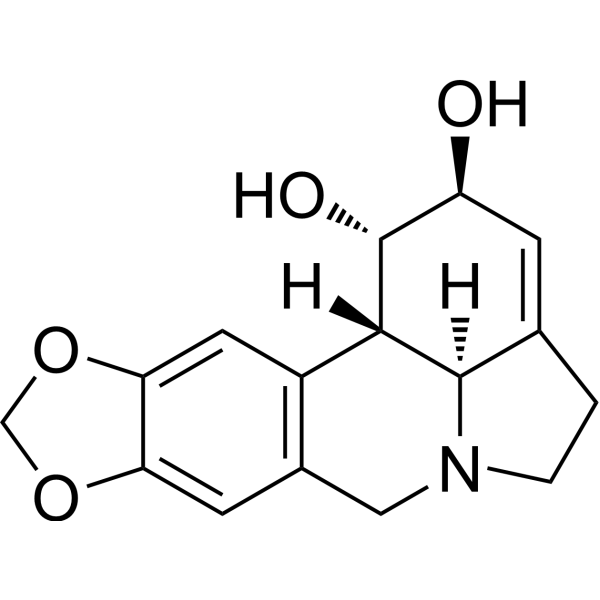
  • HY-N0288
    Lycorine
    20+ Cited Publications

    Fatty Acid Synthase (FASN) Virus Protease Bacterial Apoptosis Inflammation/Immunology Cancer
    Lycorine is a natural alkaloid extracted from the Amaryllidaceae plant. Lycorine is a potent and orally active SCAP inhibitor with a Kd value 15.24 nM. Lycorine downregulates the SCAP protein level without changing its transcription . Lycorine is also a melanoma vasculogenic inhibitor . Lycorine can be used for the study of prostate cancer and metabolic diseases .
    Lycorine
  • HY-172317

    FAP Metabolic Disease
    AZD2389 is a potent and orally active FAP inhibitor. AZD2389 can be used for the study of metabolic dysfunction-associated steatohepatitis .
    AZD2389
  • HY-113114

    Endogenous Metabolite Glucocorticoid Receptor Metabolic Disease Inflammation/Immunology
    Tetrahydrocortisone is a corticosteroid catalyzed from endogenous glucocorticoids by AKR1D1 (5β-reductase). Its formation is mediated by AKR1D1 and regulated by the glucocorticoid receptor (GR). As one of the final products of glucocorticoid inactivation metabolism, Tetrahydrocortisone participates in the maintenance of glucocorticoid metabolic homeostasis in vivo. Tetrahydrocortisone can be used for mechanistic studies of metabolic diseases such as non-alcoholic fatty liver disease (NAFLD) and type 2 diabetes, and also serves as a biomarker for in vivo AKR1D1 activity and glucocorticoid metabolic status .
    Tetrahydrocortisone
  • HY-D2919

    Fluorescent Dye Infection
    DMN-Tre is a conjugate of a solvatochromic fluorescent dye and trehalose. DMN-Tre takes advantage of the substrate promiscuity of the endogenous antigen 85 protein complex in mycobacteria to be metabolically integrated into the hydrophobic mycobacterial membrane. Once entering this hydrophobic environment, the linked DMN dye fluorescence is "turned on", enabling specific labeling . DMN-Tre can be used to reflect bacterial metabolic activity and support physiological studies of Mycobacterium tuberculosis .
    DMN-Tre
  • HY-12638
    Dichlorophen
    1 Publications Verification

    DDM

    Environmental Pollutants Fungal Parasite Bacterial Infection
    Dichlorophen is a chlorophenol antimicrobial agent that can destroy the integrity of microbial cell membranes and interfere with the activity of metabolic enzymes. Dichlorophen can covalently bind to the thiol groups of microbial proteins and has broad-spectrum antibacterial, antifungal and anthelmintic activity. Dichlorophen can be used as an antimicrobial agent in the study of drug-resistant bacterial infections .
    Dichlorophen
  • HY-134356

    AICAR-5'-MP

    Endogenous Metabolite Others
    AICA-riboside, 5′-phosphate is AICA riboside with a phosphate group. The functions of AICA riboside include: 1) conversion into AMP mimetic to selectively activate AMPK; 2) competition with adenosine for the uptake of nucleoside transporters, reversible blocking of adenosine reuptake, increasing extracellular adenosine concentration, and indirectly activating adenosine A1 receptors. AICA riboside is involved in metabolic regulation (promoting catabolism and inhibiting anabolism) and adenosine-dependent neuroprotection (inhibiting excitatory synaptic transmission). AICA riboside can be used in the study of metabolic diseases (such as diabetes and obesity) and neurological diseases (such as ischemia and epilepsy), and has central nervous system protective activity .
    AICA-riboside, 5′-phosphate
  • HY-135026
    DL-Norepinephrine tartrate
    2 Publications Verification

    Adrenergic Receptor Neurological Disease
    DL-Norepinephrine tartrate is an external racemic catecholamine neurotransmitter, which is an equal mixture of the left-handed (L-, with activity) and right-handed (D-, with very low or no activity) stereoisomers. DL-Norepinephrine tartrate after being labeled with tritium can be used as a tracer for the research on Parkinson's disease .
    DL-Norepinephrine tartrate
  • HY-N7142
    DL-Norepinephrine hydrochloride
    2 Publications Verification

    Adrenergic Receptor Neurological Disease
    DL-Norepinephrine hydrochloride is an external racemic catecholamine neurotransmitter, which is an equal mixture of the left-handed (L-, with activity) and right-handed (D-, with very low or no activity) stereoisomers. DL-Norepinephrine hydrochloride after being labeled with tritium can be used as a tracer for the research on Parkinson's disease .
    DL-Norepinephrine hydrochloride
  • HY-128661
    IDH1 Inhibitor 2
    4 Publications Verification

    Isocitrate Dehydrogenase (IDH) Metabolic Disease
    IDH1 Inhibitor 2 (compound 13) is a potent wild-type IDH1 inhibitor that exerts its activity through covalent modification of His315 with an IC50 value of 110 nM. IDH1 Inhibitor 2 can dose-dependently reduce the intracellular reduced glutamine metabolic flux, thereby affecting cellular metabolic homeostasis. IDH1 Inhibitor 2 can be used to study the role of IDH1 in cellular metabolic regulation and cancer development .
    IDH1 Inhibitor 2
  • HY-N7814
    2-Hydroxypalmitic acid
    1 Publications Verification

    Endogenous Metabolite Drug Intermediate Infection
    2-Hydroxypalmitic acid is an intermediate in the phytosphingosine metabolic pathway. 2-Hydroxypalmitic acid is exclusively incorporated into sphingolipids and not used for other lipids. 2-Hydroxypalmitic acid promotes the production of odd-carbon phosphatidylcholine species. 2-Hydroxypalmitic acid is applicable to studies of Saccharomyces cerevisiae infection .
    2-Hydroxypalmitic acid
  • HY-W010516

    2-Methylpentanoic acid

    Endogenous Metabolite Metabolic Disease
    2-Methylvaleric acid is a branched short-chain fatty acid (SCFA) produced by the metabolism of branched-chain amino acids by gut microbes. 2-Methylvaleric acid can be used as a potential biomarker for metabolic diseases such as type 2 diabetes, and its content is significantly reduced in the feces of diabetic mice. 2-Methylvaleric acid may regulate host energy metabolism and inflammatory response through G protein-coupled receptors (GPCRs) or histone deacetylase (HDAC) inhibition. 2-Methylvaleric acid can be used to study gut microbe-host interactions and metabolic diseases as a fecal biomarker[1][2].
    2-Methylvaleric acid
  • HY-128788

    DNA/RNA Synthesis SARS-CoV Endogenous Metabolite Flavivirus Lactate Dehydrogenase Infection
    ddhCTP is an endogenously produced pyrimidine base analog with a Kd of 17.0 nM for LLDH and an IC50 of 55.8 μM for GAPDH. By inhibiting key metabolic enzymes such as GAPDH, ddhCTP reduces glycolytic flux and shifts metabolic flow toward the pentose phosphate pathway, thereby regulating the redox balance of cells. As a competitive CTP analog, ddhCTP terminates RNA synthesis by flavivirus RdRps and SARS-CoV-2 RdRp, and inhibits Zika virus replication in vivo. ddhCTP can be used in studies related to viral infections, COVID-19 and Zika virus infections.
    ddhCTP
  • HY-114196

    ZGN-1061

    MetAP Metabolic Disease
    Aclimostat (ZGN-1061) is a potent inhibitor of the MetAP2 enzyme and displays favorable efficacy and safety in preclinical studies. ZGN-1061 produced similar efficacy as beloranib for weight loss, improvements in metabolic parameters in a mouse model of obesity and insulin resistance, and concordant changes in gene transcription in HepG2 cells .
    Aclimostat
  • HY-132924

    Acyltransferase Metabolic Disease Inflammation/Immunology
    BMS-963272 is an orally active and selective MGAT2 inhibitor (IC50 = 7.1 nM), used for the study of metabolic disorders and inflammatory diseases .
    BMS-963272
  • HY-N8630

    Angiotensin-converting Enzyme (ACE) Cardiovascular Disease Metabolic Disease
    Oleacein (Compound 9) is an ACE inhibitor that can be isolated from J. grandiflorum. Oleacein is orally active and can be used in the study of metabolic and cardiovascular diseases .
    Oleacein
  • HY-B2219A
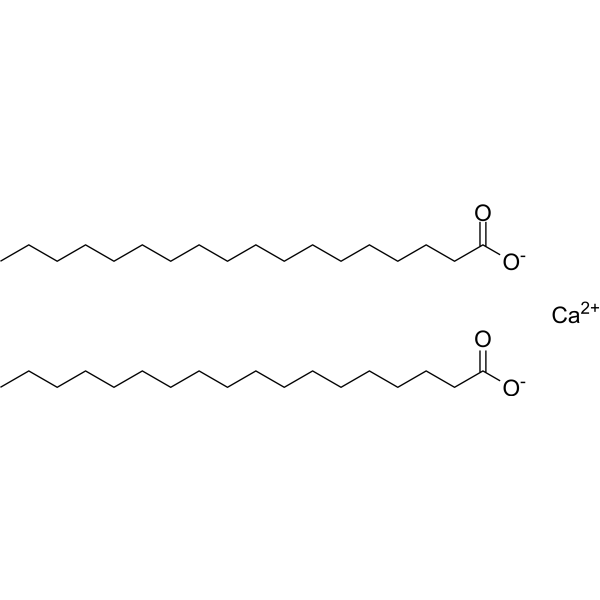
    Calcium stearate
    20+ Cited Publications

    Environmental Pollutants Endogenous Metabolite Cardiovascular Disease Metabolic Disease
    Calcium stearate is an orally active long-chain dietary saturated fatty acid that can significantly reduce visceral fat by inducing apoptosis of preadipocytes. Calcium stearate can be used in the study of cardiovascular and metabolic diseases .
    Calcium stearate
  • HY-100318

    MCHR1 (GPR24) Metabolic Disease
    MCHR1 antagonist 5 (Compound 80) is a melanin-concentrating hormone receptor 1 (MCHR1) antagonist. MCHR1 antagonist 5 can be uesd for the study of a variety of metabolic, feeding and sexual disorders .
    MCHR1 antagonist 5
  • HY-B2219R
    Stearic acid (Standard)
    20+ Cited Publications

    Reference Standards Endogenous Metabolite Apoptosis Cardiovascular Disease Metabolic Disease Cancer
    Stearic acid (Standard) is the analytical standard of Stearic acid. This product is intended for research and analytical applications. Stearic acid is a long-chain dietary saturated fatty acid that can significantly reduce visceral fat by inducing apoptosis of preadipocytes. Stearic acid can be used in the study of cardiovascular and metabolic diseases .
    Stearic acid (Standard)
  • HY-144197

    CCR Neurological Disease
    CCR8 antagonist 1 (Compound 15) is a potente human CCR8 antagonist with a Ki of 1.6 nM. CCR8 antagonist 1 has high safety and metabolic stability. CCR8 antagonist 1 can be used to study diseases such as asthma and multiple sclerosis .
    CCR8 antagonist 1
  • HY-U00461

    Ketohexokinase inhibitor 1

    Ketohexokinase Metabolic Disease
    PF-06835919 (Ketohexokinase inhibitor 1) is an inhibitor of ketohexokinase (KHK), with IC50s of 8.4 nM and 66 nM for KHK-C and KHK-A, respectively. PF-06835919 can be used for the study of metabolic disorders driven by the overconsumption of Fructose (HY-N0395) .
    PF-06835919
  • HY-119349

    Others Others
    (±)-Dihydrozeatin can be used for biological studies of the abundance of cytokinin during cytokinin metabolism, interconversion and formation of new trans-zetin metabolites .
    (±)-Dihydrozeatin
  • HY-111095S1

    (R)-2-Hydroxypropionic acid-13C; D-Lactic acid-13C

    Isotope-Labeled Compounds Others
    D-(-)-Lactic acid- 13C ((R)-2-Hydroxypropionic acid- 13C) is a 13C-labeled D-Lactic acid. D-(-)-Lactic acid- 13C can be used as an internal standard and can also be used in studies such as metabolic tracing.
    D-(-)-Lactic acid-13C
  • HY-14921

    Integrin Transmembrane Glycoprotein Cardiovascular Disease Inflammation/Immunology
    Elsibucol is a VCAM1 inhibitor for the study of organ transplant rejection. Elsibucol is a metabolically stable propanol derivative with antioxidant, anti-inflammatory and anti-proliferative properties. Elsibucol lowers blood cholesterol levels and reduces oxidative stress and inflammatory responses in injured arteries, thereby inhibiting atherosclerosis and protecting endothelial healing after arterial injury .
    Elsibucol
  • HY-W1006754

    Amine N-methyltransferase Metabolic Disease
    NNMT-IN-7 (Compound 4e) is a NNMT inhibitor (IC50 = 505.7 µM). NNMT-IN-7 can be used in studies of metabolic and chronic diseases .
    NNMT-IN-7
  • HY-126221A

    Emeriamine

    Biochemical Assay Reagents Metabolic Disease
    (R)-Aminocarnitine (Emeriamine) is a fatty acid oxidation inhibitor. (R)-Aminocarnitine reduces hyperglycaemia and ketosis. (R)-Aminocarnitine can be used in the study of metabolic diseases .
    (R)-Aminocarnitine
  • HY-153938

    PROTACs Phosphatase Metabolic Disease Cancer
    PROTAC PTPN2 degrader-2 is a potent PTPN2 PROTAC degrader with a DC50 of <50 nM. PROTAC PTPN2 degrader-2 is potential for studying cancer or metabolic diseases, such as colon cancer .
    PROTAC PTPN2 degrader-2
  • HY-A0081S

    Dopamine Receptor Neurological Disease Cancer
    Fluphenazine-d8 (dihydrochloride) is the deuterium labeled Fluphenazine dihydrochloride. Fluphenazine dihydrochloride is a phenothiazine-class D1DR and D2DR inhibitor; used to deliver Fluphenazine to biological systems in studies probing the effects and metabolic fates of this commonly used dopamine antagonist.
    Fluphenazine-d8 dihydrochloride
  • HY-W039924
    N-Azidoacetylmannosamine
    1 Publications Verification

    Drug Metabolite Metabolic Disease
    N-Azidoacetylmannosamine is an azide-labeled sugar that can be metabolically incorporated into glycoproteins. N-Azidoacetylmannosamine can then react with alkynes or phosphines that are linked to fluorescent or biotin tags for visualization or capture of the glycoproteins. N-Azidoacetylmannosamine can be used for studying glycan structures and functions in vivo .
    N-Azidoacetylmannosamine
  • HY-162016

    IPK Superfamily Metabolic Disease
    IP6K-IN-1 (compound 24) is a potent and selective inhibitor of IP6K with an IC50 of 0.896 μM. IP6K-IN-1 can used in study metabolic disease .
    IP6K-IN-1
  • HY-139286

    Pacsph; Pacsphingosine (d18:1)

    Biochemical Assay Reagents Others
    Photoclick sphingosine (Pacsph) is a photosensitizing and clickable sphingosine analog. Photoclick sphingosine is metabolized in cells into endogenous lipid metabolic pathways and can be visualized by its clickable alkyne group. Photoclick sphingosine can be used to study intracellular sphingolipid metabolism and subcellular localization .
    Photoclick sphingosine
  • HY-142080

    Pimeloyl-coenzyme A

    Endogenous Metabolite Metabolic Disease
    Pimeloyl-CoA is a key precursor compound in the biotin synthesis pathway, which can promote the de novo synthesis of biotin. Pimeloyl-CoA is mainly used in the study of microbial metabolic mechanisms, especially the analysis of biotin synthesis pathways and basic research on the biosynthesis of related antibiotics or vitamins .
    Pimeloyl-CoA
  • HY-178982

    Apelin Receptor (APJ) Metabolic Disease
    Apelin agonist 2 (Compound 35) is an orally active APLNR agonist. Apelin agonist 2 can significantly inhibit the accumulation of cAMP (EC50 = 10 nM). Apelin agonist 2 exhibits a significant improvement in glucose tolerance. Apelin agonist 2 can be used to study metabolic diseases such as diabetes .
    Apelin agonist 2
  • HY-178015

    Thyroid Hormone Receptor Metabolic Disease Inflammation/Immunology
    THR-β agonist 11 is an orally active and selective thyroid hormone receptor (THR-β) agonist. THR-β agonist 11 shows potent cholesterol-lowering activity in cholesterol-fed rats. THR-β agonist 11 significantly reduces serum total TG, LDL-cholesterol, liver total TC and TG levels, and alleviates hepatic steatosis, inflammation and fibrosis in HFD-CCl4-induced Metabolic dysfunction-associated steatohepatitis (MASH) model mice. THR-β agonist 11 can be used for the study of metabolic dysfunction-associated steatohepatitis (MASH) and other fibrotic diseases .
    THR-β agonist 11
  • HY-179131

    NOD-like Receptor (NLR) Metabolic Disease Inflammation/Immunology
    TN-783 is an orally active, brain-penetrant NLRP3 (IC50 = 19.3 nM) inhibitor. TN-783 enhances the effects of the GLP-1 receptor agonist semaglutide. TN-783 requires sustained targeted action, not permanent metabolic remodeling. TN-783 can be used for the study of obesity .
    TN-783
  • HY-16244

    Fatty Acid Synthase (FASN) Metabolic Disease Endocrinology
    GW-300 is a SREBP cleavage-activating protein (SCAP) ligand that can be used for the study of endocrinology and metabolic disease.
    GW-300
  • HY-122455

    Drug Derivative Neurological Disease Metabolic Disease Endocrinology
    K-102 is a small molecule agent that can be used for the study of nervous system diseases, endocrinology and metabolic disease.
    K-102
  • HY-W017431

    Drug Metabolite Metabolic Disease
    2,5-Dimethylbenzoic acid is one of the main urinary metabolites of Pseudocumene (1,2,4-trimethylbenzene) in rats. 2,5-Dimethylbenzoic acid can be used to quantitatively determine the inhalation exposure level of Pseudocumene .
    2,5-Dimethylbenzoic acid
  • HY-Z2667

    (R)-Omeprazole; (+)-Omeprazole

    Cytochrome P450 Metabolic Disease Inflammation/Immunology
    (R)-Esomeprazole ((R)-Omeprazole; (+)-Omeprazole) is an orally active cytochrome P450 2C19, CYP3A4, and CYP2C9-related metabolic modulator. (R)-Esomeprazole can be used in studies of digestive system diseases and compound metabolic interactions .
    (R)-Esomeprazole
  • HY-P991552

    CD3 Metabolic Disease Inflammation/Immunology
    AFM15 is a humanized monoclonal antibody inhibitor targeting CD3E. AFM15 can be used to study metabolic and immune system diseases, such as type 1 diabetes and inflammatory bowel disease (IBD) .
    AFM15
  • HY-163752

    MAP3K Metabolic Disease
    CS17919 is a potent, selective and orally active ASK1 inhibitor with an IC50 of 22.52 nM. CS17919 shows anti-inflammatory and antifibrotic effects. CS17919 can be used for the study of metabolic-related kidney and liver diseases .
    CS17919
  • HY-42632

    Acetyl-CoA Carboxylase Metabolic Disease
    ACC1/2-IN-3 (example 66) is an ACC1 and ACC2 inhibitor with an IC50 value of 1-10 nM for both. ACC1/2-IN-3 can be used for the study of diseases mediated by ACC, such as metabolic disease .
    ACC1/2-IN-3
  • HY-15790H

    (S)-A 3309; (S)-AZD 7806

    Apical Sodium-Dependent Bile Acid Transporter TNF Receptor Interleukin Related Metabolic Disease Inflammation/Immunology
    (S)-Elobixibat is the S enantiomer of Elobixibat (HY-15790). (S)-Elobixibat is an orally effective Apical Sodium-Dependent Bile (IBAT) inhibitor. (S)-Elobixibat decreases LDL cholesterol, increases serum GLP-1, promotes colon motility, and has the potential to study metabolic syndrome. (S)-Elobixibat can be used to study constipation, dyslipidemia, non-alcoholic hepatitis, and liver tumors .
    (S)-Elobixibat
  • HY-164809

    ROCK Metabolic Disease
    KD025m1 is a novel selective ROCK2 inhibitor. KD025m1 has good anti obesity, improved insulin sensitivity, and blood glucose control effects. KD025m1 can be used to study metabolic diseases such as diabetes and obesity .
    Desisopropyle-belumosudil
  • HY-N11924

    AMPK PPAR Metabolic Disease
    Foenumoside B is a triterpene saponin isolated from Lysimachia foenum-graecum. Foenumoside B activates AMPK signaling, inhibits PPARγ-induced adipogenesis, and shifts lipid metabolism toward lipolysis. Foenumoside B can be used in the study of obesity and obesity-related metabolic diseases .
    Foenumoside B
  • HY-176873

    Amino acid Transporter Metabolic Disease
    SLC6A19-IN-2 (Example 4) is a potent SLC6A19 inhibitor with an IC50 of 14 nM. SLC6A19-IN-2 can be used for the study of metabolic diseases such as nonalcoholic steatohepatitis (NASH), nonalcoholic fatty liver disease (NAFLD) and phenylketonuria (PKU) .
    SLC6A19-IN-2
  • HY-11074

    Cholecystokinin Receptor Metabolic Disease
    CE-326597 is a small molecule agonist of the cholecystokinin A receptor (CCKAR). CE-326597 occupies only the lower half of the TMD pocket and cannot mimic the crucial interaction between CCK-8 and ECL1-3. CE-326597 can be used to study metabolic diseases and gastrointestinal dysfunction .
    CE-326597
  • HY-120943

    BM 17.0744

    PPAR Metabolic Disease
    K-111 (BM-170744) is an oral active PPAR alpha agonist. K-111 show efficacy in improving insulin resistance, reducing body weight, and ameliorating atherogenic dyslipidemia. K-111 can be used for study of type 2 diabetes, dyslipidaemia, obesity and the metabolic syndrome .
    K-111
  • HY-172610

    Ketohexokinase Metabolic Disease
    KHK-IN-7 (compound 2) is a ketohexokinase (KHK) inhibitor. KHK-IN-7 can be used for study of metabolic disorders .
    KHK-IN-7

Inquiry Online

Your information is safe with us. * Required Fields.

Salutation


Country or Region *

Applicant Name *


Organization Name *

Department *


Email Address *


Product Name *

Cat. No.


Requested quantity *

Phone Number *


Remarks

Inquiry Online

Inquiry Information

Product Name:
Cat. No.:
Quantity:
MCE Japan Authorized Agent:

