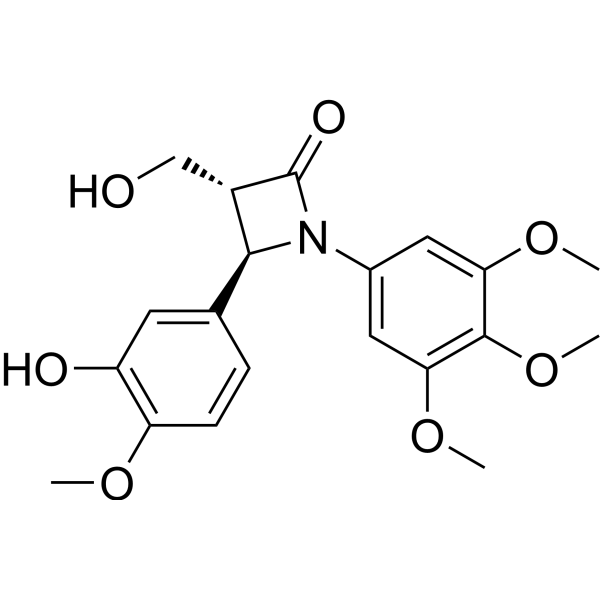
18 Results for "

Microtubulin

" in MedChemExpress (MCE) Product Catalog:
Products (18)

18 Results for "Microtubulin" in MCE Product Catalog:

28
28 Cited Publications
Cat. No.: HY-19792
CAS No.: 139504-50-0
Synonyms: DM1; Maytansinoid DM1
Research Areas:  

Cancer

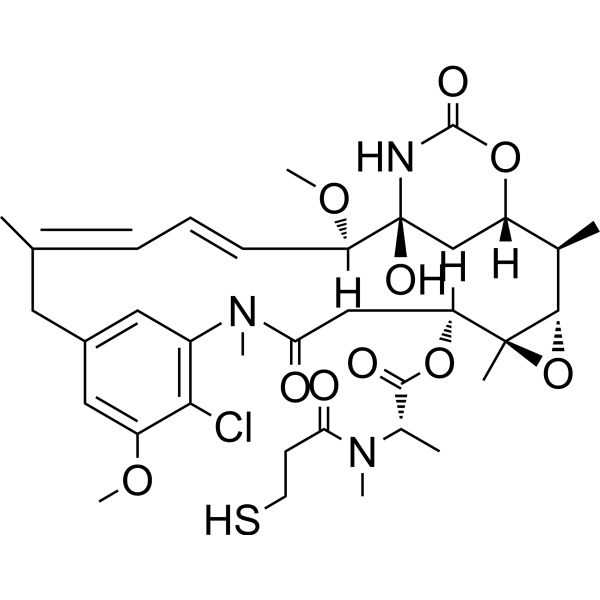
Mertansine (DM1) is a microtubulin inhibitor and is an antibody-conjugatable maytansinoid that is developed to overcome systemic toxicity associated with maytansine and to enhance tumor-specific delivery. Mertansine can be attached to a monoclonal antibody with a linker to create an antibody-drug conjugate (ADC) .
loading...
    loading...
1
1 Cited Publications
Cat. No.: HY-150761
Purity:  99.56%
Research Areas:  

Cancer

MY-875 is a competitive microtubulin polymerization inhibitor with an IC50 value of 0.92 μM. MY-875 inhibits microtubulin polymerization by targeting colchicine binding sites and activates the Hippo pathway. MY-875 induces apoptosis and has anticancer activity .
loading...
    loading...
Cat. No.: HY-164763
Research Areas:  

Cancer

SHR-A1201 is a HER2-targeting antibody-drug conjugate (ADC). SHR-A1201 is composed of a humanized anti-HER2 antibody (HY-P9907), a linker SMCC (HY-42360), and a microtubulin inhibitor payload Mertansine (HY-19792). SHR-A1201 can be used for research in HER2-positive breast cancer .
loading...
    loading...
Cat. No.: HY-136260
CAS No.: 2479378-44-2
Purity:  94.44%
Research Areas:  

Cancer

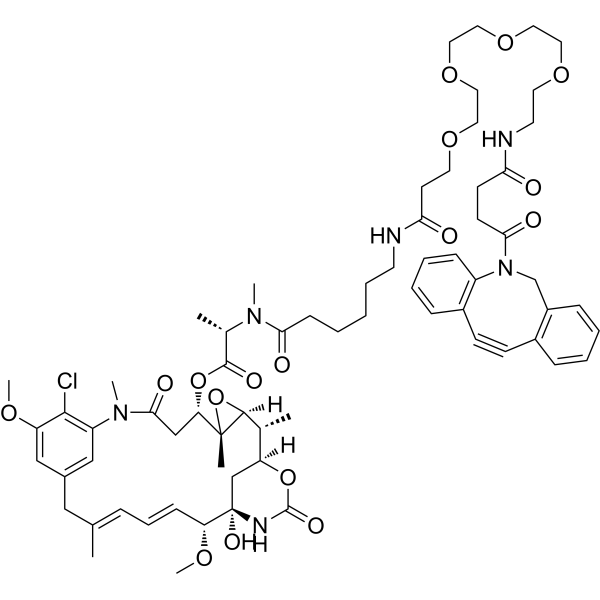
DBCO-PEG4-Ahx-DM1 is a agent-linker conjugate composed of a potent microtubulin inhibitor DM1 and a linker DBCO-PEG4-Ahx to make antibody agent conjugate (ADC). Mertansine (DM1) is a microtubulin inhibitor and is an antibody-conjugatable maytansinoid that is developed to overcome systemic toxicity associated with maytansine and to enhance tumor-specific delivery. DBCO-PEG4-Ahx-DM1 is a click chemistry reagent, it contains a DBCO group that can undergo strain-promoted alkyne-azide cycloaddition (SPAAC) with molecules containing Azide groups.
loading...
    loading...
Cat. No.: HY-143251
CAS No.: 2883436-66-4
Research Areas:  

Cancer

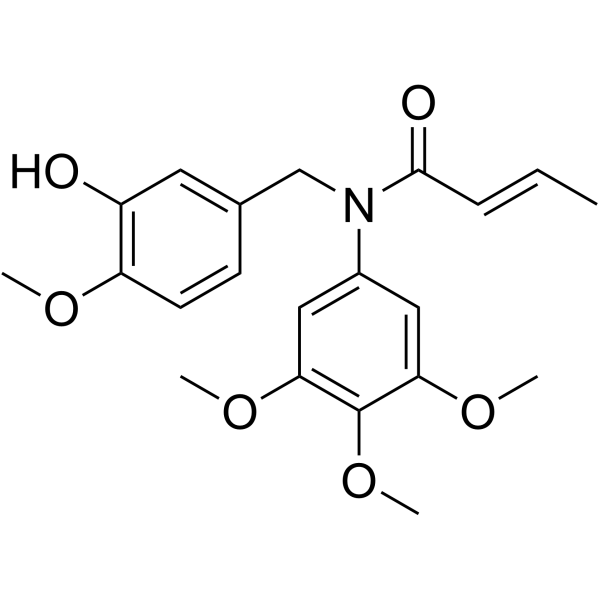
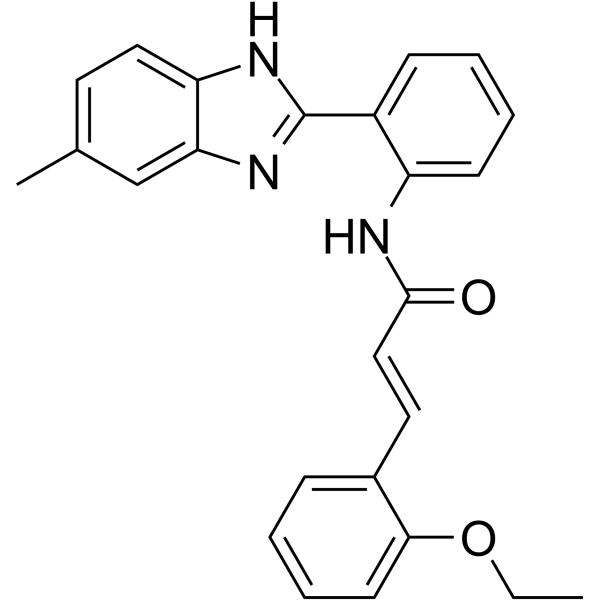
Tubulin inhibitor 13 (E27) is a potent tubulin inhibitor with an IC50 value of 16.1 μM for the tubulin polymerization inhibition. Tubulin inhibitor 13 inhibits migration and invasion of cancer cells, induces apoptosis and has anticancer activity .
loading...
    loading...
Cat. No.: HY-173074
CAS No.: 3025180-14-4
Research Areas:  

Cancer

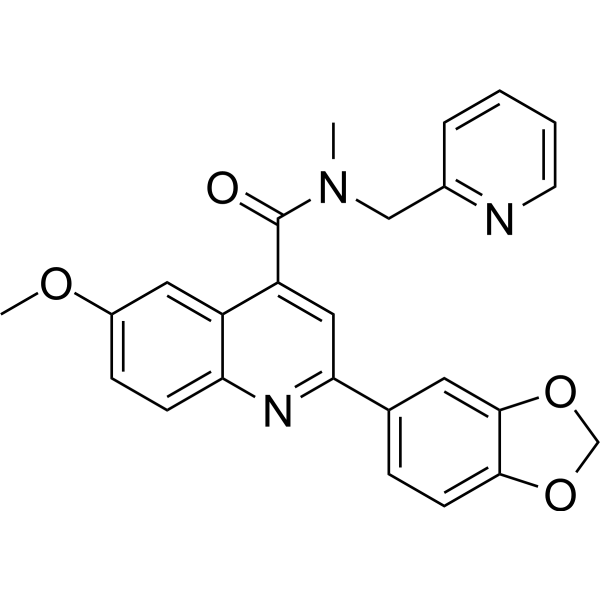
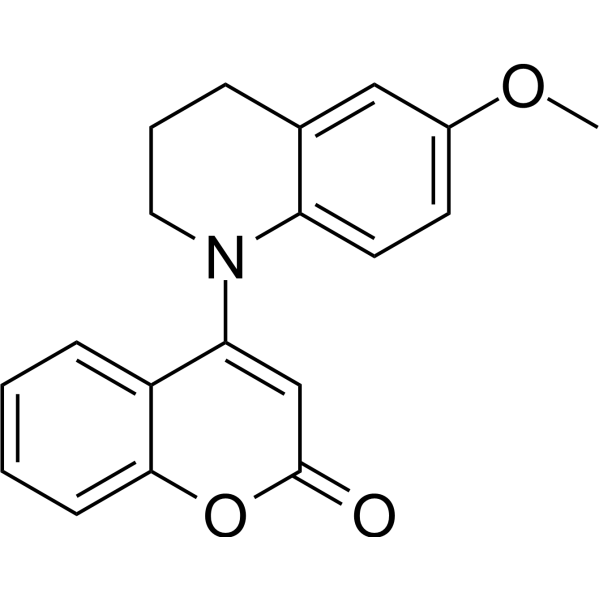
Microtubulin-IN-1 (Compound 8g) is the inhibitor for microtubulin that targets colchicine-binding site, disrupts the microtubulin integrity, and induces the upregulation of p53. Microtubulin-IN-1 exhibits antiproliferative activity in a variety of cancer cell lines (IC50 for NCI-H460, BxPC-3 and HT-29 is 2.4, 1.6 and 2.07 nM, respectively), arrests the cell cycle at G2/M phase, and induces apoptosis in NCI-H460 .
loading...
    loading...
Cat. No.: HY-149020
CAS No.: 2490291-68-2
Research Areas:  

Cancer

Tubulin polymerization-IN-26 (compound 12h) can inhibit the polymerization of microtubulin by binding to the colchicine binding site of microtubulin with an IC50 value of 4.64 μM. Tubulin polymerization-IN-26 can induce apoptosis and inhibit cell metastasis or migration, and can be used as a potential compound for lung cancer research .
loading...
    loading...
Cat. No.: HY-160854
CAS No.: 1541208-02-9
Research Areas:  

Cancer

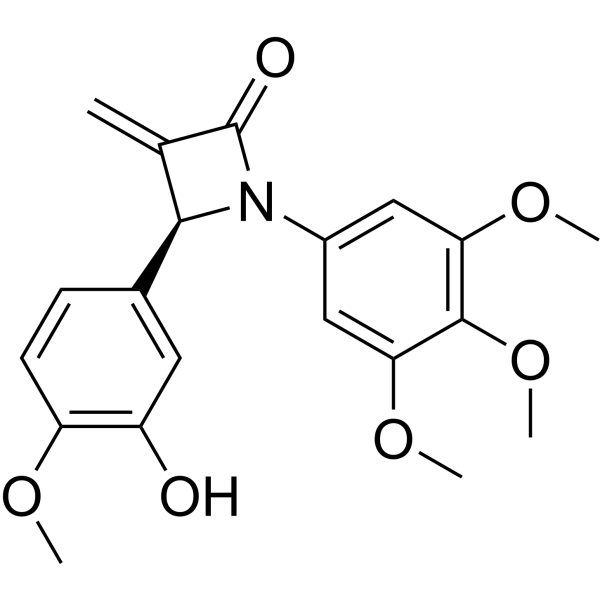
Tubulin inhibitor 43 (Compound 29) has significant antitumor activity. Tubulin inhibitor 43 inhibits the proliferation and growth of cancer cells by inhibiting the activity of β-microtubulin, and finally induces apoptosis .
loading...
    loading...
Cat. No.: HY-W013437
CAS No.: 51135-38-7
Target:  

Microtubule/Tubulin

Research Areas:  

Cancer

7-Benzoyloxindole (Compound 4a) is a tubulin destabilizer. 7-Benzoyloxindole disrupts the structure of microtubulin, thereby inhibiting the growth of tumor cells. 7-Benzoyloxindole can be used in the research of gastric cancer and lung cancer .
loading...
    loading...
Cat. No.: HY-149021
CAS No.: 2481404-89-9
Research Areas:  

Cancer

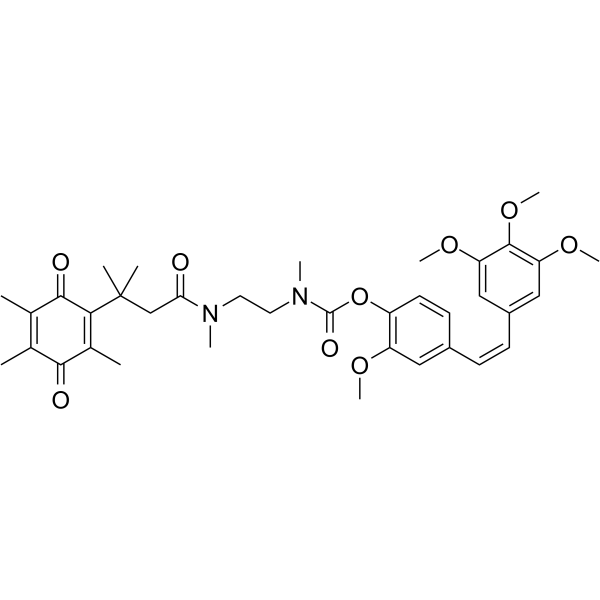
Tubulin polymerization-IN-28 (compound-4) is a microtubule protein polymerization inhibitor with highly selective anticancer activity. Tubulin polymerization-IN-28 can be activated by NQO1 and effectively release combretastatin A-4 to kill tumor cells. Tubulin polymerization-IN-28 can induce cell apoptosis and be used in anti-cancer research .
loading...
    loading...
Cat. No.: HY-162089
CAS No.: 3050871-87-6
Research Areas:  

Cancer

MY-1442 (I-3) is a microtubulin polymerization inhibitor. MY-875 inhibits tubulin polymerization by targeting colchicine binding sites. MY-1442 has anticancer activity. MY-1442 can induce apoptosis of MGC-803 cells and inhibit cell migration .
loading...
    loading...
Cat. No.: HY-106072
CAS No.: 67699-40-5
Synonyms: LY 104208
Target:  

Microtubule/Tubulin

Research Areas:  

Cancer

Vinzolidine is a semisynthetic derivative of the catharanthus alkaloid. Vinzolidine exerts its cytotoxic effect on tumor cells by interfering with microtubulin polymerization, thereby inhibiting cell division. Vinzolidine can be utilized in research to investigate synergistic effects when combined with other chemotherapeutic agents or biologic therapies, as well as to study cancer cells' tolerance or resistance to these treatments, and to explore approaches to overcome such obstacles .
loading...
    loading...
Cat. No.: HY-160853
CAS No.: 2135713-96-9
Research Areas:  

Cancer

Tubulin inhibitor 42 (Compound 14b) dose-dependently inhibited the activity of β-microtubulin (IC50 = 3.5 µM).Tubulin inhibitor 42 interferes with microtubule dynamic homeostasis, resulting in the arrest of the cancer cell cycle in the G2/M phase and inducing apoptosis. Tubulin inhibitor 42 significantly inhibits the angiogenic process in vitro and in vivo, preventing vascularization and tumor growth .
loading...
    loading...
Cat. No.: HY-163105
CAS No.: 3072778-26-5
Target:  

Microtubule/Tubulin

Research Areas:  

Cancer

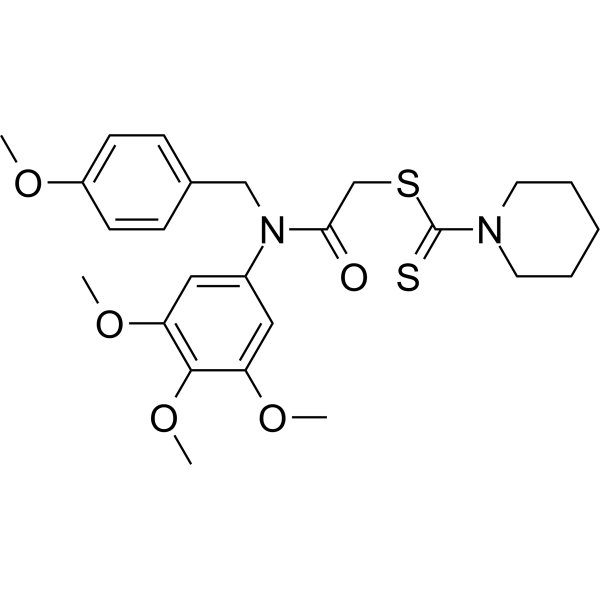
Tubulin/NEDDylation-IN-1 (compound C11) is a dual inhibitor of tubulin (Microtubule/Tubulin)-NEDDylation (IC50 for tubulin=2.40 μM), which has strong anti-proliferative activity. Neddylation is a protein post-translational modification that covalently tags the ubiquitin-like protein NEDD8 to target proteins. Tubulin/NEDDylation-IN-1 forms hydrogen bonds with residues of tubulin and E1 NEDD8 activating enzyme (NAE) through methoxy and dithiocarbamate groups and inhibits NEDDylation and microtubulin in an ATP-dependent manner. tube polymerization .
loading...
    loading...
Cat. No.: HY-180193
CAS No.: 3105435-06-8
Research Areas:  

Cancer

Tubulin polymerization-IN-86 (Compound B6) is an effective inhibitor of tubulin polymerization. Tubulin polymerization-IN-86 effectively inhibits microtubulin polymerization by binding to the colchicine binding sites on microtubulin, thereby disrupting the microtubule cytoskeleton within the cell. Tubulin polymerization-IN-86 exhibits potent anti-proliferative activity against a variety of cancer cell lines. Tubulin polymerization-IN-86 induces cell cycle arrest, apoptosis, inhibits cell migration, invasion, and long-term survival ability. Tubulin polymerization-IN-86 inhibits tumor growth in mice and can be used for the study of melanoma .
loading...
    loading...
Cat. No.: HY-19792S2
Synonyms: DM1-d3; Maytansinoid DM1-d3
Mertansine-d3 (DM1-d3) is the deuterium labeled Mertansine (HY-19792). Mertansine (DM1) is a microtubulin inhibitor and is an antibody-conjugatable maytansinoid that is developed to overcome systemic toxicity associated with maytansine and to enhance tumor-specific delivery. Mertansine can be attached to a monoclonal antibody with a linker to create an antibody-drug conjugate (ADC) .
loading...
    loading...
Cat. No.: HY-19792S
Synonyms: DM1-13C,d3; Maytansinoid DM1-13C,d3
Mertansine- 13C,d3 (DM1- 13C,d3) is the 13C- and deuterium labeled Mertansine (HY-19792). Mertansine (DM1) is a microtubulin inhibitor and is an antibody-conjugatable maytansinoid that is developed to overcome systemic toxicity associated with maytansine and to enhance tumor-specific delivery. Mertansine can be attached to a monoclonal antibody with a linker to create an antibody-drug conjugate (ADC) .
loading...
    loading...
Cat. No.: HY-W714183
CAS No.: 29091-05-2
Dinitramine is a herbicide. Dinitramine activates the Erk/P38/JNK/MAPK pathway and inactivates the PI3k/Akt pathway in testicular cells. Dinitramine induces endoplasmic reticulum stress, dysregulation of calcium homeostasis in the cytoplasm and mitochondria, apoptosis, and downregulated expression of cell cycle genes in testicular cells. Dinitramine reduces the viability and proliferation capacity of testicular cells, and inhibits cell division by suppressing the synthesis of tubulin. Dinitramine induces abnormal heart development, inhibited angiogenesis, inflammatory responses, apoptosis, and impaired embryonic growth in zebrafish embryos .
loading...
    loading...
  • 1

