161 Results for "

NOR

" in MedChemExpress (MCE) Product Catalog:
Products (161)

161 Results for "NOR" in MCE Product Catalog:

39
39 Publications Verification
Cat. No.: HY-12646
CAS No.: 1281870-42-5
Purity:  99.93%
Target:  

Ras Apoptosis

Research Areas:  

Cancer

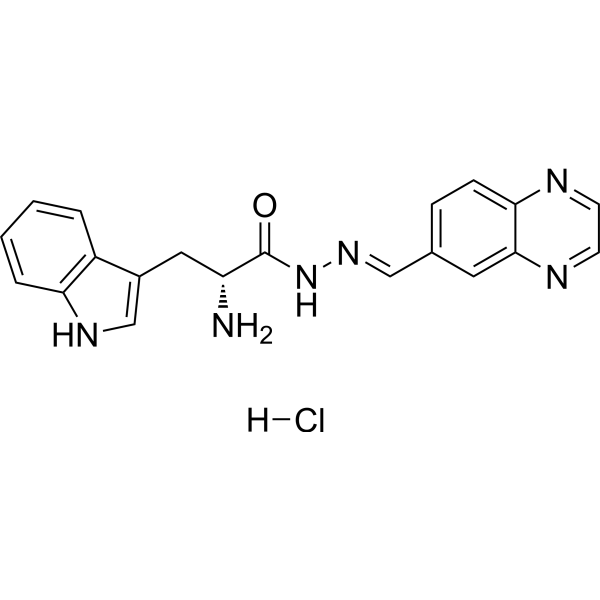
Rhosin hydrochloride is a potent, specific RhoA subfamily Rho GTPases inhibitor. Rhosin hydrochloride specifically binds to RhoA to inhibit RhoA-GEF interaction with a Kd of ~ 0.4 uM, and does not interact with Cdc42 or Rac1, nor the GEF, LARG. Rhosin hydrochloride induces cell apoptosis . Rhosin hydrochloride promotes stress resiliency through enhancing D1-MSN plasticity and reducing hyperexcitability .
loading...
    loading...
39
39 Publications Verification
Cat. No.: HY-12646A
CAS No.: 1173671-63-0
Purity:  95.08%
Target:  

Ras Apoptosis

Research Areas:  

Cancer

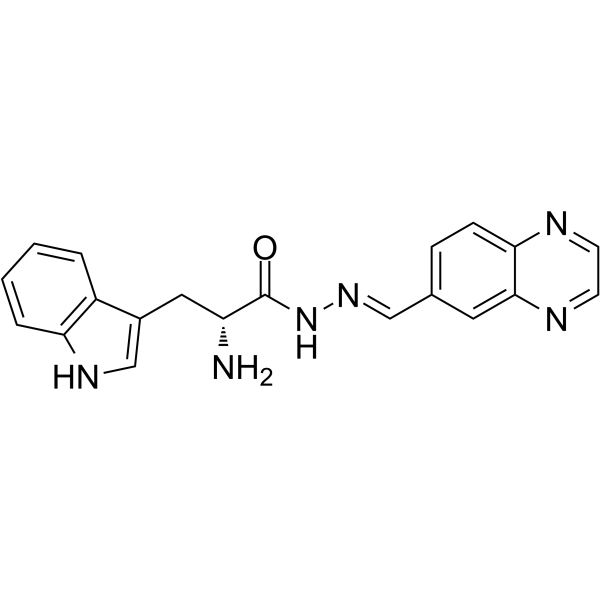
Rhosin is a potent, specific RhoA subfamily Rho GTPases inhibitor, which specifically binds to RhoA to inhibit RhoA-GEF interaction with a Kd of ~ 0.4 uM, and does not interact with Cdc42 or Rac1, nor the GEF, LARG. Rhosin induces cell apoptosis . Rhosin promotes stress resiliency through enhancing D1-MSN plasticity and reducing hyperexcitability .
loading...
    loading...
28
28 Cited Publications
Cat. No.: HY-13637
CAS No.: 82410-32-0
Purity:  99.89%
Synonyms: BW 759; 2'-NOR-2'-deoxyguanosine
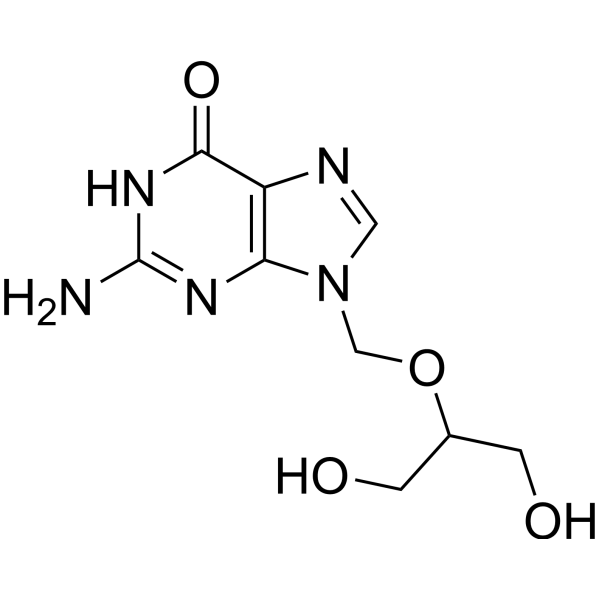
Ganciclovir (BW 759), a nucleoside analogue, is an orally active antiviral agent with activity against CMV. Ganciclovir also has activity in vitro against members of the herpes group and some other DNA viruses. Ganciclovir inhibits the in vitro replication of human herpes viruses (HSV 1 and 2, CMV) and adenovirus serotypes 1, 2, 4, 6, 8, 10, 19, 22 and 28. Ganciclovir has an IC50 of 5.2 μM for feline herpesvirus type-1 (FHV-1) and can diffuse into the brain .
loading...
    loading...
28
28 Cited Publications
Cat. No.: HY-13637A
CAS No.: 107910-75-8
Purity:  99.92%
Synonyms: BW 759 sodium; 2'-NOR-2'-deoxyguanosine sodium
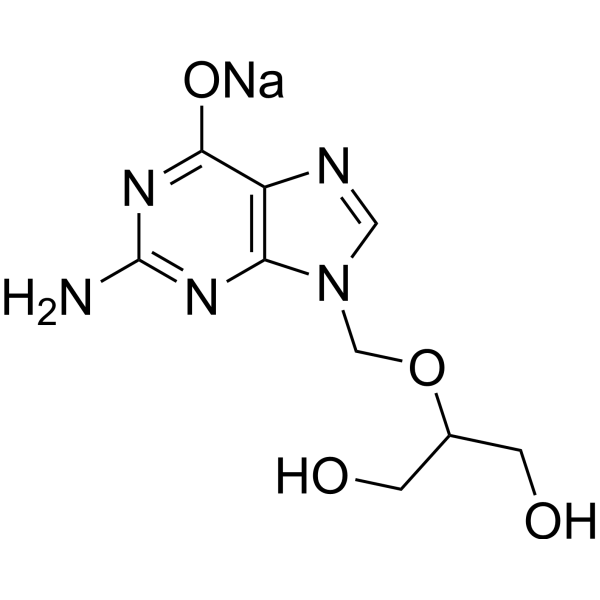
Ganciclovir (BW 759) sodium, a nucleoside analogue, is an orally active antiviral agent with activity against CMV. Ganciclovir sodium also has activity in vitro against members of the herpes group and some other DNA viruses. Ganciclovir sodium inhibits the in vitro replication of human herpes viruses (HSV 1 and 2, CMV) and adenovirus serotypes 1, 2, 4, 6, 8, 10, 19, 22 and 28. Ganciclovir sodium has an IC50 of 5.2 μM for feline herpesvirus type-1 (FHV-1) and can diffuse into the brain .
loading...
    loading...
23
23 Cited Publications
Cat. No.: HY-12053A
CAS No.: 125317-39-7
Purity:  99.94%
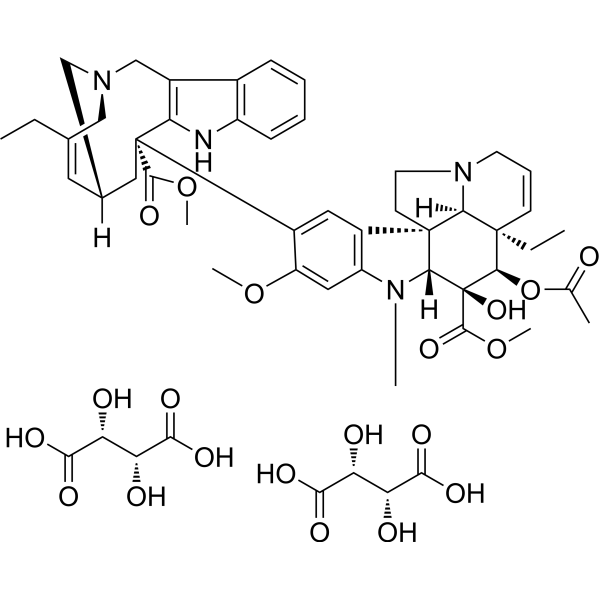
Synonyms: KW-2307; NOR-5'-anhydrovinblastine ditartrate
Vinorelbine (ditartrate) is an anti-mitotic agent which inhibits the proliferation of Hela cells with IC50 of 1.25 nM.
loading...
    loading...
17
17 Cited Publications
Cat. No.: HY-108357
CAS No.: 157-03-9
Purity:  99.98%
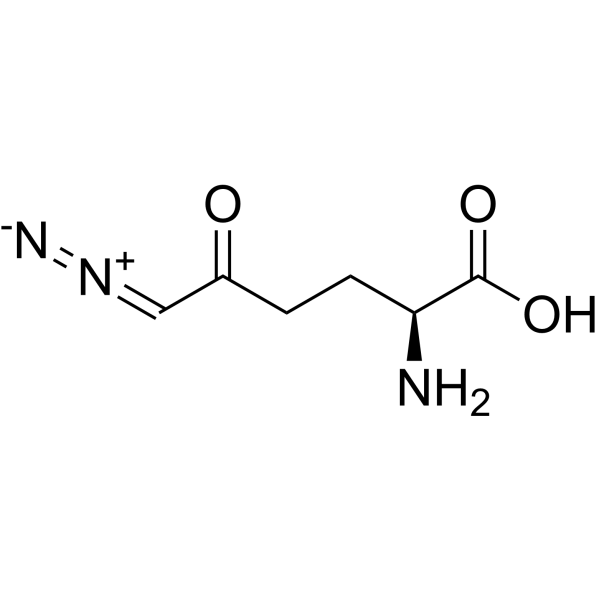
Synonyms: L-6-Diazo-5-oxoNORleucine; DON
6-Diazo-5-oxo-L-nor-Leucine (L-6-Diazo-5-oxonorleucine; DON) is a glutamine antagonist that irreversibly inhibits the catabolic effect of glutamine. 6-Diazo-5-oxo-L-nor-Leucine shows good anticancer activity (especially in pancreatic cancer) and reduces the self-renewal potential and metastatic capacity of tumour cells. 6-Diazo-5-oxo-L-nor-Leucine also possesses antibacterial and antiviral activity .
loading...
    loading...
8
8 Cited Publications
Cat. No.: HY-12949
CAS No.: 5465-86-1
Purity:  98.45%
Target:  

TRP Channel

Research Areas:  

Neurological Disease

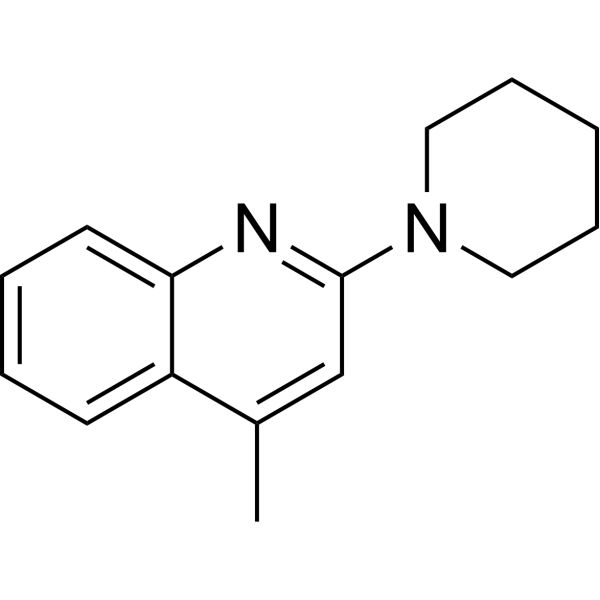
ML204 is a potent, selective TRPC4/TRPC5 channel inhibitor, with at least 19-fold selectivity against TRPC6 and no appreciable effect on all other TRP channels, nor on voltage-gated sodium, potassium, or Ca 2+ channels .
loading...
    loading...
8
8 Cited Publications
Cat. No.: HY-117040
CAS No.: 105618-26-6
Purity:  98.70%
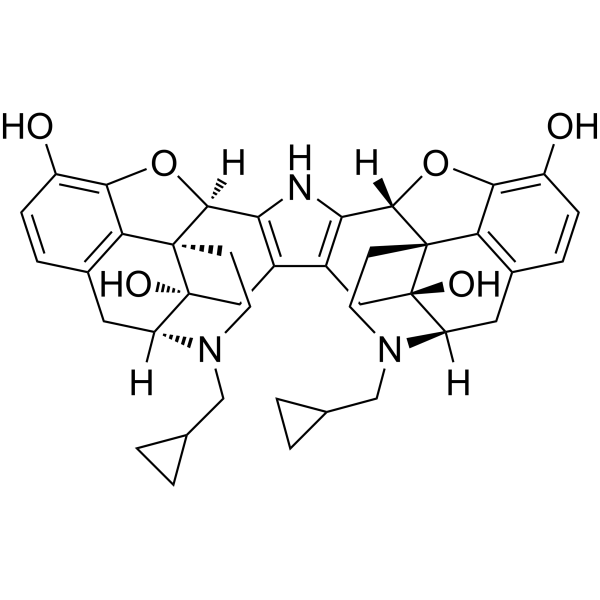
Synonyms: NORbinaltorphimine; NORBNI
Target:  

Opioid Receptor

Research Areas:  

Neurological Disease

nor-Binaltorphimine (Norbinaltorphimine; NorBNI) is a selective, long-acting competitive antagonist of the κ-opioid receptor. nor-Binaltorphimine blocks κ-opioid receptor-mediated analgesic effects, and inhibits butorphanol-induced changes in κ-opioid receptor binding kinetics, desensitization and down-regulation. nor-Binaltorphimine suppresses specific opioid withdrawal symptoms, precipitates withdrawal behaviors in butorphanol-dependent rats, and serves as a molecular probe for studying κ-opioid receptor-agonist interactions. nor-Binaltorphimine is applicable to research related to neurological disorders such as pain .
loading...
    loading...
8
8 Cited Publications
Cat. No.: HY-100903
CAS No.: 113158-34-2
Purity:  98.91%
Synonyms: NOR-Binaltorphimine dihydrochloride; NOR-BNI dihydrochloride
Target:  

Opioid Receptor

Research Areas:  

Neurological Disease

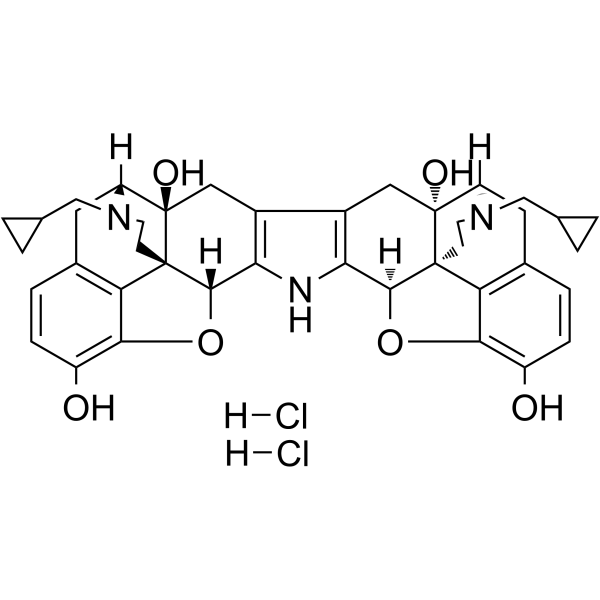
Norbinaltorphimine dihydrochloride (nor-Binaltorphimine dihydrochloride; nor-BNI dihydrochloride) is a selective, long-acting competitive antagonist of the κ-opioid receptor. Norbinaltorphimine dihydrochloride blocks κ-opioid receptor-mediated analgesic effects, and inhibits butorphanol-induced changes in κ-opioid receptor binding kinetics, desensitization and down-regulation. Norbinaltorphimine dihydrochloride suppresses specific opioid withdrawal symptoms, precipitates withdrawal behaviors in butorphanol-dependent rats, and serves as a molecular probe for studying κ-opioid receptor-agonist interactions. Norbinaltorphimine dihydrochloride is applicable to research related to neurological disorders such as pain .
loading...
    loading...
8
8 Cited Publications
Cat. No.: HY-12949A
CAS No.: 2070015-10-8
Purity:  99.74%
Target:  

TRP Channel

Research Areas:  

Neurological Disease

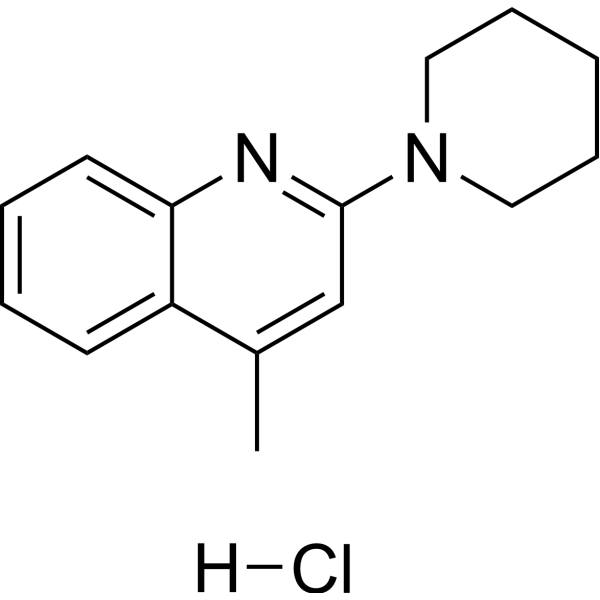
ML204 hydrochloride is a novel, potent, selective TRPC4/TRPC5 channel inhibitor, with at least 19-fold selectivity against TRPC6 and no appreciable effect on all other TRP channels, nor on voltage-gated sodium, potassium, or Ca 2+ channels .
loading...
    loading...
7
7 Cited Publications
Cat. No.: HY-112885B
CAS No.: 2250019-93-1
Purity:  99.96%
Synonyms: Nω-Hydroxy-NOR-L-arginine monoacetate
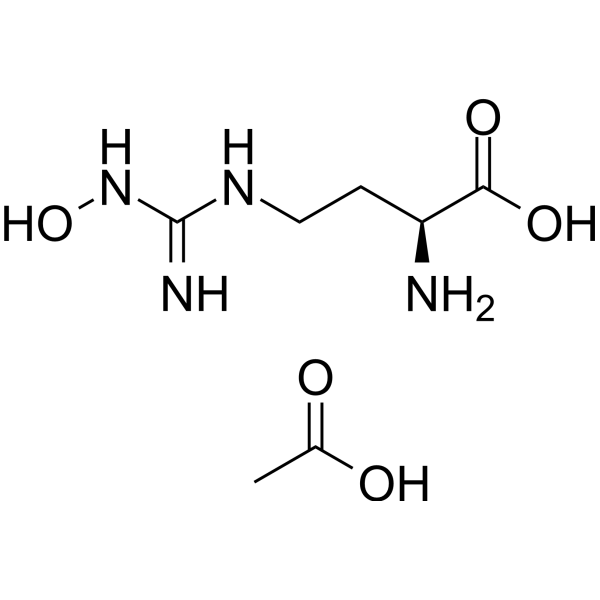
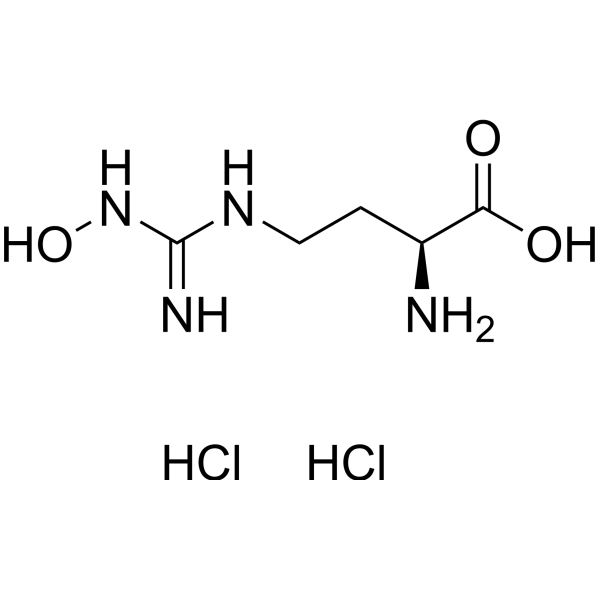
nor-NOHA monoacetate is a selective and reversible arginase inhibitor. nor-NOHA monoacetate induces apoptosis in ARG2-expressing cells under hypoxia. nor-NOHA monoacetate has anti-leukemic activity. nor-NOHA monoacetate can used in study of endothelial dysfunction, immunosuppression and metabolism .
loading...
    loading...
7
7 Cited Publications
Cat. No.: HY-112885A
CAS No.: 1140844-63-8
Purity:  98.81%
Synonyms: Nω-Hydroxy-NOR-L-arginine acetate
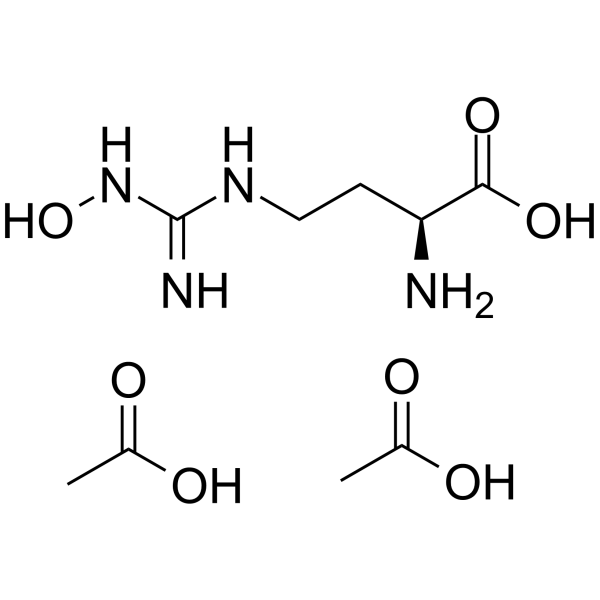
nor-NOHA acetate is a selective and reversible Arginase inhibitor. nor-NOHA acetate induces Apoptosis in ARG2-expressing cells under hypoxia. nor-NOHA acetate has anti-leukemic activity. nor-NOHA acetate improves liver ischemia-reperfusion injury. nor-NOHA acetate can used in study of tuberculosis, endothelial dysfunction, immunosuppression and metabolism .
loading...
    loading...
7
7 Cited Publications
Cat. No.: HY-112885C
CAS No.: 291758-32-2
Purity:  98.85%
Synonyms: Nω-Hydroxy-NOR-L-arginine dihydrochloride
nor-NOHA dihydrochloride is a selective and reversible Arginase inhibitor. nor-NOHA dihydrochloride induces Apoptosis in ARG2-expressing cells under hypoxia. nor-NOHA dihydrochloride has anti-leukemic activity. nor-NOHA dihydrochloride improves liver ischemia-reperfusion injury. nor-NOHA dihydrochloride can used in study of tuberculosis, endothelial dysfunction, immunosuppression and metabolism .
loading...
    loading...
4
4 Cited Publications
Cat. No.: HY-153089
CAS No.: 331963-27-0
Purity:  98.80%
Target:  

GSK-3 Mitophagy

Research Areas:  

Neurological Disease

GSK3-IN-3 is a mitophagy inducer, inducing Parkin-dependent mitophagy. GSK3-IN-3 is also a GSK-3 inhibitor with an IC50 value of 3.01 μM. GSK3-IN-3 is non-ATP nor substrate competitive and is neuroprotective against 6-OHDA .
loading...
    loading...
4
4 Cited Publications
Cat. No.: HY-15435
CAS No.: 75621-03-3
Purity:  99.91%
Research Areas:  

Others

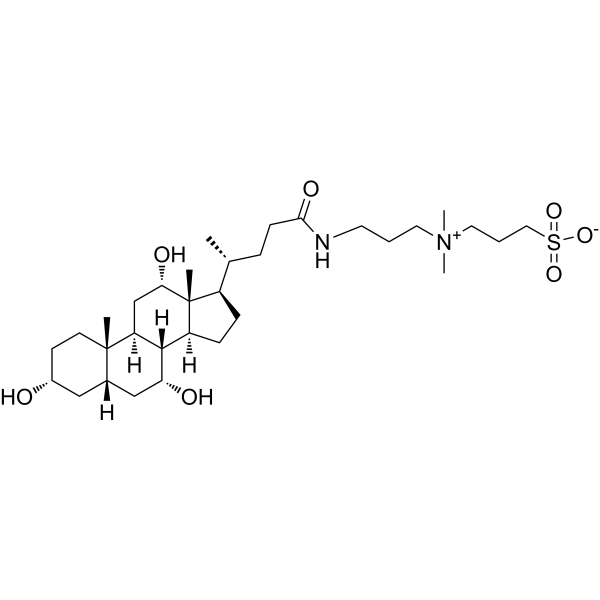
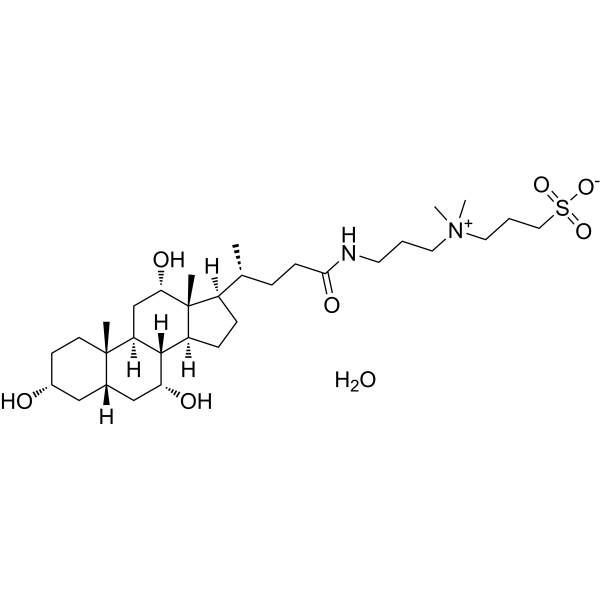
CHAPS is a cholic acid-derived, sulfobetaine-type zwitterionic detergent and micelle-forming agent. CHAPS exhibits properties of weak cationic or nonionic surfactants in different solution systems, undergoes micellization, and forms small, loose hydrophilic aggregates that are temperature-dependent. CHAPS stabilizes mononucleosomes under different ionic strengths, reduces nucleosome sequence specificity, promotes sliding of histone cores along DNA, solubilizes Tamm-Horsfall protein to reduce its interference with urinary exosome isolation, and maintains vesicle structure and the activity of related proteins at the same time. CHAPS is used to recover native folded fusion proteins, enhance the binding capacity of GST fusion proteins, and restore GST enzyme activity. However, CHAPS cannot refold proteins denatured by urea, guanidine hydrochloride or heat, nor can it construct the structure of intrinsically disordered proteins. CHAPS is commonly used in research on the separation and purification of membrane proteins .
loading...
    loading...
4
4 Cited Publications
Cat. No.: HY-15435A
CAS No.: 331717-45-4
Purity:  ≥98.0%
CHAPS hydrate is a cholic acid-derived, sulfobetaine-type zwitterionic detergent and micelle-forming agent. CHAPS hydrate exhibits properties of weak cationic or nonionic surfactants in different solution systems, undergoes micellization, and forms small, loose hydrophilic aggregates that are temperature-dependent. CHAPS hydrate stabilizes mononucleosomes under different ionic strengths, reduces nucleosome sequence specificity, promotes sliding of histone cores along DNA, solubilizes Tamm‑Horsfall protein to reduce its interference with urinary exosome isolation, and maintains vesicle structure and the activity of related proteins at the same time. CHAPS hydrate is used to recover native folded fusion proteins, enhance the binding capacity of GST fusion proteins, and restore GST enzyme activity. However, CHAPS hydrate cannot refold proteins denatured by urea, guanidine hydrochloride or heat, nor can it construct the structure of intrinsically disordered proteins. CHAPS hydrate is commonly used in research on the separation and purification of membrane proteins .
loading...
    loading...
2
2 Cited Publications
Cat. No.: HY-100784
CAS No.: 52497-36-6
Purity:  ≥99.0%
Target:  

EAAT

Research Areas:  

Neurological Disease

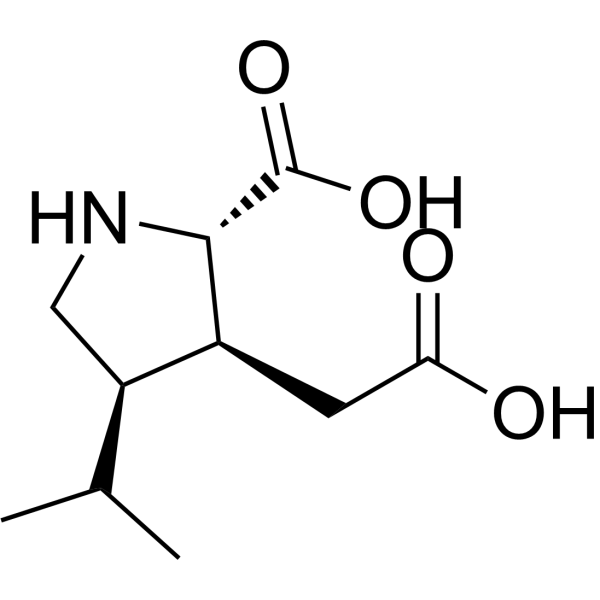
Dihydrokainic acid is a glutamate transporters (especially GLT1) inhibitor. Dihydrokainic acid targets GLT1 with high affinity, effectively inhibiting its transport function. Dihydrokainic acid exerts its effect by inhibiting the uptake of glutamate, leading to an increase in extracellular glutamate concentration, thereby affecting neuronal excitability and neurotransmission. Dihydrokainic acid is mainly applied in the field of neuroscience for research on glutamate-related neural functions, epilepsy, learning, and memory .
loading...
    loading...
2
2 Cited Publications
Cat. No.: HY-12053AS
Purity:  ≥98.0%
Synonyms: KW-2307-d3 ditartrate; NOR-5'-anhydrovinblastine-d3 ditartrate
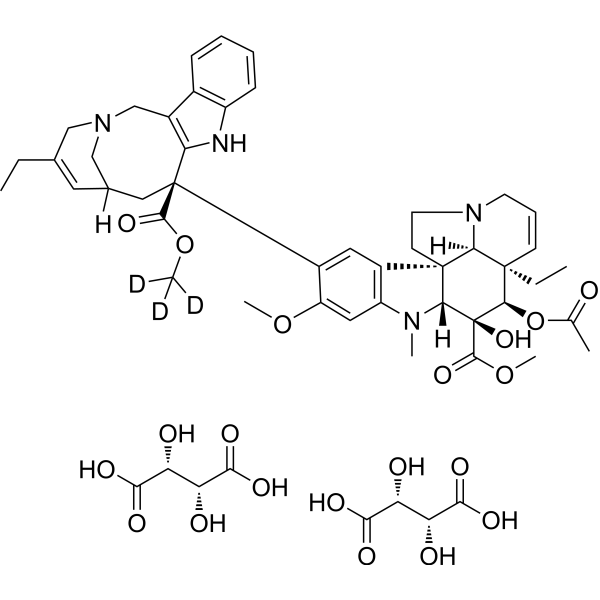
Vinorelbine-d3 (ditartrate) is the deuterium labeled Vinorelbine ditartrate. Vinorelbine (ditartrate) is an anti-mitotic agent which inhibits the proliferation of Hela cells with IC50 of 1.25 nM.
loading...
    loading...
2
2 Cited Publications
Cat. No.: HY-N6641
CAS No.: 21516-68-7
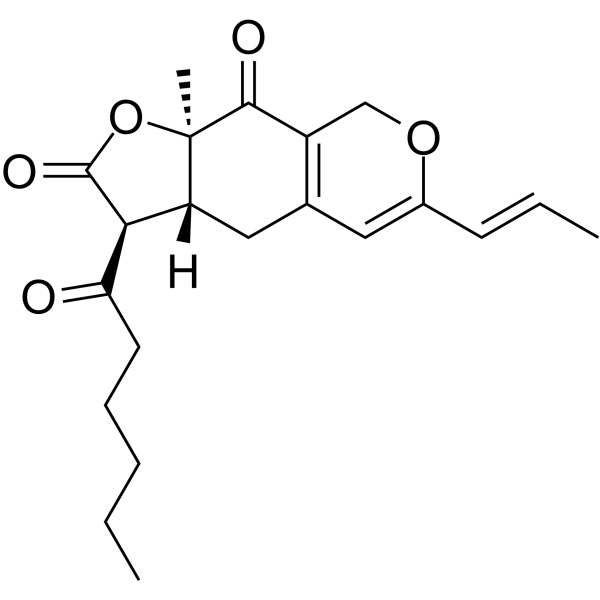
Monascin is a kind of azaphilonoid pigments extracted from Monascus pilosus-fermented rice (red-mold rice). Monascin also exhibits anti-tumor-initiating activity and anti-inflammatory activity with oral administration. Monascin inhibits the activation of NOR 1 (an NO donor). Monascin is a Nrf2 activator and PPARγ agonist .
loading...
    loading...
2
2 Cited Publications
Cat. No.: HY-G0007
CAS No.: 88546-55-8
Synonyms: Omeprazole sulphone
Omeprazole sulfone (Omeprazole sulphone) is one of the major circulating metabolites of Omeprazole (HY-B0113) in vivo, and belongs to class 4 non-mutagenic impurities. Omeprazole sulfone does not bind to the aryl hydrocarbon receptor (AhR), nor does it induce the expression of CYP1A1 or CYP1A2. However, Omeprazole sulfone promotes the migration of gastric epithelial cells under basal conditions and reverses the inhibitory effect of Indomethacin (HY-14397) on cell migration. Omeprazole sulfone does not promote cell proliferation, nor does it upregulate COX-2 expression or activate signaling pathways such as ERK, P38 MAPK and PI3K. Omeprazole sulfone maintains basal ulcer healing under non-acid-dependent conditions and can be used in studies related to gastric ulcer repair .
loading...
    loading...

