



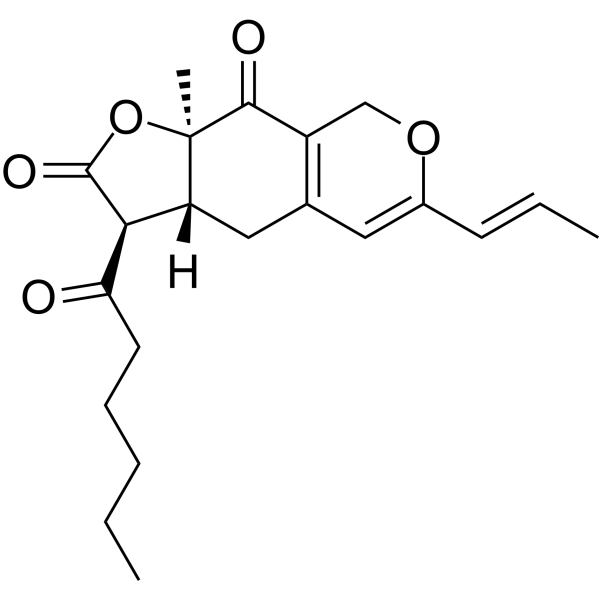
Monascin
Based on 2 publication(s) in Google Scholar
Monascin is a kind of azaphilonoid pigments extracted from Monascus pilosus-fermented rice (red-mold rice). Monascin also exhibits anti-tumor-initiating activity and anti-inflammatory activity with oral administration. Monascin inhibits the activation of NOR 1 (an NO donor). Monascin is a Nrf2 activator and PPARγ agonist.
For research use only. We do not sell to patients.
- Purity : 99.72%
- CAS No.: 21516-68-7
- Formula: C21H26O5
- Molecular Weight:358.43
-
Storage:Powder -20°C, 3 years , 4°C, 2 years ; In solvent -80°C, 6 months , -20°C, 1 month

To place orders, for customer services and technical support, please contact: MedChemExpress USA
Tel: 609-228-6898 E-mail: [email protected] [email protected]


-
 Biological Activity
-
Chemical Information
-
Solvent & Solubility
- Protocols
- Purity & Documentation
- References
-
 Help & FAQs


-
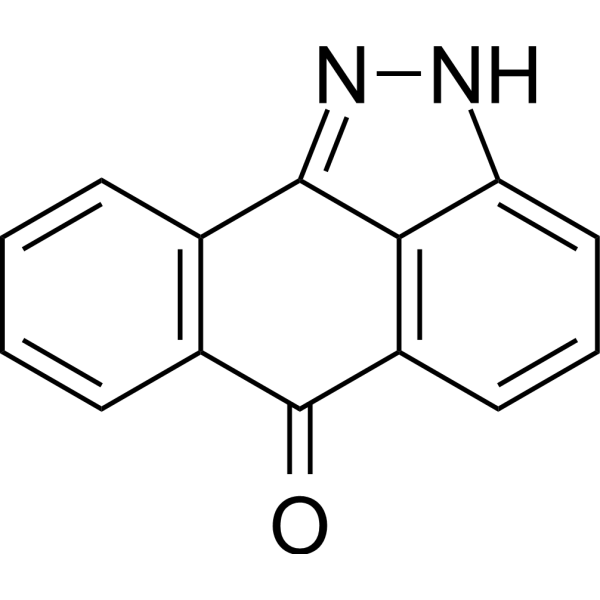
HY-12041
SP600125JNK Inhibitor -
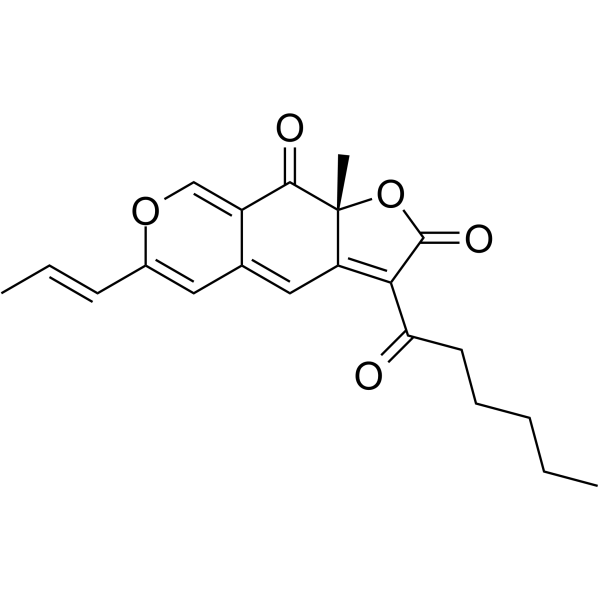
HY-N6642
AnkaflavinPPARγ Agonist -
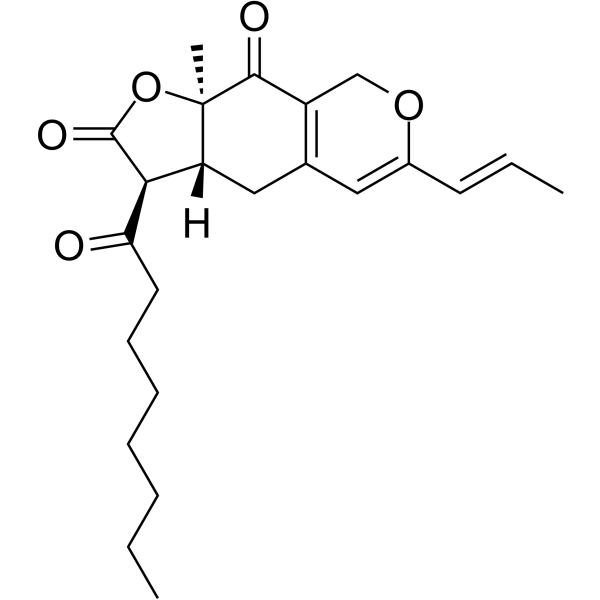
HY-N7766
RubropunctatinApoptosis Inducer -

HY-N6641R
Monascin (Standard)Azaphilonoid Pigment -
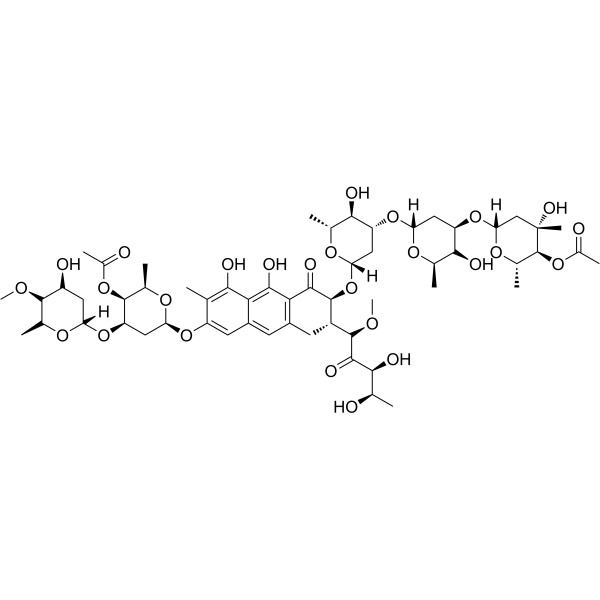
HY-W040129
Chromomycin A3Chemical Sensitizer -
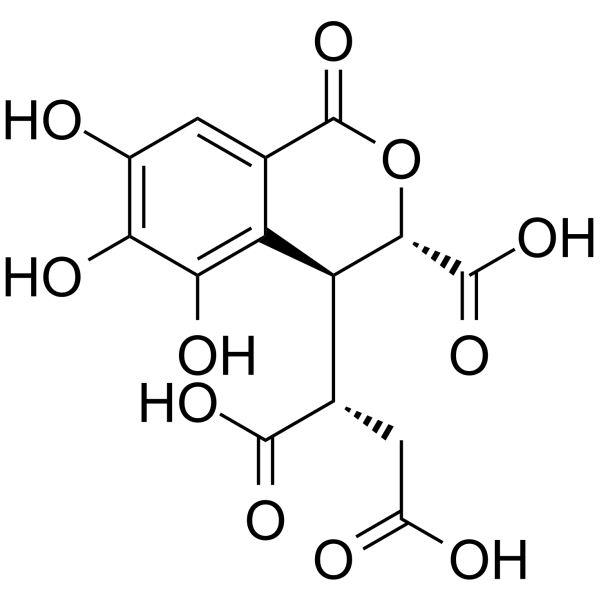
HY-N4170
Chebulic acidAntioxidant Agent -

HY-W040129R
Chromomycin A3 (Standard) -

HY-N4170R
Chebulic acid (Standard)Antioxidant Agent
Publications Citing Use of MedChemExpress (MCE) Monascin
More

Biological Activity
Description
Cellular Effect
|
Cell Line

|
Type | Value | Description | References |
|---|---|---|---|---|
| A-431 | IC50 |
17.77 μM
Compound: 7
|
Antiproliferative activity against human A431 cells after 72 hrs
Antiproliferative activity against human A431 cells after 72 hrs
|
[PMID: 20655237] |
| IGROV-1 | IC50 |
>30 μM
Compound: 7
|
Antiproliferative activity against human IGROV1 cells after 72 hrs
Antiproliferative activity against human IGROV1 cells after 72 hrs
|
[PMID: 20655237] |
| NCI-H460 | IC50 |
>50 μM
Compound: 7
|
Antiproliferative activity against human NCI-H460 cells after 72 hrs
Antiproliferative activity against human NCI-H460 cells after 72 hrs
|
[PMID: 20655237] |
In Vivo
MedChemExpress (MCE) has not independently confirmed the accuracy of these methods. They are for reference only.
-
Animal Model:SENCAR mouse using a UVB irradiation as an initiator and TPA as a promoter[1].
-
Dosage:0.0025% in drinking water.
-
Administration:Orally daily for 2 weeks in drinking water.
-
Result:Reduced the number of the papillomas.


Chemical Information
-
CAS No. 21516-68-7
-
Appearance Solid
-
Molecular Weight 358.43
-
Formula C21H26O5
-
Color Light yellow to yellow
-
SMILES
O=C([C@@H]1C(CCCCC)=O)O[C@]2(C)[C@]1([H])CC(C=C(/C=C/C)OC3)=C3C2=O
-
Structure Classification
-
Initial Source
-
Shipping
Room temperature in continental US; may vary elsewhere.
-
Storage
Powder -20°C 3 years 4°C 2 years In solvent -80°C 6 months -20°C 1 month


Publications (2)
-
Journal Impact Factor
-
Most Recent
-
ACS Appl Bio Mater
PLGA-Loaded Monascin Intranasal Delivery System: Sustained-Release and Immunomodulatory Effect for Treatment of Allergic Rhinitis by Improving Regulatory T Cell Function. [Abstract]2025 Jul 21;8(7):5718-5731. PMID: 40518762 -
Spectrochim Acta A Mol Biomol Spectrosc
Active pharmaceutical ingredient-correlated wavelength selection of UV-vis spectroscopy for the rapid quality assessment of red yeast Rice. [Abstract]2026 Jul 5:355:127669. PMID: 41785610


Solvent & Solubility
In Vitro:
DMSO : 50 mg/mL (139.50 mM; Need ultrasonic; Hygroscopic DMSO has a significant impact on the solubility of product, please use newly opened DMSO)
Please refer to the solubility information to select the appropriate solvent. Once prepared, please aliquot and store the solution to prevent product inactivation from repeated freeze-thaw cycles.
Storage method and period of stock solution: -80°C, 6 months; -20°C, 1 month. When stored at -80°C, please use it within 6 months. When stored at -20°C, please use it within 1 month.
Please refer to the solubility information to select the appropriate solvent. Once prepared, please aliquot and store the solution to prevent product inactivation from repeated freeze-thaw cycles.
Storage method and period of stock solution: -80°C, 6 months; -20°C, 1 month. When stored at -80°C, please use it within 6 months. When stored at -20°C, please use it within 1 month.
Concentration (start) × Volume (start) = Concentration (final) × Volume (final)

Protocols
-
How to Select the Route of Administration for Mammals
Route-of-administration selection in mammals is a pharmacokinetic, pharmacodynamic, formulation, animal-welfare, and translational decision, not a default technical choice. The selected route should match the study goal: intravenous dosing is most useful when complete systemic exposure and rapid onset are required, oral dosing is most translational for orally intended medicines but is affected by absorption and first-pass metabolism, subcutaneous or intramuscular dosing can provide slower systemic exposure, and intraperitoneal dosing can be useful in rodent proof-of-concept studies but may have limited clinical translation. Published route-comparison studies show that the same compound can produce different exposure, onset, bioavailability, tissue distribution, and tolerability depending on route; therefore, route choice should be supported by pilot pharmacokinetic or pharmacodynamic evidence when the literature is insufficient. Unresolved questions include how to standardize route sel
-
Cotton Pellet Granuloma
Cotton pellet granuloma is a classical in vivo chronic inflammation model used to evaluate the anti-inflammatory potential of test substances by measuring their ability to inhibit granuloma tissue formation around an implanted foreign body (cotton pellet) in rodents. The method is based on the biological response to a sterile implanted material, which induces proliferative phase inflammation characterized by fibroblast proliferation and collagen-rich granuloma formation, and the final readout reflects the extent of chronic inflammatory tissue growth surrounding the pellet. In multiple preclinical pharmacological evaluations, inhibition of cotton pellet-induced granuloma formation has been used as an indicator of anti-inflammatory activity in both synthetic and natural product screening contexts.
-
Carrageenan-Induced Paw Edema
Carrageenan-induced paw edema is an acute inflammation model in which intraplantar injection of carrageenan induces localized inflammatory swelling characterized by vascular permeability, leukocyte infiltration, and production of inflammatory mediators such as prostaglandins and cytokines, making it widely used to evaluate anti-inflammatory agents in vivo. The resulting paw volume or thickness increase is quantified over time as a direct readout of inflammatory intensity and drug efficacy, typically reflecting cyclooxygenase-mediated prostaglandin-driven edema formation and immune cell recruitment in peripheral tissue[20].
-
Research Protocol for Inflammation-related Diseases
The NLRP3 inflammasome is a cytosolic innate immune signaling platform that integrates priming signals and danger-signal activation to promote caspase-1 activation, maturation of IL-1β and IL-18, and gasdermin D-mediated pyroptotic cell death. The core experimental logic is to determine whether inflammatory disease phenotypes are driven by increased NLRP3 expression, ASC-containing inflammasome assembly, caspase-1 cleavage, GSDMD cleavage, and extracellular release of IL-1β/IL-18 rather than by nonspecific cell injury alone. The pathway is strongly linked to inflammation-related disease phenotypes because monosodium urate crystals activate NALP3/NLRP3 inflammasome signaling in gout-like crystal inflammation, cholesterol crystals activate NLRP3 inflammasomes in atherogenesis models, and DSS-induced intestinal inflammation has been reported to involve NLRP3 inflammasome activity. However, experimental colitis studies also show context-dependent protective effects of NLRP3 inflammasome co


Purity & Documentation
-
Data Sheet (277 KB)
-
SDS (393 KB)
- English - EN (393 KB)
- Français - FR (393 KB)
- Deutsch - DE (393 KB)
- Norwegian - NO (393 KB)
- Español - ES (393 KB)
- Swedish - SV (393 KB)
- Italian - IT (393 KB)
- Korean - KR (393 KB)
- Portuguese - PT (393 KB)
-
Handling Instructions (2659 KB)
References
[1]. Akihisa T, et al. Anti-tumor-initiating effects of monascin, an azaphilonoid pigment from the extract of Monascus pilosus fermented rice (red-mold rice). Chem Biodivers. 2005 Oct;2(10):1305-9. [Content Brief]
[2]. Lee CL, et al. Monascus fermentation of dioscorea for increasing the production of cholesterol-lowering agent--monacolin K and antiinflammation agent--monascin. Appl Microbiol Biotechnol. 2006 Oct;72(6):1254-62. [Content Brief]
[3]. Shi YX, Chen WS. Monascin ameliorate inflammation in the lipopolysaccharide-induced BV-2 microglial cells via suppressing the NF-κB/p65 pathway. Iran J Basic Med Sci. 2020;23(4):461-468. [Content Brief]
[4]. Hsu WH, et al. A novel natural Nrf2 activator with PPARγ-agonist (monascin) attenuates the toxicity of methylglyoxal and hyperglycemia. Toxicol Appl Pharmacol. 2013 Nov 1;272(3):842-51. [Content Brief]


Complete Stock Solution Preparation Table
Please refer to the solubility information to select the appropriate solvent. Once prepared, please aliquot and store the solution to prevent product inactivation from repeated freeze-thaw cycles.
Storage method and period of stock solution: -80°C, 6 months; -20°C, 1 month. When stored at -80°C, please use it within 6 months. When stored at -20°C, please use it within 1 month.
| Optional Solvent | Concentration Solvent Mass | 1 mg | 5 mg | 10 mg | 25 mg |
|---|---|---|---|---|---|
| DMSO | 1 mM | 2.7899 mL | 13.9497 mL | 27.8995 mL | 69.7486 mL |
| 5 mM | 0.5580 mL | 2.7899 mL | 5.5799 mL | 13.9497 mL | |
| 10 mM | 0.2790 mL | 1.3950 mL | 2.7899 mL | 6.9749 mL | |
| 15 mM | 0.1860 mL | 0.9300 mL | 1.8600 mL | 4.6499 mL | |
| 20 mM | 0.1395 mL | 0.6975 mL | 1.3950 mL | 3.4874 mL | |
| 25 mM | 0.1116 mL | 0.5580 mL | 1.1160 mL | 2.7899 mL | |
| 30 mM | 0.0930 mL | 0.4650 mL | 0.9300 mL | 2.3250 mL | |
| 40 mM | 0.0697 mL | 0.3487 mL | 0.6975 mL | 1.7437 mL | |
| 50 mM | 0.0558 mL | 0.2790 mL | 0.5580 mL | 1.3950 mL | |
| 60 mM | 0.0465 mL | 0.2325 mL | 0.4650 mL | 1.1625 mL | |
| 80 mM | 0.0349 mL | 0.1744 mL | 0.3487 mL | 0.8719 mL | |
| 100 mM | 0.0279 mL | 0.1395 mL | 0.2790 mL | 0.6975 mL |


Monascin Related Classifications
HY-N6641 Related Classifications
 Powered by Bioz