From 11:00 pm to 12:00 pm EST ( 8:00 pm to 9:00 pm PST ) on January 6th, the website will be under maintenance. We are sorry for the inconvenience. Please arrange your schedule properly.
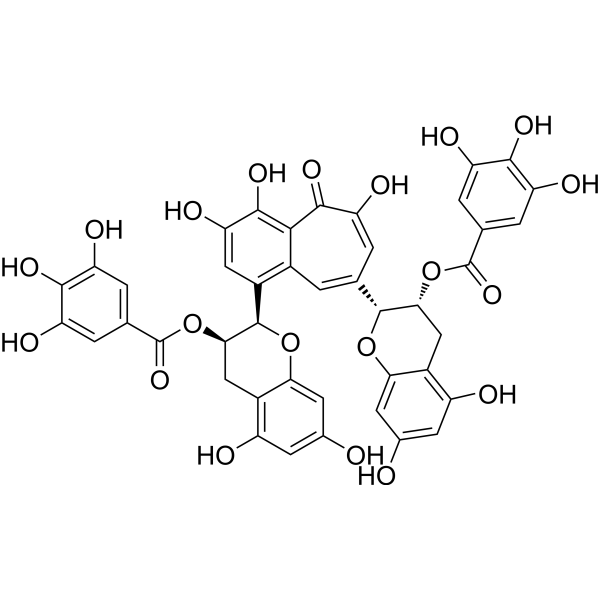
Theaflavin 3,3'-digallate (TF-3) is a potent Zika virus (ZIKV) protease inhibitor with an IC50 of 2.3 μM. Theaflavin 3,3'-digallat directly binds to ZIKVpro (Kd=8.86 μM) and inhibits ZIKV replication. Theaflavin 3,3'-digallat inhibits the activity of gp41 and NS2B-3 protease and has antiviral activity against HSV and HIV-1 . Theaflavin 3,3'-digallate, the typical pigment in black tea, is a potent antitumor agent [2].
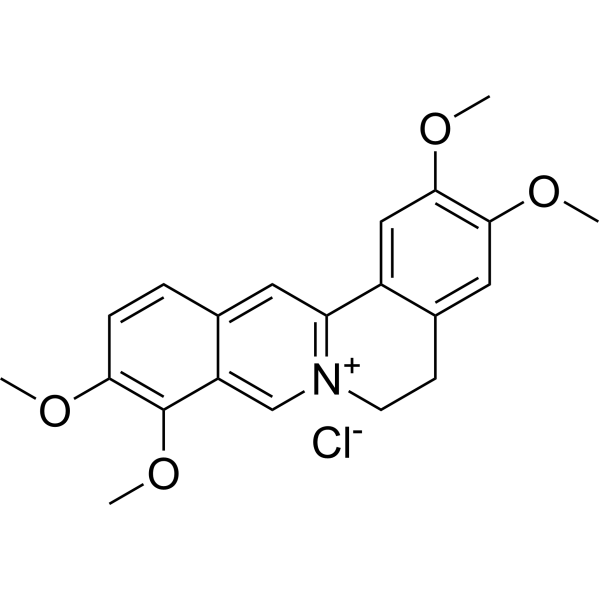
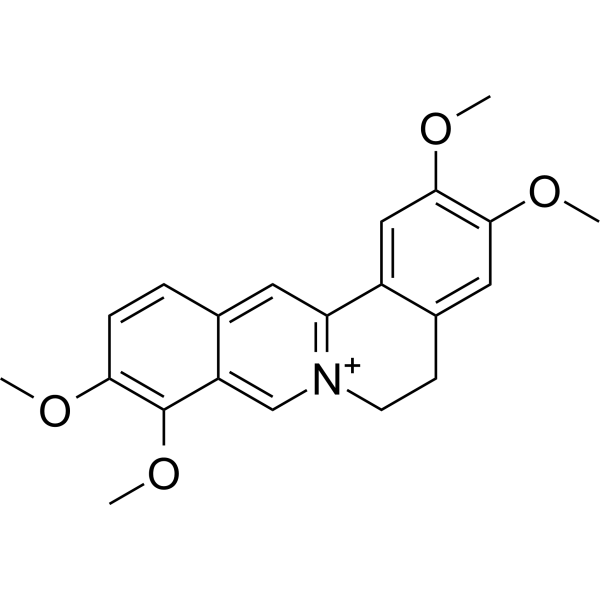
Palmatine chloride is an orally active and irreversible indoleamine 2,3-dioxygenase 1 (IDO-1) inhibitor with IC50s of 3 μM and 157μM against HEK 293-hIDO-1 and rhIDO-1, respectively. Palmatine chloride can also inhibit West Nile virus (WNV) NS2B-NS3 protease in an uncompetitive manner with an IC50 of 96 μM. Palmatine chloride shows anti-cancer, anti-oxidation, anti-inflammatory, neuroprotection, antibacterial, anti-viral activities [2] .
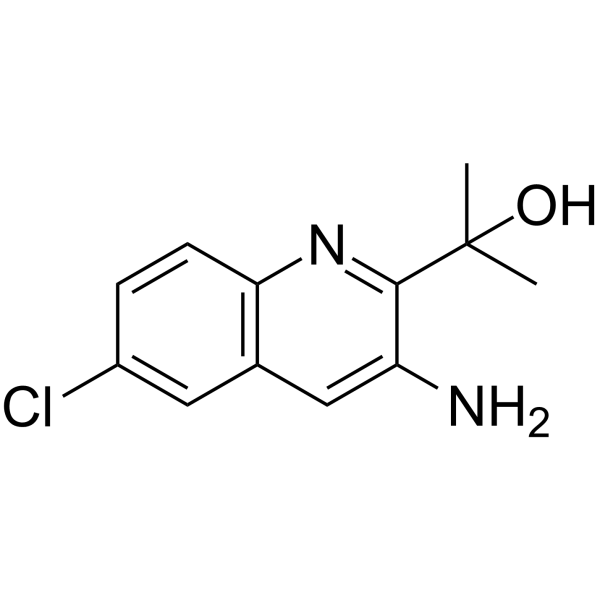
Reproxalap (ADX-102) is an active aldehyde sequestering agent. Reproxalap reduces the PKCα activity. Reproxalap blocks caspase 3/7 activation. Reproxalap protects cells from the cytotoxicity of C18:0-al. Reproxalap has anti-inflammatory and pain-relieving effects. Reproxalap is used in studies of dry eye, allergic conjunctivitis, and non-infectious anterior uveitis [2] .
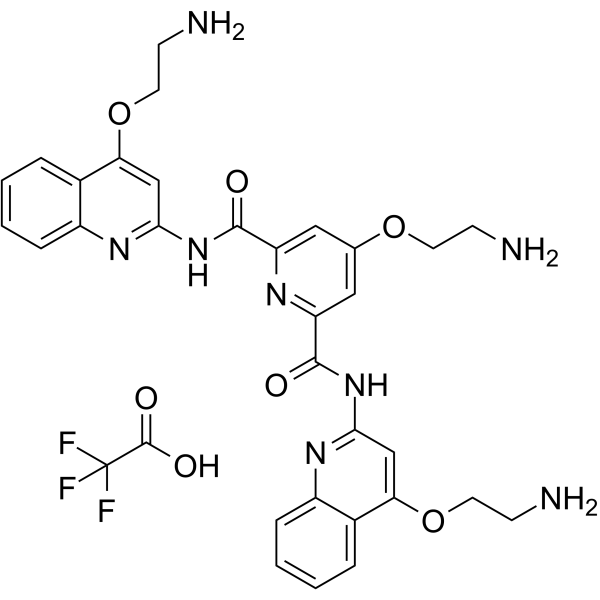
Pyridostatin (RR82) TFA is a G-quadruplex (G4) inducer/stabilizer with a Kd of 490 nM. Pyridostatin TFA also acts as an inhibitor of Zika virus (ZIKV) NS2B-NS3 protease, with an IC50 of 11.0 μM. Pyridostatin TFA interacts with G-quadruplex structures, regulates the expression of SRC and SUB1, and induces replication- and transcription-dependent DNA damage, growth arrest, and genomic instability. Pyridostatin TFA exhibits antiproliferative and antiviral activities. Pyridostatin TFA can be used in studies related to breast cancer, cervical cancer, and Zika virus infection [2] .
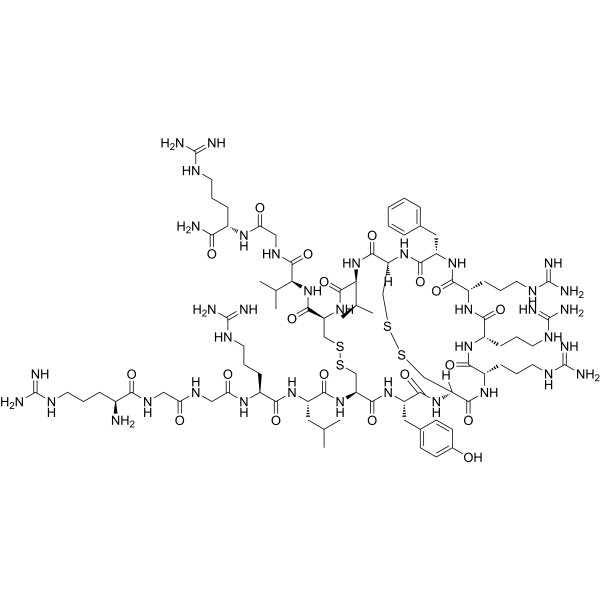
Protegrin-1 is an orally active antibacterial peptide. Protegrin-1 activates ERK, COX2, NFκB, inhibits Apoptosis, and NO production. Protegrin-1 has antibacterial activity against S. aureus, E. faecium, E. coli, P. aeruginosa and K. Pneumoniae, with MBC values between 10 and 20 µM. Protegrin-1 has antiviral activity against dengue NS2B-NS3. Protegrin-1 has anti-inflammatory activity. Protegrin-1 is used in the study of inflammatory diseases and infections [2] .
Palmatine is an orally active and irreversible indoleamine 2,3-dioxygenase 1 (IDO-1) inhibitor with IC50s of 3 μM and 157μM against HEK 293-hIDO-1 and rhIDO-1, respectively. Palmatine can also inhibit West Nile virus (WNV) NS2B-NS3 protease in an uncompetitive manner with an IC50 of 96 μM. Palmatine shows anti-cancer, anti-oxidation, anti-inflammatory, neuroprotection, antibacterial, anti-viral activities [2] .
JNJ-40418677 is an orally active modulator of γ-secretase, can cross the blood-brain barrier. JNJ-40418677 inhibits Aβ42 and NS2B-NS3 protease, with IC50s of 200 nM and 3.9 μM, respectively. JNJ-40418677 displays good biological tolerance, can be use for Alzheimer’s disease research [2] .
Pyridostatin (RR82) trihydrochloride is a G-quadruplex (G4) inducer/stabilizer with a Kd of 490 nM. Pyridostatin trihydrochloride also acts as an inhibitor of Zika virus (ZIKV) NS2B-NS3 protease, with an IC50 of 11.0 μM. Pyridostatin trihydrochloride interacts with G-quadruplex structures, regulates the expression of SRC and SUB1, and induces replication- and transcription-dependent DNA damage, growth arrest, and genomic instability. Pyridostatin trihydrochloride exhibits antiproliferative and antiviral activities. Pyridostatin trihydrochloride can be used in studies related to breast cancer, cervical cancer, and Zika virus infection [2] .
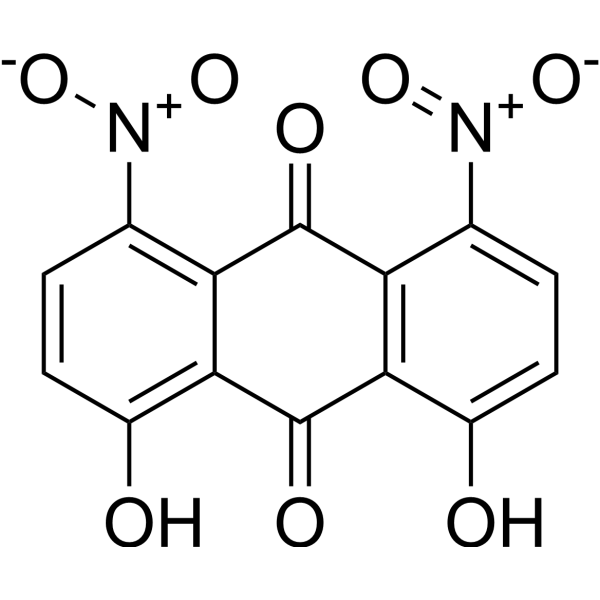
1,8-Dihydroxy-4,5-dinitroanthraquinone (ARDP0006; DHDNE) is a potent inhibitor of serine proteinase NS2B/3, the dengue viral protein. 1,8-Dihydroxy-4,5-dinitroanthraquinone has intermolecular proteinase activity and viral inhibition ability with IC50s of 432 μM and 4.2 μM, respectively. Meanwhile 1,8-Dihydroxy-4,5-dinitroanthraquinone inhibits NS2B/3 cleavage in BHK-21 cells at a dose ranging from 4.2 μM to 432 μM .
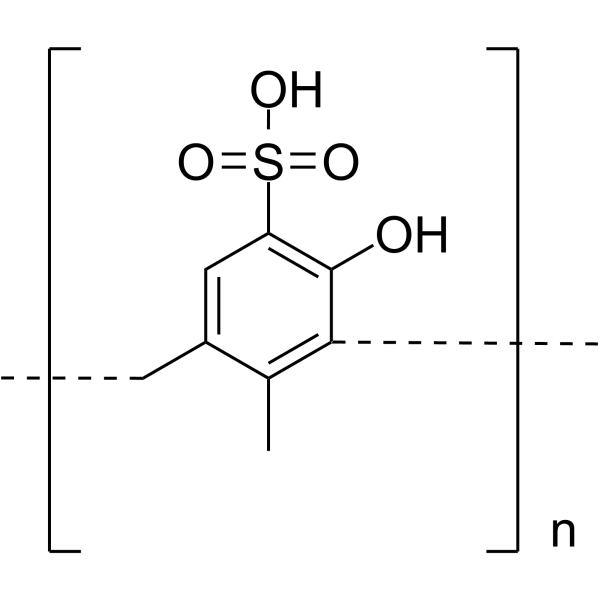
Policresulen is a competitive inhibitor for DENV2NS2B/NS3 protease with an IC50 of 0.48 μg/mL. Policresulen can be used as a local hemostatic and antibacterial agent for research of cervical and vaginal inflammation, skin lesions, oral mucosa and gingival inflammation [2].
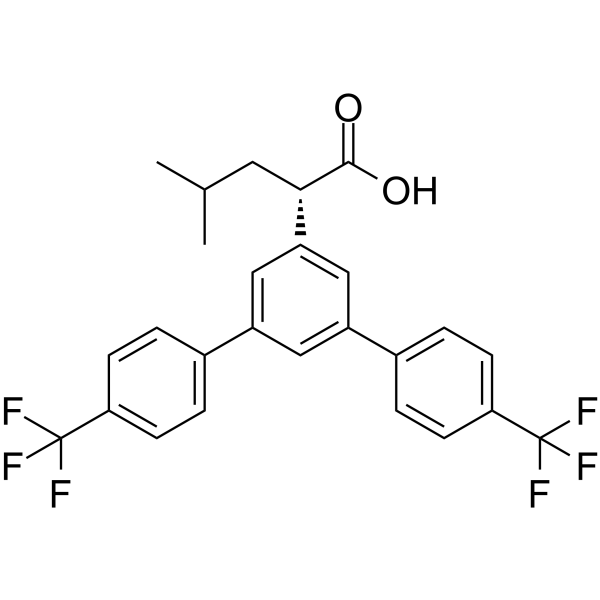
NS2B/NS3-IN-2 is a potent dengue virus (DENV) NS2B/NS3 covalent inhibitor with an IC50 of 6.0 nM and Ki of 0.66 µM. NS2B/NS3-IN-2 shows no cytotoxicity and markedly increases the cell survival rate .
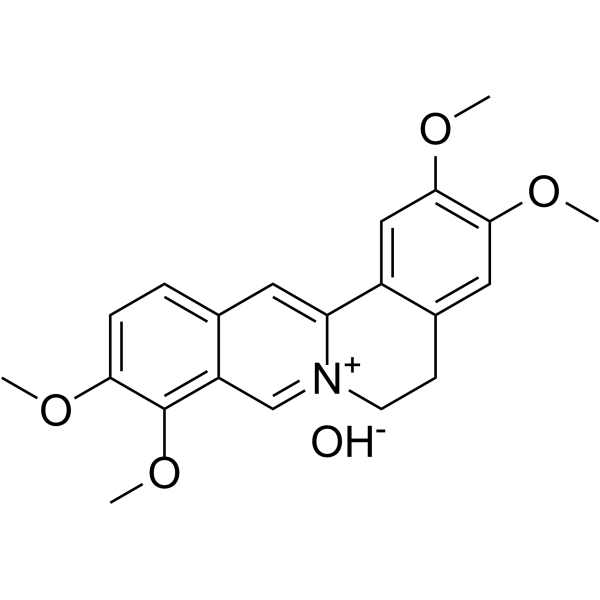
Palmatine hydroxide is an orally active and irreversible indoleamine 2,3-dioxygenase 1 (IDO-1) inhibitor with IC50s of 3 μM and 157μM against HEK 293-hIDO-1 and rhIDO-1, respectively. Palmatine hydroxide can also inhibit West Nile virus (WNV) NS2B-NS3 protease in an uncompetitive manner with an IC50 of 96 μM. Palmatine hydroxide shows anti-cancer, anti-oxidation, anti-inflammatory, neuroprotection, antibacterial, anti-viral activities [2] .
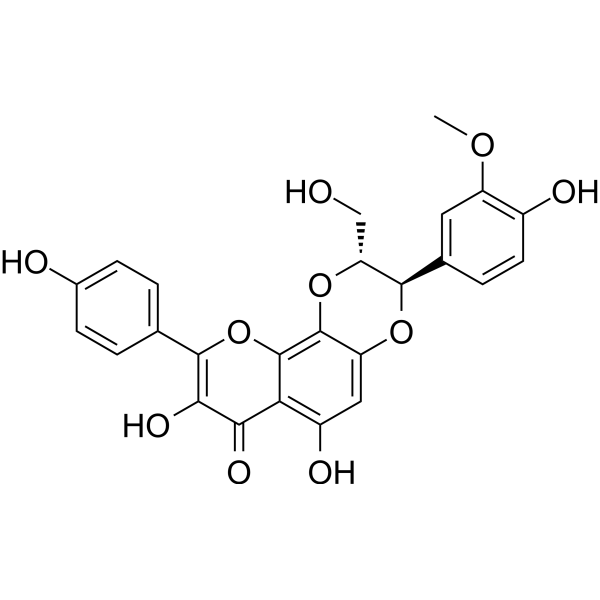
Rhodiolin, a flavonoid, is an orally active glucose 6-phosphate isomerase (GPI) inhibitor. Rhodiolin inhibits papillary thyroid cancer (PTC) by targeting glycolysis enzyme glucose 6-phosphate isomerase GPI and suppressing PI3K/AKT/mTOR phosphorylation and induce apoptosis. Rhodiolin as a NS2B-NS3 protease inhibitor can disrupt dengue viral replication. Rhodiolin is also a potential candidate for developing anticancer strategies inhibiting CK1ε kinase. Rhodiolin can be used for the study of anti-tumor and anti-viral [2] .
NS2 (114-121), Influenza, the 114-121 fragment of influenza nonstructural protein 2 (NS2), is a influenza-derived epitope. NS2 (114-121), Influenza can be used for the research of CD8 + cytotoxic T lymphocyte (CTL) in antiviral immune responses .
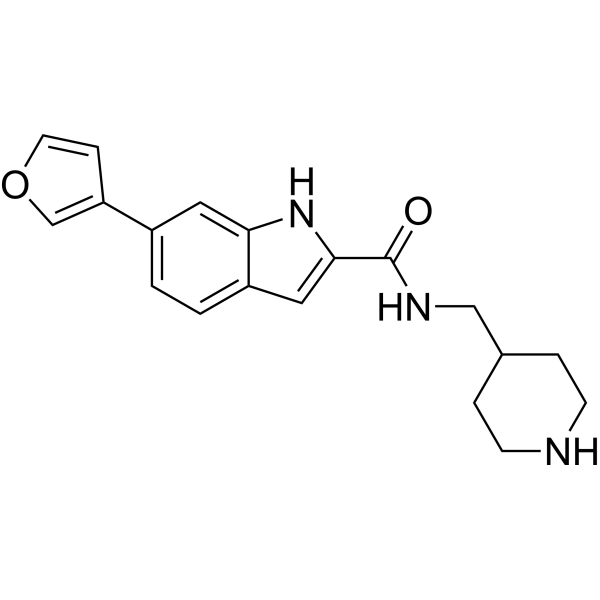
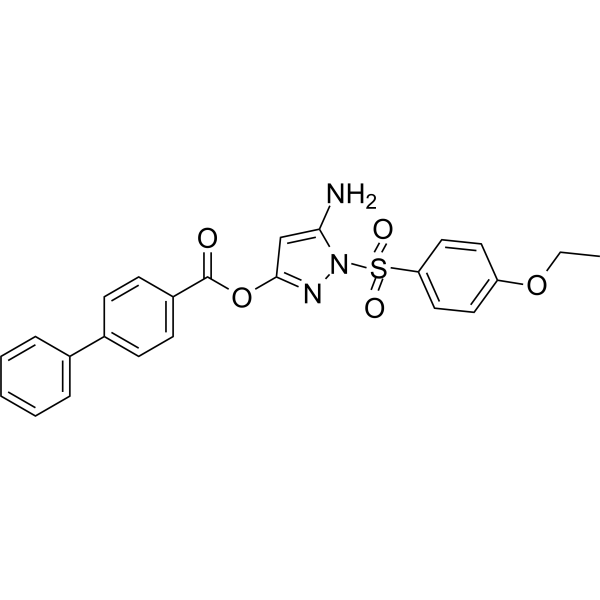
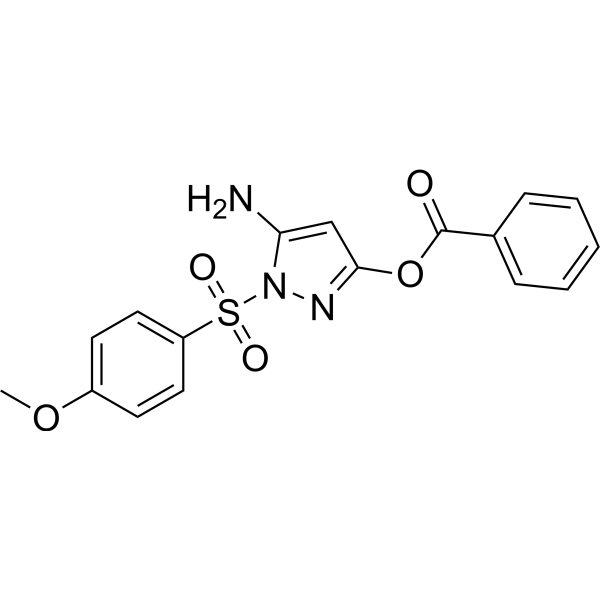
SID-852843 is a WNV NS2B-NS3 proteinase inhibitor. SID-852843 can inhibit WNV NS2B-NS3 proteinase activity with IC50 value of 0.105 μM. SID-852843 can be used for the research of virus infection .
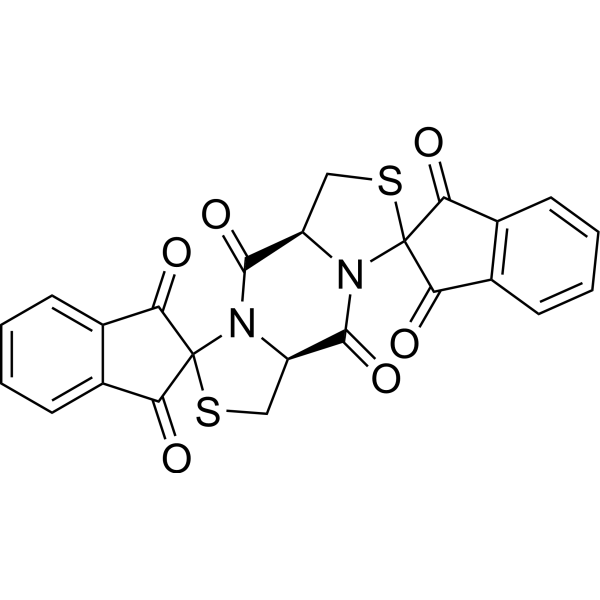
ZINC03129319 is a dengue virus (DENV) NS2B-NS3 protease inhibitor extracted from patent US20150141521A1, has inhibition constants (Ki1) of 92 μM and Ki3 of 20 μM.
DV-B-120 is a competitive inhibitor for dengue virus (DENV) with IC50s of 5.35, 7.39, 10.49 and 8.58 μM, for DENV-1, DENV-2, DENV-3 and DENV-4, respectively, by inhibiting NS2B-NS3 protease. DV-B-120 exhibits antiviral activity through inhibition of DENV replication .
LabMol-301 inhibits both NS5 RdRp and NS2B-NS3pro activity (IC50: 0.8 and 7.4 μM, respectively). LabMol-301 has a cytoprotective effect and prevents Zika virus (ZIKV)-induced cell death .
NS2B/NS3-IN-9 (Compound 73) is a broad-spectrum, non-competitive anti-Orthoflavivirus lipopeptide inhibitor targeting the NS2B-NS3 protease. NS2B/NS3-IN-9 exhibits IC50 values for Dengue virus DENV2NS2B-NS3, West Nile virus WNV NS2B-NS3, and Zika virus ZIKV NS2B-NS3 of 2.4, 7.2, and 1.9 μM, respectively. NS2B/NS3-IN-9 also exhibits antiviral activity at the cellular level against DENV2, WNV, and ZIKV, with EC50 values of 4.1, 4.9, and 5.0 μM, respectively. NS2B/NS3-IN-9 has no significant toxicity to cells. NS2B/NS3-IN-9 can be used for the study of anti-Orthoflavivirus .
NS2B/NS3-IN-7 (compound 26) is a highly potent Zika virus NS2B-NS3 protease inhibitor with a Ki value of 2.33 nM. NS2B/NS3-IN-7 can reduce amounts of ZIKV-infected cells .
4-Hydroxy-2-methylbenzenesulfonic acid ammonium is an impurity of Policresulen. Policresulen is a potent NS2B/NS3 protease inhibitor with an IC50 of 0.48 μg/mL. Policresulen effectively inhibits the replication of DENV2 virus in BHK-21 cells with an IC50 of 4.99 μg/mL. Policresulen acted as a competitive inhibitor of the protease, and slightly affected the protease stability .
5-Hydroxytoluene-2,4-disulphonic acid diammonium is an impurity of Policresulen. Policresulen is a potent NS2B/NS3 protease inhibitor with an IC50 of 0.48 μg/mL. Policresulen effectively inhibits the replication of DENV2 virus in BHK-21 cells with an IC50 of 4.99 μg/mL. Policresulen acted as a competitive inhibitor of the protease, and slightly affected the protease stability .
Palmatine (chloride) (Standard) is the analytical standard of Palmatine (chloride). This product is intended for research and analytical applications. Palmatine chloride is an orally active and irreversible indoleamine 2,3-dioxygenase 1 (IDO-1) inhibitor with IC50s of 3 μM and 157μM against HEK 293-hIDO-1 and rhIDO-1, respectively. Palmatine chloride can also inhibit West Nile virus (WNV) NS2B-NS3 protease in an uncompetitive manner with an IC50 of 96 μM. Palmatine chloride shows anti-cancer, anti-oxidation, anti-inflammatory, neuroprotection, antibacterial, anti-viral activities [2] .
Theaflavin 3,3'-digallate (Standard) is the analytical standard of Theaflavin 3,3'-digallate. This product is intended for research and analytical applications. Theaflavin 3,3'-digallate (TF-3) is a potent Zika virus (ZIKV) protease inhibitor with an IC50 of 2.3 μM. Theaflavin 3,3'-digallat directly binds to ZIKVpro (Kd=8.86 μM) and inhibits ZIKV replication. Theaflavin 3,3'-digallat inhibits the activity of gp41 and NS2B-3 protease and has antiviral activity against HSV and HIV-1 . Theaflavin 3,3'-digallate, the typical pigment in black tea, is a potent antitumor agent [2].
NSC-323241 is a potent STT3A-mediated mega protein complex assembly inhibitor. NSC-323241 disrupts he endoplasmic reticulum (ER) mega complex nucleated by STT3A during dengue virus (DENV) and Zika virus (ZIKV) infection. NSC-323241 targets the binding of STT3A subcomplex with viral nonstructural proteins (e.g., NS2B, NS3) and host translocon proteins, disrupting the formation of viral replication microenvironment. NSC-323241 is promising for research of flavivirus infection, such as dengue fever and Zika virus .
NS2B/NS3-IN-5 (Compound 25b) is an allosteric DENV2 and ZIKVNS2B/NS3 protease inhibitor with IC50 values of 0.67 µM and 4.38 µM against ZIKV and DENV2NS2B/NS3 proteases, respectively .
NS2B/NS3-IN-4 (Compound 34e) is an allosteric DENV2 and ZIKVNS2B/NS3 protease inhibitor with IC50 values of 0.69 µM and 1.04 µM against DENV2 and ZIKV NS2B/NS3 proteases, respectively .
NS2B/NS3-IN-6 (Compound 1a) is an allosteric DENV and ZIKVNS2B/NS3 protease inhibitor with IC50 values of 2.23 µM and 25.2 µM against ZIKV and DENV proteases, respectively .
Reproxalap (Standard) (ADX-102 (Standard)) is the analytical standard of Reproxalap (HY-107150). This product is intended for research and analytical applications. Reproxalap (ADX-102) is an active aldehyde sequestering agent. Reproxalap reduces the PKCα activity. Reproxalap blocks caspase 3/7 activation. Reproxalap protects cells from the cytotoxicity of C18:0-al. Reproxalap has anti-inflammatory and pain-relieving effects. Reproxalap is used in studies of dry eye, allergic conjunctivitis, and non-infectious anterior uveitis [2] .
LZTR1 Human Pre-designed siRNA Set A contains three designed siRNAs for LZTR1 gene (Human), as well as a negative control, a positive control, and a FAM-labeled negative control.
Abz-Nle-Lys-Arg-Arg-Ser-3-(NO2)Tyr is a WNV NS2B-NS3 protease substrate. Abz-Nle-Lys-Arg-Arg-Ser-3-(NO2)Tyr is used for WNV NS2B-NS3 protease substrate peptide selective inhibitor development .
Boc-GRR-AMC (TFA) is a tri-peptide Substrate. Boc-GRR-AMC can be used for a fluorogenic West Nile virus (WNV) substrate, profiling the substrate specificity for the NS2B-NS3 proteases or determining the pH optimum of LdMC activity [2].
2-Hydroxy-4-methylbenzenesulphonic acid ammonium is an impurity of Policresulen. Policresulen is a potent NS2B/NS3 protease inhibitor with an IC50 of 0.48 μg/mL. Policresulen effectively inhibits the replication of DENV2 virus in BHK-21 cells with an IC50 of 4.99 μg/mL. Policresulen acted as a competitive inhibitor of the protease, and slightly affected the protease stability .
Ac-EVKKQR-pNA is a competitive chromogenic para-nitroanilide substrate corresponding to the P6-P1 segment amino-terminal to the NS2B-NS3 cleavage site but with a more reactive, hydrolytically cleavable, para-nitroanilide at the P1’ position. Ac-EVKKQR-pNA is promising for research of dengue 2 virus and flavivirus virus infection .
Abz-Gly-Leu-Lys-Arg-Gly-Gly-3-(NO2)Tyr acetate is the acetate salt form of Abz-Gly-Leu-Lys-Arg-Gly-Gly-3-(NO2)Tyr. Abz-Gly-Leu-Lys-Arg-Gly-Gly-3-(NO2)Tyr acetate is the substrate for WNV NS2B NS3 protease, which is utilized for the development of WNV protease substrate peptide selective inhibitor .
2A/2B Dengue protease substrate (Ac-RTSKKR-pNA) is a peptide substrate for Dengue NS2B-NS3 protease. 2A/2B Dengue protease substrate is used for Dengue NS2B-NS3 protease substrate peptide selective inhibitor development .
IRBM-Z-1 is a non-competitive inhibitor of Zika virus (ZIKV) NS2B-NS3 protease, with an IC50 of 1.8 μM. IRBM-Z-1 also exhibits inhibitory activity against the NS2B-NS3 proteases of T156I-mutated dengue virus 2(DENV2) and West Nile virus (WNV), with IC50 values of 3.9 μM and 4.7 μM, respectively. IRBM-Z-1 inhibits ZIKV replication, attenuates virus-induced cytopathic effects. IRBM-Z-1 is applicable to research related to ZIKV infection .
IRBM-Z-2 is a non-competitive, orally active Zika virus (ZIKV) NS2B-NS3 protease inhibitor, with IC50 values of 0.04 μM and 3.1 μM against the wild-type and I156T mutant strains, respectively. IRBM-Z-2 exhibits broad-spectrum anti-flavivirus potential, with IC50 values of 2.1 μM and 0.09 μM against the NS2B-NS3 proteases of dengue virus 2 (DENV2) and West Nile virus (WNV), respectively. IRBM-Z-1 inhibits ZIKV replication and alleviates virus-induced cytopathic effects. IRBM-Z-1 can be used in studies related to ZIKV infection .
5-((1H-Indol-3-yl)methylene)imidazolidine-2,4-dione is an inhibitor of dengue virus NS2B-NS3 protease and thrombin. 5-((1H-Indol-3-yl)methylene)imidazolidine-2,4-dione can be used in the research of infectious diseases .
Peridinin is a hydroxylated carotenoid ketone that exhibits inhibitory activity against DENV NS2B/NS3 protease and all dengue virus serotypes (DENV-1, DENV-2, DENV-3, DENV-4). Peridinin inhibits dengue virus production and reduces viral titers. Peridinin is applicable to research related to dengue virus infection .
CN-716 dihydrochloride is a reversible covalent flavivirus NS2B·NS3 protease inhibitor with antiviral activity. CN-716 dihydrochloride effectively inhibits the replication of dengue virus (DENV2), West Nile virus (WNV) and Zika virus (ZIKV). The IC50 values of CN-716 dihydrochloride against the proteases of the above three viruses are 0.066 μM, 0.11 μM and 0.25 μM, respectively, while the Ki values against the same proteases are 0.051 μM, 0.082 μM and 0.04 μM, respectively. CN-716 dihydrochloride can be used to study the infection mechanisms of dengue fever, West Nile fever and Zika virus infection [2].
Retrocyclin-101 (RC-101) TFA is an artificially synthesized, cyclic-structured θ-defensin, a broad-spectrum agent with antimicrobial (covering viruses, bacteria, and fungi) activity and anti-inflammatory activity. Retrocyclin-101 TFA can inhibit the serine protease activity of ZIKV NS2B-NS3, with an IC50 of 7.20 μM. Retrocyclin-101 TFA has significant inhibitory activity against HIV, SARS-CoV-2, flaviviruses, influenza viruses, HSV-1/2, Staphylococcus aureus, etc. Retrocyclin-101 TFA inhibits the signal transduction mediated by TLR4 and TLR2, reducing the expression of pro-inflammatory cytokines [2] .
Protegrin-1 is an orally active antibacterial peptide. Protegrin-1 activates ERK, COX2, NFκB, inhibits Apoptosis, and NO production. Protegrin-1 has antibacterial activity against S. aureus, E. faecium, E. coli, P. aeruginosa and K. Pneumoniae, with MBC values between 10 and 20 µM. Protegrin-1 has antiviral activity against dengue NS2B-NS3. Protegrin-1 has anti-inflammatory activity. Protegrin-1 is used in the study of inflammatory diseases and infections [2] .
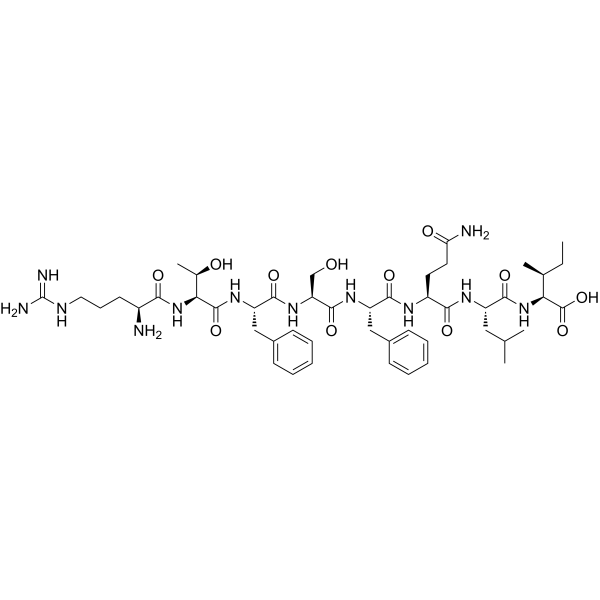
NS2 (114-121), Influenza, the 114-121 fragment of influenza nonstructural protein 2 (NS2), is a influenza-derived epitope. NS2 (114-121), Influenza can be used for the research of CD8 + cytotoxic T lymphocyte (CTL) in antiviral immune responses .
Boc-GRR-AMC is a tri-peptide Substrate. Boc-GRR-AMC can be used for a fluorogenic West Nile virus (WNV) substrate, profiling the substrate specificity for the NS2B-NS3 proteases or determining the pH optimum of LdMC activity [2].
Abz-Nle-Lys-Arg-Arg-Ser-3-(NO2)Tyr is a WNV NS2B-NS3 protease substrate. Abz-Nle-Lys-Arg-Arg-Ser-3-(NO2)Tyr is used for WNV NS2B-NS3 protease substrate peptide selective inhibitor development .
Boc-GRR-AMC (TFA) is a tri-peptide Substrate. Boc-GRR-AMC can be used for a fluorogenic West Nile virus (WNV) substrate, profiling the substrate specificity for the NS2B-NS3 proteases or determining the pH optimum of LdMC activity [2].
Ac-EVKKQR-pNA is a competitive chromogenic para-nitroanilide substrate corresponding to the P6-P1 segment amino-terminal to the NS2B-NS3 cleavage site but with a more reactive, hydrolytically cleavable, para-nitroanilide at the P1’ position. Ac-EVKKQR-pNA is promising for research of dengue 2 virus and flavivirus virus infection .
Abz-Gly-Leu-Lys-Arg-Gly-Gly-3-(NO2)Tyr acetate is the acetate salt form of Abz-Gly-Leu-Lys-Arg-Gly-Gly-3-(NO2)Tyr. Abz-Gly-Leu-Lys-Arg-Gly-Gly-3-(NO2)Tyr acetate is the substrate for WNV NS2B NS3 protease, which is utilized for the development of WNV protease substrate peptide selective inhibitor .
2A/2B Dengue protease substrate (Ac-RTSKKR-pNA) is a peptide substrate for Dengue NS2B-NS3 protease. 2A/2B Dengue protease substrate is used for Dengue NS2B-NS3 protease substrate peptide selective inhibitor development .
Retrocyclin-101 (RC-101) TFA is an artificially synthesized, cyclic-structured θ-defensin, a broad-spectrum agent with antimicrobial (covering viruses, bacteria, and fungi) activity and anti-inflammatory activity. Retrocyclin-101 TFA can inhibit the serine protease activity of ZIKV NS2B-NS3, with an IC50 of 7.20 μM. Retrocyclin-101 TFA has significant inhibitory activity against HIV, SARS-CoV-2, flaviviruses, influenza viruses, HSV-1/2, Staphylococcus aureus, etc. Retrocyclin-101 TFA inhibits the signal transduction mediated by TLR4 and TLR2, reducing the expression of pro-inflammatory cytokines [2] .
Theaflavin 3,3'-digallate (TF-3) is a potent Zika virus (ZIKV) protease inhibitor with an IC50 of 2.3 μM. Theaflavin 3,3'-digallat directly binds to ZIKVpro (Kd=8.86 μM) and inhibits ZIKV replication. Theaflavin 3,3'-digallat inhibits the activity of gp41 and NS2B-3 protease and has antiviral activity against HSV and HIV-1 . Theaflavin 3,3'-digallate, the typical pigment in black tea, is a potent antitumor agent [2].
Palmatine chloride is an orally active and irreversible indoleamine 2,3-dioxygenase 1 (IDO-1) inhibitor with IC50s of 3 μM and 157μM against HEK 293-hIDO-1 and rhIDO-1, respectively. Palmatine chloride can also inhibit West Nile virus (WNV) NS2B-NS3 protease in an uncompetitive manner with an IC50 of 96 μM. Palmatine chloride shows anti-cancer, anti-oxidation, anti-inflammatory, neuroprotection, antibacterial, anti-viral activities [2] .
Palmatine is an orally active and irreversible indoleamine 2,3-dioxygenase 1 (IDO-1) inhibitor with IC50s of 3 μM and 157μM against HEK 293-hIDO-1 and rhIDO-1, respectively. Palmatine can also inhibit West Nile virus (WNV) NS2B-NS3 protease in an uncompetitive manner with an IC50 of 96 μM. Palmatine shows anti-cancer, anti-oxidation, anti-inflammatory, neuroprotection, antibacterial, anti-viral activities [2] .
Palmatine hydroxide is an orally active and irreversible indoleamine 2,3-dioxygenase 1 (IDO-1) inhibitor with IC50s of 3 μM and 157μM against HEK 293-hIDO-1 and rhIDO-1, respectively. Palmatine hydroxide can also inhibit West Nile virus (WNV) NS2B-NS3 protease in an uncompetitive manner with an IC50 of 96 μM. Palmatine hydroxide shows anti-cancer, anti-oxidation, anti-inflammatory, neuroprotection, antibacterial, anti-viral activities [2] .
Rhodiolin, a flavonoid, is an orally active glucose 6-phosphate isomerase (GPI) inhibitor. Rhodiolin inhibits papillary thyroid cancer (PTC) by targeting glycolysis enzyme glucose 6-phosphate isomerase GPI and suppressing PI3K/AKT/mTOR phosphorylation and induce apoptosis. Rhodiolin as a NS2B-NS3 protease inhibitor can disrupt dengue viral replication. Rhodiolin is also a potential candidate for developing anticancer strategies inhibiting CK1ε kinase. Rhodiolin can be used for the study of anti-tumor and anti-viral [2] .
Palmatine (chloride) (Standard) is the analytical standard of Palmatine (chloride). This product is intended for research and analytical applications. Palmatine chloride is an orally active and irreversible indoleamine 2,3-dioxygenase 1 (IDO-1) inhibitor with IC50s of 3 μM and 157μM against HEK 293-hIDO-1 and rhIDO-1, respectively. Palmatine chloride can also inhibit West Nile virus (WNV) NS2B-NS3 protease in an uncompetitive manner with an IC50 of 96 μM. Palmatine chloride shows anti-cancer, anti-oxidation, anti-inflammatory, neuroprotection, antibacterial, anti-viral activities [2] .
Theaflavin 3,3'-digallate (Standard) is the analytical standard of Theaflavin 3,3'-digallate. This product is intended for research and analytical applications. Theaflavin 3,3'-digallate (TF-3) is a potent Zika virus (ZIKV) protease inhibitor with an IC50 of 2.3 μM. Theaflavin 3,3'-digallat directly binds to ZIKVpro (Kd=8.86 μM) and inhibits ZIKV replication. Theaflavin 3,3'-digallat inhibits the activity of gp41 and NS2B-3 protease and has antiviral activity against HSV and HIV-1 . Theaflavin 3,3'-digallate, the typical pigment in black tea, is a potent antitumor agent [2].
Peridinin is a hydroxylated carotenoid ketone that exhibits inhibitory activity against DENV NS2B/NS3 protease and all dengue virus serotypes (DENV-1, DENV-2, DENV-3, DENV-4). Peridinin inhibits dengue virus production and reduces viral titers. Peridinin is applicable to research related to dengue virus infection .
DNA-binding protein HU-alpha, a histone-like DNA-binding protein, wraps DNA, offering stabilization and preventing denaturation in challenging conditions. Comprising alpha and beta chains in a heterodimer, it demonstrates versatile DNA binding and protective functions. DNA-binding protein HU-alpha Protein, E.coli (His-SUMO) is the recombinant E. coli-derived DNA-binding protein HU-alpha protein, expressed by E. coli , with N-SUMO, N-6*His labeled tag.
Nonstructural protein 2/NS2 protein plays a crucial role in the influenza virus life cycle by mediating the nuclear export of capsid genomic RNA and is the link between the viral ribonucleoprotein complex (RNP) and the host cell nuclear export machinery. Important ties. Non-structural protein 2/NS2 Protein, H1N1 (His) is the recombinant Virus-derived Non-structural protein 2/NS2 protein, expressed by E. coli , with N-His labeled tag.
LZTR1 Human Pre-designed siRNA Set A contains three designed siRNAs for LZTR1 gene (Human), as well as a negative control, a positive control, and a FAM-labeled negative control.
Inquiry Online
Your information is safe with us. * Required Fields.
Western blot analysis of extracts from THP-1(lane 2(20μg), Jurkat (lane 3(20μg) and NIH3T3(lane 4(20μg) using FOXO1A (HY-P80132) Rabbit mAb. Proteins were transferred
to a PVDF membrane and blocked with 5% non-fat milk in TBST for 2 hour at room temperature. The primary antibody (1/1000) and Loading control antibody (Beta Actin, HY-P80438, 1/10000) was
used in 5% non-fat milk in TBST at 4°C overnight. Goat Anti-Mouse/Rabbit IgG-HRP Secondary Antibody (1/10000) was used for 1 hour at room temperature.
Western blot analysis of extracts from THP-1(lane 2(20μg), Jurkat (lane 3(20μg) and NIH3T3(lane 4(20μg) using FOXO1A (HY-P80132) Rabbit mAb. Proteins were transferred
to a PVDF membrane and blocked with 5% non-fat milk in TBST for 2 hour at room temperature. The primary antibody (1/1000) and Loading control antibody (Beta Actin, HY-P80438, 1/10000) was
used in 5% non-fat milk in TBST at 4°C overnight. Goat Anti-Mouse/Rabbit IgG-HRP Secondary Antibody (1/10000) was used for 1 hour at room temperature.
Western blot analysis of extracts from THP-1(lane 2(20μg), Jurkat (lane 3(20μg) and NIH3T3(lane 4(20μg) using FOXO1A (HY-P80132) Rabbit mAb. Proteins were transferred
to a PVDF membrane and blocked with 5% non-fat milk in TBST for 2 hour at room temperature. The primary antibody (1/1000) and Loading control antibody (Beta Actin, HY-P80438, 1/10000) was
used in 5% non-fat milk in TBST at 4°C overnight. Goat Anti-Mouse/Rabbit IgG-HRP Secondary Antibody (1/10000) was used for 1 hour at room temperature.
Western blot analysis of extracts from THP-1(lane 2(20μg), Jurkat (lane 3(20μg) and NIH3T3(lane 4(20μg) using FOXO1A (HY-P80132) Rabbit mAb. Proteins were transferred
to a PVDF membrane and blocked with 5% non-fat milk in TBST for 2 hour at room temperature. The primary antibody (1/1000) and Loading control antibody (Beta Actin, HY-P80438, 1/10000) was
MedchemExpress Validation 03
Western blot analysis of extracts from THP-1(lane 2(20μg), Jurkat (lane 3(20μg) and NIH3T3(lane 4(20μg) using FOXO1A (HY-P80132) Rabbit mAb. Proteins were transferred
MedchemExpress Validation 04
Western blot analysis of extracts from THP-1(lane 2(20μg), Jurkat (lane 3(20μg) and NIH3T3(lane 4(20μg) using FOXO1A (HY-P80132) Rabbit mAb. Proteins were transferred
to a PVDF membrane and blocked with 5% non-fat milk in TBST for 2 hour at room temperature. The primary antibody (1/1000) and Loading control antibody (Beta Actin, HY-P80438, 1/10000) was
used in 5% non-fat milk in TBST at 4°C overnight. Goat Anti-Mouse/Rabbit IgG-HRP Secondary Antibody (1/10000) was used for 1 hour at room temperature.
MedchemExpress Validation
Western blot analysis of extracts from THP-1(lane 2(20μg), Jurkat (lane 3(20μg) and NIH3T3(lane 4(20μg) using FOXO1A (HY-P80132) Rabbit mAb. Proteins were transferred
to a PVDF membrane and blocked with 5% non-fat milk in TBST for 2 hour at room temperature. The primary antibody (1/1000) and Loading control antibody (Beta Actin, HY-P80438, 1/10000) was
used in 5% non-fat milk in TBST at 4°C overnight. Goat Anti-Mouse/Rabbit IgG-HRP Secondary Antibody (1/10000) was used for 1 hour at room temperature.
Western blot analysis of extracts from THP-1(lane 2(20μg), Jurkat (lane 3(20μg) and NIH3T3(lane 4(20μg) using FOXO1A (HY-P80132) Rabbit mAb. Proteins were transferred
to a PVDF membrane and blocked with 5% non-fat milk in TBST for 2 hour at room temperature. The primary antibody (1/1000) and Loading control antibody (Beta Actin, HY-P80438, 1/10000) was
used in 5% non-fat milk in TBST at 4°C overnight. Goat Anti-Mouse/Rabbit IgG-HRP Secondary Antibody (1/10000) was used for 1 hour at room temperature.
MedchemExpress Validation
Western blot analysis of extracts from THP-1(lane 2(20μg), Jurkat (lane 3(20μg) and NIH3T3(lane 4(20μg) using FOXO1A (HY-P80132) Rabbit mAb. Proteins were transferred
to a PVDF membrane and blocked with 5% non-fat milk in TBST for 2 hour at room temperature. The primary antibody (1/1000) and Loading control antibody (Beta Actin, HY-P80438, 1/10000) was
used in 5% non-fat milk in TBST at 4°C overnight. Goat Anti-Mouse/Rabbit IgG-HRP Secondary Antibody (1/10000) was used for 1 hour at room temperature.
MedchemExpress Validation
Western blot analysis of extracts from THP-1(lane 2(20μg), Jurkat (lane 3(20μg) and NIH3T3(lane 4(20μg) using FOXO1A (HY-P80132) Rabbit mAb. Proteins were transferred
to a PVDF membrane and blocked with 5% non-fat milk in TBST for 2 hour at room temperature. The primary antibody (1/1000) and Loading control antibody (Beta Actin, HY-P80438, 1/10000) was
used in 5% non-fat milk in TBST at 4°C overnight. Goat Anti-Mouse/Rabbit IgG-HRP Secondary Antibody (1/10000) was used for 1 hour at room temperature.
MedchemExpress Validation
Western blot analysis of extracts from THP-1(lane 2(20μg), Jurkat (lane 3(20μg) and NIH3T3(lane 4(20μg) using FOXO1A (HY-P80132) Rabbit mAb. Proteins were transferred
to a PVDF membrane and blocked with 5% non-fat milk in TBST for 2 hour at room temperature. The primary antibody (1/1000) and Loading control antibody (Beta Actin, HY-P80438, 1/10000) was
used in 5% non-fat milk in TBST at 4°C overnight. Goat Anti-Mouse/Rabbit IgG-HRP Secondary Antibody (1/10000) was used for 1 hour at room temperature.
MedchemExpress Validation
Western blot analysis of extracts from THP-1(lane 2(20μg), Jurkat (lane 3(20μg) and NIH3T3(lane 4(20μg) using FOXO1A (HY-P80132) Rabbit mAb. Proteins were transferred
to a PVDF membrane and blocked with 5% non-fat milk in TBST for 2 hour at room temperature. The primary antibody (1/1000) and Loading control antibody (Beta Actin, HY-P80438, 1/10000) was
used in 5% non-fat milk in TBST at 4°C overnight. Goat Anti-Mouse/Rabbit IgG-HRP Secondary Antibody (1/10000) was used for 1 hour at room temperature.
MedchemExpress Validation
Western blot analysis of extracts from THP-1(lane 2(20μg), Jurkat (lane 3(20μg) and NIH3T3(lane 4(20μg) using FOXO1A (HY-P80132) Rabbit mAb. Proteins were transferred
to a PVDF membrane and blocked with 5% non-fat milk in TBST for 2 hour at room temperature. The primary antibody (1/1000) and Loading control antibody (Beta Actin, HY-P80438, 1/10000) was
used in 5% non-fat milk in TBST at 4°C overnight. Goat Anti-Mouse/Rabbit IgG-HRP Secondary Antibody (1/10000) was used for 1 hour at room temperature.
MedchemExpress Validation
Western blot analysis of extracts from THP-1(lane 2(20μg), Jurkat (lane 3(20μg) and NIH3T3(lane 4(20μg) using FOXO1A (HY-P80132) Rabbit mAb. Proteins were transferred
to a PVDF membrane and blocked with 5% non-fat milk in TBST for 2 hour at room temperature. The primary antibody (1/1000) and Loading control antibody (Beta Actin, HY-P80438, 1/10000) was
used in 5% non-fat milk in TBST at 4°C overnight. Goat Anti-Mouse/Rabbit IgG-HRP Secondary Antibody (1/10000) was used for 1 hour at room temperature.
MedChemExpress values your privacy and your trust is important to us. We use cookies to enhance your website experience. Some cookies are necessary to run the website.
Privacy and Cookie Policy

