

Search Result
Results for "
Nanoparticle drug delivery system
" in MedChemExpress (MCE) Product Catalog:
68
Biochemical Assay Reagents
| Cat. No. |
상품명 |
Target |
연구분야 |
Chemical Structure |
-
- HY-Y0623
-
|
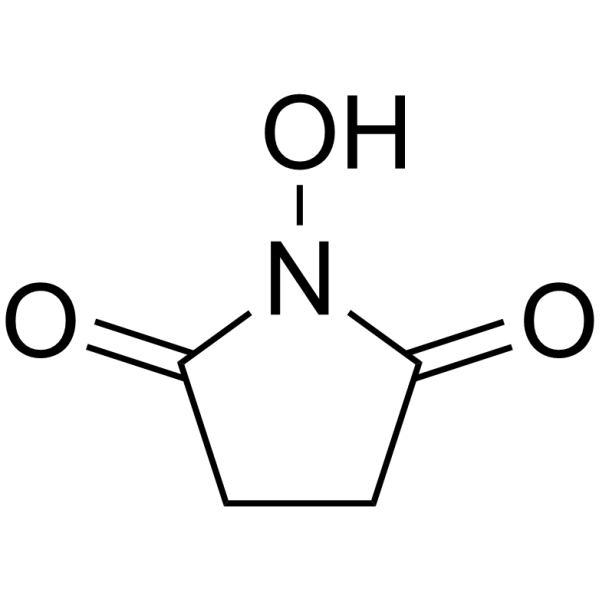
HOSu; 1-Hydroxy-2,5-pyrrolidinedione
|
Biochemical Assay Reagents
|
Others
|
|
N-Hydroxysuccinimide (HOSu; 1-Hydroxy-2,5-pyrrolidinedione) is a covalent crosslinker commonly used in bioconjugation technology with a primary amine group. N-Hydroxysuccinimide reacts with amino groups (-NH2) to form a stable amide bond, which can modify amino-containing biomolecules. N-Hydroxysuccinimide can be used, for example, for protein labeling with fluorescent dyes and enzymes, surface activation of chromatography supports, microbeads, nanoparticles and microarray slides, and chemical synthesis of peptides. N-Hydroxysuccinimide has a wide range of applications in biomaterial synthesis (such as collagen, chitosan crosslinking), drug delivery systems (such as hydrogel preparation) and tissue engineering .
|
-
-
- HY-W020780
-
|
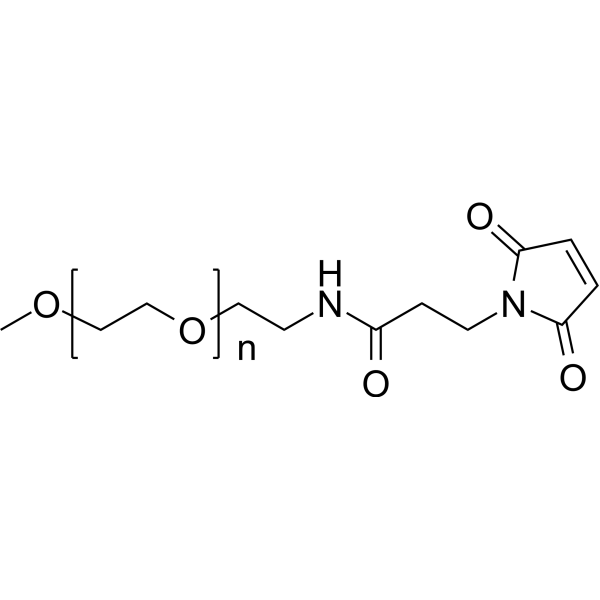
mPEG5000-Maleimide
|
Biochemical Assay Reagents
|
Cancer
|
|
mPEG5000-Mal (mPEG5000-Maleimide) is a PEG-derived selective covalent binding agent for sulfhydryl groups (RSGs), which can form irreversible thioether bonds with sulfhydryl groups under near-neutral conditions via the maleimide group. The mechanism of action of mPEG5000-Mal can be divided into two categories: firstly, as an enzyme modifier, it binds to target proteins through hydrophobic interactions, hydrogen bonds, and van der Waals forces, altering the protein's secondary structure; secondly, as a nanoparticle surface modifier, it covalently binds to sulfhydryl groups on the surface of red blood cells, changing the surface properties and morphology of the red blood cells, leading to their phagocytosis by macrophages of the reticuloendothelial system. mPEG5000-Mal can react with free cysteine in proteins, increasing the apparent molecular weight of the modified protein by 10-15 kDa for detection purposes. mPEG5000-Mal can enhance the thermal stability and catalytic activity of enzymes, and improve the macrophage targeting of nanoparticles, enabling targeted drug delivery. mPEG5000-Mal can be applied in enzyme engineering research in the food industry and in oncology, assisting radiotherapy by inhibiting tumor-associated macrophage infiltration and enhancing anti-tumor immune responses .
|
-
-
- HY-W127512
-
|
|
Drug Intermediate
|
Others
|
|
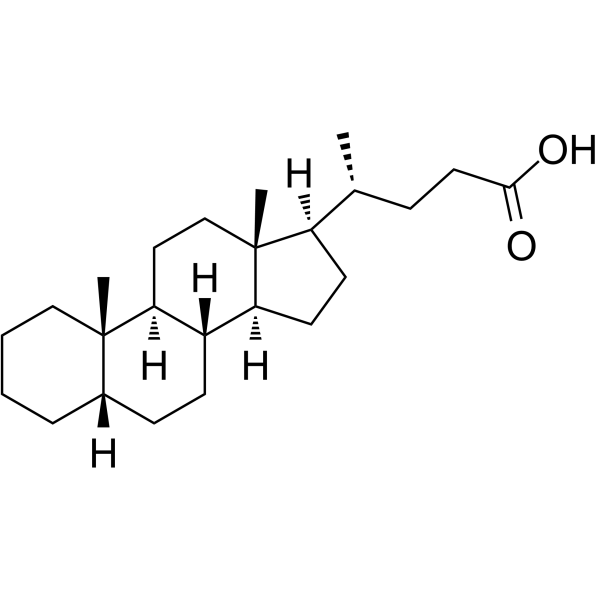
5β-Cholanic acid is a hydrophobic modifier used to modify polymer carriers. 5β-Cholanic acid can improve the acid stability, cell penetration efficiency and drug sustained release ability of nanocarriers, and optimize the oral effectiveness of delivered molecules. 5β-Cholanic acid can covalently bind to Glycol chitosan (GC) to form a GC-CA conjugate, which optimizes the hydrophobic anchoring ability of nanoparticles and enables them to be stably adsorbed on the surface of PLGA nanoparticles. Such nanoparticles can resist dissociation in the gastric acid environment and maintain positive charge to enhance endocytic uptake by intestinal epithelial cells (such as Caco-2 cells). 5β-Cholanic acid can be used in the development of drug delivery systems .
|
-
-
- HY-112624C
-
|
|
Biochemical Assay Reagents
Endogenous Metabolite
|
Others
|
|
Dextran (MW 40000) is a complex carbohydrate polymer consisting of glucose molecules linked by glycosidic bonds. Dextran has excellent solubility in water, making it useful as a viscosity modifier or stabilizer in foods, paints and adhesives. In the biomedical field, dextran is often used as a plasma expander because of its ability to increase blood volume when administered intravenously. It can also be modified to create dextran-based drug delivery systems, such as targeted nanoparticles.
|
-
-
- HY-B1325
-
|
|
Bacterial
Antibiotic
|
Infection
Inflammation/Immunology
|
|
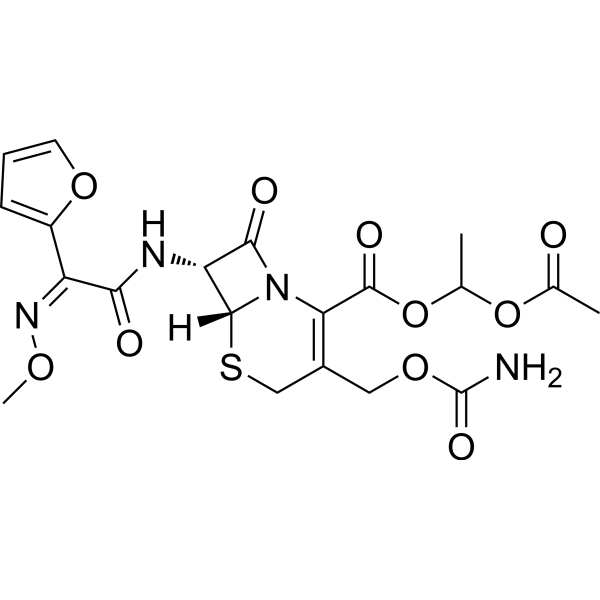
Cefuroxime axetil is an orally effective broad-spectrum β-lactam antibiotic that targets bacterial penicillin-binding proteins (PBPs, such as PBP3 and PBP1). Cefuroxime axetil inhibits cell wall synthesis, leading to bacterial lysis and death, with a minimum inhibitory concentration (MIC) of 0.12-4 mg/L for non-typeable Haemophilus influenzae (NTHi). Cefuroxime axetil is hydrolyzed by esterase to the active ingredient Cefuroxime (HY-B1256A) after oral absorption. Topical administration of Cefuroxime via bioadhesive nanoparticles (BNPs) can prolong the drug's retention time in the middle ear (≥7 days). Cefuroxime axetil can be used in the study of otitis media (especially NTHi infection). Cefuroxime axetil can achieve precise antibacterial effects through oral or topical nano-delivery systems, reducing systemic exposure and the risk of antibiotic resistance .
|
-
-
- HY-174264
-
|
|
Biochemical Assay Reagents
|
Others
|
|
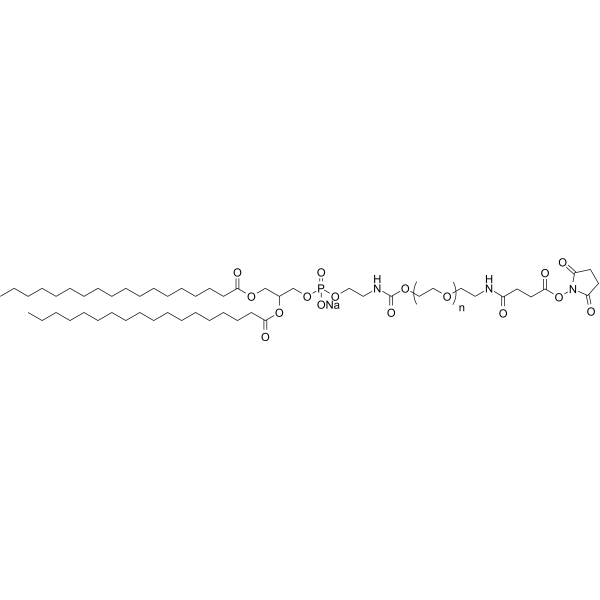
DMG-PEG2000-NHS is a polyethylene glycol lipid with a molecular weight of 2000, which can be used to construct novel drug delivery systems that confer mucoadhesive and cell-targeting capabilities to lipid nanoparticles .
|
-
-
- HY-155902
-
|
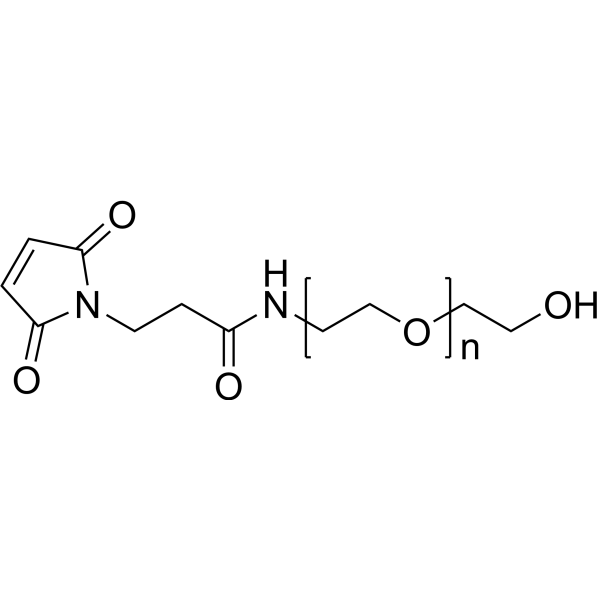
Maleimide-PEG5000-Hydroxy
|
Biochemical Assay Reagents
|
Others
|
|
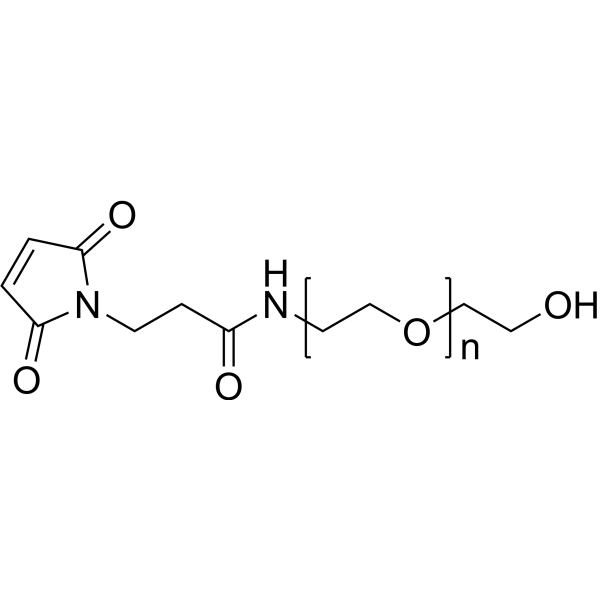
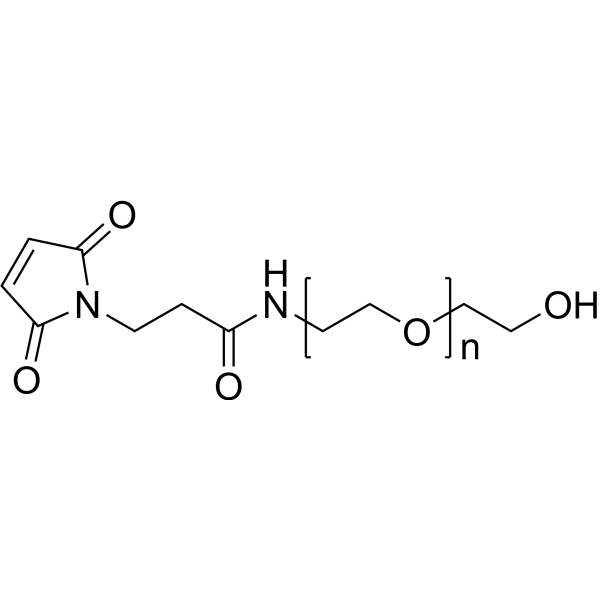
Mal-PEG5000-OH can be used as a macroinitiator to obtain amphiphilic diblock copolymers by ring-opening polymerization of LA. Nanoparticles prepared using amphiphilic block copolymers can form active drug delivery systems. Nanoparticles encapsulate Triptolide (HY-32735), which can avoid the disadvantage of Triptolide’s poor water solubility and reduce its toxicity.
|
-
-
- HY-W243303O
-
|
|
Environmental Pollutants
Biochemical Assay Reagents
|
Cancer
|
|
Poly(acrylic acid) (Mv 1250000) (viscous liquid) is a polyacrylic acid with a molecular weight of 1250000 (an anionic polymer), which can be used as a corrosion inhibitor and surface stabilizer. Poly(acrylic acid) can be used to construct an anionic nanogel to encapsulate positively charged enzymes and to modify MoS₂ nanoparticles to build a transdermal drug delivery system .
|
-
-
- HY-P1848
-
|
|
Interleukin Related
|
Cancer
|
|
Pep-1 (uncapped) is a specific ligand of IL-13Ra2. Pep-1 (uncapped) exerts cell penetrating activity through receptor-mediated endocytosis, can cross the blood-tumor barrier (BTB) and target glioma cells. Pep-1 (uncapped) can enhance the uptake of nanoparticles by tumor cells and enhance the cell penetration ability of nanoparticles, and can be used to develop targeted drug delivery systems for glioma .
|
-
-
- HY-W441015A
-
|
|
Liposome
|
Others
|
|
DSPE-m-PEG3400-NHS is a pegylated phospholipid derivatives which can be used to prepare liposome or lipid nanoparticles for targeted drug delivery system, such as DNA or mRNA vaccine .
|
-
-
- HY-W013989
-
|
|
Epoxide Hydrolase
|
Cardiovascular Disease
|
|
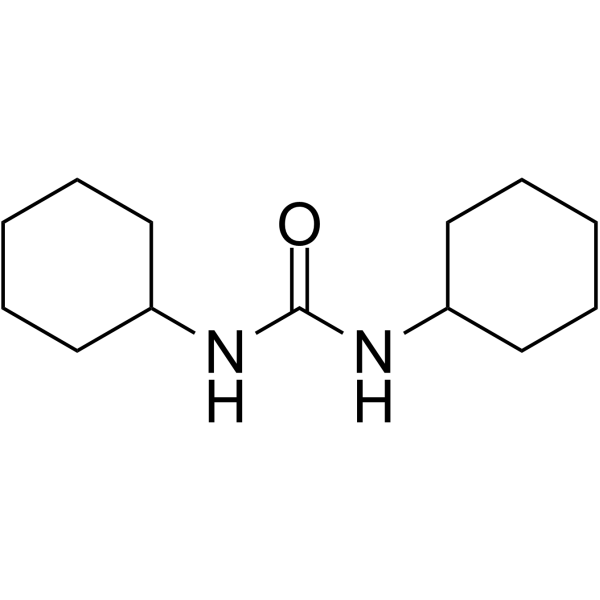
1,3-Dicyclohexylurea (DCU) is an orally active and potent sEH (soluble epoxide hydrolase) inhibitor. Oral Delivery of 1,3-Dicyclohexylurea nanosuspension enhances exposure and lowers blood pressure in hypertensive Rats .
|
-
-
- HY-155902A
-
|
Maleimide-PEG2000-Hydroxy
|
Biochemical Assay Reagents
|
Others
|
|
Mal-PEG2000-OH can be used as a macroinitiator to obtain amphiphilic diblock copolymers by ring-opening polymerization of LA. Nanoparticles prepared using amphiphilic block copolymers can form active drug delivery systems. Nanoparticles encapsulate Triptolide (HY-32735), which can avoid the disadvantage of Triptolide’s poor water solubility and reduce its toxicity.
|
-
-
- HY-W243303D
-
|
|
Environmental Pollutants
Biochemical Assay Reagents
|
Others
|
|
Poly(acrylic acid) (MW 1250000) is a polyacrylic acid with a molecular weight of 1250000 (an anionic polymer), which can be used as a corrosion inhibitor and surface stabilizer. Poly(acrylic acid) can be used to construct an anionic nanogel to encapsulate positively charged enzymes and to modify MoS2 nanoparticles to build a transdermal drug delivery system .
|
-
-
- HY-W013122
-
|
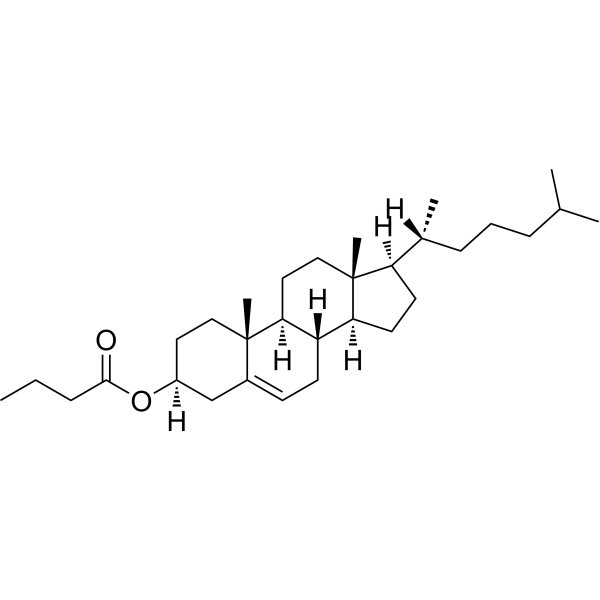
Cholesteryl butyrate
|
Biochemical Assay Reagents
|
Cancer
|
|
Cholesteryl n-butyrate is a cholesterol ester composed of cholesterol and butyrate, two naturally occurring substances. Cholesteryl n-butyrate can be used to synthesize solid lipid nanoparticles (SLNs) with inhibitory activity on the adhesion and migration of colon cancer cells, providing a delivery system for the anticancer drug butyrate .
|
-
-
- HY-D2762
-
|
|
Fluorescent Dye
|
Cancer
|
|
18:1 PE AF 594 triammonium is a fluorescently labeled phospholipid probe. 18:1 PE AF 594 triammonium can be used as a fluorescent tracer for lipid nanoparticles (LNPs). 18:1 PE AF 594 triammonium is promising for research of drug delivery systems .
|
-
-
- HY-158255
-
|
|
Biochemical Assay Reagents
|
Others
|
|
mPEG-PLGA (2000-80000) (LA/GA 50:50) is a copolymer, which consists of hydrophilic mPEG and biodegradable PLGA (molar ratio is 50:50) with a molecular weight of 2000 (mPEG) + 80000 (PLGA). mPEG-PLGA (2000-80000) (LA/GA 50:50) forms nanoparticles or microparticles, which is stable in aqueous solution at different pH values and elevated temperatures as well as in serum. mPEG-PLGA (2000-80000) (LA/GA 50:50) is utilized as carrier material in drug delivery systems .
|
-
-
- HY-155902B
-
|
Maleimide-PEG1000-Hydroxy
|
Biochemical Assay Reagents
|
Others
|
|
Mal-PEG1000-OH was used as a macroinitiator to obtain amphiphilic diblock copolymers by ring-opening polymerization of LA. Nanoparticles prepared using amphiphilic block copolymers can form active drug delivery systems. Nanoparticles encapsulate Triptolide (HY-32735), which can avoid the disadvantage of Triptolide’s poor water solubility and reduce its toxicity.
|
-
-
- HY-W440926
-
|
|
Liposome
|
Others
|
|
Stearic acid-PEG1000-NHS is a cyclooctyne containing phospholipid PEG polymer. The polymer can self-assemble spontaneously in water to form micelles/lipid bilayer. It can be used to prepare nanoparticles or liposomes as drug carrier in targeted drug delivery system. The DBCO can react with azide molecule via copper free click chemistry to form a stable triazole bond.
|
-
-
- HY-155902C
-
|
Maleimide-PEG3400-Hydroxy
|
Biochemical Assay Reagents
|
Others
|
|
Mal-PEG3400-OH (Maleimide-PEG3400-Hydroxy) is a linear heteroterminal bifunctional PEG product with maleimide and hydroxyl groups. Mal-PEG3400-OH can be used as a macroinitiator to obtain amphiphilic diblock copolymers through ring-opening polymerization of Lactate (Lactic Acid) (HY-B2227). Nanoparticles prepared using amphiphilic block copolymers can form active drug delivery systems .
|
-
-
- HY-W440722
-
|
|
Liposome
|
Others
|
|
Cholesterol-PEG1000-Thiol is a PEGylated lipid that forms micelles in water and can be used to prepare liposomes or nanoparticles as drug delivery systems. The thiol moiety reacts with maleimide to form a stable thioether bond .
|
-
-
- HY-W440724
-
|
|
Liposome
|
Cancer
|
|
Cholesterol-PEG3400-Thiol is an amphiphatic PEG derivative which forms micelles in water and can be used to prepare liposomes or nanoparticles for drug delivery system. The thiol moiety is reactive with maleimide to form a stable thioether bond.
|
-
-
- HY-W440903
-
|
|
Biochemical Assay Reagents
|
Others
|
|
DSPE-PEG5000-IA is a cyclooctyne containing phospholipid PEG polymer. The polymer can self-assemble spontaneously in water to form micelles/lipid bilayer. It can be used to prepare nanoparticles or liposomes as drug carrier in targeted drug delivery system. The DBCO can react with azide molecule via copper free click chemistry to form a stable triazole bond.
|
-
-
- HY-165427
-
|
|
Liposome
|
Cancer
|
|
Lipid 11 (Compound Lipid 1) is a cationic lipid for nucleic acid delivery. Lipid 11 forms lipid nanoparticles (LNPs) through electrostatic binding with nucleic acids (such as ceDNA). Lipid 11 forms complexes with negatively charged nucleic acids via cationic amine groups, which can be endocytosed by cells to release nucleic acids for activity. Lipid 11 is promising for research of gene therapy drug delivery systems .
|
-
-
- HY-155902D
-
|
Maleimide-PEG10000-Hydroxy
|
Biochemical Assay Reagents
|
Others
|
|
Mal-PEG10000-OH (Maleimide-PEG10000-Hydroxy) is a linear heteroterminal bifunctional PEG product with maleimide and hydroxyl groups. Mal-PEG10000-OH can be used as a macroinitiator to obtain amphiphilic diblock copolymers through ring-opening polymerization of Lactate (Lactic Acid) (HY-B2227). Nanoparticles prepared using amphiphilic block copolymers can form active drug delivery systems .
|
-
-
- HY-W1051944H
-
|
|
Biochemical Assay Reagents
|
Others
|
|
4-arm PEG1000-LA is a multifunctional drug delivery system composed of lipoic acid (HY-18733) and polyethylene glycol (PEG). The lipoic acid group has a high affinity for metal surfaces and is widely used in gold nanoparticles and quantum dot surfaces.
|
-
-
- HY-W1051944
-
|
|
Biochemical Assay Reagents
|
Others
|
|
4-arm PEG2000-LA is a multifunctional drug delivery system composed of lipoic acid (HY-18733) and polyethylene glycol (PEG). The lipoic acid group has a high affinity for metal surfaces and is widely used in gold nanoparticles and quantum dot surfaces.
|
-
-
- HY-W1051944A
-
|
|
Biochemical Assay Reagents
|
Others
|
|
4-arm PEG5000-LA is a multifunctional drug delivery system composed of lipoic acid (HY-18733) and polyethylene glycol (PEG). The lipoic acid group has a high affinity for metal surfaces and is widely used in gold nanoparticles and quantum dot surfaces.
|
-
-
- HY-W1051944I
-
|
|
Biochemical Assay Reagents
|
Others
|
|
4-arm PEG3400-LA is a multifunctional drug delivery system composed of lipoic acid (HY-18733) and polyethylene glycol (PEG). The lipoic acid group has a high affinity for metal surfaces and is widely used in gold nanoparticles and quantum dot surfaces.
|
-
-
- HY-W1051944E
-
|
|
Biochemical Assay Reagents
|
Others
|
|
4-arm PEG600-LA is a multifunctional drug delivery system composed of lipoic acid (HY-18733) and polyethylene glycol (PEG). The lipoic acid group has a high affinity for metal surfaces and is widely used in gold nanoparticles and quantum dot surfaces.
|
-
-
- HY-W1051944B
-
|
|
Biochemical Assay Reagents
|
Others
|
|
4-arm PEG10000-LA is a multifunctional drug delivery system composed of lipoic acid (HY-18733) and polyethylene glycol (PEG). The lipoic acid group has a high affinity for metal surfaces and is widely used in gold nanoparticles and quantum dot surfaces.
|
-
-
- HY-W1051944D
-
|
|
Biochemical Assay Reagents
|
Others
|
|
4-arm PEG400-LA is a multifunctional drug delivery system composed of lipoic acid (HY-18733) and polyethylene glycol (PEG). The lipoic acid group has a high affinity for metal surfaces and is widely used in gold nanoparticles and quantum dot surfaces.
|
-
-
- HY-183170A
-
|
|
Biochemical Assay Reagents
|
Others
|
|
DSG-PEG2000-Biotin is a conjugate composed of DSG, PEG chains, and biotin. DSG-PEG2000-Biotin combines the membrane compatibility of phospholipids with the high affinity of biotin for avidin/streptavidin, enabling applications such as targeted drug delivery systems and nanoparticle modification.
|
-
-
- HY-183170C
-
|
|
Biochemical Assay Reagents
|
Others
|
|
DSG-PEG5000-Biotin is a conjugate composed of DSG, PEG chains, and biotin. DSG-PEG5000-Biotin combines the membrane compatibility of phospholipids with the high affinity of biotin for avidin/streptavidin, enabling applications such as targeted drug delivery systems and nanoparticle modification.
|
-
-
- HY-183170
-
|
|
Biochemical Assay Reagents
|
Others
|
|
DSG-PEG1000-Biotin is a conjugate composed of DSG, PEG chains, and biotin. DSG-PEG1000-Biotin combines the membrane compatibility of phospholipids with the high affinity of biotin for avidin/streptavidin, enabling applications such as targeted drug delivery systems and nanoparticle modification.
|
-
-
- HY-183170B
-
|
|
Biochemical Assay Reagents
|
Others
|
|
DSG-PEG3400-Biotin is a conjugate composed of DSG, PEG chains, and biotin. DSG-PEG3400-Biotin combines the membrane compatibility of phospholipids with the high affinity of biotin for avidin/streptavidin, enabling applications such as targeted drug delivery systems and nanoparticle modification.
|
-
-
- HY-183170D
-
|
|
Biochemical Assay Reagents
|
Others
|
|
DSG-PEG10000-Biotin is a conjugate composed of DSG, PEG chains, and biotin. DSG-PEG10000-Biotin combines the membrane compatibility of phospholipids with the high affinity of biotin for avidin/streptavidin, enabling applications such as targeted drug delivery systems and nanoparticle modification.
|
-
-
- HY-182981A
-
|
|
Biochemical Assay Reagents
|
Others
|
|
Mannose-PEG2000-Biotin is a conjugate composed of mannose, PEG chains, and biotin. Mannose-PEG-Biotin combines the targeting recognition ability of mannose with the high affinity of biotin to bind avidin/link avidin, and is used for applications such as constructing targeted drug delivery systems and nanoparticle modification.
|
-
-
- HY-182981
-
|
|
Biochemical Assay Reagents
|
Others
|
|
Mannose-PEG1000-Biotin is a conjugate composed of mannose, PEG chains, and biotin. Mannose-PEG-Biotin combines the targeting recognition ability of mannose with the high affinity of biotin to bind avidin/link avidin, and is used for applications such as constructing targeted drug delivery systems and nanoparticle modification.
|
-
-
- HY-182981B
-
|
|
Biochemical Assay Reagents
|
Others
|
|
Mannose-PEG3400-Biotin is a conjugate composed of mannose, PEG chains, and biotin. Mannose-PEG-Biotin combines the targeting recognition ability of mannose with the high affinity of biotin to bind avidin/link avidin, and is used for applications such as constructing targeted drug delivery systems and nanoparticle modification.
|
-
-
- HY-182981C
-
|
|
Biochemical Assay Reagents
|
Others
|
|
Mannose-PEG5000-Biotin is a conjugate composed of mannose, PEG chains, and biotin. Mannose-PEG-Biotin combines the targeting recognition ability of mannose with the high affinity of biotin to bind avidin/link avidin, and is used for applications such as constructing targeted drug delivery systems and nanoparticle modification.
|
-
-
- HY-182981D
-
|
|
Biochemical Assay Reagents
|
Others
|
|
Mannose-PEG10000-Biotin is a conjugate composed of mannose, PEG chains, and biotin. Mannose-PEG-Biotin combines the targeting recognition ability of mannose with the high affinity of biotin to bind avidin/link avidin, and is used for applications such as constructing targeted drug delivery systems and nanoparticle modification.
|
-
-
- HY-183164D
-
|
|
Biochemical Assay Reagents
|
Others
|
|
Glucose-PEG10000-OH is a conjugate composed of glucose, PEG chains, and hydroxyl groups (-OH). Glucose-PEG10000-OH combines the targeted recognition capability of glucose with the modification flexibility of hydroxyl groups, enabling applications such as targeted drug delivery systems and nanoparticle modification.
|
-
-
- HY-183164
-
|
|
Biochemical Assay Reagents
|
Others
|
|
Glucose-PEG1000-OH is a conjugate composed of glucose, PEG chains, and hydroxyl groups (-OH). Glucose-PEG1000-OH combines the targeted recognition capability of glucose with the modification flexibility of hydroxyl groups, enabling applications such as targeted drug delivery systems and nanoparticle modification.
|
-
-
- HY-183164B
-
|
|
Biochemical Assay Reagents
|
Others
|
|
Glucose-PEG3400-OH is a conjugate composed of glucose, PEG chains, and hydroxyl groups (-OH). Glucose-PEG3400-OH combines the targeted recognition capability of glucose with the modification flexibility of hydroxyl groups, enabling applications such as targeted drug delivery systems and nanoparticle modification.
|
-
-
- HY-183164A
-
|
|
Biochemical Assay Reagents
|
Others
|
|
Glucose-PEG2000-OH is a conjugate composed of glucose, PEG chains, and hydroxyl groups (-OH). Glucose-PEG2000-OH combines the targeted recognition capability of glucose with the modification flexibility of hydroxyl groups, enabling applications such as targeted drug delivery systems and nanoparticle modification.
|
-
-
- HY-183164C
-
|
|
Biochemical Assay Reagents
|
Others
|
|
Glucose-PEG5000-OH is a conjugate composed of glucose, PEG chains, and hydroxyl groups (-OH). Glucose-PEG5000-OH combines the targeted recognition capability of glucose with the modification flexibility of hydroxyl groups, enabling applications such as targeted drug delivery systems and nanoparticle modification.
|
-
-
- HY-183160
-
|
|
Biochemical Assay Reagents
|
Others
|
|
Glucose-PEG1000-Biotin is a conjugate composed of glucose, PEG chains, and biotin. Glucose-PEG1000-Biotin combines the targeted recognition capabilities of glucose with the high-affinity binding ability of biotin to avidin/streptavidin, enabling applications such as targeted drug delivery systems and nanoparticle modification.
|
-
-
- HY-183160B
-
|
|
Biochemical Assay Reagents
|
Others
|
|
Glucose-PEG3400-Biotin is a conjugate composed of glucose, PEG chains, and biotin. Glucose-PEG3400-Biotin combines the targeted recognition capabilities of glucose with the high-affinity binding ability of biotin to avidin/streptavidin, enabling applications such as targeted drug delivery systems and nanoparticle modification.
|
-
-
- HY-183160A
-
|
|
Biochemical Assay Reagents
|
Others
|
|
Glucose-PEG2000-Biotin is a conjugate composed of glucose, PEG chains, and biotin. Glucose-PEG2000-Biotin combines the targeted recognition capabilities of glucose with the high-affinity binding ability of biotin to avidin/streptavidin, enabling applications such as targeted drug delivery systems and nanoparticle modification.
|
-
-
- HY-183160D
-
|
|
Biochemical Assay Reagents
|
Others
|
|
Glucose-PEG10000-Biotin is a conjugate composed of glucose, PEG chains, and biotin. Glucose-PEG10000-Biotin combines the targeted recognition capabilities of glucose with the high-affinity binding ability of biotin to avidin/streptavidin, enabling applications such as targeted drug delivery systems and nanoparticle modification.
|
-
- HY-183160C
-
|
|
Biochemical Assay Reagents
|
Others
|
|
Glucose-PEG5000-Biotin is a conjugate composed of glucose, PEG chains, and biotin. Glucose-PEG5000-Biotin combines the targeted recognition capabilities of glucose with the high-affinity binding ability of biotin to avidin/streptavidin, enabling applications such as targeted drug delivery systems and nanoparticle modification.
|
-
- HY-183003C
-
|
|
Biochemical Assay Reagents
|
Others
|
|
Mannose-PEG5000-COOH is a conjugate composed of mannose, PEG chains, and carboxyl groups (COOH). Mannose-PEG-COOH combines the targeting recognition ability of mannose with the carboxyl group, which can undergo condensation or esterification reactions with amino and hydroxyl groups, for applications such as targeted drug delivery systems and nanoparticle modification.
|
-
- HY-183015C
-
|
|
Biochemical Assay Reagents
|
Others
|
|
Mannose-PEG5000-NH2 is composed of mannose, PEG chains, and terminal amino groups (–NH2). Mannose-PEG-NH2 combines the targeting recognition ability of mannose with the chemical modifiability of amino groups, making it suitable for applications such as targeted drug delivery systems and nanoparticle modification.
|
-
- HY-183015
-
|
|
Biochemical Assay Reagents
|
Others
|
|
Mannose-PEG1000-NH2 is composed of mannose, PEG chains, and terminal amino groups (–NH2). Mannose-PEG-NH2 combines the targeting recognition ability of mannose with the chemical modifiability of amino groups, making it suitable for applications such as targeted drug delivery systems and nanoparticle modification.
|
-
- HY-183003D
-
|
|
Biochemical Assay Reagents
|
Others
|
|
Mannose-PEG10000-COOH is a conjugate composed of mannose, PEG chains, and carboxyl groups (COOH). Mannose-PEG-COOH combines the targeting recognition ability of mannose with the carboxyl group, which can undergo condensation or esterification reactions with amino and hydroxyl groups, for applications such as targeted drug delivery systems and nanoparticle modification.
|
-
- HY-183015A
-
|
|
Biochemical Assay Reagents
|
Others
|
|
Mannose-PEG2000-NH2 is composed of mannose, PEG chains, and terminal amino groups (–NH2). Mannose-PEG-NH2 combines the targeting recognition ability of mannose with the chemical modifiability of amino groups, making it suitable for applications such as targeted drug delivery systems and nanoparticle modification.
|
-
- HY-183003A
-
|
|
Biochemical Assay Reagents
|
Others
|
|
Mannose-PEG2000-COOH is a conjugate composed of mannose, PEG chains, and carboxyl groups (COOH). Mannose-PEG-COOH combines the targeting recognition ability of mannose with the carboxyl group, which can undergo condensation or esterification reactions with amino and hydroxyl groups, for applications such as targeted drug delivery systems and nanoparticle modification.
|
-
- HY-183015D
-
|
|
Biochemical Assay Reagents
|
Others
|
|
Mannose-PEG10000-NH2 is composed of mannose, PEG chains, and terminal amino groups (–NH2). Mannose-PEG-NH2 combines the targeting recognition ability of mannose with the chemical modifiability of amino groups, making it suitable for applications such as targeted drug delivery systems and nanoparticle modification.
|
-
- HY-183003
-
|
|
Biochemical Assay Reagents
|
Others
|
|
Mannose-PEG1000-COOH is a conjugate composed of mannose, PEG chains, and carboxyl groups (COOH). Mannose-PEG-COOH combines the targeting recognition ability of mannose with the carboxyl group, which can undergo condensation or esterification reactions with amino and hydroxyl groups, for applications such as targeted drug delivery systems and nanoparticle modification.
|
-
- HY-183003B
-
|
|
Biochemical Assay Reagents
|
Others
|
|
Mannose-PEG3400-COOH is a conjugate composed of mannose, PEG chains, and carboxyl groups (COOH). Mannose-PEG-COOH combines the targeting recognition ability of mannose with the carboxyl group, which can undergo condensation or esterification reactions with amino and hydroxyl groups, for applications such as targeted drug delivery systems and nanoparticle modification.
|
-
- HY-183015B
-
|
|
Biochemical Assay Reagents
|
Others
|
|
Mannose-PEG3400-NH2 is composed of mannose, PEG chains, and terminal amino groups (–NH2). Mannose-PEG-NH2 combines the targeting recognition ability of mannose with the chemical modifiability of amino groups, making it suitable for applications such as targeted drug delivery systems and nanoparticle modification.
|
-
- HY-183163D
-
|
|
Biochemical Assay Reagents
|
Others
|
|
Glucose-PEG10000-COOH is a conjugate composed of glucose, PEG chains, and carboxyl groups (COOH). Glucose-PEG10000-COOH combines the targeting recognition ability of glucose with the carboxyl groups capable of condensation or esterification reactions with amino and hydroxyl groups, making it suitable for applications such as targeted drug delivery systems and nanoparticle modification.
|
-
- HY-183163B
-
|
|
Biochemical Assay Reagents
|
Others
|
|
Glucose-PEG3400-COOH is a conjugate composed of glucose, PEG chains, and carboxyl groups (COOH). Glucose-PEG3400-COOH combines the targeting recognition ability of glucose with the carboxyl groups capable of condensation or esterification reactions with amino and hydroxyl groups, making it suitable for applications such as targeted drug delivery systems and nanoparticle modification.
|
-
- HY-183163
-
|
|
Biochemical Assay Reagents
|
Others
|
|
Glucose-PEG1000-COOH is a conjugate composed of glucose, PEG chains, and carboxyl groups (COOH). Glucose-PEG1000-COOH combines the targeting recognition ability of glucose with the carboxyl groups capable of condensation or esterification reactions with amino and hydroxyl groups, making it suitable for applications such as targeted drug delivery systems and nanoparticle modification.
|
-
- HY-183163C
-
|
|
Biochemical Assay Reagents
|
Others
|
|
Glucose-PEG5000-COOH is a conjugate composed of glucose, PEG chains, and carboxyl groups (COOH). Glucose-PEG5000-COOH combines the targeting recognition ability of glucose with the carboxyl groups capable of condensation or esterification reactions with amino and hydroxyl groups, making it suitable for applications such as targeted drug delivery systems and nanoparticle modification.
|
-
- HY-183163A
-
|
|
Biochemical Assay Reagents
|
Others
|
|
Glucose-PEG2000-COOH is a conjugate composed of glucose, PEG chains, and carboxyl groups (COOH). Glucose-PEG2000-COOH combines the targeting recognition ability of glucose with the carboxyl groups capable of condensation or esterification reactions with amino and hydroxyl groups, making it suitable for applications such as targeted drug delivery systems and nanoparticle modification.
|
-
- HY-W127512R
-
|
|
Drug Intermediate
Reference Standards
|
Others
|
|
5β-Cholanic acid is a hydrophobic modifier used to modify polymer carriers. 5β-Cholanic acid can improve the acid stability, cell penetration efficiency and drug sustained release ability of nanocarriers, and optimize the oral effectiveness of delivered molecules. 5β-Cholanic acid can covalently bind to Glycol chitosan (GC) to form a GC-CA conjugate, which optimizes the hydrophobic anchoring ability of nanoparticles and enables them to be stably adsorbed on the surface of PLGA nanoparticles. Such nanoparticles can resist dissociation in the gastric acid environment and maintain positive charge to enhance endocytic uptake by intestinal epithelial cells (such as Caco-2 cells). 5β-Cholanic acid can be used in the development of drug delivery systems .
|
-
- HY-169478
-
|
|
Liposome
|
Cancer
|
|
Lipid N2-3L is an ionizable cationic lipid (pKa = 8.99) that can be used to generate supramolecular lipid nanoparticles (SMLNPs) for mRNA delivery. Lipid nanoparticles formed by encapsulating a luciferase reporter gene with Lipid N2-3L were detected to accumulate in the lymph nodes of mice, indicating that they can effectively enter the mouse immune system. Lipid nanoparticles formed by encapsulating ovalbumin mRNA and the TLR7/8 agonist Resiquimod (HY-13740) with Lipid N2-3L were able to reduce tumor volume and increase survival in the MC-38-OVA mouse colon cancer model. Lipid N2-3L can be used in the research of drug delivery for cancer-related therapies .
|
-
- HY-183162A
-
|
|
Biochemical Assay Reagents
|
Others
|
|
Glucose-PEG2000-NHS is a conjugate composed of glucose, PEG chains, and an active ester (NHS). Glucose-PEG2000-NHS combines the targeted recognition capabilities of glucose with the ability to rapidly covalently react with molecules containing primary amines (such as proteins, peptides, and amino-modified small molecules) to form stable amide bonds in an NHS ester. This allows for applications such as constructing targeted drug delivery systems and modifying nanoparticles.
|
-
- HY-183162D
-
|
|
Biochemical Assay Reagents
|
Others
|
|
Glucose-PEG10000-NHS is a conjugate composed of glucose, PEG chains, and an active ester (NHS). Glucose-PEG10000-NHS combines the targeted recognition capabilities of glucose with the ability to rapidly covalently react with molecules containing primary amines (such as proteins, peptides, and amino-modified small molecules) to form stable amide bonds in an NHS ester. This allows for applications such as constructing targeted drug delivery systems and modifying nanoparticles.
|
-
- HY-183161
-
|
Glucose-PEG1000-Azide
|
Biochemical Assay Reagents
|
Others
|
|
Glucose-PEG1000-N3 (Glucose-PEG1000-Azide) is a conjugate composed of glucose, PEG chains, and an azide group (-N3). Glucose-PEG1000-N3 combines the targeted recognition ability of glucose with the azide group that can undergo click chemistry, making it suitable for applications such as constructing targeted drug delivery systems and nanoparticle modification.
|
-
- HY-183162C
-
|
|
Biochemical Assay Reagents
|
Others
|
|
Glucose-PEG5000-NHS is a conjugate composed of glucose, PEG chains, and an active ester (NHS). Glucose-PEG5000-NHS combines the targeted recognition capabilities of glucose with the ability to rapidly covalently react with molecules containing primary amines (such as proteins, peptides, and amino-modified small molecules) to form stable amide bonds in an NHS ester. This allows for applications such as constructing targeted drug delivery systems and modifying nanoparticles.
|
-
- HY-183161C
-
|
Glucose-PEG5000-Azide
|
Biochemical Assay Reagents
|
Others
|
|
Glucose-PEG5000-N3 (Glucose-PEG5000-Azide) is a conjugate composed of glucose, PEG chains, and an azide group (-N3). Glucose-PEG5000-N3 combines the targeted recognition ability of glucose with the azide group that can undergo click chemistry, making it suitable for applications such as constructing targeted drug delivery systems and nanoparticle modification.
|
-
- HY-183162B
-
|
|
Biochemical Assay Reagents
|
Others
|
|
Glucose-PEG3400-NHS is a conjugate composed of glucose, PEG chains, and an active ester (NHS). Glucose-PEG3400-NHS combines the targeted recognition capabilities of glucose with the ability to rapidly covalently react with molecules containing primary amines (such as proteins, peptides, and amino-modified small molecules) to form stable amide bonds in an NHS ester. This allows for applications such as constructing targeted drug delivery systems and modifying nanoparticles.
|
-
- HY-185404
-
|
|
Drug Intermediate
|
Others
|
|
DSPE-PEG8-OH is a monodisperse lipid-polyethylene glycol conjugate featuring a hydrophobic 1,2-distearoyl-sn-glycero-3-phosphoethanolamine (DSPE) anchor, an 8-unit discrete (PEG8) spacer, and a terminal hydroxyl (-OH) group. DSPE-PEG8-OH is primarily used in liposome formulation, nanoparticle surface modification, and targeted drug delivery systems.
|
-
- HY-183161D
-
|
Glucose-PEG10000-Azide
|
Biochemical Assay Reagents
|
Others
|
|
Glucose-PEG10000-N3 (Glucose-PEG10000-Azide) is a conjugate composed of glucose, PEG chains, and an azide group (-N3). Glucose-PEG10000-N3 combines the targeted recognition ability of glucose with the azide group that can undergo click chemistry, making it suitable for applications such as constructing targeted drug delivery systems and nanoparticle modification.
|
-
- HY-183162
-
|
|
Biochemical Assay Reagents
|
Others
|
|
Glucose-PEG1000-NHS is a conjugate composed of glucose, PEG chains, and an active ester (NHS). Glucose-PEG1000-NHS combines the targeted recognition capabilities of glucose with the ability to rapidly covalently react with molecules containing primary amines (such as proteins, peptides, and amino-modified small molecules) to form stable amide bonds in an NHS ester. This allows for applications such as constructing targeted drug delivery systems and modifying nanoparticles.
|
-
- HY-183161A
-
|
Glucose-PEG2000-Azide
|
Biochemical Assay Reagents
|
Others
|
|
Glucose-PEG2000-N3 (Glucose-PEG2000-Azide) is a conjugate composed of glucose, PEG chains, and an azide group (-N3). Glucose-PEG2000-N3 combines the targeted recognition ability of glucose with the azide group that can undergo click chemistry, making it suitable for applications such as constructing targeted drug delivery systems and nanoparticle modification.
|
-
- HY-183161B
-
|
Glucose-PEG3400-Azide
|
Biochemical Assay Reagents
|
Others
|
|
Glucose-PEG3400-N3 (Glucose-PEG3400-Azide) is a conjugate composed of glucose, PEG chains, and an azide group (-N3). Glucose-PEG3400-N3 combines the targeted recognition ability of glucose with the azide group that can undergo click chemistry, making it suitable for applications such as constructing targeted drug delivery systems and nanoparticle modification.
|
-
- HY-155902E
-
|
Maleimide-PEG20000-Hydroxy
|
Biochemical Assay Reagents
|
Others
|
|
Mal-PEG20000-OH (Maleimide-PEG20000-Hydroxy) is a linear heteroterminal bifunctional PEG product with maleimide and hydroxyl groups. Mal-PEG20000-OH can be used as a macroinitiator to obtain amphiphilic diblock copolymers through ring-opening polymerization of Lactate (Lactic Acid) (HY-B2227). Nanoparticles prepared using amphiphilic block copolymers can form active drug delivery systems .
|
-
- HY-155902H
-
|
Maleimide-PEG40000-Hydroxy
|
Biochemical Assay Reagents
|
Others
|
|
Mal-PEG40000-OH (Maleimide-PEG40000-Hydroxy) is a linear heteroterminal bifunctional PEG product with maleimide and hydroxyl groups. Mal-PEG40000-OH can be used as a macroinitiator to obtain amphiphilic diblock copolymers through ring-opening polymerization of Lactate (Lactic Acid) (HY-B2227). Nanoparticles prepared using amphiphilic block copolymers can form active drug delivery systems .
|
-
-
- HY-D2762
-
|
|
Fluorescent Dyes
|
|
18:1 PE AF 594 triammonium is a fluorescently labeled phospholipid probe. 18:1 PE AF 594 triammonium can be used as a fluorescent tracer for lipid nanoparticles (LNPs). 18:1 PE AF 594 triammonium is promising for research of drug delivery systems .
|
-
- HY-Y0623
-
|
HOSu; 1-Hydroxy-2,5-pyrrolidinedione
|
Biochemical Assay Reagents
|
|
N-Hydroxysuccinimide (HOSu; 1-Hydroxy-2,5-pyrrolidinedione) is a covalent crosslinker commonly used in bioconjugation technology with a primary amine group. N-Hydroxysuccinimide reacts with amino groups (-NH2) to form a stable amide bond, which can modify amino-containing biomolecules. N-Hydroxysuccinimide can be used, for example, for protein labeling with fluorescent dyes and enzymes, surface activation of chromatography supports, microbeads, nanoparticles and microarray slides, and chemical synthesis of peptides. N-Hydroxysuccinimide has a wide range of applications in biomaterial synthesis (such as collagen, chitosan crosslinking), drug delivery systems (such as hydrogel preparation) and tissue engineering .
|
-
- HY-W020780
-
|
mPEG5000-Maleimide
|
Biochemical Assay Reagents
|
|
mPEG5000-Mal (mPEG5000-Maleimide) is a PEG-derived selective covalent binding agent for sulfhydryl groups (RSGs), which can form irreversible thioether bonds with sulfhydryl groups under near-neutral conditions via the maleimide group. The mechanism of action of mPEG5000-Mal can be divided into two categories: firstly, as an enzyme modifier, it binds to target proteins through hydrophobic interactions, hydrogen bonds, and van der Waals forces, altering the protein's secondary structure; secondly, as a nanoparticle surface modifier, it covalently binds to sulfhydryl groups on the surface of red blood cells, changing the surface properties and morphology of the red blood cells, leading to their phagocytosis by macrophages of the reticuloendothelial system. mPEG5000-Mal can react with free cysteine in proteins, increasing the apparent molecular weight of the modified protein by 10-15 kDa for detection purposes. mPEG5000-Mal can enhance the thermal stability and catalytic activity of enzymes, and improve the macrophage targeting of nanoparticles, enabling targeted drug delivery. mPEG5000-Mal can be applied in enzyme engineering research in the food industry and in oncology, assisting radiotherapy by inhibiting tumor-associated macrophage infiltration and enhancing anti-tumor immune responses .
|
-
- HY-112624C
-
|
|
Biochemical Assay Reagents
|
|
Dextran (MW 40000) is a complex carbohydrate polymer consisting of glucose molecules linked by glycosidic bonds. Dextran has excellent solubility in water, making it useful as a viscosity modifier or stabilizer in foods, paints and adhesives. In the biomedical field, dextran is often used as a plasma expander because of its ability to increase blood volume when administered intravenously. It can also be modified to create dextran-based drug delivery systems, such as targeted nanoparticles.
|
-
- HY-174264
-
|
|
Biochemical Assay Reagents
|
|
DMG-PEG2000-NHS is a polyethylene glycol lipid with a molecular weight of 2000, which can be used to construct novel drug delivery systems that confer mucoadhesive and cell-targeting capabilities to lipid nanoparticles .
|
-
- HY-155902
-
|
Maleimide-PEG5000-Hydroxy
|
Biochemical Assay Reagents
|
|
Mal-PEG5000-OH can be used as a macroinitiator to obtain amphiphilic diblock copolymers by ring-opening polymerization of LA. Nanoparticles prepared using amphiphilic block copolymers can form active drug delivery systems. Nanoparticles encapsulate Triptolide (HY-32735), which can avoid the disadvantage of Triptolide’s poor water solubility and reduce its toxicity.
|
-
- HY-W441015A
-
|
|
Biochemical Assay Reagents
|
|
DSPE-m-PEG3400-NHS is a pegylated phospholipid derivatives which can be used to prepare liposome or lipid nanoparticles for targeted drug delivery system, such as DNA or mRNA vaccine .
|
-
- HY-155902A
-
|
Maleimide-PEG2000-Hydroxy
|
Biochemical Assay Reagents
|
|
Mal-PEG2000-OH can be used as a macroinitiator to obtain amphiphilic diblock copolymers by ring-opening polymerization of LA. Nanoparticles prepared using amphiphilic block copolymers can form active drug delivery systems. Nanoparticles encapsulate Triptolide (HY-32735), which can avoid the disadvantage of Triptolide’s poor water solubility and reduce its toxicity.
|
-
- HY-W013122
-
|
Cholesteryl butyrate
|
Biochemical Assay Reagents
|
|
Cholesteryl n-butyrate is a cholesterol ester composed of cholesterol and butyrate, two naturally occurring substances. Cholesteryl n-butyrate can be used to synthesize solid lipid nanoparticles (SLNs) with inhibitory activity on the adhesion and migration of colon cancer cells, providing a delivery system for the anticancer drug butyrate .
|
-
- HY-155902B
-
|
Maleimide-PEG1000-Hydroxy
|
Biochemical Assay Reagents
|
|
Mal-PEG1000-OH was used as a macroinitiator to obtain amphiphilic diblock copolymers by ring-opening polymerization of LA. Nanoparticles prepared using amphiphilic block copolymers can form active drug delivery systems. Nanoparticles encapsulate Triptolide (HY-32735), which can avoid the disadvantage of Triptolide’s poor water solubility and reduce its toxicity.
|
-
- HY-W440926
-
|
|
Biochemical Assay Reagents
|
|
Stearic acid-PEG1000-NHS is a cyclooctyne containing phospholipid PEG polymer. The polymer can self-assemble spontaneously in water to form micelles/lipid bilayer. It can be used to prepare nanoparticles or liposomes as drug carrier in targeted drug delivery system. The DBCO can react with azide molecule via copper free click chemistry to form a stable triazole bond.
|
-
- HY-155902C
-
|
Maleimide-PEG3400-Hydroxy
|
Biochemical Assay Reagents
|
|
Mal-PEG3400-OH (Maleimide-PEG3400-Hydroxy) is a linear heteroterminal bifunctional PEG product with maleimide and hydroxyl groups. Mal-PEG3400-OH can be used as a macroinitiator to obtain amphiphilic diblock copolymers through ring-opening polymerization of Lactate (Lactic Acid) (HY-B2227). Nanoparticles prepared using amphiphilic block copolymers can form active drug delivery systems .
|
-
- HY-W440722
-
|
|
Biochemical Assay Reagents
|
|
Cholesterol-PEG1000-Thiol is a PEGylated lipid that forms micelles in water and can be used to prepare liposomes or nanoparticles as drug delivery systems. The thiol moiety reacts with maleimide to form a stable thioether bond .
|
-
- HY-W440903
-
|
|
Biochemical Assay Reagents
|
|
DSPE-PEG5000-IA is a cyclooctyne containing phospholipid PEG polymer. The polymer can self-assemble spontaneously in water to form micelles/lipid bilayer. It can be used to prepare nanoparticles or liposomes as drug carrier in targeted drug delivery system. The DBCO can react with azide molecule via copper free click chemistry to form a stable triazole bond.
|
-
- HY-155902D
-
|
Maleimide-PEG10000-Hydroxy
|
Biochemical Assay Reagents
|
|
Mal-PEG10000-OH (Maleimide-PEG10000-Hydroxy) is a linear heteroterminal bifunctional PEG product with maleimide and hydroxyl groups. Mal-PEG10000-OH can be used as a macroinitiator to obtain amphiphilic diblock copolymers through ring-opening polymerization of Lactate (Lactic Acid) (HY-B2227). Nanoparticles prepared using amphiphilic block copolymers can form active drug delivery systems .
|
-
- HY-W1051944H
-
|
|
Biochemical Assay Reagents
|
|
4-arm PEG1000-LA is a multifunctional drug delivery system composed of lipoic acid (HY-18733) and polyethylene glycol (PEG). The lipoic acid group has a high affinity for metal surfaces and is widely used in gold nanoparticles and quantum dot surfaces.
|
-
- HY-W1051944
-
|
|
Biochemical Assay Reagents
|
|
4-arm PEG2000-LA is a multifunctional drug delivery system composed of lipoic acid (HY-18733) and polyethylene glycol (PEG). The lipoic acid group has a high affinity for metal surfaces and is widely used in gold nanoparticles and quantum dot surfaces.
|
-
- HY-W1051944A
-
|
|
Biochemical Assay Reagents
|
|
4-arm PEG5000-LA is a multifunctional drug delivery system composed of lipoic acid (HY-18733) and polyethylene glycol (PEG). The lipoic acid group has a high affinity for metal surfaces and is widely used in gold nanoparticles and quantum dot surfaces.
|
-
- HY-W1051944I
-
|
|
Biochemical Assay Reagents
|
|
4-arm PEG3400-LA is a multifunctional drug delivery system composed of lipoic acid (HY-18733) and polyethylene glycol (PEG). The lipoic acid group has a high affinity for metal surfaces and is widely used in gold nanoparticles and quantum dot surfaces.
|
-
- HY-W1051944E
-
|
|
Biochemical Assay Reagents
|
|
4-arm PEG600-LA is a multifunctional drug delivery system composed of lipoic acid (HY-18733) and polyethylene glycol (PEG). The lipoic acid group has a high affinity for metal surfaces and is widely used in gold nanoparticles and quantum dot surfaces.
|
-
- HY-W1051944B
-
|
|
Biochemical Assay Reagents
|
|
4-arm PEG10000-LA is a multifunctional drug delivery system composed of lipoic acid (HY-18733) and polyethylene glycol (PEG). The lipoic acid group has a high affinity for metal surfaces and is widely used in gold nanoparticles and quantum dot surfaces.
|
-
- HY-W1051944D
-
|
|
Biochemical Assay Reagents
|
|
4-arm PEG400-LA is a multifunctional drug delivery system composed of lipoic acid (HY-18733) and polyethylene glycol (PEG). The lipoic acid group has a high affinity for metal surfaces and is widely used in gold nanoparticles and quantum dot surfaces.
|
-
- HY-183170A
-
|
|
Biochemical Assay Reagents
|
|
DSG-PEG2000-Biotin is a conjugate composed of DSG, PEG chains, and biotin. DSG-PEG2000-Biotin combines the membrane compatibility of phospholipids with the high affinity of biotin for avidin/streptavidin, enabling applications such as targeted drug delivery systems and nanoparticle modification.
|
-
- HY-183170C
-
|
|
Biochemical Assay Reagents
|
|
DSG-PEG5000-Biotin is a conjugate composed of DSG, PEG chains, and biotin. DSG-PEG5000-Biotin combines the membrane compatibility of phospholipids with the high affinity of biotin for avidin/streptavidin, enabling applications such as targeted drug delivery systems and nanoparticle modification.
|
-
- HY-183170
-
|
|
Biochemical Assay Reagents
|
|
DSG-PEG1000-Biotin is a conjugate composed of DSG, PEG chains, and biotin. DSG-PEG1000-Biotin combines the membrane compatibility of phospholipids with the high affinity of biotin for avidin/streptavidin, enabling applications such as targeted drug delivery systems and nanoparticle modification.
|
-
- HY-183170B
-
|
|
Biochemical Assay Reagents
|
|
DSG-PEG3400-Biotin is a conjugate composed of DSG, PEG chains, and biotin. DSG-PEG3400-Biotin combines the membrane compatibility of phospholipids with the high affinity of biotin for avidin/streptavidin, enabling applications such as targeted drug delivery systems and nanoparticle modification.
|
-
- HY-183170D
-
|
|
Biochemical Assay Reagents
|
|
DSG-PEG10000-Biotin is a conjugate composed of DSG, PEG chains, and biotin. DSG-PEG10000-Biotin combines the membrane compatibility of phospholipids with the high affinity of biotin for avidin/streptavidin, enabling applications such as targeted drug delivery systems and nanoparticle modification.
|
-
- HY-182981A
-
|
|
Biochemical Assay Reagents
|
|
Mannose-PEG2000-Biotin is a conjugate composed of mannose, PEG chains, and biotin. Mannose-PEG-Biotin combines the targeting recognition ability of mannose with the high affinity of biotin to bind avidin/link avidin, and is used for applications such as constructing targeted drug delivery systems and nanoparticle modification.
|
-
- HY-182981
-
|
|
Biochemical Assay Reagents
|
|
Mannose-PEG1000-Biotin is a conjugate composed of mannose, PEG chains, and biotin. Mannose-PEG-Biotin combines the targeting recognition ability of mannose with the high affinity of biotin to bind avidin/link avidin, and is used for applications such as constructing targeted drug delivery systems and nanoparticle modification.
|
-
- HY-182981B
-
|
|
Biochemical Assay Reagents
|
|
Mannose-PEG3400-Biotin is a conjugate composed of mannose, PEG chains, and biotin. Mannose-PEG-Biotin combines the targeting recognition ability of mannose with the high affinity of biotin to bind avidin/link avidin, and is used for applications such as constructing targeted drug delivery systems and nanoparticle modification.
|
-
- HY-182981C
-
|
|
Biochemical Assay Reagents
|
|
Mannose-PEG5000-Biotin is a conjugate composed of mannose, PEG chains, and biotin. Mannose-PEG-Biotin combines the targeting recognition ability of mannose with the high affinity of biotin to bind avidin/link avidin, and is used for applications such as constructing targeted drug delivery systems and nanoparticle modification.
|
-
- HY-182981D
-
|
|
Biochemical Assay Reagents
|
|
Mannose-PEG10000-Biotin is a conjugate composed of mannose, PEG chains, and biotin. Mannose-PEG-Biotin combines the targeting recognition ability of mannose with the high affinity of biotin to bind avidin/link avidin, and is used for applications such as constructing targeted drug delivery systems and nanoparticle modification.
|
-
- HY-183164D
-
|
|
Biochemical Assay Reagents
|
|
Glucose-PEG10000-OH is a conjugate composed of glucose, PEG chains, and hydroxyl groups (-OH). Glucose-PEG10000-OH combines the targeted recognition capability of glucose with the modification flexibility of hydroxyl groups, enabling applications such as targeted drug delivery systems and nanoparticle modification.
|
-
- HY-183164
-
|
|
Biochemical Assay Reagents
|
|
Glucose-PEG1000-OH is a conjugate composed of glucose, PEG chains, and hydroxyl groups (-OH). Glucose-PEG1000-OH combines the targeted recognition capability of glucose with the modification flexibility of hydroxyl groups, enabling applications such as targeted drug delivery systems and nanoparticle modification.
|
-
- HY-183164B
-
|
|
Biochemical Assay Reagents
|
|
Glucose-PEG3400-OH is a conjugate composed of glucose, PEG chains, and hydroxyl groups (-OH). Glucose-PEG3400-OH combines the targeted recognition capability of glucose with the modification flexibility of hydroxyl groups, enabling applications such as targeted drug delivery systems and nanoparticle modification.
|
-
- HY-183164A
-
|
|
Biochemical Assay Reagents
|
|
Glucose-PEG2000-OH is a conjugate composed of glucose, PEG chains, and hydroxyl groups (-OH). Glucose-PEG2000-OH combines the targeted recognition capability of glucose with the modification flexibility of hydroxyl groups, enabling applications such as targeted drug delivery systems and nanoparticle modification.
|
-
- HY-183164C
-
|
|
Biochemical Assay Reagents
|
|
Glucose-PEG5000-OH is a conjugate composed of glucose, PEG chains, and hydroxyl groups (-OH). Glucose-PEG5000-OH combines the targeted recognition capability of glucose with the modification flexibility of hydroxyl groups, enabling applications such as targeted drug delivery systems and nanoparticle modification.
|
-
- HY-183160
-
|
|
Biochemical Assay Reagents
|
|
Glucose-PEG1000-Biotin is a conjugate composed of glucose, PEG chains, and biotin. Glucose-PEG1000-Biotin combines the targeted recognition capabilities of glucose with the high-affinity binding ability of biotin to avidin/streptavidin, enabling applications such as targeted drug delivery systems and nanoparticle modification.
|
-
- HY-183160B
-
|
|
Biochemical Assay Reagents
|
|
Glucose-PEG3400-Biotin is a conjugate composed of glucose, PEG chains, and biotin. Glucose-PEG3400-Biotin combines the targeted recognition capabilities of glucose with the high-affinity binding ability of biotin to avidin/streptavidin, enabling applications such as targeted drug delivery systems and nanoparticle modification.
|
-
- HY-183160A
-
|
|
Biochemical Assay Reagents
|
|
Glucose-PEG2000-Biotin is a conjugate composed of glucose, PEG chains, and biotin. Glucose-PEG2000-Biotin combines the targeted recognition capabilities of glucose with the high-affinity binding ability of biotin to avidin/streptavidin, enabling applications such as targeted drug delivery systems and nanoparticle modification.
|
-
- HY-183160D
-
|
|
Biochemical Assay Reagents
|
|
Glucose-PEG10000-Biotin is a conjugate composed of glucose, PEG chains, and biotin. Glucose-PEG10000-Biotin combines the targeted recognition capabilities of glucose with the high-affinity binding ability of biotin to avidin/streptavidin, enabling applications such as targeted drug delivery systems and nanoparticle modification.
|
-
- HY-183160C
-
|
|
Biochemical Assay Reagents
|
|
Glucose-PEG5000-Biotin is a conjugate composed of glucose, PEG chains, and biotin. Glucose-PEG5000-Biotin combines the targeted recognition capabilities of glucose with the high-affinity binding ability of biotin to avidin/streptavidin, enabling applications such as targeted drug delivery systems and nanoparticle modification.
|
-
- HY-183003C
-
|
|
Biochemical Assay Reagents
|
|
Mannose-PEG5000-COOH is a conjugate composed of mannose, PEG chains, and carboxyl groups (COOH). Mannose-PEG-COOH combines the targeting recognition ability of mannose with the carboxyl group, which can undergo condensation or esterification reactions with amino and hydroxyl groups, for applications such as targeted drug delivery systems and nanoparticle modification.
|
-
- HY-183015C
-
|
|
Biochemical Assay Reagents
|
|
Mannose-PEG5000-NH2 is composed of mannose, PEG chains, and terminal amino groups (–NH2). Mannose-PEG-NH2 combines the targeting recognition ability of mannose with the chemical modifiability of amino groups, making it suitable for applications such as targeted drug delivery systems and nanoparticle modification.
|
-
- HY-183015
-
|
|
Biochemical Assay Reagents
|
|
Mannose-PEG1000-NH2 is composed of mannose, PEG chains, and terminal amino groups (–NH2). Mannose-PEG-NH2 combines the targeting recognition ability of mannose with the chemical modifiability of amino groups, making it suitable for applications such as targeted drug delivery systems and nanoparticle modification.
|
-
- HY-183003D
-
|
|
Biochemical Assay Reagents
|
|
Mannose-PEG10000-COOH is a conjugate composed of mannose, PEG chains, and carboxyl groups (COOH). Mannose-PEG-COOH combines the targeting recognition ability of mannose with the carboxyl group, which can undergo condensation or esterification reactions with amino and hydroxyl groups, for applications such as targeted drug delivery systems and nanoparticle modification.
|
-
- HY-183015A
-
|
|
Biochemical Assay Reagents
|
|
Mannose-PEG2000-NH2 is composed of mannose, PEG chains, and terminal amino groups (–NH2). Mannose-PEG-NH2 combines the targeting recognition ability of mannose with the chemical modifiability of amino groups, making it suitable for applications such as targeted drug delivery systems and nanoparticle modification.
|
-
- HY-183003A
-
|
|
Biochemical Assay Reagents
|
|
Mannose-PEG2000-COOH is a conjugate composed of mannose, PEG chains, and carboxyl groups (COOH). Mannose-PEG-COOH combines the targeting recognition ability of mannose with the carboxyl group, which can undergo condensation or esterification reactions with amino and hydroxyl groups, for applications such as targeted drug delivery systems and nanoparticle modification.
|
-
- HY-183015D
-
|
|
Biochemical Assay Reagents
|
|
Mannose-PEG10000-NH2 is composed of mannose, PEG chains, and terminal amino groups (–NH2). Mannose-PEG-NH2 combines the targeting recognition ability of mannose with the chemical modifiability of amino groups, making it suitable for applications such as targeted drug delivery systems and nanoparticle modification.
|
-
- HY-183003
-
|
|
Biochemical Assay Reagents
|
|
Mannose-PEG1000-COOH is a conjugate composed of mannose, PEG chains, and carboxyl groups (COOH). Mannose-PEG-COOH combines the targeting recognition ability of mannose with the carboxyl group, which can undergo condensation or esterification reactions with amino and hydroxyl groups, for applications such as targeted drug delivery systems and nanoparticle modification.
|
-
- HY-183003B
-
|
|
Biochemical Assay Reagents
|
|
Mannose-PEG3400-COOH is a conjugate composed of mannose, PEG chains, and carboxyl groups (COOH). Mannose-PEG-COOH combines the targeting recognition ability of mannose with the carboxyl group, which can undergo condensation or esterification reactions with amino and hydroxyl groups, for applications such as targeted drug delivery systems and nanoparticle modification.
|
- HY-183015B
-
|
|
Biochemical Assay Reagents
|
|
Mannose-PEG3400-NH2 is composed of mannose, PEG chains, and terminal amino groups (–NH2). Mannose-PEG-NH2 combines the targeting recognition ability of mannose with the chemical modifiability of amino groups, making it suitable for applications such as targeted drug delivery systems and nanoparticle modification.
|
- HY-183163D
-
|
|
Biochemical Assay Reagents
|
|
Glucose-PEG10000-COOH is a conjugate composed of glucose, PEG chains, and carboxyl groups (COOH). Glucose-PEG10000-COOH combines the targeting recognition ability of glucose with the carboxyl groups capable of condensation or esterification reactions with amino and hydroxyl groups, making it suitable for applications such as targeted drug delivery systems and nanoparticle modification.
|
- HY-183163B
-
|
|
Biochemical Assay Reagents
|
|
Glucose-PEG3400-COOH is a conjugate composed of glucose, PEG chains, and carboxyl groups (COOH). Glucose-PEG3400-COOH combines the targeting recognition ability of glucose with the carboxyl groups capable of condensation or esterification reactions with amino and hydroxyl groups, making it suitable for applications such as targeted drug delivery systems and nanoparticle modification.
|
- HY-183163
-
|
|
Biochemical Assay Reagents
|
|
Glucose-PEG1000-COOH is a conjugate composed of glucose, PEG chains, and carboxyl groups (COOH). Glucose-PEG1000-COOH combines the targeting recognition ability of glucose with the carboxyl groups capable of condensation or esterification reactions with amino and hydroxyl groups, making it suitable for applications such as targeted drug delivery systems and nanoparticle modification.
|
- HY-183163C
-
|
|
Biochemical Assay Reagents
|
|
Glucose-PEG5000-COOH is a conjugate composed of glucose, PEG chains, and carboxyl groups (COOH). Glucose-PEG5000-COOH combines the targeting recognition ability of glucose with the carboxyl groups capable of condensation or esterification reactions with amino and hydroxyl groups, making it suitable for applications such as targeted drug delivery systems and nanoparticle modification.
|
- HY-183163A
-
|
|
Biochemical Assay Reagents
|
|
Glucose-PEG2000-COOH is a conjugate composed of glucose, PEG chains, and carboxyl groups (COOH). Glucose-PEG2000-COOH combines the targeting recognition ability of glucose with the carboxyl groups capable of condensation or esterification reactions with amino and hydroxyl groups, making it suitable for applications such as targeted drug delivery systems and nanoparticle modification.
|
- HY-183162A
-
|
|
Biochemical Assay Reagents
|
|
Glucose-PEG2000-NHS is a conjugate composed of glucose, PEG chains, and an active ester (NHS). Glucose-PEG2000-NHS combines the targeted recognition capabilities of glucose with the ability to rapidly covalently react with molecules containing primary amines (such as proteins, peptides, and amino-modified small molecules) to form stable amide bonds in an NHS ester. This allows for applications such as constructing targeted drug delivery systems and modifying nanoparticles.
|
- HY-183162D
-
|
|
Biochemical Assay Reagents
|
|
Glucose-PEG10000-NHS is a conjugate composed of glucose, PEG chains, and an active ester (NHS). Glucose-PEG10000-NHS combines the targeted recognition capabilities of glucose with the ability to rapidly covalently react with molecules containing primary amines (such as proteins, peptides, and amino-modified small molecules) to form stable amide bonds in an NHS ester. This allows for applications such as constructing targeted drug delivery systems and modifying nanoparticles.
|
- HY-183161
-
|
Glucose-PEG1000-Azide
|
Biochemical Assay Reagents
|
|
Glucose-PEG1000-N3 (Glucose-PEG1000-Azide) is a conjugate composed of glucose, PEG chains, and an azide group (-N3). Glucose-PEG1000-N3 combines the targeted recognition ability of glucose with the azide group that can undergo click chemistry, making it suitable for applications such as constructing targeted drug delivery systems and nanoparticle modification.
|
- HY-183162C
-
|
|
Biochemical Assay Reagents
|
|
Glucose-PEG5000-NHS is a conjugate composed of glucose, PEG chains, and an active ester (NHS). Glucose-PEG5000-NHS combines the targeted recognition capabilities of glucose with the ability to rapidly covalently react with molecules containing primary amines (such as proteins, peptides, and amino-modified small molecules) to form stable amide bonds in an NHS ester. This allows for applications such as constructing targeted drug delivery systems and modifying nanoparticles.
|
- HY-183161C
-
|
Glucose-PEG5000-Azide
|
Biochemical Assay Reagents
|
|
Glucose-PEG5000-N3 (Glucose-PEG5000-Azide) is a conjugate composed of glucose, PEG chains, and an azide group (-N3). Glucose-PEG5000-N3 combines the targeted recognition ability of glucose with the azide group that can undergo click chemistry, making it suitable for applications such as constructing targeted drug delivery systems and nanoparticle modification.
|
- HY-183162B
-
|
|
Biochemical Assay Reagents
|
|
Glucose-PEG3400-NHS is a conjugate composed of glucose, PEG chains, and an active ester (NHS). Glucose-PEG3400-NHS combines the targeted recognition capabilities of glucose with the ability to rapidly covalently react with molecules containing primary amines (such as proteins, peptides, and amino-modified small molecules) to form stable amide bonds in an NHS ester. This allows for applications such as constructing targeted drug delivery systems and modifying nanoparticles.
|
- HY-183161D
-
|
Glucose-PEG10000-Azide
|
Biochemical Assay Reagents
|
|
Glucose-PEG10000-N3 (Glucose-PEG10000-Azide) is a conjugate composed of glucose, PEG chains, and an azide group (-N3). Glucose-PEG10000-N3 combines the targeted recognition ability of glucose with the azide group that can undergo click chemistry, making it suitable for applications such as constructing targeted drug delivery systems and nanoparticle modification.
|
- HY-183162
-
|
|
Biochemical Assay Reagents
|
|
Glucose-PEG1000-NHS is a conjugate composed of glucose, PEG chains, and an active ester (NHS). Glucose-PEG1000-NHS combines the targeted recognition capabilities of glucose with the ability to rapidly covalently react with molecules containing primary amines (such as proteins, peptides, and amino-modified small molecules) to form stable amide bonds in an NHS ester. This allows for applications such as constructing targeted drug delivery systems and modifying nanoparticles.
|
- HY-183161A
-
|
Glucose-PEG2000-Azide
|
Biochemical Assay Reagents
|
|
Glucose-PEG2000-N3 (Glucose-PEG2000-Azide) is a conjugate composed of glucose, PEG chains, and an azide group (-N3). Glucose-PEG2000-N3 combines the targeted recognition ability of glucose with the azide group that can undergo click chemistry, making it suitable for applications such as constructing targeted drug delivery systems and nanoparticle modification.
|
- HY-183161B
-
|
Glucose-PEG3400-Azide
|
Biochemical Assay Reagents
|
|
Glucose-PEG3400-N3 (Glucose-PEG3400-Azide) is a conjugate composed of glucose, PEG chains, and an azide group (-N3). Glucose-PEG3400-N3 combines the targeted recognition ability of glucose with the azide group that can undergo click chemistry, making it suitable for applications such as constructing targeted drug delivery systems and nanoparticle modification.
|
- HY-155902E
-
|
Maleimide-PEG20000-Hydroxy
|
Biochemical Assay Reagents
|
|
Mal-PEG20000-OH (Maleimide-PEG20000-Hydroxy) is a linear heteroterminal bifunctional PEG product with maleimide and hydroxyl groups. Mal-PEG20000-OH can be used as a macroinitiator to obtain amphiphilic diblock copolymers through ring-opening polymerization of Lactate (Lactic Acid) (HY-B2227). Nanoparticles prepared using amphiphilic block copolymers can form active drug delivery systems .
|
- HY-155902H
-
|
Maleimide-PEG40000-Hydroxy
|
Biochemical Assay Reagents
|
|
Mal-PEG40000-OH (Maleimide-PEG40000-Hydroxy) is a linear heteroterminal bifunctional PEG product with maleimide and hydroxyl groups. Mal-PEG40000-OH can be used as a macroinitiator to obtain amphiphilic diblock copolymers through ring-opening polymerization of Lactate (Lactic Acid) (HY-B2227). Nanoparticles prepared using amphiphilic block copolymers can form active drug delivery systems .
|
| Cat. No. |
상품명 |
Target |
Research Area |
-
- HY-P1848
-
|
|
Interleukin Related
|
Cancer
|
|
Pep-1 (uncapped) is a specific ligand of IL-13Ra2. Pep-1 (uncapped) exerts cell penetrating activity through receptor-mediated endocytosis, can cross the blood-tumor barrier (BTB) and target glioma cells. Pep-1 (uncapped) can enhance the uptake of nanoparticles by tumor cells and enhance the cell penetration ability of nanoparticles, and can be used to develop targeted drug delivery systems for glioma .
|
-
- HY-P11186
-
|
|
Peptides
|
Cancer
|
|
CALNN is a pentapeptide that can be used as a ligand to stabilise and functionalise gold nanoparticles in drug delivery systems .
|
| Cat. No. |
상품명 |
|
Classification |
-
- HY-183161
-
|
Glucose-PEG1000-Azide
|
|
Azide
|
|
Glucose-PEG1000-N3 (Glucose-PEG1000-Azide) is a conjugate composed of glucose, PEG chains, and an azide group (-N3). Glucose-PEG1000-N3 combines the targeted recognition ability of glucose with the azide group that can undergo click chemistry, making it suitable for applications such as constructing targeted drug delivery systems and nanoparticle modification.
|
-
- HY-183161C
-
|
Glucose-PEG5000-Azide
|
|
Azide
|
|
Glucose-PEG5000-N3 (Glucose-PEG5000-Azide) is a conjugate composed of glucose, PEG chains, and an azide group (-N3). Glucose-PEG5000-N3 combines the targeted recognition ability of glucose with the azide group that can undergo click chemistry, making it suitable for applications such as constructing targeted drug delivery systems and nanoparticle modification.
|
-
- HY-183161D
-
|
Glucose-PEG10000-Azide
|
|
Azide
|
|
Glucose-PEG10000-N3 (Glucose-PEG10000-Azide) is a conjugate composed of glucose, PEG chains, and an azide group (-N3). Glucose-PEG10000-N3 combines the targeted recognition ability of glucose with the azide group that can undergo click chemistry, making it suitable for applications such as constructing targeted drug delivery systems and nanoparticle modification.
|
-
- HY-183161A
-
|
Glucose-PEG2000-Azide
|
|
Azide
|
|
Glucose-PEG2000-N3 (Glucose-PEG2000-Azide) is a conjugate composed of glucose, PEG chains, and an azide group (-N3). Glucose-PEG2000-N3 combines the targeted recognition ability of glucose with the azide group that can undergo click chemistry, making it suitable for applications such as constructing targeted drug delivery systems and nanoparticle modification.
|
-
- HY-183161B
-
|
Glucose-PEG3400-Azide
|
|
Azide
|
|
Glucose-PEG3400-N3 (Glucose-PEG3400-Azide) is a conjugate composed of glucose, PEG chains, and an azide group (-N3). Glucose-PEG3400-N3 combines the targeted recognition ability of glucose with the azide group that can undergo click chemistry, making it suitable for applications such as constructing targeted drug delivery systems and nanoparticle modification.
|
| Cat. No. |
상품명 |
|
Classification |
-
- HY-174264
-
|
|
|
Pegylated Lipids
|
|
DMG-PEG2000-NHS is a polyethylene glycol lipid with a molecular weight of 2000, which can be used to construct novel drug delivery systems that confer mucoadhesive and cell-targeting capabilities to lipid nanoparticles .
|
-
- HY-155902
-
|
Maleimide-PEG5000-Hydroxy
|
|
Polymers
|
|
Mal-PEG5000-OH can be used as a macroinitiator to obtain amphiphilic diblock copolymers by ring-opening polymerization of LA. Nanoparticles prepared using amphiphilic block copolymers can form active drug delivery systems. Nanoparticles encapsulate Triptolide (HY-32735), which can avoid the disadvantage of Triptolide’s poor water solubility and reduce its toxicity.
|
-
- HY-W441015A
-
|
|
|
Pegylated Lipids
|
|
DSPE-m-PEG3400-NHS is a pegylated phospholipid derivatives which can be used to prepare liposome or lipid nanoparticles for targeted drug delivery system, such as DNA or mRNA vaccine .
|
-
- HY-155902A
-
|
Maleimide-PEG2000-Hydroxy
|
|
Polymers
|
|
Mal-PEG2000-OH can be used as a macroinitiator to obtain amphiphilic diblock copolymers by ring-opening polymerization of LA. Nanoparticles prepared using amphiphilic block copolymers can form active drug delivery systems. Nanoparticles encapsulate Triptolide (HY-32735), which can avoid the disadvantage of Triptolide’s poor water solubility and reduce its toxicity.
|
-
- HY-W013122
-
|
Cholesteryl butyrate
|
|
Cholesterol
|
|
Cholesteryl n-butyrate is a cholesterol ester composed of cholesterol and butyrate, two naturally occurring substances. Cholesteryl n-butyrate can be used to synthesize solid lipid nanoparticles (SLNs) with inhibitory activity on the adhesion and migration of colon cancer cells, providing a delivery system for the anticancer drug butyrate .
|
-
- HY-D2762
-
|
|
|
Fluorescent Lipids
|
|
18:1 PE AF 594 triammonium is a fluorescently labeled phospholipid probe. 18:1 PE AF 594 triammonium can be used as a fluorescent tracer for lipid nanoparticles (LNPs). 18:1 PE AF 594 triammonium is promising for research of drug delivery systems .
|
-
- HY-155902B
-
|
Maleimide-PEG1000-Hydroxy
|
|
Polymers
|
|
Mal-PEG1000-OH was used as a macroinitiator to obtain amphiphilic diblock copolymers by ring-opening polymerization of LA. Nanoparticles prepared using amphiphilic block copolymers can form active drug delivery systems. Nanoparticles encapsulate Triptolide (HY-32735), which can avoid the disadvantage of Triptolide’s poor water solubility and reduce its toxicity.
|
-
- HY-W440926
-
|
|
|
Pegylated Lipids
|
|
Stearic acid-PEG1000-NHS is a cyclooctyne containing phospholipid PEG polymer. The polymer can self-assemble spontaneously in water to form micelles/lipid bilayer. It can be used to prepare nanoparticles or liposomes as drug carrier in targeted drug delivery system. The DBCO can react with azide molecule via copper free click chemistry to form a stable triazole bond.
|
-
- HY-W440722
-
|
|
|
Pegylated Lipids
|
|
Cholesterol-PEG1000-Thiol is a PEGylated lipid that forms micelles in water and can be used to prepare liposomes or nanoparticles as drug delivery systems. The thiol moiety reacts with maleimide to form a stable thioether bond .
|
-
- HY-W440724
-
|
|
|
Pegylated Lipids
|
|
Cholesterol-PEG3400-Thiol is an amphiphatic PEG derivative which forms micelles in water and can be used to prepare liposomes or nanoparticles for drug delivery system. The thiol moiety is reactive with maleimide to form a stable thioether bond.
|
-
- HY-W440903
-
|
|
|
Pegylated Lipids
|
|
DSPE-PEG5000-IA is a cyclooctyne containing phospholipid PEG polymer. The polymer can self-assemble spontaneously in water to form micelles/lipid bilayer. It can be used to prepare nanoparticles or liposomes as drug carrier in targeted drug delivery system. The DBCO can react with azide molecule via copper free click chemistry to form a stable triazole bond.
|
-
- HY-165427
-
|
|
|
Cationic Lipids
|
|
Lipid 11 (Compound Lipid 1) is a cationic lipid for nucleic acid delivery. Lipid 11 forms lipid nanoparticles (LNPs) through electrostatic binding with nucleic acids (such as ceDNA). Lipid 11 forms complexes with negatively charged nucleic acids via cationic amine groups, which can be endocytosed by cells to release nucleic acids for activity. Lipid 11 is promising for research of gene therapy drug delivery systems .
|
-
- HY-169478
-
|
|
|
Cationic Lipids
|
|
Lipid N2-3L is an ionizable cationic lipid (pKa = 8.99) that can be used to generate supramolecular lipid nanoparticles (SMLNPs) for mRNA delivery. Lipid nanoparticles formed by encapsulating a luciferase reporter gene with Lipid N2-3L were detected to accumulate in the lymph nodes of mice, indicating that they can effectively enter the mouse immune system. Lipid nanoparticles formed by encapsulating ovalbumin mRNA and the TLR7/8 agonist Resiquimod (HY-13740) with Lipid N2-3L were able to reduce tumor volume and increase survival in the MC-38-OVA mouse colon cancer model. Lipid N2-3L can be used in the research of drug delivery for cancer-related therapies .
|
Your information is safe with us. * Required Fields.
Inquiry Information
- 상품명:
- Cat. No.:
- 수량:
- MCE Japan Authorized Agent:

