24 Results for "

PAR4 receptor

" in MedChemExpress (MCE) Product Catalog:
Products (24)

24 Results for "PAR4 receptor" in MCE Product Catalog:

9
9 Publications Verification
Cat. No.: HY-114164H
CAS No.: 9002-04-4
Synonyms: EC 3.4.21.5 (Lyophilized); Human Alpha Thrombin (Lyophilized)
Human α-Thrombin (EC 3.4.21.5; Human Alpha Thrombin) (Lyophilized) is a terminal serine protease in the coagulation cascade, as well as a potent physiological platelet agonist and fibrin-generating enzyme in vivo. Human α-Thrombin catalyzes the conversion of fibrinogen to fibrin for blood clot formation, and activates platelet aggregation by cleaving the protease-activated receptors PAR1 (major) (Kd = 1 nM) and PAR4 (minor) on the platelet surface to expose tethered ligands. Human α-Thrombin also amplifies coagulation via positive feedback by activating coagulation factors V, VIII, XI (FV/FVIII/FXI), and switches to activate protein C to exert anticoagulant effects after binding to thrombomodulin .
This product is in a freeze-dried form.
loading...
    loading...
6
6 Cited Publications
Cat. No.: HY-P0078
CAS No.: 141136-83-6
Synonyms: PAR-1 agonist peptide; Thrombin receptor Activator Peptide 6
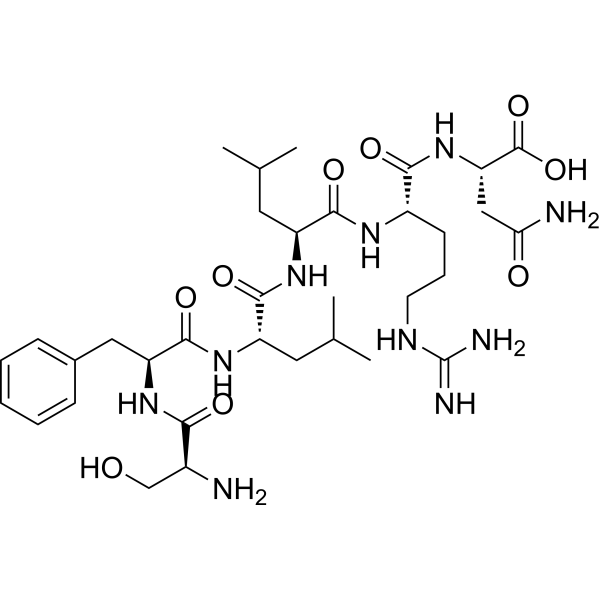
TRAP-6 (PAR-1 agonist peptide), a peptide fragment, is a selective protease activating receptor 1 (PAR1) agonist. TRAP-6 activates human platelets via the thrombin receptor. TRAP-6 shows no activity at PAR4 .
loading...
    loading...
2
2 Cited Publications
Cat. No.: HY-P1309
CAS No.: 352017-71-1
Synonyms: PAR-4-AP; AY-NH2
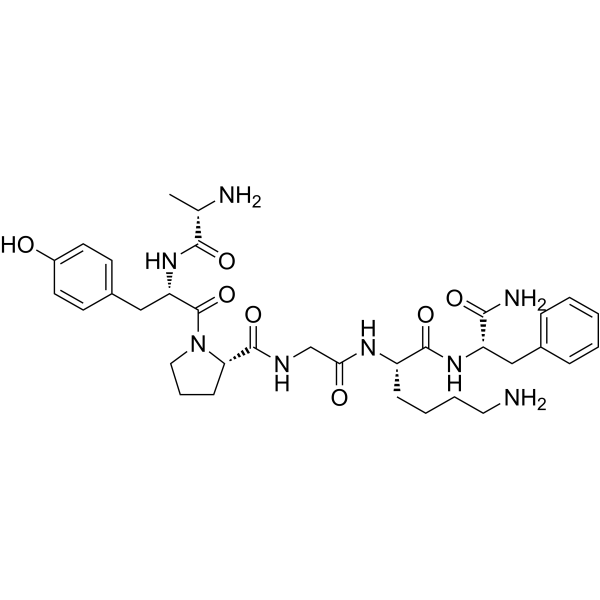
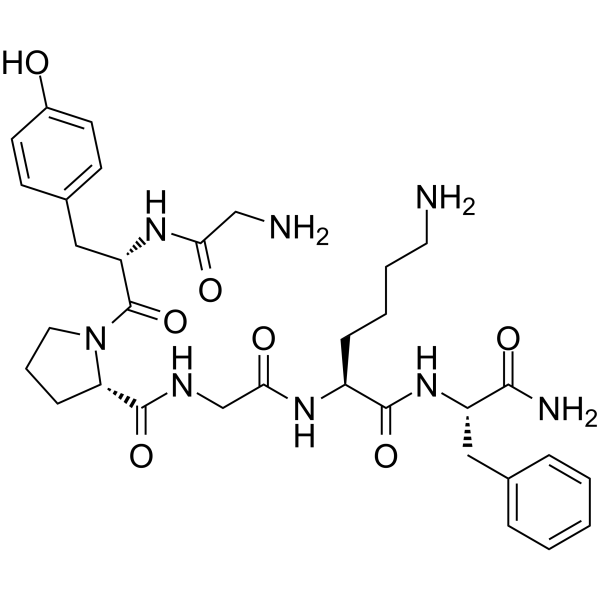
PAR-4 Agonist Peptide, amide (PAR-4-AP; AY-NH2) is a proteinase-activated receptor-4 (PAR-4) agonist, which has no effect on either PAR-1 or PAR-2 and whose effects are blocked by a PAR-4 antagonist.
loading...
    loading...
2
2 Cited Publications
Cat. No.: HY-P1309A
CAS No.: 1228078-65-6
Synonyms: PAR-4-AP TFA; AY-NH2 TFA
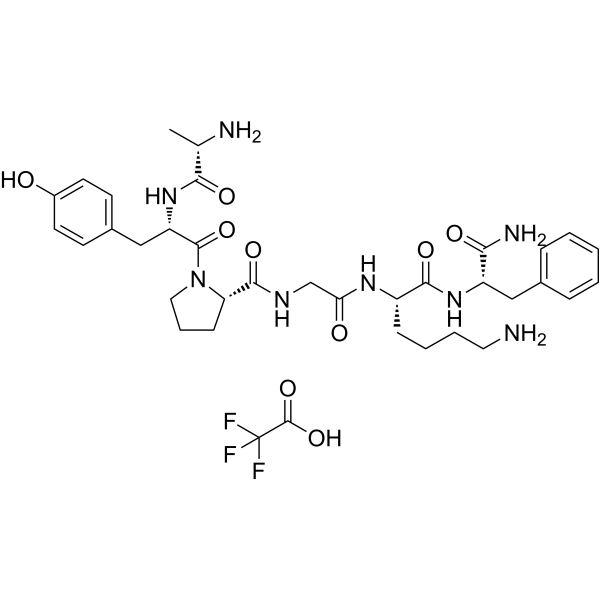
PAR-4 Agonist Peptide, amide TFA (PAR-4-AP TFA; AY-NH2 TFA) is a proteinase-activated receptor-4 (PAR-4) agonist, which has no effect on either PAR-1 or PAR-2 and whose effects are blocked by a PAR-4 antagonist .
loading...
    loading...
1
1 Cited Publications
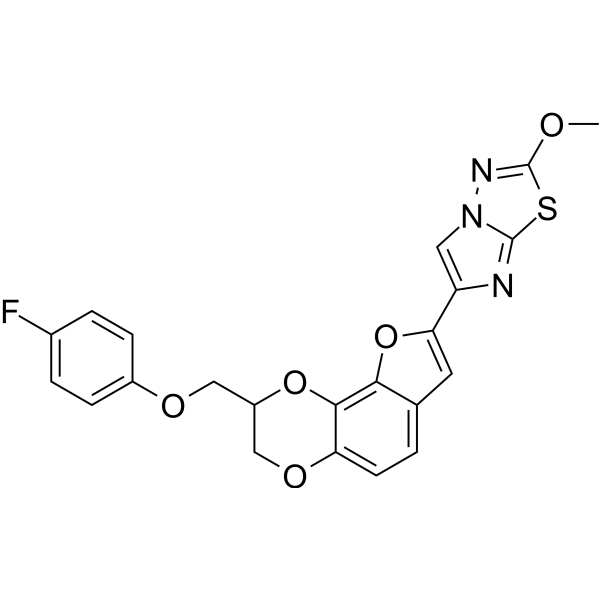
Cat. No.: HY-19837
CAS No.: 1478712-37-6
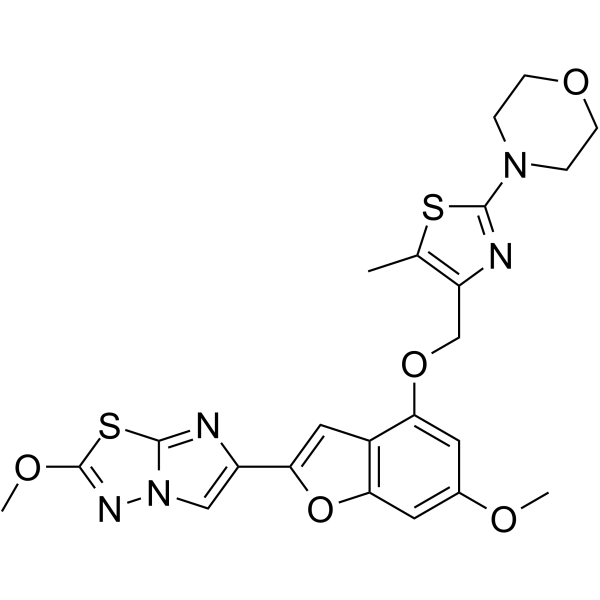
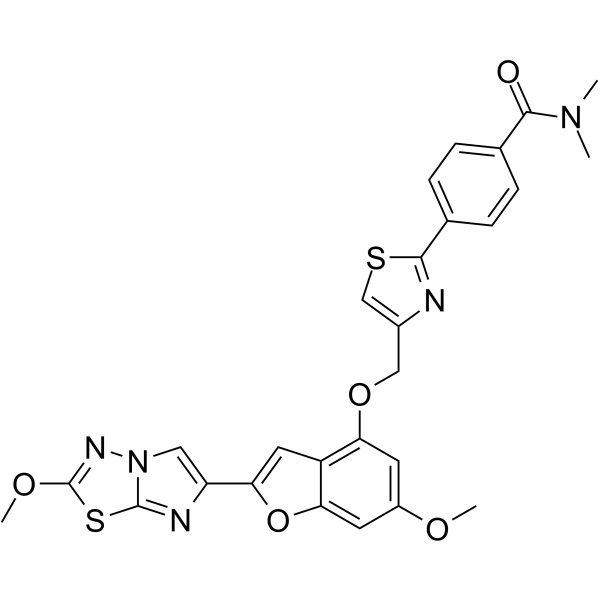
BMS-986120 is a first-in-class oral and reversible protease-activated receptor 4 (PAR4) antagonist, with IC50s of 9.5 nM and 2.1 nM in human and monkey blood, respectively. BMS-986120 has potent and selective antiplatelet effects .
loading...
    loading...
1
1 Cited Publications
Cat. No.: HY-114164G
CAS No.: 9002-04-4
Murine Thrombin is a murine serine protease that plays a central role in blood coagulation. Murine Thrombin stimulates macrophages to polarize into a unique phenotype characterized by anti-inflammatory and pro-repair properties. Murine Thrombin activates PAR1, induces the production of MCP-1, MMP3 and VEGF in mouse intervertebral discs, and causes degradation of the cartilage matrix and destruction of intervertebral disc structure. Murine Thrombin activity increases significantly in paraoxon-induced status epilepticus .
loading...
    loading...
Cat. No.: HY-150790
CAS No.: 1478711-48-6
Purity:  98.86%
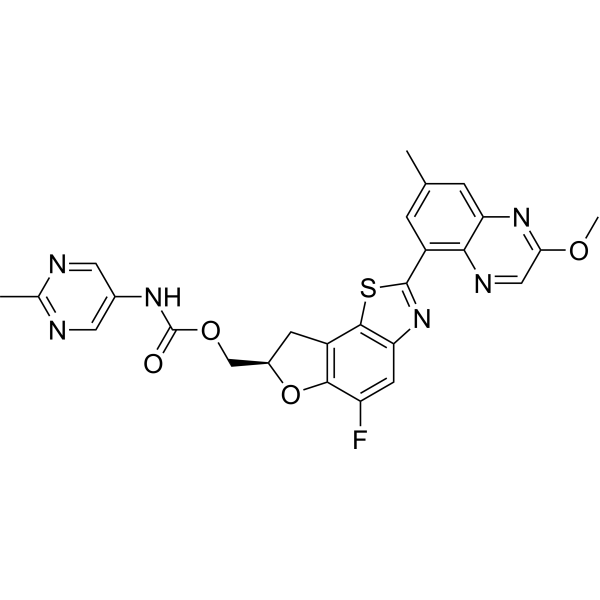
BMS-98614 is an orally active, selective thrombin receptor protease-activated receptor-4 (PAR-4) antagonist with an IC50 value of 0.4 nM. BMS-98614 has excellent antithrombotic effect .
loading...
    loading...
Cat. No.: HY-P0297
CAS No.: 245443-52-1
Research Areas:  

Others

Protease-Activated Receptor-4 is the agonist of proteinase-activated receptor-4 (PAR4).
loading...
    loading...
Cat. No.: HY-P4004
CAS No.: 245443-51-0
PAR-4 (1-6) amide human is an N-terminal fragment of protease-activated receptor 4 (PAR4). PAR-4 (1-6) amide human induce platelet aggregation .
loading...
    loading...
Cat. No.: HY-P5372A
Research Areas:  

Cancer

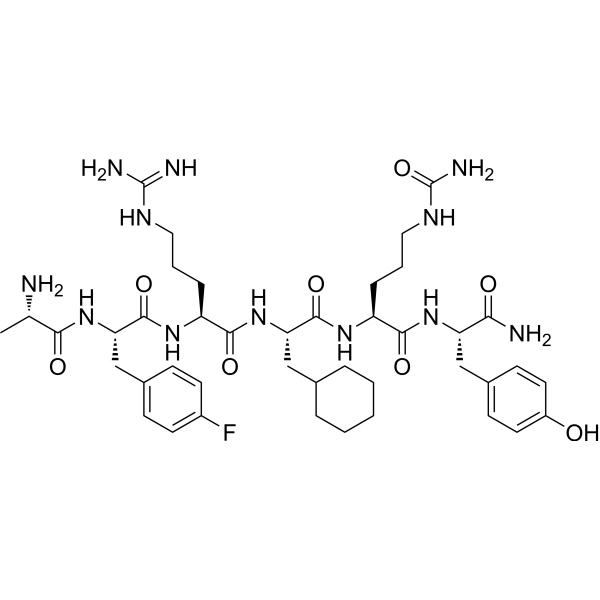
Ala-parafluoroPhe-Arg-Cha-Cit-Tyr-NH2 TFA, a bioactive peptide, is a selective Protease activating receptor 1 (PAR-1) agonist over PAR-2. PAR-1 belongs to a subfamily of G-protein coupled receptors and is known to mediate the cellular effects of thrombin. In addition to its varied cellular effects of thrombin, PAR-1 has also been shown to coordinate with PAR-4 and regulate thrombin-induced hepatocellular carcinoma harboring thrombin formation within the tumor environment classified as 'coagulation type' .
loading...
    loading...
Cat. No.: HY-P5875A
P4pal10 TFA is the TFA salt form of P4pal10 (HY-P5875). P4pal10 TFA is an antagonist for protease-activated receptor 4 (PAR4). P4pal10 TFA inhibits the platelet aggregation, inhibits tissue factor (TF)-induced thrombin generation, and exhibits anticoagulant and antithrombotic activities. P4pal10 TFA reduces the oedema and the granulocyte infiltration induced by Carrageenan (HY-125474). P4pal10 TFA ameliorates the injury in rats myocardial ischemia/reperfusion (I/R) models .
loading...
    loading...
Cat. No.: HY-163341
CAS No.: 2173201-65-3
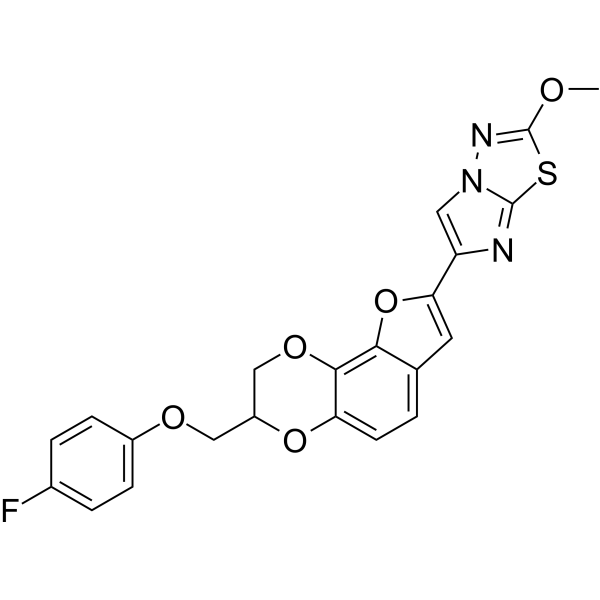
PAR4 antagonist 1 (Compound 48) is a protease activated receptor 4 (PAR4) antagonist with an IC50 of 1.8 nM. PAR4 antagonist 1 has an IC50 of 2 nM against γ-thrombin-activated PAR4 in platelet-rich plasma (PRP). PAR4 antagonist 1 can be used in antithrombotic research .
loading...
    loading...
Cat. No.: HY-162409
CAS No.: 3057206-41-1
Research Areas:  

Others

PAR4 antagonist 4 (Compound 37) is a selective antagonist for protease activated receptor 4 (PAR4). PAR4 antagonist 3 exhibits antiplatelet efficacy with IC50 of 14.2 nM. PAR4 antagonist 3 improves metabolic stablility in human liver microsomes with T1/2 of 42.5 min .
loading...
    loading...
Cat. No.: HY-P1313A
Synonyms: GYPGQV TFA
Research Areas:  

Others

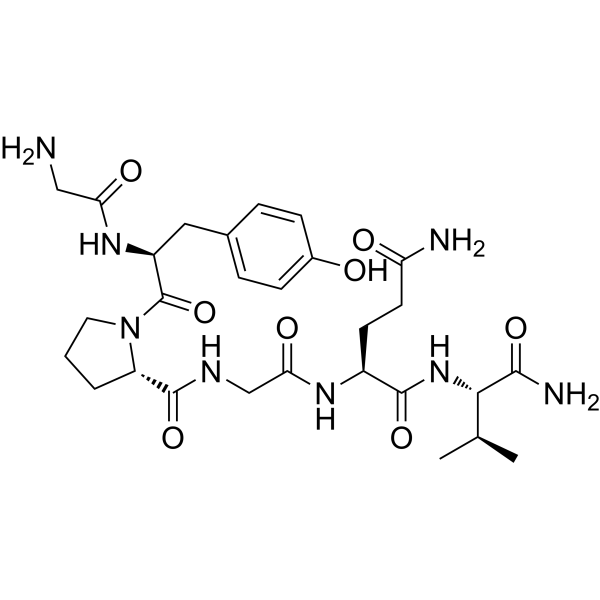
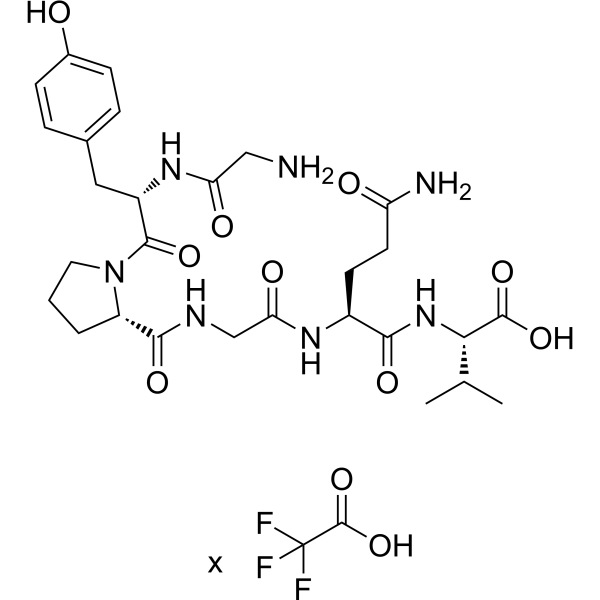
PAR 4 (1-6) TFA (GYPGQV TFA), a hexapeptide, is a fragment of protease-activated receptor 4 (PAR4). PAR 4 (1-6) TFA acts as a PAR4-specific agonist .
loading...
    loading...
Cat. No.: HY-128345
CAS No.: 1477497-01-0
UDM-001651 is a potent, selective, and orally bioavailable protease-activated receptor 4 (PAR4) antagonist (IC50=4 nM; Kd=1.4 nM). UDM-001651 shows antiplatelet potency (IC50=25 nM) in a γ-thrombin-induced platelet-rich plasma aggregation assay (γ-Thr PRP) .
loading...
    loading...
Cat. No.: HY-P5372
CAS No.: 211190-38-4
Research Areas:  

Cancer

Ala-parafluoroPhe-Arg-Cha-Cit-Tyr-NH2, a bioactive peptide, is a selective Protease activating receptor 1 (PAR-1) agonist over PAR-2. PAR-1 belongs to a subfamily of G-protein coupled receptors and is known to mediate the cellular effects of thrombin. In addition to its varied cellular effects of thrombin, PAR-1 has also been shown to coordinate with PAR-4 and regulate thrombin-induced hepatocellular carcinoma harboring thrombin formation within the tumor environment classified as 'coagulation type' .
loading...
    loading...
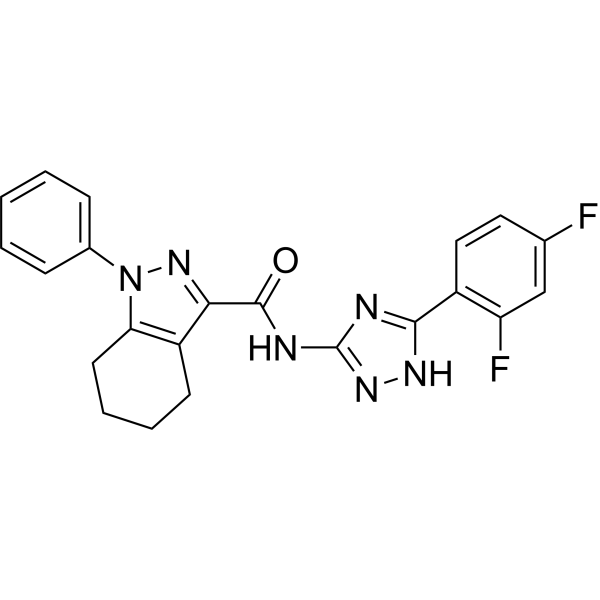
Cat. No.: HY-161401
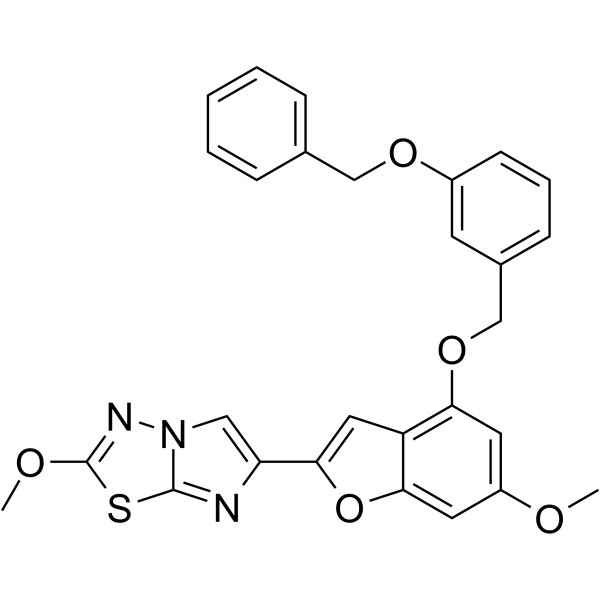
PAR4 antagonist 2 (Compound 31) is a protease activated receptor 4 (PAR4) antagonist, with IC50 values of 95 nM and 367 nM for human PAR4 and mouse PAR4. PAR4 antagonist 2 is active against PAR4 activation by the native protease thrombin cleavage but not the synthetic PAR4 agonist peptide AYPGKF .
loading...
    loading...
Cat. No.: HY-P1313
CAS No.: 225779-44-2
Synonyms: GYPGQV
Research Areas:  

Others

PAR 4 (1-6) human, a hexapeptide, is a fragment of protease-activated receptor 4 (PAR4). PAR 4 (1-6) TFA acts as a PAR4-specific agonist .
loading...
    loading...
Cat. No.: HY-162408
CAS No.: 3057206-40-0
Research Areas:  

Others

PAR4 antagonist 3 (Compound 36) is a selective antagonist for protease activated receptor 4 (PAR4). PAR4 antagonist 3 exhibits antiplatelet efficacy with IC50 of 26.1 nM. PAR4 antagonist 3 improves metabolic stablility in human liver microsomes with T1/2 of 97.6 min .
loading...
    loading...
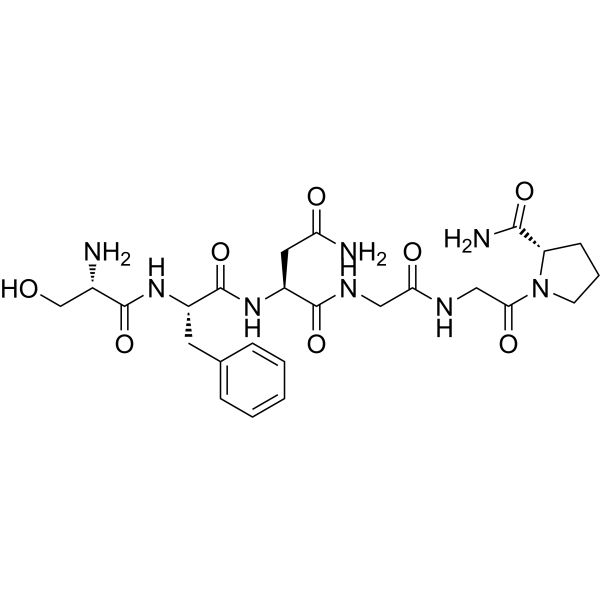
Cat. No.: HY-P5357
CAS No.: 261521-21-5
Research Areas:  

Others

SFNGGP-NH2 is a biological active peptide. (PAR-3 is a high-affinity thrombin receptor. PAR-3 mRNA is expressed in the cutaneous mast cells of humans. Protease-Activated Receptors (PARs) have been studied for their roles in itch and their itch-associated response through histamine-dependent/independent pathways have been reported. PAR-3 has been shown not to induce itching alone but possibly in conjunction with PAR-4. Co-expression of PAR-3 and PAR-4 enhances thrombin action suggesting that PAR-3 alone does not mediate transmembrane signaling but instead functions as a cofactor to activate PAR-4.)
loading...
    loading...

