

1. Search Result
Search Result
Results for "

PD-1/PD-L1 immune checkpoint

" in MedChemExpress (MCE) Product Catalog:

23

阻害剤およびアゴニスト

1

スクリーニングライブラリ

1

ペプチド

5

阻害性抗体

製品番号 製品名 Target 研究分野 構造式
  • HY-P99144A
    Anti-Mouse PD-1 Antibody (S-5001)
    1 Publications Verification

    PD-1/PD-L1 Inflammation/Immunology Cancer
    Anti-Mouse PD-1 Antibody (S-5001) is a selective inhibitor targeting PD-1, blocking the PD-1/PD-L1 immune checkpoint axis through competitive binding to PD-1. Anti-Mouse PD-1 Antibody (S-5001) works by reversing the tumor immunosuppressive microenvironment and reactivating the anti-tumor activity of cytotoxic T lymphocytes. It can be used in research on tumors such as melanoma and HPV-positive oropharyngeal squamous cell carcinoma. Anti-Mouse PD-1 Antibody (S-5001) is often combined with photothermal therapy, chemotherapy, etc., to enhance efficacy .
    Anti-Mouse PD-1 Antibody (S-5001)
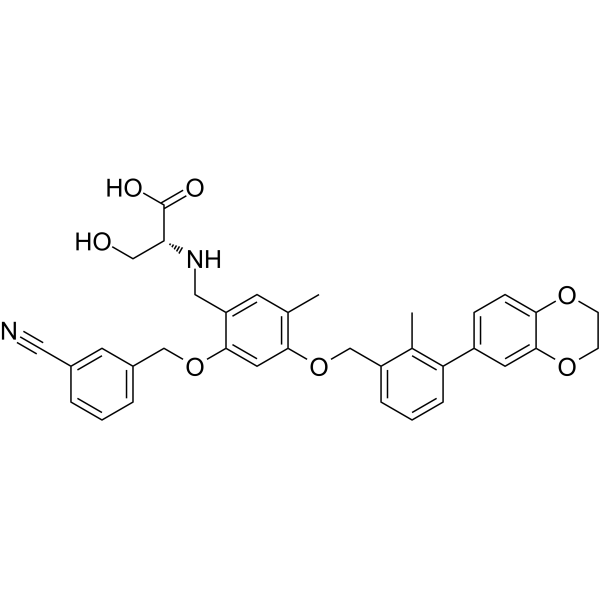
  • HY-102011
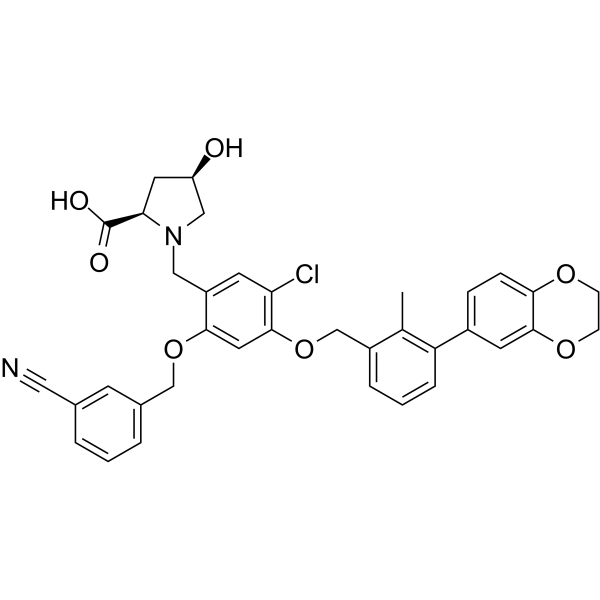
    BMS-1166
    Maximum Cited Publications
    6 Publications Verification

    PD-1/PD-L1 Inflammation/Immunology Cancer
    BMS-1166 is a potent PD-1/PD-L1 immune checkpoint inhibitor. BMS-1166 induces dimerization of PD-L1 and blocks its interaction with PD-1, with an IC50 of 1.4 nM. BMS-1166 antagonizes the inhibitory effect of PD-1/PD-L1 immune checkpoint on T cell activation .
    BMS-1166
  • HY-P99166

    XMAB-20717

    PD-1/PD-L1 CTLA-4 Inflammation/Immunology Cancer
    Vudalimab is a potent dual PD-1 and CTLA-4 inhibitor as a fully humanized bispecific monoclonal antibody. Vudalimab targets immune checkpoint receptors PD-1 and CTLA-4 and promotes tumor-selective T-cell activation .
    Vudalimab
  • HY-122542B
    PPACK TFA
    2 Publications Verification

    Ligands for E3 Ligase Molecular Glues IKZF Family Cardiovascular Disease
    PPACK TFA is an orally active, selective molecular glue degrader targeting IKZF2. Through a molecular glue mechanism, PPACK TFA binds to CRBN, recruits IKZF2 to form a ternary complex, and promotes its ubiquitination and proteasomal degradation. This further converts inhibitory regulatory T cells (Treg) into effector-like T cells, enhances CD8 + T cell responses, and modulates the Teff:Treg balance. PPACK TFA also increases the production of the inflammatory cytokine IL-2 and reduces the suppressive activity of Treg. PPACK TFA can be used in cancer immunotherapy research, and exhibits a synergistic effect when combined with immune checkpoint inhibitors such as anti-PD1 .
    PPACK TFA
  • HY-120635

    PD-1/PD-L1 Inflammation/Immunology Cancer
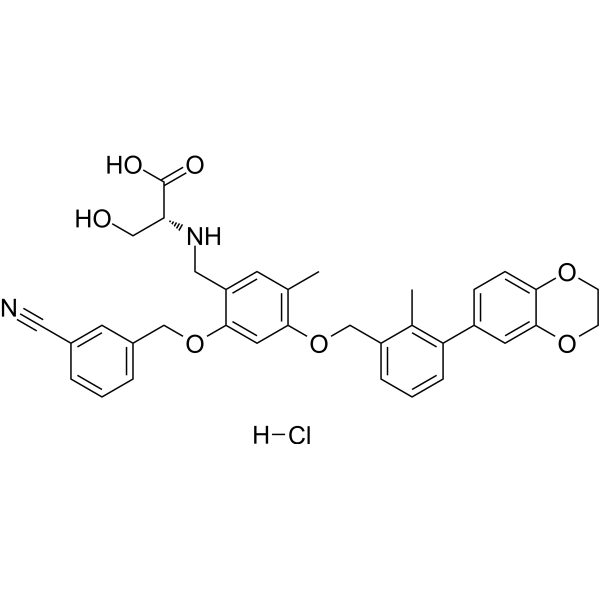
    BMS-1001 is an orally active human PD-L1/PD-1 immune checkpoint inhibitor. BMS-1001 exhibits low-toxicity in cells. The IC50 value of BMS-1001 in a homogeneous time-resolved fluorescence (HTRF) binding assay is 2.25 nM .
    BMS-1001 hydrochloride
  • HY-150879

    PD-1/PD-L1 Ligands for Target Protein for PROTAC Cancer
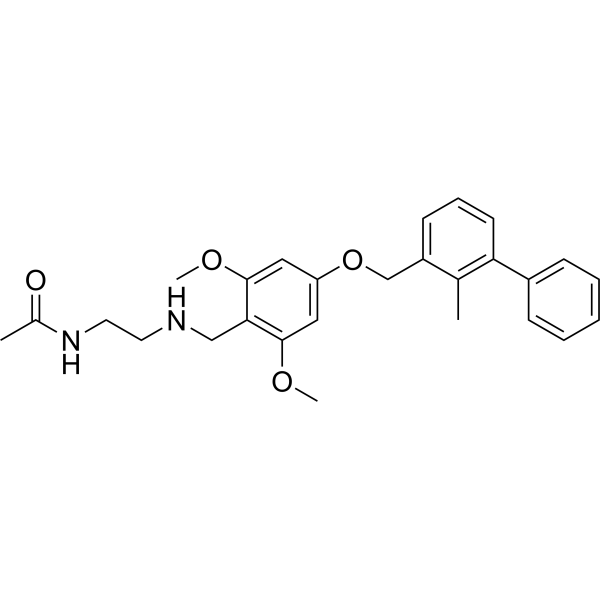
    BMS-37 is a PD-1/PD-L1 immune checkpoint inhibitor with an IC50 towards the PD-L1/PD-1 complex in the range of 18 to 200 nM. BMS-37 shows unspecific toxicity against modified Jurkat T cells with an EC50 between 3 and 6 µM. BMS-37 can be used for the study of the PD-L1-induced exhaustion of T-cells or as PD-L1 ligand to synthesize PROTAC molecules .
    BMS-37
  • HY-P990704

    AZD-2936

    PD-1/PD-L1 Transmembrane Glycoprotein Cancer
    Rilvegostomig (AZD-2936) is a bispecific humanized IgG1 antibody targeting PD-1 and TIGIT. Rilvegostomig induces tumor growth inhibition and modulates the tumor immune microenvironment. Rilvegostomig exhibits anti-tumor activity in metastatic non-small cell lung cancer (without prior immune checkpoint inhibitor treatment). Rilvegostomig can be used in research related to metastatic non-small cell lung cancer and endometrial cancer .
    Rilvegostomig
  • HY-122542A
    PPACK dihydrochloride
    2 Publications Verification

    Pebac; D-Phenylalanyl-prolyl-arginyl Chloromethyl Ketone; D-Phe-Pro-Arg-CH2Cl

    Ligands for E3 Ligase Molecular Glues IKZF Family Cardiovascular Disease
    PPACK dihydrochloride is an orally active, selective molecular glue degrader targeting IKZF2. Through a molecular glue mechanism, PPACK dihydrochloride binds to CRBN, recruits IKZF2 to form a ternary complex, and promotes its ubiquitination and proteasomal degradation. This further converts inhibitory regulatory T cells (Treg) into effector-like T cells, enhances CD8 + T cell responses, and modulates the Teff:Treg balance. PPACK dihydrochloride also increases the production of the inflammatory cytokine IL-2 and reduces the suppressive activity of Treg. PPACK dihydrochloride can be used in cancer immunotherapy research, and exhibits a synergistic effect when combined with immune checkpoint inhibitors such as anti-PD1 .
    PPACK dihydrochloride
  • HY-159647

    Molecular Glues Ligands for E3 Ligase IKZF Family Cancer
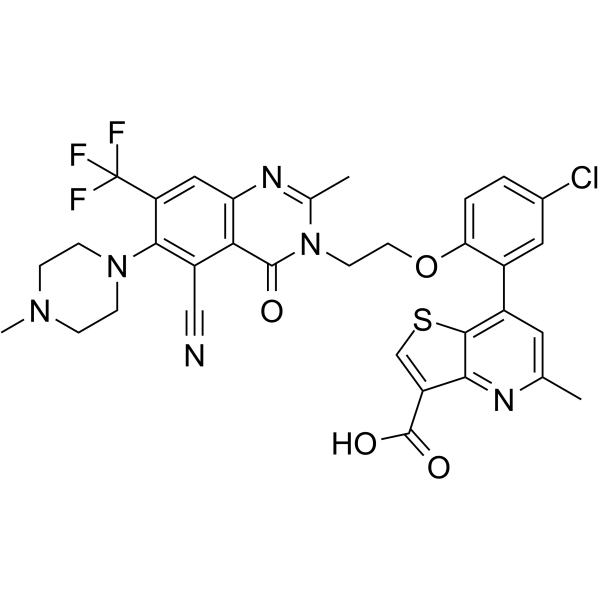
    PLX-4545 is an orally active, selective molecular glue degrader targeting IKZF2. Through a molecular glue mechanism, PLX-4545 binds to CRBN, recruits IKZF2 to form a ternary complex, and promotes its ubiquitination and proteasomal degradation. This further converts inhibitory regulatory T cells (Treg) into effector-like T cells, enhances CD8 + T cell responses, and modulates the Teff:Treg balance. PLX-4545 also increases the production of the inflammatory cytokine IL-2 and reduces the suppressive activity of Treg. PLX-4545 can be used in cancer immunotherapy research, and exhibits a synergistic effect when combined with immune checkpoint inhibitors such as anti-PD1 .
    PLX-4545
  • HY-P99895

    PD-1/PD-L1 Inflammation/Immunology Cancer
    Rulonilimab is a human IgG1 monoclonal antibody against PD-1 that targets, binds and inhibits PD-1 and its downstream signalling pathways with potential immune checkpoint inhibition and anti-tumour activity .
    Rulonilimab
  • HY-131386A

    Target Protein Ligand-Linker Conjugates Cancer
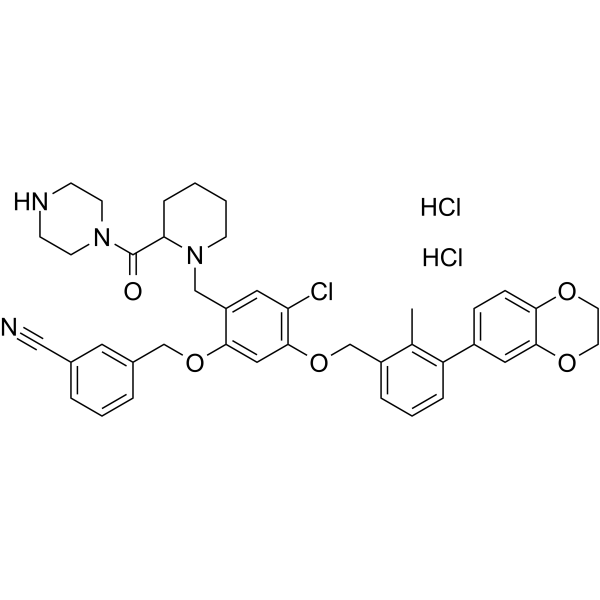
    BMS-1166-N-piperidine-CO-N-piperazine dihydrochloride incorporates a ligand for PD-1/PD-L1 immune checkpoint, and a PROTAC linker. BMS-1166-N-piperidine-CO-N-piperazine dihydrochloride can be used in the synthesis of PROTAC PD-1/PD-L1 degrader-1?(HY-131183). PROTAC PD-1/PD-L1 degrader-1 inhibits PD-1/PD-L1 interaction with an IC50 of 39.2 nM .
    BMS-1166-N-piperidine-CO-N-piperazine dihydrochloride
  • HY-145240

    Eukaryotic Initiation Factor (eIF) Infection Cancer
    eIF4E-IN-1 is a potent inhibitor of eIF4E. eIF4E-IN-1 inhibits immunosuppression components such as immune checkpoint proteins PD-1, PD-L1, LAG3, TIM3, and/or IDO, in order to inhibit or release immune suppression in certain diseases, such as cancer and infectious disease (extracted from patent WO2021003194A1, compound Y) .
    eIF4E-IN-1
  • HY-148305

    PD-1/PD-L1 Cancer
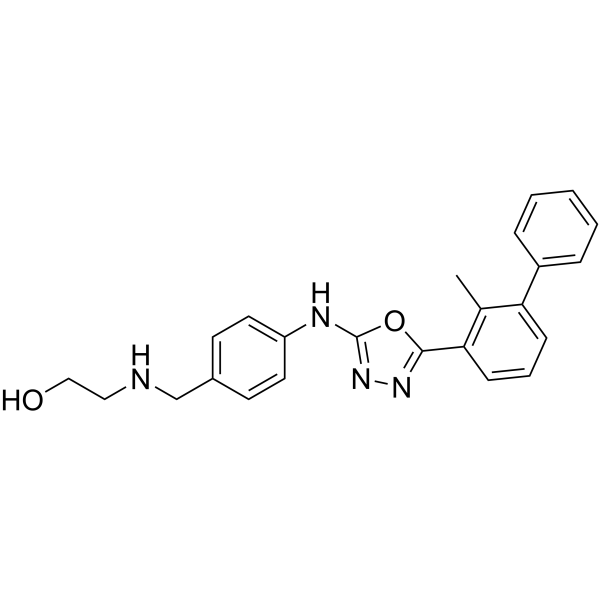
    PD-1/PD-L1-IN-28 (compound 3) is an immune checkpoint inhibitor of PD-1/PD-L1 signaling pathway (IC50=0.744 µM). PD-1/PD-L1-IN-28 shows good research potential in tumor immunity .
    PD-1/PD-L1-IN-28
  • HY-102011A
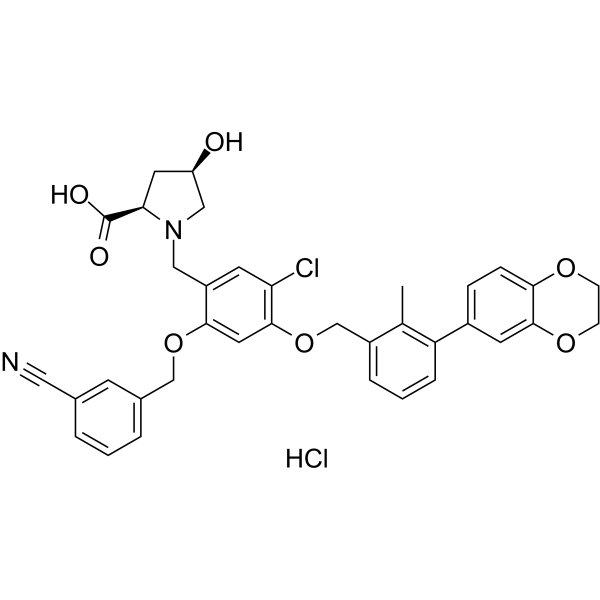
    BMS-1166 hydrochloride
    Maximum Cited Publications
    6 Publications Verification

    PD-1/PD-L1 Inflammation/Immunology Cancer
    BMS-1166 hydrochloride is a potent PD-1/PD-L1 immune checkpoint inhibitor. BMS-1166 hydrochloride induces dimerization of PD-L1 and blocks its interaction with PD-1, with an IC50 of 1.4 nM. BMS-1166 hydrochloride antagonizes the inhibitory effect of PD-1/PD-L1 immune checkpoint on T cell activation .
    BMS-1166 hydrochloride
  • HY-145239

    PD-1/PD-L1 Cancer
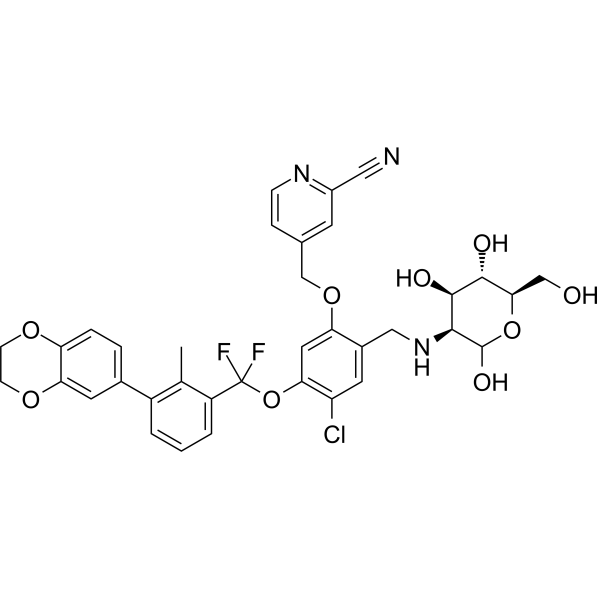
    PD-1/PD-L1-IN-13 (Compound 43) is a potent immune checkpoint PD-1/PD-L1 inhibitor with an IC50 value of 10.2 nM. PD-1/PD-L1-IN-13 promots CD8 + T cell activation and delays the tumor growth in the Hepa1-6 syngeneic mouse model .
    PD-1/PD-L1-IN-13
  • HY-120647

    PD-1/PD-L1 Inflammation/Immunology Cancer
    BMS-1001 is an orally active human PD-L1/PD-1 immune checkpoint inhibitor. BMS-1001 exhibits low-toxicity in cells. The IC50 value of BMS-1001 in a homogeneous time-resolved fluorescence (HTRF) binding assay is 2.25 nM .
    BMS-1001
  • HY-175236

    PD-1/PD-L1 Apoptosis ERK JNK Cadherin p38 MAPK GSK-3 IFNAR Caspase Bcl-2 Family Cancer
    SF-9-2 is a PD-L1/PD-1 binding inhibitor (IC50 = 24.9 nM). SF-9-2 inhibits epithelial-mesenchymal transition, migration, invasion, and proliferation of SK-N-SH cells, and also induces apoptosis and cell cycle arrest. SF-9-2 blocks PD-L1-induced SK-N-SH cell growth through the MAPK signaling pathway. SF-9-2 restores GSK-3β activity and enhances PD-L1 degradation through the ubiquitin-proteasome pathway. SF-9-2 inhibits tumor growth in the SK-N-SH NOG mouse model without significant toxicity. SF-9-2 also acts as an immune checkpoint inhibitor, blocking PD-L1 to restore T cell function. SF-9-2 can be used in neuroblastoma research .
    SF-9-2
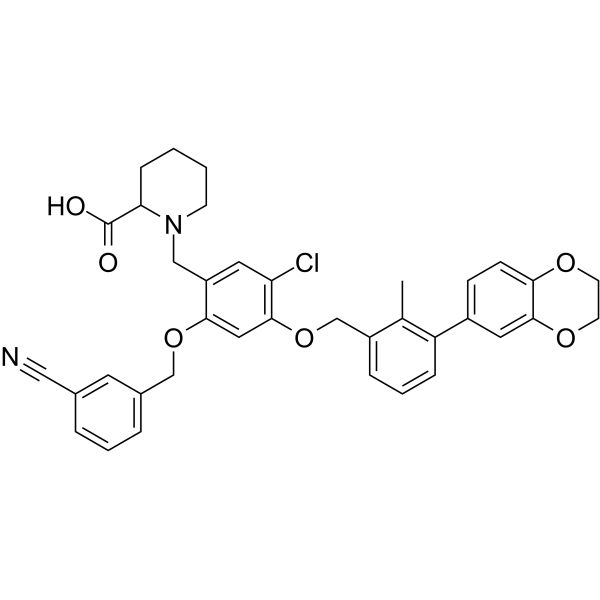
  • HY-131187

    Ligands for Target Protein for PROTAC Cancer
    BMS-1166-N-piperidine-COOH, the BMS-1166-based moiety, binds to E3 ligase ligand via a linker to form PROTAC PD-1/PD-L1 degrader-1 (HY-131183) to degrade PD-1/PD-L1 . BMS-1166 is a potent PD-1/PD-L1 interaction inhibitor with an IC50 of 1.4 nM. BMS-1166 antagonizes the inhibitory effect of PD-1/PD-L1 immune checkpoint on T cell activation .
    BMS-1166-N-piperidine-COOH
  • HY-120646

    PD-1/PD-L1 Others
    BMS-242 is a small molecule PD-1/PD-L1 inhibitor with the activity of inhibiting the PD-1/PD-L1 interaction. BMS-242 can bind to the hydrophobic channel pocket between PD-L1 molecules, inhibit the PD-1/PD-L1 immune checkpoint pathway, and provide a new way for cancer inhibition.
    BMS-242
  • HY-163844

    PD-1/PD-L1 Inflammation/Immunology Cancer
    PD-1/PD-L1-IN-49 (compound 1c) is a potent inhibitor of PD-1/PD-L1, with the IC50 of 77 nM. PD-1/PD-L1-IN-49 activates Jurkat T cells, reflecting successful blockade of the PD-1/PD-L1 immune checkpoint .
    PD-1/PD-L1-IN-49
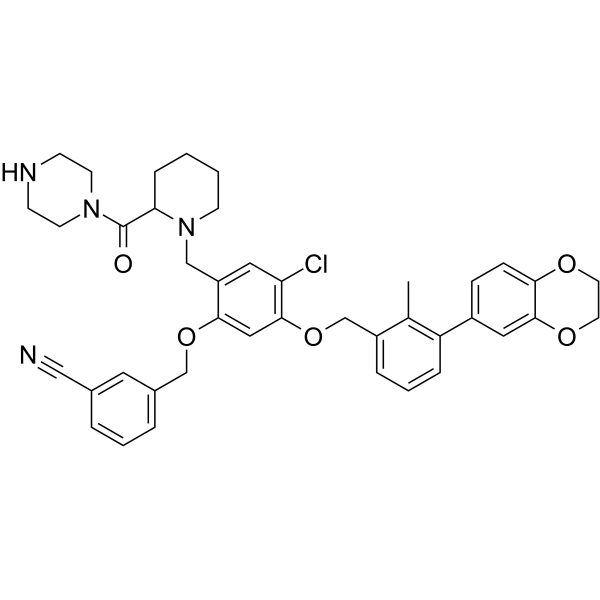
  • HY-131386

    Target Protein Ligand-Linker Conjugates Cancer
    BMS-1166-N-piperidine-CO-N-piperazine incorporates a ligand for PD-1/PD-L1 immune checkpoint, and a PROTAC linker. BMS-1166-N-piperidine-CO-N-piperazine can be used in the synthesis of PROTAC PD-1/PD-L1 degrader-1?(HY-131183). PROTAC PD-1/PD-L1 degrader-1 inhibits PD-1/PD-L1 interaction with an IC50 of 39.2 nM .
    BMS-1166-N-piperidine-CO-N-piperazine
  • HY-102011R

    Reference Standards PD-1/PD-L1 Inflammation/Immunology Cancer
    BMS-1166 (Standard) is the analytical standard of BMS-1166 (HY-102011). This product is intended for research and analytical applications. BMS-1166 is a potent PD-1/PD-L1 immune checkpoint inhibitor. BMS-1166 induces dimerization of PD-L1 and blocks its interaction with PD-1, with an IC50 of 1.4 nM. BMS-1166 antagonizes the inhibitory effect of PD-1/PD-L1 immune checkpoint on T cell activation .
    BMS-1166 (Standard)
  • HY-150879A

    PD-1/PD-L1 Cancer
    BMS-37 hydrochloride is a PD-1/PD-L1 immune checkpoint inhibitor with an IC50 towards the PD-L1/PD-1 complex in the range of 18 to 200 nM. BMS-37 hydrochloride shows unspecific toxicity against modified Jurkat T cells with an EC50 between 3 and 6 µM. BMS-37 hydrochloride can be used for the study of the PD-L1-induced exhaustion of T-cells or as PD-L1 ligand to synthesize PROTAC molecules .
    BMS-37 hydrochloride

オンラインお問い合わせ

入力情報は安全に管理されます. 必須入力項目.

タイトル


国或いは地域 *

お名前 *


組纖名 *

デパートメント *


メールアドレス *


製品名 *

製品番号


カスタマ需要量 *

電話番号 *


必ず会社名を記載ください。個人への返信は行いません。

備考

バルクお問い合わせ

Inquiry Information

製品名:
製品番号:
数量:
MCE 日本正規代理店:

