From 11:00 pm to 12:00 pm EST ( 8:00 pm to 9:00 pm PST ) on January 6th, the website will be under maintenance. We are sorry for the inconvenience. Please arrange your schedule properly.
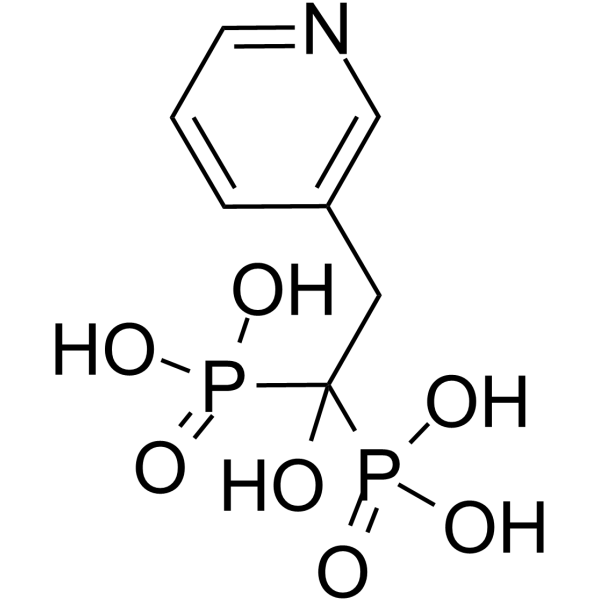
Risedronic acid (Risedronate) is a bisphosphonate and potent antiresorptive agent. Risedronic acid induces Apoptosis. Risedronic acid inhibits the transfer of farnesyl pyrophosphate groups to parasite proteins. Risedronic acid inhibits osteoclast-mediated bone resorption and alters bone metabolism. Risedronic acid inhibits blood-stage Plasmodium falciparum (IC50 of 20.3 μM) .
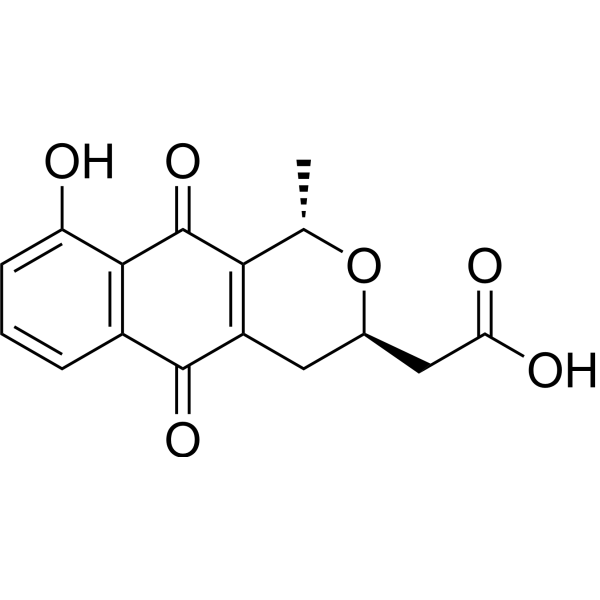
Nanaomycin A is the first selective DNMT3B inhibitor with an IC50 of 500 nM. Nanaomycin A, a quinone antibiotics, reactivates silenced tumor suppressor genes in human cancer cells . Nanaomycin A inhibits in vitro growth of the human malaria parasite Plasmodium falciparum with an IC80 value of 33.1 nM .
Hex is an enolase inhibitor and antimalarial agent with Ki values of 74.4 nM and 269.4 nM for ENO2 and ENO1, respectively. Hex is a NfENO and TbENO inhibitor with IC50s value of 0.14 μM and 2.1 μM, respectively. Hex has antimalarial activity against Plasmodium falciparum 3D7, Naegleria fowleri trophozoites and Plasmodium berghei ANKA strain. Hex has anti-tumor effects against intracranial tumors .
SID 26681509 is a potent, reversible, competitive, and selective inhibitor of human cathepsin L with an IC50 of 56 nM. SID 26681509 inhibits in vitro propagation of malaria parasite Plasmodium falciparum and inhibits Leishmania major with IC50s of 15.4 μM and 12.5 μM, respectively. SID 26681509 shows no inhibitory activity against cathepsin G .
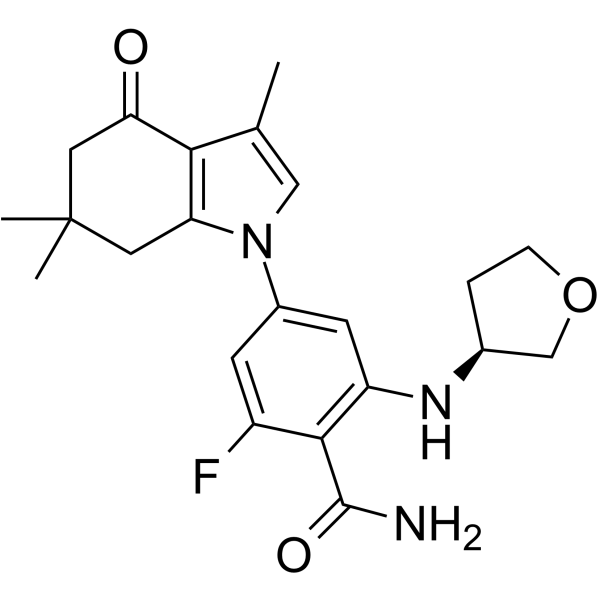
KDU691, an imidazopyrazine with potent anti-parasitic activity against blood stage schizonts, gametocytes and liver stages, is a Plasmodium PI4K inhibitor. KDU691 selectively inhibits dihydroartemisinin-pretreated Plasmodium falciparum ring-stage parasites .
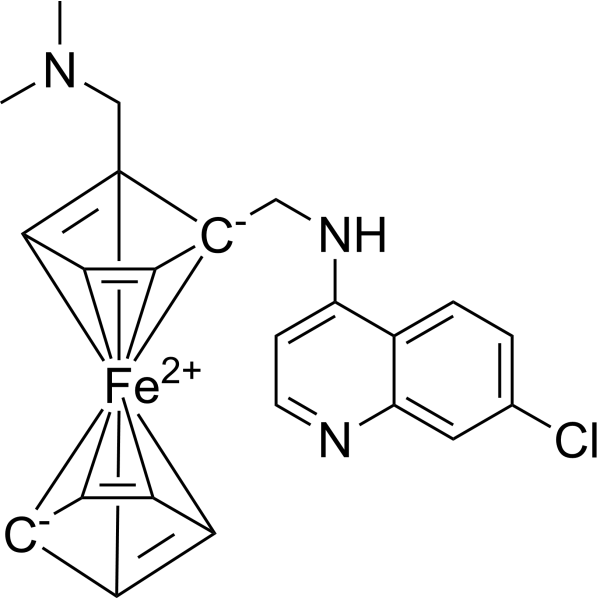
Ferroquine (Ferrochloroquine), a ferrocenyl analogue of Chloroquine, is an antimalarial agent. Ferroquine shows parasiticidal effect on Plasmodium by inducing oxidative stress and the subsequent destruction of the membrane .
DHFR-IN-5 is a potent and orally active dihydrofolate reductase (DHFR) inhibitor with a Ki value of 0.54 nM for quadruple mutant Plasmodium falciparum DHFR. DHFR-IN-5 shows anti-malaria activity .
Ursolic acid acetate (Acetylursolic acid) is a triterpenoid compound and an inhibitor of Plasmodium falciparum heat shock protein 90 (PfHsp90) with a KD of 8.16 μM. Ursolic acid acetate is cytotoxic to KB cells, with an IC50 value of 8.4 μM. Ursolic acid acetate can be used in tumor and antimalarial research .
LIN28 inhibitor LI71 is a LIN28 inhibitor that effectively inhibits LIN28:let-7 binding (IC50: 7 μM). LIN28 inhibitor LI71 can abolish LIN28-mediated oligouridylation of let-7 precursor (IC50: 27 μM). LIN28 inhibitor LI71 has potential application value in LIN28-driven cancer research. LIN28 inhibitor LI71 inhibits the interaction of cold shock protein of Plasmodium falciparum (PfCoSP) with DNA and α/β tubulin and has an inhibitory effect on Plasmodium falciparum .
Sulfalene (Sulfametopyrazine; AS-18908) is an orally active antimalarial agent. Sulfalene competes for para-aminobenzoic acid binding in plasmodial folic acid synthesis. Sulfalene, combined with Trimethoprim (HY-B0510), clears parasites, resolves fever, and resists induced resistance against drug-sensitive and drug-resistant Plasmodium falciparum. Sulfalene can be used for the research of acute falciparum malaria and Schistosoma mansoni infection .
Phomarin is an inhibitor for dihydrofolate reductase (DHFR). Phomarin exhibits activity against Plasmodiumparasites and fungi including Mycrobotryum violaceum and Botrytis cinerea. Phomarin can be used for the research of malaria and fungal infections .
GLUT1-IN-2 (compound 17) is a GLUT1 inhibitor with an IC50 value of 12 μM. GLUT1-IN-2 shows inhibitory effect to Plasmodium falciparum hexose transporter PfHT with an IC50 value of 13 μM. GLUT1-IN-2 can be used for the research of infection .
Norcaesalpinin E, a C-17-norcassane-type diterpene found in Caesalpinia crista, is a Plasmodium falciparum growth inhibitor with an IC50 of 90 nM. Norcaesalpinin E induces dose-dependent growth inhibition of Plasmodium falciparum. Norcaesalpinin E can be used for the research of malaria .
GSK2181306A is a pan-FIKK inhibitor with an EC50 value of 0.16 μM for parasite growth inhibition. GSK2181306A can be used to study Plasmodium infection .
Cheilanthifoline, an alkaloid, is isolated from Corydalis calliantha. Cheilanthifoline exhibits antiplasmodial activities against Plasmodium falciparum, with IC50s of 0.90 μg/mL and 1.22 μg/mL for wild type (TM4) and multidrug resistant (K1) strains, respectively .
CK-2-68 is an inhibitor for complex III in protozoan mitochondrial respiratory chain, by targeting the alternative NADH dehydrogenase (NDH2) of the malarial parasite Plasmodium. CK-2-68 exhibits antimalaria efficacy, that inhibits Plasmodium falciparum infected erythrocytes with an IC50 of 40 nM .
C3361 is a moderate specific Plasmodium falciparum hexose transporter 1 (PfHT1) and Plasmodium berghei hexose transporter 1 (PbHT1) inhibitor with Ki values of 8.6 and 9.4 μM. C3361 inhibits TgGT1 with a Ki of 82 μM. C3361 attenuates hepatic (IC50 = 15 μM) and ookinete development of P. berghei. C3361 can suppress the growth of blood-stage parasites. C3361 can be used for the research of infection, such as malaria .
PfDHODH-IN-1 is an analogue of the active metabolite of Leflunomide. PfDHODH-IN-1 is a Plasmodium falciparum dihydroorotate dehydrogenase (PfDHODH) inhibitor. PfDHODH-IN-1 has antimalarial activity .
OSM-S-106 is a pro-inhibitor and that inhibition of PfAsnRS occurs via enzyme-mediated production of an Asn-OSM-S-106 adduct. OSM-S-106 inhibits protein translation and activates the amino acid starvation response. OSM-S-106 exhibits selective activity against Plasmodium blood and liver stages and low intrinsic clearance by human microsomes .
DSM502 is a pyrrole-based Dihydroorotate Dehydrogenase (DHODH) inhibitor. DSM502 exhibits nanomolar potency againsts Plasmodium DHODH and Plasmodium parasites, with no inhibition of mammalian DHODHs .
DSM705 hydrochloride, an orally active antimalarial compound, is a pyrrole-based Dihydroorotate Dehydrogenase (DHODH) inhibitor. DSM705 hydrochloride exhibits nanomolar potency against Plasmodium DHODH and Plasmodium parasites (IC50=95, 52 nM for P. falciparum and P. vivax DHODH, respectively), with no inhibition of mammalian DHODHs .
13,21-Dihydroeurycomanone, a natural compound isolated from Eurycoma longifolia root, possesses anti-parasite activity for Plasmodium falciparum and Toxoplasma gondii .
DHODH-IN-4 (compound 17) is a human and Plasmodium falciparumdihydroorotate dehydrogenase (DHODH) inhibitor, with IC50 values of 4 μM and 0.18 μM for PfDHODH and HsDHODH, respectively. DHODH-IN-4 (compound 17) possess antimalarial activity .
TDI-8304, a macrocyclic peptide, is a potent, species selective, and noncovalent Plasmodium falciparum (Pf20S) inhibitor. TDI-8304 shows highly selective for Pf20S over human proteasomes .
Digitolutein is a natural product that can be isolated from the stem bark and the roots of Morinda lucida Benth. Digitolutein effectively inhibits the growth of Plasmodium falciparum with an IC50 value of 12.92 μg/mL. Digitolutein can be used for the research of infection .
Nitidanin ((±)-Nitidanin) is an antimalarial and antiviral compound that can be isolated from the wood of Xanthoxylum nitidun D. C. Nitidanin is shows IC50 values of 21.2 and 18.4 μM for D6 and W2 clones of Plasmodium falciparum, respectively. Nitidanin can be used for the research of malaria and virus infection .
Aristolactam A II (Aristololactam A II) is a weak COX inhibitor with cytotoxic and anti-plasmodial activities. Aristolactam A II exhibits inhibitory activity against Chloroquine (HY-17589A)-sensitive strains, and exerts its inhibitory effect on Plasmodium falciparum growth by inducing cell membrane damage marked by LDH release. Aristolactam A II can be applied to the research of malaria-related mechanisms .
MMV1557817 is an orally active and potent antimalarial compound. MMV1557817 is a selective, nanomolar inhibitor of both Plasmodium falciparum and Plasmodium vivax aminopeptidases M1 and M17, leading to inhibition of end-stage hemoglobin digestion in asexual parasites .
DSM705 is a pyrrole-based Dihydroorotate Dehydrogenase (DHODH) inhibitor. DSM705 exhibits nanomolar potency against Plasmodium DHODH and Plasmodium parasites, with no inhibition of mammalian DHODHs. DSM705 is a potent antimalarial compound .
Gamhepathiopine is a thienopyrimidinone compound. Gamhepathiopine exerts antimalarial effects by targeting the Qo site of Plasmodium falciparumcytochrome b and inhibiting the activity of complex III in the electron transport chain .
DNMT-IN-3 is an DNA Methyltransferase (DNMT) inhibitor, and plays an antimalarial role with IC50 of 60 nM against Plasmodium falciparum(Plasmodium). DNMT-IN-3 can be used for malaria related research .
Antimalarial agent 58 is a diaminoquinoline methanol compound with weak in vitro activity against Plasmodium falciparum strain D6, and no activity against Plasmodium falciparum strains W2, C235 and C2A .
PI4Kβ-IN-1 is an orally active and selective PI4Kβ inhibitor, with an IC50 of 0.9 nM. PI4Kβ-IN-1 exhibits inhibitory activity against all stages of the P. falciparum life cycle, including blood, liver, and transmission stages. PI4Kβ-IN-1 demonstrates potent antimalarial efficacy in the mouse model infected with Plasmodium falciparum. PI4Kβ-IN-1 can be used for the study of malaria caused by Plasmodium falciparum .
DHODH-IN-8 (Compound 27) is an inhibitor of human and Plasmodium falciparum dihydroorotate dehydrogenase (DHODH) with IC50s of 0.13 μM and 47.4 μM, and Kis of 0.016 μM and 5.6 μM, respectively. DHODH-IN-8 has antimalarial activity .
Antimalarial agent 38 is an orally active antimalarial agent, which inhibits Plasmodium falciparum D6 strain, Chloroquine (HY-17589A)-sensitive Thai strain and Chloroquine-resistant FcB1 strain and K1 strain, with IC50s of 0.5, 13, 1 and 13 μM, respectively. Antimalarial agent 38 is non-cytotoxic for mammalian cells MCR58 (IC50 >140 μM). Antimalarial agent 38 improves the survival rate of Plasmodium yoelii nigeriensis infected mouse model .
Tuberostemonine (Standard) is the analytical standard of Tuberostemonine. This product is intended for research and analytical applications. Tuberostemonine is a stenine alkaloid that can be isolated from Stemona tuberosa and Stemona sessifolia. Tuberostemonine is an antimalarial agent that has inhibitory activity Ferredoxin-NADP + reductases (FNRs) from Plasmodium falciparum (PfFNR). Tuberostemonine has a level of activity as a feeding deterrent .
Aminoacyl tRNA synthetase-IN-3 (compound 36K3) is an inhibitor of lysine tRNA synthetase (PfLysRS) from Plasmodium falciparum (IC50=59.2 nM), which inhibits the activity of PfLysRS by occupying the ATP binding site and L-lysine binding site of PfLysRS. Aminoacyl tRNA synthetase-IN-3 can be used in the development of antimalarial drugs .
MMV006833 is an inhibitor for Plasmodium falciparum. MMV006833 targets the lipid-transfer protein PfSTART1 and inhibits the development of Plasmodium falciparum at the ring stage .
8304-vs is a macrocyclic anti-Plasmodial agent that covalently and irreversibly targets the Plasmodium proteasome. 8304-vs effectively inhibits the growth of Plasmodium falciparum .
SPB07935 inhibits the plasmepsin II in Plasmodium falciparum and can be used as an antimalarial agent. SPB07935 regulates the life cycle of P. falciparum, inhibits the growth of Plasmodium strains FcB1 and 3D7 with IC50 of 8 μM and 4.7 μM .
MMV688533 is an antimalarial agent. MMV688533 interferes with intracellular trafficking, lipid utilization, and endocytosis pathways in Plasmodium falciparum. MMV688533 rapidly kills asexual blood-stage Plasmodium falciparum and Plasmodium vivax parasites in vitro and reduces parasitemia in a Plasmodium falciparum NSG mouse model. MMV688533 can be used for the research of malaria .
NIC is a host invasion inhibitor. NIC can suppress host invasion by interacting with the major invasion-related protein, merozoite surface protein 1 (MSP-1). NIC prevents the invasion of Plasmodium falciparum and Plasmodium vivax into the host .
DXR-IN-2 is a 1-deoxy-D-xylulose-5-phosphate reductoisomerase (DXR) inhibitor and an antimalarial agent (IC50: 0.1062 μM for Plasmodium falciparum DXR and 0.369 μM for Plasmodium falciparum). DXR-IN-2 inhibits Plasmodium falciparum growth by suppressing the methyl erythritol phosphate (MEP) pathway via DXR .
Antimalarial agent 42 (Compound 2) is an antimalarial agent, that inhibits Plasmodium falciparum in the phase of asexual blood stages (IC50 <0.5μM) and gametocytes (IC50 is 0.14 μM) .
DL-threo-PPMP is an inhibitor of sphingosine synthetase in Plasmodium falciparum. DL-threo-PPMP inhibits the activity of sphingosine synthetase by mimicking the substrate sphingosine. This inhibition leads to a rapid decrease in the activity of sensitive sphingosine synthetase, selectively destroying the interconnected tubular network of TVMs in the host cell cytoplasm, and this inhibition also blocks the proliferation of Plasmodium falciparum. DL-threo-PPMP can be used for the study of Plasmodium biology and the search for new antimalarial strategies .
Anti-infective agent 9 (compound 1) is a Plasmodium falciparum inhibitor (IC50=600 nM), can downregulate pyruvate levels and TCA cycle in Plasmodium. Anti-infective agent 9It has good metabolic stability and low toxicity to human liver cells. The study found, Anti-infective agent 9Potential targets for inhibiting Plasmodium falciparum are not 1-deoxidation-d-xylulose-5-Phosphate synthase (DXPS) .
Emoquine-1 is an orally active and potent antimalarial drug. Emoquine-1 is efficient against multidrug-resistant Plasmodium parasites, including the Artemisinin-resistant quiescent stage. Emoquine-1 is active against proliferative P. falciparum with IC50 values of 20-55 nM. Emoquine-1 is a candidate to fight Plasmodium parasites resistant to artemisinin-based combination therapies (ACTs) with a capacity to eliminate persistent parasites .
PfThrRS-IN-1 (compound 11) is a potent inhibitor of Plasmodium falciparum threonyl tRNA synthetase (PfThrRS), with the IC50 value of 0.1 μM. PfThrRS-IN-1 is a potent antimalaria agent .
Amythiamicin B is a trisubstituted pyridine thiopeptide with antibiotic properties against Gram-positive bacteria and activity against Plasmodium falciparum .
Plm IV inhibitor-2 (compound 3) is a potent digestive vacuole plasmepsins IV (Plm IV) inhibitor with IC50 values of 24 nM, 70 nM and 0.3 μM for Plm IV, II and I, respectively. Plm IV inhibitor-2 can be used to research malaria caused by Plasmodiumparasites .
S 82-5455 is a floxacrine derivative that exhibits high activity against drug-susceptible strains of Plasmodium berghei induced in mouse and rat blood .
Antiproliferative agent-56 (Compound 31) is an antimalarial agent, that inhibits Plasmodium falciparum 3D7 (Pf3D7) with an IC50 >12.5 (48h) and 0.03 μM (98h), and reveals a slow-acting property .
DHFR-IN-5 hydrochloride is a potent and orally active dihydrofolate reductase (DHFR) inhibitor with a Ki value of 0.54 nM for quadruple mutant Plasmodium falciparum DHFR. DHFR-IN-5 hydrochloride shows anti-malaria activity .
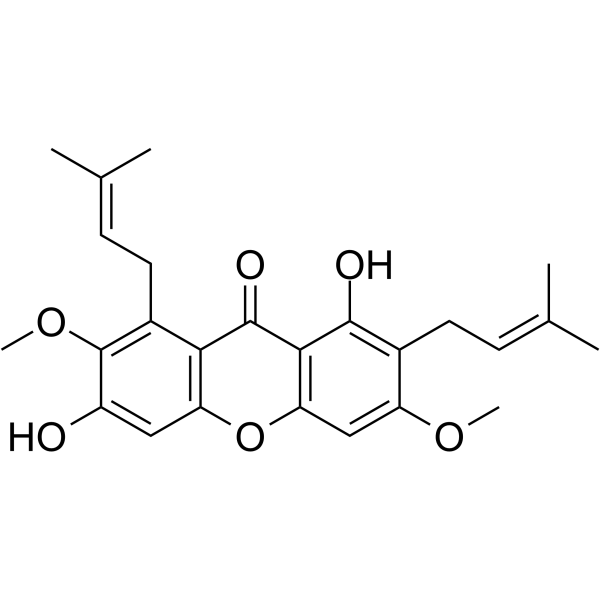
Pancixanthone A is a xanthone that can be isolated from Garcinia vieillardii. Pancixanthone A has antimalarial activity against chloroquino-resistant strains of Plasmodium falciparum with an IC50 of 1.6 μg/mL .
Isocudraniaxanthone A is a xanthone that can be isolated from Garcinia vieillardii. Isocudraniaxanthone A has antimalarial activity against chloroquino-resistant strains of Plasmodium falciparum with an IC50 of 2.3 μg/mL .
Antimalarial agent 7 is a potent inhibitor of PfATP4. PfATP4 is an essential ion pump on the parasite surface. Antimalarial agent 7 has the potential for the research of human malaria parasite, Plasmodium falciparum .
Batzelladine L is a potent Plasmodium falciparum inhibitor (IC50= 0.4 μM). Batzelladine L shows moderate cytotoxicity to HepG2 cells (CC50= 14 μM) with antimalarial properties. Batzelladine L is promising for research of antimalarial agents .
WJM664 is a potent Plasmodium falciparum PfATP4 inhibitor. WJM664 shows strong activity against malaria parasites. WJM664 blocks gamete development and transmission to mosquitoes by inhibiting PfATP4-mediated Na +-dependent ATPase activity, and acts on multiple stages of the malaria parasite life cycle .
WR-27653 (RC-12) is a derivative of Catechol with good activity against hypnozoites in the gold-standard Plasmodium cynomolgi-rhesus monkey (Macaca mulatta) model. WR-27653 has antimalarial activity .
Bulaquine (CDRI 80/53) is a potent antimalarial agent which is an analogue of Primaquine (HY-12651A). Bulaquine affects multiple metabolism pathways and shows inhibition effect on Plasmodium cynomolgi infection. Bulaquine can be used for the research of malaria .
Genz-669178 is an inhibitor for dihydroorotate dehydrogenase (DHODH) with IC50 of 0.015-0.05 μM in Plasmodium spp.. Genz-669178 inhibits P. berghei, P. falciparum strains 3D7 and Dd2 with IC50 of 0.068, 0.008 and 0.01 μM, respectively. Genz-669178 exhibits anti-malarial efficacy in P. berghei-infected mice with ED50 of 13-21 mg/kg/day. Genz-669178 exhibits good pharmacokinetic characteristics in mice .
PfPK6-IN-1 is a potent and selective PfPK6 inhibitor with an IC50 of 0.3 μM. PfPK6-IN-1 inhibits hemozoin formation, a Plasmodium-specific pathway with IC50 of 13 μM against β-hematin (βH). PfPK6-IN-1 exhibits rapid and broad-spectrum anti-malarial properties, being effective against both chloroquine-sensitive and resistant strains.PfPK6-IN-1 can be used for the study of antimalarial .
PfDHODH-IN-2, a dihydrothiophenone derivative (Compound 11), is a potent Plasmodium falciparum dihydroorotate dehydrogenase (PfDHODH) inhibitor with an IC50 of 1.11 µM. PfDHODH-IN-2 acts as an antimalarial agent and can be used for the research of malaria .
PfCLK3-IN-1 (Compound 4) is a covalent inhibitor for Plasmodium falciparumCLK3 (Pf CLK3) under alkaline conditions with an pEC50 of 7.1. PfCLK3-IN-1 reduces mature gametocytes in sexual stage parasites, and prevents transmission. PfCLK3-IN-1 inhibits P. falciparum Dd2-B2 clone with an IC50 of 239.5 nM .
Antimalarial agent 50 is an antiplasmodial compound. Antimalarial agent 50 has an effect against Plasmodium berghei induced malaria infection in mice model. Antimalarial agent 50 can regulate oxidative stress and significantly reduce the levels of inflammatory factors. Antimalarial agent 50 can be used for the research of the malaria.
Tebuquine (WR228258), a 4-aminoquinoline, is a potent antimalarial agent. Tebuquine is active against the Chloroquine (HY-17589A) sensitive HB3 strain and the Chloroquine resistant K1 strain of Plasmodium falciparum with IC50s of 0.9 nM and 20.8 nM, respectively .
Antimalarial agent 41 (Compound 17) exhibits antimalarial activity, which inhibits Plasmodium falciparum with an IC50 of 40 nM (NF54 strain) and 76 nM (K1 strain). Antimalarial agent 41 is an inhibitor for P. falciparum phosphatidylinositol-4-kinase β (Pf PI4K) and hERG channel, with an IC50 of 53 nM and 3 μM. Antimalarial agent 41 exhibits cytotoxicity to CHO cells with an IC50 of 34 μM. Antimalarial agent 41 ameliorates the malaria infection and exhibits good pharmacokinetic characters in mouse models .
DL-threo-PPMP hydrochloride is an inhibitor of sphingosine synthetase in Plasmodium falciparum. DL-threo-PPMP hydrochloride inhibits the activity of sphingosine synthetase (sphingosine synthetase) by binding to a substrate that mimics sphingosine. This inhibition leads to a rapid decline in sensitive sphingomyelin synthase (SSS) activity, selectively disrupting the interconnected tubular network of TVM in the cytoplasm of the host cell, and this inhibition also blocks the proliferation of the parasite. DL-threo-PPMP hydrochloride can be used in the study of malaria parasite biology and the search for new antimalarial strategies .
Pheanthine (Compound 2) is an antiplasmodial agent, that inhibits chloroquine-resistant Plasmodium falciparum K-1 (IC50 is 0.8 μM) and chloroquine-sensitive P. falciparum strain NF54 A19A (IC50 of 0.03 μM). Pheanthine exhibits low cytotoxicity in human lung fibrosblast (MRC-5, IC50 is 11.2 μM) and macrophages (PMM, IC50 is 8 μM) .
Carbazomycin D exhibits antituberculosis and antimalarial activities, that inhibits Plasmodium falciparum with an IC50 > 10 μg/mL, inhibits Mycobacterium tuberculosis with MIC of 25 μg/mL. Carbazomycin D exhibits cytotoxicity in cell MCF-7, KB, NCI-H187 and Vero, with IC50s of 21.3, 33.2, 12.9, and 34.3 μg/mL, respectively .
DM-1157 is an orally active asymmetric bisquinoline heme inhibitor with a IC50 of 1.6 μM and a Kd of 1.7 μM. DM-1157 binds to heme dimers in solution, inhibits β-hematin formation, suppresses hemozoin formation in the digestive vacuole of Plasmodium falciparum, accumulates in the digestive vacuole of Plasmodium falciparum, induces enlargement of the digestive vacuole of Plasmodium falciparum, and inhibits the growth of Chloroquine (HY-17589A)-sensitive and resistant Plasmodium falciparum strains. DM-1157 can be used for the research of malaria and Plasmodium falciparum-type malaria .
Isopentaquine is an orally active antimalarial agent. Isopentaquine induces mild morphological changes in the exoerythrocytic stage of Plasmodium fallax, with a ED50 of 6.7 mg/L. Isopentaquine causes degenerative changes in the development of Plasmodium oocysts in infected mosquitoes. Isopentaquine reduces the infectivity of Plasmodium falciparum gametocytes. Isopentaquine impairs sympathetic cardiovascular reflexes. Isopentaquine decreases the recurrence rate and total disease duration of Plasmodium vivax infection. Isopentaquine can be used in malaria-related research .
Antimalarial agent 62 is an orally active imidazopyridine-6-carboxamide antimalarial agent with a high resistance barrier. Antimalarial agent 62 kills trophozoite-stage Plasmodium ring forms, effectively clears dihydroartemisinin-induced dormant Plasmodium ring forms, and eliminates parasitemia in mice infected with Plasmodium yoelii. In AReBaR resistance omics screening, Antimalarial agent 62 is not affected by different target- and efflux-mediated resistance mutations and can withstand resistance selection. Antimalarial agent 62 has been applied to studies of malaria-related mechanisms .
Antimalarial agent 55 is an orally potent inhibitor of PfA-M1 and PfA-M17 aminopeptidases from Plasmodium falciparum, with Ki values of 27 nM and 81 nM, respectively. Antimalarial agent 55 exhibits potent nanomolar activity against homologous enzymes from Plasmodium vivax and Plasmodium berghei, with Ki values of 2 nM, 4 nM, 190 nM and 18 nM for Pv-M1, Pb-M1, Pv-M17 and Pb-M17, respectively. Antimalarial agent 55 possesses significant antiplasmodial activity, as well as cross-species inhibitory capacity and broad-spectrum activity that is unaffected by existing drug resistance mechanisms. Antimalarial agent 55 can be used in malaria research .
(S)-DSM1465 is a Plasmodiumdihydroorotate dehydrogenase (DHODH) inhibitor. (S)-DSM1465 exhibits potential inhibitory activity against Plasmodium falciparum and Plasmodium vivax, and can be used in malaria research .
Myrrhterpenoid O enantiomer is a enantiomer of Myrrhterpenoid O (HY-N12452). Myrrhterpenoid O is a sesquiterpenoid compound that exhibits good inhibitory activity against Plasmodium falciparum (IC50 = 21 μM) .
PROTAC DHFR Degrader-1 is a selective PROTAC degrader targeting Plasmodium falciparumDHFR-TS with a Ki of 2.01 nM. PROTAC DHFR Degrader-1 exhibits no inhibitory activity against human DHFR and suppresses the growth of Plasmodium falciparum. PROTAC DHFR Degrader-1 can be used for the research of Plasmodium falciparum and malaria .
8-Acetonylidihydrochelerythrine is a benzophenanthridine alkaloid found in the stem bark of Zanthoxylum gilletii. 8-Acetonylidihydrochelerythrine inhibits growth of Chloroquine (HY-17589A)-resistant and Chloroquine-sensitive Plasmodium falciparum strains. 8-Acetonylidihydrochelerythrine can be used for the research of malaria .
Antimalarial agent 61 is an antimalarial agent. Antimalarial agent 61 disrupts hemoglobin breakdown in Plasmodium falciparum asexual blood stage trophozoites. Antimalarial agent 61 exerts antiplasmodial activity against Chloroquine (HY-17589A)-sensitive Plasmodium falciparum parasites. Antimalarial agent 61 can be used for the research of malaria .
G6PD-IN-2 is a Plasmodium falciparumglucose-6-phosphate dehydrogenase (G6PD) inhibitor with an IC50 value of 0.2 μM. G6PD-IN-2 exerts weak inhibitory activity on Plasmodium falciparumglucose-6-phosphate dehydrogenase-6-phosphogluconolactonase (PfGluPho) with an IC50 value of 22.0 μM. G6PD-IN-2 inhibits growth of Plasmodium falciparum 3D7 strain and exhibits low cytotoxicity in hepatocytes. G6PD-IN-2 can be used for the research of malaria .
IMP-1002 is a PlasmodiumN-myristoyltransferase (NMT) inhibitor. IMP-1002 inhibits myristoylation activity, blocks parasite development. IMP-1002 can be used for the research of malaria .
LSPN954 (compound 4i) is an indole-based peptidomimetic antiplasmodial agent that exhibits submicromolar activity against both sensitive and multidrug-resistant *Plasmodium falciparum* strains, with low cytotoxicity to human cells and a high selectivity index. LSPN954 shows slow-acting inhibitory activity, allowing the initial development of *Plasmodium* followed by morphological changes, and its activity is independent of the inhibition of plastid-dependent isoprenoid biosynthesis. LSPN954 can be used in malaria research .
LSPN959 is a slow-acting indole peptidomimetic antiplasmodial agent with submicromolar activity against the Plasmodium falciparum 3D7 strain. LSPN959 does not inhibit plastid-dependent isoprenoid biosynthesis. The combination of LSPN959 with Artesunate (HY-N0193) exhibits an additive effect against Plasmodium falciparum. LSPN959 can be used in malaria research .
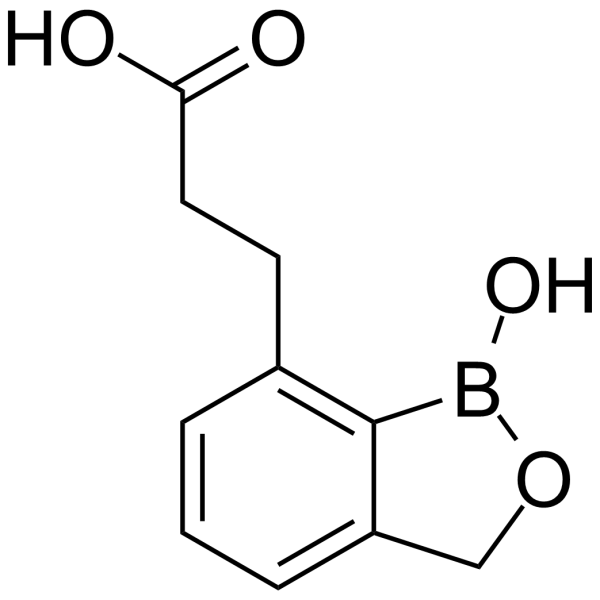
AN13762 is a benzoxaborole antimalarial agent. AN13762 augments Plasmodium falciparum stress responses. AN13762 acts against cultured and fresh Plasmodium falciparum isolates and in vivo murine malaria models. AN13762 can be used for the research of malaria .
MMV1581361 is a PfATP4 inhibitor and an orally active, transmission-blocking agent with nanomolar activity against Plasmodium falciparum blood-stage isolates. MMV1581361 disrupts sodium ion (Na +) homeostasis in Plasmodium falciparum. MMV1581361 inhibits male gamete exflagellation, reduces oocyst intensity, and blocks transmission of Plasmodium falciparum. MMV1581361 demonstrates efficacy in the humanized Plasmodium falciparum NOD scid IL2Rγ null mouse model. MMV1581361 can be used for the research of malaria .
Pf20S-IN-1 is a selective inhibitor of the 20S proteasome β5 subunit of Plasmodium falciparum. Pf20S-IN-1 exhibits antiparasitic activity against Plasmodium falciparum, with an EC50 of 20.1 nM against the Plasmodium falciparum W2 strain. Pf20S-IN-1 shows weak inhibitory effect on human 20S proteasome, has no obvious toxicity to human foreskin fibroblasts (HFF), and has a selectivity index > 25000. Pf20S-IN-1 can be used in malaria research .
Europetin (7-O-Methylmyricetin) is a natural product. Europetin can be isolated from the peels of Citrus aurantifolia. Europetin shows no antiplasmodial activity againstPlasmodium falciparum NF54 with an IC50 > 50 μM. Europetin can be used for the research of malaria .
DSM267 is a triazolopyrimidine inhibitor of Plasmodium falciparum dihydroorotate dehydrogenase (PfDHODH), with an IC50 of 38 nM, while its IC50 against human DHODH exceeds 100000 nM. DSM267 is used for the in vitro systematic screening and characterization of the resistance evolution pathways of Plasmodium falciparum to DHODH inhibitors .
KAI-407 is an orally active inhibitor of PlasmodiumPI4K kinase, which can broadly inhibit multiple stages of the parasite lifecycle. KAI-407 exhibits EC50s of for the blood stage of malignant Plasmodium of 81 nM; for the liver schizonts of P. yoelii of 88 nM; and IC50s for the liver schizonts and dormant bodies of P. cynomolgi of 0.64 μM and 0.69 μM respectively. KAI-407 can prevent Plasmodium berghei infection 100%. KAI-407 can be used for the study of vivax malaria .
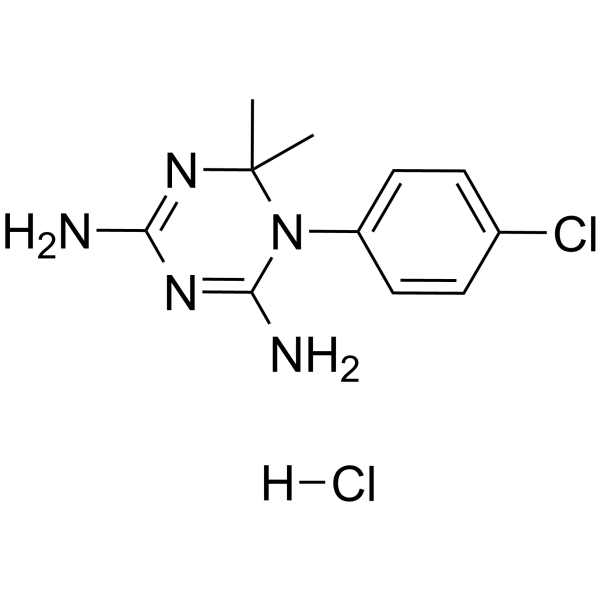
Chlorproguanil is an antifolate with an IC50 of 4.68 μM against Plasmodium falciparum female gamete formation. Chlorproguanil can be used for the research of malaria .
NSC-80141 is a Kinesin-5 inhibitor. NSC-80141 exerts selective inhibitory activity against human kinesin-5 (HsEg5) (IC50: 9.4 μM), while shows weak inhibitory activity against Plasmodium kinesin-5 (PvEg5) (IC50: 27.3 μM). NSC-80141 serves as a tool compound for distinguishing human and Plasmodium homologous proteins .
Antimalarial agent 56 is an orally active antimalarial agent. Antimalarial agent 56 inhibits the growth of both drug-sensitive and drug-resistant Plasmodium falciparum strains in vitro. Antimalarial agent 56 can be used in malaria research .
Cipargamin enantiomer (NITD609 enantiomer) is a Plasmodium falciparum inhibitor that can be characterized as a spirotetrahydro β-carboline (1S,3R stereoisomer). Cipargamin enantiomer exerts antiplasmodial activity against Plasmodium falciparum strains NF54 (IC50 of 77 nM) and K1. Cipargamin enantiomer displays low liver microsomal intrinsic clearance in mouse and human systems. Cipargamin enantiomer does not inhibit CYP2C9. Cipargamin enantiomer can be used for the research of malaria .
WR 30090 (Compound 37) is a broad-spectrum antimalarial agent that does not rely on the classical antifolate pathway. WR 30090 exhibits strong activity against a variety of chloroquine-sensitive and resistant Plasmodium falciparum strains, especially the highly resistant Vietnamese strain. WR 30090 shows high activity in mouse malaria tests, with a minimum effective dose of 5 mg/kg and a minimum cure dose of 20 mg/kg. WR 30090 can be used for research on acute malaria .
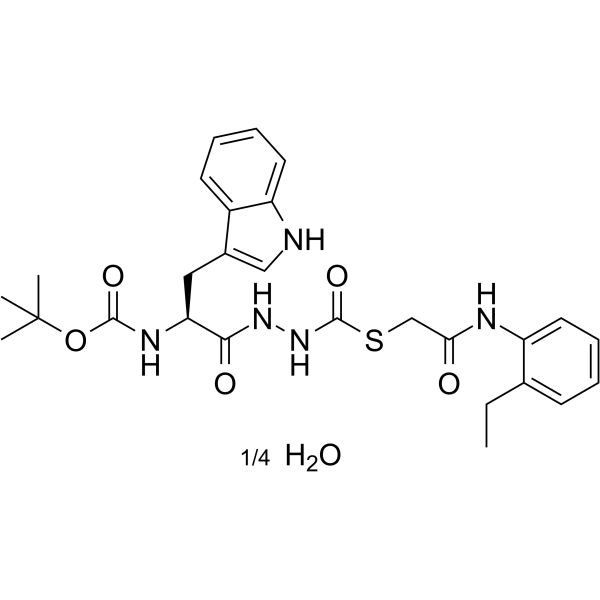
SID 26681509 quarterhydrate is a potent, reversible, competitive, and selective inhibitor of human cathepsin L with an IC50 of 56 nM. SID 26681509 quarterhydrate inhibits in vitro propagation of malaria parasite Plasmodium falciparum and inhibits Leishmania major with IC50s of 15.4 μM and 12.5 μM, respectively. SID 26681509 quarterhydrate shows no inhibitory activity against cathepsin G .
Sulfalene (Standard) is the analytical standard of Sulfalene. This product is intended for research and analytical applications. Sulfalene (Sulfametopyrazine; AS-18908) is an orally active antimalarial agent. Sulfalene competes for para-aminobenzoic acid binding in plasmodial folic acid synthesis. Sulfalene, combined with Trimethoprim (HY-B0510), clears parasites, resolves fever, and resists induced resistance against drug-sensitive and drug-resistant Plasmodium falciparum. Sulfalene can be used for the research of acute falciparum malaria and Schistosoma mansoni infection .
JMI-346 is a potent PfFP-2(Plasmodium falciparum falcipain-2 protease) inhibitor. JMI-346 inhibits the growth of CQ S (3D7; IC50=13 µM) and CQ R (RKL-9; IC50=33 µM) strains of P. falciparum. JMI-346 has the potential to be used as an anti-malarial agent .
MMV085203 is a potent Plasmodium falciparum inhibitor, with a PfTrxREC50 of 900 nM. MMV085203 exerts potent antimalarial activity against both blood‑stage and sexual‑stage Plasmodium falciparum parasites, with superior efficacy toward clinical isolates of high clonal diversity. MMV085203 modulates parasite redox homeostasis, induces ROS production, and elevates mitochondrial TCA cycle intermediates. MMV085203 can be used for the research of malaria .
PAM 1392 is active orally against Plasmodium berghei in mice, P. cynofologi and P. knowlesi in monkeys and Trypanosoma cruzi in tissue cultures of mice, and hemolytic streptococci in vitro. PAM 1392 has antimalarial and antitrypanosomal activities, which is proming for rasearch of drug-resistant malaria .
1H-pyrazole (Pyrazole) is a five-membered heterocyclic compound, and its derivatives are orally effective antimalarial and antileishmanial agents with the potential to modulate targets such as alcohol dehydrogenase and NMDA receptors. 1H-pyrazole derivatives exhibit inhibitory effects on Plasmodium berghei in infected mice and on promastigotes of Leishmania aethiopica, respectively. 1H-pyrazole can be used in research related to malaria and leishmaniasis .
MMV693183 is an orally active inhibitor of Plasmodium falciparumacetyl-CoA synthetase (AcAS), with an IC50 of 300 nM against Plasmodium falciparum. MMV693183 exhibits potent inhibitory activity against clinical isolates of malaria parasites, including Artemisinin (HY-B0094)-resistant strains. MMV693183 is metabolized in vivo into the active antimetabolite CoA-MMV693183, which exerts effects of killing asexual blood-stage parasites and blocking transmission to Anopheles mosquitoes by binding to and inhibiting the function of acetyl-CoA synthetase, thereby reducing the levels of acetyl-CoA and 4'-phosphopantetheine. In humanized mouse models, MMV693183 shows favorable in vivo efficacy, drug-like properties, and no significant cytotoxicity or off-target activity against human cells. MMV693183 is widely used in malaria-related research as a parasiticide and metabolic disruptor .
Tuberostemonine is a stenine alkaloid that can be isolated from Stemona tuberosa and Stemona sessifolia. Tuberostemonine is an antimalarial agent that has inhibitory activity against Ferredoxin-NADP + reductases (FNRs) from Plasmodium falciparum (PfFNR). Tuberostemonine can reduce the number of citric acid-induced coughs in guinea pigs. Tuberostemonine decreases bronchoalveolar lavage fluid (BALF), neutrophil and macrophage infiltration and reduces peribronchial and perivascular inflammatory cell infiltration in mouse model of acute lung inflammation. Tuberostemonine has a level of activity as a feeding deterrent .
Nanaomycin A (Standard) is the analytical standard of Nanaomycin A. This product is intended for research and analytical applications. Nanaomycin A is the first selective DNMT3B inhibitor with an IC50 of 500 nM. Nanaomycin A, a quinone antibiotics, reactivates silenced tumor suppressor genes in human cancer cells[1]. Nanaomycin A inhibits in vitro growth of the human malaria parasite Plasmodium falciparum with an IC80 value of 33.1 nM[2].
Quinoprazine is a potent inhibitor of Vaccinia virus DNA synthesis with an IC50 value of 10 μM. Quinoprazine has antimalarial activity against Plasmodium berghei and also displays antiprion potency, significantly decreases PrP S c levels - .
SCR0911 is an inhibitor of mycobacterial cytochrome bcc oxidase and Plasmodium falciparum cytochrome bc1. SCR0911 disrupts oxidative phosphorylation by binding to mycobacterial cytochrome bcc, binds to the Qi site of Plasmodium falciparum cytochrome bc1, inhibits mycobacterial cell growth and ATP synthesis, and exhibits broad-spectrum anti-mycobacterial and anti-malarial activities. SCR0911 can be used in research related to tuberculosis, malaria, and isolated persistent hypermethioninemia (iph) .
Purfalcamine is an orally active, selective Plasmodium falciparum calcium-dependent protein kinase 1 (PfCDPK1) inhibitor with an IC50 of 17 nM and an EC50 of 230 nM. Purfalcamine has antimalarial activity and causes malaria parasites developmental arrest at the schizont stage .
Nummularine B (Daechuine S27; N-Demethylamphibine H) is an anti-parasite agent. Nummularine B inhibits calmodulin-dependent phosphodiesterase activity with an IC50 of 16.8 μM. Nummularine B inhibits the growth of Plasmodium and Leishmania donovani in vitro. Nummularine B inhibits the calmodulin-dependent activity of actomyosin Ca 2+-ATPase. Nummularine B is applicable to research related to malaria and visceral leishmaniasis .
Antimalarial agent 33 (compound 5g) has antiplasmodial activity against erythrocytic and hepatic stages of Plasmodium with an EC50 of 1.1 μM for K1 P. falciparum strain. Antimalarial agent 33 demonstrats enhanced microsomal stability (T1/2=29 min). Antimalarial agent 33 has no significant cytotoxicity against primary hepatocytes .
Phomoxanthone A is a xanthone dimer, which can be isolated from Phomopsis. Phomoxanthone A exhibits antimalarial and antitubercular activities against Plasmodium falciparum (K1, multidrug-resistant strain, IC50 is 0.11 µg/mL) and Mycobacterium tuberculosis (H37Ra strain, MIC is 0.50 µg/mL). Phomoxanthone A exhibits cytotoxicity in cells KB, BC-1 and Vero, IC50 is 0.99, 0.51 and 1.4 µg/mL, respectively .
JMI-105 is a potent PfFP-2(Plasmodium falciparum falcipain-2 protease) inhibitor. JMI-105 inhibits the growth of CQ S (3D7; IC50=8.8 µM) and CQ R (RKL-9; IC50=14.3 µM) strains of P. falciparum. JMI-105 significantly decreases parasitemia and prolonged host survival in a murine model with P. berghei ANKA infection. JMI-105 has the potential to be used as an anti-malarial agent .
DS-103 is an inhibitor for HDAC that inhibits HDAC1, HDAC2, HDAC3, HDAC6 and HDAC8 with IC50s of 0.029, 0.123, 0.022, 0.367 and 9.26 μM, respectively. DS-103 inhibits Plasmodium falciparum 3D7 with IC50 of 5.08 μM. DS-103 exhibits cytotoxicity in cells A2780 and Cal27 with IC50 of 1.48 μM and 1.47 μM, reverses Cisplatin (HY-17394) resistance in A2780 and Cal27 with IC50 of 4.62 μM and 2.23 μM. DS-103 exhibits synergistic effect with Cisplatin (HY-17394), enhances Cisplatin-induced apoptosis .
Didesethyl chloroquine (Bisdesethylchloroquine) is the major metabolite of the antimalarial agent Chloroquine (HY-17589A). Didesethyl chloroquine is a potent myocardial inhibitor. Didesethyl chloroquine reduces calcium binding and accumulation in cardiac mitochondria, induces mitochondrial swelling, rupture and membrane conformational changes. Didesethyl chloroquine inhibits the growth of Plasmodium falciparum strains. Didesethyl chloroquine can be used in research related to malaria, chikungunya virus infection, and cardiovascular and cerebrovascular diseases .
D44 is a PlasmodiumFKBP35 inhibitor that selectively inhibits the FKBD35PPIase activity, with PPIaseIC50 values of 132 nM and 125 nM for Plasmodium falciparum and Plasmodium vivax, respectively. D44 exhibits antiplasmodium activity and can be used in research related to infectious diseases .
Chondroitin sulfate A disodium is a mucopolysaccharide extracted from animal cartilages such as porcine nasal cartilage, and serves as a major structural component of cartilage. Chondroitin sulfate A disodium is one of the specific receptors for the adhesion of Plasmodium falciparum-infected red blood cells in the microcirculation. Chondroitin sulfate A disodium can be used together with selenium to prepare nanoparticles for protecting cartilage against T‑2 toxin-induced damage. Chondroitin sulfate A disodium is abnormally highly expressed in ameloblastoma, and is particularly enriched in stellate reticulum-like tumor cells. Chondroitin sulfate A disodium can be applied to studies on Plasmodium infection mechanisms, cartilage protection and oral tumors .
Phebestin is a compound with antimalarial activity that has an inhibitory effect on Plasmodium and has shown good results in in vitro and in vivo experiments. It can also bind to related enzymes of Plasmodium.
Euquinine is an odorless salt that can be used as
a substitute for quinine. Euquinine has anti-Plasmodium falciparum activity.
Euquinine can be used for the study of multidrug resistance and bioavailability
of Plasmodium falciparum .
Diuvaretin is an antimalarial agent and a C-phenylated dihydrochalcone. Diuvaretin can be isolated from the roots of U. acuminata. Diuvaretin increases the activity of Caspase-3 and triggers Apoptosis. Diuvaretin exhibits antiparasitic activity against Plasmodium falciparum. Diuvaretin can be used in the research of promyelocytic leukemia and malaria .
4-(3-Phenylpropoxy)aniline (Compound 3g) is an antimalarial agent targeting Plasmodium. 4-(3-Phenylpropoxy)aniline is promising for research of multidrug-resistant Plasmodium strains .
Dehydroabietinol is a SYK inhibitor with an IC50 of 46.4 μM. Dehydroabietinol inhibits the growth of Trypanosoma cruzi epimastigotes, Leishmania braziliensis promastigotes and Leishmania infantum promastigotes. Dehydroabietinol indirectly inhibits the growth of Plasmodium falciparum, alters the erythrocyte membrane, and induces spherostomatocyte transformation and endovesicle formation. Dehydroabietinol can be used in studies related to immune-mediated diseases, Chagas disease, leishmaniasis and malaria .
Mirincamycin (hydrochloride) (U-24729 A), a compound used to inhibit malaria, has a protective effect against the early liver stages of Plasmodium but fails to kill dormant liver stages of Plasmodium in a rhesus monkey model.
Purine phosphoribosyltransferase-IN-2 is a potent inhibitor of the Plasmodium falciparum ((Pf)), Plasmodium vivax ((Pv)) and Trypanosoma brucei ((Tbr)) 6-oxopurine phosphoribosyltransferase (PRT), with Kis of 30, 20 and 2 nM, respectively .
MMV675968 is an inhibitor of Acinetobacter baumannii dihydrofolate reductase (AbDHFR) with an IC50 of 8.5 nM, and it exhibits selectivity against human DHFR. MMV675968 inhibits dihydrofolate reductase in Cryptosporidium, Plasmodium, and Escherichia coli, disrupting the thymidylate cycle and folate biosynthesis pathway. MMV675968 inhibits the growth of multiple A. baumannii strains, including clinical isolates and environmental isolates. MMV675968 is applicable to research related to A. baumannii infections .
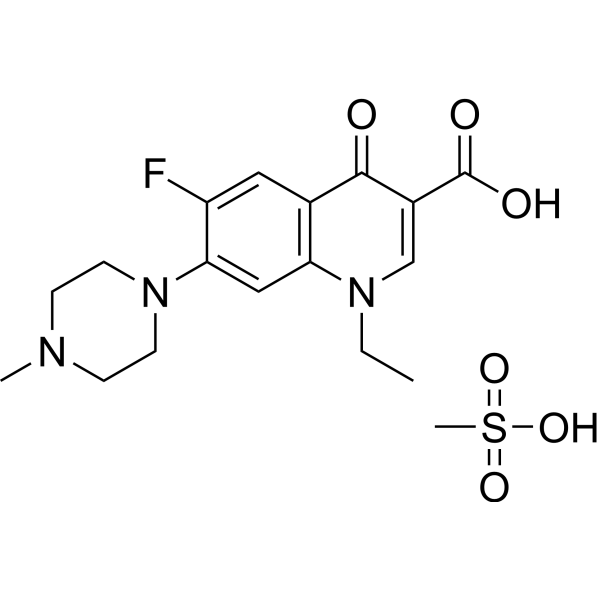
Pefloxacin (Pefloxacinium) mesylate is a broad spectrum antibiotic. Pefloxacin blocks DNA replication by inhibiting DNA gyrase. Pefloxacin mesylate inhibits DNA relaxation catalyzed by topoisomerase I with an IC50 of 45 μg/mL. Pefloxacin mesylate exhibits antibacterial activity against Escherichia coli, Pseudomonas aeruginosa, and Bacteroides fragilis with MIC90s of 0.12, 4, and 16 mg/L, respectively. Pefloxacin mesylate has anti-Plasmodium yoelii infection activity. Pefloxacin mesylate increase UVA-induced edema and immunesuppression. Pefloxacin mesylate can be used for infection studies .
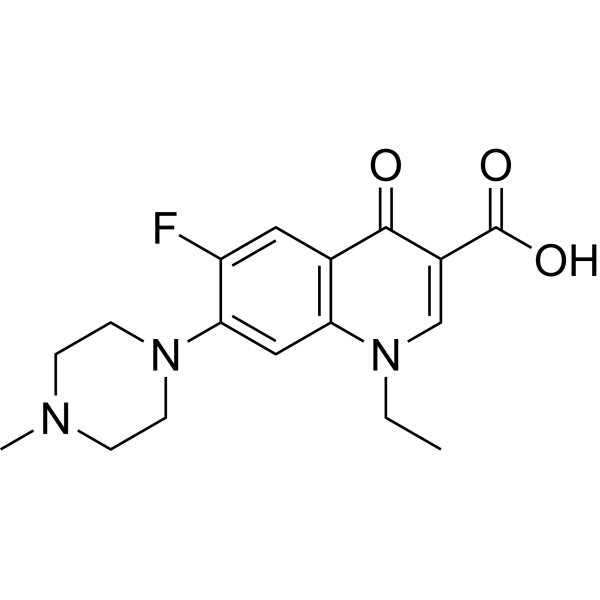
Pefloxacin (Pefloxacinium) is a broad spectrum antibiotic. Pefloxacin blocks DNA replication by inhibiting DNA gyrase. Pefloxacin inhibits DNA relaxation catalyzed by topoisomerase I with an IC50 of 45 μg/mL. Pefloxacin exhibits antibacterial activity against Escherichia coli, Pseudomonas aeruginosa, and Bacteroides fragilis with MIC90s of 0.12, 4, and 16 mg/L, respectively. Pefloxacin has anti-Plasmodium yoelii infection activity. Pefloxacin increase UVA-induced edema and immunesuppression. Pefloxacin can be used for infection studies .
HDAC1-IN-12 is a Plasmodium falciparum HDAC1 (PfHDAC1) inhibitor with an IC50 of 4.1 nM against Pf3D7. HDAC1-IN-12 inhibits PfHDAC1, upregulates histone H3 acetylation in P. falciparum parasites, downregulates malaria invasion-related gene expression, and exhibits favorable safety profiles, improved physicochemical properties, and potent in vivo antimalarial activity. HDAC1-IN-12 can be used for the research of malaria .
Cladophorol A is a cyclic GMP-AMP synthase (cGAS) inhibitor. Cladophorol A binds to the conserved adenosine nucleobase binding site within the cGAS active site to inhibit its catalytic activity. Cladophorol A effectively inhibits the overactivation of the cGAS-STING pathway with an IC50 of 370 nM. Cladophorol A inhibits asexual blood-stage Plasmodium falciparum with an EC50 of 0.7 μg/mL. Cladophorol A can be used for the researches of inflammatory disease and malaria .
Nopol is a quinoline derivative based on nopol that has inhibitory activity against the asexual blood stage of Plasmodium falciparum. Derivatives with different structures have different activities against different Plasmodium strains, and some derivatives have submicromolar EC50 values in specific strains.
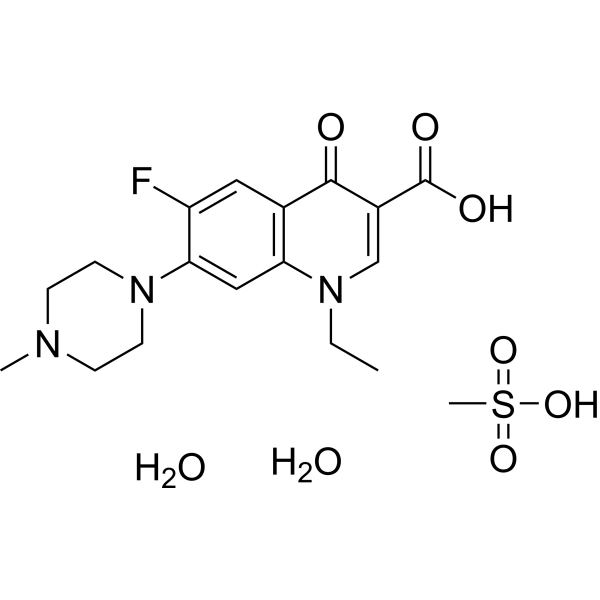
Pefloxacin (Pefloxacinium) mesylate dihydrate is a broad spectrum antibiotic. Pefloxacin mesylate dihydrate blocks DNA replication by inhibiting DNA gyrase. Pefloxacin mesylate dihydrate inhibits DNA relaxation catalyzed by topoisomerase I with an IC50 of 45 μg/mL. Pefloxacin mesylate dihydrate exhibits antibacterial activity against Escherichia coli, Pseudomonas aeruginosa, and Bacteroides fragilis with MIC90s of 0.12, 4, and 16 mg/L, respectively. Pefloxacin mesylate dihydrate has anti-Plasmodium yoelii infection activity. Pefloxacin mesylate dihydrate increase UVA-induced edema and immunesuppression. Pefloxacin mesylate dihydrate can be used for infection studies .
Antimalarial agent 51 (Compound 2) is an orally active antimalarial compound. Antimalarial agent 51 blocks nutrient uptake by Plasmodium by inhibiting the plasmodium surface anion channel (PSAC). Antimalarial agent 51 significantly inhibits the growth of Plasmodium under nutrient-restricted conditions. Combination of antimalarial agent 51 with the residual transport inhibitor PRT-2 can enhance the antimalarial effect. Antimalarial agent 51 can be used in the study of malaria targeting the PSAC channel .
(R,R)-Polysphorin is a neolignan antimalarial agent that is isolated from the dried leaves and stems of Rhaphidophora decursiva. (R,R)-Polysphorin inhibits the growth of chloroquine-sensitive and chloroquine-resistant Plasmodium falciparum clones in vitro by mediating free radical damage to key cellular components via conjugated double bonds. (R,R)-Polysphorin also exhibits cytotoxicity against human oral epidermoid carcinoma cells .
Antimalarial agent 59 is an antimalarial agent. Antimalarial agent 59 inhibits the growth of Chloroquine (HY-17589A)-resistant FcB1 strain of Plasmodium falciparum with an IC50 of 46 nM. Antimalarial agent 59 also shows cytotoxic activity against cancer cells. Antimalarial agent 59 can be used for the researches of malaria and ovarian cancer .
Antimalarial agent 48 (Compound 15a) is a triazine-class compound with antimalarial activity, showing inhibitory concentrations of 280 nM against Plasmodium falciparum K1 and 290 nM against Plasmodium falciparum FCR3. Antimalarial agent 48 is expected to be useful for research in the field of antimalarial infections .
ELQ-453 is an inhibitor targeting the Qo site of the Plasmodium falciparum cytochrome bc1 complex (CytB) with an IC50 value of 0.57 nM. ELQ-453 blocks the mitochondrial function of the parasite, and suppresses Plasmodium infection in mosquitoes. ELQ-453 is promising for research of malaria .
SC83288 is a Plasmodium falciparumPfDNMT2 inhibitor with an IC50 of 7 μM. SC83288 disrupts the epigenetic regulation of malaria parasites, blocks DNA replication and nuclear division, arrests the development of the asexual blood stage, induces the formation of pyknotic morphology in malaria parasites, and does not affect cytokinesis after nuclear division or parasite egress. SC83288 is applicable to malaria-related research .
Primaquine-d3 (diphosphate) is the deuterium labeled Primaquine diphosphate. Primaquine Diphosphate (Primaquine phosphate), an 8-aminoquinoline, exerts a broad spectrum of activities against various stages of parasitic malaria. Primaquine Diphosphate remains as the only agent that destroys late hepatic stages and latent tissue forms of Plasmodium vivax and Plasmodium ovale .
SAL-0010042 is the inhibitor for Plasmodiumphosphodiesterase β (PDEβ), that inhibits the hydrolysis of cAMP and cGMP (IC50=48.9 nM) in gametocytes, activates PKG, and inhibits the growth and development of Plasmodium (IC50 for 3D7 and Dd2 is 142 nM and 218 nM). SAL-0010042 inhibits hPDE5 and hPDE6 with IC50 of 632 nM and 73 nM .
Epoxyazadiradione is a limonoid purified from neem (Azadirachta indica) fruits. Epoxyazadiradione inhibits the tautomerase activity of MIF of both human (huMIF) and malaria parasites (Plasmodium falciparum (PfMIF) and Plasmodium yoelii (PyMIF)) non-competitively in a reversible fashion (Ki, 2.11-5.23 μM). Epoxyazadiradione has the potential against proinflammatory reactions induced by MIF of both malaria parasites and human .
AN3661, a potent antimalarial lead compound, targets a Plasmodium falciparum cleavage and polyadenylation specificity factor homologue subunit 3 (PfCPSF3). AN3661 inhibits Plasmodium falciparum laboratory-adapted strains (mean IC50=32 nM), Ugandan field isolates (mean ex vivo IC50=64 nM), and murine P. berghei and P. falciparum infections .
PfGSK3/PfPK6-IN-1 is a dual Plasmodium serine/threonine kinase inhibitor, with an IC50 of 97 nM against PfGSK3 and 8 nM against PfPK6 of Plasmodium falciparum. PfGSK3/PfPK6-IN-1 inhibits the proliferation of blood-stage parasites of Plasmodium falciparum 3D7. PfGSK3/PfPK6-IN-1 shows low cytotoxicity to hepatocytes at a concentration of 200 nM, and reduces cell viability at a concentration of 2 μM. PfGSK3/PfPK6-IN-1 is applicable to malaria-related research .
Ascaridole (Standard) is the analytical standard of Ascaridole. This product is intended for research and analytical applications. Ascaridole is an anthelmintic and also has antimalarial activity .
Dabcyl-LNKRLLHETQ-Edans (Fluorigenic PEXEL peptide) is a biological active peptide. (This FRET substrate peptide for Plasmepsin V (PMV) is derived from the conserved Plasmodium Export Element (PEXEL) motif of Histidine-Rich Protein II (HRPII). PMV is an ER aspartic protease that recognizes and cleaves the RXL sequence within the PEXEL motif of proteins exported by human malaria parasite Plasmodium falciparum, allowing them to translocate into host erythrocytes.)
trans-Cinnamic anhydride is a Parasite inhibitor tnat can be isolated from Cinnamomum zeylanicum and exhibits moderate activity against Plasmodium falciparum .
Amythiamicin A is an antimicrobial antibiotic against Gram-positive bacteria (including methicillin-resistant Staphylococcus aureus (MRSA)) and activity against Plasmodium falciparum .
Amythiamicin C is an antimicrobial antibiotic against Gram-positive bacteria (including methicillin-resistant Staphylococcus aureus (MRSA)) and activity against Plasmodium falciparum .
Floxacrine (HOE-991) is a dihydroacridinedione derivative with antimalarial activity. Floxacrine can be used to study its activity against different Plasmodium species .
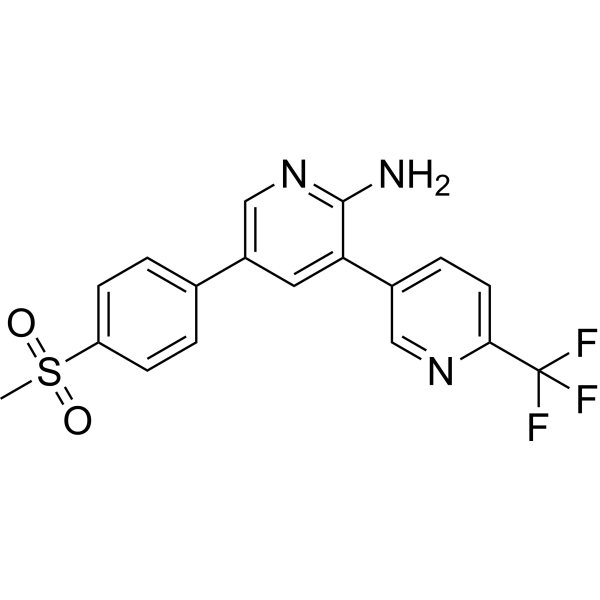
MMV390048 is a representative of a new chemical class of PlasmodiumPI4K inhibitor (Kdapp=0.3 µM). MMV390048 binds to the ATP binding site of Plasmodium PI4K and does not bind to other P. falciparum and human kinases apart from human PIP4K2C, thus alleviating potential kinase-mediated safety concerns. MMV390048 is an antimalarial agent .
RO-09-4609 exhibits antimicrobial activity, that inhibits Candida albicans, Trypanosoma brucei and Plasmodium vivax through inhibition of N-myristoyl transferase .
trans-Clopenthixol ((E)-Clopenthixol) is an antibiotic, without neuroleptic effect. trans-Clopenthixol can be used to inhibit Pseudomonas aeruginosa and Plasmodium falciparum in vitro .
PI4Kβ/PKG-IN-2 (Compound 20) is an orally active dual inhibitor of Plasmodium phosphatidylinositol 4-kinase beta (PI4Kβ) and cGMP-dependent protein kinase (PKG). PI4Kβ/PKG-IN-2 has potent inhibitory effects on Plasmodium. PI4Kβ/PKG-IN-2 is promising for research of malaria .
Hexacyclinol has moderate anti-Gram-positive bacteria activity, 4-40 μg/mL can inhibit the production of oxidants by polymorphonuclear neutrophils (PMNL) stimulated by zymosan. Hexacyclinol inhibits the growth of L-930 and K 562 cells with IC50s of 1.4 μg/mL and 0.4 μg/mL, respectively, and the IC50 of HeLa cells is 10 μg/mL. Hexacyclinol also has an anti-Plasmodium effect, and its IC50 for Plasmodium falciparum is 2.4 μg/mL .
Aplasmomycin is a boron-containing macrodiolide antibiotic. Aplasmomycin shows antimicrobial activity against Gram-positive bacteria and exhibits inhibitory activity against plasmodium infections in vivo .
trans-Clopenthixol ((E)-Clopenthixol) dihydrochloride is an antibiotic agent, without neuroleptic effect. trans-Clopenthixol dihydrochloride can be used to inhibit Pseudomonas aeruginosa and Plasmodium falciparum in vitro .
Brevicompanine B, a diketopiperazine alkaloid, is an antiplasmodial agent. Brevicompanine B is active against the malaria parasite Plasmodium falciparum 3D7 IC50 of 35 mg/mL .
TCMDC-137332 is a compound that exhibits antimalarial activity against Plasmodium falciparum with an IC50 value of 7 nM. TCMDC-137332 can be utilized for the research of malaria .
RUPB-61 is a potent Plasmodium falciparum cGMP-dependent protein kinase (PfPKG) inhibitor with an IC50 value of 13 nM. RUPB-61 shows antiparasitic activity .
SpdSyn binder-1 is a weak binder, which binds in the active site of plasmodium falciparum spermidine synthase. SpdSyn binder-1 can be used for the research of malaria .
Xestoquinone ((+)-Xestoquinone) is a Plasmodium falciparum protein kinase Pfnek-1 inhibitor (IC50=1.1 μM). Xestoquinone is promising for research of antimalarial agents .
1-(26-Hydroxyhexacosanoyl)-glycerol is a potent antimalarial agent. 1-(26-Hydroxyhexacosanoyl)-glycerol shows antimalarial activity with an IC50 value of 9.48 µM for Plasmodium falciparum .
Arterolane (OZ 277) (maleate) is an orally active antimalarial. Arterolane exhibits potent activity against erythrocytic stages of P. falciparum and Plasmodium vivax. Arterolane (maleate) is promising for research of falciparum malaria .
Artelinic acid, a derivative of Artemisinin, is an antimalarial agent for the treatment of multidrug resistant strains of Plasmodium falciparum. Artelinic acid can be administered by various routes of administration, including intravenous, intramuscular and oral routes .
Azlocillin sodium salt (Sodium azlocillin), a semisynthetic penicillin, is a broad spectrum β-lactam antibiotic. Azlocillin sodium salt shows antipseudomonal activity, and also potent against the malarial parasitePlasmodium falciparum .
CHMFL-PI4K-127 (compound 15g) is an orally active, potent and high selective PfPI4K(Plasmodium falciparum PI4K kinase) inhibitor, with an IC50 of 0.9 nM. CHMFL-PI4K-127 exhibits potent activity against 3D7 Plasmodium falciparum, with an EC50 of 25.1 nM. CHMFL-PI4K-127 shows antimalaria efficacy .
Rutarin is a Coumarin (HY-N0709) derivative with antimalarial and antifungal activities. Rutarin inhibits Plasmodium falciparum with an IC50 of 88 μg/mL. Rutarin also inhibits Coniophora cerebella .
PfDHODH-IN-3 (compound 2) is an orally active PfDHODH inhibitor with strong antimalarial activity (IC50=47 nM). PfDHODH-IN-3 can inhibit the growth of Plasmodium in animals .
Strictosamide is a compound that can be isolated from Nauclea officinalis. Strictosamide has various activities such as anti-inflammatory, analgesic, anti-Plasmodium, antifungal, and promoting wound healing .
MMV666693 is a translation inhibitor specific for Plasmodium falciparum. MMV666693 has low cytotoxicity in human fibroblasts (IC50>32 µM) and can be used in the development of antimalarial drugs .
ELQ-650 is a quinolone derivative, that exhibits antimicrobial activity against several protozoan parasites, including the intraerythrocytic parasites Plasmodium and Babesia. ELQ-650 attenuates babesiosis in immunosuppressed mice .
ELQ-596 is a quinolone derivative, that exhibits antimicrobial activity against several protozoan parasites, including the intraerythrocytic parasites Plasmodium and Babesia. ELQ-596 attenuates babesiosis in immunosuppressed mice .
Z-Antiepilepsirine is an amide alkaloid that can be found in Piper capense L.f. Z-Antiepilepsirine shows antiplasmodial activity with an IC50 value of 27 µM for W2 strain of Plasmodium falciparum .
4-Propylcatechol is an Allylpyrocatechol (HY-124127) analog. 4-Propylcatechol shows anti-malarial activity against Plasmodium falciparum CDC-1 with an IC50 of 32 µM .
Dianellin is an orally active anti-malarial agent found in Kniphofia foliosa. Dianellin binds to Plasmodium falciparum plasmepsin II and shows anti-malarial activity in mice. Dianellin can be used for the research of malaria .
MMV019662 is a PfNCR1 inhibitor. MMV019662 specifically interact with PfNCR1. MMV019662 induces opening of the SSD. MMV019662 can be used in the research of Plasmodium falciparum infection .
Trioxacarcin B (TXN-B) is a potent cytotoxic agent and DNA-targeted inhibitor. Trioxacarcin B disrupts DNA function and induces apoptosis in cancer cells. Trioxacarcin B not only effectively inhibits the growth of various Gram-positive and Gram-negative bacteria as well as Plasmodium falciparum, but also blocks the colony formation of cancer stem cells, significantly reduces tumor volume and prolongs survival in preclinical in vivo models. The activity of Trioxacarcin B is highly dependent on its intact spiro-epoxide structure; it loses efficacy once this moiety undergoes hydrolysis, and Trioxacarcin B shows no activity against fungi, microalgae and small RNA viruses. Trioxacarcin B can be used for research on bacterial infections, malaria, and various cancers including colon cancer and melanoma .
Decoquinate is an orally active, selective inhibitor of the mitochondrial bc1 complex, targeting Eimeria spp. sporozoites and first generation schizonts, and Plasmodium spp. Decoquinate inhibits electron transfer by competitively binding to the mitochondrial cytochrome b system, blocking the parasite's energy metabolism, thereby inhibiting its development and reproduction. Decoquinate has significant anticoccidial activity, preventing intestinal damage and improving host growth performance, and also has inhibitory effects on the liver and blood stages of Plasmodium. Decoquinate is mainly used in veterinary research to prevent and treat coccidiosis in ruminants and poultry .
MMV390048 (Standard) is the analytical standard of MMV390048 (HY-106005). This product is intended for research and analytical applications. MMV390048 is a representative of a new chemical class of Plasmodium PI4K inhibitor (Kdapp=0.3 μM). MMV390048 binds to the ATP binding site of Plasmodium PI4K and does not bind to other P. falciparum and human kinases apart from human PIP4K2C, thus alleviating potential kinase-mediated safety concerns. MMV390048 is an antimalarial agent .
WEHI-326 is a potent antimalarial agent targeting Plasmodium falciparum ROM8 and CSC1 proteins (IC50=0.006 μM). WEHI-326 is promising for research of malaria .
Puberulic acid- 13C8 is the 13C-labeled Puberulic acid. Puberulic acid possesses anti-malarial activity with an IC50 value of 0.050 μM against Plasmodium falciparum K1 (chloroquine-resistant) .
CWHM-1008 is a potent and orally active antimalarial agent, with EC50 values of 46 and 21 nM against agent-sensitive Plasmodium falciparum 3D7 and drug-resistant Dd2 strains, respectively .
Scoulerine ((-)-Scoulerine; Discretamine) hydrochloride is a multi-target inhibitor with anti-tumor and antioxidant activities. Scoulerine hydrochloride mainly targets the PI3K/Akt/mTOR signaling axis and α1D-adrenergic receptor, disrupts microtubule structure, and induces cell cycle arrest and apoptosis. Scoulerine hydrochloride effectively inhibits mitochondrial dehydrogenase activity, targets GABA receptors and BACE1, and suppresses the proliferation, migration, invasion, epithelial-mesenchymal transition and stem cell properties of cancer cells. Scoulerine hydrochloride also exhibits multiple pharmacological activities including anti-Plasmodium falciparum, antibacterial, antiemetic and antitussive effects, and regulates endoplasmic reticulum stress and mitochondrial function (modulates Bax, Bcl-2 and cytochrome c). Scoulerine hydrochloride is applicable to research related to leukemia, ovarian cancer, and colorectal cancer .
Chaparrinone is a quassinoid that can be isolated from the root of Eurycoma harmandiana. Chaparrinone has antimalarial and cytotoxic activities against Plasmodium falciparum and P-388 cells (IC50: 0.037 and 0.34 μg/mL respectively) .
Phosphodiesterase-IN-1 (Compound 7) is a phosphodiesterase (PDE) inhibitor with anti-Plasmodium activity. Phosphodiesterase-IN-1 has antiproliferative activity against P. falciparum (strain 3D7) with an IC50 value of 0.64 μM .
AQ-13 dihydrochloride (Standard) is the analytical standard of AQ-13 dihydrochloride (HY-100358). This product is intended for research and analytical applications. AQ-13 dihydrochloride is an aminoquinoline antimalarial agent that is effective against drug-resistant strains of Plasmodium falciparum.
DSM74 (compound 21) is an orally active and potent antimalarial inhibitor of PfDHODH (IC50=0.28 μM) and PbDHODH (IC50=0.38 μM). DSM74 inhibits the growth of Plasmodium in animals .
PfFAS-II inhibitor 1 (Compound 3) is a Plasmodium falciparum type II fatty acid biosynthesis pathway (PfFAS-II) inhibitor, with an IC50 of 0.63 μM for PfFabI enzyme. PfFAS-II inhibitor 1 has antimalarial activity .
FNDR-20123 is a safe, first-in-class, and orally active anti-malarial HDAC inhibitor with IC50s of 31 nM and 3 nM for Plasmodium and human HDAC, respectively. FNDR-20123 exerts anti-malarial activity against Plasmodium falciparum asexual stage (IC50=41 nM) and sexual blood stage (IC50=190 nM for male gametocytes). FNDR-20123 inhibits HDAC1, HDAC2, HDAC3, HDAC6, and HDAC8 (IC50=25/29/2/11/282 nM, respectively.) and inhibits Class III HDAC isoforms at nanomolar concentrations .
LysRs-IN-2 is a lysyl-tRNA synthetase (KRS) inhibitor with IC50s of 0.015 μM and 0.13 μM for Plasmodium falciparum lysyl-tRNA synthetase (PfKRS) and Cryptosporidium parvum lysyl-tRNA synthetase (CpKRS), respectively .
Artemotil (β-Arteether) has antimalarial activity for the treatment of chloroquine-resistant Plasmodium falciparum malaria with an IC50 of 1.61 nM. Artemotil also has central nervous system (CNS) neurotoxicity and anorectic toxicity in rats, dogs and monkeys .
Zymolyase, Arthrobacter luteus, is a zymolyase mainly found in Arthrobacter luteus. Enzyme, an enzyme with beta-1,3 glucanase activity, removes the electron-dense outer layer of the Plasmodium karinii cell wall, exposing an electron-lucent layer .
Purine phosphoribosyltransferase-IN-1 (Compound (S,R)-48) is a potent inhibitor of the Plasmodium falciparum (Pf), P. vivax (Pv) and Trypanosoma brucei (Tbr) 6-oxopurine purine phosphoribosyltransferases (PRTs), with Ki values of 50, 20, and 2 nM, respectively .
Evernic Acid is an orally active thioredoxin reductase 1 (TrxR1) inhibitor and antiproliferative agent. Evernic Acid inhibits the proliferation and migration of human breast cancer cells. Evernic Acid blocks the NF-κB pathway by inhibiting p65 nuclear translocation and IκBα phosphorylation, thereby suppressing downstream inflammatory mediators. Evernic Acid acts as an antioxidant, anti-inflammatory agent and neuroprotective agent, protects neurons from cell death, mitochondrial dysfunction and oxidative stress damage, reduces astrocyte activation, and ameliorates dopaminergic neuron loss and neuroinflammation. Evernic Acid inhibits enoyl reductases FabI and FabZ of Plasmodium falciparum. Evernic Acid downregulates the expression of lasB and rhlA genes in Pseudomonas aeruginosa, inhibits quorum sensing and biofilm formation, and exerts antibacterial activity against Gram-positive bacteria, Gram-negative bacteria and fungi. Evernic Acid is applicable to research related to breast cancer, Parkinson's disease, bacterial infections and fungal infections.
FNDR-20123 free base is a safe, first-in-class, and orally active anti-malarial HDAC inhibitor with IC50s of 31 nM and 3 nM for Plasmodium and human HDAC, respectively. FNDR-20123 free base exerts anti-malarial activity against Plasmodium falciparum asexual stage (IC50=41 nM) and sexual blood stage (IC50=190 nM for male gametocytes). FNDR-20123 free base inhibits HDAC1, HDAC2, HDAC3, HDAC6, and HDAC8 (IC50=25, 29, 2, 11, and 282 nM, respectively) and inhibits Class III HDAC isoforms at nanomolar concentrations .
trans-Clopenthixol (dihydrochloride) (Standard) is the analytical standard of trans-Clopenthixol (dihydrochloride). This product is intended for research and analytical applications. trans-Clopenthixol ((E)-Clopenthixol) dihydrochloride is an antibiotic agent, without neuroleptic effect. trans-Clopenthixol can be used to inhibit Pseudomonas aeruginosa and Plasmodium falciparum in vitro[1][2].
VF-149 is a Ribonucleotide reductase inhibitor. VF-149 significantly inhibits Plasmodium falciparum growth with an IC50 of 6.4 μM. VF-149 has antimalarial and antitumor activities. VF-149 can be used for malarial infections and cancers research .
Hexyl gallates (Hexyl 3,4,5-trihydroxybenzoate) shows antibacterial activity and inhibits the production of rhamnolipid and pyocyanin by inhibiting RhlR . Hexyl gallate, a alkyl ester derivative of gallic acid, exhibits potent antimalarial activity against Plasmodium falciparum, with IC50 of 0.11 mM .
Azlocillin (sodium salt) (Standard) is the analytical standard of Azlocillin (sodium salt). This product is intended for research and analytical applications. Azlocillin sodium salt (Sodium azlocillin), a semisynthetic penicillin, is a broad spectrum β-lactam antibiotic. Azlocillin sodium salt shows antipseudomonal activity, and also potent against the malarial parasitePlasmodium falciparum .
Hydroquinine (Dihydroquinine) is an anti-bacterial agent that inhibits both Gram-positive and Gram-negative bacteria. Hydroquinine inhibits the growth of multidrug-resistant pseudomonas aeruginosa via the suppression of the arginine deiminase pathway genes. Hydroquinine inhibits Plasmodium falciparum and Plasmodium berghei. Hydroquinine displays anti-malarial and demelanizing activities. Hydroquinine effectively induces specific RND-type efflux pump systems in Pseudomonas aeruginosa, particularly the MexCD-OprJ and MexXY efflux pumps. Hydroquinine inhibits Pseudomonas aeruginosa adhesion and biofilm formation. Hydroquinine serves as a precursor for derivatives such as C9 epihydroquinine, 9-acetoxy-10,11-dihydroquinine, and 10,11-dihydroquinine monohydrochloride .
Ganaplacide (KAF156) is a first-in-class,
orally active imidazolopiperazine antimalarial agent.
Ganaplacide is active against a broad range of Plasmodium
species, including drug-resistant parasites. Ganaplacide is parasiticidal
against both asexual and sexual blood stages as well as the liver stages of the
parasite .
Decoquinate (Standard) is the analytical standard of Decoquinate. This product is intended for research and analytical applications. Decoquinate is a quinolone derivative that can be used for research of coccidiosis in domestic ruminants. Decoquinate also has potent activity against both Plasmodium hepatic development and red cell replication .
Gallinamide A TFA is a linearly depositing peptide and a potent inhibitor of cathepsin L (CatL) (IC50: 17.6 pM). Gallinamide A TFA inhibits SARS-CoV-2 infection by inhibiting CatL (EC50: 28 nM). Gallinamide A TFA also inhibits Plasmodium falciparum (IC50: 50 nM) .
Ganaplacide (KAF156) hydrochloride is a first-in-class, orally active imidazolopiperazine antimalarial agent. Ganaplacide hydrochloride is active against a broad range of Plasmodium species, including drug-resistant parasites. Ganaplacide hydrochloride is parasiticidal against both asexual and sexual blood stages as well as the liver stages of the parasite .
Phytol ((E)-Phytol) is an orally active diterpenoid alcohol that can be extracted from chlorophyll. Phytol has antioxidant, anti-inflammatory, anti-schistosomiasis and antibacterial activities .
2-Amino-1-phenylethanol (Standard) is the analytical standard of 2-Amino-1-phenylethanol. This product is intended for research and analytical applications. 2-Amino-1-phenylethanol is a pharmaceutical intermediate that can be used for the synthesis of antimalarial agents and β2-adrenergic receptor agonists.
Sporogen AO-1 is a fungal metabolite originally isolated from the fungusAspergillus oryzae. Sporogen AO-1 has significant antimalarial activity againstplasmodium falciparum, with an IC50 value of 1.53 μM, and also has certain cytotoxicity .
Phytol (Standard) is the analytical standard of Phytol. This product is intended for research and analytical applications. Phytol ((E)-Phytol) is an orally active diterpenoid alcohol that can be extracted from chlorophyll. Phytol has antioxidant, anti-inflammatory, anti-schistosomiasis and antibacterial activities[1][2][3].
KAR425 is a potent and orally active antimalarial agent. KAR425 shows antimalarial activity against the Chloroquine-sensitive (CQS) D6, the Chloroquine-resistant (CQR) Dd2, and 7G8 strains of Plasmodium falciparum, with IC50 values of 62 nM, 55 nM, and 60 nM, respectively .
Hydroquinine (Standard) is the analytical standard of Hydroquinine. Hydroquinine (Dihydroquinine) is an anti-bacterial agent that inhibits both Gram-positive and Gram-negative bacteria. Hydroquinine inhibits the growth of multidrug-resistant pseudomonas aeruginosa via the suppression of the arginine deiminase pathway genes. Hydroquinine inhibits Plasmodium falciparum and Plasmodium berghei. Hydroquinine displays anti-malarial and demelanizing activities. Hydroquinine effectively induces specific RND-type efflux pump systems in Pseudomonas aeruginosa, particularly the MexCD-OprJ and MexXY efflux pumps. Hydroquinine inhibits Pseudomonas aeruginosa adhesion and biofilm formation. Hydroquinine serves as a precursor for derivatives such as C9 epihydroquinine, 9-acetoxy-10,11-dihydroquinine, and 10,11-dihydroquinine monohydrochloride .
Cladosporin is an antibiotic and an an antifungal metabolite that can be produced in good yield in the mycelium of Cladosporium cladosporioid. Cladosporin exhibits inhibitory activity against various dermatophytes, plant pathogens, and bacteria. Cladosporin also exhibits antimalarial activity through inhibition of cytoplasmic lysine-tRNA synthetase of Plasmodium (PfKrs1) .
PI4KIIIbeta-IN-11 is an inhibitor of PI4KIIIβ, with a mean pIC50 value of at least 9.1. PI4KIIIβ plays a key role in diseases research of RNA viruses and Plasmodium falciparum .
Guanfu base H (Atisinium chloride) is a diterpenoid alkaloid isolated from Aconitum coreanum and has antiplasmodial activity against the malarial Plasmodium falciparum strains TM4/8.2 (wild type) and K1CB1 with IC50 values of 4 μM and 3.6 μM, respectively .
Miaosporone A, an angucyclic quinone, exhibits antimalarial activity against Plasmodium falciparum K1 and antibacterial activity against Mycobacterium tuberculosis with respective IC50 values of 2.5 and 2.4 μM and displays cytotoxic activities against both cancerous (MCF-7 and NCI-H187) and nonmalignant (Vero) cells .
Obafluorin is a β-lactone antibiotic. Obafluorin inhibits threonyl-tRNA synthetase (PfThrRS) with an IC50 of 4.3 nM. Obafluorin inhibits the aminoacylation activity of EcThrRS and ObaO. Obafluorin exhibits Fe 3+-enhanced antibacterial activity. Obafluorin can be used in studies related to infections caused by bacterial and parasites such as Plasmodium .
SNX-0723 is a potent Hsp90 Inhibitor with anti-Plasmodium activity. SNX-0723 shows high binding affinity for HsHsp90 and PfHsp90 with Kis of 4.4 and 47 nM, respectively. SNX-0723 inhibits liver-stage P. berghei ANKA parasites with the EC50 of 3.3 μM .
LIN28 inhibitor LI71 enantiomer is the less active enantiomer of LIN28 inhibitor LI71 (HY-123905). LIN28 inhibitor LI71 is a LIN28 inhibitor that effectively inhibits LIN28:let-7 binding (IC50: 7 μM). LIN28 inhibitor LI71 can abolish LIN28-mediated oligouridylation of let-7 precursor (IC50: 27 μM). LIN28 inhibitor LI71 has potential application value in LIN28-driven cancer research. LIN28 inhibitor LI71 inhibits the interaction of cold shock protein of Plasmodium falciparum (PfCoSP) with DNA and α/β tubulin and has an inhibitory effect on Plasmodium falciparum .
PI4K-IN-3 (Compound 27) is an orally active PI4K inhibitor with an IC50 of 1.9 nM for Plasmodium vivax PI4K. PI4K-IN-3 has no hERG channel inhibition and mammalian cytotoxicity. PI4K-IN-3 has significant selectivity against the human MINK1 and MAP4K4 kinases but with low selectivity against human PI3Kα and PI4Kβ. PI4K-IN-3 has potent antimalarial activity and significantly reduces parasitaemia in NSG mice mouse models of Plasmodium falciparum malaria .
HDAC-IN-88 (Compound HJ-9) is the inhibitor for HDAC that inhibits HDAC6, HDAC1, HDAC2, HDAC8 and HDAC3 with IC50s of 0.226, 1.103, 2.308, 3.255 and 3.864 μM, respectively. HDAC-IN-88 inhibits the proliferation of cancer cell HepG2, HCT116 and MV4-11 with IC50 of 5.47, 9.78 and 0.38 μM, inhibits the migration of HCT116, arrests the cell cycle at G0/G1 phase, and induces apoptosis and autophagy in MV4-11. HDAC-IN-88 reduces ROS level and mitochondrial membrane potential. HDAC-IN-88 exhibits antimalarial activity that inhibits P. falciparum 3D7 with EC50 of 165 nM. HDAC-IN-88 also exhibits anti-angiogenic activity .
Atovaquone (Standard) is the analytical standard of Atovaquone. This product is intended for research and analytical applications. Atovaquone (Atavaquone) is a potent, selective and orally active inhibitor of the parasite’s mitochondrial cytochrome bc1 complex. Atovaquone is against human and P. falciparum cytochrome bc1 activity with IC50 values of 460 nM and 2.0 nM, respectively. Atovaquone is an antimalarial agent and has the potential for the investigation of neumocystis pneumonia, toxoplasmosis, malaria, and babesia .
FTI 276 TFA is a farnesyltransferase (FTase) inhibitor with an IC50 of 0.5 nM, and it exhibits selectivity for FTase over geranylgeranyltransferase I (GGTase I). FTI 276 TFA blocks the farnesylation of H-Ras and K-Ras4B, causes inactive Ras-Raf complexes to accumulate in the cytoplasm, and inhibits constitutive MAPK activation. FTI 276 TFA reduces the number, incidence and volume of tumors, and restricts the growth of tumors expressing activated K-ras. FTI 276 TFA can be used in research related to pulmonary adenoma .
Atovaquone (Atavaquone) is a potent, selective and orally active inhibitor of the parasite’s mitochondrial cytochrome bc1 complex. Atovaquone is against human and P. falciparum cytochrome bc1 activity with IC50 values of 460 nM and 2.0 nM, respectively. Atovaquone is an antimalarial agent and has the potential for the investigation of neumocystis pneumonia, toxoplasmosis, malaria, and babesia .
8-Deoxygartanin, a prenylated xanthones from G. mangostana, is a selective inhibitor of butyrylcholinesterase (BChE) . 8-Deoxygartanin exhibits antiplasmodial activity with an IC50 of 11.8 μM for the W2 strain of Plasmodium falciparum . 8-Deoxygartanin inhibits NF-κB (p65) activation with an IC50 of 11.3 μM .
Pelorol ((-)-Pelorol) is a sesquiterpene found in the tropical marine sponge Dactylospongia elegans. Pelorol has weak antitrypanosomal activity with an IC50 of 17.4 μg/mL and antiplasmodial activity against Plasmodium falciparum clones K1 and NF54 with IC50 values of 786 ng/mL and 1911 ng/mL, respectively. Pelorol is promising for research of parasitic diseases, such as trypanosomiasis and malaria .
Ethylhydrocupreine hydrochloride (Optochin hydrochloride) is a quinine derivate with antimicrobial activity against S. pneumoniae. Ethylhydrocupreine hydrochloride also possesses antimalarial activity against Plasmodium falciparum, with an IC50 of 25.75 nM. Ethylhydrocupreine hydrochloride is a Gallus gallus taste 2 receptors (ggTas2r1, ggTas2r2 and ggTas2r7) agonist .
Ethylhydrocupreine (Optochin) is a quinine derivate with antimicrobial activity against S. pneumoniae. Ethylhydrocupreine also possesses antimalarial activity against Plasmodium falciparum, with an IC50 of 25.75 nM. Ethylhydrocupreine is a Gallus gallus taste 2 receptors (ggTas2r1, ggTas2r2 and ggTas2r7) agonist .
L-Canaline is a nonprotein amino acid stored in many leguminous plants. L-Canaline is a cytotoxic metabolite catalyzed by L-canavanine and its arginase. L-Canaline is a potent and irreversible inhibitor of ornithine aminotransferase. L-Canaline inhibits the growth of the malaria parasite Plasmodium falciparum with an IC50 of 297 nM. L-Canaline has anticancer and antiproliferative effects .
Chloranthalactone C (Compound 43), a lindenane-type sesquiterpenoid, is an antimalarial agent. Chloranthalactone C can be isolated from plant Chloranthus japonicas Sieb. Chloranthalactone C inhibits Chloroquine (HY-17589A)-resistant Plasmodium falciparum strain Dd2 growth. Chloranthalactone C can be used for parasitic infections research .
Ac-{Cpg}-Thr-Ala-{Ala(CO)}-Asp-{Cpg}-NH2 (compound 40) is a potent Plasmodium subtilisin-like protease 1 (SUB1) inhibitor. SUB1-IN-1 shows IC50 values of 12 nM and 10 nM against P. vivax and P. falciparum SUB1 (Pv- and PfSUB1), respectively .
NE58043 (Compound 21) is a nitrogen-containing bisphosphonate compound. NE58043 has no significant inhibitory activity against Entamoeba histolytica and Plasmodium falciparum with IC50 > 200 μM. NE58043 shows a LD50 of 171 μM for human nasopharyngeal carcinoma KB cells. NE58043 can be used for the research of cancer and infection, such as nasopharyngeal carcinoma .
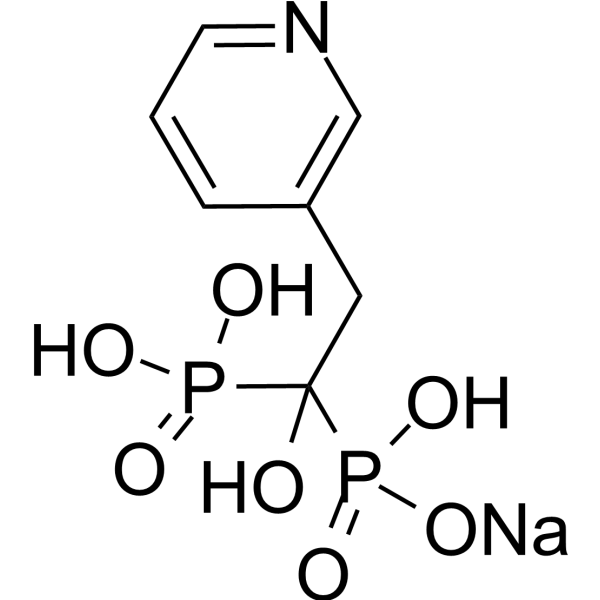
Risedronic acid (Risedronate) sodium, a bisphosphonate, is a potent anti-resorption agent that inhibits osteoclast-mediated bone resorption and changes the bone metabolism. Risedronic acid sodium suppresses osteoblast differentiation and induced caspase- and isoprenoid depletion-dependent apoptosis. Risedronic acid sodium inhibits blood stages of Plasmodium falciparum (IC50 of 20.3 μM). Risedronic acid sodium inhibits the transfer of the farnesyl pyrophosphate group to parasite proteins .
PfGSK3/PfPK6-IN-2 is a potent dual PfGSK3/PfPK6(Plasmodium falciparum GSK3/PK6) inhibitor (IC50: 172 nM and 11 nM respectively). PfGSK3/PfPK6-IN-2 can be used in the research of Malaria .
2-Amino-1-phenylethanol is a pharmaceutical intermediate that can be used for the synthesis of antimalarial agents and β2-adrenergic receptor agonists .
Anti-Mouse IL-2 Antibody (JES6-1A12) is an anti-mouse IL-2 IgG1 monoclonal antibody. Anti-Mouse IL-2 Antibody (JES6-1A12) can inhibit Treg amplification and enhance Th1 response. Anti-Mouse IL-2 Antibody (JES6-1A12) can form a complex with IL-2 for experimentation. Anti-Mouse IL-2 Antibody (JES6-1A12) can be used for research on infection conditions such as malaria .
Antiparasitic agent-17 (compound 5u) is an orally active antiparasitic agent. Antiparasitic agent-17 inhibits Chloroquine sensitive (Pf3D7) and Chloroquine resistant (PfK1) strain with IC50s of 0.96 μM and 1.67 μM, respectively .
Antimalarial agent 52 is an orally active formation of synthetic hemozoin (β-hematin) inhibitor with an IC50 of 6.6 μM. Antimalarial agent 52 exhibits in vitro antiplasmodial activity against P. falciparumPf3D7, PfDd2 strains and P. knowlesi with IC50s of 6.1, 6.4 and 3.3 nM. Antimalarial agent 52 remain highly effective against multidrug-resistant strains and demonstrates curative activity in the P. berghei mouse model .
Antimalarial agent 25 is an orally active 1,4-naphthoquinones derivative with antimalarial activity. Antimalarial agent 25 shows cytotoxicity against P. falciparum. Antimalarial agent 25 inhibits P. burghei induced parasitemia in vivo .
MMV009085 is a potent PfHT1 (Plasmodium falciparum hexose transporter)-specific inhibitor and a potential anti-malarial agent . MMV009085 is also a human glucose transporter inhibitor, it has high potency in inhibiting both glucose uptake (IC50: 2.6 μM in glucose uptake assay) and growth of the parasites (EC50: 1.23±0.04 μM against 3D7) .
Ganaplacide hydrochloride (Standard) is the analytical standard of Ganaplacide (hydrochloride) (HY-108024A). This product is intended for research and analytical applications. Ganaplacide (KAF156) hydrochloride is a first-in-class, orally active imidazolopiperazine antimalarial agent. Ganaplacide hydrochloride is active against a broad range of Plasmodium species, including drug-resistant parasites. Ganaplacide hydrochloride is parasiticidal against both asexual and sexual blood stages as well as the liver stages of the parasite .
Antimalarial agent 49 is an orally active antimalarial compound. Antimalarial agent 49 inhibits growth of Pf3D7 and PfK1 strains (IC50: 0.84 μM and 0.4 μM respectively). Antimalarial agent 49 has antimalarial activity and inhibits the development of P. berghei liver stages. Antimalarial agent 49 can be used in the study of Plasmodium infection .
Sulfadoxine-d3 is a deuterium labeled Sulfadoxine (HY-B0439). Sulfadoxine is a sulfonamide that is used, usually in combination with Pyrimethamine(HY-18062), for multidrug-resistant Plasmodium falciparum and P. vivax inhibition. Unlike PYR, Sulfadoxine has no impact on HIV replication or MT-2 cell cycle progression. But also Sulfadoxine exhibits suppression on respiratory, and urinary tract infections .
Risedronic acid (Standard) (Risedronate (Standard)) is the analytical standard of Risedronic acid (HY-B0148). This product is intended for research and analytical applications. Risedronic acid (Risedronate) is a bisphosphonate and potent antiresorptive agent. Risedronic acid induces Apoptosis. Risedronic acid inhibits the transfer of farnesyl pyrophosphate groups to parasite proteins. Risedronic acid inhibits osteoclast-mediated bone resorption and alters bone metabolism. Risedronic acid inhibits blood-stage Plasmodium falciparum (IC50 of 20.3 μM).
PfSUB1-IN-1 (compound 4c) is a plasmodium falciparum subtilisin-like serine protease 1 (PfSUB1) Inhibitor (IC50: 15 nM). PfSUB1 is an antimalarial target. PfSUB1-IN-1 inhibits the growth of a genetically modified P. falciparum line expressing reduced levels of PfSUB1 13-fold more efficiently compared to a wild-type parasite line .
Cycloguanil (Chlorguanide triazine) is a dihydrofolate reductase (DHFR) inhibitor with an IC50 of 10.8 μM against human DHFR. Cycloguanil blocks the folate metabolic pathway, thereby affecting nucleotide synthesis and interfering with DNA replication. Cycloguanil inhibits DHFR in Plasmodium and is thus used in malaria research. Cycloguanil also potently inhibits DHFR in human cancer cells and blocks the transcriptional activity of STAT3, thereby exhibiting anticancer activity .
Ethylhydrocupreine (hydrochloride) (Standard) is the analytical standard of Ethylhydrocupreine (hydrochloride). This product is intended for research and analytical applications. Ethylhydrocupreine hydrochloride (Optochin hydrochloride) is a quinine derivate with antimicrobial activity against S. pneumoniae. Ethylhydrocupreine hydrochloride also possesses antimalarial activity against Plasmodium falciparum, with an IC50 of 25.75 nM. Ethylhydrocupreine hydrochloride is a Gallus gallus taste 2 receptors (ggTas2r1, ggTas2r2 and ggTas2r7) agonist .
Cycloguanil (Chlorguanide triazine) hydrochloride is a dihydrofolate reductase (DHFR) inhibitor with an IC50 of 10.8 μM against human DHFR. Cycloguanil hydrochloride blocks the folate metabolic pathway, thereby affecting nucleotide synthesis and interfering with DNA replication. Cycloguanil inhibits DHFR in Plasmodium and is thus used in malaria research. Cycloguanil hydrochloride also potently inhibits DHFR in human cancer cells and blocks the transcriptional activity of STAT3, thereby exhibiting anticancer activity .
SJ000025081 is a dihydropyridine and acts as a potent antimalarial agent. SJ000025081 results in an obvious suppression of the parasitemia in a murine malaria model infected with P. yoelii .
MMV019313 is a potent, non-bisphosphonate inhibitor of farnesyl/geranylgeranyl diphosphate synthase (FPPS/GGPPS) with an IC50 of 0.82 µM. MMV019313 has activity against P. falciparum (Parasite) .
Deacylketoconazole (N-Deacetylketoconazole; R-39519) is an orally active metabolite of Ketoconazole (HY-B0105). Deacylketoconazole exhibits antifungal and antibacterial activity. Deacylketoconazole is cytotoxic in rats hepatocyte .
ACT-451840 is an orally active, potent and low-toxicity compound, showing activity against sensitive and resistant plasmodium falciparum strains. ACT-451840 targets all asexual blood stages of the parasite, has a rapid onset of action. ACT-451840 behaves in a way similar to artemisinin derivatives, with very rapid onset of action and elimination of parasite. ACT-451840 can be used for the research of malarial .
DHFR-IN-20 (Compound LA1) is a Plasmodium falciparum dihydrofolate reductase (DHFR) inhibitor, with Kis of 0.16, 0.30, 6.6 nM for PfDHFR-WT, PfDHFR-QM, HsDHFR. DHFR-IN-20 has antimalarial activities (IC50: 1.4 nM and 1.6 μM for P. falciparum carrying the wild-type (TM4/8.2) and the quadruple mutant (V1/S) PfDHFR enzyme .
TPE-MI (Tetraphenylethene maleimide) is a thiol probe for measuring unfolded protein load and proteostasis in cells (the excitation wavelength is 350 nm and the emission wavelength is 470 nm). TPE-MI can report imbalances in proteostasis in induced pluripotent stem cell models of Huntington disease, as well as cells transfected with mutant Huntington exon 1 before the formation of visible aggregates. TPE-MI also detects protein damage following dihydroartemisinin research of the malaria parasites Plasmodium falciparum .
PI4Kβ/PKG-IN-1 (Compound 19) is an orally active dual inhibitor targeting Plasmodium phosphatidylinositol 4-kinase beta (PI4Kβ) and cGMP-dependent protein kinase (PKG). PI4Kβ/PKG-IN-1 exhibits potent antiplasmodial activity. PI4Kβ/PKG-IN-1 is promising for research of malaria .
Antileishmanial agent-21 (compound 4e) is an antileishmanial agent that targets the Leishmania pteridine reductase 1 (Lm-PTR1). Antileishmanial agent-21 has an anti-folate mechanism, and folic acid and leucovorin can reverse the anti-leishmanial activity of Antileishmanial agent-21. Antileishmanial agent-21 inhibits the Chloroquine (HY-17589A)-resistant strain of Plasmodium falciparum (RKL9) with an IC50 of 0.0198-0.096 μM .
SufS-IN-1, a (2R,3R)-3-ethoxycarbonylaziridine-2-carboxylic acid (EAC), is a selective Cysteine desulfurase type II (SufS) inhibitor. SufS-IN-1 significantly inhibits the SufS activity by covalently binding to the cofactor PLP to form a stable PLP-ligand conjugates. SufS-IN-1 can be used for pathogenic microorganisms research, such as Plasmodium falciparum, Staphylococcus aureus and Mycobacterium tuberculosis .
beta-Mangostin (β-Mangostin) is a xanthone compound present in Cratoxylum arborescens, with antibacterial and antimalarial activities. beta-Mangostin exhibits antimycobacterial activity against Mycobacterium tuberculosis with an MIC of 6.25 μg/mL. beta-Mangostin possesses in vitro antimalarial activity against Plasmodium falciparum, with an IC50 of 3.00 μg/mL. beta-Mangostin has potent anticancer activity against various cancers (such as hepatocellular carcinoma, leukaemic) .
Risedronic acid-d4 (Risedronate-d4) is the deuterium labeled Risedronic acid (HY-B0148). Risedronic acid (Risedronate) is a bisphosphonate and potent antiresorptive agent. Risedronic acid induces Apoptosis. Risedronic acid inhibits the transfer of farnesyl pyrophosphate groups to parasite proteins. Risedronic acid inhibits osteoclast-mediated bone resorption and alters bone metabolism. Risedronic acid inhibits blood-stage Plasmodium falciparum (IC50 of 20.3 μM) .
Lactucin (Standard) is the analytical standard of Lactucin. This product is intended for research and analytical applications. Lactucin is an anti-inflammatory agent. Lactucin induces cancer cell apoptosis. Lactucin also shows analgesic, anticancer and antimalarial activities [4].
Lactucin is an anti-inflammatory agent. Lactucin induces cancer cell apoptosis. Lactucin also shows analgesic, anticancer and antimalarial activities .
TCMDC-135051 is a highly selective and potent protein kinase PfCLK3 inhibitor with low off-target toxicity. TCMDC-135051 prevents trophozoite-to-schizont transition, disrupts transcription and reduces transmission to the mosquito vector. TCMDC-135051 has antiparasiticidal activity (EC50=320 nM) .
TCMDC-135051 hydrochloride is a highly selective and potent protein kinase PfCLK3 inhibitor with low off-target toxicity. TCMDC-135051 hydrochloride prevents trophozoite-to-schizont transition, disrupts transcription and reduces transmission to the mosquito vector. TCMDC-135051 hydrochloride has antiparasiticidal activity (EC50=320 nM) .
TCMDC-135051 TFA is a highly selective and potent protein kinase PfCLK3 inhibitor with low off-target toxicity. TCMDC-135051 TFA prevents trophozoite-to-schizont transition, disrupts transcription and reduces transmission to the mosquito vector. TCMDC-135051 TFA has antiparasiticidal activity (EC50=320 nM) .
BION106 is a dihydrofolate reductasethymidylate synthase (DHFR-TS) PROTAC degrader. BION106 exhibits extremely strong anti-malarial activity with a Ki and toxicity of 2.68 nM and 0.2 μM against Plasmodium falciparum, and > 100 μM and 44.2 μM in mammalian cells. BION106 can be used for the study of antimalarial parasites (Blue: Idasanutlin ligand (HY-15676); Pink: DHFR-TS ligand (HY-153007); Black: Linker (HY-W021401)) .
DXR-IN-4 (Compound 12a) is the inhibitor for 1-deoxy-D-xylulose 5-phosphate reductoisomerase (DXR). DXR-IN-4 inhibits DXR in Plasmodium falciparum Pf DXR, Escherichia coli Ec DXR, and Mycobacterium tuberculosis Mt DXR with IC50s of 18, 4.9 and 89 nM, respectively. DXR-IN-4 exhibits antimalarial activity that inhibits P. falciparum strains 3D7 and Dd2 with IC50 of 11 μM and 12 μM .
Cycloguanil hydrochloride (Standard) is the analytical standard of Cycloguanil hydrochloride (HY-12784A). This product is intended for research and analytical applications. Cycloguanil hydrochloride is a dihydrofolate reductase (DHFR) inhibitor with an IC50 of 10.8 μM against human DHFR. Cycloguanil hydrochloride blocks the folate metabolic pathway, thereby affecting nucleotide synthesis and interfering with DNA replication. Cycloguanil hydrochloride inhibits DHFR in Plasmodium and is thus used in malaria research. Cycloguanil hydrochloride also potently inhibits DHFR in human cancer cells and blocks the transcriptional activity of STAT3, thereby exhibiting anticancer activity .
Cycloguanil-d6 (Chlorguanide triazine-d6) hydrochloride is the deuterium labeled Cycloguanil hydrochloride (HY-12784A). Cycloguanil hydrochloride is a dihydrofolate reductase (DHFR) inhibitor with an IC50 of 10.8 μM against human DHFR. Cycloguanil hydrochloride blocks the folate metabolic pathway, thereby affecting nucleotide synthesis and interfering with DNA replication. Cycloguanil hydrochloride inhibits DHFR in Plasmodium and is thus used in malaria research. Cycloguanil hydrochloride also potently inhibits DHFR in human cancer cells and blocks the transcriptional activity of STAT3, thereby exhibiting anticancer activity .
Penicinoline (Marinamide) (Compound 1), a pyrrolyl 4-quinolinone alkaloid, is a microbial secondary metabolite. Penicinoline can be isolated from endophytic fungus Penicillium sp. Penicinoline has antimalarial activity against Chloroquine (HY-17589A) sensitive strain (pf3d7) and against Chloroquine resistant strain (pfDd2) of plasmodium falciparum. Penicinoline also has strong insecticidal activity against Aphis gossypii and selective anticancer effect with significant cytotoxicity for 95-D and HepG2 cells .
Micrococcin P1 is a macrocyclic peptide antibiotic and is a potent hepatitis C virus (HCV) inhibitor with an EC50 range of 0.1-0.5 μM . Micrococcin P1 has in vitro antibacterial activity against Gram-positive bacterial strains. The MIC values of Micrococcin P1 against S. aureus 1974149, E. faecalis 1674621 and S. pyogenes 1744264 are 2 μg/mL, 1 μg/mL and 1 μg/mL, respectively . Micrococcin P1 is also a potent inhibitor of the malaria parasitePlasmodium falciparum .
Cycloguanil-d4 (Chlorguanide triazine-d4) hydrochloride is the deuterium labeled Cycloguanil hydrochloride (HY-12784A). Cycloguanil hydrochloride is a dihydrofolate reductase (DHFR) inhibitor with an IC50 of 10.8 μM against human DHFR. Cycloguanil hydrochloride blocks the folate metabolic pathway, thereby affecting nucleotide synthesis and interfering with DNA replication. Cycloguanil hydrochloride inhibits DHFR in Plasmodium and is thus used in malaria research. Cycloguanil hydrochloride also potently inhibits DHFR in human cancer cells and blocks the transcriptional activity of STAT3, thereby exhibiting anticancer activity .
Cycloguanil-d6 (Chlorguanide triazine-d6) is the deuterium labeled Cycloguanil (HY-12784). Cycloguanil is a dihydrofolate reductase (DHFR) inhibitor with an IC50 of 10.8 μM against human DHFR. Cycloguanil blocks the folate metabolic pathway, thereby affecting nucleotide synthesis and interfering with DNA replication. Cycloguanil inhibits DHFR in Plasmodium and is thus used in malaria research. Cycloguanil also potently inhibits DHFR in human cancer cells and blocks the transcriptional activity of STAT3, thereby exhibiting anticancer activity .
1H-pyrazole (Standard) is the analytical standard of 1H-pyrazole. This product is intended for research and analytical applications. 1H-pyrazole (Pyrazole) is a five-membered heterocyclic compound, and its derivatives are orally effective antimalarial and antileishmanial agents with the potential to modulate targets such as alcohol dehydrogenase and NMDA receptors. 1H-pyrazole derivatives exhibit inhibitory effects on Plasmodium berghei in infected mice and on promastigotes of Leishmania aethiopica, respectively. 1H-pyrazole can be used in research related to malaria and leishmaniasis .
Anti-inflammatory agent 40 is a potential and orally active anti-malarial and anti-inflammatory agent. Anti-inflammatory agent 40 inhibits carrageenan induced paw swelling in vivo.
Frenolicin B is a covalent enzyme inhibitor and an orally active antiparasitic agent, with an IC50 of 0.2 μM against human Prx1. Frenolicin B selectively inhibits Glutaredoxin 3 via covalent modification of the active-site cysteines Cys159/Cys261. Frenolicin B selectively inhibits Peroxiredoxin 1 via covalent modification of the active-site cysteines Cys83/Cys173. Frenolicin B can be used in research related to colon cancer, breast cancer, lung cancer and malaria .
CR-1-31-B is a synthetic rocaglate and a potent eIF4A inhibitor. CR-1-31-B exhibits powerful inhibitory effects over eIF4A by perturbing the interaction between eIF4A and RNA, sequentially impeding initiation during protein synthesis. CR-1-31-B perturbs association of Plasmodium falciparum eIF4A (PfeIF4A) with RNA. CR-1-31-B induces apoptosis of neuroblastoma and gallbladder cancer cells .
HDAC-IN-76 (compound 6i) is a histone deacetylase (HDAC) inhibitor. HDAC-IN-76 IC50 values of 30 nM and 98 nM for Pf3D7 (chloroquine (HY-17589A) drug-susceptible strain) and PfDd2 (chloroquine (HY-17589A) drug-resistant strain), has a highly potent antimalarial activity against asexual blood-stage Plasmodium, respectively, and exhibits selective inhibition against parasites, with IC50 values of 7 nM and 9 nM for human HDAC1 and HDAC6, respectively, while inhibiting PfHDAC1 .
3,4,5'-Trihydroxy-3'-methoxy-trans-stilbene (Compound 3) is a stilbenoid compound found in Stuhlmannia moavi. 3,4,5'-Trihydroxy-3'-methoxy-trans-stilbene exerts weak proliferative inhibitory activity and antimalarial activity with IC50 values of 54 and 27 μM against A2780 human ovarian cancer cells and Plasmodium falciparum. 3,4,5'-Trihydroxy-3'-methoxy-trans-stilbene can be used for researches of ovarian cancer and malaria .
Cycloguanil-d6 (Chlorguanide triazine-d6) nitrate is the deuterium labeled Cycloguanil nitrate. Cycloguanil nitrate is a dihydrofolate reductase (DHFR) inhibitor with an IC50 of 10.8 μM against human DHFR. Cycloguanil nitrate blocks the folate metabolic pathway, thereby affecting nucleotide synthesis and interfering with DNA replication. Cycloguanil nitrate inhibits DHFR in Plasmodium and is thus used in malaria research. Cycloguanil nitrate also potently inhibits DHFR in human cancer cells and blocks the transcriptional activity of STAT3, thereby exhibiting anticancer activity .
Borrelidin (Treponemycin) is a bacterial and eukaryal threonyl-tRNA synthetase inhibitor which is a nitrile-containing macrolide antibiotic isolated from Streptomyces rochei . Borrelidin is an inhibitor of Cdc28/Cln2 of the budding yeast, with an IC50 of 24 μM . Borrelidin is a potent angiogenesis inhibitor, with an IC50 of 0.8 nM. Borrelidin induces apoptosis in the tube-forming cells . Borrelidin has strong antimalarial activities, with IC50s of 1.9 nM and 1.8 nM against K1 and FCR3 strains of Plasmodium falciparum, respectively .
Halofantrine (SKF-102886 hydrochloride; WR-171669 hydrochloride) is a blocker that delays the delayed rectifier potassium current by inhibiting human ERG channels, and it is a potent antimalarial agent with oral activity. Halofantrine inhibits the Cap1-dependent oxidative stress response of Candida albicans, suppresses ROS responses, and enhances the antifungal (Fungal) activity of oxidative damage agents. Halofantrine exhibits antifungal activity in the Galleria mellonella model, and shows antimalarial activity against Plasmodium strains both in vitro and in animal models. Halofantrine can be used in studies related to invasive candidiasis, falciparum malaria, and vivax malaria .
Mollicellin K is a depsidone that can be isolated from the fungus Chaetomium brasiliense. Mollicellin K exhibits antimicrobial activity against Myobacterium tuberculosis, antimalarial activity (IC50 = 1.2 μM) against Plasmodium falciparum as well as antifungal property (IC50 = 1.2 μM) against Candida albicans. Mollicellin K is cytotoxic against KB (IC50 = 1.9 μM), BC1 (IC50 = 6.8 μM), NCI-H187 (IC50 = 0.35 μM), and five cholangiocarcinoma cell lines. Mollicellin K also has an MIC of 12.5 μM for tuberculosis .
Halofantrine hydrochloride (SKF-102886 hydrochloride; WR-171669 hydrochloride) is a blocker that delays the delayed rectifier potassium current by inhibiting human ERG channels, and it is a potent antimalarial agent with oral activity. Halofantrine hydrochloride inhibits the Cap1-dependent oxidative stress response of Candida albicans, suppresses ROS responses, and enhances the antifungal (Fungal) activity of oxidative damage agents. Halofantrine hydrochloride exhibits antifungal activity in the Galleria mellonella model, and shows antimalarial activity against Plasmodium strains both in vitro and in animal models. Halofantrine hydrochloride can be used in studies related to invasive candidiasis, falciparum malaria, and vivax malaria .
beta-Mangostin (Standard) is the analytical standard of beta-Mangostin. This product is intended for research and analytical applications. beta-Mangostin (β-Mangostin) is a xanthone compound present in Cratoxylum arborescens, with antibacterial and antimalarial activities. beta-Mangostin exhibits antimycobacterial activity against Mycobacterium tuberculosis with an MIC of 6.25 μg/mL. beta-Mangostin possesses in vitro antimalarial activity against Plasmodium falciparum, with an IC50 of 3.00 μg/mL. beta-Mangostin has potent anticancer activity against various cancers (such as hepatocellular carcinoma, leukaemic) .
Antiparasitic agent-22 (Compound 24) is a pan antiparasitic agent, that inhibits T. Brucei, L. infantum, L. tropica promastigotes (IC50 of 2.41, 5.95, 8.98 μM), L. infantum amastigotes (IC50 of 8.18 μM) and P. falciparum W2 strain (IC50 of 0.155 μM). Antiparasitic agent-22 exhibits low cytotoxicity against THP1, with CC50 of 64.16 μM .
Halofantrine hydrochloride (Standard) is the analytical standard of Halofantrine hydrochloride. This product is intended for research and analytical applications. Halofantrine hydrochloride (SKF-102886 hydrochloride; WR-171669 hydrochloride) is a blocker that delays the delayed rectifier potassium current by inhibiting human ERG channels, and it is a potent antimalarial agent. Halofantrine hydrochloride inhibits the Cap1-dependent oxidative stress response of Candida albicans, suppresses ROS responses, and enhances the antifungal (Fungal) activity of oxidative damage agents. Halofantrine hydrochloride exhibits antifungal activity in the Galleria mellonella model, and shows antimalarial activity against Plasmodium strains both in vitro and in animal models. Halofantrine hydrochloride can be used in studies related to invasive candidiasis, falciparum malaria, and vivax malaria.
Dehatrine is a dibenzylisoquinoline alkaloid with antiplasmodial activity. Dehatrine can be found in the Indonesian medicinal plant Beilschmiedia madang. Dehatrine is applicable to malaria-related research .
Gum Arabic is an orally active complex branched polysaccharide. Gum Arabic can be isolated from the Acacia senegal tree. Gum Arabic upregulates the expression of maturation markers (CD86, CD40, and CD54), promotes ERK1/2 phosphorylation, and inhibits Apoptosis. Gum Arabic exhibits antimalarial effects against Plasmodium berghei ANKA. Gum Arabic exhibits hepatoprotective, renal, and cardiovascular protective activities. Gum Arabic improves obesity. Gum Arabic is commonly used as a stabilizer and thickener. Gum Arabic can be used in the research of brain tumor imaging .
Pefloxacin (Standard) (Pefloxacinium (Standard)) is the analytical standard of Pefloxacin (HY-B0147). This product is intended for research and analytical applications. Pefloxacin (Pefloxacinium) is a broad spectrum antibiotic. Pefloxacin blocks DNA replication by inhibiting DNA gyrase. Pefloxacin inhibits DNA relaxation catalyzed by topoisomerase I with an IC50 of 45 μg/mL. Pefloxacin exhibits antibacterial activity against Escherichia coli, Pseudomonas aeruginosa, and Bacteroides fragilis with MIC90s of 0.12, 4, and 16 mg/L, respectively. Pefloxacin has anti-Plasmodium yoelii infection activity. Pefloxacin increase UVA-induced edema and immunesuppression. Pefloxacin can be used for infection studies .
Pefloxacin mesylate (Standard) (Pefloxacinium mesylate (Standard)) is the analytical standard of Pefloxacin mesylate (HY-B0147A). This product is intended for research and analytical applications. Pefloxacin (Pefloxacinium) mesylate is a broad spectrum antibiotic. Pefloxacin blocks DNA replication by inhibiting DNA gyrase. Pefloxacin mesylate inhibits DNA relaxation catalyzed by topoisomerase I with an IC50 of 45 μg/mL. Pefloxacin mesylate exhibits antibacterial activity against Escherichia coli, Pseudomonas aeruginosa, and Bacteroides fragilis with MIC90s of 0.12, 4, and 16 mg/L, respectively. Pefloxacin mesylate has anti-Plasmodium yoelii infection activity. Pefloxacin mesylate increase UVA-induced edema and immunesuppression. Pefloxacin mesylate can be used for infection studies .
Pefloxacin-d3 (Pefloxacinium-d3) is the deuterium labeled Pefloxacin (HY-B0147). Pefloxacin (Pefloxacinium) is a broad spectrum antibiotic. Pefloxacin blocks DNA replication by inhibiting DNA gyrase. Pefloxacin inhibits DNA relaxation catalyzed by topoisomerase I with an IC50 of 45 μg/mL. Pefloxacin exhibits antibacterial activity against Escherichia coli, Pseudomonas aeruginosa, and Bacteroides fragilis with MIC90s of 0.12, 4, and 16 mg/L, respectively. Pefloxacin has anti-Plasmodium yoelii infection activity. Pefloxacin increase UVA-induced edema and immunesuppression. Pefloxacin can be used for infection studies .
Pefloxacin-d5 (Pefloxacinium-d5) is the deuterium labeled Pefloxacin (HY-B0147). Pefloxacin (Pefloxacinium) is a broad spectrum antibiotic. Pefloxacin blocks DNA replication by inhibiting DNA gyrase. Pefloxacin inhibits DNA relaxation catalyzed by topoisomerase I with an IC50 of 45 μg/mL. Pefloxacin exhibits antibacterial activity against Escherichia coli, Pseudomonas aeruginosa, and Bacteroides fragilis with MIC90s of 0.12, 4, and 16 mg/L, respectively. Pefloxacin has anti-Plasmodium yoelii infection activity. Pefloxacin increase UVA-induced edema and immunesuppression. Pefloxacin can be used for infection studies .
Cryptolepine is an orally active multi-potent alkaloid with anti-cancer, anti-bacterial, anti-viral, anti-malarial, anti-inflammatory, anti-hyperglycemic, relieve pain and other properties. Cryptolepine acts as an inhibitor of c-Myc, mTOR, NF-κB, HIF-1, MAPK and an activator of AMPKα1/2. It intercalates into DNA, inhibits topoisomerase II (Top II), disrupts mitochondrial dynamics and induces apoptosis. Cryptolepine also exhibits anti-plasmodial and cholinesterase inhibitory activities. Cryptolepine can be used in research related to tumors (melanoma, hepatocellular carcinoma, mammary adenocarcinoma, etc.), malaria, inflammatory diseases and diabetes, particularly in studies focused on inhibiting tumor growth and anti-plasmodial infection .
(E)-Methyl 4-coumarate (Methyl 4-hydroxycinnamate) is a phenolic compound and derivative of Cinnamic acid (HY-N0610A). (E)-Methyl 4-coumarate can be found in several plants, such as the leaves of Allium cepa and Morinda citrifolia L. (E)-Methyl 4-coumarate, when combined with Carnosic acid (HY-N0644), induces Apoptosis. (E)-Methyl 4-coumarate inhibits GSK3β activity and modulates inflammatory cytokine levels (increasing IL-10 and decreasing IL-4). (E)-Methyl 4-coumarate combined with Carnosic acid exhibits anticancer effects against acute myeloid leukemia. (E)-Methyl 4-coumarate ameliorates Plasmodium berghei NK65 infection .
Pefloxacin (Pefloxacinium) mesylate dihydrate (Standard) is the analytical standard of Pefloxacin mesylate dihydrate (HY-B0147B). This product is intended for research and analytical applications. Pefloxacin (Pefloxacinium) mesylate dihydrate is a broad spectrum antibiotic. Pefloxacin mesylate dihydrate blocks DNA replication by inhibiting DNA gyrase. Pefloxacin mesylate dihydrate inhibits DNA relaxation catalyzed by topoisomerase I with an IC50 of 45 μg/mL. Pefloxacin mesylate dihydrate exhibits antibacterial activity against Escherichia coli, Pseudomonas aeruginosa, and Bacteroides fragilis with MIC90s of 0.12, 4, and 16 mg/L, respectively. Pefloxacin mesylate dihydrate has anti-Plasmodium yoelii infection activity. Pefloxacin mesylate dihydrate increase UVA-induced edema and immunesuppression. Pefloxacin mesylate dihydrate can be used for infection studies .
2-Butenoyl coenzyme A lithium is an inactivator and a substrate of Plasmodium falciparum enoyl-β-hydroxyacyl-acyl carrier protein (ACP) reductase and other enoyl-CoA reductases, and it is also the lithium salt of trans-2-methyl-2-butenoyl coenzyme A. 2-Butenoyl coenzyme A lithium acts on short-chain and medium-chain coenzyme A dehydrogenases as well as glutaryl-CoA dehydrogenase, and shows no activity against wild-type isovaleryl-CoA dehydrogenase. 2-Butenoyl coenzyme A lithium functions as a metabolite in the L-isoleucine catabolic pathway, and can serve as a substrate in the activity assay of 3-ketothiolase. 2-Butenoyl coenzyme A lithium is applicable to research related to 3-ketothiolase deficiency .
Scoulerine ((-)-Scoulerine; Discretamine) hydrochloride is a multi-target inhibitor with anti-tumor and antioxidant activities. Scoulerine mainly targets the PI3K/Akt/mTOR signaling axis and α1D-adrenergic receptor, disrupts microtubule structure, and induces cell cycle arrest and apoptosis. Scoulerine effectively inhibits mitochondrial dehydrogenase activity, targets GABA receptors and BACE1, and suppresses the proliferation, migration, invasion, epithelial-mesenchymal transition and stem cell properties of cancer cells. Scoulerine also exhibits multiple pharmacological activities including anti-Plasmodium falciparum, antibacterial, antiemetic and antitussive effects, and regulates endoplasmic reticulum stress and mitochondrial function (modulates Bax, Bcl-2 and cytochrome c). Scoulerine is applicable to research related to leukemia, ovarian cancer, and colorectal cancer .
Antimalarial agent 44 (Compound 3) is an antimalarial agent against parasite. Antimalarial agent 44 has a good permeability across MDCK-MDR1 cell monolayers and a high clearance by mouse liver microsomes .
Chrysosplenetin is an orally active polymethoxyflavone. Chrysosplenetin exerts anticancer effects by inhibiting topoisomerase, protecting DNA and inducing apoptosis. Chrysosplenetin acts as an antimalarial sensitizer, reverses Artemisinin (HY-B0094) resistance by inhibiting and downregulating P-glycoprotein, and enhances the efficacy of Artemisinin. Chrysosplenetin promotes bone formation by activating the Wnt/β-catenin pathway and exerts anti-osteoporotic effects .
ML901 is an antimalarial agent with an IC50 value of 2 nM against the malaria parasite. ML901 specifically inhibits the tyrosine tRNA synthetase of the malaria parasite (PfYRS) through "receptor hijacking". ML901 exhibits full life-cycle killing activity in the malaria mouse model. ML901 can be used for studying malaria parasite infection .
FR900098 sodium is an antimalarial agent that inhibits 1-deoxy-d-xylulose-5-phosphate (DXP) reductoisomerase. FR900098 sodium has no significant acute toxicity or genotoxicity, and does not have the ability to cause chromosome breakage or heterogeneity. FR900098 sodium has no effect on bone marrow red blood cells in NMRI mice .
FR900098 is an antimalarial agent that inhibits 1-deoxy-d-xylulose-5-phosphate (DXP) reductoisomerase. FR900098 has no significant acute toxicity or genotoxicity, and does not have the ability to cause chromosome breakage or heterogeneity. FR900098 has no effect on bone marrow red blood cells in NMRI mice .
MSP-1 P2 is a synthetic peptide of merozoite surface protein-1 (MSP-1). MSP-1 P2 stimulates umbilical cord blood lymphocytes to produce IFN-γ and IL-13, and this immune response is primarily mediated by CD4+ T cells. MSP-1 P2 can be used as a specific antigen stimulus to detect T cell responses and cytokine levels .
(E)-Methyl 4-coumarate (Standard) is the analytical standard of (E)-Methyl 4-coumarate (HY-N2492). This product is intended for research and analytical applications. (E)-Methyl 4-coumarate (Methyl 4-hydroxycinnamate) is a phenolic compound and derivative of Cinnamic acid (HY-N0610A). (E)-Methyl 4-coumarate can be found in several plants, such as the leaves of Allium cepa and Morinda citrifolia L. (E)-Methyl 4-coumarate, when combined with Carnosic acid (HY-N0644), induces Apoptosis. (E)-Methyl 4-coumarate inhibits GSK3β activity and modulates inflammatory cytokine levels (increasing IL-10 and decreasing IL-4). (E)-Methyl 4-coumarate combined with Carnosic acid exhibits anticancer effects against acute myeloid leukemia. (E)-Methyl 4-coumarate ameliorates Plasmodium berghei NK65 infection .
SB5-171 is a covalent PfCLK3 inhibitor with IC50 values of 10-12 nM. SB5-171shows antiparasitic activity. SB5-171 can be used for the research of malaria .
Eriodictyol chalcone is an antioxidant that inhibits multiple key enzymes including 5-LOX (IC50=0.043 μM), aromatase/CYP19A1 (IC50=2.8 μM), PTPase 1B (IC50=1.26 μM), and COX (IC50=34 μM). Eriodictyol chalcone exhibits excellent free radical scavenging activity. Eriodictyol chalcone not only inhibits the growth of plasmodia and enhances the efficacy of Artemisinin (HY-B0094), but also reduces depression-like behaviors in animal models. Eriodictyol chalcone serves as a biosynthetic precursor for Aureusidin (HY-N9834). Eriodictyol chalcone is a potential dietary supplement and herbicide, and it can be applied to research on malaria, depression, breast cancer and other related diseases .
Etoprine is a potent orally active dihydrofolate reductase (DHFR) inhibitor. Etoprine competitively inhibits testicular DHFR to disrupt tetrahydrofolate and DNA synthesis in rapidly dividing cells. Etoprine acts as an antifertility agent in male mice and reduces fecundity in male rats .
Parthenin is a pseudoguaianolide-type sesquiterpene lactone present in Parthenium hysterophorus L. Parthenin induces chromosomal aberrations, mainly chromatid breaks, in human peripheral blood lymphocytes. Parthenin exhibits toxicity against Salmonella typhimurium and Escherichia coli strains, with reduced toxicity in the presence of a metabolic activation system (S9). Parthenin acts as an antifeedant against the 6th instar larvae of the tobacco cutworm (Spodoptera litura). Parthenin shows insecticidal activity against adult cowpea weevils (Callosobruchus maculatus). Parthenin inhibits seed germination and seedling growth of sicklepod (Cassia tora). Parthenin possesses nematicidal activity against the 2nd instar larvae of the southern root-knot nematode (Meloidogyne incognita). Parthenin serves as a research agent for studies related to cancer, malaria, amoebiasis, inflammatory diseases, and bacterial infections .
trans-Melilotoside is a coumarin precursor and that can be isolated from Melilotus neapolitan. trans-Melilotoside exhibits antiparasitic and DPPH radical-scavenging activity. trans-Melilotoside can be used for the research of human african trypanosomiasis, chagas’ disease, malaria [1][3].
A parasite is an organism that lives on or in a host organism and gets its food from or at the expense of its host. Parasites of humans include protozoans, helminths, and ecto-parasites (organisms that live on the external surface of a host). They are responsible for many diseases and are transmitted to their hosts most often through the ingestion of contaminated food, water or through the bite of an arthropod (e.g., a fly or tick), which can act as an intermediate host and as a vector. Parasitic diseases of humans are a major global health problem causing significant morbidity and mortality, especially in developing countries. Each year there are hundreds of millions of people infected with disease-causing parasites, particularly in tropical and subtropical regions of the world, resulting in an estimated one million deaths. Therefore, there is a dire need of novel anti-parasitic drugs.
MCE has a unique collection of 644 compounds with validated anti-parasitic activity which offer researchers an opportunity to screen novel anti-parasitic targets.
TPE-MI (Tetraphenylethene maleimide) is a thiol probe for measuring unfolded protein load and proteostasis in cells (the excitation wavelength is 350 nm and the emission wavelength is 470 nm). TPE-MI can report imbalances in proteostasis in induced pluripotent stem cell models of Huntington disease, as well as cells transfected with mutant Huntington exon 1 before the formation of visible aggregates. TPE-MI also detects protein damage following dihydroartemisinin research of the malaria parasites Plasmodium falciparum .
2-Butenoyl coenzyme A lithium is an inactivator and a substrate of Plasmodium falciparum enoyl-β-hydroxyacyl-acyl carrier protein (ACP) reductase and other enoyl-CoA reductases, and it is also the lithium salt of trans-2-methyl-2-butenoyl coenzyme A. 2-Butenoyl coenzyme A lithium acts on short-chain and medium-chain coenzyme A dehydrogenases as well as glutaryl-CoA dehydrogenase, and shows no activity against wild-type isovaleryl-CoA dehydrogenase. 2-Butenoyl coenzyme A lithium functions as a metabolite in the L-isoleucine catabolic pathway, and can serve as a substrate in the activity assay of 3-ketothiolase. 2-Butenoyl coenzyme A lithium is applicable to research related to 3-ketothiolase deficiency .
MSP-1 P2 is a synthetic peptide of merozoite surface protein-1 (MSP-1). MSP-1 P2 stimulates umbilical cord blood lymphocytes to produce IFN-γ and IL-13, and this immune response is primarily mediated by CD4+ T cells. MSP-1 P2 can be used as a specific antigen stimulus to detect T cell responses and cytokine levels .
Dabcyl-LNKRLLHETQ-Edans (Fluorigenic PEXEL peptide) is a biological active peptide. (This FRET substrate peptide for Plasmepsin V (PMV) is derived from the conserved Plasmodium Export Element (PEXEL) motif of Histidine-Rich Protein II (HRPII). PMV is an ER aspartic protease that recognizes and cleaves the RXL sequence within the PEXEL motif of proteins exported by human malaria parasite Plasmodium falciparum, allowing them to translocate into host erythrocytes.)
Ac-{Cpg}-Thr-Ala-{Ala(CO)}-Asp-{Cpg}-NH2 (compound 40) is a potent Plasmodium subtilisin-like protease 1 (SUB1) inhibitor. SUB1-IN-1 shows IC50 values of 12 nM and 10 nM against P. vivax and P. falciparum SUB1 (Pv- and PfSUB1), respectively .
Nummularine B (Daechuine S27; N-Demethylamphibine H) is an anti-parasite agent. Nummularine B inhibits calmodulin-dependent phosphodiesterase activity with an IC50 of 16.8 μM. Nummularine B inhibits the growth of Plasmodium and Leishmania donovani in vitro. Nummularine B inhibits the calmodulin-dependent activity of actomyosin Ca 2+-ATPase. Nummularine B is applicable to research related to malaria and visceral leishmaniasis .
Anti-Mouse IL-2 Antibody (JES6-1A12) is an anti-mouse IL-2 IgG1 monoclonal antibody. Anti-Mouse IL-2 Antibody (JES6-1A12) can inhibit Treg amplification and enhance Th1 response. Anti-Mouse IL-2 Antibody (JES6-1A12) can form a complex with IL-2 for experimentation. Anti-Mouse IL-2 Antibody (JES6-1A12) can be used for research on infection conditions such as malaria .
Phytol ((E)-Phytol) is an orally active diterpenoid alcohol that can be extracted from chlorophyll. Phytol has antioxidant, anti-inflammatory, anti-schistosomiasis and antibacterial activities .
Pefloxacin (Pefloxacinium) is a broad spectrum antibiotic. Pefloxacin blocks DNA replication by inhibiting DNA gyrase. Pefloxacin inhibits DNA relaxation catalyzed by topoisomerase I with an IC50 of 45 μg/mL. Pefloxacin exhibits antibacterial activity against Escherichia coli, Pseudomonas aeruginosa, and Bacteroides fragilis with MIC90s of 0.12, 4, and 16 mg/L, respectively. Pefloxacin has anti-Plasmodium yoelii infection activity. Pefloxacin increase UVA-induced edema and immunesuppression. Pefloxacin can be used for infection studies .
beta-Mangostin (β-Mangostin) is a xanthone compound present in Cratoxylum arborescens, with antibacterial and antimalarial activities. beta-Mangostin exhibits antimycobacterial activity against Mycobacterium tuberculosis with an MIC of 6.25 μg/mL. beta-Mangostin possesses in vitro antimalarial activity against Plasmodium falciparum, with an IC50 of 3.00 μg/mL. beta-Mangostin has potent anticancer activity against various cancers (such as hepatocellular carcinoma, leukaemic) .
Borrelidin (Treponemycin) is a bacterial and eukaryal threonyl-tRNA synthetase inhibitor which is a nitrile-containing macrolide antibiotic isolated from Streptomyces rochei . Borrelidin is an inhibitor of Cdc28/Cln2 of the budding yeast, with an IC50 of 24 μM . Borrelidin is a potent angiogenesis inhibitor, with an IC50 of 0.8 nM. Borrelidin induces apoptosis in the tube-forming cells . Borrelidin has strong antimalarial activities, with IC50s of 1.9 nM and 1.8 nM against K1 and FCR3 strains of Plasmodium falciparum, respectively .
Gum Arabic is an orally active complex branched polysaccharide. Gum Arabic can be isolated from the Acacia senegal tree. Gum Arabic upregulates the expression of maturation markers (CD86, CD40, and CD54), promotes ERK1/2 phosphorylation, and inhibits Apoptosis. Gum Arabic exhibits antimalarial effects against Plasmodium berghei ANKA. Gum Arabic exhibits hepatoprotective, renal, and cardiovascular protective activities. Gum Arabic improves obesity. Gum Arabic is commonly used as a stabilizer and thickener. Gum Arabic can be used in the research of brain tumor imaging .
1H-pyrazole (Pyrazole) is a five-membered heterocyclic compound, and its derivatives are orally effective antimalarial and antileishmanial agents with the potential to modulate targets such as alcohol dehydrogenase and NMDA receptors. 1H-pyrazole derivatives exhibit inhibitory effects on Plasmodium berghei in infected mice and on promastigotes of Leishmania aethiopica, respectively. 1H-pyrazole can be used in research related to malaria and leishmaniasis .
Artemotil (β-Arteether) has antimalarial activity for the treatment of chloroquine-resistant Plasmodium falciparum malaria with an IC50 of 1.61 nM. Artemotil also has central nervous system (CNS) neurotoxicity and anorectic toxicity in rats, dogs and monkeys .
Evernic Acid is an orally active thioredoxin reductase 1 (TrxR1) inhibitor and antiproliferative agent. Evernic Acid inhibits the proliferation and migration of human breast cancer cells. Evernic Acid blocks the NF-κB pathway by inhibiting p65 nuclear translocation and IκBα phosphorylation, thereby suppressing downstream inflammatory mediators. Evernic Acid acts as an antioxidant, anti-inflammatory agent and neuroprotective agent, protects neurons from cell death, mitochondrial dysfunction and oxidative stress damage, reduces astrocyte activation, and ameliorates dopaminergic neuron loss and neuroinflammation. Evernic Acid inhibits enoyl reductases FabI and FabZ of Plasmodium falciparum. Evernic Acid downregulates the expression of lasB and rhlA genes in Pseudomonas aeruginosa, inhibits quorum sensing and biofilm formation, and exerts antibacterial activity against Gram-positive bacteria, Gram-negative bacteria and fungi. Evernic Acid is applicable to research related to breast cancer, Parkinson's disease, bacterial infections and fungal infections.
Scoulerine ((-)-Scoulerine; Discretamine) hydrochloride is a multi-target inhibitor with anti-tumor and antioxidant activities. Scoulerine mainly targets the PI3K/Akt/mTOR signaling axis and α1D-adrenergic receptor, disrupts microtubule structure, and induces cell cycle arrest and apoptosis. Scoulerine effectively inhibits mitochondrial dehydrogenase activity, targets GABA receptors and BACE1, and suppresses the proliferation, migration, invasion, epithelial-mesenchymal transition and stem cell properties of cancer cells. Scoulerine also exhibits multiple pharmacological activities including anti-Plasmodium falciparum, antibacterial, antiemetic and antitussive effects, and regulates endoplasmic reticulum stress and mitochondrial function (modulates Bax, Bcl-2 and cytochrome c). Scoulerine is applicable to research related to leukemia, ovarian cancer, and colorectal cancer .
Ursolic acid acetate (Acetylursolic acid) is a triterpenoid compound and an inhibitor of Plasmodium falciparum heat shock protein 90 (PfHsp90) with a KD of 8.16 μM. Ursolic acid acetate is cytotoxic to KB cells, with an IC50 value of 8.4 μM. Ursolic acid acetate can be used in tumor and antimalarial research .
Tuberostemonine is a stenine alkaloid that can be isolated from Stemona tuberosa and Stemona sessifolia. Tuberostemonine is an antimalarial agent that has inhibitory activity against Ferredoxin-NADP + reductases (FNRs) from Plasmodium falciparum (PfFNR). Tuberostemonine can reduce the number of citric acid-induced coughs in guinea pigs. Tuberostemonine decreases bronchoalveolar lavage fluid (BALF), neutrophil and macrophage infiltration and reduces peribronchial and perivascular inflammatory cell infiltration in mouse model of acute lung inflammation. Tuberostemonine has a level of activity as a feeding deterrent .
Hydroquinine (Dihydroquinine) is an anti-bacterial agent that inhibits both Gram-positive and Gram-negative bacteria. Hydroquinine inhibits the growth of multidrug-resistant pseudomonas aeruginosa via the suppression of the arginine deiminase pathway genes. Hydroquinine inhibits Plasmodium falciparum and Plasmodium berghei. Hydroquinine displays anti-malarial and demelanizing activities. Hydroquinine effectively induces specific RND-type efflux pump systems in Pseudomonas aeruginosa, particularly the MexCD-OprJ and MexXY efflux pumps. Hydroquinine inhibits Pseudomonas aeruginosa adhesion and biofilm formation. Hydroquinine serves as a precursor for derivatives such as C9 epihydroquinine, 9-acetoxy-10,11-dihydroquinine, and 10,11-dihydroquinine monohydrochloride .
L-Canaline is a nonprotein amino acid stored in many leguminous plants. L-Canaline is a cytotoxic metabolite catalyzed by L-canavanine and its arginase. L-Canaline is a potent and irreversible inhibitor of ornithine aminotransferase. L-Canaline inhibits the growth of the malaria parasite Plasmodium falciparum with an IC50 of 297 nM. L-Canaline has anticancer and antiproliferative effects .
2-Amino-1-phenylethanol is a pharmaceutical intermediate that can be used for the synthesis of antimalarial agents and β2-adrenergic receptor agonists .
2-Butenoyl coenzyme A lithium is an inactivator and a substrate of Plasmodium falciparum enoyl-β-hydroxyacyl-acyl carrier protein (ACP) reductase and other enoyl-CoA reductases, and it is also the lithium salt of trans-2-methyl-2-butenoyl coenzyme A. 2-Butenoyl coenzyme A lithium acts on short-chain and medium-chain coenzyme A dehydrogenases as well as glutaryl-CoA dehydrogenase, and shows no activity against wild-type isovaleryl-CoA dehydrogenase. 2-Butenoyl coenzyme A lithium functions as a metabolite in the L-isoleucine catabolic pathway, and can serve as a substrate in the activity assay of 3-ketothiolase. 2-Butenoyl coenzyme A lithium is applicable to research related to 3-ketothiolase deficiency .
Chrysosplenetin is an orally active polymethoxyflavone. Chrysosplenetin exerts anticancer effects by inhibiting topoisomerase, protecting DNA and inducing apoptosis. Chrysosplenetin acts as an antimalarial sensitizer, reverses Artemisinin (HY-B0094) resistance by inhibiting and downregulating P-glycoprotein, and enhances the efficacy of Artemisinin. Chrysosplenetin promotes bone formation by activating the Wnt/β-catenin pathway and exerts anti-osteoporotic effects .
Phomarin is an inhibitor for dihydrofolate reductase (DHFR). Phomarin exhibits activity against Plasmodiumparasites and fungi including Mycrobotryum violaceum and Botrytis cinerea. Phomarin can be used for the research of malaria and fungal infections .
Strictosamide is a compound that can be isolated from Nauclea officinalis. Strictosamide has various activities such as anti-inflammatory, analgesic, anti-Plasmodium, antifungal, and promoting wound healing .
Lactucin is an anti-inflammatory agent. Lactucin induces cancer cell apoptosis. Lactucin also shows analgesic, anticancer and antimalarial activities .
Norcaesalpinin E, a C-17-norcassane-type diterpene found in Caesalpinia crista, is a Plasmodium falciparum growth inhibitor with an IC50 of 90 nM. Norcaesalpinin E induces dose-dependent growth inhibition of Plasmodium falciparum. Norcaesalpinin E can be used for the research of malaria .
Cheilanthifoline, an alkaloid, is isolated from Corydalis calliantha. Cheilanthifoline exhibits antiplasmodial activities against Plasmodium falciparum, with IC50s of 0.90 μg/mL and 1.22 μg/mL for wild type (TM4) and multidrug resistant (K1) strains, respectively .
Phytol (Standard) is the analytical standard of Phytol. This product is intended for research and analytical applications. Phytol ((E)-Phytol) is an orally active diterpenoid alcohol that can be extracted from chlorophyll. Phytol has antioxidant, anti-inflammatory, anti-schistosomiasis and antibacterial activities[1][2][3].
Cladosporin is an antibiotic and an an antifungal metabolite that can be produced in good yield in the mycelium of Cladosporium cladosporioid. Cladosporin exhibits inhibitory activity against various dermatophytes, plant pathogens, and bacteria. Cladosporin also exhibits antimalarial activity through inhibition of cytoplasmic lysine-tRNA synthetase of Plasmodium (PfKrs1) .
8-Deoxygartanin, a prenylated xanthones from G. mangostana, is a selective inhibitor of butyrylcholinesterase (BChE) . 8-Deoxygartanin exhibits antiplasmodial activity with an IC50 of 11.8 μM for the W2 strain of Plasmodium falciparum . 8-Deoxygartanin inhibits NF-κB (p65) activation with an IC50 of 11.3 μM .
Guanfu base H (Atisinium chloride) is a diterpenoid alkaloid isolated from Aconitum coreanum and has antiplasmodial activity against the malarial Plasmodium falciparum strains TM4/8.2 (wild type) and K1CB1 with IC50 values of 4 μM and 3.6 μM, respectively .
trans-Melilotoside is a coumarin precursor and that can be isolated from Melilotus neapolitan. trans-Melilotoside exhibits antiparasitic and DPPH radical-scavenging activity. trans-Melilotoside can be used for the research of human african trypanosomiasis, chagas’ disease, malaria [1][3].
Cladophorol A is a cyclic GMP-AMP synthase (cGAS) inhibitor. Cladophorol A binds to the conserved adenosine nucleobase binding site within the cGAS active site to inhibit its catalytic activity. Cladophorol A effectively inhibits the overactivation of the cGAS-STING pathway with an IC50 of 370 nM. Cladophorol A inhibits asexual blood-stage Plasmodium falciparum with an EC50 of 0.7 μg/mL. Cladophorol A can be used for the researches of inflammatory disease and malaria .
(E)-Methyl 4-coumarate (Methyl 4-hydroxycinnamate) is a phenolic compound and derivative of Cinnamic acid (HY-N0610A). (E)-Methyl 4-coumarate can be found in several plants, such as the leaves of Allium cepa and Morinda citrifolia L. (E)-Methyl 4-coumarate, when combined with Carnosic acid (HY-N0644), induces Apoptosis. (E)-Methyl 4-coumarate inhibits GSK3β activity and modulates inflammatory cytokine levels (increasing IL-10 and decreasing IL-4). (E)-Methyl 4-coumarate combined with Carnosic acid exhibits anticancer effects against acute myeloid leukemia. (E)-Methyl 4-coumarate ameliorates Plasmodium berghei NK65 infection .
Eriodictyol chalcone is an antioxidant that inhibits multiple key enzymes including 5-LOX (IC50=0.043 μM), aromatase/CYP19A1 (IC50=2.8 μM), PTPase 1B (IC50=1.26 μM), and COX (IC50=34 μM). Eriodictyol chalcone exhibits excellent free radical scavenging activity. Eriodictyol chalcone not only inhibits the growth of plasmodia and enhances the efficacy of Artemisinin (HY-B0094), but also reduces depression-like behaviors in animal models. Eriodictyol chalcone serves as a biosynthetic precursor for Aureusidin (HY-N9834). Eriodictyol chalcone is a potential dietary supplement and herbicide, and it can be applied to research on malaria, depression, breast cancer and other related diseases .
13,21-Dihydroeurycomanone, a natural compound isolated from Eurycoma longifolia root, possesses anti-parasite activity for Plasmodium falciparum and Toxoplasma gondii .
Digitolutein is a natural product that can be isolated from the stem bark and the roots of Morinda lucida Benth. Digitolutein effectively inhibits the growth of Plasmodium falciparum with an IC50 value of 12.92 μg/mL. Digitolutein can be used for the research of infection .
Nitidanin ((±)-Nitidanin) is an antimalarial and antiviral compound that can be isolated from the wood of Xanthoxylum nitidun D. C. Nitidanin is shows IC50 values of 21.2 and 18.4 μM for D6 and W2 clones of Plasmodium falciparum, respectively. Nitidanin can be used for the research of malaria and virus infection .
Aristolactam A II (Aristololactam A II) is a weak COX inhibitor with cytotoxic and anti-plasmodial activities. Aristolactam A II exhibits inhibitory activity against Chloroquine (HY-17589A)-sensitive strains, and exerts its inhibitory effect on Plasmodium falciparum growth by inducing cell membrane damage marked by LDH release. Aristolactam A II can be applied to the research of malaria-related mechanisms .
Epoxyazadiradione is a limonoid purified from neem (Azadirachta indica) fruits. Epoxyazadiradione inhibits the tautomerase activity of MIF of both human (huMIF) and malaria parasites (Plasmodium falciparum (PfMIF) and Plasmodium yoelii (PyMIF)) non-competitively in a reversible fashion (Ki, 2.11-5.23 μM). Epoxyazadiradione has the potential against proinflammatory reactions induced by MIF of both malaria parasites and human .
Rutarin is a Coumarin (HY-N0709) derivative with antimalarial and antifungal activities. Rutarin inhibits Plasmodium falciparum with an IC50 of 88 μg/mL. Rutarin also inhibits Coniophora cerebella .
Z-Antiepilepsirine is an amide alkaloid that can be found in Piper capense L.f. Z-Antiepilepsirine shows antiplasmodial activity with an IC50 value of 27 µM for W2 strain of Plasmodium falciparum .
Pelorol ((-)-Pelorol) is a sesquiterpene found in the tropical marine sponge Dactylospongia elegans. Pelorol has weak antitrypanosomal activity with an IC50 of 17.4 μg/mL and antiplasmodial activity against Plasmodium falciparum clones K1 and NF54 with IC50 values of 786 ng/mL and 1911 ng/mL, respectively. Pelorol is promising for research of parasitic diseases, such as trypanosomiasis and malaria .
Lactucin (Standard) is the analytical standard of Lactucin. This product is intended for research and analytical applications. Lactucin is an anti-inflammatory agent. Lactucin induces cancer cell apoptosis. Lactucin also shows analgesic, anticancer and antimalarial activities [4].
Tuberostemonine (Standard) is the analytical standard of Tuberostemonine. This product is intended for research and analytical applications. Tuberostemonine is a stenine alkaloid that can be isolated from Stemona tuberosa and Stemona sessifolia. Tuberostemonine is an antimalarial agent that has inhibitory activity Ferredoxin-NADP + reductases (FNRs) from Plasmodium falciparum (PfFNR). Tuberostemonine has a level of activity as a feeding deterrent .
Phomoxanthone A is a xanthone dimer, which can be isolated from Phomopsis. Phomoxanthone A exhibits antimalarial and antitubercular activities against Plasmodium falciparum (K1, multidrug-resistant strain, IC50 is 0.11 µg/mL) and Mycobacterium tuberculosis (H37Ra strain, MIC is 0.50 µg/mL). Phomoxanthone A exhibits cytotoxicity in cells KB, BC-1 and Vero, IC50 is 0.99, 0.51 and 1.4 µg/mL, respectively .
Dehydroabietinol is a SYK inhibitor with an IC50 of 46.4 μM. Dehydroabietinol inhibits the growth of Trypanosoma cruzi epimastigotes, Leishmania braziliensis promastigotes and Leishmania infantum promastigotes. Dehydroabietinol indirectly inhibits the growth of Plasmodium falciparum, alters the erythrocyte membrane, and induces spherostomatocyte transformation and endovesicle formation. Dehydroabietinol can be used in studies related to immune-mediated diseases, Chagas disease, leishmaniasis and malaria .
Chloranthalactone C (Compound 43), a lindenane-type sesquiterpenoid, is an antimalarial agent. Chloranthalactone C can be isolated from plant Chloranthus japonicas Sieb. Chloranthalactone C inhibits Chloroquine (HY-17589A)-resistant Plasmodium falciparum strain Dd2 growth. Chloranthalactone C can be used for parasitic infections research .
Penicinoline (Marinamide) (Compound 1), a pyrrolyl 4-quinolinone alkaloid, is a microbial secondary metabolite. Penicinoline can be isolated from endophytic fungus Penicillium sp. Penicinoline has antimalarial activity against Chloroquine (HY-17589A) sensitive strain (pf3d7) and against Chloroquine resistant strain (pfDd2) of plasmodium falciparum. Penicinoline also has strong insecticidal activity against Aphis gossypii and selective anticancer effect with significant cytotoxicity for 95-D and HepG2 cells .
Frenolicin B is a covalent enzyme inhibitor and an orally active antiparasitic agent, with an IC50 of 0.2 μM against human Prx1. Frenolicin B selectively inhibits Glutaredoxin 3 via covalent modification of the active-site cysteines Cys159/Cys261. Frenolicin B selectively inhibits Peroxiredoxin 1 via covalent modification of the active-site cysteines Cys83/Cys173. Frenolicin B can be used in research related to colon cancer, breast cancer, lung cancer and malaria .
Amythiamicin B is a trisubstituted pyridine thiopeptide with antibiotic properties against Gram-positive bacteria and activity against Plasmodium falciparum .
Pancixanthone A is a xanthone that can be isolated from Garcinia vieillardii. Pancixanthone A has antimalarial activity against chloroquino-resistant strains of Plasmodium falciparum with an IC50 of 1.6 μg/mL .
Isocudraniaxanthone A is a xanthone that can be isolated from Garcinia vieillardii. Isocudraniaxanthone A has antimalarial activity against chloroquino-resistant strains of Plasmodium falciparum with an IC50 of 2.3 μg/mL .
Batzelladine L is a potent Plasmodium falciparum inhibitor (IC50= 0.4 μM). Batzelladine L shows moderate cytotoxicity to HepG2 cells (CC50= 14 μM) with antimalarial properties. Batzelladine L is promising for research of antimalarial agents .
Pheanthine (Compound 2) is an antiplasmodial agent, that inhibits chloroquine-resistant Plasmodium falciparum K-1 (IC50 is 0.8 μM) and chloroquine-sensitive P. falciparum strain NF54 A19A (IC50 of 0.03 μM). Pheanthine exhibits low cytotoxicity in human lung fibrosblast (MRC-5, IC50 is 11.2 μM) and macrophages (PMM, IC50 is 8 μM) .
Carbazomycin D exhibits antituberculosis and antimalarial activities, that inhibits Plasmodium falciparum with an IC50 > 10 μg/mL, inhibits Mycobacterium tuberculosis with MIC of 25 μg/mL. Carbazomycin D exhibits cytotoxicity in cell MCF-7, KB, NCI-H187 and Vero, with IC50s of 21.3, 33.2, 12.9, and 34.3 μg/mL, respectively .
Ascaridole (Standard) is the analytical standard of Ascaridole. This product is intended for research and analytical applications. Ascaridole is an anthelmintic and also has antimalarial activity .
trans-Cinnamic anhydride is a Parasite inhibitor tnat can be isolated from Cinnamomum zeylanicum and exhibits moderate activity against Plasmodium falciparum .
Amythiamicin A is an antimicrobial antibiotic against Gram-positive bacteria (including methicillin-resistant Staphylococcus aureus (MRSA)) and activity against Plasmodium falciparum .
Amythiamicin C is an antimicrobial antibiotic against Gram-positive bacteria (including methicillin-resistant Staphylococcus aureus (MRSA)) and activity against Plasmodium falciparum .
Hexacyclinol has moderate anti-Gram-positive bacteria activity, 4-40 μg/mL can inhibit the production of oxidants by polymorphonuclear neutrophils (PMNL) stimulated by zymosan. Hexacyclinol inhibits the growth of L-930 and K 562 cells with IC50s of 1.4 μg/mL and 0.4 μg/mL, respectively, and the IC50 of HeLa cells is 10 μg/mL. Hexacyclinol also has an anti-Plasmodium effect, and its IC50 for Plasmodium falciparum is 2.4 μg/mL .
Aplasmomycin is a boron-containing macrodiolide antibiotic. Aplasmomycin shows antimicrobial activity against Gram-positive bacteria and exhibits inhibitory activity against plasmodium infections in vivo .
Brevicompanine B, a diketopiperazine alkaloid, is an antiplasmodial agent. Brevicompanine B is active against the malaria parasite Plasmodium falciparum 3D7 IC50 of 35 mg/mL .
1-(26-Hydroxyhexacosanoyl)-glycerol is a potent antimalarial agent. 1-(26-Hydroxyhexacosanoyl)-glycerol shows antimalarial activity with an IC50 value of 9.48 µM for Plasmodium falciparum .
Chaparrinone is a quassinoid that can be isolated from the root of Eurycoma harmandiana. Chaparrinone has antimalarial and cytotoxic activities against Plasmodium falciparum and P-388 cells (IC50: 0.037 and 0.34 μg/mL respectively) .
Gallinamide A TFA is a linearly depositing peptide and a potent inhibitor of cathepsin L (CatL) (IC50: 17.6 pM). Gallinamide A TFA inhibits SARS-CoV-2 infection by inhibiting CatL (EC50: 28 nM). Gallinamide A TFA also inhibits Plasmodium falciparum (IC50: 50 nM) .
2-Amino-1-phenylethanol (Standard) is the analytical standard of 2-Amino-1-phenylethanol. This product is intended for research and analytical applications. 2-Amino-1-phenylethanol is a pharmaceutical intermediate that can be used for the synthesis of antimalarial agents and β2-adrenergic receptor agonists.
Sporogen AO-1 is a fungal metabolite originally isolated from the fungusAspergillus oryzae. Sporogen AO-1 has significant antimalarial activity againstplasmodium falciparum, with an IC50 value of 1.53 μM, and also has certain cytotoxicity .
Hydroquinine (Standard) is the analytical standard of Hydroquinine. Hydroquinine (Dihydroquinine) is an anti-bacterial agent that inhibits both Gram-positive and Gram-negative bacteria. Hydroquinine inhibits the growth of multidrug-resistant pseudomonas aeruginosa via the suppression of the arginine deiminase pathway genes. Hydroquinine inhibits Plasmodium falciparum and Plasmodium berghei. Hydroquinine displays anti-malarial and demelanizing activities. Hydroquinine effectively induces specific RND-type efflux pump systems in Pseudomonas aeruginosa, particularly the MexCD-OprJ and MexXY efflux pumps. Hydroquinine inhibits Pseudomonas aeruginosa adhesion and biofilm formation. Hydroquinine serves as a precursor for derivatives such as C9 epihydroquinine, 9-acetoxy-10,11-dihydroquinine, and 10,11-dihydroquinine monohydrochloride .
Miaosporone A, an angucyclic quinone, exhibits antimalarial activity against Plasmodium falciparum K1 and antibacterial activity against Mycobacterium tuberculosis with respective IC50 values of 2.5 and 2.4 μM and displays cytotoxic activities against both cancerous (MCF-7 and NCI-H187) and nonmalignant (Vero) cells .
1H-pyrazole (Standard) is the analytical standard of 1H-pyrazole. This product is intended for research and analytical applications. 1H-pyrazole (Pyrazole) is a five-membered heterocyclic compound, and its derivatives are orally effective antimalarial and antileishmanial agents with the potential to modulate targets such as alcohol dehydrogenase and NMDA receptors. 1H-pyrazole derivatives exhibit inhibitory effects on Plasmodium berghei in infected mice and on promastigotes of Leishmania aethiopica, respectively. 1H-pyrazole can be used in research related to malaria and leishmaniasis .
beta-Mangostin (Standard) is the analytical standard of beta-Mangostin. This product is intended for research and analytical applications. beta-Mangostin (β-Mangostin) is a xanthone compound present in Cratoxylum arborescens, with antibacterial and antimalarial activities. beta-Mangostin exhibits antimycobacterial activity against Mycobacterium tuberculosis with an MIC of 6.25 μg/mL. beta-Mangostin possesses in vitro antimalarial activity against Plasmodium falciparum, with an IC50 of 3.00 μg/mL. beta-Mangostin has potent anticancer activity against various cancers (such as hepatocellular carcinoma, leukaemic) .
(E)-Methyl 4-coumarate (Standard) is the analytical standard of (E)-Methyl 4-coumarate (HY-N2492). This product is intended for research and analytical applications. (E)-Methyl 4-coumarate (Methyl 4-hydroxycinnamate) is a phenolic compound and derivative of Cinnamic acid (HY-N0610A). (E)-Methyl 4-coumarate can be found in several plants, such as the leaves of Allium cepa and Morinda citrifolia L. (E)-Methyl 4-coumarate, when combined with Carnosic acid (HY-N0644), induces Apoptosis. (E)-Methyl 4-coumarate inhibits GSK3β activity and modulates inflammatory cytokine levels (increasing IL-10 and decreasing IL-4). (E)-Methyl 4-coumarate combined with Carnosic acid exhibits anticancer effects against acute myeloid leukemia. (E)-Methyl 4-coumarate ameliorates Plasmodium berghei NK65 infection .
Myrrhterpenoid O enantiomer is a enantiomer of Myrrhterpenoid O (HY-N12452). Myrrhterpenoid O is a sesquiterpenoid compound that exhibits good inhibitory activity against Plasmodium falciparum (IC50 = 21 μM) .
8-Acetonylidihydrochelerythrine is a benzophenanthridine alkaloid found in the stem bark of Zanthoxylum gilletii. 8-Acetonylidihydrochelerythrine inhibits growth of Chloroquine (HY-17589A)-resistant and Chloroquine-sensitive Plasmodium falciparum strains. 8-Acetonylidihydrochelerythrine can be used for the research of malaria .
Europetin (7-O-Methylmyricetin) is a natural product. Europetin can be isolated from the peels of Citrus aurantifolia. Europetin shows no antiplasmodial activity againstPlasmodium falciparum NF54 with an IC50 > 50 μM. Europetin can be used for the research of malaria .
Nummularine B (Daechuine S27; N-Demethylamphibine H) is an anti-parasite agent. Nummularine B inhibits calmodulin-dependent phosphodiesterase activity with an IC50 of 16.8 μM. Nummularine B inhibits the growth of Plasmodium and Leishmania donovani in vitro. Nummularine B inhibits the calmodulin-dependent activity of actomyosin Ca 2+-ATPase. Nummularine B is applicable to research related to malaria and visceral leishmaniasis .
Diuvaretin is an antimalarial agent and a C-phenylated dihydrochalcone. Diuvaretin can be isolated from the roots of U. acuminata. Diuvaretin increases the activity of Caspase-3 and triggers Apoptosis. Diuvaretin exhibits antiparasitic activity against Plasmodium falciparum. Diuvaretin can be used in the research of promyelocytic leukemia and malaria .
(R,R)-Polysphorin is a neolignan antimalarial agent that is isolated from the dried leaves and stems of Rhaphidophora decursiva. (R,R)-Polysphorin inhibits the growth of chloroquine-sensitive and chloroquine-resistant Plasmodium falciparum clones in vitro by mediating free radical damage to key cellular components via conjugated double bonds. (R,R)-Polysphorin also exhibits cytotoxicity against human oral epidermoid carcinoma cells .
Dianellin is an orally active anti-malarial agent found in Kniphofia foliosa. Dianellin binds to Plasmodium falciparum plasmepsin II and shows anti-malarial activity in mice. Dianellin can be used for the research of malaria .
Scoulerine ((-)-Scoulerine; Discretamine) hydrochloride is a multi-target inhibitor with anti-tumor and antioxidant activities. Scoulerine hydrochloride mainly targets the PI3K/Akt/mTOR signaling axis and α1D-adrenergic receptor, disrupts microtubule structure, and induces cell cycle arrest and apoptosis. Scoulerine hydrochloride effectively inhibits mitochondrial dehydrogenase activity, targets GABA receptors and BACE1, and suppresses the proliferation, migration, invasion, epithelial-mesenchymal transition and stem cell properties of cancer cells. Scoulerine hydrochloride also exhibits multiple pharmacological activities including anti-Plasmodium falciparum, antibacterial, antiemetic and antitussive effects, and regulates endoplasmic reticulum stress and mitochondrial function (modulates Bax, Bcl-2 and cytochrome c). Scoulerine hydrochloride is applicable to research related to leukemia, ovarian cancer, and colorectal cancer .
3,4,5'-Trihydroxy-3'-methoxy-trans-stilbene (Compound 3) is a stilbenoid compound found in Stuhlmannia moavi. 3,4,5'-Trihydroxy-3'-methoxy-trans-stilbene exerts weak proliferative inhibitory activity and antimalarial activity with IC50 values of 54 and 27 μM against A2780 human ovarian cancer cells and Plasmodium falciparum. 3,4,5'-Trihydroxy-3'-methoxy-trans-stilbene can be used for researches of ovarian cancer and malaria .
Cryptolepine is an orally active multi-potent alkaloid with anti-cancer, anti-bacterial, anti-viral, anti-malarial, anti-inflammatory, anti-hyperglycemic, relieve pain and other properties. Cryptolepine acts as an inhibitor of c-Myc, mTOR, NF-κB, HIF-1, MAPK and an activator of AMPKα1/2. It intercalates into DNA, inhibits topoisomerase II (Top II), disrupts mitochondrial dynamics and induces apoptosis. Cryptolepine also exhibits anti-plasmodial and cholinesterase inhibitory activities. Cryptolepine can be used in research related to tumors (melanoma, hepatocellular carcinoma, mammary adenocarcinoma, etc.), malaria, inflammatory diseases and diabetes, particularly in studies focused on inhibiting tumor growth and anti-plasmodial infection .
Parthenin is a pseudoguaianolide-type sesquiterpene lactone present in Parthenium hysterophorus L. Parthenin induces chromosomal aberrations, mainly chromatid breaks, in human peripheral blood lymphocytes. Parthenin exhibits toxicity against Salmonella typhimurium and Escherichia coli strains, with reduced toxicity in the presence of a metabolic activation system (S9). Parthenin acts as an antifeedant against the 6th instar larvae of the tobacco cutworm (Spodoptera litura). Parthenin shows insecticidal activity against adult cowpea weevils (Callosobruchus maculatus). Parthenin inhibits seed germination and seedling growth of sicklepod (Cassia tora). Parthenin possesses nematicidal activity against the 2nd instar larvae of the southern root-knot nematode (Meloidogyne incognita). Parthenin serves as a research agent for studies related to cancer, malaria, amoebiasis, inflammatory diseases, and bacterial infections .
ACKR3 is an atypical chemokine receptor that regulates chemokine levels and localization through high-affinity binding, induction of sequestration, degradation, or transcytosis. ACKR3, also known as a chemokine interceptor or decoy receptor, binds to chemokines such as CXCL11 and CXCL12/SDF1. ACKR1 Protein, Human (Cell-Free, His) is the recombinant human-derived ACKR1 protein, expressed by E. coli Cell-free , with N-10*His labeled tag.
Sulfadoxine-d3 is a deuterium labeled Sulfadoxine (HY-B0439). Sulfadoxine is a sulfonamide that is used, usually in combination with Pyrimethamine(HY-18062), for multidrug-resistant Plasmodium falciparum and P. vivax inhibition. Unlike PYR, Sulfadoxine has no impact on HIV replication or MT-2 cell cycle progression. But also Sulfadoxine exhibits suppression on respiratory, and urinary tract infections .
Risedronic acid-d4 (Risedronate-d4) is the deuterium labeled Risedronic acid (HY-B0148). Risedronic acid (Risedronate) is a bisphosphonate and potent antiresorptive agent. Risedronic acid induces Apoptosis. Risedronic acid inhibits the transfer of farnesyl pyrophosphate groups to parasite proteins. Risedronic acid inhibits osteoclast-mediated bone resorption and alters bone metabolism. Risedronic acid inhibits blood-stage Plasmodium falciparum (IC50 of 20.3 μM) .
Primaquine-d3 (diphosphate) is the deuterium labeled Primaquine diphosphate. Primaquine Diphosphate (Primaquine phosphate), an 8-aminoquinoline, exerts a broad spectrum of activities against various stages of parasitic malaria. Primaquine Diphosphate remains as the only agent that destroys late hepatic stages and latent tissue forms of Plasmodium vivax and Plasmodium ovale .
Cycloguanil-d6 (Chlorguanide triazine-d6) is the deuterium labeled Cycloguanil (HY-12784). Cycloguanil is a dihydrofolate reductase (DHFR) inhibitor with an IC50 of 10.8 μM against human DHFR. Cycloguanil blocks the folate metabolic pathway, thereby affecting nucleotide synthesis and interfering with DNA replication. Cycloguanil inhibits DHFR in Plasmodium and is thus used in malaria research. Cycloguanil also potently inhibits DHFR in human cancer cells and blocks the transcriptional activity of STAT3, thereby exhibiting anticancer activity .
Cycloguanil-d4 (Chlorguanide triazine-d4) hydrochloride is the deuterium labeled Cycloguanil hydrochloride (HY-12784A). Cycloguanil hydrochloride is a dihydrofolate reductase (DHFR) inhibitor with an IC50 of 10.8 μM against human DHFR. Cycloguanil hydrochloride blocks the folate metabolic pathway, thereby affecting nucleotide synthesis and interfering with DNA replication. Cycloguanil hydrochloride inhibits DHFR in Plasmodium and is thus used in malaria research. Cycloguanil hydrochloride also potently inhibits DHFR in human cancer cells and blocks the transcriptional activity of STAT3, thereby exhibiting anticancer activity .
Cycloguanil-d6 (Chlorguanide triazine-d6) hydrochloride is the deuterium labeled Cycloguanil hydrochloride (HY-12784A). Cycloguanil hydrochloride is a dihydrofolate reductase (DHFR) inhibitor with an IC50 of 10.8 μM against human DHFR. Cycloguanil hydrochloride blocks the folate metabolic pathway, thereby affecting nucleotide synthesis and interfering with DNA replication. Cycloguanil hydrochloride inhibits DHFR in Plasmodium and is thus used in malaria research. Cycloguanil hydrochloride also potently inhibits DHFR in human cancer cells and blocks the transcriptional activity of STAT3, thereby exhibiting anticancer activity .
Cycloguanil-d6 (Chlorguanide triazine-d6) nitrate is the deuterium labeled Cycloguanil nitrate. Cycloguanil nitrate is a dihydrofolate reductase (DHFR) inhibitor with an IC50 of 10.8 μM against human DHFR. Cycloguanil nitrate blocks the folate metabolic pathway, thereby affecting nucleotide synthesis and interfering with DNA replication. Cycloguanil nitrate inhibits DHFR in Plasmodium and is thus used in malaria research. Cycloguanil nitrate also potently inhibits DHFR in human cancer cells and blocks the transcriptional activity of STAT3, thereby exhibiting anticancer activity .
Pefloxacin-d3 (Pefloxacinium-d3) is the deuterium labeled Pefloxacin (HY-B0147). Pefloxacin (Pefloxacinium) is a broad spectrum antibiotic. Pefloxacin blocks DNA replication by inhibiting DNA gyrase. Pefloxacin inhibits DNA relaxation catalyzed by topoisomerase I with an IC50 of 45 μg/mL. Pefloxacin exhibits antibacterial activity against Escherichia coli, Pseudomonas aeruginosa, and Bacteroides fragilis with MIC90s of 0.12, 4, and 16 mg/L, respectively. Pefloxacin has anti-Plasmodium yoelii infection activity. Pefloxacin increase UVA-induced edema and immunesuppression. Pefloxacin can be used for infection studies .
Pefloxacin-d5 (Pefloxacinium-d5) is the deuterium labeled Pefloxacin (HY-B0147). Pefloxacin (Pefloxacinium) is a broad spectrum antibiotic. Pefloxacin blocks DNA replication by inhibiting DNA gyrase. Pefloxacin inhibits DNA relaxation catalyzed by topoisomerase I with an IC50 of 45 μg/mL. Pefloxacin exhibits antibacterial activity against Escherichia coli, Pseudomonas aeruginosa, and Bacteroides fragilis with MIC90s of 0.12, 4, and 16 mg/L, respectively. Pefloxacin has anti-Plasmodium yoelii infection activity. Pefloxacin increase UVA-induced edema and immunesuppression. Pefloxacin can be used for infection studies .
Puberulic acid- 13C8 is the 13C-labeled Puberulic acid. Puberulic acid possesses anti-malarial activity with an IC50 value of 0.050 μM against Plasmodium falciparum K1 (chloroquine-resistant) .
Gum Arabic is an orally active complex branched polysaccharide. Gum Arabic can be isolated from the Acacia senegal tree. Gum Arabic upregulates the expression of maturation markers (CD86, CD40, and CD54), promotes ERK1/2 phosphorylation, and inhibits Apoptosis. Gum Arabic exhibits antimalarial effects against Plasmodium berghei ANKA. Gum Arabic exhibits hepatoprotective, renal, and cardiovascular protective activities. Gum Arabic improves obesity. Gum Arabic is commonly used as a stabilizer and thickener. Gum Arabic can be used in the research of brain tumor imaging .
Inquiry Online
Your information is safe with us. * Required Fields.
Western blot analysis of extracts from THP-1(lane 2(20μg), Jurkat (lane 3(20μg) and NIH3T3(lane 4(20μg) using FOXO1A (HY-P80132) Rabbit mAb. Proteins were transferred
to a PVDF membrane and blocked with 5% non-fat milk in TBST for 2 hour at room temperature. The primary antibody (1/1000) and Loading control antibody (Beta Actin, HY-P80438, 1/10000) was
used in 5% non-fat milk in TBST at 4°C overnight. Goat Anti-Mouse/Rabbit IgG-HRP Secondary Antibody (1/10000) was used for 1 hour at room temperature.
Western blot analysis of extracts from THP-1(lane 2(20μg), Jurkat (lane 3(20μg) and NIH3T3(lane 4(20μg) using FOXO1A (HY-P80132) Rabbit mAb. Proteins were transferred
to a PVDF membrane and blocked with 5% non-fat milk in TBST for 2 hour at room temperature. The primary antibody (1/1000) and Loading control antibody (Beta Actin, HY-P80438, 1/10000) was
used in 5% non-fat milk in TBST at 4°C overnight. Goat Anti-Mouse/Rabbit IgG-HRP Secondary Antibody (1/10000) was used for 1 hour at room temperature.
Western blot analysis of extracts from THP-1(lane 2(20μg), Jurkat (lane 3(20μg) and NIH3T3(lane 4(20μg) using FOXO1A (HY-P80132) Rabbit mAb. Proteins were transferred
to a PVDF membrane and blocked with 5% non-fat milk in TBST for 2 hour at room temperature. The primary antibody (1/1000) and Loading control antibody (Beta Actin, HY-P80438, 1/10000) was
used in 5% non-fat milk in TBST at 4°C overnight. Goat Anti-Mouse/Rabbit IgG-HRP Secondary Antibody (1/10000) was used for 1 hour at room temperature.
Western blot analysis of extracts from THP-1(lane 2(20μg), Jurkat (lane 3(20μg) and NIH3T3(lane 4(20μg) using FOXO1A (HY-P80132) Rabbit mAb. Proteins were transferred
to a PVDF membrane and blocked with 5% non-fat milk in TBST for 2 hour at room temperature. The primary antibody (1/1000) and Loading control antibody (Beta Actin, HY-P80438, 1/10000) was
MedchemExpress Validation 03
Western blot analysis of extracts from THP-1(lane 2(20μg), Jurkat (lane 3(20μg) and NIH3T3(lane 4(20μg) using FOXO1A (HY-P80132) Rabbit mAb. Proteins were transferred
MedchemExpress Validation 04
Western blot analysis of extracts from THP-1(lane 2(20μg), Jurkat (lane 3(20μg) and NIH3T3(lane 4(20μg) using FOXO1A (HY-P80132) Rabbit mAb. Proteins were transferred
to a PVDF membrane and blocked with 5% non-fat milk in TBST for 2 hour at room temperature. The primary antibody (1/1000) and Loading control antibody (Beta Actin, HY-P80438, 1/10000) was
used in 5% non-fat milk in TBST at 4°C overnight. Goat Anti-Mouse/Rabbit IgG-HRP Secondary Antibody (1/10000) was used for 1 hour at room temperature.
MedchemExpress Validation
Western blot analysis of extracts from THP-1(lane 2(20μg), Jurkat (lane 3(20μg) and NIH3T3(lane 4(20μg) using FOXO1A (HY-P80132) Rabbit mAb. Proteins were transferred
to a PVDF membrane and blocked with 5% non-fat milk in TBST for 2 hour at room temperature. The primary antibody (1/1000) and Loading control antibody (Beta Actin, HY-P80438, 1/10000) was
used in 5% non-fat milk in TBST at 4°C overnight. Goat Anti-Mouse/Rabbit IgG-HRP Secondary Antibody (1/10000) was used for 1 hour at room temperature.
Western blot analysis of extracts from THP-1(lane 2(20μg), Jurkat (lane 3(20μg) and NIH3T3(lane 4(20μg) using FOXO1A (HY-P80132) Rabbit mAb. Proteins were transferred
to a PVDF membrane and blocked with 5% non-fat milk in TBST for 2 hour at room temperature. The primary antibody (1/1000) and Loading control antibody (Beta Actin, HY-P80438, 1/10000) was
used in 5% non-fat milk in TBST at 4°C overnight. Goat Anti-Mouse/Rabbit IgG-HRP Secondary Antibody (1/10000) was used for 1 hour at room temperature.
MedchemExpress Validation
Western blot analysis of extracts from THP-1(lane 2(20μg), Jurkat (lane 3(20μg) and NIH3T3(lane 4(20μg) using FOXO1A (HY-P80132) Rabbit mAb. Proteins were transferred
to a PVDF membrane and blocked with 5% non-fat milk in TBST for 2 hour at room temperature. The primary antibody (1/1000) and Loading control antibody (Beta Actin, HY-P80438, 1/10000) was
used in 5% non-fat milk in TBST at 4°C overnight. Goat Anti-Mouse/Rabbit IgG-HRP Secondary Antibody (1/10000) was used for 1 hour at room temperature.
MedchemExpress Validation
Western blot analysis of extracts from THP-1(lane 2(20μg), Jurkat (lane 3(20μg) and NIH3T3(lane 4(20μg) using FOXO1A (HY-P80132) Rabbit mAb. Proteins were transferred
to a PVDF membrane and blocked with 5% non-fat milk in TBST for 2 hour at room temperature. The primary antibody (1/1000) and Loading control antibody (Beta Actin, HY-P80438, 1/10000) was
used in 5% non-fat milk in TBST at 4°C overnight. Goat Anti-Mouse/Rabbit IgG-HRP Secondary Antibody (1/10000) was used for 1 hour at room temperature.
MedchemExpress Validation
Western blot analysis of extracts from THP-1(lane 2(20μg), Jurkat (lane 3(20μg) and NIH3T3(lane 4(20μg) using FOXO1A (HY-P80132) Rabbit mAb. Proteins were transferred
to a PVDF membrane and blocked with 5% non-fat milk in TBST for 2 hour at room temperature. The primary antibody (1/1000) and Loading control antibody (Beta Actin, HY-P80438, 1/10000) was
used in 5% non-fat milk in TBST at 4°C overnight. Goat Anti-Mouse/Rabbit IgG-HRP Secondary Antibody (1/10000) was used for 1 hour at room temperature.
MedchemExpress Validation
Western blot analysis of extracts from THP-1(lane 2(20μg), Jurkat (lane 3(20μg) and NIH3T3(lane 4(20μg) using FOXO1A (HY-P80132) Rabbit mAb. Proteins were transferred
to a PVDF membrane and blocked with 5% non-fat milk in TBST for 2 hour at room temperature. The primary antibody (1/1000) and Loading control antibody (Beta Actin, HY-P80438, 1/10000) was
used in 5% non-fat milk in TBST at 4°C overnight. Goat Anti-Mouse/Rabbit IgG-HRP Secondary Antibody (1/10000) was used for 1 hour at room temperature.
MedchemExpress Validation
Western blot analysis of extracts from THP-1(lane 2(20μg), Jurkat (lane 3(20μg) and NIH3T3(lane 4(20μg) using FOXO1A (HY-P80132) Rabbit mAb. Proteins were transferred
to a PVDF membrane and blocked with 5% non-fat milk in TBST for 2 hour at room temperature. The primary antibody (1/1000) and Loading control antibody (Beta Actin, HY-P80438, 1/10000) was
used in 5% non-fat milk in TBST at 4°C overnight. Goat Anti-Mouse/Rabbit IgG-HRP Secondary Antibody (1/10000) was used for 1 hour at room temperature.
MedchemExpress Validation
Western blot analysis of extracts from THP-1(lane 2(20μg), Jurkat (lane 3(20μg) and NIH3T3(lane 4(20μg) using FOXO1A (HY-P80132) Rabbit mAb. Proteins were transferred
to a PVDF membrane and blocked with 5% non-fat milk in TBST for 2 hour at room temperature. The primary antibody (1/1000) and Loading control antibody (Beta Actin, HY-P80438, 1/10000) was
used in 5% non-fat milk in TBST at 4°C overnight. Goat Anti-Mouse/Rabbit IgG-HRP Secondary Antibody (1/10000) was used for 1 hour at room temperature.
MedChemExpress values your privacy and your trust is important to us. We use cookies to enhance your website experience. Some cookies are necessary to run the website.
Privacy and Cookie Policy

