



Phytol
Based on 3 publication(s) in Google Scholar
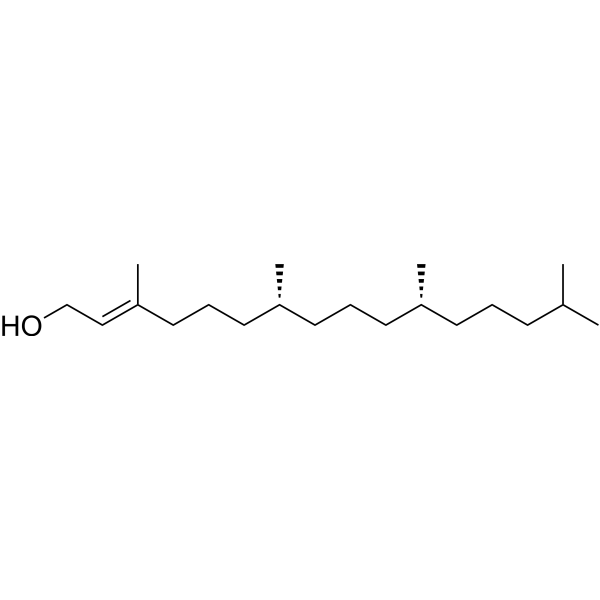
Phytol ((E)-Phytol) is an orally active diterpenoid alcohol that can be extracted from chlorophyll. Phytol has antioxidant, anti-inflammatory, anti-schistosomiasis and antibacterial activities.
For research use only. We do not sell to patients.
- Purity : 99.97%
- CAS No.: 150-86-7
- Formula: C20H40O
- Molecular Weight:296.53
-
Storage:Pure form -20°C, 3 years , 4°C, 2 years ; In solvent -80°C, 6 months , -20°C, 1 month

To place orders, for customer services and technical support, please contact: MedChemExpress USA
Tel: 609-228-6898 E-mail: [email protected] [email protected]


-
 Biological Activity
-
Chemical Information
-
Solvent & Solubility
- Protocols
- Purity & Documentation
- References
-
 Help & FAQs


-
HY-B1465
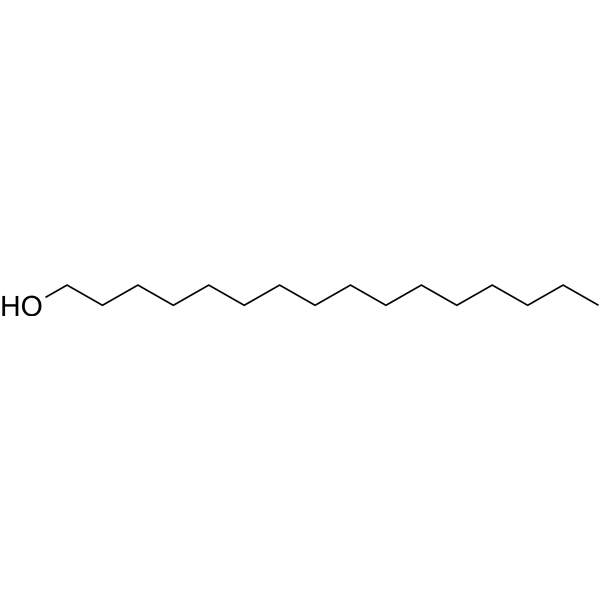
1-HexadecanolEndogenous Metabolite -
HY-W011474
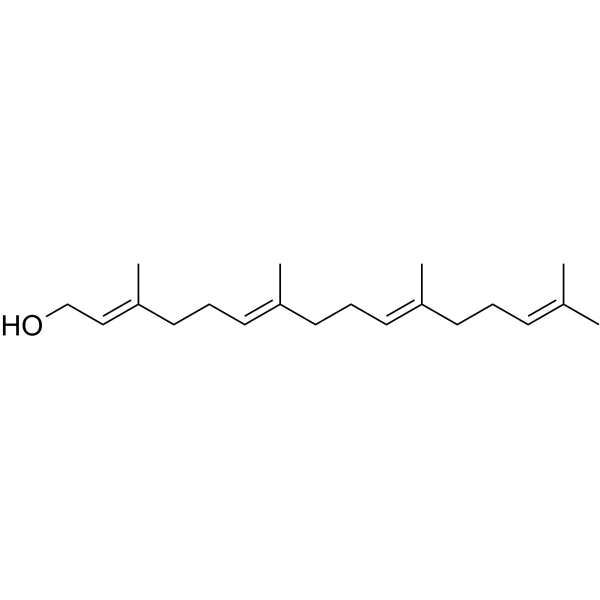
GeranylgeraniolVitamin K2 -

HY-N3075R
Phytol (Standard)Diterpene Alcohol -
HY-15128
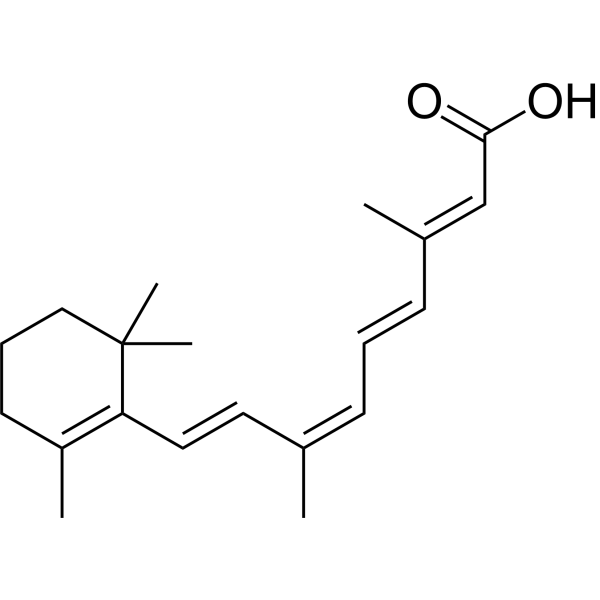
9-cis-Retinoic acidRAR/RXR Agonist -
HY-20685
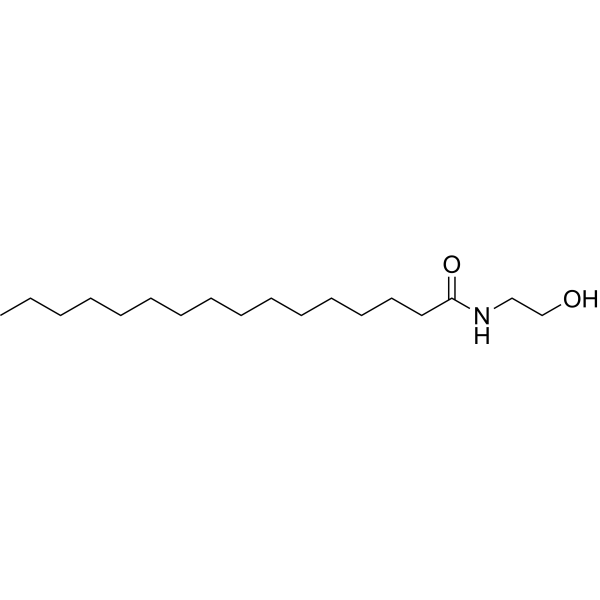
PalmitoylethanolamideEndogenous Metabolite -
HY-N0290
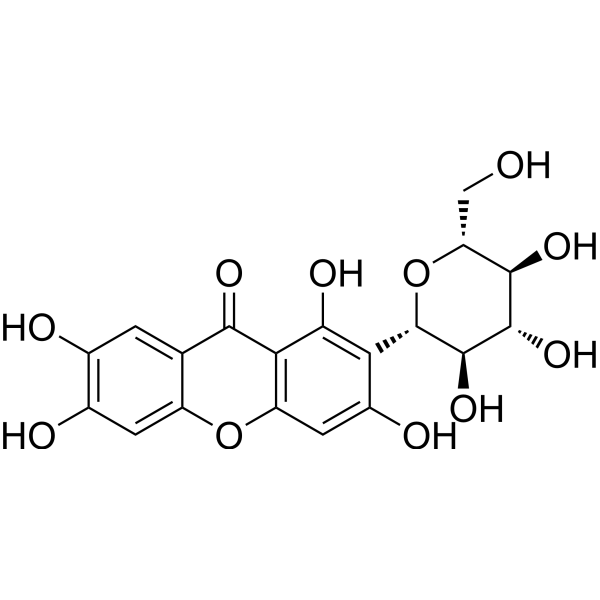
MangiferinNrf2 Activator -
HY-N0643
CarnosolEndogenous Metabolite -

HY-N6653
LentinanNrf2 Activator -
HY-14909
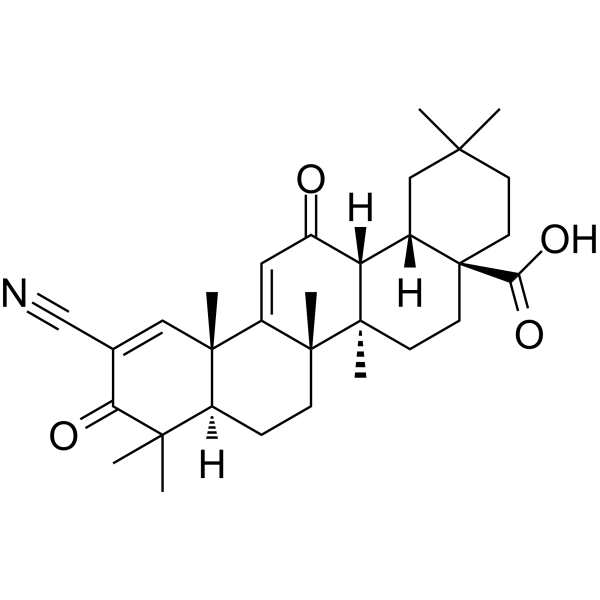
BardoxoloneNrf2 Activator -
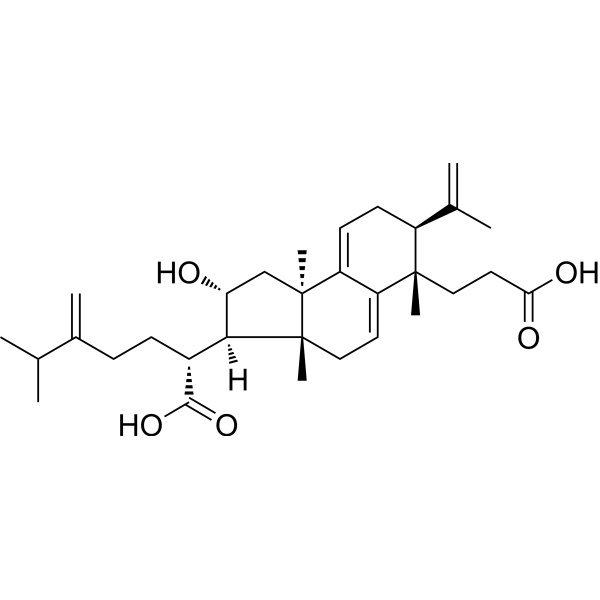
HY-N2995
Poricoic acid ANatural Product -
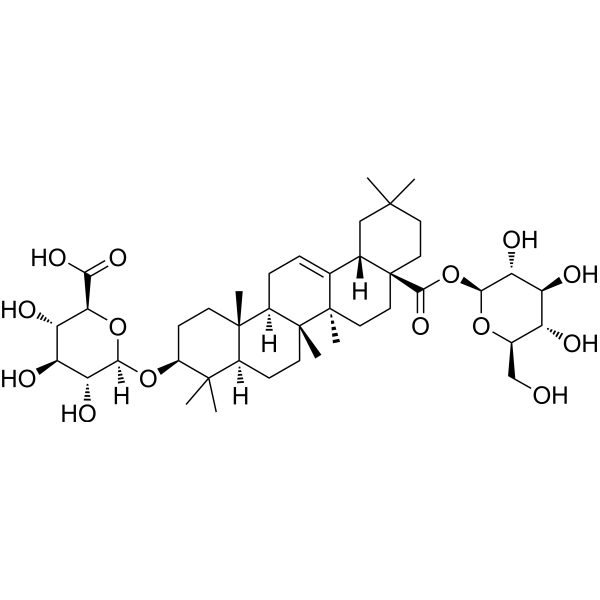
HY-N0818
Chikusetsusaponin IvaAnti-inflammatory Agent -
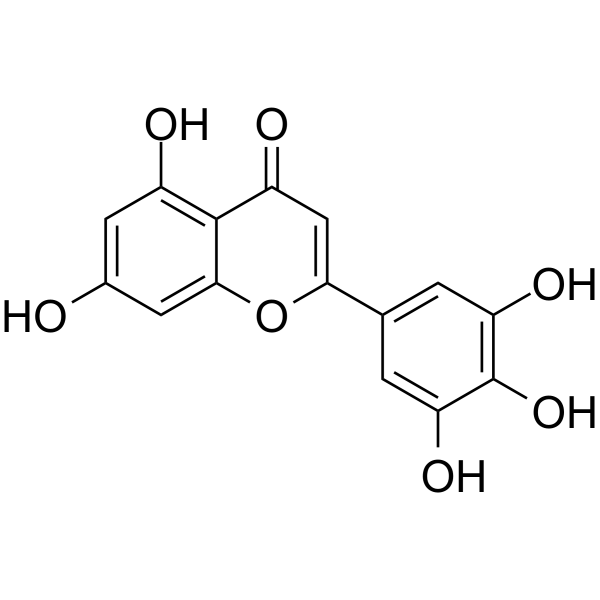
HY-131592
TricetinKeap1-Nrf2 PPI Inhibitor
Publications Citing Use of MedChemExpress (MCE) Phytol
MoreAll Parasite Isoforms
More

Biological Activity
Description
IC50 & Target
|
Schistosome |
Cellular Effect
|
Cell Line

|
Type | Value | Description | References |
|---|---|---|---|---|
| A549 | IC50 |
>100 μM
Compound: 5
|
Cytotoxicity against human A549 cells by SRB assay
Cytotoxicity against human A549 cells by SRB assay
|
[PMID: 25497963] |
| BMDC | IC50 |
1.22 μM
Compound: 19
|
Antiinflammatory activity in C57BL/6 mouse BMDCs assessed as inhibition of LPS-stimulated TNF-alpha production treated 1 hr before LPS challenge measured 18 hrs post stimulation by ELISA
Antiinflammatory activity in C57BL/6 mouse BMDCs assessed as inhibition of LPS-stimulated TNF-alpha production treated 1 hr before LPS challenge measured 18 hrs post stimulation by ELISA
|
[PMID: 23484668] |
| BMDC | IC50 |
2.02 μM
Compound: 19
|
Antiinflammatory activity in C57BL/6 mouse BMDCs assessed as inhibition of LPS-stimulated IL12 production treated 1 hr before LPS challenge measured 18 hrs post stimulation by ELISA
Antiinflammatory activity in C57BL/6 mouse BMDCs assessed as inhibition of LPS-stimulated IL12 production treated 1 hr before LPS challenge measured 18 hrs post stimulation by ELISA
|
[PMID: 23484668] |
| BMDC | IC50 |
3.62 μM
Compound: 19
|
Antiinflammatory activity in C57BL/6 mouse BMDCs assessed as inhibition of LPS-stimulated IL-12p40 production treated 1 hr before LPS challenge measured 18 hrs post stimulation by ELISA
Antiinflammatory activity in C57BL/6 mouse BMDCs assessed as inhibition of LPS-stimulated IL-12p40 production treated 1 hr before LPS challenge measured 18 hrs post stimulation by ELISA
|
[PMID: 23484668] |
| HCT-15 | IC50 |
22.5 μM
Compound: 3
|
Antiproliferative activity against human HCT15 cells after 72 hrs by sulforhodamine B assay
Antiproliferative activity against human HCT15 cells after 72 hrs by sulforhodamine B assay
|
[PMID: 25981689] |
| HeLa | IC50 |
46.6 μM
Compound: 6
|
Cytotoxicity against human HeLa cells by MTT method
Cytotoxicity against human HeLa cells by MTT method
|
[PMID: 17547457] |
| HL-60 | IC50 |
>100 μM
Compound: 5
|
Cytotoxicity against human HL60 cells by SRB assay
Cytotoxicity against human HL60 cells by SRB assay
|
[PMID: 25497963] |
| K562 | IC50 |
45.8 μg/mL
Compound: Phytol
|
Antiproliferative activity against human K562 cells assessed as reduction in cell viability incubated for 2 days by MTT assay
Antiproliferative activity against human K562 cells assessed as reduction in cell viability incubated for 2 days by MTT assay
|
[PMID: 32527555] |
| MCF7 | IC50 |
>50 μg/mL
Compound: 18
|
Antiproliferative activity against human MCF7 cells after 48 hrs by MTT assay
Antiproliferative activity against human MCF7 cells after 48 hrs by MTT assay
|
[PMID: 21109433] |
| SW-620 | IC50 |
5.85 μM
Compound: 3
|
Antiproliferative activity against human SW620 cells after 72 hrs by sulforhodamine B assay
Antiproliferative activity against human SW620 cells after 72 hrs by sulforhodamine B assay
|
[PMID: 25981689] |
| U-251 | IC50 |
27.8 μM
Compound: 3
|
Antiproliferative activity against human U251 cells after 72 hrs by sulforhodamine B assay
Antiproliferative activity against human U251 cells after 72 hrs by sulforhodamine B assay
|
[PMID: 25981689] |
| U-87MG ATCC | IC50 |
8.02 μM
Compound: 3
|
Antiproliferative activity against human U87MG cells after 72 hrs by sulforhodamine B assay
Antiproliferative activity against human U87MG cells after 72 hrs by sulforhodamine B assay
|
[PMID: 25981689] |
In Vitro
Phytol (50-100 μg/mL, 48 h) reduces the motor activity of worms and causes their death[1].
Phytol (40 μM, 2 h) inhibits osteoclast differentiation and oxidative stress of RAW264.7 cells induced by RANKL by regulating Nrf2/HO-1[2].
MedChemExpress (MCE) has not independently confirmed the accuracy of these methods. They are for reference only. Further protocols information, click here.
-
Cell Line:RAW264.7
-
Concentration:5, 10, 20, 40 μM
-
Incubation Time:5 days
-
Result:Did not exert toxicity to RAW264.7.
-
Cell Line:RAW264.7
-
Concentration:40 μM
-
Incubation Time:2 h
-
Result:Results: Decreased the Nrf2 expression in the cytosolic extract and increased in the nuclear extract.
Did not affect the expression of the housekeeping genes, β-actin and lamin B.
Reduced the expression of NFATc1 and c-Fos.
Recovered the expression of SOD, CAT.
-
Cell Line:RAW264.7
-
Concentration:5, 10, 20, 40 μM
-
Incubation Time:5 days
-
Result:Decreased cell migration and the bone resorption area and osteoclast movement.
In Vivo
Phytol (10 or 20 mg/kg, orally, for 4 consecutive days) can improve anemia and oxidative brain damage in Plasmodium bergsii infected mice[3].
MedChemExpress (MCE) has not independently confirmed the accuracy of these methods. They are for reference only.
-
Animal Model:Plasmodium berghei infected mice[3]
-
Dosage:10 or 20 mg/kg
-
Administration:p.o.
-
Result:Suppressed the multiplication of P. berghei in a dose-dependent manner and ameliorated the P. berghei-induced anaemia and brain damage.


Chemical Information
-
CAS No. 150-86-7
-
Appearance Liquid (Density: 0.85 g/cm3)
-
Molecular Weight 296.53
-
Formula C20H40O
-
Color Light yellow to brown
-
SMILES
CC(C)CCC[C@@H](C)CCC[C@@H](C)CCC/C(C)=C/CO
-
Synonyms
(E)-Phytol
-
Structure Classification
-
Initial Source
-
Shipping
Room temperature in continental US; may vary elsewhere.
-
Storage
Pure form -20°C 3 years 4°C 2 years In solvent -80°C 6 months -20°C 1 month


Publications (3)
-
Journal Impact Factor
-
Most Recent
-
PLoS Biol
2024 Jun 27;22(6):e3002672. PMID: 38935621 -
Int J Environ Health Res
Green extraction and RSM optimization of Peganum harmala shoots for antioxidant and anti-inflammatory properties: modulation of pro-inflammatory cytokines. [Abstract]2026 Feb 17:1-12. PMID: 41700732 -
bioRxiv
An efficient behavioral screening platform classifies natural products and other chemical cues according to their chemosensory valence in C. elegans. [Abstract]2024 Apr 3:2023.06.02.542933. PMID: 37333363


Solvent & Solubility
In Vitro:
DMSO : 100 mg/mL (337.23 mM; ultrasonic and warming and heat to 60°C; Hygroscopic DMSO has a significant impact on the solubility of product, please use newly opened DMSO)
Ethanol : 25 mg/mL (84.31 mM; Need ultrasonic)
Please refer to the solubility information to select the appropriate solvent. Once prepared, please aliquot and store the solution to prevent product inactivation from repeated freeze-thaw cycles.
Storage method and period of stock solution: -80°C, 6 months; -20°C, 1 month. When stored at -80°C, please use it within 6 months. When stored at -20°C, please use it within 1 month.
Please refer to the solubility information to select the appropriate solvent. Once prepared, please aliquot and store the solution to prevent product inactivation from repeated freeze-thaw cycles.
Storage method and period of stock solution: -80°C, 6 months; -20°C, 1 month. When stored at -80°C, please use it within 6 months. When stored at -20°C, please use it within 1 month.
Concentration (start) × Volume (start) = Concentration (final) × Volume (final)
In Vivo:
Select the appropriate dissolution method based on your experimental animal and administration route.
- For the following dissolution methods, please ensure to first prepare a clear stock solution using an In Vitro approach and then sequentially add co-solvents:
- To ensure reliable experimental results, the clarified stock solution can be appropriately stored based on storage conditions. As for the working solution for In Vivo experiments, it is recommended to prepare freshly and use it on the same day.
- The percentages shown for the solvents indicate their volumetric ratio in the final prepared solution. If precipitation or phase separation occurs during preparation, heat and/or sonication can be used to aid dissolution.
Add each solvent one by one: 10% DMSO 40% PEG300 5% Tween-80 45% Saline
Solubility: ≥ 2.25 mg/mL (7.59 mM); Clear solution
This protocol yields a clear solution of ≥ 2.25 mg/mL (saturation unknown).
Taking 1 mL working solution as an example, add 100 μL DMSO stock solution (22.5 mg/mL) to 400 μL PEG300, and mix evenly; then add 50 μL Tween-80 and mix evenly; then add 450 μL Saline to adjust the volume to 1 mL.
Preparation of Saline: Dissolve 0.9 g sodium chloride in ddH₂O and dilute to 100 mL to obtain a clear Saline solution.
Add each solvent one by one: 10% DMSO 90% (20% SBE-β-CD in Saline)
Solubility: ≥ 2.25 mg/mL (7.59 mM); Clear solution
This protocol yields a clear solution of ≥ 2.25 mg/mL (saturation unknown).
Taking 1 mL working solution as an example, add 100 μL DMSO stock solution (22.5 mg/mL) to 900 μL 20% SBE-β-CD in Saline, and mix evenly.
Preparation of 20% SBE-β-CD in Saline (4°C, storage for one week): 2 g SBE-β-CD powder is dissolved in 10 mL Saline, completely dissolve until clear.
In Vivo Dissolution Calculator
Please enter the basic information of animal experiments:
-
-
-
-
Recommended: Prepare an additional quantity of animals to account for potential losses during experiments.
Please enter your animal formula composition:
-
%DMSO +
Recommended: Keep the proportion of DMSO in working solution below 2% if your animal is weak.
-
%+
-
+%Tween-80 + +
-
%Saline +
The co-solvents required include: DMSO, . All of co-solvents are available by MedChemExpress (MCE). , Tween 80. All of co-solvents are available by MedChemExpress (MCE).
Working solution concentration: 0.22 mg/mL
Method for preparing stock solution: mg drug dissolved in μL DMSO. Stock solution concentration: mg/mL.
1. Take μL DMSO stock solution;
2. Add μL .
μL , mix evenly;
3. Then add μL Tween 80, mix evenly;
4. Then add μL
Please ensure that the stock solution in the first step is dissolved to a clear state, and add co-solvents in sequence. You can use ultrasonic heating (ultrasonic cleaner, recommended frequency 20-40 kHz), vortexing, etc. to assist dissolution.

Protocols
-
Research Protocol for Infectious Diseases
Infectious-disease experiments test how pathogens interact with host barriers, innate immune receptors, inflammatory signaling, pathogen replication, and tissue injury; pattern-recognition receptors such as TLRs, RIG-I-like receptors, NOD-like receptors, and inflammasomes detect microbial molecules and activate NF-κB, interferon, and cytokine responses. The central hypothesis is that infection severity reflects the balance between pathogen burden and host response: protective inflammation restricts pathogen growth, whereas excessive or mislocalized inflammation contributes to tissue damage and disease phenotype. Unresolved questions include which host pathways are protective versus pathogenic, why some infection models fail to translate to human disease, and which combined readouts best predict clinically relevant infection outcomes.
-
Research Protocol for Inflammation-related Diseases
The NLRP3 inflammasome is a cytosolic innate immune signaling platform that integrates priming signals and danger-signal activation to promote caspase-1 activation, maturation of IL-1β and IL-18, and gasdermin D-mediated pyroptotic cell death. The core experimental logic is to determine whether inflammatory disease phenotypes are driven by increased NLRP3 expression, ASC-containing inflammasome assembly, caspase-1 cleavage, GSDMD cleavage, and extracellular release of IL-1β/IL-18 rather than by nonspecific cell injury alone. The pathway is strongly linked to inflammation-related disease phenotypes because monosodium urate crystals activate NALP3/NLRP3 inflammasome signaling in gout-like crystal inflammation, cholesterol crystals activate NLRP3 inflammasomes in atherogenesis models, and DSS-induced intestinal inflammation has been reported to involve NLRP3 inflammasome activity. However, experimental colitis studies also show context-dependent protective effects of NLRP3 inflammasome co


Purity & Documentation
-
Data Sheet (272 KB)
-
SDS (396 KB)
- English - EN (396 KB)
- Français - FR (396 KB)
- Deutsch - DE (396 KB)
- Norwegian - NO (396 KB)
- Español - ES (396 KB)
- Swedish - SV (396 KB)
- Italian - IT (396 KB)
- Korean - KR (396 KB)
- Portuguese - PT (396 KB)
-
Handling Instructions (2659 KB)
References
[1]. de Moraes J, et al. Phytol, a diterpene alcohol from chlorophyll, as a drug against neglected tropical diseaseSchistosomiasis mansoni. PLoS Negl Trop Dis. 2014 Jan 2;8(1):e2617. [Content Brief]
[2]. Kim EN, et al. Phytol Suppresses Osteoclast Differentiation and Oxidative Stress through Nrf2/HO-1 Regulation in RANKL-Induced RAW264.7 Cells. Cells. 2022 Nov 14;11(22):3596. [Content Brief]
[3]. Usman MA, et al. Phytol suppresses parasitemia and ameliorates anaemia and oxidative brain damage in mice infected with Plasmodium berghei. Exp Parasitol. 2021 May;224:108097. [Content Brief]


Complete Stock Solution Preparation Table
Please refer to the solubility information to select the appropriate solvent. Once prepared, please aliquot and store the solution to prevent product inactivation from repeated freeze-thaw cycles.
Storage method and period of stock solution: -80°C, 6 months; -20°C, 1 month. When stored at -80°C, please use it within 6 months. When stored at -20°C, please use it within 1 month.
| Optional Solvent | Concentration Solvent Mass | 1 mg | 5 mg | 10 mg | 25 mg |
|---|---|---|---|---|---|
| Ethanol / DMSO | 1 mM | 3.3723 mL | 16.8617 mL | 33.7234 mL | 84.3085 mL |
| 5 mM | 0.6745 mL | 3.3723 mL | 6.7447 mL | 16.8617 mL | |
| 10 mM | 0.3372 mL | 1.6862 mL | 3.3723 mL | 8.4309 mL | |
| 15 mM | 0.2248 mL | 1.1241 mL | 2.2482 mL | 5.6206 mL | |
| 20 mM | 0.1686 mL | 0.8431 mL | 1.6862 mL | 4.2154 mL | |
| 25 mM | 0.1349 mL | 0.6745 mL | 1.3489 mL | 3.3723 mL | |
| 30 mM | 0.1124 mL | 0.5621 mL | 1.1241 mL | 2.8103 mL | |
| 40 mM | 0.0843 mL | 0.4215 mL | 0.8431 mL | 2.1077 mL | |
| 50 mM | 0.0674 mL | 0.3372 mL | 0.6745 mL | 1.6862 mL | |
| 60 mM | 0.0562 mL | 0.2810 mL | 0.5621 mL | 1.4051 mL | |
| 80 mM | 0.0422 mL | 0.2108 mL | 0.4215 mL | 1.0539 mL | |
| DMSO | 100 mM | 0.0337 mL | 0.1686 mL | 0.3372 mL | 0.8431 mL |


Phytol Related Classifications
HY-N3075 Related Classifications
 Powered by Bioz