1. Search Result
Search Result
Results for "

Pseudomonas sp.

" in MedChemExpress (MCE) Product Catalog:

32

Inhibitors & Agonists

2

Biochemical Assay Reagents

3

Peptides

10

Natural
Products

2

Recombinant Proteins

Cat. No. Product Name Target Research Areas Chemical Structure
  • HY-P2909

    Biochemical Assay Reagents Others
    Formaldehyde dehydrogenase is a widely occuring enzyme that can catalyze S-hydroxymethylglutathione in the presence of NAD. Formaldehyde dehydrogenase detoxifies formaldehyde within cells through capturing and limiting it from reaching a toxic level. Formaldehyde dehydrogenase can be studied in research on M. tuberculosis .
    Formaldehyde dehydrogenase, Pseudomonas sp
  • HY-P2752

    LPL

    Endogenous Metabolite Metabolic Disease Cancer
    Lipoprotein lipase, Pseudomonas sp (LPL) is a multifunctional enzyme from adipose tissue, heart and skeletal muscle, islets and macrophages. Lipoprotein lipase promotes normal lipoprotein metabolism, delivery and utilization of tissue-specific substrates. Lipoprotein lipase catalyzes the rate-limiting step of lipids in blood circulation .
    Lipoprotein lipase, Pseudomonas sp
  • HY-41465

    Drug Intermediate Others
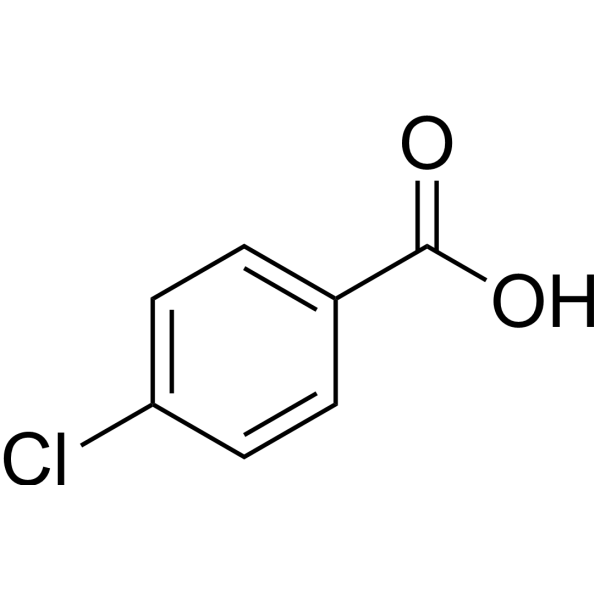
    4-Chlorobenzoic acid is a halogenated aromatic compound that can be used as an industrial chemical and an intermediate in drug synthesis. 4-Chlorobenzoic acid is a persistent organic micropollutant and can be biodegraded through a direct dehalogenation pathway .
    4-Chlorobenzoic acid
  • HY-Y1313

    m-Carboxynitrobenzene; m-Nitrobenzenecarboxylic acid; m-Nitrobenzoic acid

    Bacterial Fungal Infection
    3-Nitrobenzoic acid (m-Carboxynitrobenzene; m-Nitrobenzenecarboxylic acid; m-Nitrobenzoic acid) is an antioxidant and antibacterial agent that can kill bacteria and fungi. 3-Nitrobenzoic acid can be degraded or reduced by certain bacteria (such as Pseudomonas) and fungi (such as white rot fungi) into aldehydes and alcohols .
    3-Nitrobenzoic acid
  • HY-W010062

    Drug Derivative Cytochrome P450 Estrogen Receptor/ERR Metabolic Disease Cancer
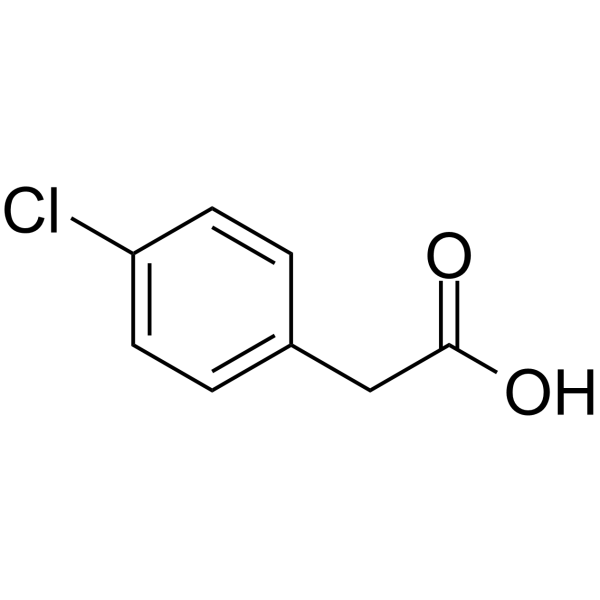
    4-Chlorophenylacetic acid is a halogenated phenylacetic acid derivative. 4-Chlorophenylacetic acid is a potent aromatase inhibitor and antagonizes estrogen signaling. 4-Chlorophenylacetic acid can provide carbon and energy for Pseudomonas sp. strain CBS3. 4-Chlorophenylacetic acid is effective against estrogen-induced mammary tumorigenesis .
    4-Chlorophenylacetic acid
  • HY-P1712A

    Biochemical Assay Reagents Metabolic Disease
    Arthrofactin (TFA) is an effective lipopeptide biosurfactant in Pseudomonas sp. MIS38. Arthrofactin (TFA) production is associated with multiple ATP dependent active transporter systems .
    Arthrofactin TFA
  • HY-142075

    Bacterial Infection
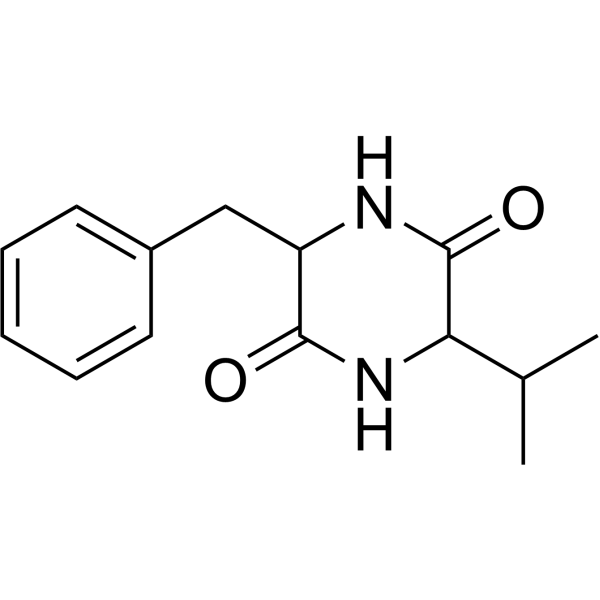
    Antibacterial agent 134 (compound 1) is an diketopiperazine alkaloid with antimicrobial activity. Antibacterial agent 134 is the major metabolite in the culture of Hymeniacidon perleve associated bioactive bacterium Pseudomonas sp. NJ6-3-1 .
    Antibacterial agent 134
  • HY-P3100

    Parasite Infection
    Orfamide A is a major metabolite of insecticidal biosurfactant in Pseudomonas sp. F6 and has aphidicidal activity. Orfamide A can be used for aphid control in organic agriculture. Orfamide A exhibits dose-dependent mortality against aphids with an LC50 value of 34.5 μg/mL .
    Orfamide A
  • HY-Y1771

    Phthalaldehydic acid

    Drug Metabolite Bacterial Infection
    2-Carboxybenzaldehyde is a key intermediate metabolite in the biodegradation of polycyclic aromatic hydrocarbons (PAHs) such as fluoranthene and phenanthrene. 2-Carboxybenzaldehyde can be produced by the degradation of fluoranthene by Pasteurella sp. IFA and Mycobacterium sp. PYR-1. 2-Carboxybenzaldehyde can also be produced by the degradation of phenanthrene by Pseudomonas sp. PPD .
    2-Carboxybenzaldehyde
  • HY-P10548

    Bacterial Infection
    Cyclic L27-11 is a cyclic peptide-like antibiotic with strong antibacterial activity against specific bacteria such as Pseudomonas sp. Cyclic L27-11 shows nanomolar antibacterial activity against Pseudomonas sp., especially Pseudomonas aeruginosa. Cyclic L27-11 interferes with the function of bacterial outer membrane protein LptD, preventing the normal transport of lipopolysaccharide (LPS), leading to the accumulation of membrane-like substances in bacterial cells, which in turn affects the survival of bacteria. Cyclic L27-11 can be used in the development of antibacterial agents .
    Cyclic L27-11
  • HY-P2848C

    Endogenous Metabolite Metabolic Disease
    Cholesterol Oxidase, Pseudomonas sp. (EC 1.1.3.6) belongs to the oxidoreductase family, acts on the CH-OH group of the donor molecule, and uses oxygen as the acceptor. Cholesterol Oxidase, Pseudomonas sp. (EC 1.1.3.6) participates in the biosynthesis of bile acids.
    Cholesterol Oxidase, Pseudomonas sp.
  • HY-E70955

    Endogenous Metabolite Metabolic Disease
    Sarcosine Dehydrogenase, Pseudomonas sp. (EC 1.5.99.1) is a mitochondrial enzyme that catalyzes the chemical reaction N-demethylation of sarcosine to give glycine. Sarcosine dehydrogenase, Pseudomonas sp. (EC 1.5.99.1) is an oxidoreductase that acts on the CH-NH group of donor molecules and other acceptor molecules.
    Sarcosine Dehydrogenase, Pseudomonas sp.
  • HY-E70956

    Biochemical Assay Reagents Metabolic Disease
    Polymyxin Acylase, Pseudomonas sp. deacylates polymyxin group antibiotics and long-chain fatty acyl groups of proteins.
    Polymyxin Acylase, Pseudomonas sp.
  • HY-E70957

    Endogenous Metabolite Metabolic Disease
    Creatinine amidohydrolase, Pseudomonas sp. (EC 3.5.2.10) catalyzes the hydrolytic reaction converting creatinine to creatine.
    Creatinine amidohydrolase, Pseudomonas sp.
  • HY-P2832B

    Endogenous Metabolite Metabolic Disease
    Acyl-coenzyme A Synthetase, Pseudomonas sp. (EC 6.2.1.3) belongs to the ligase family and can activate the breakdown of complex fatty acids. Acyl-coenzyme A Synthetase, Pseudomonas sp. (EC 6.2.1.3) catalyzes the production of fatty acyl-CoA in a two-step process via an adenylate intermediate. Acyl-coenzyme A Synthetase, Pseudomonas sp. (EC 6.2.1.3) catalyzes the pre-reaction of fatty acid β-oxidation and can also be incorporated into phospholipids. Acyl-coenzyme A Synthetase, Pseudomonas sp. (EC 6.2.1.3) protein is involved in regulating and promoting the transport of long-chain fatty acids in mammalian cells.
    Acyl-coenzyme A Synthetase, Pseudomonas sp.
  • HY-124106

    Bacterial Infection
    Resorstatin is a dialkylresorcinol that can be isolated from a liquid culture of Pseudomonas sp. Ki19. Resorstatin exhibits antimicrobial activity .
    Resorstatin
  • HY-P2837A

    Endogenous Metabolite Metabolic Disease
    Oxaloacetate Decarboxylase, Pseudomonas sp. (EC 4.1.1.3) is a Na pump in anaerobic bacteria. Oxaloacetate Decarboxylase is a membrane protein consisting of three subunits, α, β and γ with the α subunit containing the carboxylase activity.
    Oxaloacetate Decarboxylase, Pseudomonas sp.
  • HY-W016584

    Others Infection
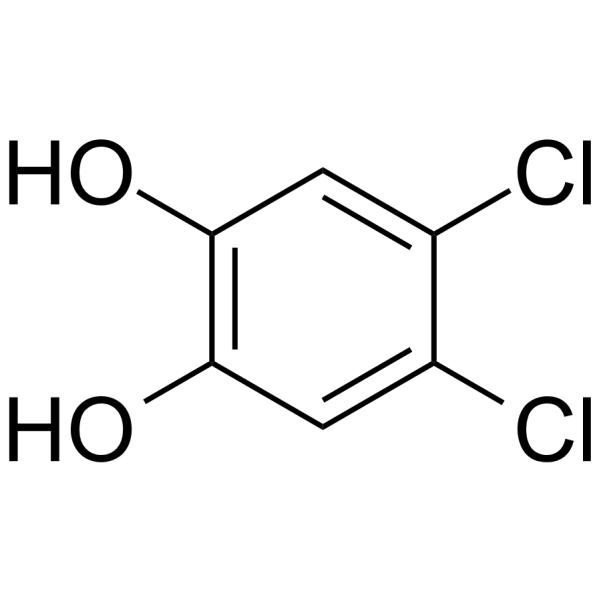
    4,5-Dichlorocatechol is a substrate of the broad-spectrum chlorocatechol 1,2-dioxygenase of pseudomonas chlororaphis RW71. The Ki values for 4,5-dichlorocatechol is 30 nM for the dioxygenase of the Chlorobenzoate-degrading strain Pseudomonas putida AC27 and 4 nM for the dioxygenase of Acidovorax sp. strain PS14 .
    4,5-Dichlorocatechol
  • HY-165272

    Bacterial Antibiotic Infection
    Antibiotic SF-2132 is a peptide antibiotic identified in Nocardiopsis sp., which exhibits inhibitory activity against β-lactam antibiotic-resistant strains, such as Pseudomonas and Escherichia .
    Antibiotic SF-2132
  • HY-E70116A

    Glycosidase Metabolic Disease
    Isoamylase, Pseudomonas sp. (EC 3.2.1.68) is an enzyme systematically named glycogen 6-α-D-glucan hydrolase. Isoamylase catalyzes the hydrolysis of (1→6)-α-D-glycosidic bonds in glycogen, amylopectin, and their β-limited dextrins. Isoamylase can also effectively hydrolyze amylopectin.
    Isoamylase, Pseudomonas sp.
  • HY-Y1771R

    Phthalaldehydic acid (Standard)

    Reference Standards Drug Metabolite Bacterial Infection
    2-Carboxybenzaldehyde (Standard) is the analytical standard of 2-Carboxybenzaldehyde (HY-Y1771). This product is intended for research and analytical applications. 2-Carboxybenzaldehyde is a key intermediate metabolite in the biodegradation of polycyclic aromatic hydrocarbons (PAHs) such as fluoranthene and phenanthrene. 2-Carboxybenzaldehyde can be produced by the degradation of fluoranthene by Pasteurella sp. IFA and Mycobacterium sp. PYR-1. 2-Carboxybenzaldehyde can also be produced by the degradation of phenanthrene by Pseudomonas sp. PPD .
    2-Carboxybenzaldehyde (Standard)
  • HY-P3186B

    Endogenous Metabolite Metabolic Disease
    Glucose dehydrogenase, Pseudomonas sp. (EC 1.1.1.47) is an oxidoreductase that acts on the CH-OH group of a donor molecule and uses NAD + or NADP + as an acceptor. The three substrates of glucose dehydrogenase are β-D-glucose, NAD +, and NADP +, while its four products are D-gluconic acid-1,5-lactone, NADH, NADPH, and H +.
    Glucose dehydrogenase, Pseudomonas sp.
  • HY-P2994A

    Endogenous Metabolite Metabolic Disease
    D-3-hydroxybutyrate dehydrogenase, Pseudomonas sp. (EC 1.1.1.30) is a redox enzyme that acts on the donor CH-OH group and uses NAD+ or NADP+ as the acceptor. D-3-hydroxybutyrate dehydrogenase is involved in the synthesis and degradation of ketone bodies and butyrate metabolism.
    D-3-hydroxybutyrate dehydrogenase, Pseudomonas sp.
  • HY-E70958

    Carboxypeptidase Metabolic Disease
    Carboxypeptidase G, Pseudomonas sp. (EC 3.4.17.11) is a lysosomal thiol-dependent protease that stepwise cleaves γ-glutamylpteroyl polyγ-glutamic acid to generate pteroyl-α-glutamic acid (folic acid) and free glutamic acid. Carboxypeptidase G is highly specific for the γ-glutamyl bond but not for the C-terminal amino acid of the leaving group. Carboxypeptidase G can be activated by Zn 2+ ions.
    Carboxypeptidase G, Pseudomonas sp.
  • HY-E71009

    Biochemical Assay Reagents Metabolic Disease
    N-Acylmannosamine 1-Dehydrogenase, Pseudomonas sp. (EC 1.1.1.233) acts on the CH-OH group of donor with NAD+ or NADP+ as acceptor. The two substrates of this enzyme are N-acyl-D-mannosamine and NAD+, whereas its 3 products are N-acyl-D-mannosaminolactone, NADH, and H+.
    N-Acylmannosamine 1-Dehydrogenase, Pseudomonas sp.
  • HY-W010062R

    Reference Standards Cytochrome P450 Estrogen Receptor/ERR Drug Derivative Metabolic Disease Cancer
    4-Chlorophenylacetic acid (Standard) is the analytical standard of 4-Chlorophenylacetic acid. This product is intended for research and analytical applications. 4-Chlorophenylacetic acid is a halogenated phenylacetic acid derivative. 4-Chlorophenylacetic acid is a potent aromatase inhibitor and antagonizes estrogen signaling. 4-Chlorophenylacetic acid can provide carbon and energy for Pseudomonas sp. strain CBS3. 4-Chlorophenylacetic acid is effective against estrogen-induced mammary tumorigenesis .
    4-Chlorophenylacetic acid (Standard)
  • HY-123558

    Y 14556

    Antibiotic Cancer
    Bactobolin C is an antibiotic produced by Pseudomonas sp. BMG13A7, which has strong antimicrobial and antitumor activities, can also inhibit antibody production and treat autoimmune encephalomyelitis. However, its undesirable toxicity limits its medicinal application. The unique chemical structure and promising biological activities of Bactobolin C have attracted people's interest in its total synthesis and new active analogs. So far, the structural modification of Bactobolin C has mainly focused on the hydroxyl groups on the amino acid side chains and backbone.
    Bactobolin C
  • HY-121120

    Antibiotic Infection
    Isosulfazecin (iSZ) is a novel β-lactam antibiotic produced by Pseudomonas acidophilus sp., synthesized in a nutrient solution supplemented with glycerol and sodium thiosulfate under aerobic conditions in parallel with bacterial growth. It is purified by chromatography and crystallization from aqueous methanol. Physicochemical analysis determined its molecular formula to be C12H20N4O9S, showing a structure with a β-lactam ring, methoxyl and sulfonate groups. Acid hydrolysis yields L-alanine and D-glutamic acid. iSZ is a diastereomer of sulfadiazine and exhibits moderate activity against both gram-positive and gram-negative bacteria, but potent activity against bacteria resistant to β-lactam antibiotics .
    Isosulfazecin
  • HY-N15432

    Endogenous Metabolite Others
    4-Cholenic acid-3-one is an antifeedant steroid metabolite formed via anaerobic biotransformation of Lithocholic acid (HY-B0172) by Pseudomonas sp. strain NCIB 10590 .
    4-Cholenic acid-3-one
  • HY-W016983

    Drug Derivative Others
    3-Phenylphenol is a secondary metabolite. 3-Phenylphenol can induce the hbp gene cluster in Pseudomonas sp. strain P1B16. 3-Phenylphenol can bind to the Sge1 transcription factor of Fusarium oxysporum f. sp. cubense and disrupt the function of virulence regulators. 3-Phenylphenol can be used in studies related to banana fusarium wilt .
    3-Phenylphenol
  • HY-N16410

    5-cis-C12-HSL

    Bacterial Infection
    N-cis-Dodec-5(Z)-enoyl-L-homoserine lactone (5-cis-C12-HSL) (Compound 2) is an acylated homoserine lactone. N-cis-Dodec-5(Z)-enoyl-L-homoserine lactone can be isolated for Mesorhizobium sp. N-cis-Dodec-5(Z)-enoyl-L-homoserine lactone restores protease and pyoverdin production of an AHL-deficient Pseudomonas aeruginosa PAO1 lasI rhlI double mutant. N-cis-Dodec-5(Z)-enoyl-L-homoserine lactone has no significant antibacterial activity and cytotoxicity against tumor cells .
    N-cis-Dodec-5(Z)-enoyl-L-homoserine lactone
  • HY-W012346

    Drug Derivative Bacterial Infection
    Geranyl isobutyrate is a synthetic α,β‑unsaturated branched‑chain aliphatic ester and a geraniol derivative. Geranyl isobutyrate acts as a food and feed flavouring agent and a biologically active antimicrobial compound. Geranyl isobutyrate shows antimicrobial activity against Gram‑positive and most Gram‑negative bacteria .
    Geranyl isobutyrate

Inquiry Online

Your information is safe with us. * Required Fields.

Salutation


Country or Region *

Applicant Name *


Organization Name *

Department *


Email Address *


Product Name *

Cat. No.


Requested quantity *

Phone Number *


Remarks

Inquiry Online

Inquiry Information

Product Name:
Cat. No.:
Quantity:
MCE Japan Authorized Agent:

