1. Search Result
Search Result
Results for "

Reduction

" in MedChemExpress (MCE) Product Catalog:

576

Inhibitors & Agonists

2

Screening Libraries

11

Fluorescent Dye

25

Biochemical Assay Reagents

34

Peptides

3

MCE Kits

10

Inhibitory Antibodies

87

Natural
Products

33

Isotope-Labeled Compounds

3

Click Chemistry

13

Oligonucleotides

Cat. No. Product Name Target Research Areas Chemical Structure
  • HY-105129
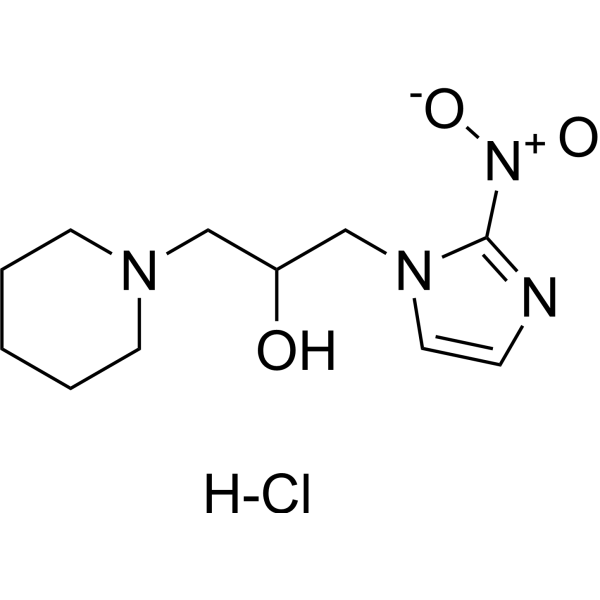
    Pimonidazole hydrochloride
    5+ Cited Publications

    Biochemical Assay Reagents Cancer
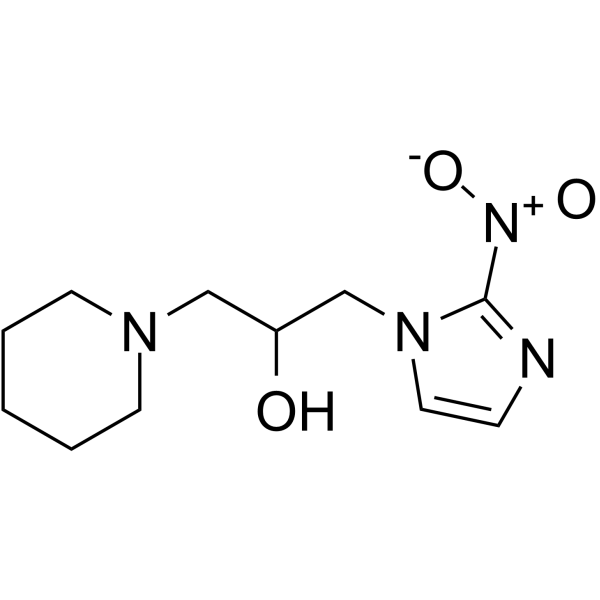
    Pimonidazole is a novel hypoxia marker for complementary study of tumor hypoxia and cell proliferation in tumor . Pimonidazole accumulates in hypoxic cells via covalent binding with macromolecules or by forming reductive metabolites after reduction of its nitro group, it can be used for qualitative and quantitative assessment of tumor hypoxia .
    Pimonidazole hydrochloride
  • HY-P10745

    ZP8396

    Amylin Receptor Metabolic Disease
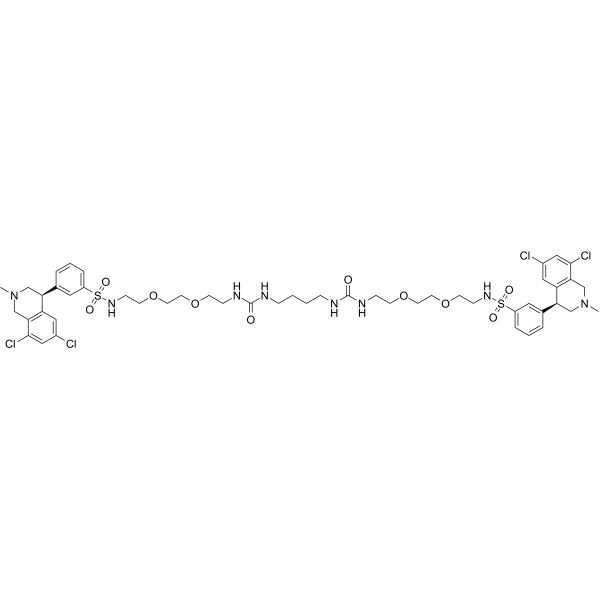
    Petrelintide (ZP8396) is a dual amylin and calcitonin receptor agonist (DACRA) Petrelintide elicits a selective reduction in high-fat diet intake in diet-induced obese (DIO) rats, which is accompanied by a loss of fat mass and preservation of lean mass during weight reduction. Petrelintide can be utilized in diabetes research .
    Petrelintide
  • HY-105129A
    Pimonidazole
    5+ Cited Publications

    Biochemical Assay Reagents Cancer
    Pimonidazole is a novel hypoxia marker for complementary study of tumor hypoxia and cell proliferation in tumor . Pimonidazole accumulates in hypoxic cells via covalent binding with macromolecules or by forming reductive metabolites after reduction of its nitro group, it can be used for qualitative and quantitative assessment of tumor hypoxia .
    Pimonidazole
  • HY-P10745A

    ZP8396 acetate

    Amylin Receptor Metabolic Disease
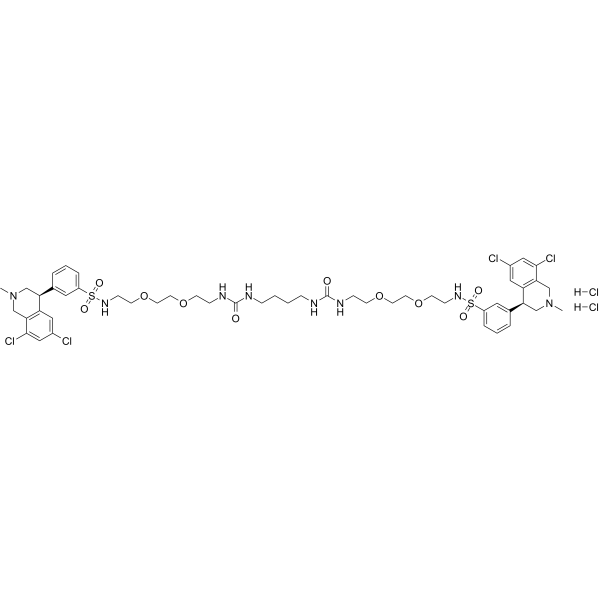
    Perelintide (ZP8396) acetate is a dual amylin and calcitonin receptor agonist (DACRA). Perelintide acetate elicits a selective reduction in high-fat diet intake in diet-induced obese (DIO) rats, which is accompanied by a loss of fat mass and preservation of lean mass during weight reduction. Perelintide acetate can be utilized in diabetes research .
    Petrelintide acetate
  • HY-N0893
    Tetrahydrocurcumin
    2 Publications Verification

    HZIV 81-2

    Cytochrome P450 Autophagy Endogenous Metabolite Inflammation/Immunology Cancer
    Tetrahydrocurcumin is a Curcuminoid found in turmeric (Curcuma longa) that is produced by the reduction of Curcumin. Tetrahydrocurcumin inhibit CYP2C9 and CYP3A4.
    Tetrahydrocurcumin
  • HY-P1008
    Z-VDVAD-FMK
    5 Publications Verification

    Z-VD(OMe)VAD(OMe)-FMK

    Caspase Cancer
    Z-VDVAD-FMK is a special inhibitor of caspase-2. Z-VDVAD-FMK produces a reduction in Lovastatin-induced apoptosis .
    Z-VDVAD-FMK
  • HY-145605

    HSG4112

    Reactive Oxygen Species (ROS) Bacterial PPAR Metabolic Disease
    Vutiglabridin (HSG4112), a racemic compound, is a potent anti-obesity agent . Vutiglabridin, an optimized structural analog of Glabridin, markedly supersedes Glabridin in weight reduction efficacy and chemical stability .
    Vutiglabridin
  • HY-B1901

    (±)-Eperisone hydrochloride

    P2X Receptor Neurological Disease
    Eperisone Hydrochloride ((±)-Eperisone hydrochloride) is an orally active antispastic agent with a vasodilator effect, used for the research of muscle stiffness and pain. Eperisone Hydrochloride is a potent and selectively P2X7 receptor antagonist, also shows antagonism for human P2X3. Eperisone Hydrochloride works by relaxing both skeletal muscles and vascularsmooth muscles, demonstrating a variety of effects such as reduction ofmyotonia, improvement of circulationand and suppression of the pain reflex .
    Eperisone hydrochloride
  • HY-100582
    Ribitol
    3 Publications Verification

    Adonitol; Adonite

    Endogenous Metabolite Others
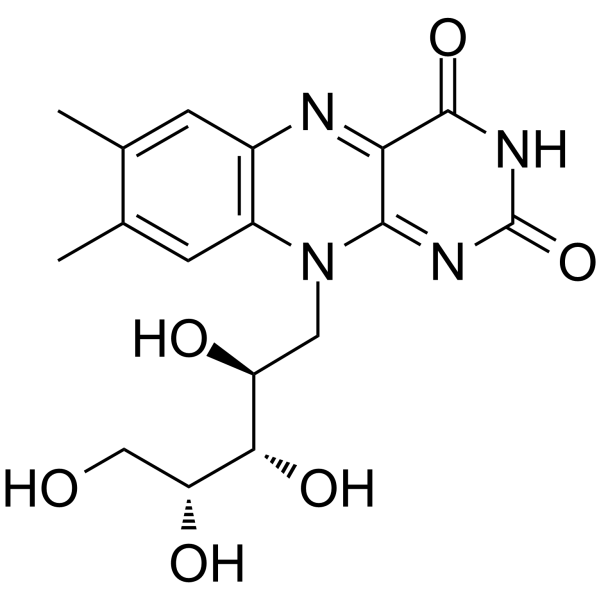
    Ribitol is a crystalline pentose alcohol formed by the reduction of ribose. Enhancing the flux of D-glucose to the pentose phosphate pathway in Saccharomyces cerevisiae for the production of D-ribose and ribitol.
    Ribitol
  • HY-W229874

    E1/E2/E3 Enzyme NF-κB Reactive Oxygen Species (ROS) SOD Cancer
    EN106 is a potent inhibitor of FEMIB. EN106 is a cysteine-reactive covalent ligand. EN106 disrupts recognition of the key reductive stress substrate of FEM1B, FNIP1. EN106 reduces oxidative stress and rescues high glucose-induced impaired angiogenesis in HUVECs .
    EN106
  • HY-W006230

    Cytochrome P450 Cancer
    Anthraflavic acid specifically inhibits the activity of cytochrome P-448 without affecting phenobarbital-induced cytochrome P-450 or NADPH-dependent cytochrome c reduction. Anthraflavic acid inhibits cytosolic metabolic pathways, blocks the microsomal and cytosolic activation of IQ, and reduces the metabolic activation level of Glu-P-I. Anthraflavic acid may exert anticancer activity by inhibiting the metabolic activation of chemical carcinogens. Anthraflavic acid is applicable to cancer-related research .
    Anthraflavic acid
  • HY-N6618

    Others Others
    DL-Mannitol is obtained by combining D-mannitol with a sample of Lmannitol obtained by reduction of L-mannono-1, Clactone .
    DL-Mannitol
  • HY-Y0418

    Dulcitol; Melampyrit; NSC 1944

    Endogenous Metabolite Others
    Dulcite (Dulcitol; Melampyrit; NSC 1944) is a sugar alcohol. Dulcite is produced by the reduction of galactose by aldose reductase in non-insulin-dependent cells .
    Dulcite
  • HY-118930A

    Melanocortin Receptor Metabolic Disease Endocrinology
    MK-0493 hydrochloride is a potent, orally active and selective agonist of the melanocortin receptor 4 (MC4R), demonstrating significant reductions in energy intake .
    MK-0493 hydrochloride
  • HY-P2807

    LAD

    Endogenous Metabolite Inflammation/Immunology Cancer
    L-Lactate dehydrogenase, E.coli is a redox enzyme. L-Lactate dehydrogenase, E.coli catalyzes the reduction of pyruvate to L-lactate by NADH in vivo with absolute enantiospecificity .
    L-Lactate dehydrogenase, E.coli
  • HY-W540000

    Biochemical Assay Reagents Others
    Graphitic carbon nitride is a metal-free photocatalyst with a semiconductor absorption wavelength of 460 nm. Graphitic carbon nitride can be applied to photocatalytic water splitting, degradation of organic pollutants, and carbon dioxide reduction .
    Graphitic carbon nitride
  • HY-78036

    Citronic acid; Methylfumaric acid

    Endogenous Metabolite Others
    Mesaconic acid is an active product that can be extracted from Saxifraga stolonifera. Mesaconic acid is used as a fire retardant and is a competitive inhibitor of fumarate reduction .
    Mesaconic acid
  • HY-120423

    Cannabinoid Receptor Neurological Disease
    AM6538 is a long-acting, high affinity and pseudo-irreversible cannabinoid (CB) antagonist. AM6538 is a structural analog of rimonabant. AM6538 can be effectively used to evaluate the apparent efficacy of cannabinoid full and partial agonists. AM6538 may be useful in future studies that require temporary reductions in cannabinoid receptor availability . AM-6538 is a click chemistry reagent, it contains an Alkyne group and can undergo copper-catalyzed azide-alkyne cycloaddition (CuAAc) with molecules containing Azide groups.
    AM-6538
  • HY-107620

    MEK Neurological Disease
    PD 198306 is a selective MAPK/ERK-kinase (MEK) inhibitor. PD 198306 results in an observable reduction in the Streptozocin induced increase in the level of active ERK1 and 2. Antihyperalgesic effects .
    PD 198306
  • HY-D0852A
    Sodium metavanadate, 99%
    1 Publications Verification

    Sodium vanadate(V), 99%

    Biochemical Assay Reagents Others
    Sodium metavanadate, 99% (Sodium vanadate(V), 99%) is a biochemical reagent used as a vanadium source in microbial cultures to study vanadium reduction in mesophilic and thermophilic methanogens .
    Sodium metavanadate, 99%
  • HY-41877

    pyrrolidine-2,5-dione

    Biochemical Assay Reagents Others Neurological Disease
    Succinimide rapidly hydrolyzes into aspartic acid and aspartic acid during the reduction/alkylation process. Succinimide is utilized in the development of antiepileptic agent .
    Succinimide
  • HY-P2809
    Malic dehydrogenase, microorganism
    1 Publications Verification

    MDH; EC 1.1.1.37

    Endogenous Metabolite Metabolic Disease
    Malate dehydrogenase (EC 1.1.1.37) (MDH) catalyzes the mutual conversion of oxaloacetate and malate, and is associated with the oxidation/reduction of dinucleotide coenzymes .
    Malic dehydrogenase, microorganism
  • HY-N4072
    6''-O-Acetylglycitin
    4 Publications Verification

    Others Metabolic Disease
    6''-O-Acetylglycitin, a acetyl glucoside, is one of the isoflavone isomer in soybeans, shows various extents of content reduction dependent on storage temperature, packaging condition, and its isoflavone isomer kind .
    6''-O-Acetylglycitin
  • HY-D0222

    Fluorescent Dye Others
    N,N-Dimethyl-1-naphthylamine is an aromatic amine and a dye. N,N-Dimethyl-1-naphthylamine can be used in nitrate reduction test .
    N,N-Dimethyl-1-naphthylamine
  • HY-B1901R

    (±)-Eperisone hydrochloride (Standard)

    P2X Receptor Reference Standards Neurological Disease
    Eperisone (hydrochloride) (Standard) is the analytical standard of Eperisone (hydrochloride). This product is intended for research and analytical applications. Eperisone Hydrochloride ((±)-Eperisone hydrochloride) is an orally active antispastic agent with a vasodilator effect, used for the research of muscle stiffness and pain. Eperisone Hydrochloride is a potent and selectively P2X7 receptor antagonist, also shows antagonism for human P2X3. Eperisone Hydrochloride works by relaxing both skeletal muscles and vascularsmooth muscles, demonstrating a variety of effects such as reduction ofmyotonia, improvement of circulationand and suppression of the pain reflex .
    Eperisone hydrochloride (Standard)
  • HY-111391R

    Diazoresorcinol sodium (Standard)

    Reference Standards Bacterial Others
    Resazurin (sodium) (Standard) is the analytical standard of Resazurin (sodium). This product is intended for research and analytical applications. Resazurin sodium (Diazoresorcinol sodium) is commonly used to measure bacterial and eukaryotic cell viability through its reduction to the fluorescent product resorufin.
    Resazurin sodium (Standard)
  • HY-117580

    OH-PRED

    Drug Metabolite Inflammation/Immunology
    16α-Hydroxyprednisolone (OH-PRED) is a stereoselective metabolite of the 22(R) epimer of the glucocorticoid Budesonide (HY-13580). 16α-Hydroxyprednisolone formation is catalyzed by isoenzymes within the cytochrome P450 3A (CYP3A) subfamily. 16α-Hydroxyprednisolone formation can be inhibited by antibodies targeting the CYP3A subfamily .
    16α-Hydroxyprednisolone
  • HY-N4203

    Fungal Infection
    Isopropyl ferulate, isolated from Notopterygium incisum, is used in the reduction of pharmaceuticals, preparation of antifungal agents, cosmetics and as antioxidant agent and so forth .
    Isopropyl ferulate
  • HY-169004

    TGF-beta/Smad Interleukin Related Neurological Disease Inflammation/Immunology
    CBT-295 is an orally active autotaxin (ATX) inhibitor. CBT-295 exhibits a significant reduction in inflammatory cytokines like TGF-β, TNF-α and IL-6 levels, also reduced bile duct proliferation marker CK-19 and lowered liver fibrosis. The reversal of liver fibrosis with CBT-295 led to a reduction in blood and brain ammonia levels. CBT-295 also reduced neuroinflammation induced by ammonia. CBT-295 is promising for research of liver cirrhosis and associated encephalopathy .
    CBT-295
  • HY-W011757

    Biochemical Assay Reagents Others
    Neocuproine hydrochloride monohydrate, 99% can be used to prepare complex solutions for studying antioxidant capacity determination in biological samples based on copper reduction complexes.
    Neocuproine hydrochloride monohydrate, 99%
  • HY-111872

    SNIPERs Bcr-Abl Cancer
    SNIPER(ABL)-020, conjugating Dasatinib (ABL inhibitor) to Bestatin (IAP ligand) with a linker, induces the reduction of BCR-ABL protein .
    SNIPER(ABL)-020
  • HY-W193398

    Monoamine Oxidase Cardiovascular Disease
    N-2-Cyclohexylethyl-N-methylamine is an amine from A.ridigula Benth for a reduction of monoamine oxidase (MAO) activity .
    N-2-Cyclohexylethyl-N-methylamine
  • HY-W055845

    Biochemical Assay Reagents Others
    4-Methylbenzamide oxime is a model of benzamide oxime and can be used as a substrate for mitochondrial amidoxime reducing component (mARC) catalytic enzyme reduction .
    4-Methylbenzamide oxime
  • HY-P2807K

    Endogenous Metabolite Metabolic Disease
    L-Lactate Dehydrogenase, bovine muscle is an oxidoreductase. L-Lactate Dehydrogenase, bovine muscle catalyzes the reversible conversion of lactate to pyruvate with the reduction of NAD+ to NADH .
    L-Lactate Dehydrogenase, bovine muscle
  • HY-111860

    SNIPERs Bcr-Abl Cancer
    SNIPER(ABL)-013, conjugating GNF5 (ABL inhibitor) to Bestatin (IAP ligand) with a linker, induces the reduction of BCR-ABL protein with a DC50 of 20 μM .
    SNIPER(ABL)-013
  • HY-N1322

    Bacterial β-glucuronidase Others
    Sanggenol A acts as a dual inhibitor of nitrofuranone reduction mediated by the intestinal microbial nitrification reductases EcNfsA and EcNfsB. In addition, Sanggenol A is also an effective inhibitor of intestinal bacterial β-glucuronidase .
    Sanggenol A
  • HY-111861

    SNIPERs Bcr-Abl Cancer
    SNIPER(ABL)-024, conjugating GNF5 (ABL inhibitor) to LCL161 derivative (IAP ligand) with a linker, induces the reduction of BCR-ABL protein with a DC50 of 5μM .
    SNIPER(ABL)-024
  • HY-W129615

    2,3,4,5,6-Pentachloroaniline

    Biochemical Assay Reagents Others
    Pentachloroaniline (2,3,4,5,6-Pentachloroaniline) is a pentachlorinated aromatic amine pesticide that serves as a substrate for reductive dehalogenation reactions and a metabolite of quintozene. Pentachloroaniline can be converted into different trichloroanilines and dichloroanilines via reduction. Pentachloroaniline cannot induce its own dehalogenation activity in Desulfitobacterium frappieri PCP-1, and its conversion process must rely on induction by 3,5-dichlorophenol .
    Pentachloroaniline
  • HY-W783829

    Hex-2-trans-enoyl-CoA

    Endogenous Metabolite Metabolic Disease
    (2E)-Hexenoyl-CoA (Hex-2-trans-enoyl-CoA) is an intermediate in fatty acid metabolism. (2E)-Hexenoyl-CoA undergoes reductive carboxylation to yield butylmalonyl-CoA .
    (2E)-Hexenoyl-CoA
  • HY-W001968

    3-TC

    Drug Intermediate Others
    3-Thiophenecarboxaldehyde is a thiophene derivative substrate for biocatalytic reduction to 3-thiophenemethanol, and can be processed by Pseudomonas putida S12 cells. 3-Thiophenecarboxaldehyde functions as an intermediate compound. 3-Thiophenecarboxaldehyde exhibits toxicity toward Pseudomonas putida S12 cells at elevated concentrations, reducing specific growth rate and final biomass yield .
    3-Thiophenecarboxaldehyde
  • HY-141653

    Free Fatty Acid Receptor Metabolic Disease
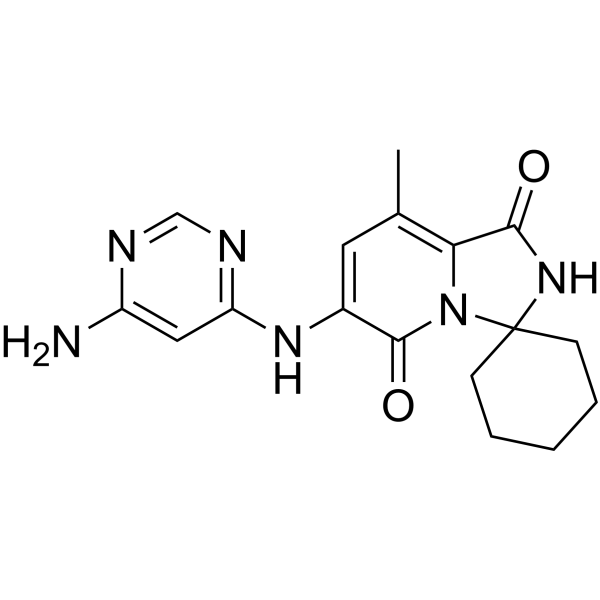
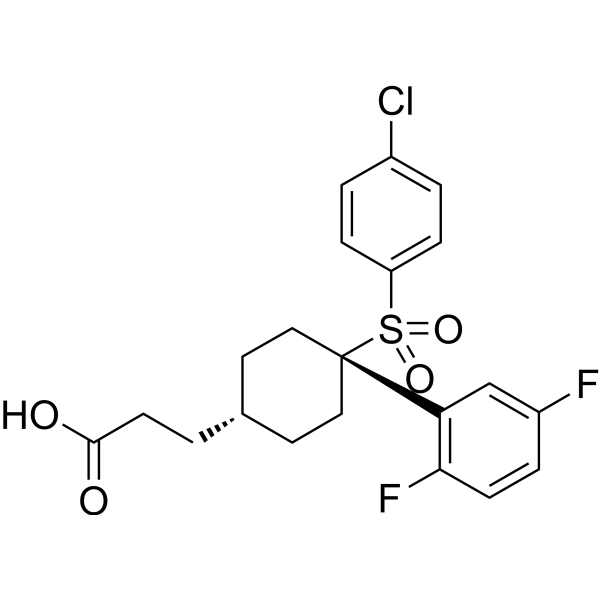
    MK-8666 (tromethamine) is a GPR40 agonist. MK-8666 (tromethamine) can be used in the research of type II diabetes .
    MK-8666 tromethamine
  • HY-W133897

    Biochemical Assay Reagents Others
    tert-Butylamine borane is a mild reducing agent. tert-Butylamine borane involves in the selective reduction of aldehydes and ketones to the corresponding alcohols .
    tert-Butylamine borane
  • HY-W017206

    Drug Intermediate Others
    1-Phenyl-2-nitropropene is the reduction product of acetophenone and can be used to prepare chiral amine compounds .
    1-Phenyl-2-nitropropene
  • HY-106767

    Biochemical Assay Reagents Metabolic Disease
    Dulofibrate is a hypolipidaemic agent that induces microsomal drug-metabolizing enzymes. Dulofibrate is selective for a reduction in triglycerides. Dulofibrate decreases nopol conjugation .
    Dulofibrate
  • HY-E70522

    DHFR

    Others Others
    Dihydrofolate reductase is a key enzyme in folate metabolism and, therefore, in the production of thymidine. Its role in thymidine biosynthesis is the reduction of dihydrofolate to tetrahydrofolate using the cofactor NADPH .
    Dihydrofolate reductase
  • HY-W012308

    Drug Metabolite Inflammation/Immunology
    2′-Hydroxydihydrochalcone (Compound 2a) is an anti-inflammatory agent. 2′-Hydroxydihydrochalcone can be synthesized from the reduction of Flavone (HY-N2424) .
    2′-Hydroxydihydrochalcone
  • HY-P11633

    Autophagy Neurological Disease
    YLRPEGDW is an orally active sleep-promoting peptide. YLRPEGDW upregulates Autophagy-related genes, increase Autophagy activity. YLRPEGDW could improve Caffeine-induced sleep reduction .
    YLRPEGDW
  • HY-147391

    Sodium Channel Neurological Disease
    ASIC-IN-1 is a potent acid sensing ion channel inhibitor with an IC50 value of < 10 µM. ASIC-IN-1 causes a dose- dependent reduction of the pain intensity .
    ASIC-IN-1
  • HY-126730

    Phosphatase Cancer
    Rubratoxin A is a natural mycotoxin and competitive inhibitor of protein phosphatase 2A (PP2A) with an IC50 of 170 nM. Rubratoxin A causes suppression of tumor metastasis and reduction of primary tumor volume in mouse xenografts .
    Rubratoxin A
  • HY-78036R

    Citronic acid (Standard); Methylfumaric acid (Standard)

    Endogenous Metabolite Reference Standards Others
    Mesaconic acid (Standard) is the analytical standard of Mesaconic acid. This product is intended for research and analytical applications. Mesaconic acid is an active product that can be extracted from Saxifraga stolonifera. Mesaconic acid is used as a fire retardant and is a competitive inhibitor of fumarate reduction[1].
    Mesaconic acid (Standard)

Inquiry Online

Your information is safe with us. * Required Fields.

Salutation


Country or Region *

Applicant Name *


Organization Name *

Department *


Email Address *


Product Name *

Cat. No.


Requested quantity *

Phone Number *


Remarks

Inquiry Online

Inquiry Information

Product Name:
Cat. No.:
Quantity:
MCE Japan Authorized Agent:

