
1. Search Result
Search Result
Pathways Recommended: Cell Cycle/DNA Damage
Results for "

Retinal damage

" in MedChemExpress (MCE) Product Catalog:

22

Inhibitors & Agonists

1

Peptides

1

Inhibitory Antibodies

7

Natural
Products

1

Oligonucleotides

Targets Recommended:
Cat. No. Product Name Target Research Areas Chemical Structure
  • HY-W004500
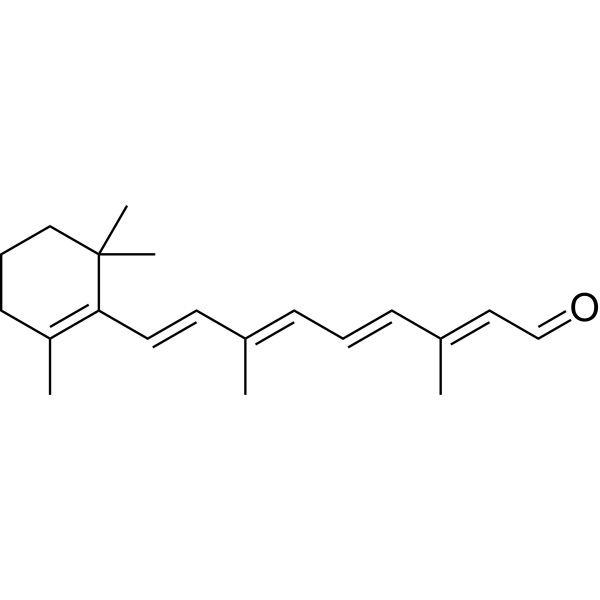
    All-trans-retinal
    3 Publications Verification

    Endogenous Metabolite Apoptosis Metabolic Disease
    All-trans-retinal is an vitamin A metabolite in the retina, and is produced following photo-isomerization of the visual chromophore 11-cis-Retinal. All-trans-retinal is cleared from photoreceptors by ATP-binding cassette transporter (ABCA4) and all-trans-retinol dehydrogenase (RDH). All-trans-retinal induces Bax activation via DNA damage to mediate retinal cell apoptosis .
    All-trans-retinal
  • HY-N0428
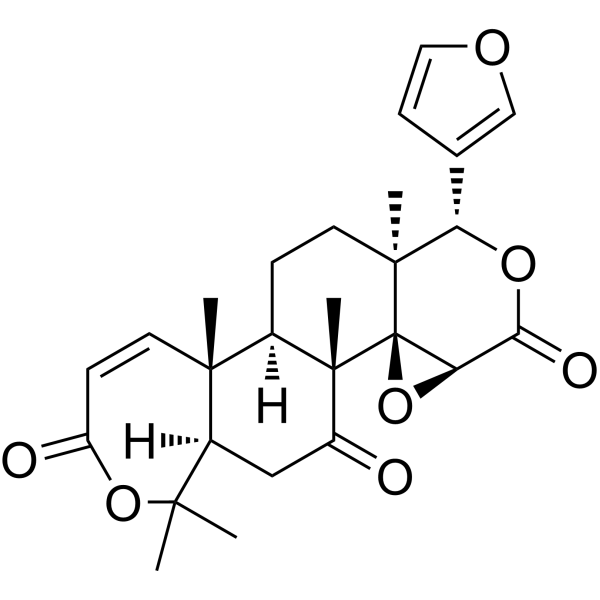
    Obacunone
    4 Publications Verification

    Apoptosis Cancer
    Obacunone is a highly oxidized triterpenoid limonoid isolated from citrus plants. Obacunone exerts its anticancer effects by inducing apoptosis. Obacunone also protects retinal pigment epithelial (RPE) cells from ultraviolet (UV) radiation (UVR)-induced oxidative damage .
    Obacunone
  • HY-107661
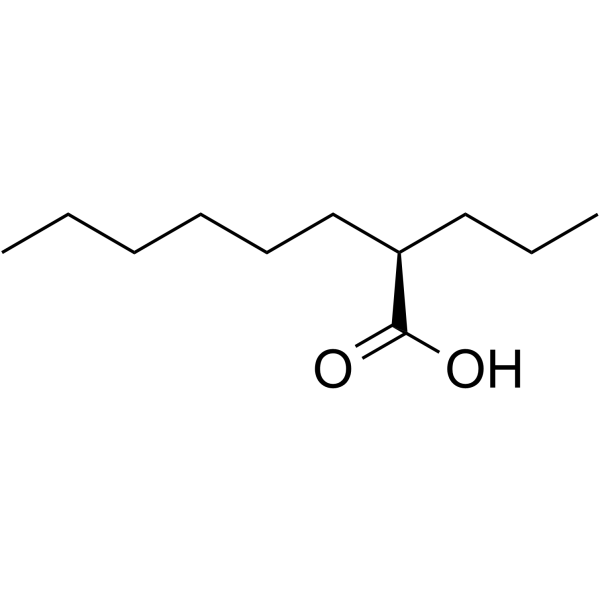
    Arundic Acid
    2 Publications Verification

    ONO-2506; (R)-2-Propyloctanoic acid

    ERK Akt NF-κB EAAT Cardiovascular Disease Neurological Disease
    Arundic Acid is an orally effective astrocyte function modulator and neuroprotective agent. Arundic Acid increases the expression and function of the astrocytic glutamate transporter EAAT1 by activating the ERK, Akt and NF-κB pathways. Arundic Acid attenuates retinal ganglion cell death in a normal-tension glaucoma model. Arundic Acid exerts neuroprotective effects in a mouse model of Parkinson's disease. Arundic Acid is a S100β protein synthesis inhibitor that prevents neurological deficits and brain tissue damage after intracerebral hemorrhage in rats. Arundic Acid downregulates neuroinflammation and astrocytic dysfunction after status epilepticus in immature rats. Arundic Acid is applicable to research related to Parkinson's disease, cerebral ischemia, glaucoma, intracerebral hemorrhage and epilepsy .
    Arundic Acid
  • HY-W040045
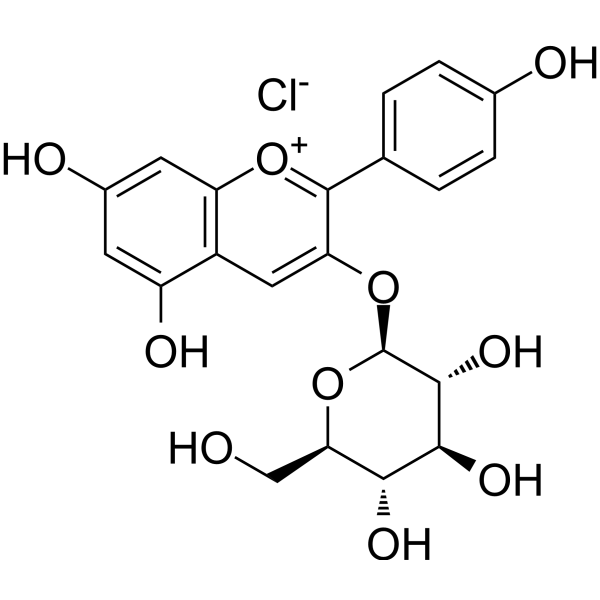
    Callistephin chloride
    1 Publications Verification

    Pelargonidin-3-O-glucoside chloride

    Reactive Oxygen Species (ROS) COX NO Synthase p38 MAPK TNF Receptor Apoptosis Neurological Disease Metabolic Disease Inflammation/Immunology Cancer
    Callistephin (Pelargonidin 3-O-glucoside) chloride is an anthocyanin. Callistephin chloride regulates the expression of inflammatory (reducing iNOS/TNF-α/COX-2) and apoptosis-related proteins by inhibiting p38 phosphorylation, and enhances the protective effect of Isoflurane (HY-A0134) on microglial cell damage. Callistephin chloride significantly reduces ROS levels, eliminates DPPH free radicals, protects retinal pigment epithelial cells, and inhibits lipid peroxidation. Callistephin chloride can alleviate glutamate excitotoxicity, reduce neuronal apoptosis, and protect cerebellar granule neurons. Callistephin chloride can inhibit the proliferation and metastasis of breast cancer cells by inducing apoptosis .
    Callistephin chloride
  • HY-148457

    Izervay

    Complement System Infection Neurological Disease Inflammation/Immunology
    Avacincaptad pegol (Izervay) is a selective inhibitor targeting complement component C5, and is a pegylated ribonucleic acid aptamer. Avacincaptad pegol inhibits the cleavage of C5 into pro-inflammatory C5a and C5b, which forms the membrane attack complex (C5b-9), thereby reducing inflammatory cell recruitment and retinal cell damage. Avacincaptad pegol can slow the growth of geographic atrophy (GA) lesions and reduce the risk of persistent vision loss. Avacincaptad pegol can be used in research of geographic atrophy associated with age-related macular degeneration (AMD) and has been approved by the FDA .
    Avacincaptad pegol
  • HY-139192
    Brophenexin
    3 Publications Verification

    NMDAR/TRPM4-IN-2

    iGluR TRP Channel ERK Neurological Disease
    Brophenexin (compound 8) is a potent NMDAR/TRPM4 interaction interface inhibitor. Brophenexin shows neuroprotective activity. Brophenexin prevents NMDA-induced cell death and mitochondrial dysfunction in hippocampal neurons, with an IC50 of 2.1 μM. Brophenexin protects mice from MCAO-induced brain damage and NMDA-induced retinal ganglion cell loss .
    Brophenexin
  • HY-P1663A
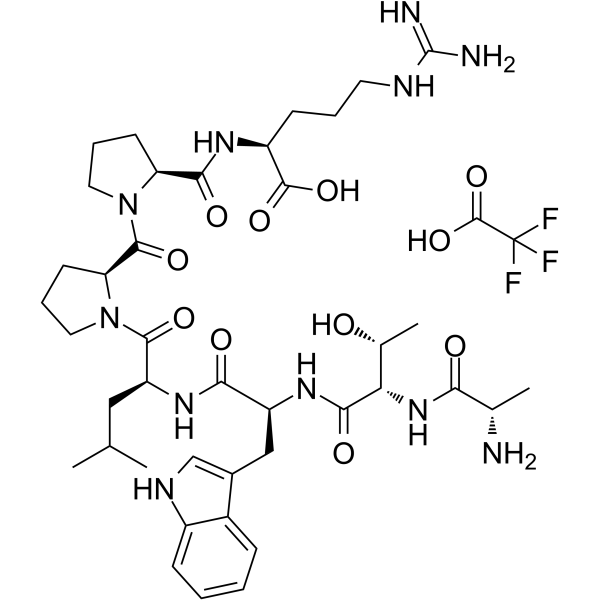
    ATWLPPR Peptide TFA
    1 Publications Verification

    Complement System Cardiovascular Disease Metabolic Disease
    ATWLPPR Peptide TFA, a heptapeptide, acts as a selective neuropilin-1 inhibitor, inhibits VEGF165 binding to NRP-1, used in the research of angiogenesis . ATWLPPR Peptide TFA has potential in reducing the early retinal damage caused by diabetes .
    ATWLPPR Peptide TFA
  • HY-N11499

    Bacterial Infection Inflammation/Immunology
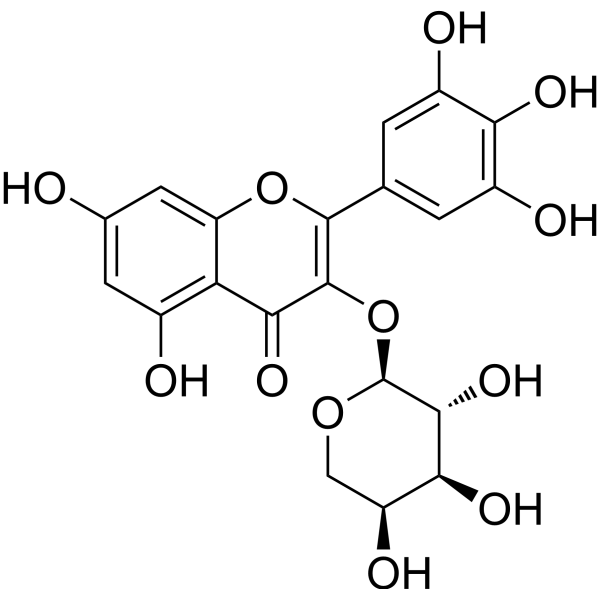
    Myricetin 3-O-α-L-arabinopyranoside is a quercetin derivative and plant flavonoid with antioxidant, antibacterial and antiurease effects. Myricetin 3-O-α-L-arabinopyranoside inhibits A2E photooxidation-induced RPE cell death. Myricetin 3-O-α-L-arabinopyranoside is protective against retinal degeneration and protects against blue light (BL)-induced damage in RPE cells and mouse models .
    Myricetin 3-O-α-L-arabinopyranoside
  • HY-139192A
    Brophenexin free base
    3 Publications Verification

    NMDAR/TRPM4-IN-2 free base

    iGluR TRP Channel ERK Neurological Disease
    Brophenexin free base (compound 8) is a potent NMDAR/TRPM4 interaction interface inhibitor. Brophenexin free base shows neuroprotective activity. Brophenexin free base prevents NMDA-induced cell death and mitochondrial dysfunction in hippocampal neurons, with an IC50 of 2.1 μM. Brophenexin free base protects mice from MCAO-induced brain damage and NMDA-induced retinal ganglion cell loss .
    Brophenexin free base
  • HY-179157

    PROTACs Checkpoint Kinase (Chk) DNA/RNA Synthesis Apoptosis Bcl-2 Family Caspase Cancer
    MA203 is a highly efficient and selective PROTAC degrader targeting CHK1. MA203 accelerates CRBN-dependent proteasomal degradation of CHK1 in solid tumor-derived cells and acute leukemia cells. MA203 induces DNA replication stress. MA203 blocks cell cycle progression and triggers tumor cell apoptosis. MA203 does not damage healthy differentiated and primitive hematopoietic cells, stromal cells, and retinal epithelial cells. MA203 can be used for the study of CHK1-dependent cancers .
    MA203
  • HY-136903

    Calcium Channel Proteasome Reactive Oxygen Species (ROS) Cardiovascular Disease Neurological Disease Inflammation/Immunology
    SNJ-1945 is an orally active Calpain inhibitor that can cross the blood-brain barrier. SNJ-1945 protects rat hearts against cardiac arrest-reperfusion injury by inhibiting the hydrolysis of α-fodrin. SNJ-1945 inhibits VEGF-induced angiogenesis in retinal endothelial cells. SNJ-1945 also protects SH-SY5Y cells from damage induced by MPP+ (HY-W008719) and Rotenone (HY-B1756). SNJ-1945 exhibits anti-inflammatory and neuroprotective activities in a mouse model of multiple sclerosis. SNJ-1945 can be used for the research of cardiovascular, nervous system and inflammatory diseases .
    SNJ-1945
  • HY-P11469

    Melanocortin Receptor Interleukin Related Neurological Disease Metabolic Disease Inflammation/Immunology
    PG-901 is a full, selective MC5R agonist (EC50 = 0.072 nM for hMC5R). PG-901 is also a full antagonist at the hMC3R and the hMC4R (Kb: 1.0 nM and 0.53 nM, respectively). PG-901 significantly diminishes Cytokines (IL-1α, IL-1β, IL-6). PG-901 increases glucose tolerance, reduces blood glucose, decreases retinal damage .
    PG-901
  • HY-P991886

    Complement System Neurological Disease
    ANX-M1 is a blood-brain barrier-permeable anti-C1q antibody. ANX-M1 can slow down the progression of retinal degeneration following photo-oxidative damage. ANX-M1 has been incorporated into nanocarriers to evaluate its brain delivery efficacy in a mouse model of Alzheimer's disease. ANX-M1 is applicable for research on age-related macular degeneration and Alzheimer's disease [1] .
    ANX-M1 (Human IgG1)
  • HY-175663

    RPE65 Metabolic Disease
    EYE-002 is a RPE65 inhibitor with an IC50 of 69 nM. EYE-002 promotes recovery of scotopic ERG a-/b-wave amplitudes. EYE-002 regulates the visual cycle in mice by reducing 11-cis-retinal (11cRAL) (HY-116711) synthesis and increasing all-trans-retinyl esters (atREs). EYE-002 exerts protective effects against photic retinal damage in mice. EYE-002 can be used for the study of visual cycle-associated retinopathies, such as Stargardt disease type 1 (STGD1) .
    EYE-002
  • HY-N0428R

    Reference Standards Apoptosis Cancer
    Obacunone (Standard) is the analytical standard of Obacunone. This product is intended for research and analytical applications. Obacunone is a highly oxidized triterpenoid limonoid isolated from citrus plants. Obacunone exerts its anticancer effects by inducing apoptosis. Obacunone also protects retinal pigment epithelial (RPE) cells from ultraviolet (UV) radiation (UVR)-induced oxidative damage .
    Obacunone (Standard)
  • HY-W040045R

    Pelargonidin-3-O-glucoside chloride (Standard)

    Reference Standards Reactive Oxygen Species (ROS) COX NO Synthase p38 MAPK Apoptosis TNF Receptor Neurological Disease Inflammation/Immunology Cancer
    Callistephin (Pelargonidin 3-O-glucoside) chloride (Standard) is the analytical standard of Callistephin chloride (HY-W040045). This product is intended for research and analytical applications. Callistephin chloride is an anthocyanin. Callistephin chloride regulates the expression of inflammatory (reducing iNOS/TNF-α/COX-2) and apoptosis-related proteins by inhibiting p38 phosphorylation, and enhances the protective effect of Isoflurane (HY-A0134) on microglial cell damage. Callistephin chloride significantly reduces ROS levels, eliminates DPPH free radicals, protects retinal pigment epithelial cells, and inhibits lipid peroxidation. Callistephin chloride can alleviate glutamate excitotoxicity, reduce neuronal apoptosis, and protect cerebellar granule neurons. Callistephin chloride can inhibit the proliferation and metastasis of breast cancer cells by inducing apoptosis.
    Callistephin chloride (Standard)
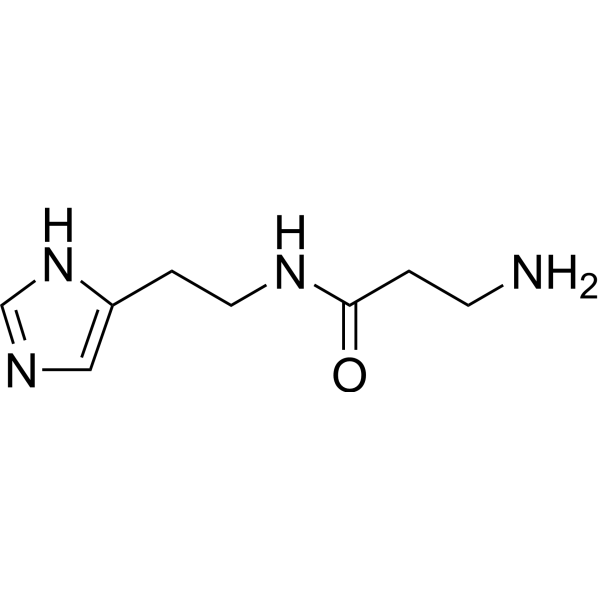
  • HY-107567

    β-Alanylhistamine

    Histamine Receptor Cardiovascular Disease Neurological Disease Metabolic Disease Inflammation/Immunology
    Carcinine (β-Alanylhistamine) is a selective and orally active histamine H3 receptor antagonist with a Ki of 0.2939 μM. Carcinine can reduce histamine content. Carcinine exhibits anti-oxidant activity and neuroprotective effects. Carcinine shows positive inotropic effect and can reduce blood sugar and blood lipid levels. Carcinine can be used for the researches of inflammation, neurological, cardiovascular and metabolic disease, such as retinal damage, seizure and diabetes .
    Carcinine
  • HY-107567B

    β-Alanylhistamine dihydrochloride

    Histamine Receptor Cardiovascular Disease Neurological Disease Metabolic Disease Inflammation/Immunology
    Carcinine (β-Alanylhistamine) dihydrochloride is the dihydrochloride salt of Carcinine (HY-107567). Carcinine is a selective and orally active histamine H3 receptor antagonist with a Ki of 0.2939 μM. Carcinine can reduce histamine content. Carcinine exhibits anti-oxidant activity and neuroprotective effects. Carcinine shows positive inotropic effect and can reduce blood sugar and blood lipid levels. Carcinine can be used for the researches of inflammation, neurological, cardiovascular and metabolic disease, such as retinal damage, seizure and diabetes .
    Carcinine dihydrochloride
  • HY-107567BR

    β-Alanylhistamine dihydrochloride (Standard)

    Reference Standards Histamine Receptor Cardiovascular Disease Neurological Disease Metabolic Disease Inflammation/Immunology
    Carcinine dihydrochloride (Standard) is the analytical standard of Carcinine (dihydrochloride) (HY-107567B). This product is intended for research and analytical applications. Carcinine (β-Alanylhistamine) dihydrochloride is the dihydrochloride salt of Carcinine (HY-107567). Carcinine is a selective and orally active histamine H3 receptor antagonist with a Ki of 0.2939 μM. Carcinine can reduce histamine content. Carcinine exhibits anti-oxidant activity and neuroprotective effects. Carcinine shows positive inotropic effect and can reduce blood sugar and blood lipid levels. Carcinine can be used for the researches of inflammation, neurological, cardiovascular and metabolic disease, such as retinal damage, seizure and diabetes .
    Carcinine dihydrochloride (Standard)
  • HY-N18471

    5,7-DHP

    Monoamine Oxidase 5-HT Receptor Cardiovascular Disease Neurological Disease
    5,7-Dihydroxytryptamine (5,7-DHP) is an autofluorescent (λex≈365 nm), selective neurotoxin and a transport substrate for MAO-A and 5-HT. 5,7-Dihydroxytryptamine can specifically target and damage central and peripheral 5-HTergic neurons, while affecting 5-HT-related pathways and neurotransmitter balance. 5,7-Dihydroxytryptamine can be used to establish 5-HTergic neuron injury models for studies on neural development, neurodegenerative diseases, as well as mechanisms related to platelet function and retinal neurons .
    5,7-Dihydroxytryptamine
  • HY-N18471A

    5,7-DHP hydrobromide

    Monoamine Oxidase 5-HT Receptor Neurological Disease
    5,7-Dihydroxytryptamine (5,7-DHT) hydrobromide is an autofluorescent (Ex ≈ 365 nm), selective neurotoxin and a transport substrate for MAO-A and 5-HT. 5,7-Dihydroxytryptamine hydrobromide can specifically target and damage central and peripheral 5-HTergic neurons, while affecting 5-HT-related pathways and neurotransmitter balance. 5,7-Dihydroxytryptamine hydrobromide can be used to establish 5-HTergic neuron injury models for studies on neural development, neurodegenerative diseases, as well as mechanisms related to platelet function and retinal neurons .
    5,7-Dihydroxytryptamine hydrobromide
  • HY-N18471B

    5,7-DHP creatinine sulfate

    Monoamine Oxidase 5-HT Receptor Cardiovascular Disease Neurological Disease
    5,7-Dihydroxytryptamine creatinine sulfate (5,7-DHT) is an autofluorescent (Ex ≈ 365 nm), selective neurotoxin and a transport substrate for MAO-A and 5-HT. 5,7-Dihydroxytryptamine creatinine sulfate can specifically target and damage central and peripheral 5-HTergic neurons, while affecting 5-HT-related pathways and neurotransmitter balance. 5,7-Dihydroxytryptamine creatinine sulfate can be used to establish 5-HTergic neuron injury models for studies on neural development, neurodegenerative diseases, as well as mechanisms related to platelet function and retinal neurons .
    5,7-Dihydroxytryptamine creatinine sulfate

Inquiry Online

Your information is safe with us. * Required Fields.

Salutation


Country or Region *

Applicant Name *


Organization Name *

Department *


Email Address *


Product Name *

Cat. No.


Requested quantity *

Phone Number *


Remarks

Inquiry Online

Inquiry Information

Product Name:
Cat. No.:
Quantity:
MCE Japan Authorized Agent:

