
27 Results for "

SDF-1/CXCR4

" in MedChemExpress (MCE) Product Catalog:
Products (27)

27 Results for "SDF-1/CXCR4" in MCE Product Catalog:

  • Isoforms Recommended:
  • Targets Recommended:
13
13 Publications Verification
Cat. No.: HY-12488
CAS No.: 1088715-84-7
Purity:  99.11%
Target:  

CXCR

Research Areas:  

Endocrinology Cancer

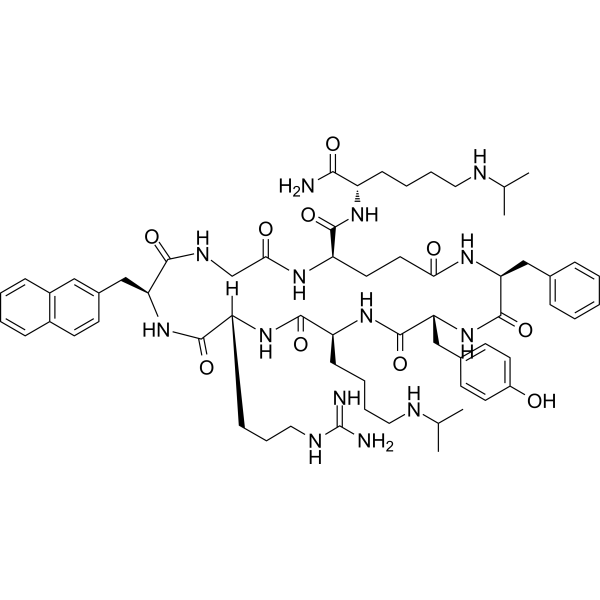
LY2510924 is a potent and selective CXCR4 antagonist that blocks SDF-1 binding to CXCR4 with an IC50 of 0.079 nM.
loading...
    loading...
3
3 Cited Publications
Cat. No.: HY-15478
CAS No.: 55778-02-4
Purity:  99.80%
Target:  

MOFs CXCR

Research Areas:  

Endocrinology Cancer

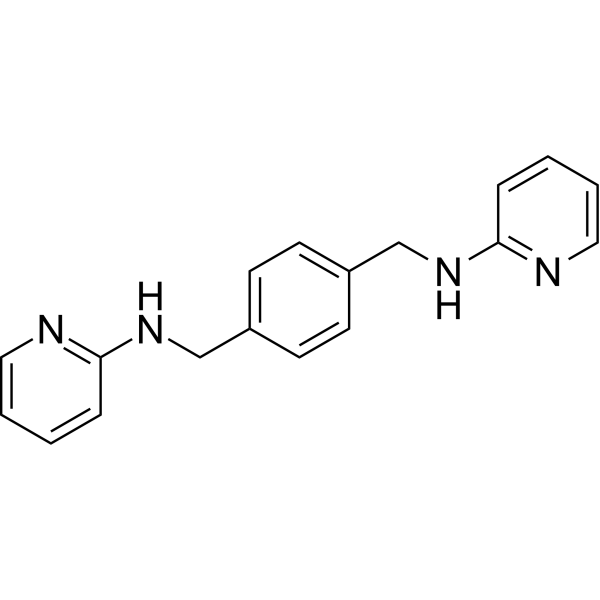
WZ811 is an orally active, highly potent competitive antagonist of CXCR4. WZ811 efficiently inhibits CXCR4/SDF-1 (or CXCL12)-mediated modulation of cAMP levels (EC50=1.2 nM) and SDF-1 induced Matrigel invasion in cells (EC50=5.2 nM) [1].
loading...
    loading...
2
2 Cited Publications
Cat. No.: HY-P4911A
Target:  

CXCR

Research Areas:  

Cardiovascular Disease

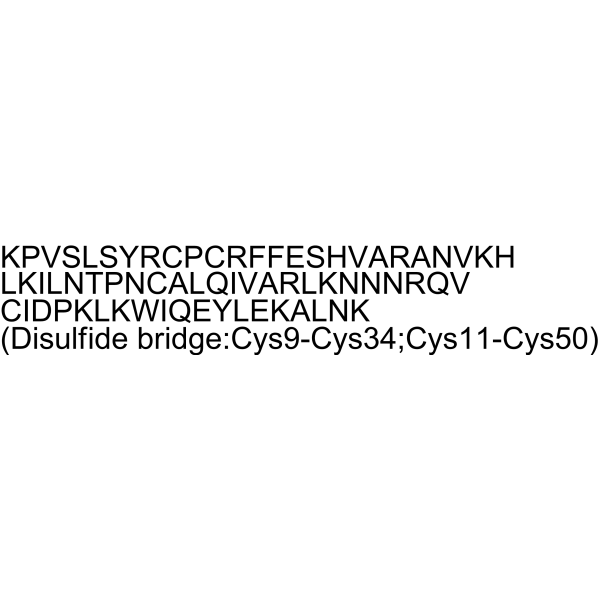
SDF-1α (human) TFA is a mononuclear cells chemoattractant that can bind to CXCR4. SDF-1α plays a central role in stem cell homing, retention, survival, proliferation, cardiomyocyte repair, angiogenesis and ventricular remodelling following myocardial infarction. SDF-1α (human) TFA can be used in cardiovascular disease research [1] .
loading...
    loading...
1
1 Cited Publications
Cat. No.: HY-P7061A
Research Areas:  

Infection Endocrinology

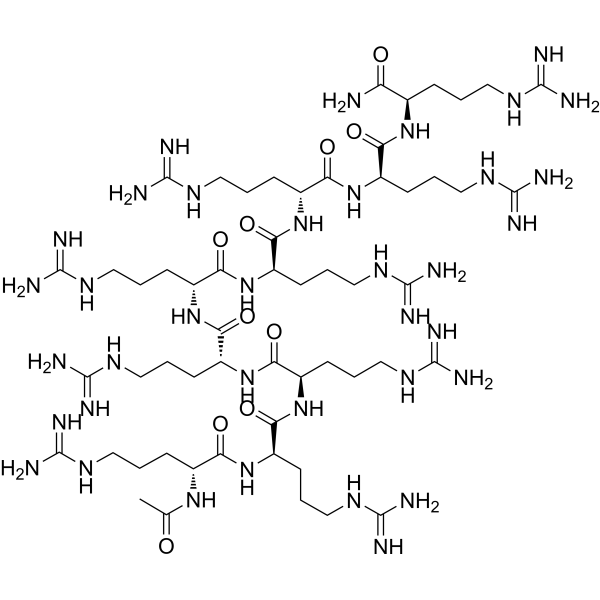
ALX 40-4C Trifluoroacetate is a small peptide inhibitor of the chemokine receptor CXCR4, inhibits SDF-1 from binding CXCR4 with a Ki of 1 μM, and suppresses the replication of X4 strains of HIV-1; ALX 40-4C Trifluoroacetate also acts as an antagonist of the APJ receptor, with an IC50 of 2.9 μM.
loading...
    loading...
Cat. No.: HY-P3612
CAS No.: 577782-52-6
Target:  

CXCR

Research Areas:  

Inflammation/Immunology

CTCE-0214 is a chemokine CXC receptor 4 (CXCR4) agonist, SDF-1α (stromal cell-derived factor-1α) peptide analog. CTCE-0214 shows anti-inflammatory activity, and can be used in inflammation sepsis and systemic inflammatory syndromes research [1] .
loading...
    loading...
Cat. No.: HY-P10427
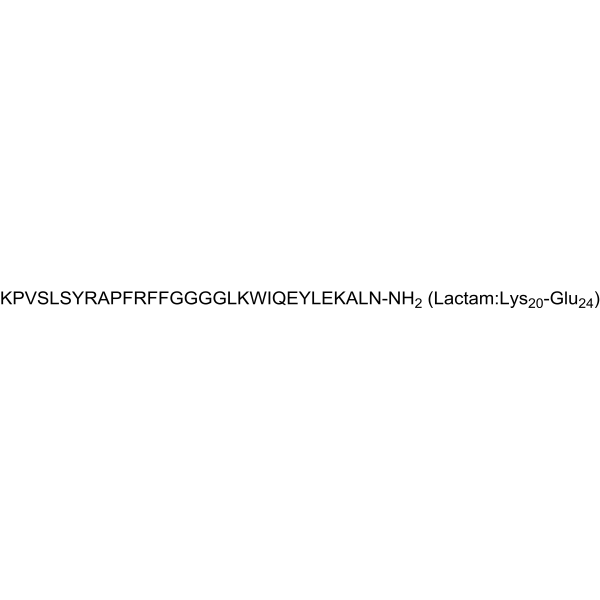
DV1 is a CXCR4 inhibitor with anti-proteolytic properties that specifically blocks the binding of SDF-1α to its receptor. DV1 inhibits the migration of breast cancer cells and enables the targeted delivery of avidin-PLGA nanoparticles to CXCR4-expressing cancer cells. DV1 not only effectively suppresses the progression of metastatic breast cancer in mouse models, but also preferentially accumulates in brain tumor tissues rather than normal brain tissues, showing potential for inhibiting intracranial tumor metastasis. As a humoral immune stimulant, DV1 induces the production of specific IgG, neutralizing antibodies and cellular immune responses, thereby providing the host with protection against lethal challenges. DV1 has been applied to studies on CXCR4-expressing cancers, glioblastoma, dengue fever and other related diseases [1] .
loading...
    loading...
Cat. No.: HY-122058A
CAS No.: 2253744-59-9
Target:  

CXCR HIV

Research Areas:  

Infection Inflammation/Immunology

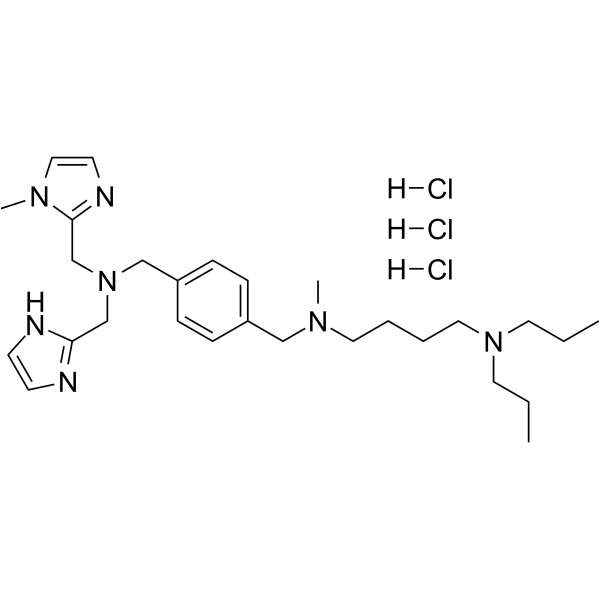
KRH-3955 hydrochloride is an orally bioavailable CXCR4 antagonist. KRH-3955 hydrochloride inhibits SDF-1α binding to CXCR4 with an IC50 of 0.61 nM. KRH-3955 hydrochloride is also a highly potent and selective inhibitor of X4 HIV-1, with an EC50 of 0.3 to 1.0 nM [1].
loading...
    loading...
Cat. No.: HY-P4109
CAS No.: 265650-93-9
Synonyms: NT21MP; V1 peptide
Target:  

CXCR

Research Areas:  

Inflammation/Immunology Cancer

vMIP-II (1-21) (NT21MP) is an inhibitor of CXCR4. vMIP-II (1-21) interacts broadly with CC and CXC chemokine receptors. vMIP-II (1-21) inhibits CXCR4 by competing with 125I-SDF-1R for binding sites (IC50=190 nM) [1].
loading...
    loading...
Cat. No.: HY-P4911
CAS No.: 1268129-65-2
Target:  

CXCR

Research Areas:  

Cardiovascular Disease

SDF-1α (human) is a mononuclear cells chemoattractant that can bind to CXCR4. SDF-1α plays a central role in stem cell homing, retention, survival, proliferation, cardiomyocyte repair, angiogenesis and ventricular remodelling following myocardial infarction. SDF-1α (human) can be used in cardiovascular disease research [1] .
loading...
    loading...
Cat. No.: HY-P10427A
Target:  

CXCR Dengue Virus

Research Areas:  

Infection

DV1 TFA is a CXCR4 inhibitor with anti-proteolytic properties that specifically blocks the binding of SDF-1α to its receptor. DV1 TFA inhibits the migration of breast cancer cells and enables the targeted delivery of avidin-PLGA nanoparticles to CXCR4-expressing cancer cells. DV1 TFA not only effectively suppresses the progression of metastatic breast cancer in mouse models, but also preferentially accumulates in brain tumor tissues rather than normal brain tissues, showing potential for inhibiting intracranial tumor metastasis. As a humoral immune stimulant, DV1 TFA induces the production of specific IgG, neutralizing antibodies and cellular immune responses, thereby providing the host with protection against lethal challenges. DV1 TFA has been applied to studies on CXCR4-expressing cancers, glioblastoma, dengue fever and other related diseases [1] .
loading...
    loading...
Cat. No.: HY-P7061
CAS No.: 143413-49-4
Research Areas:  

Infection Endocrinology

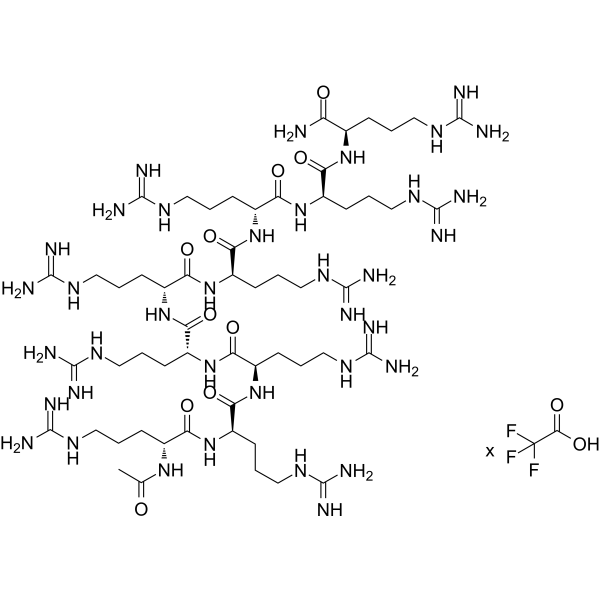
ALX 40-4C is a small peptide inhibitor of the chemokine receptor CXCR4, inhibits SDF-1 from binding CXCR4 with a Ki of 1 μM, and suppresses the replication of X4 strains of HIV-1; ALX 40-4C Trifluoroacetate also acts as an antagonist of the APJ receptor, with an IC50 of 2.9 μM.
loading...
    loading...
Cat. No.: HY-144347
CAS No.: 2177311-29-2
Target:  

CXCR

Research Areas:  

Infection Cancer

HF51116 is a potent antagonist of CXCR4. HF51116 strongly antagonizes SDF-1α-induced cell migration, calcium mobilization, and CXCR4 internalization. HF51116 inhibits HIV-1 infection via CXCR4. HF51116 has the potential for the research of HIV-1 infection, hematopoietic stem cell mobilization, and cancer metastasis [1].
loading...
    loading...
Cat. No.: HY-P991656
CAS No.: 2125546-89-4

Target:  

CXCR Apoptosis p38 MAPK Akt

Research Areas:  

Cancer

LY-2624587 is a humanized IgG4 monoclonal antibody antagonist targeting CXCR4. LY-2624587 blocks SDF-1/CXCR4 interaction and SDF-1-induced GTP binding. LY-2624587 significantly inhibits cell migration and induces apoptosis in human lymphoma and leukemia cells. LY-2624587 also inhibits CXCR4 and SDF-1 mediated cell signaling including activation of MAPK and AKT. LY-2624587 can be used for human hematological malignancies like acute myeloid leukemia (AML) research [1] .
loading...
    loading...
Cat. No.: HY-P4109A
Synonyms: NT21MP TFA; V1 peptide TFA
Target:  

CXCR

Research Areas:  

Inflammation/Immunology Cancer

vMIP-II (1-21) (NT21MP) TFA is an inhibitor of CXCR4. vMIP-II (1-21) TFA interacts broadly with CC and CXC chemokine receptors. vMIP-II (1-21) TFA inhibits CXCR4 by competing with 125I-SDF-1R for binding sites (IC50=190 nM) [1].
loading...
    loading...
Cat. No.: HY-P992405

Target:  

CXCR

Research Areas:  

Cancer

MEDI-3185 is a potent CXCR4 antagonist. MEDI-3185 binds CXCR4 via CDR3H and ECL2 β-strand/β-strand interaction, blocks SDF-1 access and displaces SDF-1. MEDI-3185 can be used for the research of hematologic tumors, ovarian tumors .
loading...
    loading...
Cat. No.: HY-122058
CAS No.: 1097732-62-1
Target:  

HIV

Research Areas:  

Infection

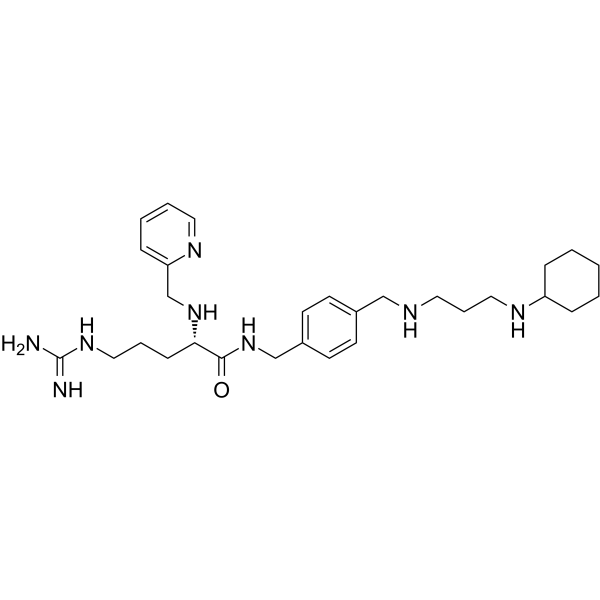
KRH-3955 is a CXCR4 antagonist with good bioavailability and potent anti-HIV-1 activity. KRH-3955 can effectively inhibit the replication of X4 HIV-1, including clinical isolates from different donors. KRH-3955 also shows activity against recombinant X4 HIV-1 containing reverse transcriptase, protease and tyrosinase resistance mutations. KRH-3955 can inhibit the binding of SDF-1alpha to CXCR4 and calcium ion signaling through this receptor. KRH-3955 inhibits the binding of an antibody against CXCR4 to CXCR4, showing a potent antagonistic effect on CXCR4. KRH-3955 shows an oral bioavailability of 25.6% in rats and can inhibit the replication of X4 HIV-1 in vivo [1].
loading...
    loading...
Cat. No.: HY-164682
CAS No.: 170861-77-5
Target:  

HIV CXCR

Research Areas:  

Infection

AMD 3329 octahydrobromide is a potent and selective anti-HIV-1 and HIV-2 compound with activity to inhibit viral replication. AMD 3329 blocks viral invasion by binding to the chemokine receptor CXCR4. AMD 3329 exhibits EC50 values as low as 0.8 and 1.6 nM when inhibiting HIV-1 and HIV-2 replication, showing better antiviral efficacy than AMD3100. AMD 3329 significantly inhibits the binding of specific CXCR4 monoclonal antibodies and the Ca(2+) flux induced by SDF-1alpha. AMD 3329 is also able to effectively interfere with virus-induced syncytium formation, with an EC50 value of 12 nM [1].
loading...
    loading...
Cat. No.: HY-P81089
Synonyms: C-X-C chemokine receptor type 4; CXC-R4; CXCR-4; Stromal cell-derived factor 1 receptor; SDF-1 receptor; Fusin; Leukocyte-derived seven transmembrane domain receptor; LESTR; CD184 antigen; CXCR4_HUMAN.

Host:  

Rabbit

Application:  

WB, IHC-P, IHC-F, ICC/IF, FC, ELISA

Reactivity:  

Human, Mouse, Rat

loading...
    loading...
Cat. No.: HY-P991790

Target:  

CXCR

Research Areas:  

Others

Anti-Human/Monkey CXCR4 Antibody (12G5) reacts with human and monkey CXCR4. Anti-Human/Monkey CXCR4 Antibody (12G5) blocks the cognate ligand, CXCL12/SDF-1, and gp120/160 from binding to CXCR4. Recommend Isotype Controls: Mouse IgG2a kappa, Isotype Control (HY-P99978) [1].
loading...
    loading...
Cat. No.: HY-P991744

Target:  

CXCR

Research Areas:  

Cancer

Anti-Mouse CXCR4 Antibody is a monoclonal antibody that specifically recognizes murine CXCR4 (C-X-C chemokine receptor 4), also known as fusin or CD184. CXCR4 is a seven-transmembrane G protein–coupled receptor whose principal endogenous ligand is CXCL12 (stromal cell–derived factor-1α, SDF-1α) and is widely expressed in hematopoietic cells, endothelial cells, neurons, as well as embryonic and adult stem cells. The CXCR4–CXCL12 signaling axis activates multiple downstream pathways, including ERK1/2, Ras, p38 MAPK, PLC/MAPK, and SAPK/JNK, thereby regulating cell survival, proliferation, migration, and stemness maintenance. Aberrant overexpression of CXCR4 is closely associated with poor prognosis and metastasis in various cancers, with CXCR4-positive tumor cells preferentially home to CXCL12-rich tissues such as the liver, bone marrow, lung, and lymph nodes. Accordingly, CXCR4 and its CXCL12-related antagonists emerge as attractive targets for experimental anticancer therapy. Anti-Mouse CXCR4 Antibody is generated using a cell-based immunization and screening strategy and exhibits high affinity for both endogenous and exogenous murine CXCR4. Anti-Mouse CXCR4 Antibody can be used for thestudy of chronic lymphocytic leukemia and multiple myeloma [1].
loading...
    loading...

