3 Results for "

SMARCB-1 deficient cells

" in MedChemExpress (MCE) Product Catalog:
Products (3)

3 Results for "SMARCB-1 deficient cells" in MCE Product Catalog:

3
3 Cited Publications
Cat. No.: HY-145925B
CAS No.: 2704617-96-7
Purity:  98.10%
Research Areas:  

Cancer

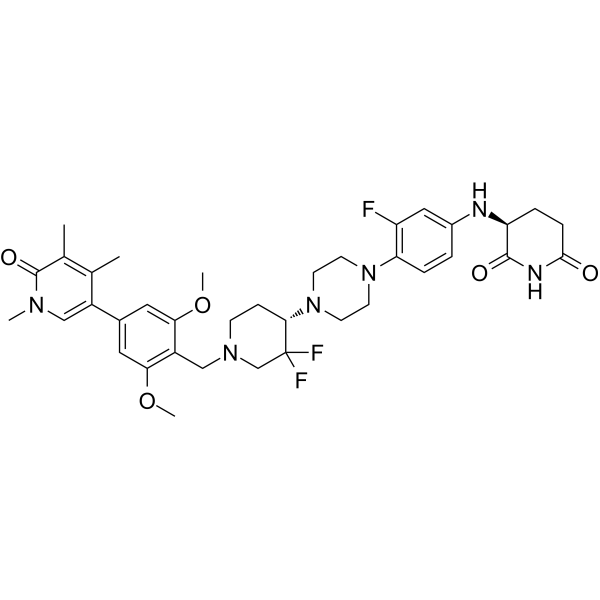
CFT8634 is an orally active BRD9 PROTAC degrader with a DC50 of 0.003 μM (HEK293T.166). CFT8634 recruits the CRBN E3 ubiquitin ligase to form a ternary complex, triggering CRBN-catalyzed BRD9 polyubiquitination and 26S proteasome-mediated degradation. CFT8634 induces sustained tumor regression and inhibits tumor growth in mouse models. CFT8634 can be used in research related to synovial sarcoma, SMARCB-1-deficient cancers, acute myeloid leukemia, malignant rhabdoid tumors, and multiple myeloma .
loading...
    loading...
Cat. No.: HY-184266
CAS No.: 2926699-71-8
Synonyms: ONO-6428513
Target:  

Ferroptosis

Research Areas:  

Cancer

GCLCi0 (ONO-6428513) is a glutamate-cysteine ligase catalytic subunit (GCLC) inhibitor and ferroptosis inducer that blocks the rate-limiting step of glutathione synthesis and exerts anti-tumor activity. GCLCi0 specifically targets SMARCB1-deficient cancer cells, induces reactive oxygen species production and lipid peroxidation. In addition, GCLCi0 shows a significant synergistic effect with SLC7A11 inhibitors and Telaglenastat (HY-12248). GCLCi0 can be used in the research of smarcb1-deficient malignant rhabdoid tumors and smarcb1-deficient epithelioid sarcomas .
loading...
    loading...
Cat. No.: HY-184267
CAS No.: 2926699-78-5
Synonyms: ONO-7068506
Research Areas:  

Cancer

GCLCi1 is an orally active glutamate-cysteine ligase catalytic subunit (GCLC) inhibitor and ferroptosis inducer. GCLCi1 blocks the rate-limiting step of glutathione synthesis, leading to GSH depletion, elevated reactive oxygen species and lipid peroxidation. GCLCi1 exhibits high selectivity for SMARCB1 -deficient cancer cells and possesses anti-tumor activity. In addition, the combination of GCLCi1 with SLC7A11 inhibitors and Telaglenastat (HY-12248) produces a synergistic effect, which can be used for the research of smarcb1-deficient malignant rhabdoid tumors and smarcb1-deficient epithelioid sarcomas .
loading...
    loading...

