9 Results for "

Suzuki-Miyaura cross-coupling reactions

" in MedChemExpress (MCE) Product Catalog:
Products (9)

9 Results for "Suzuki-Miyaura cross-coupling reactions" in MCE Product Catalog:

Cat. No.: HY-21623
CAS No.: 95464-05-4
Dichloro[1,1'-bis(diphenylphosphino)ferrocene]palladium(II) dichloromethane adduct is a common dichloromethane solvate of the palladium catalyst Pd(dppf)Cl2, a phosphine ligand palladium(II) complex, which can be used as a versatile precatalyst for various cross-coupling reactions. Dichloro[1,1'-bis(diphenylphosphino)ferrocene]palladium(II) dichloromethane adduct can stabilize reaction intermediates and lower the reaction activation energy in coupling reactions, and can be used in Suzuki-Miyaura coupling reaction studies .
loading...
    loading...
Cat. No.: HY-W002570
CAS No.: 32316-92-0
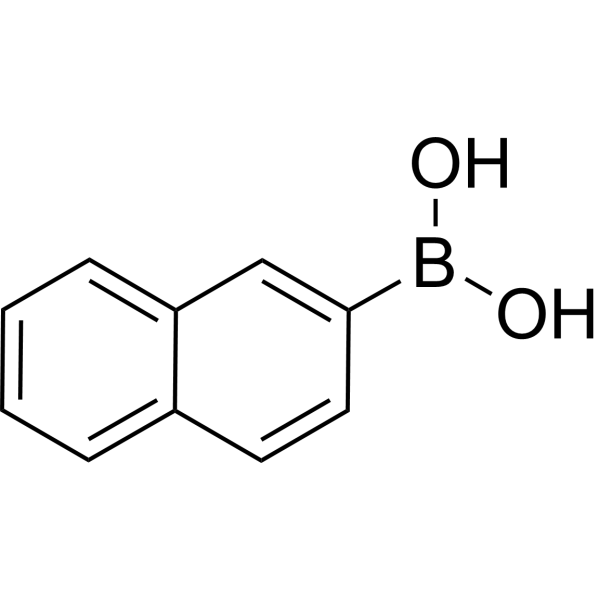
2-Naphthylboronic acid is a biochemical reagent that can be used as a biological material or organic compound for life science related research. 2-Naphthylboronic acid can undergo silylation reaction. 2-Naphthylboronic acid also readily undergo Suzuki-Miyaura cross-coupling .
loading...
    loading...
Cat. No.: HY-32927
CAS No.: 150255-96-2
Research Areas:  

Others

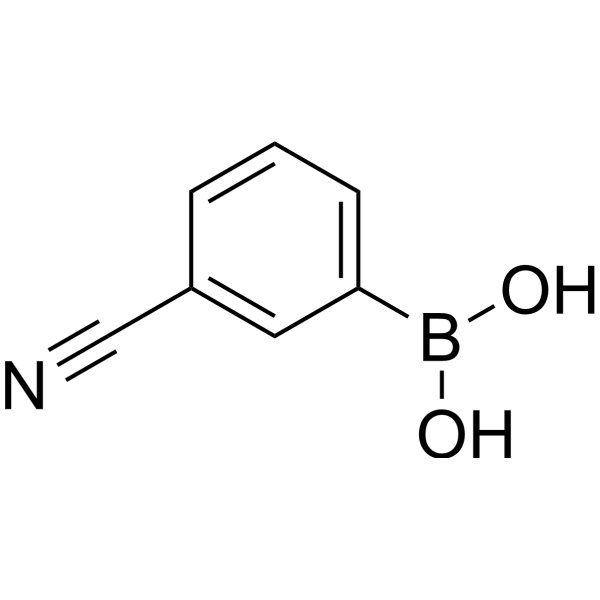
3-Cyanophenylboronic acid is an arylboronic acid-based boronic acid reagent that serves as a coupling partner in Suzuki-Miyaura cross-coupling reactions. 3-Cyanophenylboronic acid participates in reactions to synthesize 4'-propoxybiphenyl-3-carbonitrile .
loading...
    loading...
Cat. No.: HY-W013726
CAS No.: 198561-04-5
Research Areas:  

Others

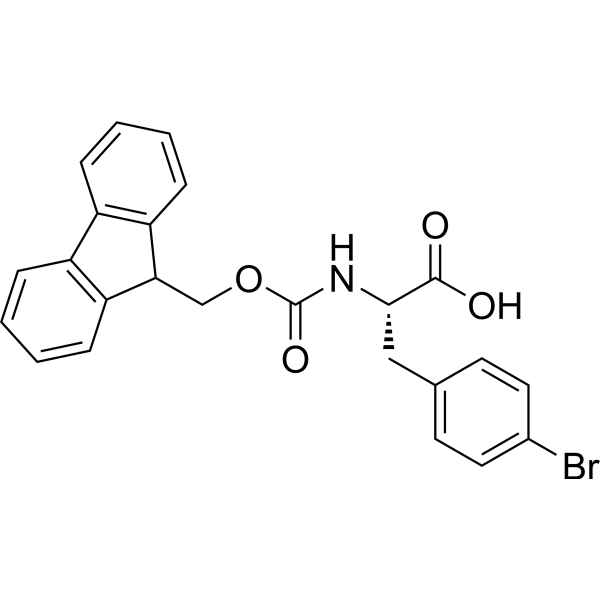
Fmoc-Phe(4-Br)-OH is a widely used amino acid derivative. Fmoc-Phe(4-Br)-OH can be used in the synthesis of compounds and for the study of protein-protein interactions and the development of biomaterials. Fmoc-Phe(4-Br)-OH can be used in peptide synthesis to incorporate phenylalanine bromide into the peptide chain .
loading...
    loading...
Cat. No.: HY-32748
CAS No.: 41404-58-4
Research Areas:  

Others

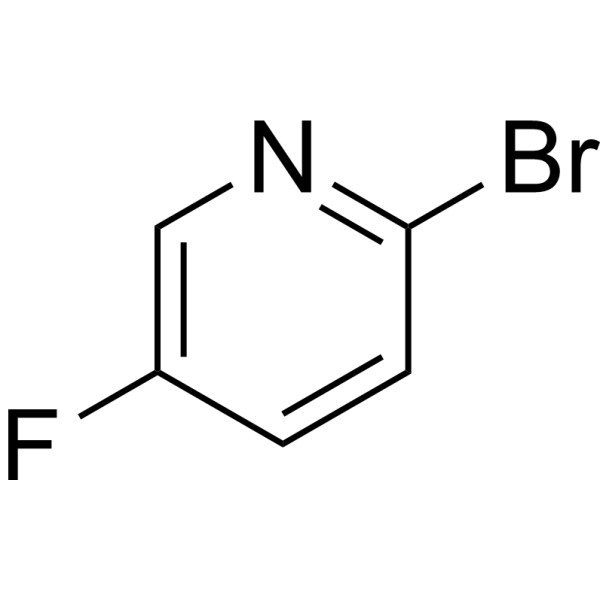
2-Bromo-5-fluoropyridine acts as a bromofluoropyridine starting material and an azaaryl halide coupling partner. 2-Bromo-5-fluoropyridine participates in an oxygen-promoted, ligand-free Pd (OAc)2-catalyzed Suzuki reaction, reacting with arylboronic acids to produce 5-fluoro-2-aryl-substituted pyridine derivatives. 2-Bromo-5-fluoropyridine can be used to synthesize 5-fluoro-2-(4-(methylsulfonyl) phenyl) pyridine, an intermediate of the GPR119 agonist GSK1292263A .
loading...
    loading...
Cat. No.: HY-W000873
CAS No.: 146631-00-7
Target:  

Drug Intermediate

Research Areas:  

Metabolic Disease

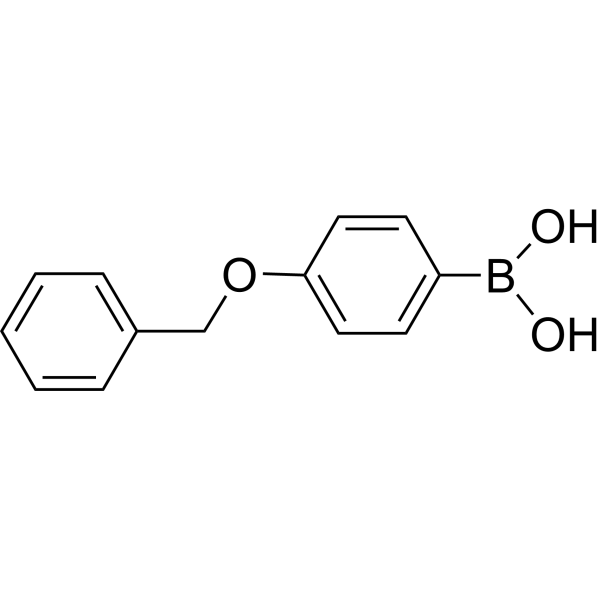
4-Benzyloxyphenylboronic acid is an arylboronic acid reagent that generates Monobenzone (HY-30272), a compound that inhibits melanin production in the skin, via electrochemical deboronation hydroxylation. 4-Benzyloxyphenylboronic acid serves as a coupling partner in Pd (0)-catalyzed Suzuki-Miyaura cross-coupling reactions for the synthesis of bent-core liquid crystals and liquid crystalline amphiphiles. 4-Benzyloxyphenylboronic acid is used in the study of hyperpigmentation .
loading...
    loading...
Cat. No.: HY-32956
CAS No.: 163105-90-6
Research Areas:  

Others

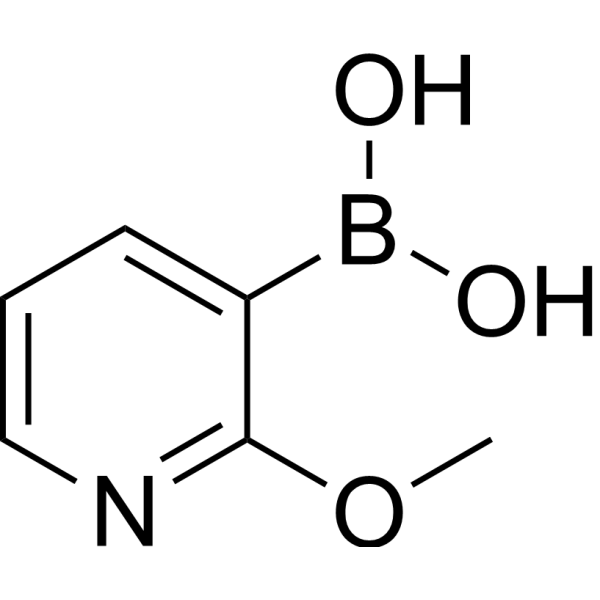
2-Methoxypyridine-3-boronic acid is a pyridine boronic acid compound and also borylation reagent used in Suzuki cross-coupling reactions .
loading...
    loading...
Cat. No.: HY-W002463
CAS No.: 63503-60-6
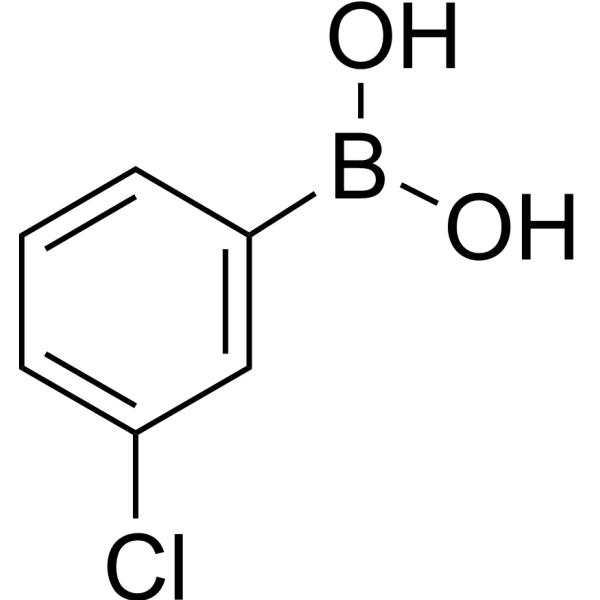
3-Chlorophenylboronic acid is employed as a reactant involved in 1,4-conjugate addition reactions with ethenesulfonamides to form arylethanesulfonamides, Suzuki-Miyaura reactions with dibromotrifluoromethylbenzene, cross-coupling reactions with diazoesters3 or potassium cyanate. 3-Chlorophenylboronic acid is involved in the synthesis of biarylketones and phthalides and synthesis of inhibitors including PDE4 inhibitors among others. 3-Chlorophenyl boronic acid can affect cell migration. 3-Chlorophenyl boronic acid can be used to study wound healing .
loading...
    loading...
Cat. No.: HY-W020985
CAS No.: 31277-98-2
Synonyms: Pd(DIPHOS)2
Bis[1,2-bis(diphenylphosphino)ethane]palladium(0), often abbreviated as Pd(PPh3)2 or Pd(dppf), is an organometallic compound. This compound is widely used as a catalyst for organic chemical reactions, especially cross-coupling reactions such as Suzuki-Miyaura reaction and Heck reaction, and its high catalytic activity, selectivity and stability make it a versatile tool for the synthesis of complex organic compounds , in addition, the potential application of Pd(PPh3)2 in the production of electronic materials and in medical and biochemical research has also been investigated.
loading...
    loading...