1. Search Result
Search Result
Results for "

TBK1 phosphorylation

" in MedChemExpress (MCE) Product Catalog:

30

Inhibitors & Agonists

1

Natural
Products

1

Click Chemistry

Cat. No. Product Name Target Research Areas Chemical Structure
  • HY-112693
    H-151
    Maximum Cited Publications
    138 Publications Verification

    STING Inflammation/Immunology
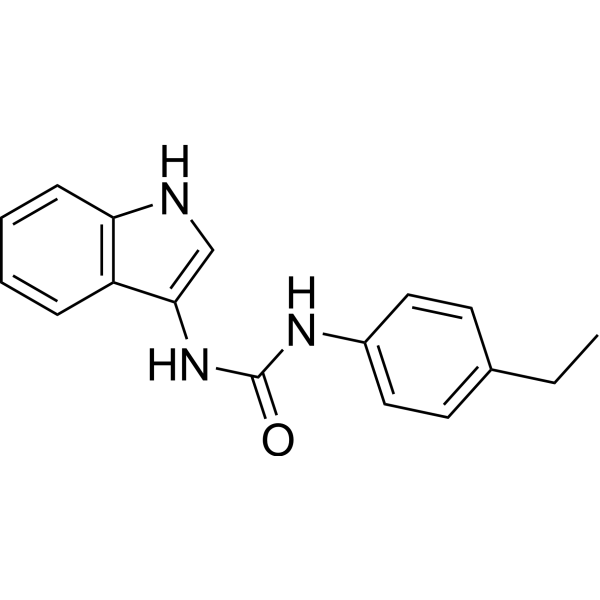
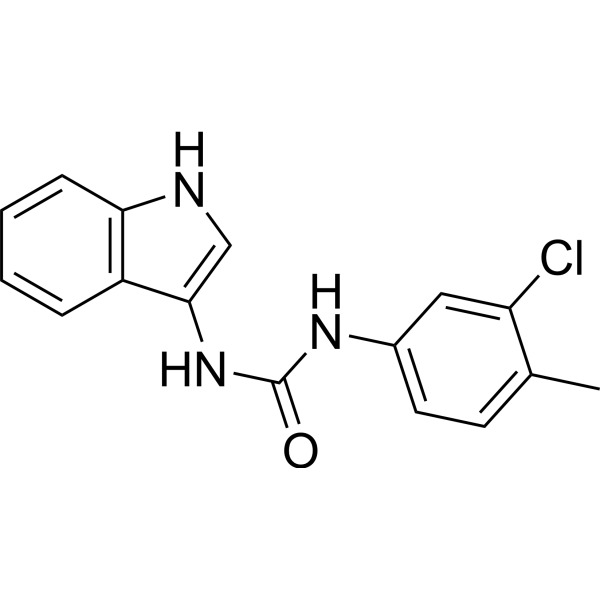
    H-151 is a potent, selective and covalent antagonist of STING that has noteworthy inhibitory activity both in cells and in vivo. H-151 reduces TBK1 phosphorylation and suppresses STING palmitoylation. H-151 can be used for the research of autoinflammatory disease .
    H-151
  • HY-B0713
    Amlexanox
    20+ Cited Publications

    AA673; Amoxanox; CHX3673

    IKK Metabolic Disease
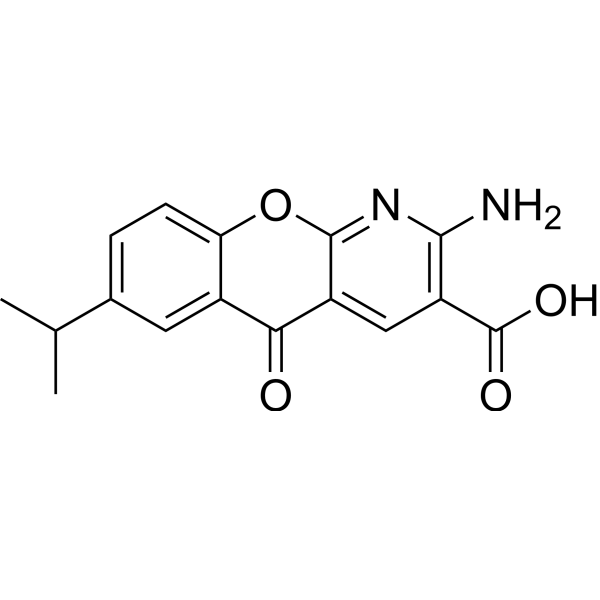
    Amlexanox (AA673; Amoxanox; CHX3673) is a specific inhibitor of IKKε and TBK1, and inhibits the IKKε and TBK1 activity determined by MBP phosphorylation with an IC50 of approximately 1-2 μM.
    Amlexanox
  • HY-10514
    BX795
    35+ Cited Publications

    PDK-1 IKK Autophagy Cancer
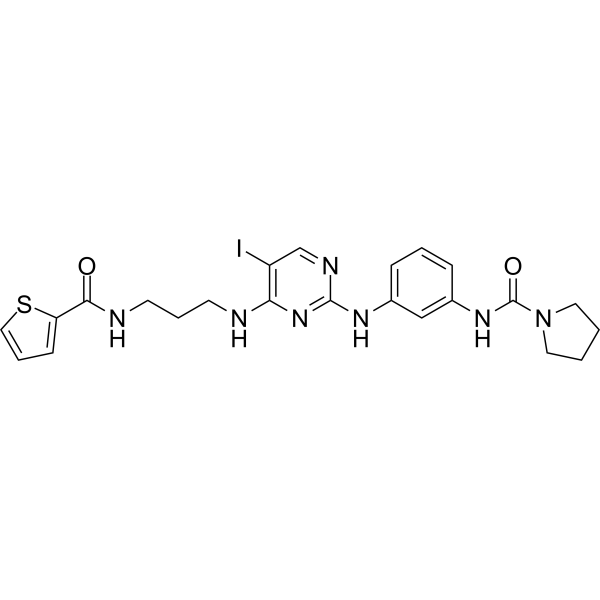
    BX795 is a potent and selective inhibitor of PDK1, with an IC50 of 6 nM. BX795 is also a potent and relatively specific inhibitor of TBK1 and IKKε, with an IC50 of 6 and 41 nM, respectively. BX795 blocks phosphorylation of S6K1, Akt, PKCδ, and GSK3β, and has lower selectivity over PKA, PKC, c-Kit, GSK3β etc. BX795 modulates autophagy .
    BX795
  • HY-173425

    STING IFNAR TNF Receptor Interleukin Related Inflammation/Immunology
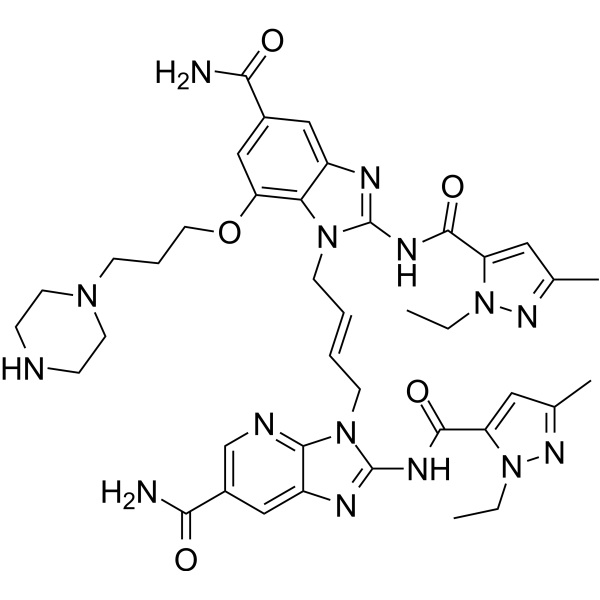
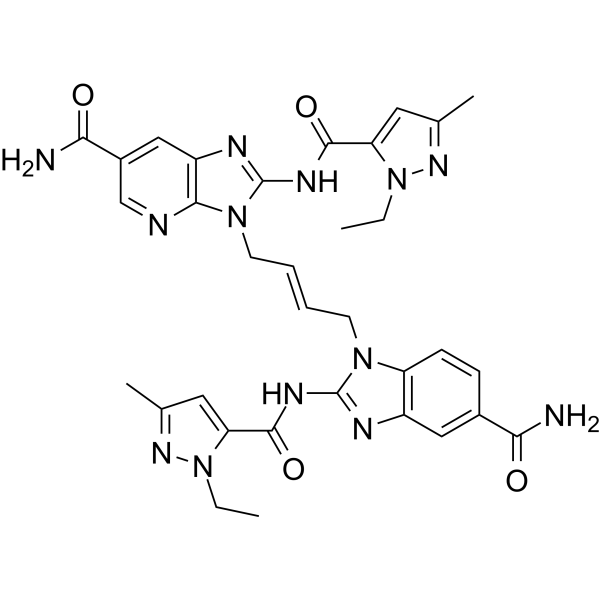
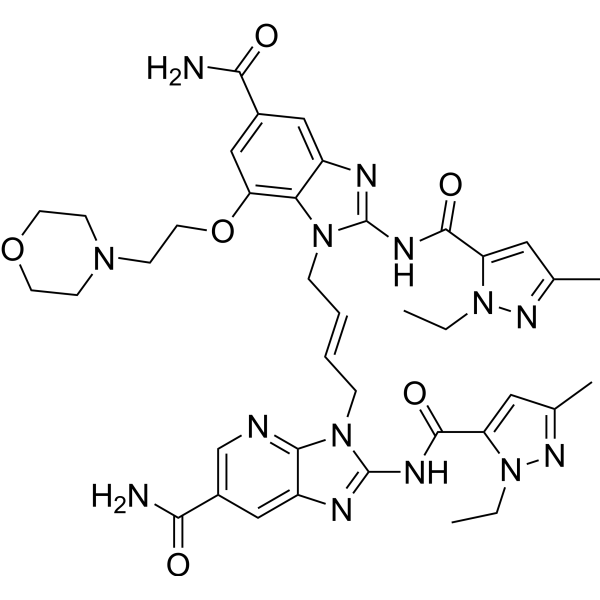
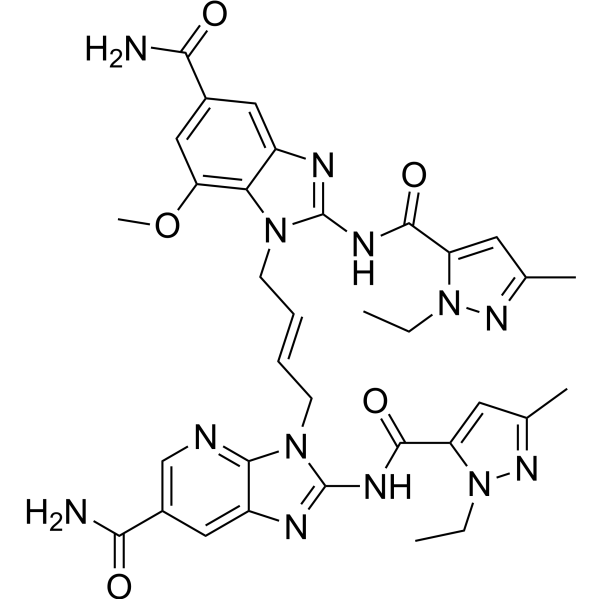
    STING-IN-15 is an orally active STING inhibitor, with an IC50 of 116 nM against h-STING and an IC50 of 96.3 nM against m-STING. STING-IN-15 inhibits the STING signaling pathway in cells, reduces the secretion of IFN-β and IP-10, downregulates the expression of ISG15, ISG56 and TNF-α, and suppresses the phosphorylation of TBK1/IRF3. STING-IN-15 alleviates systemic and renal inflammation induced by STING agonists in mice, reduces tissue damage and the expression of interferon pathway genes, and inhibits spontaneous tissue inflammation in mice. STING-IN-15 can be used for the research of acute kidney injury and autoimmune/inflammatory diseases .
    STING-IN-15
  • HY-156449

    STING IKK Inflammation/Immunology
    STING-IN-7 is a potent STING inhibitor with an IC50 of 11.5 nM. STING-IN-7 can inhibit the phosphorylation of STING, IRF3, and TBK1. STING-IN-7 can be used in the research of autoimmune and inflammatory diseases .
    STING-IN-7
  • HY-152959

    STING Infection Cancer
    STING agonist-26 (CF508) is a non-nucleotide small-molecule STING agonist. STING agonist-23 activates STING, increases phosphorylation of STING, TBK1 and IRF3. STING agonist-23 promotes the levels of IFN-β, IL-6, CXCL-10, TNF-α, ISG-15, and CCL-5 in tumor cells. STING agonist-23 exhibits activity against SARS-CoV series strains .
    STING agonist-26
  • HY-152956

    STING Infection Cancer
    STING agonist-23 (CF502) is a non-nucleotide small-molecule STING agonist. STING agonist-23 activates STING, increases phosphorylation of STING, TBK1 and IRF3. STING agonist-23 promotes the levels of IFN-β, IL-6, CXCL-10, TNF-α, ISG-15, and CCL-5 in tumor cells. STING agonist-23 exhibits activity against SARS-CoV series strains .
    STING agonist-23
  • HY-175714

    STING Inflammation/Immunology Cancer
    STING agonist-46 is an orally active STING agonist. STING agonist-46 activates the STING signaling pathway, promoting phosphorylation of TBK1 and IRF3, and secretion of IFN-β and IP-10. STING agonist-46 directly binds to STING and increases its thermal stability. STING agonist-46 demonstrates potent anti-tumor efficacy in B16F10, CT26, and 4T1 mouse models. STING agonist-46 can be used for cancer immunotherapy studies .
    STING agonist-46
  • HY-162133

    STING Apoptosis IKK IFNAR NF-κB Cancer
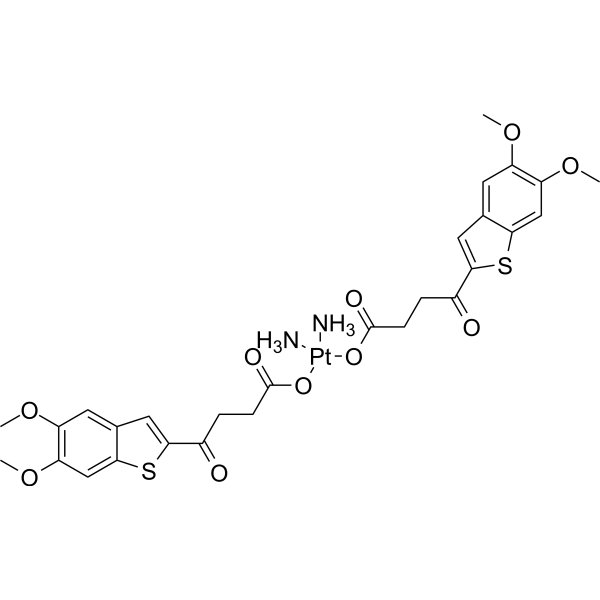
    MSA-2-Pt, platinum salt-modified MSA-2 (HY-136927), is a STING agonist. MSA-2-Pt inducing cell
    death by platinum and activating the STING pathway by MSA-2. MSA-2-Pt direct activates STING pathway, induces phosphorylation of TBK1, IRF3, and NF-κB p65. MSA-2-Pt enhances tumor infiltration of CD4 + and CD8 + T cells, and induces tumor cell death and apoptosis in mouse colon carcinoma and melanoma models .
    MSA-2-Pt
  • HY-158036

    PROTACs STING IKK IFNAR CXCR Inflammation/Immunology
    PROTAC STING Degrader-2 is a STING PROTAC degrader with a DC50 of 0.53 μM. PROTAC STING Degrader-2 reduces the phosphorylation levels of TBK1 and IRF3. PROTAC STING Degrader-2 decreases the mRNA expression levels of IFN-β, CXCL10 and TNF-α, and blocks luciferase secretion. PROTAC STING Degrader-2 can be used in the research of autoimmune diseases .
    PROTAC STING Degrader-2
  • HY-178049

    STING IFNAR Interleukin Related Neurological Disease Inflammation/Immunology
    UM-259 is a STING inhibitor, with an EC50 of 1.50 μM in THP1-Dual cells expressing wild-type STING. UM-259 blocks STING oligomerization and inhibits diABZI-induced phosphorylation of TBK1 and IRF3, thereby suppressing the transcription of IFNβ and IL6 and reducing IFNβ secretion. UM-259 can be used for the study of STING-dependent inflammatory and neurological diseases .
    UM-259
  • HY-176192

    Toll-like Receptor (TLR) NF-κB p38 MAPK ERK IKK TNF Receptor Interleukin Related Inflammation/Immunology
    SMU-14a is a selective Toll-like receptor 3 (TLR3) inhibitor wirh an IC50 of 0.18 μM. SMU-14a reduces phosphorylation of p65, ERK, and TBK1 via NF-κB, MAPK, and IRF3 signaling pathways. SMU-14a inhibits IL-6 secretion in mouse peritoneal macrophages, downregulates TNF-α in human peripheral blood monocytes and decreases serum alanine aminotransferase (ALT) and aspartate aminotransferase (AST) levels. SMU-14a can be used for the research of acute hepatitis .
    SMU-14a
  • HY-N8107
    Matairesinol monoglucoside
    2 Publications Verification

    STING IFNAR HBV Infection
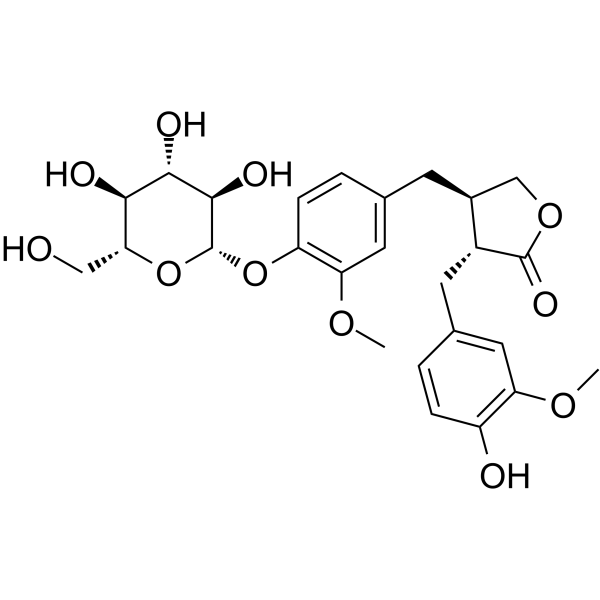
    Matairesinol monoglucoside is a STING activator. Matairesinol monoglucoside modulates the STING-TBK1-IRF3 signaling axis, promotes STING transcriptional expression, increases TBK1 and IRF3 phosphorylation. Matairesinol monoglucoside induces IFN-α and IFN-β production, reduces HBV DNA, HBsAg, and HBeAg expression. Matairesinol monoglucoside can be used for the research of hepatitis b virus (hbv) infection .
    Matairesinol monoglucoside
  • HY-152961

    STING Infection
    STING agonist-28 (CF510) is a non-nucleotide small-molecule STING agonist. STING agonist-23 activates STING, increases phosphorylation of STING, TBK1 and IRF3. STING agonist-23 promotes the levels of IFN-β, IL-6, CXCL-10, TNF-α, ISG-15, and CCL-5 in tumor cells. STING agonist-23 exhibits activity against SARS-CoV series strains .
    STING agonist-28
  • HY-173462

    IKK Cancer
    TBK1-IN-2 (Compound A1) is a potent TBK1 inhibitor (IC50: 775 pM). TBK1-IN-2 binds to TBK1 through stable hydrogen bonds and π-π stacking, inhibiting IRF3 phosphorylation. TBK1-IN-2 synergizes with TNF/IFNγ to enhance immune-mediated tumor cell death. TBK1-IN-2 can be used in cancer immunotherapy research .
    TBK1-IN-2
  • HY-B0713R

    AA673 (Standard); Amoxanox (Standard); CHX3673 (Standard)

    Reference Standards IKK Metabolic Disease
    Amlexanox (Standard) is the analytical standard of Amlexanox. This product is intended for research and analytical applications. Amlexanox (AA673; Amoxanox; CHX3673) is a specific inhibitor of IKKε and TBK1, and inhibits the IKKε and TBK1 activity determined by MBP phosphorylation with an IC50 of approximately 1-2 μM.
    Amlexanox (Standard)
  • HY-178915

    IKK IFNAR STAT Inflammation/Immunology
    ITA-5 is a TBK1 inhibitor based on the structure of itaconic acid. can significantly inhibit the secretion of IFN-β. ITA-5 can inhibit the phosphorylation of TBK1, IRF3, and STAT1. ITA-5 can be used for research on autoimmune diseases and excessive inflammation .
    ITA-5
  • HY-178916

    IKK IFNAR STAT Inflammation/Immunology
    ITA-9 is a TBK1 inhibitor based on the structure of itaconic acid. ITA-9 can inhibit the IFN-I signaling pathway. ITA-9 can inhibit the phosphorylation of TBK1, IRF3, and STAT1. ITA-9 can be used for research on inflammatory reactions and tissue damage .
    ITA-9
  • HY-178047

    STING IFNAR Interleukin Related Neurological Disease Inflammation/Immunology
    UM-242 is a STING inhibitor, with an EC50 of 1.70 μM in THP1-Dual cells expressing wild-type STING. UM-242 blocks STING oligomerization and inhibits diABZI-induced phosphorylation of TBK1 and IRF3, thereby suppressing the transcription of IFNβ and IL6 and reducing IFNβ secretion. UM-242 can be used for the study of STING-dependent inflammatory and neurological diseases .
    UM-242
  • HY-152957

    STING Infection
    STING agonist-24 (CF504) is a non-nucleotide small-molecule STING agonist. STING agonist-23 activates STING, increases phosphorylation of STING, TBK1 and IRF3. STING agonist-23 promotes the levels of IFN-β, IL-6, CXCL-10, TNF-α, ISG-15, and CCL-5 in tumor cells. STING agonist-23 exhibits activity against SARS-CoV series strains .
    STING agonist-24
  • HY-152958

    STING Infection
    STING agonist-25 (CF505) is a non-nucleotide small-molecule STING agonist. STING agonist-23 activates STING, increases phosphorylation of STING, TBK1 and IRF3. STING agonist-23 promotes the levels of IFN-β, IL-6, CXCL-10, TNF-α, ISG-15, and CCL-5 in tumor cells. STING agonist-23 exhibits activity against SARS-CoV series strains .
    STING agonist-25
  • HY-178951

    STING IKK Reactive Oxygen Species (ROS) IFNAR PARP Caspase Inflammation/Immunology
    STING-IN-17 (compound 10a) is an orally active STING (human STING IC50 = 29 nM, mouse STING IC50 = 15 nM) inhibitor. STING-IN-17 can inhibit the phosphorylation of STING, TBK1 and IRF3. STING-IN-17 dose dependently inhibits the mRNA expression of IP10, IFNB1 and ISG56. STING-IN-17 can reduce ROS and inhibit the expression of cleaved-PARP/caspase-3. STING-IN-17 can improve kidney function. STING-IN-17 can be used for research on inflammatory conditions such as acute kidney injury .
    STING-IN-17
  • HY-123929

    MDM-2/p53 Wnt IKK Apoptosis Caspase Cancer
    PAWI-2 is a p53-Activator and Wnt Inhibitor. PAWI-2 inhibits β3-KRAS signaling independent of KRAS. PAWI-2 selectively inhibits phosphorylation of TBK1. PAWI-2 activates apoptosis (activation of caspase-3/7), and induces PARP cleavage. PAWI-2 promotes optineurin translocation into the nucleus and causes G2/M arrest. PAWI-2 reverses cancer stemness and overcomes drug resistance in an integrin β3 KRAS-dependent human pancreatic cancer stem cells (hPCSCs). PAWI-2 inhibits growth of tumors from hPCSCs in orthopic xenograft mice model .
    PAWI-2
  • HY-179111

    MAP4K Interleukin Related Cancer
    HPK1-IN-64 is a potent, selective, and orally active HPK1 inhibitor with an IC50 value of 1.9 nM. HPK1-IN-64 exhibits selectivity exceeding 100-fold, 80-fold, 300-fold, and 350-fold against off-target kinases such as GLK, MAP4K5, TBK1, and TNIK, respectively. HPK1-IN-64 inhibits SLP76 protein phosphorylation and IL-2 secretion. HPK1-IN-64 may be used in cancer research, such as for colorectal cancer .
    HPK1-IN-64
  • HY-181484

    STING IKK IFNAR Interleukin Related CXCR Cancer
    STING agonist-50 is an orally active STING agonist with an IC50 of 3.457 μM. STING agonist-50 activates the STING signaling pathway and promotes the phosphorylation of downstream TBK1 and IRF3. STING agonist-50 induces the expression of IFN-β, CXCL10 and IL-6. STING agonist-50 inhibits tumor growth in syngeneic mouse models. STING agonist-50 can be used for the research of colorectal cancer .
    STING agonist-50
  • HY-183537

    STING IFNAR Interleukin Related TNF Receptor IKK STAT Inflammation/Immunology
    KSI-028 is a STING inhibitor. KSI-028 disrupts STING-mediated signal transduction, reduces IFN-β and pro-inflammatory cytokine (IL-6, IL-1β and TNF-α) production. KSI-028 inhibits the phosphorylation of STING, TBK1, IRF3, and STAT1. KSI-028 attenuates renal and hepatic injury in a Cisplatin (HY-17394)-induced acute kidney injury mouse model .
    KSI-028
  • HY-182923

    STING Inflammation/Immunology
    UM-200 is a covalent STING inhibitor with an EC50 of 1.10 μM. UM-200 covalently modifies the cysteine residues C292 or C309 of STING, thereby blocking its oligomerization and downstream signal transduction. UM-200 inhibits STING-dependent phosphorylation of TBK1 and IRF3. UM-200 inhibits the STING signaling pathway in mouse models. UM-200 can be used for research on STING-driven inflammatory and autoimmune diseases .
    UM-200
  • HY-180120

    STING IKK NF-κB IFNAR Interleukin Related Inflammation/Immunology
    UM-203 is a reversible covalent STING antagonist. UM-203 is effective against both mouse and human STING, and in particular, it inhibits the most common human STING R232 variant. UM-203 can inhibit STING oligomerization and reduce phosphorylation of downstream TBK1 and IRF3, thereby blocking the IRF3 and NF-κB-mediated signaling pathways and inhibiting IFNβ and IL-6 secretion. UM-203 can be used for the research of inflammation and immunology, such as systemic lupus erythematosus .
    UM-203
  • HY-10514R

    Reference Standards PDK-1 IKK Autophagy Cancer
    BX795 (Standard) is the analytical standard of BX795 (HY-10514). This product is intended for research and analytical applications. BX795 is a potent and selective inhibitor of PDK1, with an IC50 of 6 nM. BX795 is also a potent and relatively specific inhibitor of TBK1 and IKKε, with an IC50 of 6 and 41 nM, respectively. BX795 blocks phosphorylation of S6K1, Akt, PKCδ, and GSK3β, and has lower selectivity over PKA, PKC, c-Kit, GSK3β etc. BX795 modulates autophagy .
    BX795 (Standard)
  • HY-183607

    STING PD-1/PD-L1 IFNAR Interleukin Related CXCR Cancer
    SMU-3k is a STING activator and PD-L1 inhibitor, with a PD-L1 IC50 of 106 nM, a KD of 386 nM for human PD-L1, and a KD of 352 nM for murine PD-L1. SMU-3k activates the STING pathway, induces phosphorylation of TBK1 and IRF3, and promotes the expression of IFN-β, IL-6 and CXCL10. SMU-3k blocks the PD-1/PD-L1 interaction, reduces PD-L1 levels and induces PD-L1 internalization. Through dual immunomodulation, SMU-3k exerts synergistic tumor growth inhibitory effects in a mouse colon cancer model. SMU-3k can be used for the research of colon cancer .
    SMU-3k

Inquiry Online

Your information is safe with us. * Required Fields.

Salutation


Country or Region *

Applicant Name *


Organization Name *

Department *


Email Address *


Product Name *

Cat. No.


Requested quantity *

Phone Number *


Remarks

Inquiry Online

Inquiry Information

Product Name:
Cat. No.:
Quantity:
MCE Japan Authorized Agent:

