1. Search Result
Search Result
Results for "

Thyroid stimulating hormone receptor

" in MedChemExpress (MCE) Product Catalog:

17

Inhibitors & Agonists

1

Peptides

1

Inhibitory Antibodies

2

Recombinant Proteins

2

Isotope-Labeled Compounds

2

Antibodies

Cat. No. Product Name Target Research Areas Chemical Structure
  • HY-P991202

    TSH Receptor PKA Metabolic Disease Inflammation/Immunology
    Anti-TSHR Antibody (M22) is a selective agonist targeting TSHR (thyroid-stimulating hormone receptor), acting through competitive binding to the extracellular domain of TSHR. Anti-TSHR Antibody (M22) can mimic the biological effects of thyroid-stimulating hormone (TSH), activating downstream cAMP-PKA and other signaling pathways. Anti-TSHR Antibody (M22) can stimulate the proliferation of thyroid follicular epithelial cells and human umbilical vein endothelial cells (HUVECs), promote angiogenesis and tube formation, cell migration, and also upregulate the expression of angiogenesis-related proteins such as PROX1. Anti-TSHR Antibody (M22) can be used in research areas such as the mechanisms of goiter formation in Graves' disease (GD), angiogenesis regulation, and TSHR antagonist screening .
    Anti-TSHR Antibody (M22)
  • HY-114116

    TSH Receptor Metabolic Disease Endocrinology
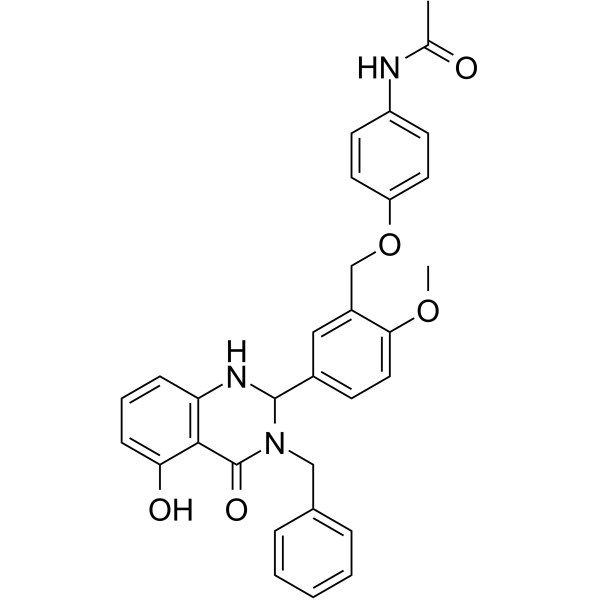
    ML-109 is a potent and full thyroid stimulating hormone receptor (TSHR) agonist, with an EC50 of 40 nM.
    ML-109
  • HY-A0069

    Histamine Receptor Cytochrome P450 Neurological Disease Metabolic Disease
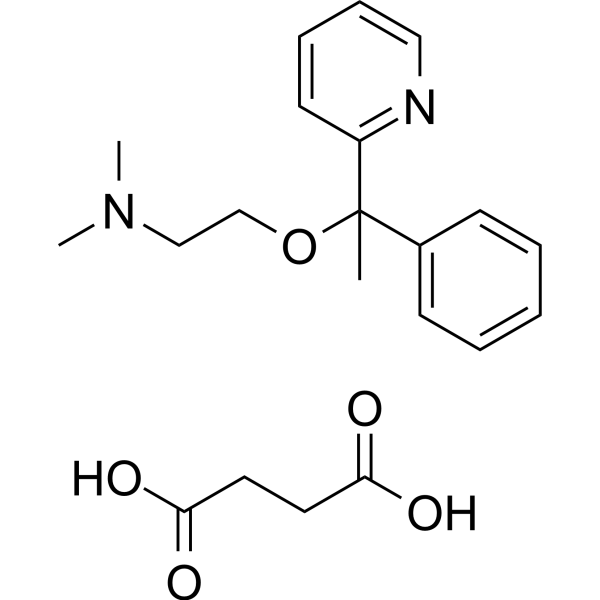
    Doxylamine succinate is a first-generation antihistamine and acts as a histamine H1 receptor antagonist. Doxylamine succinate is orally active, possessing analgesic and hypnotic activities. Doxylamine succinate enhances the activities of CYP2B, CYP2A, CYP3A and thyroxine-glucuronosyltransferase via promoting substrate hydroxylation and thyroxine metabolic pathways. Doxylamine succinate decreases serum thyroxine (T4) level and elevates serum thyroid-stimulating hormone (TSH) level. Doxylamine succinate induces liver enlargement and increases the activities of hepatic microsomal cytochrome P450, cytochrome b5 and NADPH-cytochrome c reductase. Doxylamine succinate can be used for the research of nausea, allergy, insomnia .
    Doxylamine succinate
  • HY-122974

    TSH Receptor Endocrinology
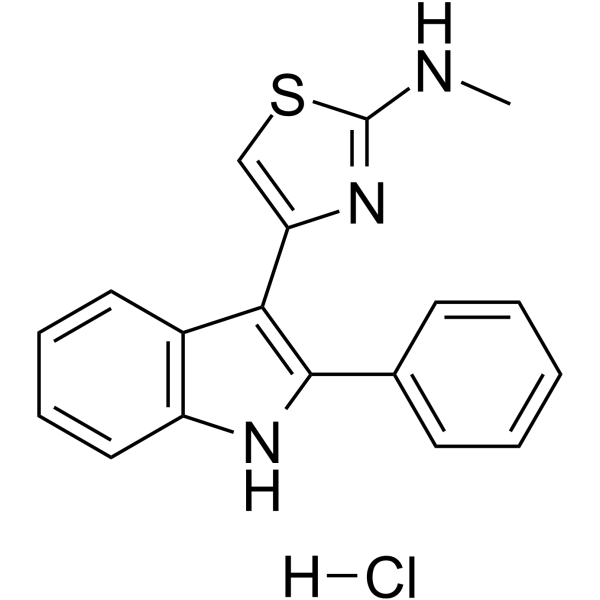
    VA-K-14 hydrochloride is a specific thyroid-stimulating hormone receptor (TSHR) antagonist (IC50= 12.3 μM) .
    VA-K-14 hydrochloride
  • HY-153213

    TSH Receptor Metabolic Disease
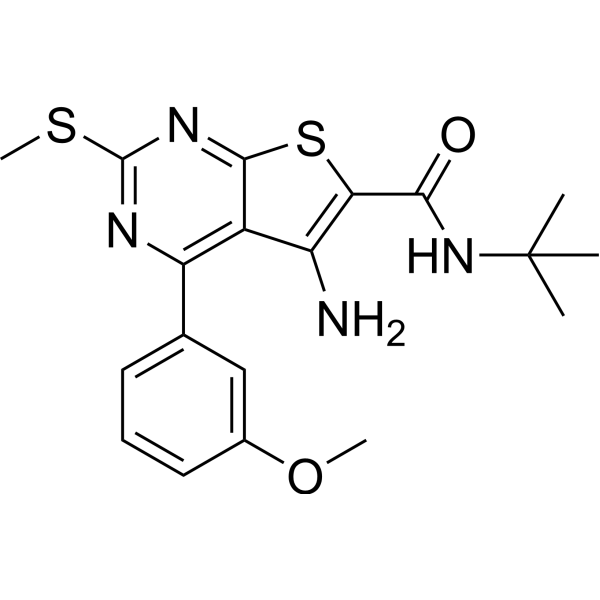
    Org 274179-0 is a potent and allosteric antagonist of thyroid-stimulating hormone (TSH) receptor, with an IC50 of nanomolar concentration. Org 274179-0 completely inhibits TSH (and TSI)-mediated TSH receptor activation with little effect on the potency of TSH. Org 274179-0 can be used for the research of Graves' disease (GD) .
    Org 274179-0
  • HY-158100

    TSH Receptor Endocrinology
    SYD5115 is an orally available TSH-R antagonist .
    SYD5115
  • HY-100271

    TSH Receptor Endocrinology
    Org41841 is a partial agonist of both luteinizing hormone/chorionic gonadotropin receptor (LHCGR) and thyroid-stimulating hormone receptor (TSHR) with EC50s of 0.2 and 7.7 μM, respectively.
    Org41841
  • HY-153213A

    TSH Receptor Endocrinology
    Org 274178-0 is a selective thyroid-stimulating hormone receptor (TSHR) antagonist with a pIC50 value for TSHR is 5.03. Org 274178-0 inhibits the activation of cAMP signaling pathway and phospholipase C (PLC) signaling pathway mediated by thyroid-stimulating hormone (TSH) and TSH receptor-stimulating immunoglobulins (TSIs). Org 274178-0 is promising for research of Graves’ disease and Graves’ ophthalmopathy .
    Org 274178-0
  • HY-164764

    Estrogen Receptor/ERR Endocrinology
    ADX61623 is a potent follicle stimulating hormone (FSH) receptor (FSHR) negative allosteric modulator (NAM). ADX61623 shows luteinizing hormone receptor (LH-R) activity and is not active on thyroid-stimulating hormone (TSH) receptors. ADX61623 can be used for the study of estrogen dependent disease .
    ADX61623
  • HY-164495

    FAAH Thyroid Hormone Receptor Inflammation/Immunology Endocrinology
    Sob-AM2 is a potent substrate (Km=1.3 μM) targeting fatty acid amide hydrolase (FAAH) expressed in the brain and has blood-brain barrier permeability. Sob-AM2 delivers high concentrations of Sobetirome (HY-14823) to the central nervous system with minimal peripheral systemic dose, thereby stimulating central thyroid hormone receptor β (TRβ). In addition, Sob-AM2 can prevent myelin and axon degeneration in experimental autoimmune encephalomyelitis (EAE) mice .
    Sob-AM2
  • HY-A0069A

    Histamine Receptor Cytochrome P450 Neurological Disease Metabolic Disease
    Doxylamine is a first-generation antihistamine and acts as a histamine H1 receptor antagonist. Doxylamine is orally active, possessing analgesic and hypnotic activities. Doxylamine enhances the activities of CYP2B, CYP2A, CYP3A and thyroxine-glucuronosyltransferase via promoting substrate hydroxylation and thyroxine metabolic pathways. Doxylamine decreases serum thyroxine (T4) level and elevates serum thyroid-stimulating hormone (TSH) level. Doxylamine induces liver enlargement and increases the activities of hepatic microsomal cytochrome P450, cytochrome b5 and NADPH-cytochrome c reductase. Doxylamine can be used for the research of nausea, allergy, insomnia .
    Doxylamine
  • HY-A0069R

    Reference Standards Histamine Receptor Cytochrome P450 Neurological Disease Metabolic Disease
    Doxylamine succinate (Standard) is the analytical standard of Doxylamine succinate (HY-A0069). This product is intended for research and analytical applications. Doxylamine succinate is a first-generation antihistamine and acts as a histamine H1 receptor antagonist. Doxylamine succinate is orally active, possessing analgesic and hypnotic activities. Doxylamine succinate enhances the activities of CYP2B, CYP2A, CYP3A and thyroxine-glucuronosyltransferase via promoting substrate hydroxylation and thyroxine metabolic pathways. Doxylamine succinate decreases serum thyroxine (T4) level and elevates serum thyroid-stimulating hormone (TSH) level. Doxylamine succinate induces liver enlargement and increases the activities of hepatic microsomal cytochrome P450, cytochrome b5 and NADPH-cytochrome c reductase. Doxylamine succinate can be used for the research of nausea, allergy, insomnia .
    Doxylamine succinate (Standard)
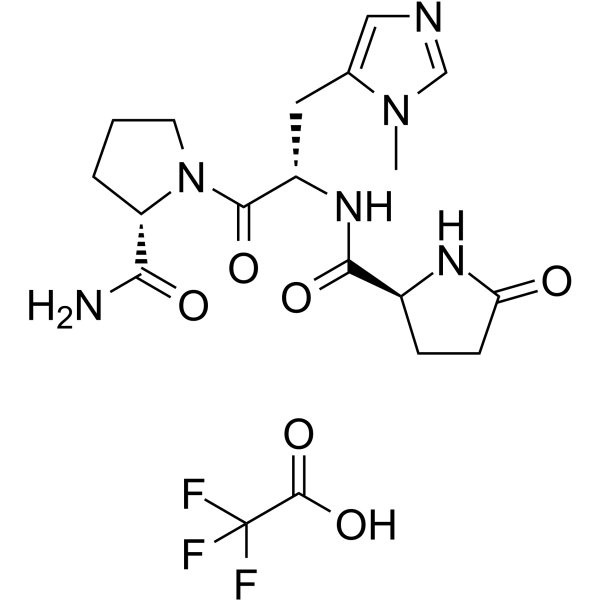
  • HY-107380A

    A-42872 TFA

    TSH Receptor Endocrinology
    PGlu-3-methyl-His-Pro-NH2 TFA (A-42872 TFA), the modified thyrotropin-releasing hormone (TRH) peptide, enhances binding to pituitary TRH receptors and increases stimulation of thyroid-stimulating hormone (TSH) release from the pituitary. The in vitro permeability of PGlu-3-methyl-His-Pro-NH2 TFA through rat skin is increased in the presence of enhancers Ethanol and Cineole .
    PGlu-3-methyl-His-Pro-NH2 TFA
  • HY-169054

    TSH Receptor Cancer
    NCATS-SM4420 (Compound A35) is an orally active thyroid-stimulating hormone receptor (TSHR) ligand that inhibits the proliferation of MDA-T32 and MDA-T85 cells in vitro (IC50 values of 0.71 μM and 0.38 μM, respectively) and suppresses metastasis of MDA-T85F1 in mice. NCATS-SM4420 holds promise for research in the field of thyroid cancer .
    NCATS-SM4420
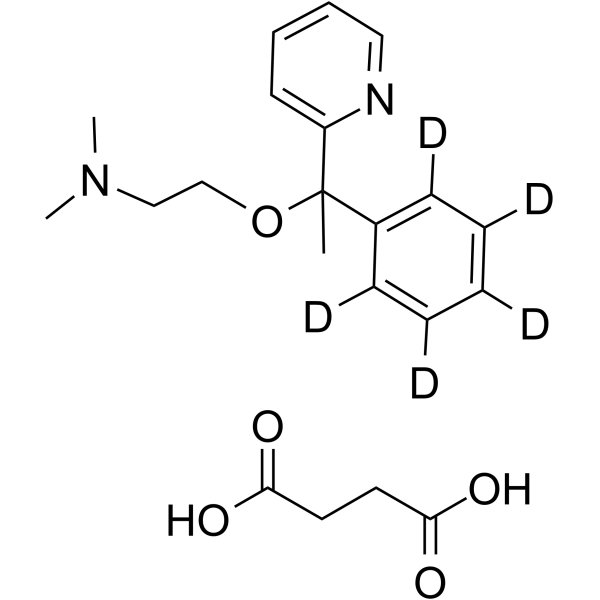
  • HY-A0069AS

    Isotope-Labeled Compounds Histamine Receptor Cytochrome P450 Neurological Disease Metabolic Disease
    Doxylamine-d5 is deuterium labeled Doxylamine (HY-A0069A). Doxylamine is a first-generation antihistamine and acts as a histamine H1 receptor antagonist. Doxylamine is orally active, possessing analgesic and hypnotic activities. Doxylamine enhances the activities of CYP2B, CYP2A, CYP3A and thyroxine-glucuronosyltransferase via promoting substrate hydroxylation and thyroxine metabolic pathways. Doxylamine decreases serum thyroxine (T4) level and elevates serum thyroid-stimulating hormone (TSH) level. Doxylamine induces liver enlargement and increases the activities of hepatic microsomal cytochrome P450, cytochrome b5 and NADPH-cytochrome c reductase. Doxylamine can be used for the research of nausea, allergy, insomnia .
    Doxylamine-d5
  • HY-A0069S

    Isotope-Labeled Compounds Histamine Receptor Cytochrome P450 Neurological Disease Metabolic Disease
    Doxylamine-d5 succinate is deuterium labeled Doxylamine succinate (HY-A0069A). Doxylamine succinate is a first-generation antihistamine and acts as a histamine H1 receptor antagonist. Doxylamine succinate is orally active, possessing analgesic and hypnotic activities. Doxylamine succinate enhances the activities of CYP2B, CYP2A, CYP3A and thyroxine-glucuronosyltransferase via promoting substrate hydroxylation and thyroxine metabolic pathways. Doxylamine succinate decreases serum thyroxine (T4) level and elevates serum thyroid-stimulating hormone (TSH) level. Doxylamine succinate induces liver enlargement and increases the activities of hepatic microsomal cytochrome P450, cytochrome b5 and NADPH-cytochrome c reductase. Doxylamine succinate can be used for the research of nausea, allergy, insomnia .
    Doxylamine-d5 succinate
  • HY-100271R

    TSH Receptor Reference Standards Endocrinology
    Org41841 (Standard) is the analytical standard of Org41841 (HY-100271). This product is intended for research and analytical applications. Org41841 is a partial agonist of both luteinizing hormone/chorionic gonadotropin receptor (LHCGR) and thyroid-stimulating hormone receptor (TSHR) with EC50s of 0.2 and 7.7 μM, respectively.
    Org41841 (Standard)

Inquiry Online

Your information is safe with us. * Required Fields.

Salutation


Country or Region *

Applicant Name *


Organization Name *

Department *


Email Address *


Product Name *

Cat. No.


Requested quantity *

Phone Number *


Remarks

Inquiry Online

Inquiry Information

Product Name:
Cat. No.:
Quantity:
MCE Japan Authorized Agent:

