1. Search Result
Search Result
Results for "

U-251

" in MedChemExpress (MCE) Product Catalog:

32

Inhibitors & Agonists

2

Inhibitory Antibodies

6

Natural
Products

2

Isotope-Labeled Compounds

Cat. No. Product Name Target Research Areas Chemical Structure
  • HY-P99948

    AMG-596

    EGFR CD3 Neurological Disease Cancer
    Etevritamab (AMG-596) is a bispecific T-cell engager that targets EGFRvIII and CD3. Etevritamab simultaneously binds CD3 on T cells and EGFRvIII on glioblastoma multiforme cells, thereby forming a bridge structure. Etevritamab triggers T-cell activation, proliferation, secretion of cytotoxic substances, and tumor cell lysis. Etevritamab extends overall survival and induces tumor regression in mouse models of glioblastoma multiforme. Etevritamab can be used for research related to glioblastoma .
    Etevritamab
  • HY-12833
    AMZ30
    1 Publications Verification

    Phosphatase Akt ERK Others
    AMZ30 is selective protein phosphatase methylesterase-1(PME-1) inhibitor with IC50s of 600 nM and 3.5 µM in human cell lysates and in HEK 293T cells, respectively. AMZ30 shows >100-fold selectivity relative to other serine hydrolases. AMZ30 reduces the demethylated form of PP2A in living cells. AMZ30 attenuates muscle cell differentiation. AMZ30 increases the resistance of U87MG and U251MG glioblastoma cells to t-BHP-induced oxidative stress. AMZ30can be used for the study of glioblastoma .
    AMZ30
  • HY-13768S1

    Isotope-Labeled Compounds Topoisomerase Autophagy Cancer
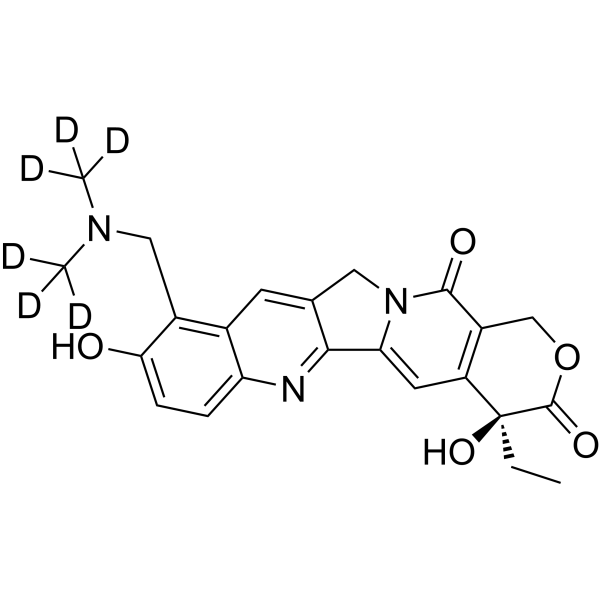
    Topotecan-d6 is the deuterium labeled Topotecan. Topotecan (SKF 104864A; NSC 609669) is a Topoisomerase I inhibitor. The IC50 values of Topotecan at 24 h are 2.73±0.25 μM of U251 cells, 2.95±0.23 μM of U87 cells, 5.46±0.41 μM of GSCs-U251 and 5.95 μM of GSCs-U87 .
    Topotecan-d6
  • HY-151350

    SphK Cardiovascular Disease Inflammation/Immunology Cancer
    SphK2-IN-1 is a SphK2 inhibitor (IC50: 0.359 μM). SphK2-IN-1 can be used in the research of cancer, inflammation, neurological and cardiovascular disorders .
    SphK2-IN-1
  • HY-N10871

    SARS-CoV Cancer
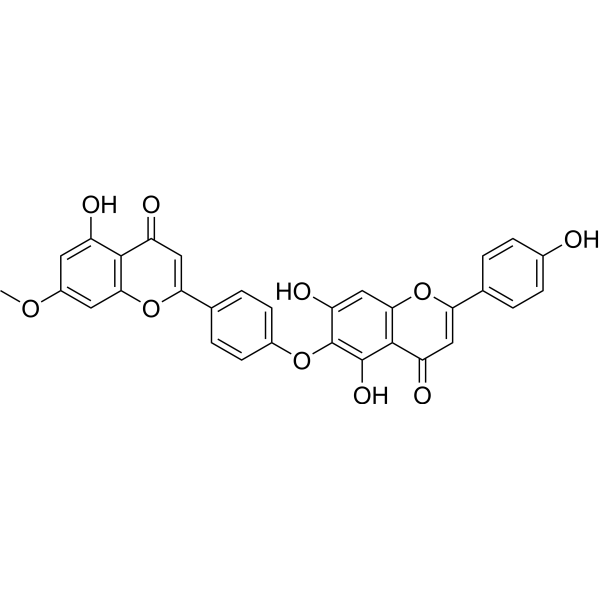
    Neocryptomerin, a biflavonoid, shows inhibitory activity against U251, MCF-7, HeLa cell. Neocryptomerin has favorable binding affinities in the active pocket of SARS-CoV-2. Neocryptomerin is the leading compound of rational compounds against COVID-19 .
    Neocryptomerin
  • HY-163835

    Ephrin Receptor Cancer
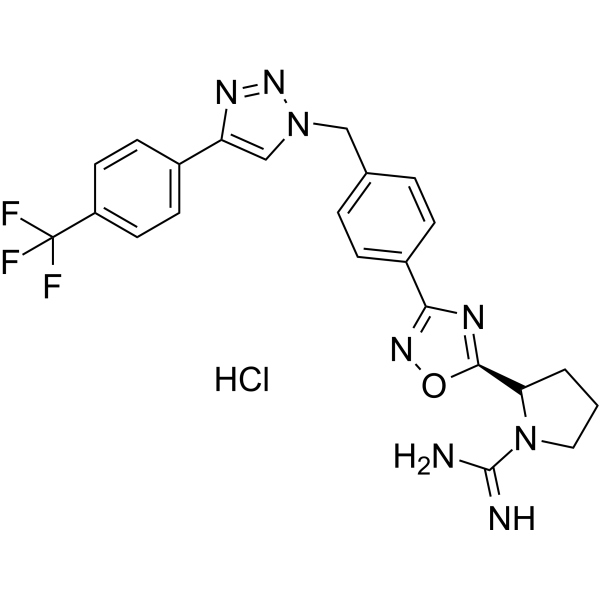
    UniPR1454 targets EphA2 receptor, inhibits the EphA2-ephrin A1 interaction with an IC50 of 2.6 μM. UniPR1454 inhibits the proliferation of glioblastoma cell U251 .
    UniPR1454
  • HY-N7980

    NF-κB Cancer
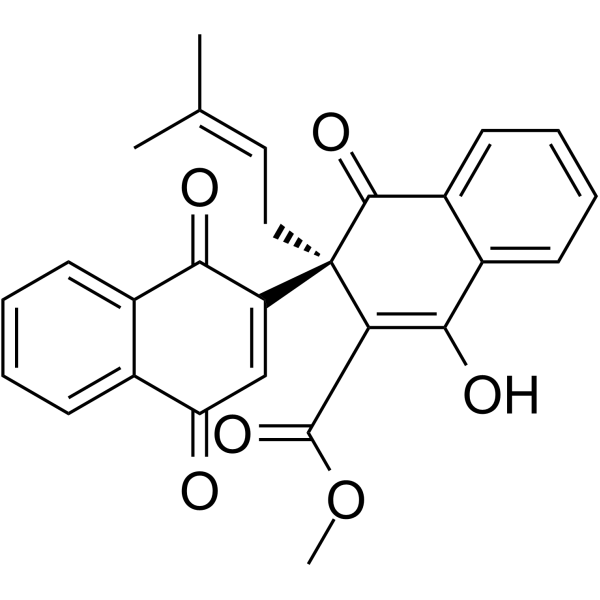
    Rubipodanone A, a naphthohydroquinone dimer, shows cytotoxicity against A549, BEL-7402, HeLa, HepG2, SGC-7901 and U251 cells. Rubipodanone A also shows obvious activating effect at 20 and 40 μM for NF-κB .
    Rubipodanone A
  • HY-175530

    OLIG2 Cancer
    OLIG2-IN-1 is a potent and selective oligodendrocyte transcription factor 2 (OLIG2) inhibitor. OLIG2-IN-1 directly and dose-dependently downregulates nuclear OLIG2 levels with an IC50 value of 0.88 μM. OLIG2-IN-1 exhibits strong anti-proliferative activity in U87 and U251 cells with IC50 values of 7.02 μM and 6.43 μM, respectively. OLIG2-IN-1 can be used for the research of cancer, such as glioblastoma multiforme .
    OLIG2-IN-1
  • HY-N15582

    Apoptosis Inflammation/Immunology Cancer
    Perezone is a sesquiterpenoid benzoquinone found in the roots of Acourtia species. Perezone inhibits the activity of leukemia cell line K-562 and human glioma cell line U-251 (IC50: 6.83 μM). Perezone increases the expression of caspase 3, 8, and 9 genes associated with apoptosis. Perezone has antioxidant and anti-inflammatory activities .
    Perezone
  • HY-13768S

    SKF 104864A-d5; NSC 609669-d5

    Isotope-Labeled Compounds Topoisomerase Autophagy Cancer
    Topotecan-d5 is the deuterium labeled Topotecan. Topotecan (SKF 104864A; NSC 609669) is a Topoisomerase I inhibitor. The IC50 values of Topotecan at 24 h are 2.73±0.25 μM of U251 cells, 2.95±0.23 μM of U87 cells, 5.46±0.41 μM of GSCs-U251 and 5.95±0.24 μM of GSCs-U87 .
    Topotecan-d5
  • HY-P991419

    VEGFR Cancer
    MSB-0254 is a human monoclonal antibody (mAb) targeting VEGFR2/KDR/CD309. MSB-0254 inhibits the invasion, migration, and vascular mimetic (VM) formation of U251 and primary glioma cells. MSB-0254 inhibits the growth of U251 and GL261 cell transplanted tumors. MSB-0254 reduces the expression of CD34, VEGFR2, Ki67, MMP2, MMP9, and CD34/PAS. MSB-0254 can be used in advanced solid tumors research .
    MSB-0254
  • HY-129932

    Drug Derivative Cancer
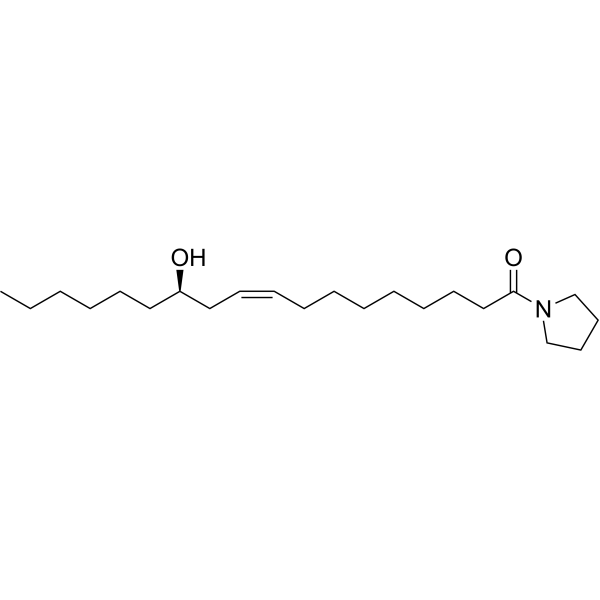
    Pyrrolidine ricinoleamide ((R)-5d) is a fatty acid amide that exhibits effective antiproliferative activity against a series of cancer cells, including human glioma U251 cells. Pyrrolidine ricinoleamide can be used in cancer research .
    Pyrrolidine ricinoleamide
  • HY-124242

    Drug Derivative Cancer
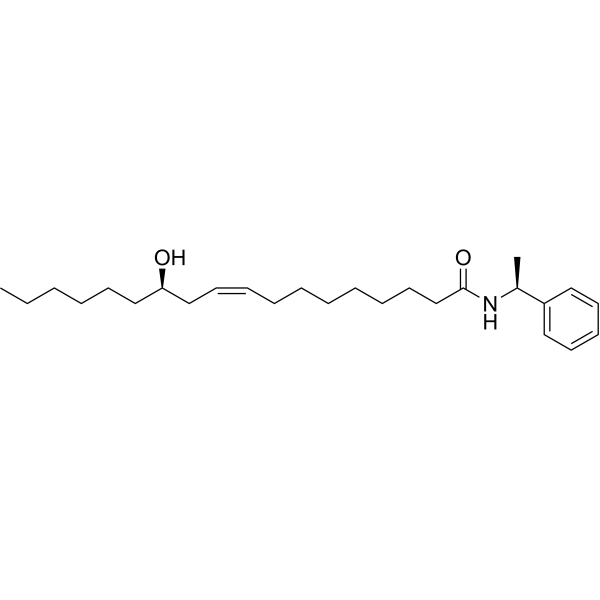
    (S)-α-Methylbenzyl ricinoleamide (compound (R,S)-3d) is a fatty acid amide. (S)-α-Methylbenzyl ricinoleamide shows antiproliferative activity, inhibits the growth of human ovarian cancer cells NCI-ADR/RES and glioma cells U251 with GI50s of 1.9 μg/mL and 3.6 μg/mL, respectively .
    (S)-α-Methylbenzyl ricinoleamide
  • HY-170893

    Carbonic Anhydrase Cancer
    CAIX/CAXII-IN-4 (Compound 7h) is the inhibitor for carbonic anhydrase (CA) that binds CA IX, CA XII and CA II with Ki of 1.324 μM, 0.435 μM and 3.035 μM. CAIX/CAXII-IN-4 exhibits board-spectrum antitumor efficacy, inhibits the proliferation of CNS cancer U251 with GI50 of 0.361 μM .
    CAIX/CAXII-IN-4
  • HY-155532

    Apoptosis Cancer
    10m/ZS44 is a blood-brain barrier-permeable Glioblastoma (GBM) inhibitor. 10m/ZS44 significantly inhibits GBM tumor growth in a mouse xenograft model. 10m/ZS44 also activates the SIRT1/p53-mediated apoptosis pathway, thereby inhibiting the proliferation of U251 cells .
    10m/ZS44
  • HY-168899

    FAK Apoptosis Cancer
    FAK-IN-24 (Compound 9f) is a FAK inhibitor (IC50: 0.815 nM). FAK-IN-24 induces DNA damage and apoptosis. FAK-IN-24 has anti-glioblastoma activity. FAK-IN-24 inhibits proliferation of glioblastoma cell lines U87-MG (IC50 = 15 nM) and U251 (IC50 = 20 nM). FAK-IN-24 inhibits tumor growth in U87-MG xenograft model .
    FAK-IN-24
  • HY-169476

    Drug Derivative Cancer
    Pyrrolidine linoleamide is a derivative of linoleic acid amide with anticancer activity. Pyrrolidine linoleamide exhibits antiproliferative activity against a range of cancer cell lines, with IC50 values of 12.0, 27.5, 7.7, 21.9, 36.6, 32.6, and 33.9 μg/mL against U251, MCF-7, NCI-ADR/RES, 786-0, NCI-H460, PC-3, and OVCAR-3 cell lines, respectively .
    Pyrrolidine linoleamide
  • HY-173431

    Dopamine Receptor Reactive Oxygen Species (ROS) Cancer
    Dopamine D4 receptor ligand 3 (Compound 16) is a dopamine D4 receptor (D4R) antagonist (pKi: 8.86). Dopamine D4 receptor ligand 3 has pIC50 values of 5.78, 5.55, and 6.17 for Go, Gi, and βArr2 sensors in HEK-293T cells, respectively. Dopamine D4 receptor ligand 3 inhibits the viability of three human glioma cell lines, U87 MG, T98G, and U251 MG. Dopamine D4 receptor ligand 3 induces ROS production and mitochondrial dysfunction in glioma cells .
    Dopamine D4 receptor ligand 3
  • HY-160121

    Patrinoside aglycone

    Apoptosis NO Synthase TNF Receptor Interleukin Related PGE synthase COX Inflammation/Immunology Cancer
    Patrinoside aglucone (Compound 8) is an iridoid glucoside that can be isolated from the Valeriana tuberosa. Patrinoside aglucone has potent anticancer activity with G2/M phase tumor cell cycle arrest and apoptosis induction. Patrinoside aglucone also significantly inhibits the proliferation of cancer stem cells (such as MDA-MB-231 and U-251MG cells). Patrinoside aglucone has great anti-inflammatory activity by inhibiting NO release (IC50: 43.44 μM) and significantly reduces the level of TNF-α, IL-1β, IL-6, PGE2 and COX-2 .
    Patrinoside aglucone
  • HY-N1107

    NSC 119993; NSC 277290; Odorigeni

    Others Cancer
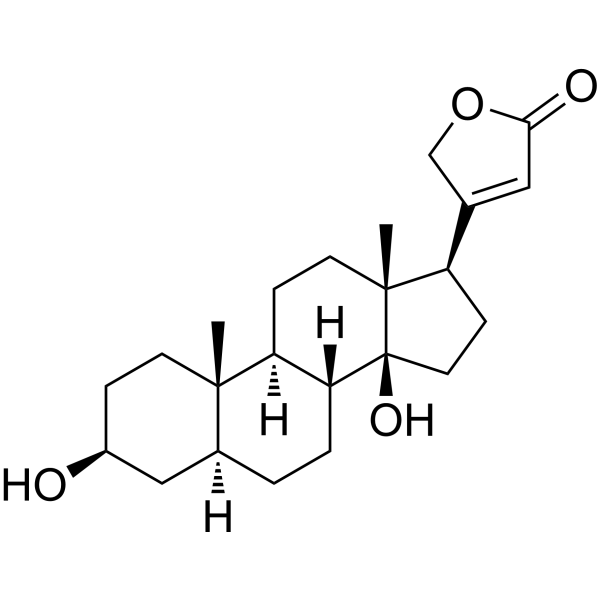
    Uzarigenin (NSC 119993; NSC 277290; Odorigeni) is a carnolide can be isolated from Pergularia tomentosa and exhibits antiproliferative activity. Uzarigenin resists the proliferation of PC3 cells, HeLa cells, Calu-1 cells, MCF-7 cells and U251MG cells, with IC50 values of 0.3 μM, 3.0 μM, 8.0 μM, 6.0 μM and 6.0 μM respectively .
    Uzarigenin
  • HY-173045

    5-HT Receptor Cancer
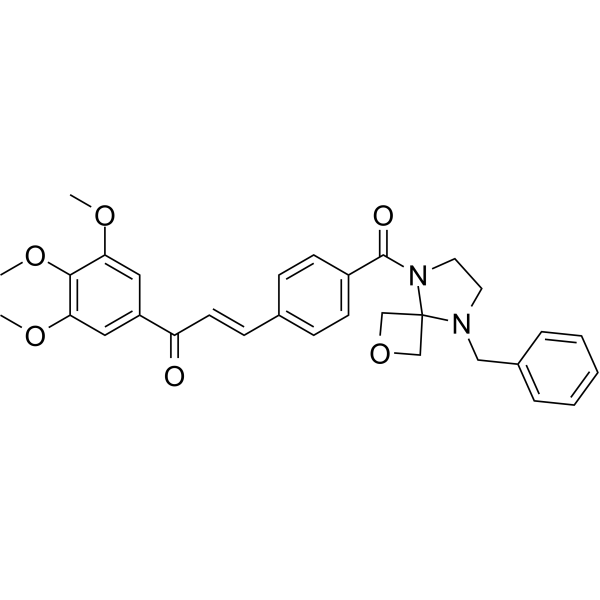
    5-HT5AR/5-HT6R ligand-1 (Compound PP10) is a ligand for serotonin receptors, showing high affinity for 5-HT5A and 5-HT6 receptors, with Ki values of 59 nM and 96 nM, respectively. 5-HT5AR/5-HT6R ligand-1 exhibits certain antiproliferative activity against tumor cells and can be used in the study of cancer .
    5-HT5AR/5-HT6R ligand-1
  • HY-170313

    GLUT Apoptosis Reactive Oxygen Species (ROS) Cancer
    GLUT-1-IN-4 (Compound 13) is the p53 protein-dependent inhibitor for GLUT-1 glucose transporter. GLUT-1-IN-4 inhibits the proliferation of multiple cancer cells with IC50 in submicromolar levels. GLUT-1-IN-4 arrests the cell cycle, stimulates oxidative stress, and induces apoptosis .
    GLUT-1-IN-4
  • HY-173043

    5-HT Receptor Cancer
    5-HT6R antagonist 6 exhibits high affinity and selectivity for 5-HT6R , with a Ki value of 42 nM. 5-HT6R antagonist 6 shows weak antiproliferative activity against tumor cells and low toxicity to normal cells. 5-HT6R antagonist 6 can be used in the study of cancer .
    5-HT6R antagonist 6
  • HY-180976

    PROTACs α-synuclein Neurological Disease
    Arg-PEG1-Tαsyn is an α-syn PROTAC degrader with a DC50 of 0.28 μM in U251 cells. Arg-PEG1-Tαsyn employs the amino acid arginine (Arg) as the E3 ligase UBR1 ligand and a benzothiazole-aniline variant as the warhead for α-syn. Arg-PEG1-Tαsyn significantly reduces α-syn aggregates and improves the dopaminergic neuronal impairment and the locomotion with safety profile in vivo.Arg-PEG1-Tαsyn shows the high degradation effect in mammalian cells for both wild-type α-syn and the α-syn (A53T) mutant. Arg-PEG1-Tαsyn can be used for Parkinson’s disease research .
    Arg-PEG1-Tαsyn
  • HY-182896

    TRP Channel Calcium Channel Neurological Disease Cancer
    HKC54 is a selective TRPV2 antagonist with an IC50 of 0.4 μM. HKC54 binds directly to TRPV2 and inhibits TRPV2-mediated calcium influx. HKC54 inhibits glioblastoma cell migration in vitro and breast cancer metastasis in vivo. HKC54 can be used for the research of breast cancer lung metastasis .
    HKC54
  • HY-181056

    EGFR COX Neurological Disease Cancer
    EGFR/COX-2-IN-3 is a selective EGFR/COX-2 dual inhibitor with IC50 values of 0.098 μM and 0.05 μM, respectively. EGFR/COX-2-IN-3 is predicted to have oral activity and blood-brain barrier permeability. EGFR/COX-2-IN-3 exhibits both potent analgesic activity and anti-glioblastoma effects. EGFR/COX-2-IN-3 can be used in the research of tumors such as glioblastoma .
    EGFR/COX-2-IN-3
  • HY-N16866

    Drug Derivative Others
    Gossypetin 3,8,3′-trimethyl ether is a natural flavonoid.
    Gossypetin 3,8,3′-trimethyl ether
  • HY-183306

    mTOR STAT Neurological Disease Inflammation/Immunology Cancer
    mTOR/STAT3-IN-1 is a dual mTOR/STAT3 inhibitor. mTOR/STAT3-IN-1 exhibits potent mTOR inhibitory activity and moderate STAT3 inhibitory activity, while exerting cell type-dependent antiproliferative and senolytic activities in human cell lines. mTOR/STAT3-IN-1 can be used in the research of glioblastoma and aging-related diseases .
    mTOR/STAT3-IN-1
  • HY-123612

    Choline Kinase Early 2 Factor (E2F) Fluorescent Dye Neurological Disease Cancer
    JAS239 is a blood-brain barrier-permeable ChoK inhibitor. JAS239 inhibits phosphocholine synthesis and reduces the expression level of E2F1 protein. JAS239 exhibits near-infrared fluorescence properties. JAS239 exerts anti-tumor activity against glioblastoma. JAS239 can be used in studies related to glioblastoma .
    JAS239
  • HY-183307

    mTOR STAT Neurological Disease Cancer
    mTOR-IN-29 (Compound 4k) is an mTOR inhibitor with a IC50 of ~120 nM. mTOR-IN-29 inhibits mTOR kinase activity without affecting the phosphorylation of STAT3. mTOR-IN-29 acts as a cytotoxic agent against proliferating and senescent cells. mTOR-IN-29 can be used in studies related to glioblastoma .
    mTOR-IN-29
  • HY-181491

    Microtubule/Tubulin EGFR Akt mTOR Ras Apoptosis Autophagy Cancer
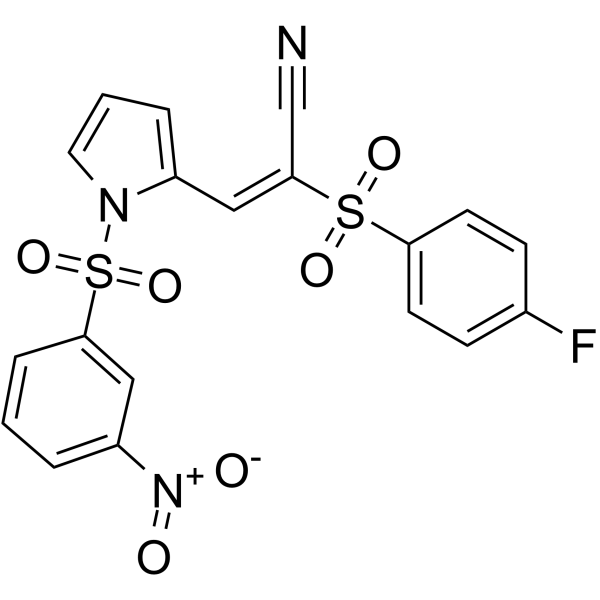
    Tubulin-IN-64 is a sulfonated styrylquinazoline derivative with high selectivity antitumor activity. Tubulin-IN-64 targets tubulin, inhibits the EGFR/Akt/mTOR and EGFR/Ras signaling pathways, induces cell cycle arrest, apoptosis and autophagy. Tubulin-IN-64 exhibits significant antitumor efficacy in the zebrafish GBM xenograft model. Tubulin-IN-64 can be used for the research on glioblastoma and leukemia .
    Tubulin-IN-64
  • HY-181529

    VDAC PERK Cancer
    NCATS-SM0225 is an endoplasmic reticulum-associated degradation (ERAD) inhibitor and a direct binder of VDAC1, VDAC2 and VDAC3. NCATS-SM0225 exhibits an IC50of 1.02 μM for ERAD and a Kd of 3.13 μM for human VDAC1 binding. NCATS-SM0225 disrupts cellular calcium homeostasis, enhances VDAC1-IP3R coupling and activating PERK. NCATS-SM0225 selectively kills cancer cells, exhibits tumor growth inhibitory effects in melanoma xenograft models. NCATS-SM0225 can be used for research on multiple cancers including melanoma, as well as the molecular mechanisms of ERAD and calcium homeostasis regulation .
    NCATS-SM0225

Inquiry Online

Your information is safe with us. * Required Fields.

Salutation


Country or Region *

Applicant Name *


Organization Name *

Department *


Email Address *


Product Name *

Cat. No.


Requested quantity *

Phone Number *


Remarks

Inquiry Online

Inquiry Information

Product Name:
Cat. No.:
Quantity:
MCE Japan Authorized Agent:

