
11 Results for "

acetaminophen toxicity

" in MedChemExpress (MCE) Product Catalog:
Products (11)

11 Results for "acetaminophen toxicity" in MCE Product Catalog:

2
2 Cited Publications
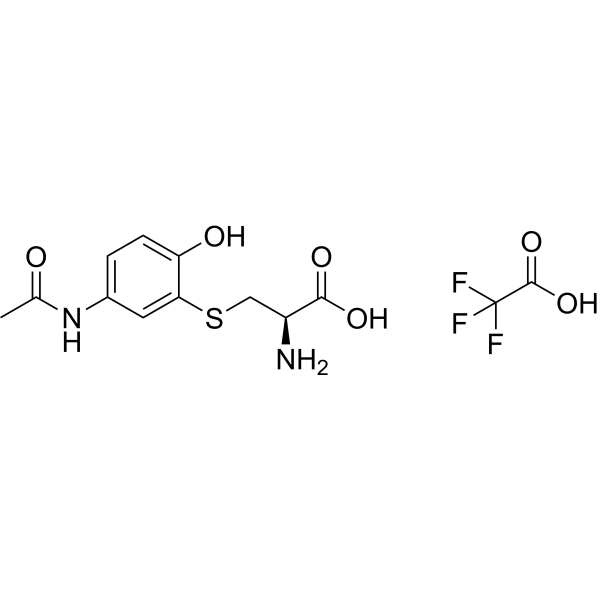
Cat. No.: HY-139093A
CAS No.: 1331891-93-0
Purity:  ≥99.0%
Synonyms: APAP-Cys TFA
Target:  

Drug Derivative

Research Areas:  

Others

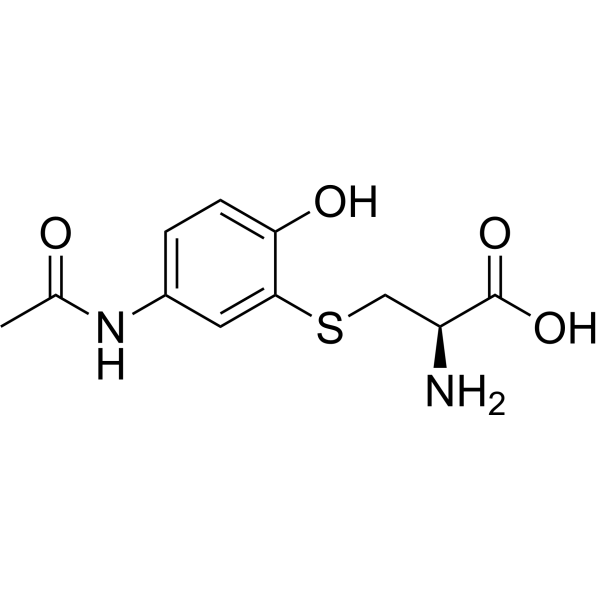
Paracetamol-cysteine TFA (APAP-Cys TFA) is a cysteine adduct of Acetaminophen (HY-66005). It forms when Acetaminophen is oxidized to the reactive metabolite N-acetyl-p-benzoquinone imine (NAPQI) .
loading...
    loading...
1
1 Cited Publications
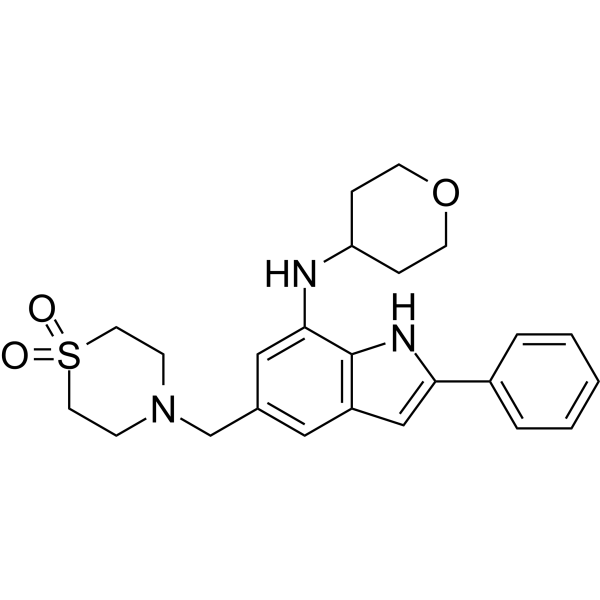
Cat. No.: HY-124750
CAS No.: 1120332-55-9
Purity:  99.69%
NecroX-7 is a potent free radical scavenger and a HMGB1 (high-mobility group box 1) inhibitor. NecroX-7 can be used as an antidote to acetaminophen toxicity. NecroX-7 exerts a protective effect by preventing the release of HMGB1 in ischemia/reperfusion injury. NecroX-7 inhibits the HMGB1-induced release of TNF and IL-6, as well as the expression of TLR-4 and receptor for advanced glycation end products. NecroX-7 can be used graft-versus-host disease (GVHD) research .
loading...
    loading...
1
1 Cited Publications
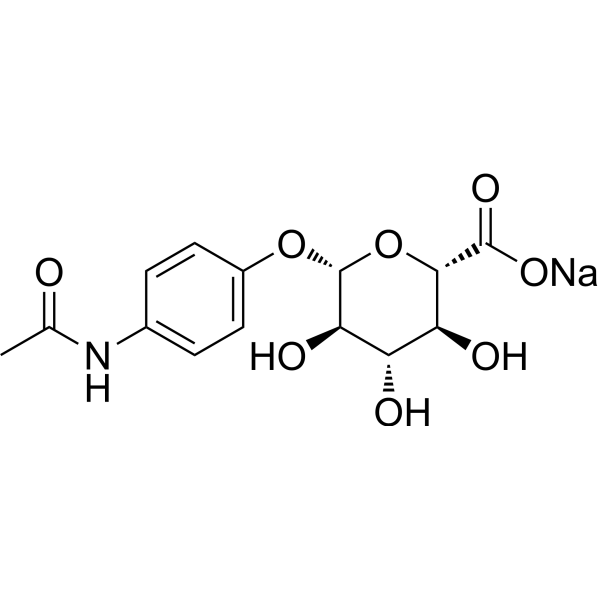
Cat. No.: HY-W016034
CAS No.: 120595-80-4
Synonyms: p-Acetamidophenyl β-D-glucuronide sodium salt; p-AAPG sodium salt
Target:  

Drug Metabolite

Research Areas:  

Infection

Acetaminophen glucuronide is a safe and effective antipyretic analgesic. Acetaminophen glucuronide is potentially toxic to liver and kidney .
loading...
    loading...
Cat. No.: HY-134816
CAS No.: 9012-72-0
Purity:  ≥96.0%
D-Glucan is an orally effective Dectin-1 receptor immune activator with antioxidant properties (reducing TNF-α). D-Glucan activates macrophages and neutrophils to scavenge free radicals, inhibit oxidative stress and inflammatory responses, and improve insulin sensitivity. D-Glucan promotes glycolysis by enhancing the activity of the antioxidant enzyme glutathione, inhibiting gluconeogenesis and activating GK. D-Glucan can be used in the research of liver damage protection (antagonizing Acetaminophen (HY-66005) toxicity), radiation protection (synergistic with vitamin E) and diabetes (improving glucose metabolism) .
loading...
    loading...
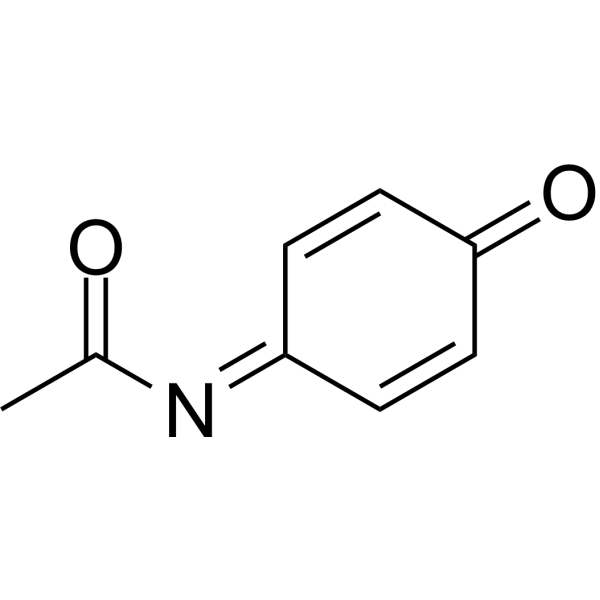
Cat. No.: HY-W017464
CAS No.: 50700-49-7
Synonyms: N-Acetyl-4-benzoquinone Imine
NAPQI is the toxic metabolite of Acetaminophen (HY-66005). NAPQI is also an inhibitor of enzymes in the vitamin K cycle. NAPQI is rapidly detoxified by glutathione (GSH), but in situations of GSH deficiency, excess NAPQI reacts with cysteine residues in proteins, causing cell death and toxicity in the liver .
loading...
    loading...
Cat. No.: HY-G0004
CAS No.: 37519-14-5
Synonyms: 3-Hydroxyacetaminophen
Target:  

Drug Metabolite

Research Areas:  

Inflammation/Immunology

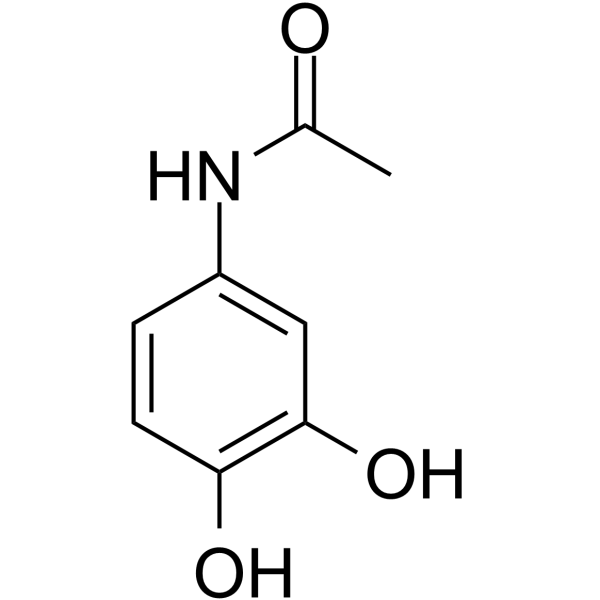
Acetaminophen metabolite 3-hydroxy-acetaminophen (3-Hydroxyacetaminophen) is a non-toxic metabolite and antioxidant of acetaminophen (HY-66005) with free radical scavenging activity. Acetaminophen metabolite 3-hydroxy-acetaminophen can reduce oxidative damage by exerting electron donation ability and antioxidant activity through phenolic hydroxyl groups. 3-hydroxy-acetaminophen can be used to study the toxicity mechanism and drug metabolism of acetaminophen .
loading...
    loading...
Cat. No.: HY-139093
CAS No.: 53446-10-9
Synonyms: APAP-Cys
Target:  

Drug Derivative

Research Areas:  

Others

Paracetamol-cysteine (APAP-Cys) is a cysteine adduct of Acetaminophen (HY-66005). It forms when Acetaminophen is oxidized to the reactive metabolite N-acetyl-p-benzoquinone imine (NAPQI) .
loading...
    loading...
Cat. No.: HY-G0004R
CAS No.: 37519-14-5
Synonyms: 3-Hydroxyacetaminophen (Standard)
Acetaminophen metabolite 3-hydroxy-acetaminophen (3-Hydroxyacetaminophen) (Standard) is the analytical standard of Acetaminophen metabolite 3-hydroxy-acetaminophen (HY-G0004). This product is intended for research and analytical applications. Acetaminophen metabolite 3-hydroxy-acetaminophen is a non-toxic metabolite and antioxidant of acetaminophen (HY-66005) with free radical scavenging activity. Acetaminophen metabolite 3-hydroxy-acetaminophen can reduce oxidative damage by exerting electron donation ability and antioxidant activity through phenolic hydroxyl groups. 3-hydroxy-acetaminophen can be used to study the toxicity mechanism and drug metabolism of acetaminophen .
loading...
    loading...
Cat. No.: HY-W016034R
CAS No.: 120595-80-4
Synonyms: p-Acetamidophenyl β-D-glucuronide sodium salt (Standard); p-AAPG sodium salt (Standard)
Research Areas:  

Infection

Acetaminophen glucuronide (sodium salt) (Standard) is the analytical standard of Acetaminophen glucuronide (sodium salt). This product is intended for research and analytical applications. Acetaminophen glucuronide is a safe and effective antipyretic analgesic. Acetaminophen glucuronide is potentially toxic to liver and kidney .
loading...
    loading...
Cat. No.: HY-W744265
Synonyms: N-Acetyl-4-benzoquinone Imine-d3
NAPQI-d3 (N-Acetyl-4-benzoquinone Imine-d3) is the deuterium labeled NAPQI (HY-W017464). NAPQI is the toxic metabolite of Acetaminophen (HY-66005). NAPQI is also an inhibitor of enzymes in the vitamin K cycle. NAPQI is rapidly detoxified by glutathione (GSH), but in situations of GSH deficiency, excess NAPQI reacts with cysteine residues in proteins, causing cell death and toxicity in the liver .
loading...
    loading...
Cat. No.: HY-W017464R
CAS No.: 50700-49-7
Synonyms: N-Acetyl-4-benzoquinone Imine (Standard)
NAPQI (Standard) is the analytical standard of NAPQI (HY-W017464). This product is intended for research and analytical applications. NAPQI is the toxic metabolite of Acetaminophen (HY-66005). NAPQI is also an inhibitor of enzymes in the vitamin K cycle. NAPQI is rapidly detoxified by glutathione (GSH), but in situations of GSH deficiency, excess NAPQI reacts with cysteine residues in proteins, causing cell death and toxicity in the liver .
loading...
    loading...
  • 1

