



50700-49-7
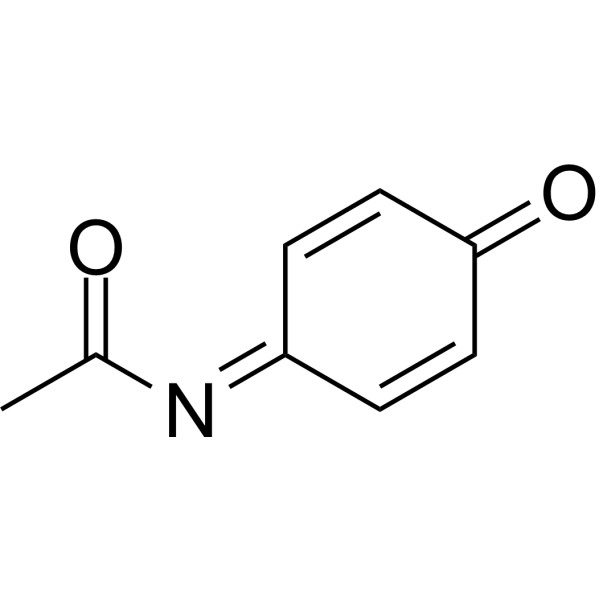
50700-49-7
Chemical Structure
NAPQI
Synonym(s): N-Acetyl-4-benzoquinone Imine
- CAS No.: 50700-49-7
- Formula:C8H7NO2
- Molecular Weight:149.15
IUPAC Name: N-(4-oxocyclohexa-2,5-dien-1-ylidene)acetamide
InChIKey: URNSECGXFRDEDC-UHFFFAOYSA-N
SMILES: CC(/N=C1C=CC(C=C\1)=O)=O
Biological Activity: NAPQI is the toxic metabolite of Acetaminophen (HY-66005). NAPQI is also an inhibitor of enzymes in the vitamin K cycle. NAPQI is rapidly detoxified by glutathione (GSH), but in situations of GSH deficiency, excess NAPQI reacts with cysteine residues in proteins, causing cell death and toxicity in the liver[1][2].
| Cat. No. | Product Name | Purity | Description | Pricing | |||||||||||||||||||
|---|---|---|---|---|---|---|---|---|---|---|---|---|---|---|---|---|---|---|---|---|---|---|---|
|
|
NAPQI | 98.0% | NAPQI is the toxic metabolite of Acetaminophen (HY-66005). NAPQI is also an inhibitor of enzymes in the vitamin K cycle. NAPQI is rapidly detoxified by glutathione (GSH), but in situations of GSH deficiency, excess NAPQI reacts with cysteine residues in proteins, causing cell death and toxicity in the liver. | ||||||||||||||||||||
|
loading...
/
|
|||||||||||||||||||||||
|
|
NAPQI (Standard) | ≥98% | NAPQI (Standard) is the analytical standard of NAPQI (HY-W017464). This product is intended for research and analytical applications. NAPQI is the toxic metabolite of Acetaminophen (HY-66005). NAPQI is also an inhibitor of enzymes in the vitamin K cycle. NAPQI is rapidly detoxified by glutathione (GSH), but in situations of GSH deficiency, excess NAPQI reacts with cysteine residues in proteins, causing cell death and toxicity in the liver. | ||||||||||||||||||||
|
loading...
/
|
|||||||||||||||||||||||
|
|
NAPQI-d3 | NAPQI-d3 (N-Acetyl-4-benzoquinone Imine-d3) is the deuterium labeled NAPQI (HY-W017464). NAPQI is the toxic metabolite of Acetaminophen (HY-66005). NAPQI is also an inhibitor of enzymes in the vitamin K cycle. NAPQI is rapidly detoxified by glutathione (GSH), but in situations of GSH deficiency, excess NAPQI reacts with cysteine residues in proteins, causing cell death and toxicity in the liver. | |||||||||||||||||||||
|
loading...
/
|
|||||||||||||||||||||||
Structural Analogs
-
Similarity Score 0.72
 HY-W010480Toluquinone
-
Similarity Score 0.69
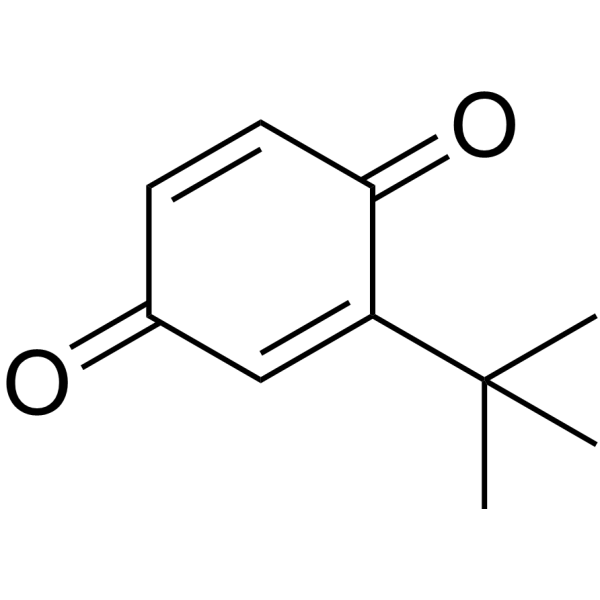 HY-W0171872-tert-Butyl-1,4-benzoquinone
-
Similarity Score 0.68
 HY-Z12727Mesalazine impurity 11
-
Similarity Score 0.68
 HY-180357Graviquinone
-
Similarity Score 0.65
 HY-W0158162,6-Dimethylbenzoquinone
-
Similarity Score 0.64
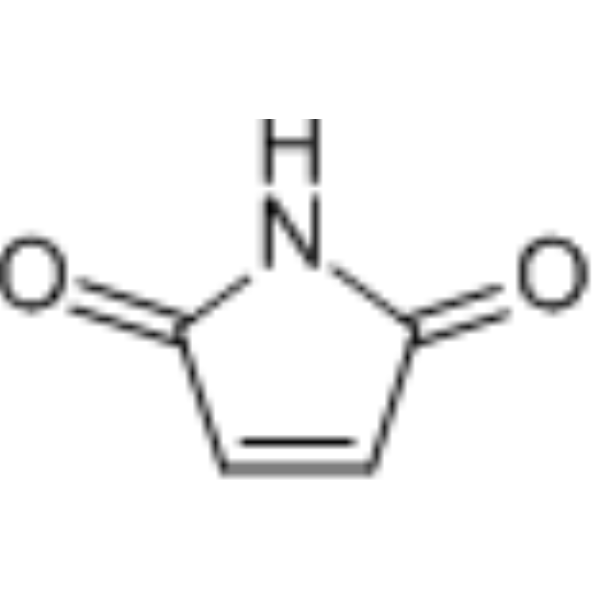 HY-W007324Maleimide
-
Similarity Score 0.64
 HY-W142206Cyclopent-4-ene-1,3-dione
-
Similarity Score 0.64
 HY-W0903172,5-Dimethyl-1,4-benzoquinone
-
Similarity Score 0.63
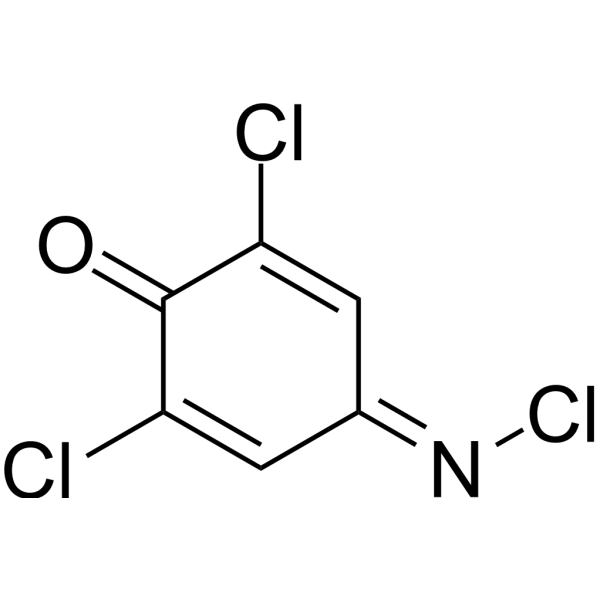 HY-W1051352,6-Dichloroquinone-4-chloroimide
-

Explore the MedChemAI to find more analogs


References
- [1]. Jiang D, et al. Organ-Specific Screening for Protein Damage Using Magnetic Bead Bioreactors and LC-MS/MS. Anal Chem. 2020 Apr 7;92(7):5337-5345. [Content Brief]
- [2]. Thijssen HH, et al. Paracetamol (acetaminophen) warfarin interaction: NAPQI, the toxic metabolite of paracetamol, is an inhibitor of enzymes in the vitamin K cycle. Thromb Haemost. 2004 Oct;92(4):797-802. [Content Brief]



