7 Results for "

acute gastritis

" in MedChemExpress (MCE) Product Catalog:
Products (7)

7 Results for "acute gastritis" in MCE Product Catalog:

1
1 Cited Publications
Cat. No.: HY-N4280
CAS No.: 2445-80-9
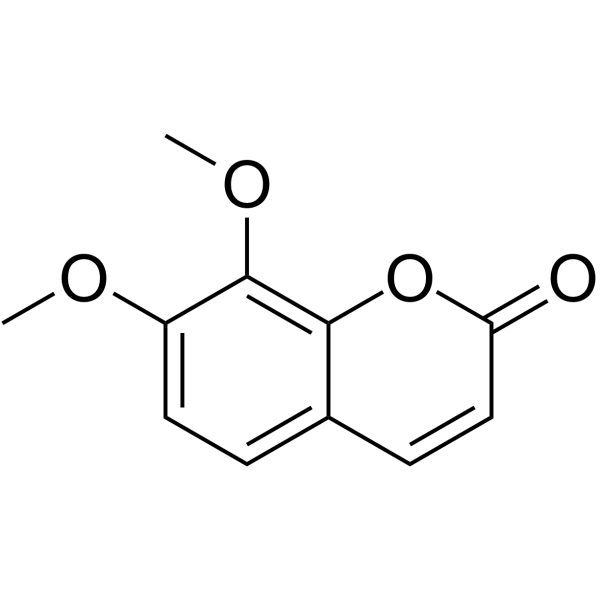
7,8-Dimethoxycoumarin is a coumarin compound derived from Artemisia caruifolia with oral activity. 7,8-Dimethoxycoumarin inhibits mitochondrial permeability transition pore and H +/K +-ATPase, and exhibits antioxidant, anti-inflammatory, renoprotective, neuroprotective and gastroprotective effects. 7,8-Dimethoxycoumarin reduces lipid peroxidation (TBARS), increases GSH levels, inhibits myeloperoxidase (MPO) activity, and regulates the expression of inflammatory factors by inhibiting the NF‑κB and MAPK pathways. 7,8-Dimethoxycoumarin ameliorates gastric mucosal injury, alleviates renal tissue lesions and relieves neuropathic pain. 7,8-Dimethoxycoumarin can be used in studies related to acute renal failure, trigeminal neuralgia and gastritis .
loading...
    loading...
Cat. No.: HY-15538
CAS No.: 100981-43-9
Purity:  98.51%
Synonyms: FI3542
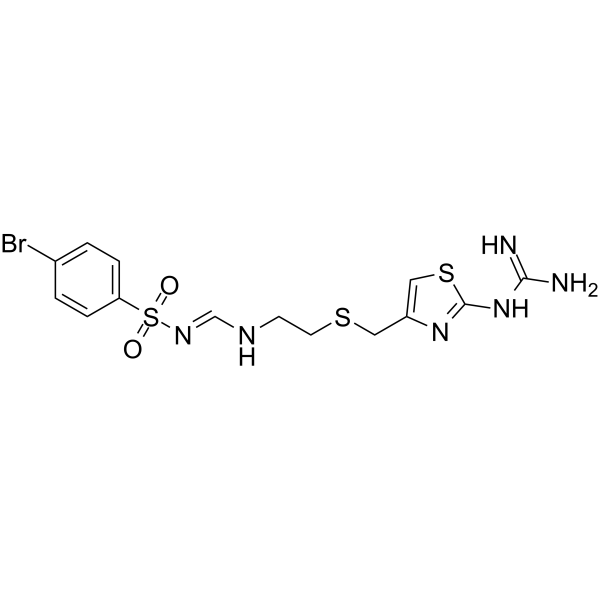
Ebrotidine (FI3542) is a competitive histamine H2 receptor (histamine H2 receptor) antagonist with gastric acid secretion inhibitory and gastric mucosal protective effects. Ebrotidine alleviates gastric mucosal injury and epithelial cell apoptosis induced by Indomethacin (HY-14397) and Helicobacter pylori LPS (HY-D1056), and accelerates chronic gastric ulcer healing by promoting rapid recovery of IL-4 and inhibiting TNF-α, endothelin-1 (ET-1) and NOS-2. Ebrotidine can be used in studies on gastric ulcer healing, NSAID-induced gastric mucosal injury, Helicobacter pylori-associated gastritis, and H2 receptor-mediated gastric mucosal protection mechanisms .
loading...
    loading...
Cat. No.: HY-75424A
CAS No.: 2062-25-1
Target:  

Proton Pump

Research Areas:  

Inflammation/Immunology

2-(Trifluoromethyl)cinnamic acid is a cinnamic acid derivative that inhibits the proton pump (H +/K +-ATPase), thereby reducing gastric acid secretion. 2-(Trifluoromethyl)cinnamic acid also improves delayed gastric emptying and can be used in research on gastric diseases such as acute gastritis and gastric ulcers .
loading...
    loading...
Cat. No.: HY-D3005
NpCy-4 is a reliable reporter for monitoring lysosomal pH and viscosity changes in real time during Autophagy (λex = 650 nm; λem = 660-740 nm). NpCy-4 demonstrates a superior signal-to-background ratio (SBR) for cellular imaging. NpCy-4 facilitates real-time, noninvasive diagnostic imaging of acute gastritis model with high contrast .
loading...
    loading...
Cat. No.: HY-135288
CAS No.: 114370-57-9
Target:  

Leukotriene Receptor

Research Areas:  

Inflammation/Immunology

L-649923 is an orally active CysLT1 antagonist. L-649923 reduced the incidence of gastritis in an animal model of acute gastric mucosal injury. L-649923 can be used in research on diseases such as asthma and gastritis .
loading...
    loading...
Cat. No.: HY-118418
CAS No.: 1601-22-5
Anti-inflammatory agent 120 is an orally active non-steroidal anti-inflammatory agent. Anti-inflammatory agent 120 can be used in the research of rheumatoid arthritis, osteoarthritis, dysmenorrhea, acute gouty arthritis, ankylosing spondylitis and dementia .
loading...
    loading...
Cat. No.: HY-15538R
CAS No.: 100981-43-9
Synonyms: FI3542 (Standard)
Ebrotidine (Standard) (FI3542 (Standard)) is the analytical standard of Ebrotidine (HY-15538). This product is intended for research and analytical applications. Ebrotidine (FI3542) is a competitive histamine H2 receptor (histamine H2 receptor) antagonist with gastric acid secretion inhibitory and gastric mucosal protective effects. Ebrotidine alleviates gastric mucosal injury and epithelial cell apoptosis induced by Indomethacin (HY-14397) and Helicobacter pylori LPS (HY-D1056), and accelerates chronic gastric ulcer healing by promoting rapid recovery of IL-4 and inhibiting TNF-α, endothelin-1 (ET-1) and NOS-2. Ebrotidine can be used in studies on gastric ulcer healing, NSAID-induced gastric mucosal injury, Helicobacter pylori-associated gastritis, and H2 receptor-mediated gastric mucosal protection mechanisms .
loading...
    loading...

