

26 Results for "

amide hydrolysis

" in MedChemExpress (MCE) Product Catalog:
Products (26)

26 Results for "amide hydrolysis" in MCE Product Catalog:

Cat. No.: HY-130086
CAS No.: 1314378-11-4
Purity:  99.29%
Target:  

ADC Linkers

Research Areas:  

Cancer

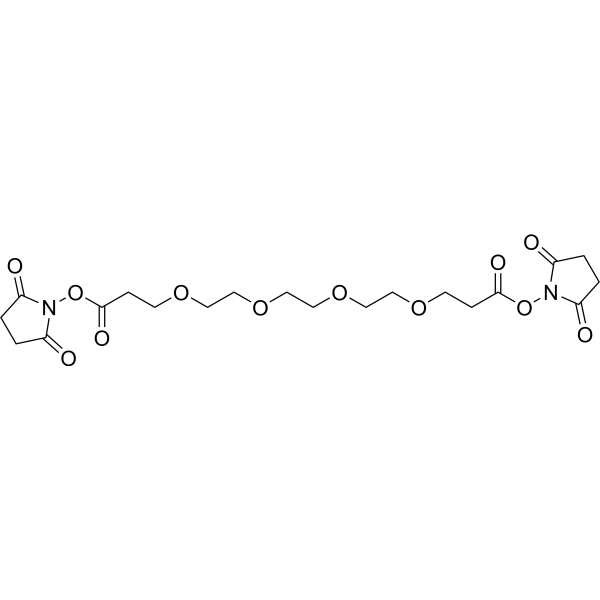
Bis-PEG4-NHS ester is a crosslinking reagent and amine-reactive modulator .Bis-PEG4-NHS ester reacts with primary amine groups on liposome surfaces via amide bond formation to covalently attach dibenzylcyclooctyne groups, with a hydrophilic PEG4 spacer reducing steric hindrance for subsequent click chemistry .Bis-PEG4-NHS ester enables site-specific antibody coupling to liposome surfaces via copper-free strain-promoted alkyne-azide cycloaddition click chemistry without disrupting liposome structure in minimal organic solvent volumes .Bis-PEG4-NHS ester undergoes hydrolysis during annealing to form -COOH groups that interact with PbI and FAI to enhance perovskite structural integrity, passivate defects, and modulate nucleation kinetics to regulate crystal growth .Bis-PEG4-NHS ester enhances device efficiency and long-term stability when used as an antisolvent additive for p-i-n perovskite solar cells .
loading...
    loading...
Cat. No.: HY-112624H
CAS No.: 9004-54-0
Synonyms: Dextran 2; Dextran D2; Dextran T2(MW 1600-2400)
Dextran T2 (Dextran 2; Dextran T2(MW 1600-2400)) is a natural high molecular weight polysaccharide, the glycosidic bonds in its structure can be recognized by endo-dextranase and exo-dextranase. Dextran T2 (MW 2,000) breaks the glycosidic bonds in the enzymatic hydrolysis mechanism, releasing products such as D-glucose, Isomaltose (IM2), and Isomaltotriose (IM3). Dextran T2 (MW 2,000) can be used as a model substrate to characterize the catalytic properties of dextranase (such as optimal pH, temperature and product specificity), and to study enzymatic mechanism research and polysaccharide degradation pathways in glycobiology. The Dextran series of compounds are also a natural polysaccharide drug carrier, which can be connected to drugs through covalent bonding methods such as ester bonds, amide bonds or click chemistry, or self-assembled to form carriers such as nanoparticles and hydrogels. Dextran is biodegradable and biocompatible, and can achieve targeted delivery and controlled release of drugs. Dextran derivatives can prolong drug half-life, increase local concentration and reduce immune clearance activity .
loading...
    loading...
Cat. No.: HY-E70600
Research Areas:  

Others

Human CES1 Enzyme is a recombinantly expressed CES1 enzyme. Human CES1 Enzyme, an enzyme responsible for the hydrolysis of ester- and amide-containing molecules, is mainly expressed in the liver where it is crucial for the processing of active metabolites and is also involved in trans-esterification reactions .
loading...
    loading...
Cat. No.: HY-P4821
CAS No.: 83139-29-1
Research Areas:  

Metabolic Disease Cancer

PTH (1-34) amide human is a type 1 PTH/PTHrP receptor agonist. PTH (1-34) amide human activates adenylate cyclase and phospholipase C pathways, thereby mediating mineral ion homeostasis and bone metabolism regulation. PTH (1-34) amide human increases serum calcium, decreases serum phosphorus, regulates renal excretion, while inducing the inhibition of endogenous PTH (1-84) and the increase of 1,25-dihydroxyvitamin D2 and bone resorption. PTH (1-34) amide human stimulates phosphatidylcholine hydrolysis via phospholipase D mediation, and its hypercalcemic effect is inhibited by human PTH-(7-84). PTH (1-34) amide human can be used in the research of diseases related to humoral hypercalcemia of malignancy .
loading...
    loading...
Cat. No.: HY-120957
CAS No.: 862913-13-1
Synonyms: AMC-AA; 7-Amino-4-methyl coumarin-arachidonamide
Target:  

FAAH

Research Areas:  

Neurological Disease

AMC Arachidonoyl Amide (AMC-AA; 7-Amino-4-methyl coumarin-arachidonamide) is a fluorescent fatty acid amide substrate used to detect fatty acid amide hydrolase (FAAH) activity. AMC Arachidonoyl Amide releases 7-amino-4-methylcoumarin (AMC) upon hydrolysis by FAAH, producing fluorescence at Ex 360 nm/Em 465 nm, thereby allowing rapid determination of FAAH activity using a cuvette or microplate fluorometer .
loading...
    loading...
Cat. No.: HY-P2736
CAS No.: 9012-56-0
Target:  

Endogenous Metabolite

Research Areas:  

Metabolic Disease

Amidases, a member of nitrilase superfamily, catalyzes the hydrolysis of an amide, leading to the formation of carboxylic acid and ammonia. Amidases contain a conserved stretch of approximately 130 amino acids known as the AS sequence, and play a role in important metabolic processes .
loading...
    loading...
Cat. No.: HY-W800839
CAS No.: 2268817-73-6
Research Areas:  

Others

TCO-PEG4-TFP Ester is an amine-reactive labeling reagent used to modify proteins, antibodies, and other amine-containing biopolymers. A 2,3,5,6-tetrafluorophenol (TFP) is a reactive ester that displays much better stability toward hydrolysis in aqueous media resulting in more efficiency and better reproducible labeling of biopolymers. TFP ester of carboxylic acids react with primary amines at the same rate as NHS ester forming covalent amide bond that is identical to one formed by the reaction between primary amines and NHS esters or sulfo-NHS esters.
loading...
    loading...
Cat. No.: HY-W158239
CAS No.: 144059-86-9
Target:  

Drug Metabolite

Research Areas:  

Others

4-Methyl-2-[4-(trifluoromethyl) phenyl]-1,3-thiazole-5-carboxylic acid is a substituted thiazole carboxylic acid synthetic intermediate and a metabolite of GW 501516 (HY-10838), which is detected in horse plasma and hair samples after administration .
loading...
    loading...
Cat. No.: HY-N2512R
CAS No.: 589-68-4
1-Monomyristin, extracted from Serenoa repens, inhibits the hydrolysis of 2-oleoylglycerol (IC50=32 μM) and fatty acid amide hydrolase (FAAH) activity (IC50=18 μM). 1-Monomyristin shows antibacterial activity against Staphylococcus aureus and Aggregatibacter actinomycetemcomitans and also antifungal activity against Candida albicans .
loading...
    loading...
Cat. No.: HY-120422S
Research Areas:  

Others

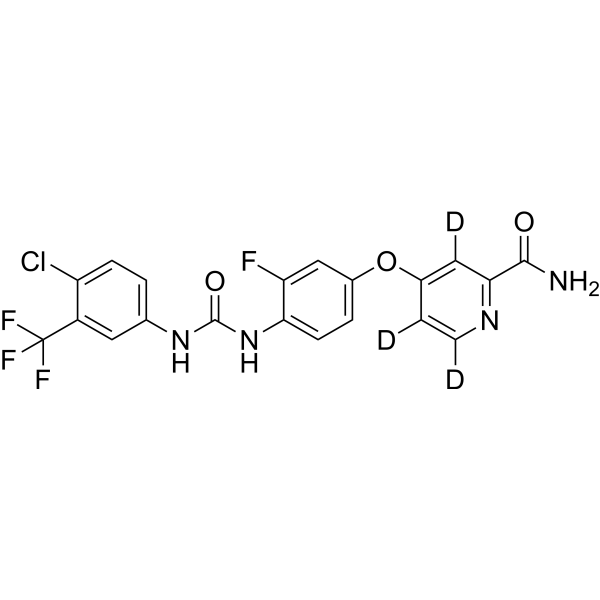
N-Desmethyl Regorafenib-d3 is the deuterated-labeled N-Desmethyl Regorafenib (HY-120422). N-Desmethyl Regorafenib is a demethylated metabolite of Regorafenib (HY-10331), formed by N-demethylation, and is found in feces and occasionally in plasma as a trace component. N-Desmethyl Regorafenib is a substrate for amide hydrolysis .
loading...
    loading...
Cat. No.: HY-P4818
CAS No.: 173833-08-4
Research Areas:  

Metabolic Disease

Human PTH-(1-31) amide is a PTH analog. Human PTH-(1-31) amide stimulate phosphatidylcholine hydrolysis and stimulates adenylyl cyclase release .
loading...
    loading...
Cat. No.: HY-137483
CAS No.: 851761-42-7
Research Areas:  

Endocrinology

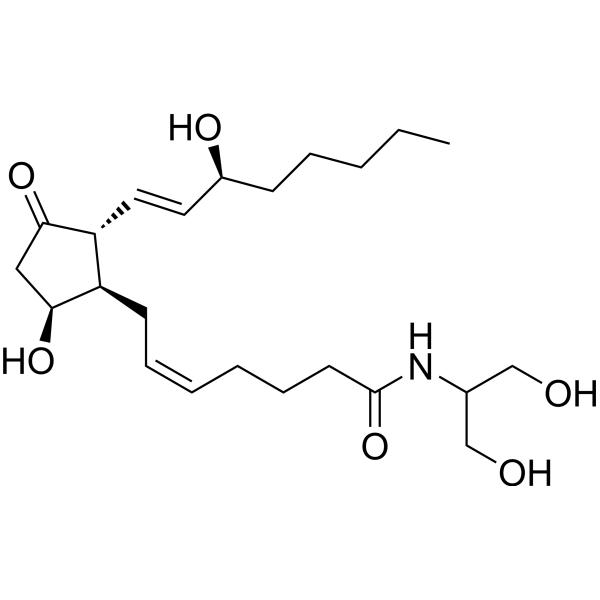
Prostaglandin D2 serinol amide is a weak inhibitor of the hydrolysis of [3H]2-oleoylglycerol .
loading...
    loading...
Cat. No.: HY-118556
CAS No.: 951209-67-9
Research Areas:  

Endocrinology

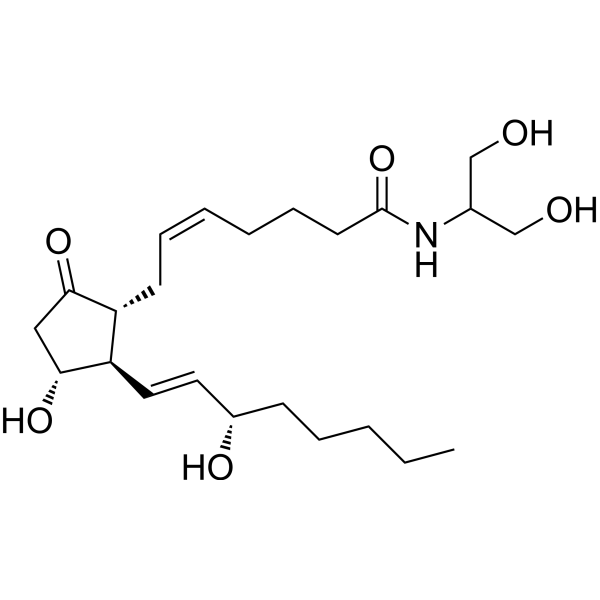
Prostaglandin E2 serinol amide is a weak inhibitor of the hydrolysis of [3H]2-oleoylglycerol. Prostaglandin E2 serinol amide is non-hydrolyzable to produce PGE2 and thus cannot inhibit leukotriene B4 biosynthesis, superoxide production, migration and antimicrobial peptide release .
loading...
    loading...
Cat. No.: HY-134110
CAS No.: 156910-29-1
Target:  

Endogenous Metabolite

Research Areas:  

Metabolic Disease

Anandamide (AEA) is an endogenous cannabinoid that binds to both central cannabinoid (CB1) and peripheral cannabinoid (CB2) receptors. The biological actions of AEA are terminated by cellular uptake and hydrolysis of the amide bond by the enzyme fatty acid amide hydrolase. Arachidonoyl-N-methyl amide is an analog of anandamide that binds to the human central cannabinoid (CB1) receptor with a Ki of 60 nM. It inhibits rat glial gap junction cell-cell communication 100% at a concentration of 50 μM.
loading...
    loading...
Cat. No.: HY-134055
CAS No.: 45280-17-9
Synonyms: Arachidonic acid-N,N-dimethyl amide
Target:  

Cannabinoid Receptor

Research Areas:  

Metabolic Disease

Anandamide (AEA) is an endogenous cannabinoid that binds to both central cannabinoid (CB1) and peripheral cannabinoid (CB2) receptors. The biological actions of AEA are terminated by cellular uptake and hydrolysis of the amide bond by the enzyme fatty acid amide hydrolase. Arachidonoyl-N,N-dimethyl amide is an analog of anandamide that exhibits weak or no binding to the human central cannabinoid (CB1) receptor (Ki >1 μM). It inhibits rat glial gap junction cell-cell communication 100% at a concentration of 50 μM.
loading...
    loading...
Cat. No.: HY-120300
CAS No.: 213738-77-3
Target:  

Cannabinoid Receptor

Research Areas:  

Metabolic Disease

UCM710 is an endocannabinoid (eCB) hydrolysis inhibitor that increases the levels of N-arachidonoyl ethanolamine and 2-arachidonoylglycerol in neurons. UCM710 inhibits fatty acid amide hydrolase and α/β-hydrolase domain 6, but not monoacylglycerol lipase .
loading...
    loading...
Cat. No.: HY-134019
CAS No.: 119520-58-0
Target:  

Others

Research Areas:  

Others

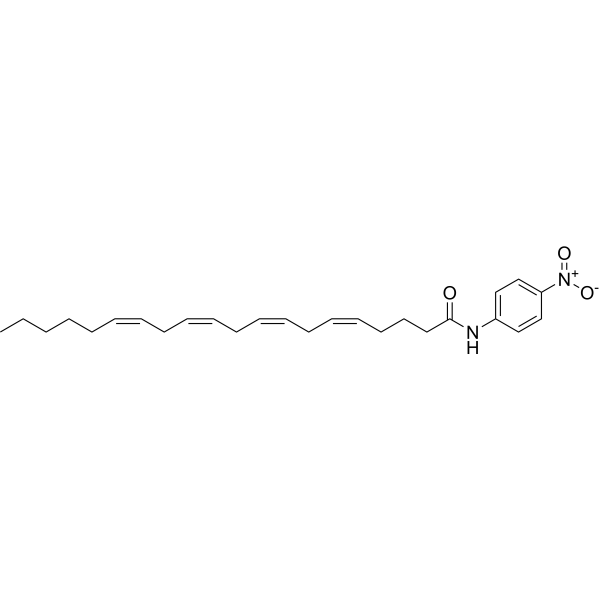
Arachidonoyl p-nitroaniline is a substrate for the hydrolysis of p-nitroaniline by FAAH in Dictyostelium discoideum with long-chain unsaturated fatty acids. Arachidonoyl p-nitroaniline can be used in enzyme kinetic studies. Examples include determining the hydrolysis rate of Arachidonoyl p-nitroaniline and analyzing the fatty acid amide hydrolase activity of recombinant His-FAAH purified from Dictyostelium to characterize the binding and catalytic specificity of mammalian FAAH enzymes .
loading...
    loading...
Cat. No.: HY-116833
CAS No.: 19545-95-0
Purity:  ≥95.0%
Target:  

Drug Derivative

Research Areas:  

Metabolic Disease

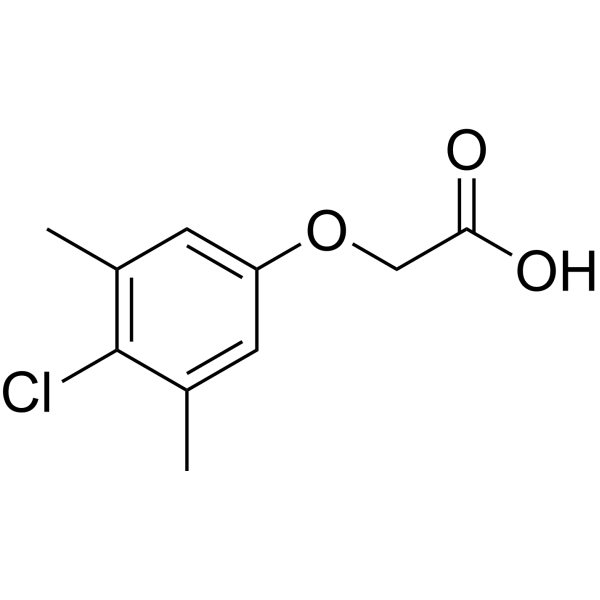
4-Chloro-3,5-dimethylphenoxyacetic acid (compound 602 UC) is a product of masked amide bond hydrolysis of auxin analog 602 (compound 602). Auxin can effectively stimulate hypocotyl growth in wild-type seedlings .
loading...
    loading...
Cat. No.: HY-129934S
Synonyms: Lat-NEt-d4
Latanoprost ethyl amide-d4 (Lat-NEt-d4) is deuterium labeled Latanoprost ethyl amide. Latanoprost ethyl amide (Lat-NEt) is a latanoprost analog in which the C-1 carboxyl group has been modified to an N-ethyl amide. Prostaglandin esters have been shown to have ocular hypotensive activity.1 Prostaglandin N-ethyl amides were recently introduced as alternative prostaglandin ocular hypotensive prodrugs. Although it has been claimed that prostaglandin ethyl amides are not converted to the free acids in vivo, studies in our laboratories have shown that bovine and human corneal tissue converts the N-ethyl amides of various prostaglandins to the free acids with a conversion rate of about 2.5 μg/g corneal tissue/hr. Lat-NEt would be expected to show the typical intraocular effects of Latanoprost free acid, but with the much slower hydrolysis pharmacokinetics of the prostaglandin N-amides .
loading...
    loading...
Cat. No.: HY-129934
CAS No.: 607351-44-0
Synonyms: Lat-NEt
Research Areas:  

Endocrinology

Latanoprost ethyl amide (Lat-NEt) is a latanoprost analog in which the C-1 carboxyl group has been modified to an N-ethyl amide. Prostaglandin esters have been shown to have ocular hypotensive activity.1 Prostaglandin N-ethyl amides were recently introduced as alternative prostaglandin ocular hypotensive prodrugs. Although it has been claimed that prostaglandin ethyl amides are not converted to the free acids in vivo, studies in our laboratories have shown that bovine and human corneal tissue converts the N-ethyl amides of various prostaglandins to the free acids with a conversion rate of about 2.5 μg/g corneal tissue/hr. Lat-NEt would be expected to show the typical intraocular effects of Latanoprost free acid, but with the much slower hydrolysis pharmacokinetics of the prostaglandin N-amides.
loading...
    loading...