1. Search Result
Search Result
Results for "

antibiotic activity

" in MedChemExpress (MCE) Product Catalog:

1461

Inhibitors & Agonists

3

Screening Libraries

2

Fluorescent Dyes

7

Biochemical Assay Reagents

70

Peptides

1

Inhibitory Antibodies

631

Natural
Products

100

Isotope-Labeled Compounds

2

Click Chemistry

2

GMP Molecules

Targets Recommended:
Cat. No. Product Name Target Research Areas Chemical Structure
  • HY-N0565
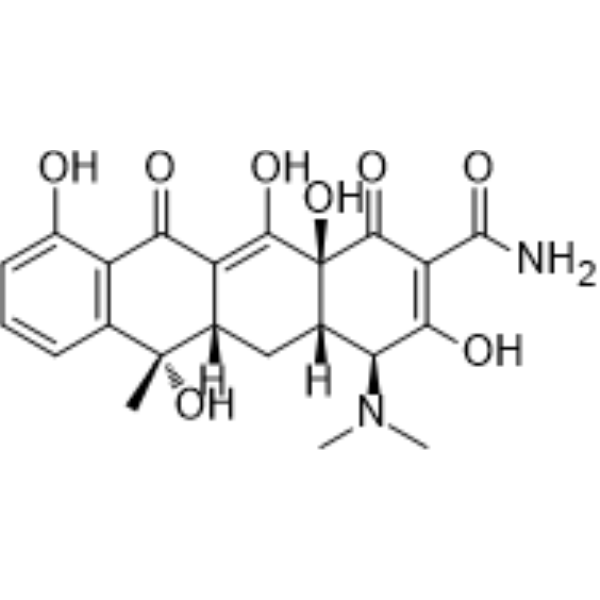
    Doxycycline
    170+ Cited Publications

    MMP Bacterial Antibiotic Parasite Infection Neurological Disease Inflammation/Immunology Cancer
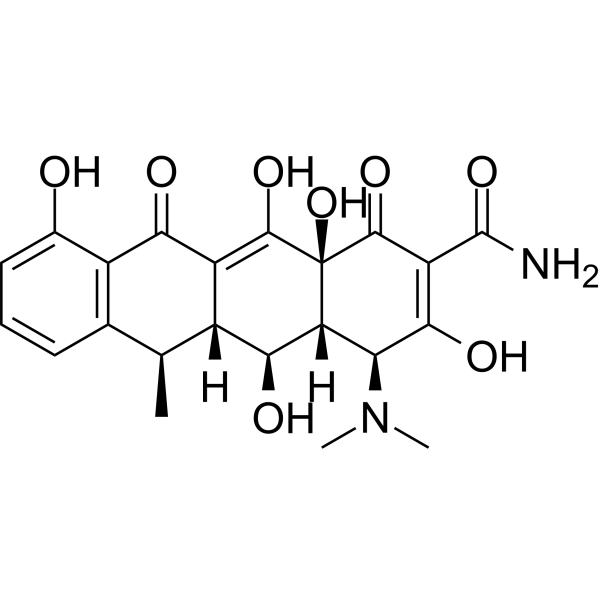
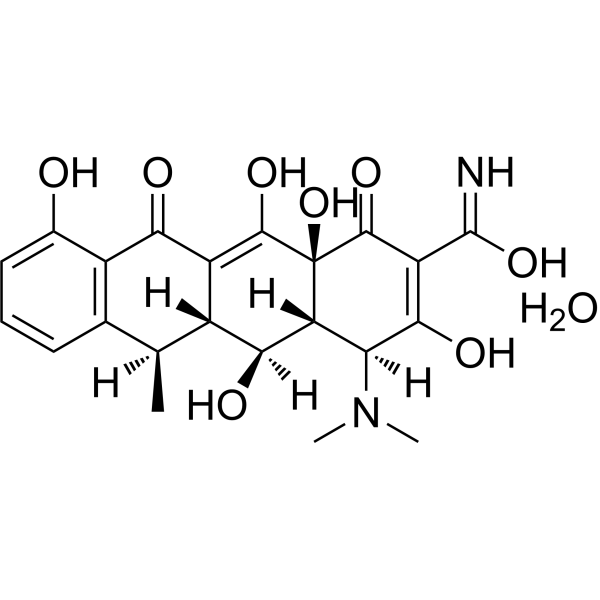
    Doxycycline, an antibiotic, is an orally active and broad-spectrum metalloproteinase (MMP) inhibitor . Doxycycline shows antibacterial activity and anti-cancer cell proliferation activity .
    Doxycycline
  • HY-N0565B
    Doxycycline hyclate
    170+ Cited Publications

    Doxycycline hydrochloride hemiethanolate hemihydrate; WC2031

    Antibiotic MMP Bacterial Parasite Infection Neurological Disease Inflammation/Immunology Cancer
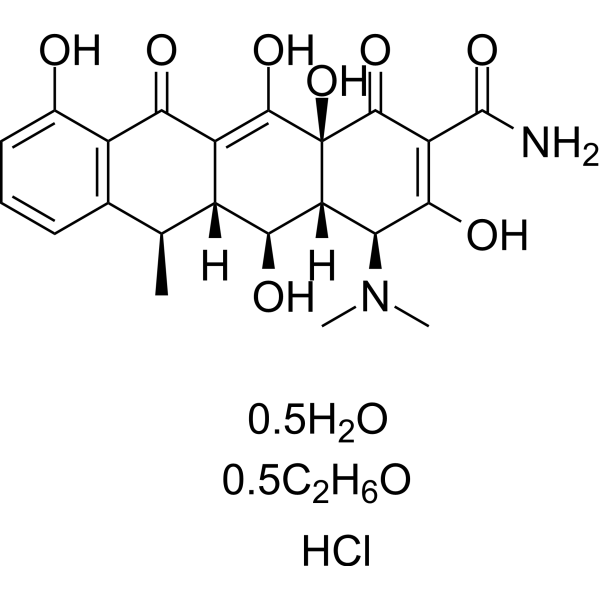
    Doxycycline hyclate, an antibiotic, is an orally active and broad-spectrum metalloproteinase (MMP) inhibitor. Doxycycline hyclate shows antibacterial activity and anti-cancer cell proliferation activity. Doxycycline hyclate can be used to construct gene expression regulation models .
    Doxycycline hyclate
  • HY-N0565A
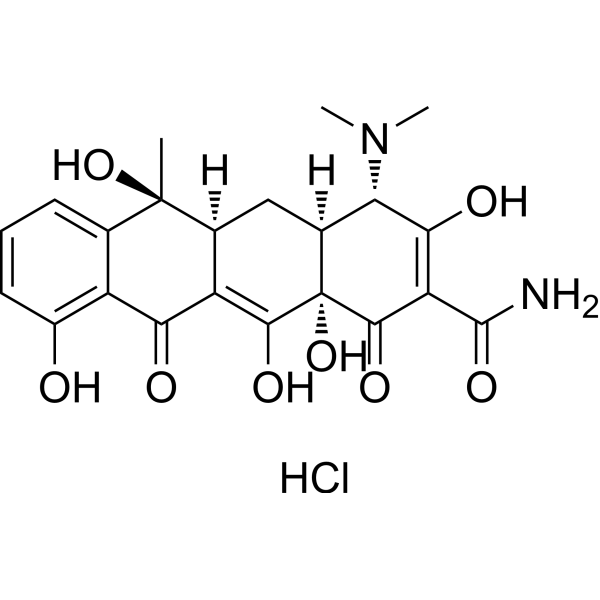
    Doxycycline hydrochloride
    170+ Cited Publications

    MMP Bacterial Antibiotic Parasite Infection Neurological Disease Inflammation/Immunology Cancer
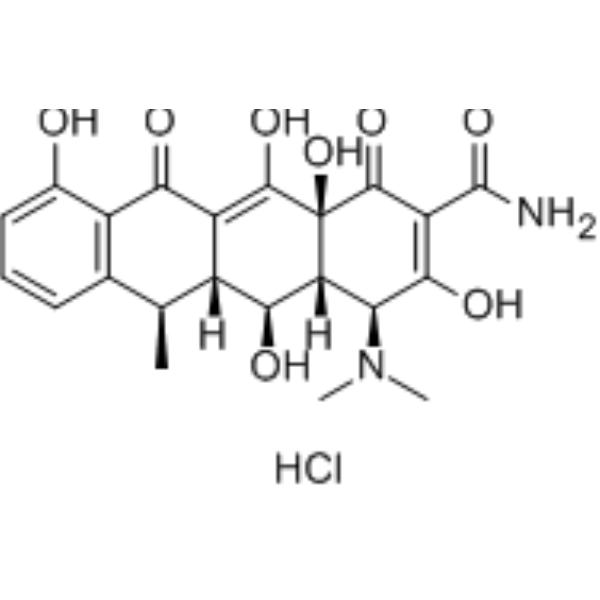
    Doxycycline hydrochloride, an antibiotic, is an orally active and broad-spectrum metalloproteinase (MMP) inhibitor . Doxycycline hydrochloride shows antibacterial activity and anti-cancer cell proliferation activity. Doxycycline hydrochloride can be used to construct gene expression regulation models .
    Doxycycline hydrochloride
  • HY-W016420
    Fosfomycin sodium
    10+ Cited Publications

    MK-0955 sodium

    Bacterial Antibiotic Infection Cancer
    Fosfomycin (MK-0955) sodium is a blood-brain barrier penetrating, broad-spectrum antibiotic by irreversibly inhibiting an early stage in cell wall synthesis. Fosfomycin sodium shows both in vivo and in vitro activity against a wide range of bacteria, including multidrug-resistant (MDR), extensively drug-resistant (XDR), and pan-drug-resistant (PDR) bacteria .
    Fosfomycin sodium
  • HY-W592871

    10-HDA; Queen Bee Acid

    mTOR Apoptosis ERK MDM-2/p53 GSK-3 AMPK Interleukin Related TNF Receptor Caspase NF-κB Bacterial Fungal Cardiovascular Disease Neurological Disease Inflammation/Immunology Cancer
    10-Hydroxy-2-decenoic acid (10-HDA) is an orally active unsaturated medium-chain fatty acid with various physiological activities. 10-Hydroxy-2-decenoic acid induces ROS-mediated apoptosis in A549 cells. 10-Hydroxy-2-decenoic acid inhibits VEGF-induced angiogenesis in human venous endothelial cells. 10-Hydroxy-2-decenoic acid alleviates non-alcoholic fatty liver disease (NAFLD) by activating the AMPK-α signaling pathway. 10-Hydroxy-2-decenoic acid protects against bone loss by inhibiting NF-κB signaling downstream of FFAR4. 10-Hydroxy-2-decenoic acid is an antibiotic against many bacteria and fungi, such as Neurospora sitophila, molds and Staphylococcus aureus. 10-Hydroxy-2-decenoic acid has longevity-promoting effects in C. elegans. 10-Hydroxy-2-decenoic acid prevents osteoarthritis by targeting aspartyl β hydroxylase and inhibiting chondrocyte senescence .
    10-Hydroxy-2-decenoic acid
  • HY-B1831A
    Oritavancin diphosphate
    2 Publications Verification

    LY333328 diphosphate

    Bacterial Antibiotic Infection Inflammation/Immunology
    Oritavancin diphosphate (LY333328 diphosphate), a semisynthetic derivative of Vancomycin (HY-B0671), is an orally active glycopeptide antibiotic with bactericidal activity against gram-positive organisms. Oritavancin diphosphate shows antibacterial effect against B. anthracis, such as Ames strain with a MIC value of 0.015 g/mL. Oritavancin diphosphate inhibits cell wall synthesis and disrupts the membrane potential. Oritavancin diphosphate inhibits ArlS kinase activity thereby interfering the signal transduction. Oritavancin diphosphate enters cells by adsorptive endocytosis, which drives it to lysosomes, where it exerts antibiotic activity .
    Oritavancin diphosphate
  • HY-B1075
    Fosfomycin calcium
    10+ Cited Publications

    MK-​0955 calcium

    Bacterial Antibiotic Infection Cancer
    Fosfomycin (MK-0955) calcium is a blood-brain barrier penetrating, broad-spectrum antibiotic by irreversibly inhibiting an early stage in cell wall synthesis. Fosfomycin calcium shows both in vivo and in vitro activity against a wide range of bacteria, including multidrug-resistant (MDR), extensively drug-resistant (XDR), and pan-drug-resistant (PDR) bacteria .
    Fosfomycin calcium
  • HY-N7112
    Leucomycin
    1 Publications Verification

    Kitasamycin

    Bacterial Antibiotic Infection
    Leucomycin (Kitasamycin) is an orally active macrolide antibiotic produced by Streptomyces kitasatoensis. Leucomycin has broad-spectrum antibacterial activities against gram-positive and gram-negative bacteria, mycoplasma, leptospira, spirochaetes, rickettsiae and some larger viruses .
    Leucomycin
  • HY-133704
    Pyrrolnitrin
    1 Publications Verification

    Bacterial Fungal Antibiotic Infection
    Pyrrolnitrin is an antibiotic isolated from Pseudomonas pyrrocinia. Pyrrolnitrin shows a broad spectrum of antibiotic activity against fungi, yeast and gram-positive bacteria .
    Pyrrolnitrin
  • HY-B1075A

    MK-0955

    Bacterial Antibiotic Infection Cancer
    Fosfomycin (MK-0955) is a broad-spectrum antibiotic. Fosfomycin can cross blood-brain barrier penetrating, and irreversibly inhibits an early stage in cell wall synthesis. Fosfomycin shows anti-bacteria activity for a range of bacteria, including multidrug-resistant (MDR), extensively drug-resistant (XDR), and pan-drug-resistant (PDR) bacteria .
    Fosfomycin
  • HY-B0734A

    SCE-963 hydrochloride

    Antibiotic Bacterial Infection
    Cefotiam (SCE-963) hydrochloride is a parenteral cephalosporin antibiotic. Cefotiam hydrochloride has broad-spectrum activity against Gram-positive and Gram-negative bacteria .
    Cefotiam hydrochloride
  • HY-B0609
    Fosfomycin tromethamine
    10+ Cited Publications

    MK-0955 tromethamine

    Bacterial Antibiotic Infection Cancer
    Fosfomycin (MK-0955) tromethamine is a blood-brain barrier penetrating, broad-spectrum antibiotic by irreversibly inhibiting an early stage in cell wall synthesis. Fosfomycin tromethamine shows both in vivo and in vitro activity against a wide range of bacteria, including multidrug-resistant (MDR), extensively drug-resistant (XDR), and pan-drug-resistant (PDR) bacteria .
    Fosfomycin tromethamine
  • HY-A0071

    Bacterial Antibiotic Infection
    Tildipirosin, a long-acting macrolide, has antibiotic activity.
    Tildipirosin
  • HY-P1926

    Antibiotic Bacterial Infection
    A-54556A (ADEP 1) is an acyldepsipeptide (ADEP) antibiotic. A-54556A shows antibacterial activity against a broad range of Gram-positive bacteria .
    A-54556A
  • HY-P5726

    Antibiotic Cancer
    Aurein 1.2 is an active amphibian antibiotic peptide with antibiotic and anticancer activities .
    Aurein 1.2
  • HY-N0565AR

    Reference Standards MMP Parasite Bacterial Antibiotic Apoptosis Akt PI3K Infection Neurological Disease Inflammation/Immunology Cancer
    Doxycycline hydrochloride (Standard) is the analytical standard of Doxycycline hydrochloride (HY-N0565A). This product is intended for research and analytical applications. Doxycycline hydrochloride is an orally active highly lipophilic, tissue-permeable MMP inhibitor with broad-spectrum antibacterial activity. Doxycycline hydrochloride is also a semi-synthetic antibiotic with chelating properties, which blocks bacterial protein synthesis and inhibits extracellular matrix degradation through interactions with zinc and calcium atoms. Doxycycline hydrochloride also inhibits mitochondrial biogenesis, translation, and the expression of respiratory chain proteins. Doxycycline hydrochloride induces apoptosis, inhibits autophagy and EMT, downregulates stem cell markers, and activates the PI3K-AKT pathway, thereby effectively inhibiting the viability and proliferation of cancer cells such as breast cancer cells. Doxycycline hydrochloride also promotes the survival and self-renewal of embryonic stem cells and neural stem cells, and reduces the frequency of medium changes in culture. Doxycycline hydrochloride has been applied in studies related to breast cancer, prostate cancer, bladder cancer, and other cancers .
    Doxycycline (hydrochloride) (Standard)
  • HY-N0565R

    Reference Standards MMP Parasite Bacterial Antibiotic Apoptosis Akt PI3K Infection Neurological Disease Inflammation/Immunology Cancer
    Doxycycline (Standard) is the analytical standard of Doxycycline (HY-N0565). This product is intended for research and analytical applications. Doxycycline is an orally active highly lipophilic, tissue-permeable MMP inhibitor with broad-spectrum antibacterial activity. Doxycycline is also a semi-synthetic antibiotic with chelating properties, which blocks bacterial protein synthesis and inhibits extracellular matrix degradation through interactions with zinc and calcium atoms. Doxycycline also inhibits mitochondrial biogenesis, translation, and the expression of respiratory chain proteins. Doxycycline induces apoptosis, inhibits autophagy and EMT, downregulates stem cell markers, and activates the PI3K-AKT pathway, thereby effectively inhibiting the viability and proliferation of cancer cells such as breast cancer cells. Doxycycline also promotes the survival and self-renewal of embryonic stem cells and neural stem cells, and reduces the frequency of medium changes in culture. Doxycycline has been applied in studies related to breast cancer, prostate cancer, bladder cancer, and other cancers .
    Doxycycline (Standard)
  • HY-N0565BR

    Doxycycline (hydrochloride hemiethanolate hemihydrate) (Standard); WC2031 (Standard)

    Reference Standards MMP Parasite Bacterial Antibiotic Apoptosis Akt PI3K Infection Neurological Disease Inflammation/Immunology Cancer
    Doxycycline hyclate (Standard) is the analytical standard of Doxycycline hyclate (HY-N0565B). This product is intended for research and analytical applications. Doxycycline hyclate is an orally active highly lipophilic, tissue-permeable MMP inhibitor with broad-spectrum antibacterial activity. Doxycycline hyclate is also a semi-synthetic antibiotic with chelating properties, which blocks bacterial protein synthesis and inhibits extracellular matrix degradation through interactions with zinc and calcium atoms. Doxycycline hyclate also inhibits mitochondrial biogenesis, translation, and the expression of respiratory chain proteins. Doxycycline hyclate induces apoptosis, inhibits autophagy and EMT, downregulates stem cell markers, and activates the PI3K-AKT pathway, thereby effectively inhibiting the viability and proliferation of cancer cells such as breast cancer cells. Doxycycline hyclate also promotes the survival and self-renewal of embryonic stem cells and neural stem cells, and reduces the frequency of medium changes in culture. Doxycycline hyclate has been applied in studies related to breast cancer, prostate cancer, bladder cancer, and other cancers .
    Doxycycline hyclate (Standard)
  • HY-19965

    antibiotic UK 2A

    Antibiotic Fungal Infection
    UK-2A (Antibiotic UK 2A) is a potent antifungal antibiotic. UK-2A shows antifungal activity .
    UK-2A
  • HY-P10518

    Bacterial Infection
    Anoplin is an antimicrobial peptide found in the venom of the solitary wasp (Anoplius samariensis). Anoplin exhibits antimicrobial activity against a wide range of bacteria, including both gram-positive and gram-negative bacteria. Anoplin can be used in the development of antibiotics .
    Anoplin
  • HY-B1831

    LY 333328; Orbactiv

    Antibiotic Bacterial Infection Inflammation/Immunology
    Oritavancin (LY 333328), a semisynthetic derivative of Vancomycin (HY-B0671), is an orally active glycopeptide antibiotic with bactericidal activity against gram-positive organisms. Oritavancin shows antibacterial effect against B. anthracis, such as Ames strain with a MIC value of 0.015 g/mL. Oritavancin inhibits cell wall synthesis and disrupts the membrane potential. Oritavancin inhibits ArlS kinase activity thereby interfering the signal transduction. Oritavancin enters cells by adsorptive endocytosis, which drives it to lysosomes, where it exerts antibiotic activity .
    Oritavancin
  • HY-121405

    antibiotic K16

    Antibiotic Parasite Infection
    Malonomicin (Antibiotic K16) is an antibiotic with anti-protozoa and anti-trypanosome activities. Malonomicin also shows anti-trypanosome activity in vivo .
    Malonomicin
  • HY-N6705

    Bacterial Antibiotic Infection
    Tropodithietic acid is a sulfur-containing antibiotic produced by the marine bacterium Phaeobacter inhibens. Tropodithietic acid exhibits a strong antibiotic activity against a broad spectrum of bacteria including alpha- and gammaproteobacteria, flavobacteria and actinobacteria .
    Tropodithietic acid
  • HY-N10174

    Antibiotic Infection
    Tomaymycin is an antitumor antibiotic. Tomaymycin has antimicrobial activity against Grampositive bacteria .
    Tomaymycin
  • HY-15993

    AZD2563; AZD5847

    Antibiotic Infection
    Posizolid (AZD2563), an oxazolidinone antibiotic, is developed by AstraZeneca for the study of bacterial infections. Posizolid shows very good anti-mycobacterial activity .
    Posizolid
  • HY-B0734

    SCE-963; Cefotiam Dihydrochloride

    Antibiotic Bacterial Infection
    Cefotiam (SCE-963) is a parenteral cephalosporin antibiotic. Cefotiam has broad-spectrum activity against Gram-positive and Gram-negative bacteria .
    Cefotiam
  • HY-125117

    DNA/RNA Synthesis Bacterial Infection Cancer
    Simocyclinone D8 is an anthracycline antibiotic with antibacterial and antitumor activity against Gram-positive bacteria. Simocyclinone D8 inhibits DNA gyrase and thus has an inhibitory effect on a variety of tumor cell lines .
    Simocyclinone D8
  • HY-N16459

    Antibiotic Bacterial Infection
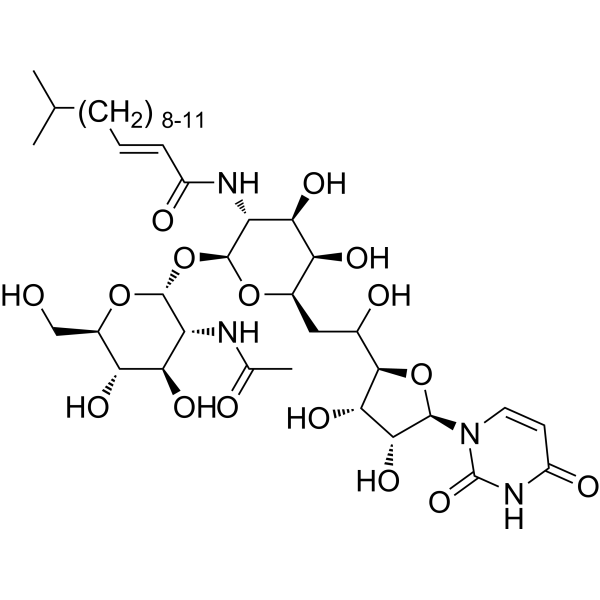
    Albomycin δ1 is a selective bacterial ribosome-targeted antibiotic (MIC: 0.0625 μg/mL against S. pneumoniae). Albomycin δ1 exerts bactericidal activity via covalent binding to 70S ribosomes and irreversible inhibition of peptidyl transferase. Albomycin δ1 is promising for research of S. pneumoniae and S. aureus infections .
    Albomycin δ1
  • HY-106922

    GV104326

    Antibiotic Bacterial Infection
    Sanfetrinem (GV104326) is a β-lactamase-stable antibiotic. Sanfetrinem has broad-spectrum antimicrobial activity against both Gram-positive and Gram-negative bacteria .
    Sanfetrinem
  • HY-19071

    Antibiotic Bacterial Infection
    BK-218 is an orally active cephalosporin antibiotic that binds to penicillin-binding proteins (PBPs) and has a greater inhibitory effect than Cephalexin (HY-B0200) and Cefoxitin (HY-B1825). BK-218 has similar antibacterial activity to Cefamandole (HY-B1128) and can be used in the development of antibacterial drugs .
    BK-218
  • HY-W592871R

    10-HDA (Standard); Queen Bee Acid (Standard)

    Reference Standards mTOR Cardiovascular Disease Neurological Disease Inflammation/Immunology Cancer
    10-Hydroxy-2-decenoic acid (Standard) is an analytical standard for 10-Hydroxy-2-decenoic acid (HY-W592871). This product is intended for research and analytical applications.10-Hydroxy-2-decenoic acid (10-HDA) is an orally active unsaturated medium-chain fatty acid with various physiological activities. 10-Hydroxy-2-decenoic acid induces ROS-mediated apoptosis in A549 cells. 10-Hydroxy-2-decenoic acid inhibits VEGF-induced angiogenesis in human venous endothelial cells. 10-Hydroxy-2-decenoic acid alleviates non-alcoholic fatty liver disease (NAFLD) by activating the AMPK-α signaling pathway. 10-Hydroxy-2-decenoic acid protects against bone loss by inhibiting NF-κB signaling downstream of FFAR4. 10-Hydroxy-2-decenoic acid is an antibiotic against many bacteria and fungi, such as Neurospora sitophila, molds and Staphylococcus aureus. 10-Hydroxy-2-decenoic acid has longevity-promoting effects in C. elegans. 10-Hydroxy-2-decenoic acid prevents osteoarthritis by targeting aspartyl β hydroxylase and inhibiting chondrocyte senescence .
    10-Hydroxy-2-decenoic acid (Standard)
  • HY-101136

    AT-265

    Antibiotic Carbonic Anhydrase Bacterial Infection
    Dealanylascamycin (AT-265) (Compound 2) is a nucleoside antibiotic. AT 265 is a carbonic anhydrase (CA) inhibitor, with Ki values of 167, 65.2, 234, and 143 nM for hCA I, hCA II, hCA IV, and hCA IX respectively. Dealanylascamycin is the active form of Ascamycin (HY-121071). Dealanylascamycin exhibits broad-spectrum antibacterial activity and is effective against pathogenic bacteria such as Xanthomonas citri (MIC = 0.4 μg/mL). Dealanylascamycin has high cytotoxicity .
    Dealanylascamycin
  • HY-B1075R

    MK-​0955 calcium (Standard)

    Reference Standards Bacterial Antibiotic Infection Cancer
    Fosfomycin (calcium) (Standard) is the analytical standard of Fosfomycin (calcium). This product is intended for research and analytical applications. Fosfomycin (MK-0955) calcium is a blood-brain barrier penetrating, broad-spectrum antibiotic by irreversibly inhibiting an early stage in cell wall synthesis. Fosfomycin calcium shows both in vivo and in vitro activity against a wide range of bacteria, including multidrug-resistant (MDR), extensively drug-resistant (XDR), and pan-drug-resistant (PDR) bacteria .
    Fosfomycin calcium (Standard)
  • HY-133056

    Antibiotic Bacterial Infection
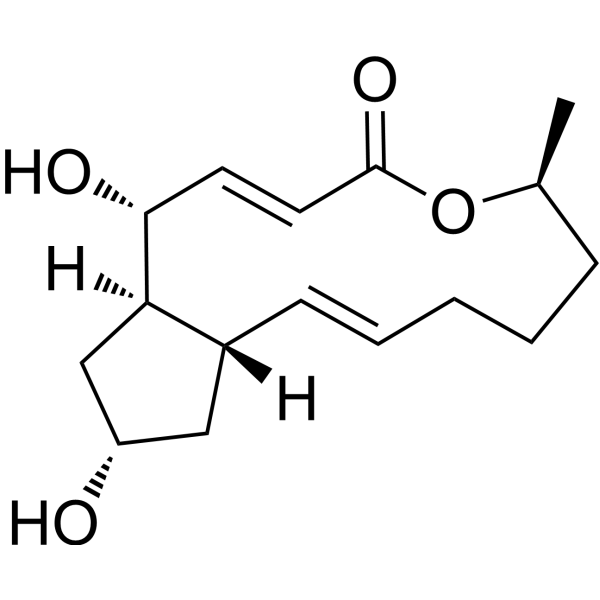
    Pseudomonic acid C, an antibiotic, possesses antibacterial activity .
    Pseudomonic acid C
  • HY-16035

    DNA/RNA Synthesis Antibiotic Cancer
    Alatrofloxacin, the parenteral proagent of Trovafloxacin, is a fluoronaphthyridone which contains an L-alanyl-L-alanyl salt. Alatrofloxacin functions similar to other fluoroquinolone antibiotics in that it not only has antibiotic activity to kill invading organisms by interfering with DNA synthesis, it possesses immunosuppressive activity .
    Alatrofloxacin
  • HY-N14544

    Fungal Infection
    Orchinol is an aromatic derivative of antibiotic and has antifungal activity .
    Orchinol
  • HY-13644A

    Spanidin; NKT-01; BMS181173

    Antibiotic Inflammation/Immunology Cancer
    Gusperimus trihydrochloride (Spanidin) is a derivative of the antitumor antibiotic spergualin with immunosuppressant activity .
    Gusperimus trihydrochloride
  • HY-113582

    Antibiotic Bacterial Infection
    Albothricin is a potent streptothricin Antibiotic with antimicrobial activities .
    Albothricin
  • HY-113562

    Antibiotic Parasite Infection
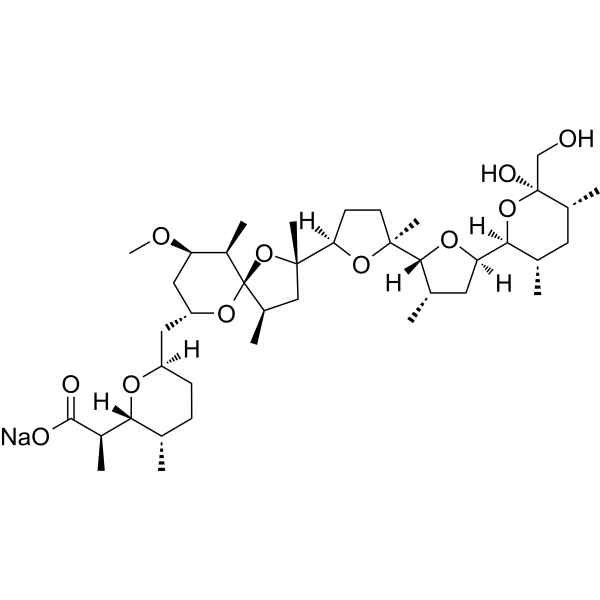
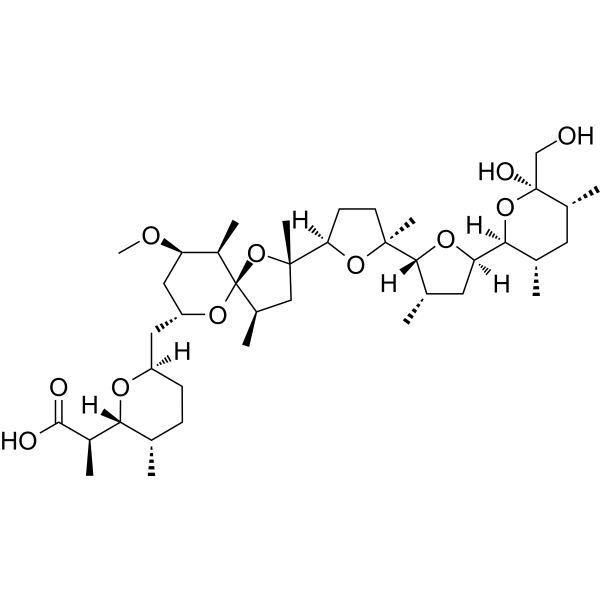
    Laidlomycin phenylcarbamate is a semisynthetic polyether antibiotic with antiparasitic activity .
    Laidlomycin phenylcarbamate
  • HY-123552

    Antibiotic Infection
    RK-1441A is a pyrrolobenzodiazepine antibiotic with antibacteriophage activity .
    RK-1441A
  • HY-116272

    Antibiotic Bacterial Infection
    A51493A is an anthracyclinone antibiotic with antimicrobial activities against Gram-positive bacteria .
    A51493A
  • HY-111019A

    Antibiotic Bacterial Infection
    SCH 34343 sodium is a potent β-lactam Antibiotic with bactericidal activity against Streptococcus pneumoniae, viridans streptococci, streptococci of groups A, B, C and G, and Str. bovis .
    SCH 34343 sodium
  • HY-113622

    Palmarumycin C13; Diepoxin ζ; antibiotic Sch53514

    Fungal Antibiotic Infection
    Cladospirone bisepoxide is a metabolite that isolated from cultures of a fungus. Cladospirone bisepoxide displays selective antibiotic activity against several bacteria and fungi and inhibits germinations of Lepidium sativum at low concentrations .
    Cladospirone bisepoxide
  • HY-113602

    antibiotic 273 A1-beta

    Antibiotic Bacterial Infection
    Paldimycin B (Antibiotic 273 A1-beta) is a powerful semi-synthetic antibiotic with antibacterial activity against S. aureus and coagulase-negative staphylococci .
    Paldimycin B
  • HY-125060

    Antibiotic Endogenous Metabolite Infection
    Viridicatin is a fungal metabolite from Penicillium species. Viridicatin shows slight in vitro antibiotic activity against Mycobacterium tuberculosis .
    Viridicatin
  • HY-116168

    Antibiotic Bacterial Infection
    Aldecalmycin is an antibiotic showing antimicrobial activities against Gram-positive bacteria including methicillin-resistant Staphylococcus aureus (MRSA) with MICs values of 6.25-25 μg/mL .
    Aldecalmycin
  • HY-N11407

    Antibiotic Bacterial Fungal Infection
    Bagougeramine B is an orally active nucleoside antibiotic with antimicrobial activity, which is found in Bacillus circulans. Bagougeramine B inhibits the growth of Gram-positive and Gram-negative bacteria and some fungi .
    Bagougeramine B
  • HY-116060

    Antibiotic PKC Bacterial Fungal Infection
    RK-286D is an antibiotic and a PKC inhibitor with antimicrobial activity. RK-286D shows inhibitory activities against bleb formation induced by PDBu (HY-18985) and in vitro PKC activity .
    RK-286D
  • HY-138179

    Bacterial Infection
    7-APRA is a semi-synthetic intermediate of cephalosporin antibiotics. 7-APRA has antibacterial activity and is mainly used in the synthesis of other Cefaclor (HY-B0198) and Cefprozil (HY-B0458A) .
    7-APRA
  • HY-136817

    OM173-αA; Nanaomycin A methyl ester

    Antibiotic Infection
    Nanaomycin αA (OM173-αA) is an antibiotic with antimicrobial activity. Nanaomycin αA can be isolated from a fermentation broth of Streptomyces hebeiensis derived from lichen .
    Nanaomycin αA

Inquiry Online

Your information is safe with us. * Required Fields.

Salutation


Country or Region *

Applicant Name *


Organization Name *

Department *


Email Address *


Product Name *

Cat. No.


Requested quantity *

Phone Number *


Remarks

Inquiry Online

Inquiry Information

Product Name:
Cat. No.:
Quantity:
MCE Japan Authorized Agent:

