1. Search Result
Search Result
Results for "

anticholinergic

" in MedChemExpress (MCE) Product Catalog:

214

Inhibitors & Agonists

2

Biochemical Assay Reagents

12

Natural
Products

21

Isotope-Labeled Compounds

Cat. No. Product Name Target Research Areas Chemical Structure
  • HY-B0520A
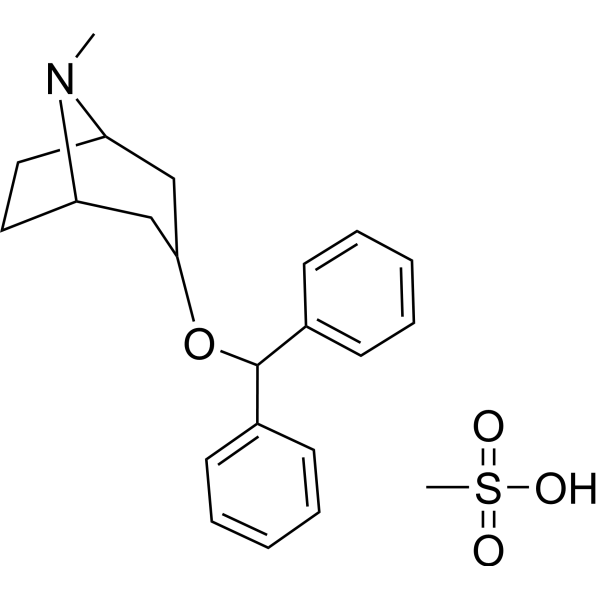
    Benztropine mesylate
    5 Publications Verification

    Benzatropine mesylate; Benzotropine mesylate; Benztropine methanesulfonate

    Dopamine Receptor mAChR Histamine Receptor Infection Neurological Disease Metabolic Disease Cancer
    Benztropine mesylate (Benzatropine mesylate) is an orally active and BBB-permeable centrally acting anticholinergic agent that can be used for Parkinson's disease research. Benztropine mesylate is an anti-histamine agent and a dopamine re-uptake inhibitor. Benztropine mesylate is also a human D2 dopamine receptor allosteric antagonist. Benztropine mesylate also has anti-CSCs (cancer stem cells) effects .
    Benztropine mesylate
  • HY-B0781
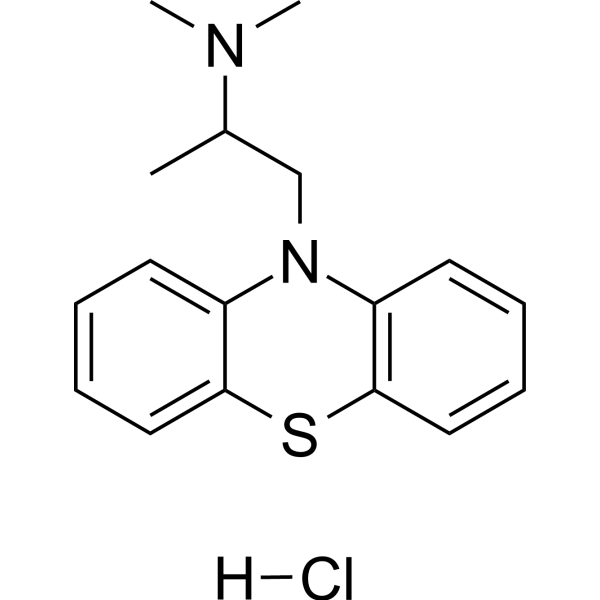
    Promethazine hydrochloride
    1 Publications Verification

    Histamine Receptor mAChR Adrenergic Receptor Neurological Disease Endocrinology
    Promethazine hydrochloride is an orally active phenothiazine derivative with antihistaminic (H1), sedative, antiemetic, anticholinergic, and antimotion sickness properties. Promethazine hydrochloride is a potent H1 receptor antagonist and a mAChR antagonist. It also has a certain affinity for 5-HT2A and 5-HT2C receptors .
    Promethazine hydrochloride
  • HY-B0480
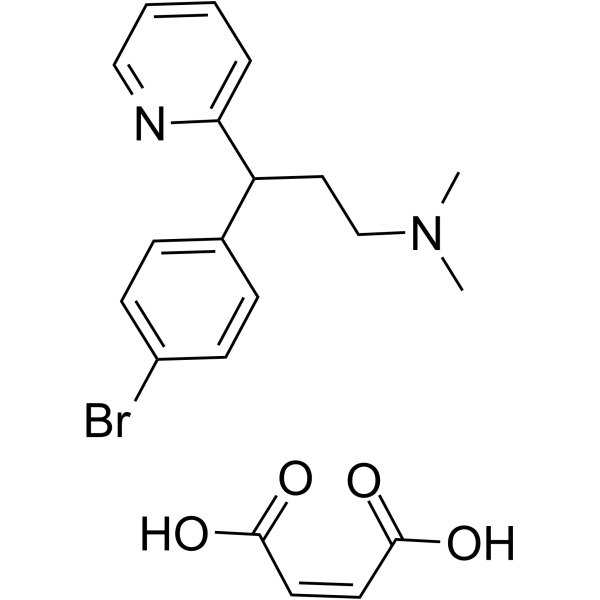
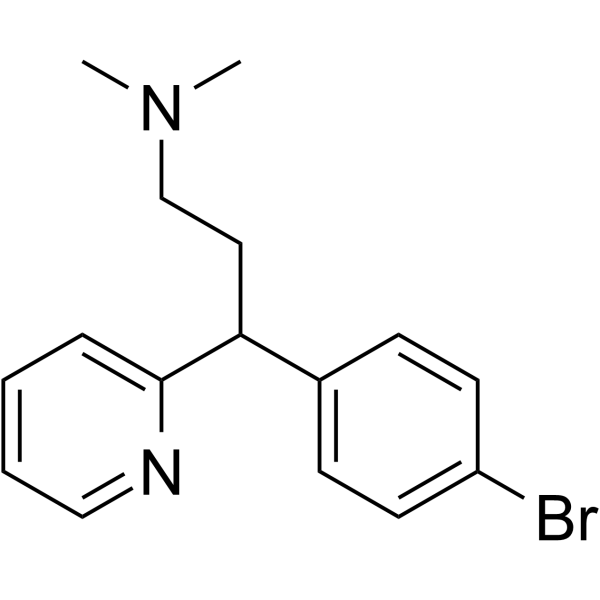
    Brompheniramine maleate
    2 Publications Verification

    (±)-Brompheniramine maleate

    Histamine Receptor mAChR Potassium Channel Sodium Channel Calcium Channel Neurological Disease Inflammation/Immunology Endocrinology
    Brompheniramine ((±)-Brompheniramine) maleate is a potent and orally active antihistamine of the alkylamine class. Brompheniramine maleate is a selective histamine H1 receptor antagonist with a Kd of 6.06 nM. Brompheniramine maleate can block the hERG channels, calcium channels, and sodium channels with IC50s of 0.90 μM, 16.12 μM and 21.26 μM, respectively. Brompheniramine maleate has anticholinergic, antidepressant and anesthetic properties and can be used for allergic rhinitis research .
    Brompheniramine maleate
  • HY-B1487

    Tricyclamol hydrochloride; (±)-Procyclidine hydrochloride

    iGluR mAChR Neurological Disease
    Procyclidine (Tricyclamol, (±)-Procyclidine) hydrochloride , an anticholinergic agent, is a muscarinic receptor antagonist that also has the properties of an N-methyl-D-aspartate (NMDA) antagonist. Procyclidine hydrochloride can be used in studies of Parkinson's disease and related psychiatric disorders such as Soman-induced epilepsy .
    Procyclidine hydrochloride
  • HY-14263

    Propericiazine; RP 8909

    Dopamine Receptor Neurological Disease
    Pericyazine (Propericiazine) is a first-generation antipsychotic agent that is used as an adjunct to the short-term management of severe anxiety states and psychosis . Pericyazine is a selective D2-dopamine receptor antagonist . Pericyazine has adrenolytic, anticholinergic, and extrapyramidal effects .
    Pericyazine
  • HY-116408A

    mAChR Calcium Channel Neurological Disease Cancer
    Propiverine hydrochloride is a bladder spasmolytic with calcium antagonistic and anticholinergic properties. Propiverine hydrochloride can be used for the research of overactive blaqdder and urinary incontinence .
    Propiverine hydrochloride
  • HY-109013

    BBI 4000

    mAChR Neurological Disease
    Sofpironium bromide (BBI 4000) is an anticholinergic agent used in the study of primary axillary hyperhidrosis (PAH). Sofpironium bromide reduces sweating by inhibiting M3 muscarinic receptors in eccrine glands at the application site. Sofpironium bromide also has a high afnity for the M1, M2, M4 and M5 subtypes .
    Sofpironium bromide
  • HY-120081A
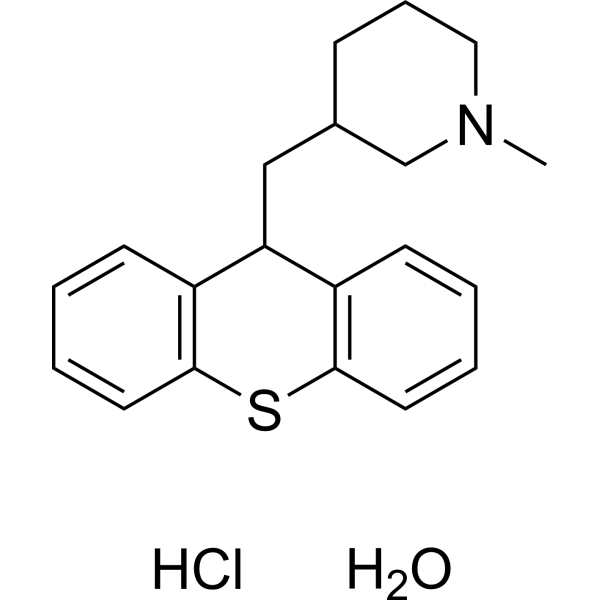
    Metixene hydrochloride hydrate
    2 Publications Verification

    mAChR Neurological Disease
    Metixene (Piperidine) hydrochloride hydrate is an anticholinergic and antiparkinsonian agent. Metixene hydrochloride hydrate potently inhibits binding of quinuclidinyl benzilate (QNB) with the muscarinic receptor, IC50 and Ki values of 55 nM and 15 nM, respectively. Metixene hydrochloride hydrate can be used for the research of parkinsonian .
    Metixene hydrochloride hydrate
  • HY-105710

    Cholinesterase (ChE) Neurological Disease
    Tropatepine is an orally active anticholinergic agent and can be used in the research of neurological diseases such as Parkinson's disease and extrapyramidal syndromes .
    Tropatepine
  • HY-B0547A

    mAChR Neurological Disease
    Homatropine Bromide is an orally active muscarinic acetylcholine receptor antagonist and can be used as an anticholinergic agent .
    Homatropine Bromide
  • HY-N7061

    Drug Intermediate Neurological Disease
    Tropine is a tropane alkaloid. Tropine serves as an important intermediate for the synthesis of anticholinergics and bronchodilators such as Atropine (HY-B1205) and Scopolamine (HY-N0296) .
    Tropine
  • HY-B1483

    Thenylpyramine hydrochloride

    Environmental Pollutants Histamine Receptor Inflammation/Immunology
    Methapyrilene (Thenylpyramine) hydrochloride is an orally active H1-receptor antihistamine and an anticholinergic agent of the pyridine chemical class. Methapyrilene hydrochloride has hepatotoxicity and can be used as a hepatotoxin that cause periportal hepatic necrosis in vivo
    Methapyrilene hydrochloride
  • HY-111130

    Histamine Receptor mAChR Neurological Disease Cancer
    Methapyrilene is a histamine antagonist, a pyridine chemical with anticholinergic activity. Methapyrilene can cause target organ-specific epigenetic alterations, such as a decrease in DNA methylation levels. Methapyrilene induces hepatocellular carcinoma in rats .
    Methapyrilene
  • HY-B0520
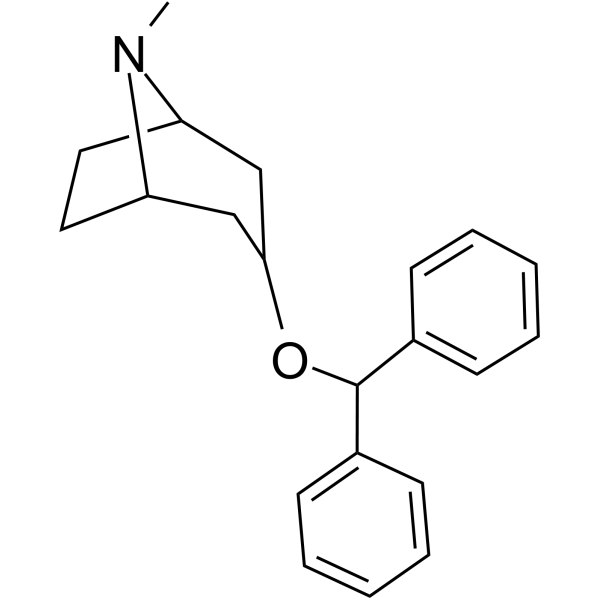
    Benztropine
    5 Publications Verification

    Benzatropine; Benzotropine

    Dopamine Receptor mAChR Histamine Receptor Cancer
    Benztropine (Benzatropine; Benzotropine) is an orally active and BBB-permeable centrally acting anticholinergic agent that can be used for Parkinson's disease research . Benztropine is an anti-histamine agent and a dopamine re-uptake inhibitor. Benztropine is also a human D2 dopamine receptor allosteric antagonist. Benztropine mesylate also has anti-CSCs (cancer stem cells) effects .
    Benztropine
  • HY-136587

    Histamine Receptor mGluR Inflammation/Immunology
    Oxomemazine is a phenothiazine-based histamine H1-receptor blocker. Oxomemazine is a selective antagonist for muscarinic M1 receptor, displays about 20-fold difference in the affinity for high (Ki = 84 nM, M1 receptor) and low (Ki = 1.65 μM, M2 receptor) affinity sites. Oxomemazine is an antihistamine and anticholinergic agent used for the study of cough treatment. Oxomemazine is protective against anaphylactic microshock in guinea pigs .
    Oxomemazine
  • HY-U00050

    E-10-OH-NT

    Drug Metabolite Adrenergic Receptor mAChR Neurological Disease
    (E)-10-Hydroxynortriptyline (E-10-OH-NT) is a blood-brain barrier-permeable norepinephrine uptake inhibitor. (E)-10-Hydroxynortriptyline effectively promotes central norepinephrine neuronal transmission, with little interindividual variation in in vivo potency. (E)-10-Hydroxynortriptyline has low affinity for muscarinic receptors, exhibits only extremely weak anticholinergic activity, and does not inhibit salivary secretion. (E)-10-Hydroxynortriptyline can be used in studies related to depression .
    (E)-10-Hydroxynortriptyline
  • HY-105545

    (+)-Benzetimide; (S)-(+)-Dexetimide; Dexbenzetimide

    mAChR Neurological Disease
    Dexetimide ((+)-Benzetimide; (S)-(+)-Dexetimide; Dexbenzetimide) is a piperidine anticholinergic and a high-affinity muscarinic receptor antagonist. Dexetimide can be used in studies of parkinson's disease .
    Dexetimide
  • HY-B1475

    Octatropine bromide

    mAChR Neurological Disease Metabolic Disease
    Anisotropine (Octatropine) bromide is an orally active anticholinergic muscarinic antagonist. Anisotropine bromide can inhibit gastric acid secretion and is used as an adjunct to peptic ulcers .
    Anisotropine bromide
  • HY-B2112

    mAChR Neurological Disease
    Valethamate bromide is an ester, serving as an effective rapidly acting anticholinergic antispasmodic and muscle relaxant. Valethamate bromide accelerates labor by improving cervical dilation. Valethamate bromide can significantly shorten the labor process and have fewer side effects .
    Valethamate bromide
  • HY-137976
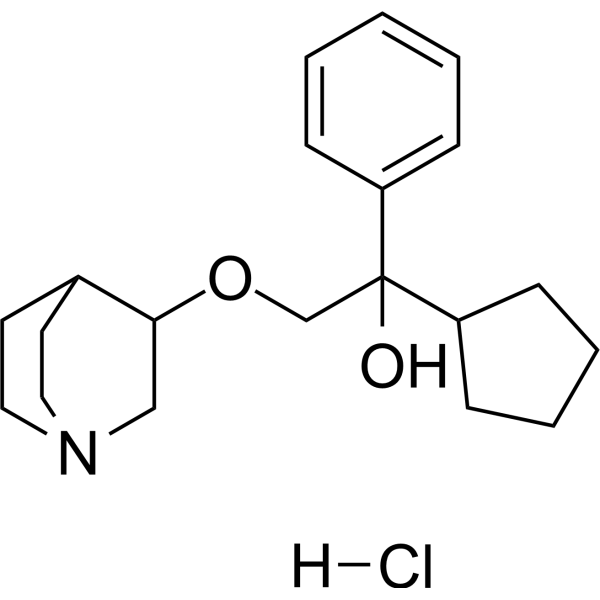
    Penehyclidine hydrochloride
    1 Publications Verification

    Penequinine hydrochloride

    mAChR NF-κB Apoptosis Autophagy Akt GSK-3 ERK Cardiovascular Disease Neurological Disease Inflammation/Immunology
    Penehyclidine (Penequinine) hydrochloride, a anticholinergic agent, is a selective antagonist of M1 and M3 receptors. Penehyclidine hydrochloride activates NF-kβ in lung tissue and inhibits the release of inflammatory factors. Penehyclidine hydrochloride can alleviate the pulmonary inflammatory response in rats with chronic obstructive pulmonary disease (COPD) undergoing mechanical ventilation .
    Penehyclidine hydrochloride
  • HY-16171

    Diphemanil mesylate

    mAChR Infection Neurological Disease Metabolic Disease
    Diphemanil methylsulfate is a quaternary ammonium anticholinergic.
    Diphenmanil methylsulfate
  • HY-B1667

    mAChR Metabolic Disease
    Isopropamide iodide is a long-acting quaternary anticholinergic agent. Isopropamide iodide is used in peptic ulcer and other gastrointestinal disorders marked by hyperacidity and hypermotility .
    Isopropamide iodide
  • HY-N9337

    NO Synthase Metabolic Disease Inflammation/Immunology Cancer
    Amaroswerin is a bioactive secoiridoid glucoside from Swertia mussotii. Amaroswerin has anti-inflammatory, antidiabetic, antiviral, anticholinergic and immunomodulatory activities. Amaroswerin inhibits NO release with an IC50 value of 5.42 μg/mL in RAW264.7 cells .
    Amaroswerin
  • HY-Z16070

    Drug Derivative Cardiovascular Disease Neurological Disease
    Hydronopol is a saturated alcohol terpene derivative. Hydronopol shows central inhibitory, anticonvulsant, analgesic, anticholinergic and antihypertensive activities. Hydronopol can be used for the researches of neurological and cardiovascular disease .
    Hydronopol
  • HY-B0480A
    Brompheniramine
    2 Publications Verification

    (±)-Brompheniramine

    Histamine Receptor mAChR Potassium Channel Sodium Channel Calcium Channel Neurological Disease Inflammation/Immunology Endocrinology
    Brompheniramine ((±)-Brompheniramine) is a potent and orally active antihistamine of the alkylamine class. Brompheniramine is a selective histamine H1 receptor antagonist with a Kd of 6.06 nM. Brompheniramine can block the hERG channels, calcium channels, and sodium channels with IC50s of 0.90 μM, 16.12 μM and 21.26 μM, respectively. Brompheniramine has anticholinergic, antidepressant and anesthetic properties and can be used for allergic rhinitis research .
    Brompheniramine
  • HY-B0547

    mAChR Neurological Disease
    Homatropine is an orally active muscarinic acetylcholine receptor antagonist and can be used as an anticholinergic agent .
    Homatropine
  • HY-B1806A

    Pathilon chloride

    mAChR Neurological Disease Inflammation/Immunology
    Tridihexethyl (Pathilon) chloride is an orally active anticholinergic agent and mAChR antagonist, shows activities of antimuscarinic and anticholinergic. Tridihexethyl chloride shows pronounced antispasmodic and antisecretory effects on the gastrointestinal tract. Tridihexethyl chloride can be used in studies of peptic ulcer disease and acquired nystagmus .
    Tridihexethyl chloride
  • HY-B0267C

    Aroxybutynin

    mAChR Neurological Disease
    (R)-Oxybutynin (Aroxybutynin) is the racemic isomer of Oxybutynin and an orally active muscarinic receptor antagonist. (R)-Oxybutynin has antispasmodic, antimuscarinic, and anticholinergic activities and competitively antagonizes carbachol-induced contractions. (R)-Oxybutynin can be used to study urinary incontinence caused by neurogenic bladder dysfunction .
    (R)-Oxybutynin
  • HY-122086

    mAChR Neurological Disease
    Prifinium bromide is an anticholinergic drug with anticholinergic and antispasmodic activities, and it exhibits oral activity. Prifinium bromide competitively antagonizes cholinergic receptors and relieves symptoms of spasm or hypermotility in the digestive and urinary tracts, with its anticholinergic activity representing the core mechanism underlying the inhibition of bladder smooth muscle contraction. Prifinium bromide can be used in research related to spasms and diverticular disease .
    Prifinium bromide
  • HY-105771

    mAChR Neurological Disease
    Parapenzolate bromide, an antispasmodic, is an orally active mAChR antagonist. Parapenzolate bromide is an anticholinergic agent .
    Parapenzolate bromide
  • HY-117284

    mAChR Neurological Disease
    Eucatropine is a potent muscarinic acetylcholine receptor (mAChR) inhibitor with an IC50 value of 0.583 μM. Eucatropine is an anticholinergic agent .
    Eucatropine
  • HY-117501

    Histamine Receptor Inflammation/Immunology Cancer
    Dexchlorpheniramine is an potent and blood-brain barrier (BBB) penetrant histamine 1 (H1) receptor antagonist with anticholinergic properties. Dexchlorpheniramine can be used for researching allergies .
    Dexchlorpheniramine
  • HY-120081

    mAChR Neurological Disease
    Metixene (Piperidine) is an anticholinergic and antiparkinsonian agent. Metixene potently inhibits binding of quinuclidinyl benzilate (QNB) with the muscarinic receptor, IC50 and Ki values of 55 nM and 15 nM, respectively. Metixene can be used for the research of parkinsonian .
    Metixene
  • HY-B1487R

    Tricyclamol hydrochloride (Standard); (±)-Procyclidine hydrochloride (Standard)

    Reference Standards iGluR mAChR Neurological Disease
    Procyclidine (hydrochloride) (Standard) is the analytical standard of Procyclidine (hydrochloride). This product is intended for research and analytical applications. Procyclidine (Tricyclamol, (±)-Procyclidine) hydrochloride , an anticholinergic agent, is a muscarinic receptor antagonist that also has the properties of an N-methyl-D-aspartate (NMDA) antagonist. Procyclidine hydrochloride can be used in studies of Parkinson's disease and related psychiatric disorders such as Soman-induced epilepsy .
    Procyclidine hydrochloride (Standard)
  • HY-B0267B

    Aroxybutynin hydrochloride

    mAChR Neurological Disease
    (R)-Oxybutynin hydrochloride, a (R)-isomer of Oxybutynin hydrochloride, is an orally active muscarinic receptor antagonist. (R)-Oxybutynin hydrochloride has antimuscarinic, antispasmodic and anticholinergic activity, competitively antagonizes Carbachol-induced contractions. (R)-Oxybutynin hydrochloride can be used for researching incontinence due to neurogenic bladder dysfunction . (R)-Oxybutynin (hydrochloride) is a click chemistry reagent, it contains an Alkyne group and can undergo copper-catalyzed azide-alkyne cycloaddition (CuAAc) with molecules containing Azide groups.
    (R)-Oxybutynin hydrochloride
  • HY-U00082

    Tigloyl pseudotropine; Tiglylpseudotropine; Tiglyssin

    mAChR Inflammation/Immunology
    Tigloidin is an analogue of atropine, with anticholinergic activity.
    Tigloidin
  • HY-B1542A

    Cholinesterase (ChE) Neurological Disease
    Benactyzine hydrochloride is a competitive BChE inhibitor with a Ki of 0.01 mM. Benactyzine hydrochloride is an anticholinergic drug. Benactyzine hydrochloride has the potential for organophosphate poisoning research .
    Benactyzine hydrochloride
  • HY-43711

    mAChR Neurological Disease
    Nor-benzetimide is a major metabolite of Benzetimide. Benzetimide is a mAChR antagonist with anticholinergic activity .
    Nor-benzetimide
  • HY-B1585B

    Parpanil (edisylate)

    iGluR Neurological Disease
    Caramiphen edisylate (Parpanil edisylate) is an anticholinergic agent with NMDA receptor antagonist activity. Caramiphen edisylate can be used to inhibit diseases related to cholinergic neurotransmission. Caramiphen edisylate exerts its pharmacological effects by blocking cholinergic effects .
    Caramiphen (edisylate)
  • HY-B0761

    (R,R)-Glycopyrronium bromide; (R,R)-Glycopyrrolate bromide

    mAChR Neurological Disease
    (R,R)-Glycopyrrolate ((R,R)-Glycopyrronium (bromide); (R,R)-Glycopyrrolate (bromide)) is an anticholinergic agent. (R,R)-Glycopyrrolate ((R,R)-Glycopyrronium (bromide); (R,R)-Glycopyrrolate (bromide)) has the ability to reduce the frequency of drooling in vivo with developmental disabilities .
    (R,R)-Glycopyrrolate
  • HY-B1487A

    Tricyclamol; (±)-Procyclidine

    mAChR iGluR Neurological Disease
    Procyclidine (Tricyclamol; (±)-Procyclidine), an anticholinergic agent, is a muscarinic receptor antagonist that also has the properties of an N-methyl-D-aspartate (NMDA) antagonist. Procyclidine can be used in studies of Parkinson's disease and related psychiatric disorders such as Soman-induced epilepsy .
    Procyclidine
  • HY-145391

    Influenza Virus Infection
    Triperiden is an inhibitor of influenza virus multiplication. Triperiden targets the haemagglutinin of fowl plague virus (FPV) for antiviral activity and acts by inhibiting the conformational change in the haemagglutinin at acid pH. Triperiden is also anticholinergic anti-parkinsonism agent .
    Triperiden
  • HY-U00132

    Histamine Receptor Inflammation/Immunology
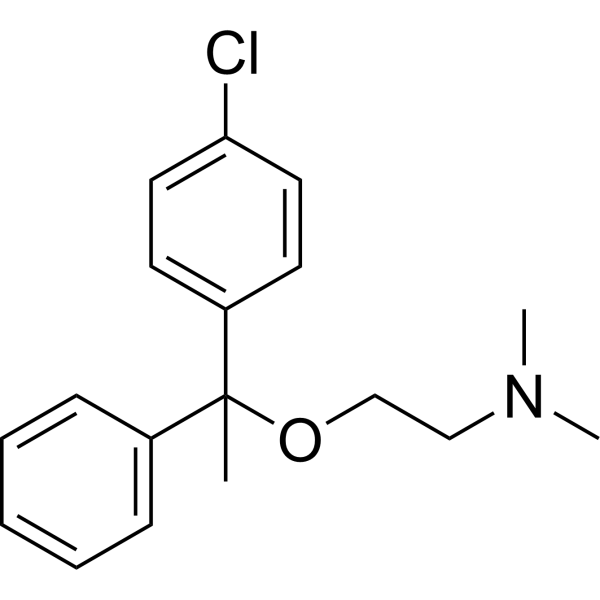
    Embramine is a monoethanolamine used as an antihistamine and anticholinergic.
    Embramine
  • HY-U00184

    Sesden; SA504

    mAChR Cardiovascular Disease
    Timepidium bromide (Sesden; SA504) is an anticholinergic agent.
    Timepidium bromide
  • HY-121773

    mAChR Neurological Disease
    Metoquizine is an anticholinergic agent .
    Metoquizine
  • HY-117633

    Atropine sulfobetaine; A-118

    Cholinesterase (ChE) Neurological Disease
    Sultroponium (A118) is an anticholinergic agent .
    Sultroponium
  • HY-108030

    mAChR Neurological Disease Inflammation/Immunology Cancer
    Bencycloquidium bromide, a muscarinic M(3) receptor antagonist, is an anticholinergic compound that acts as an anticholinergic bronchodilator. Bencycloquidium bromide can be used in the study for rhinitis .
    Bencycloquidium bromide
  • HY-B1542

    Cholinesterase (ChE) Neurological Disease
    Benactyzine is a competitive BChE inhibitor with a Ki of 0.01 mM. Benactyzine is an anticholinergic drug. Benactyzine has the potential for organophosphate poisoning research .
    Benactyzine
  • HY-B0547AR

    Reference Standards mAChR Neurological Disease
    Homatropine (Bromide) (Standard) is the analytical standard of Homatropine (Bromide). This product is intended for research and analytical applications. Homatropine Bromide is an orally active muscarinic acetylcholine receptor antagonist and can be used as an anticholinergic agent .
    Homatropine Bromide (Standard)
  • HY-118406

    Ponalid; UK 738

    mAChR Neurological Disease
    Ethybenztropine (Ponalid) is a muscarinic receptor blocker. Ethybenztropine is an anticholinergic and antihistaminergic agent .
    Ethybenztropine

Inquiry Online

Your information is safe with us. * Required Fields.

Salutation


Country or Region *

Applicant Name *


Organization Name *

Department *


Email Address *


Product Name *

Cat. No.


Requested quantity *

Phone Number *


Remarks

Inquiry Online

Inquiry Information

Product Name:
Cat. No.:
Quantity:
MCE Japan Authorized Agent:

