1. Search Result
Search Result
Results for "

anticholinesterase

" in MedChemExpress (MCE) Product Catalog:

30

Inhibitors & Agonists

4

Biochemical Assay Reagents

2

Peptides

7

Natural
Products

2

Isotope-Labeled Compounds

1

Oligonucleotides

Cat. No. 상품명 Target 연구분야 Chemical Structure
  • HY-Y0320C
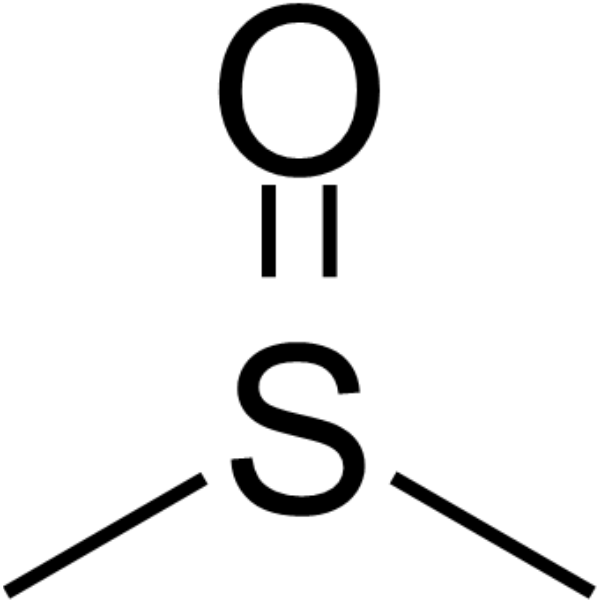
    Dimethyl sulfoxide
    30+ Cited Publications

    DMSO

    Environmental Pollutants Bacterial Cholinesterase (ChE) Inflammation/Immunology
    Dimethyl sulfoxide (DMSO) is an aprotic solvent that can dissolve water-insoluble therapeutic and toxic agents. Dimethyl sulfoxide (DMSO) has a strong affinity for water and has the ability to rapidly penetrate or enhance the penetration of other substances through biological membranes. Dimethyl sulfoxide also has potential free radical scavenging and anticholinesterase effects and may affect coagulation activity. Dimethyl sulfoxide also induces histamine release from mast cells but is thought to have low systemic toxicity .
    Low endotoxin, can be used in various biochemical experiments such as drug dissolution.
    Dimethyl sulfoxide
  • HY-Y0320

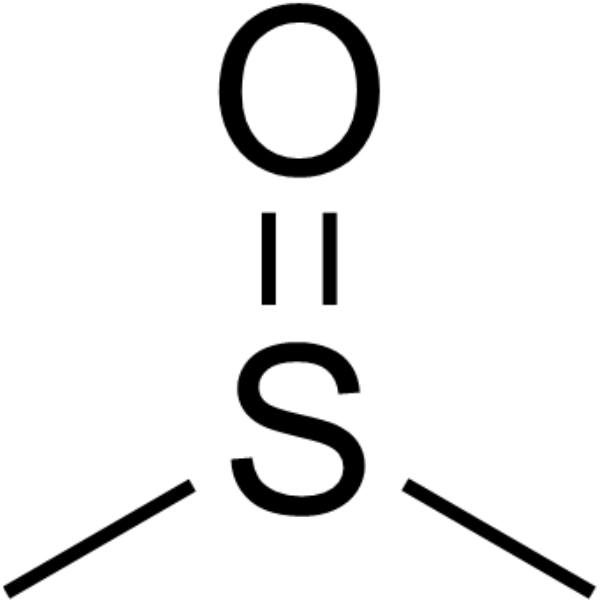
    DMSO, meets analytical specification of Ch.P.

    Environmental Pollutants Bacterial Cholinesterase (ChE) Infection Inflammation/Immunology Cancer
    Dimethyl sulfoxide (DMSO), meets analytical specification of Ch.P. is an aprotic solvent that dissolves polar and non-polar compounds, including water-insoluble therapeutic and toxic agents. Dimethyl sulfoxide (DMSO) has a strong affinity for water and can rapidly penetrate or enhance the penetration of other substances into biological membranes. Dimethyl sulfoxide also has potential free radical scavenging and anticholinesterase effects and may affect coagulation activity. Dimethyl sulfoxide also induces histamine release from mast cells but is thought to have low systemic toxicity. Dimethyl sulfoxide also exhibits antifreeze and antibacterial properties .
    MCE provides Dimethyl sulfoxide that complies with the inspection standards (Ch.P) of Part 4 of the Chinese Pharmacopoeia (2020 Edition). Amicrobic, low endotoxin, can be used in various biochemical experiments such as drug dissolution.
    Dimethyl sulfoxide, meets analytical specification of Ch.P.
  • HY-107569
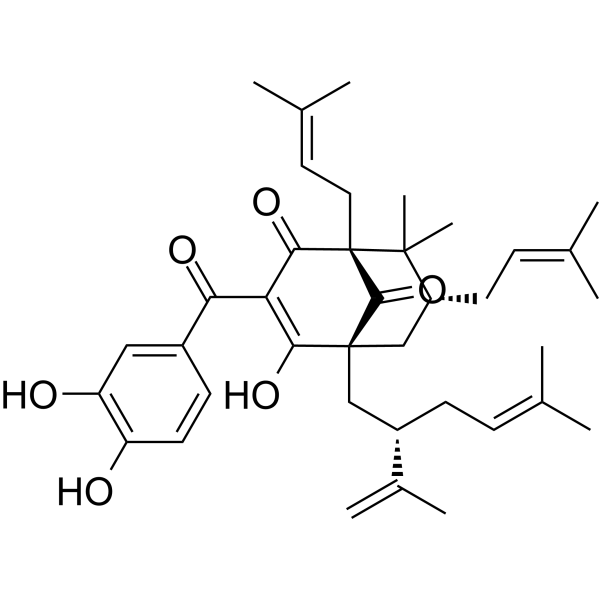
    Garcinol
    5 Publications Verification

    Cholinesterase (ChE) Histone Acetyltransferase Apoptosis Endogenous Metabolite Inflammation/Immunology Cancer
    Garcinol, a polyisoprenylated benzophenone harvested from Garcinia indica, exerts anti-cholinesterase properties towards acetyl cholinesterase (AChE) and butyrylcholinesterase (BChE) with IC50s of 0.66 μM and 7.39 μM, respectively . Garcinol also inhibits histone acetyltransferases (HATs, IC50= 7 μM) and p300/CPB-associated factor (PCAF, IC50 = 5 μM). Garcinol has anti-inflammatory and anti-cancer activity .
    Garcinol
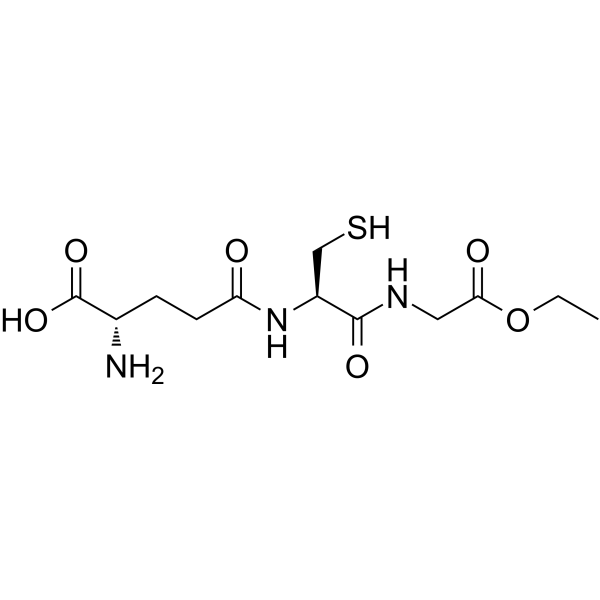
  • HY-134124

    Reactive Oxygen Species (ROS) Metabolic Disease
    Glutathione ethyl ester is a cell-permeable GSH donor and provides an efficient supply of GSH to the oocyte. Glutathione ethyl ester shows positive effect on the in vitro production of embryos by enhancement of the antioxidative defense .
    Glutathione ethyl ester
  • HY-Y0320GL

    DMSO (GMP Like)

    Cholinesterase (ChE) Bacterial Infection Inflammation/Immunology Cancer
    Dimethyl sulfoxide (DMSO) (GMP Like) is the GMP Like class Dimethyl sulfoxide (HY-Y0320C). Dimethyl sulfoxide is an aprotic solvent that can dissolve water-insoluble therapeutic and toxic agents. Dimethyl sulfoxide has a strong affinity for water and has the ability to rapidly penetrate or enhance the penetration of other substances through biological membranes. Dimethyl sulfoxide also has potential free radical scavenging and anticholinesterase effects and may affect coagulation activity. Dimethyl sulfoxide also induces histamine release from mast cells but is thought to have low systemic toxicity .
    Dimethyl sulfoxide (GMP Like)
  • HY-B0841
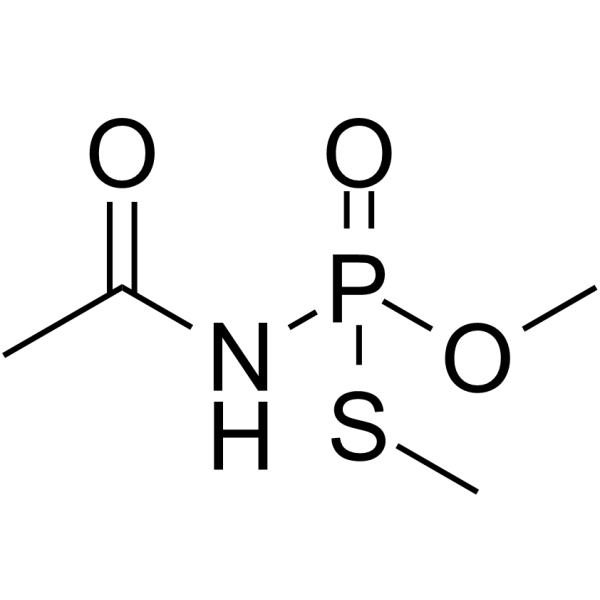
    Acephate
    2 Publications Verification

    Environmental Pollutants Cholinesterase (ChE) Neurological Disease
    Acephate is a broad-spectrum anticholinesterase insecticide. Acephate acts via inhibiting AChE activity of insects. Acephate is used for control of several species of insects in agriculture and in horticulture .
    Acephate
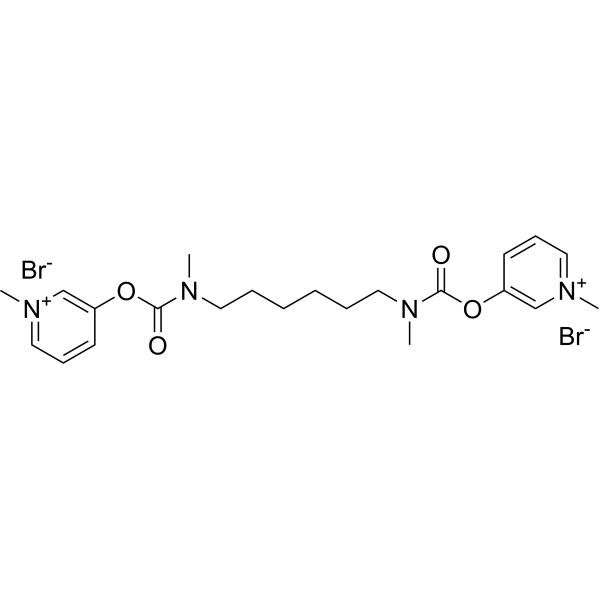
  • HY-119577

    Distigmine dibromide

    Cholinesterase (ChE) Neurological Disease
    Ubretid is a potent inhibitor of plasma cholinesterase. Ubretid therefore delays the hydrolysis of suxamethonium and prolongs its action, similar to the effects shown by other anticholinesterase agents, such as pyridostigmine and donepezil. Ubretid has the potential for the research of urinary retention prolongs the effect of suxamethonium. Ubretid is commonly prescribed for the research of myasthenia gravis and for difficulty in emptying the bladder .
    Ubretid
  • HY-Y0320E

    Cholinesterase (ChE) Bacterial Infection Inflammation/Immunology Cancer
    Dimethyl sulfoxide (suitable for HPLC) is an aprotic solvent that can dissolve water-insoluble therapeutic and toxic agents. Dimethyl sulfoxide (DMSO) has a strong affinity for water and has the ability to rapidly penetrate or enhance the penetration of other substances through biological membranes. Dimethyl sulfoxide also has potential free radical scavenging and anticholinesterase effects and may affect coagulation activity. Dimethyl sulfoxide also induces histamine release from mast cells but is thought to have low systemic toxicity. Dimethyl sulfoxide (suitable for HPLC) is suitable for HPLC .
    Dimethyl sulfoxide (suitable for HPLC)
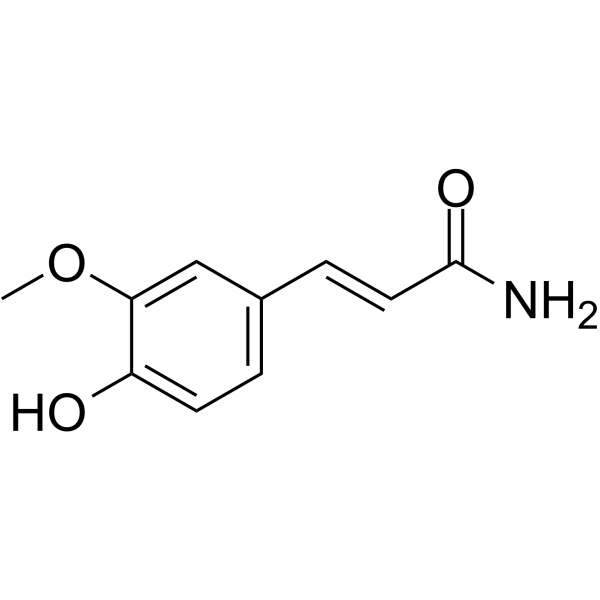
  • HY-N3894

    nAChR Neurological Disease
    Ferulamide is a Ferulic acid derivative isolated from Portulaca oleracea L. with anticholinesterase activities .
    Ferulamide
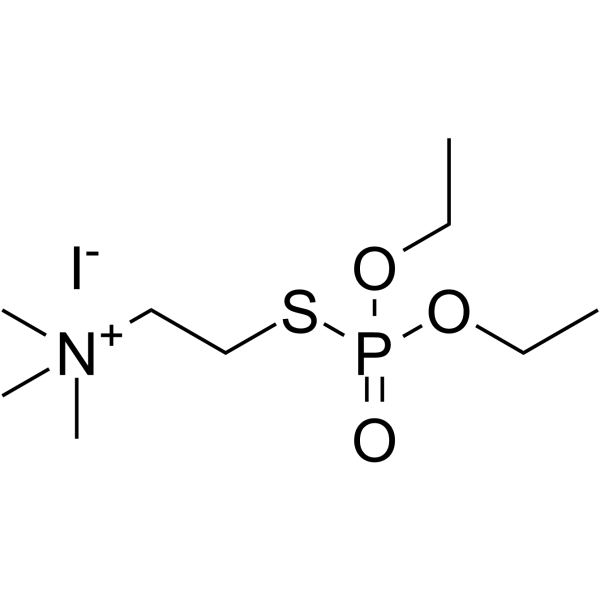
  • HY-16183

    Echothiophate iodide

    Cholinesterase (ChE) Neurological Disease
    Echothiopate iodide is a potent hBChE (human butyrylcholinesterase) inhibitor. Echothiopate iodide is a long-acting anticholinesterase agent. Echothiopate iodide can be used for glaucoma research .
    Echothiopate iodide
  • HY-B0841R

    Reference Standards Cholinesterase (ChE) Neurological Disease
    Acephate (Standard) is the analytical standard of Acephate. This product is intended for research and analytical applications. Acephate is a broad-spectrum anticholinesterase insecticide. Acephate acts via inhibiting AChE activity of insects. Acephate is used for control of several species of insects in agriculture and in horticulture .
    Acephate (Standard)
  • HY-P2424

    CCK-J

    Calcium Channel Others
    Cholecystokinin-J (CCK-J), a cholecystokinin, stimulates Ca 2+ release .
    Cholecystokinin-J
  • HY-107569R

    Cholinesterase (ChE) Histone Acetyltransferase Apoptosis Endogenous Metabolite Reference Standards Inflammation/Immunology Cancer
    Garcinol (Standard) is the analytical standard of Garcinol. This product is intended for research and analytical applications. Garcinol, a polyisoprenylated benzophenone harvested from Garcinia indica, exerts anti-cholinesterase properties towards acetyl cholinesterase (AChE) and butyrylcholinesterase (BChE) with IC50s of 0.66 μM and 7.39 μM, respectively . Garcinol also inhibits histone acetyltransferases (HATs, IC50= 7 μM) and p300/CPB-associated factor (PCAF, IC50 = 5 μM). Garcinol has anti-inflammatory and anti-cancer activity .
    Garcinol (Standard)
  • HY-122437

    Bacterial Infection Inflammation/Immunology
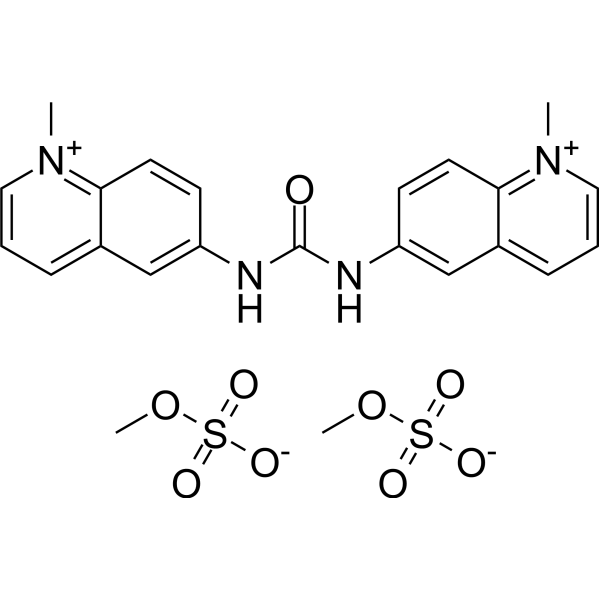
    Quinuronium disulfate, a babesicidal agent, possesses anticholinesterase activity .
    Quinuronium disulfate
  • HY-127001

    Cholinesterase (ChE) Neurological Disease
    Lycodine is a lycopodium alkaloid, which can be isolated from Huperzia saururus. Lycodine exhibits anticholinesterase activity .
    Lycodine
  • HY-175006

    Cholinesterase (ChE) Neurological Disease
    AChE-IN-91 (Compound 8u) is a AChE inhibitor with an IC50 of 0.05 μM. AChE-IN-91 has significant anticholinesterase activity, promising for neurological diseases like Alzheimer's disease (AD) research .
    AChE-IN-91
  • HY-119577R

    Distigmine dibromide (Standard)

    Cholinesterase (ChE) Reference Standards Neurological Disease
    Ubretid (Standard) is the analytical standard of Ubretid. This product is intended for research and analytical applications. Ubretid is a potent inhibitor of plasma cholinesterase. Ubretid therefore delays the hydrolysis of suxamethonium and prolongs its action, similar to the effects shown by other anticholinesterase agents, such as pyridostigmine and donepezil. Ubretid has the potential for the research of urinary retention prolongs the effect of suxamethonium. Ubretid is commonly prescribed for the research of myasthenia gravis and for difficulty in emptying the bladder .
    Ubretid (Standard)
  • HY-N5089

    Cholinesterase (ChE) Neurological Disease Metabolic Disease Inflammation/Immunology
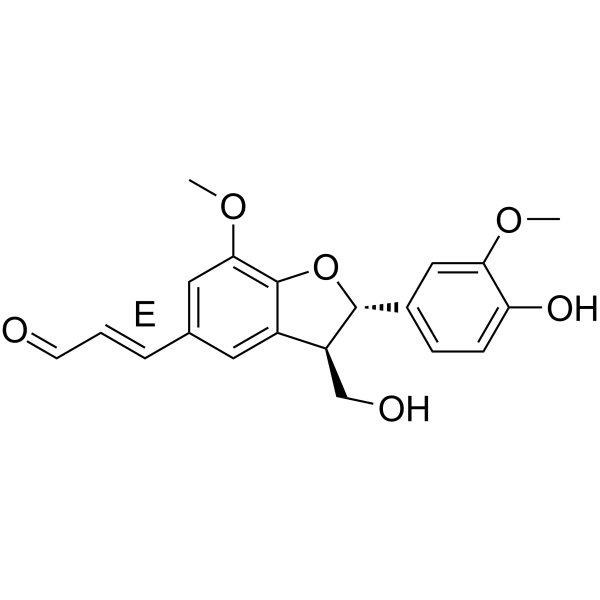
    (+)-Balanophonin is a phenolic compound that could be isolated from Passiflora edulis. (+)-Balanophonin possesses anti-oxidant, anticholinesterase, anti-inflammatory, anticancer, and antineurodegenerative activities .
    (+)-Balanophonin
  • HY-112013

    Cholinesterase (ChE) Neurological Disease
    Isodimethoate is a thermal decomposition product of Dimethoate (HY-B1946). Isodimethoate is a direct anticholinesterase agent and shows an inhibition to human red blood cell acetylcholinesterase (AChE) .
    Isodimethoate
  • HY-B0841S

    Isotope-Labeled Compounds Cholinesterase (ChE) Neurological Disease
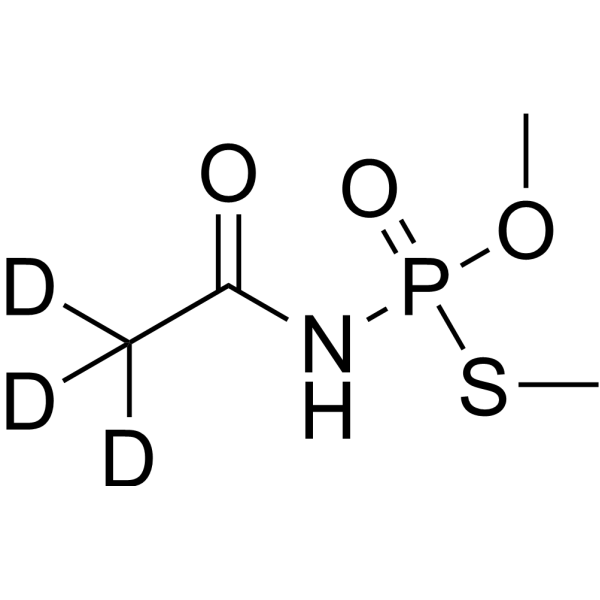
    Acephate-d3 is the deuterium labeled Acephate. Acephate is an anticholinesterase insecticide that produces cholinotoxicity. Acephate displays weak inhibition of rat AChE but potently inhibits cockroach AChE.
    Acephate-d3
  • HY-W749948

    Isotope-Labeled Compounds Cholinesterase (ChE) Neurological Disease
    Acephate-d6 is the deuterium labeled Acephate (HY-B0841). Acephate is a broad-spectrum anticholinesterase insecticide. Acephate acts via inhibiting AChE activity of insects. Acephate is used for control of several species of insects in agriculture and in horticulture .
    Acephate-d6
  • HY-162145

    Cholinesterase (ChE) Inflammation/Immunology
    AChE-IN-54 (compound 3c) is an inhibitor of acetylcholinesterase (AChE) and has anti-lipid oxidation activity .
    AChE-IN-54
  • HY-135006

    Cholinesterase (ChE) Neurological Disease
    Octahydroaminoacridine succinate, a Tacrine analogue, is an acetylcholinesterse (AChE) and butyrylcholinesterase (BChE) inhibitor. Octahydroaminoacridine succinate can be used for Alzheimer's disease (AD) research .
    Octahydroaminoacridine succinate
  • HY-135006A

    Cholinesterase (ChE) Neurological Disease
    Octahydroaminoacridine, a Tacrine analogue, is an acetylcholinesterse (AChE) and butyrylcholinesterase (BChE) inhibitor. Octahydroaminoacridine can be used for Alzheimer's disease (AD) research .
    Octahydroaminoacridine
  • HY-147955

    Carbonic Anhydrase Cholinesterase (ChE) Neurological Disease Metabolic Disease
    hCAI/II-IN-5 (compound MZ8) is a potent hCA I and hCA II (human carbonic anhydrase isoenzymes I and II) inhibitor, with IC50 values of 37.88 and 45.23 nM, respectively. hCAI/II-IN-5 also shows inhibition profile against α-Glycosidase and AChE, with IC50 values of 48.98 and 420.14 nM, respectively. hCAI/II-IN-5 can be used for the research of many diseases such as diabetes, Alzheimer’s disease, heart failure, ulcer, and epilepsy .
    hCAI/II-IN-5
  • HY-147954

    Carbonic Anhydrase Cholinesterase (ChE) Neurological Disease Metabolic Disease
    α-Glycosidase-IN-1 (compound MZ7) is a potent α-GLY (α-Glycosidase) inhibitor, with an IC50 of 44.72 nM and a KI of 41.74 nM. α-Glycosidase-IN-1 also shows inhibition profile against human carbonic anhydrase isoenzymes I and II (hCA I and hCA II), and acetylcholinesterase (AChE), with IC50 values of 104.87, 100.04, and 654.87 nM, respectively. α-Glycosidase-IN-1 can be used for the research of many diseases such as diabetes, Alzheimer’s disease, heart failure, ulcer, and epilepsy .
    α-Glycosidase-IN-1
  • HY-W746884

    Cholinesterase (ChE) Neurological Disease
    2-Methyl-2-butenyl (E)-Caffeate is a type of caffeic acid ester compound. The petroleum ether and chloroform extracts containing 2-Methyl-2-butenyl (E)-Caffeate have inhibitory effects on acetylcholinesterase (AChE) and butyrylcholinesterase (BChE). The ether extract containing 2-Methyl-2-butenyl (E)-Caffeate exhibits strong antioxidant properties. 2-Methyl-2-butenyl (E)-Caffeate can be used in the research of Alzheimer's disease .
    2-Methyl-2-butenyl (E)-Caffeate
  • HY-181597

    Cholinesterase (ChE) Histamine Receptor Neurological Disease
    LINS05414 is a histamine H3 receptor ligand with antiCholinesterase and metal chelating activities. LINS05414 exhibits inhibitory activity against acetylcholinesterase (pIC50 = 4.03) and butyrylcholinesterase (pIC50 = 3.83), with a pKi of 6.37 for human histamine H3 receptors. LINS05414 chelates copper ions, ferrous ions and ferric ions. LINS05414 regulates the release of neurotransmitters. LINS05414 can be used in the research of neurodegenerative diseases .
    LINS05414
  • HY-N16847

    Others Others
    3-Methyl-3-butenyl (E)-Caffeate is a caffeic acid ester compound found in Algerian propolis. Algerian propolis has antioxidant and anticholinesterase activities .
    3-Methyl-3-butenyl (E)-Caffeate
  • HY-179711

    Cholinesterase (ChE) Amyloid-β Neurological Disease
    AChE/BChE-IN-32 (Compound 4a) is an AChE and BChE inhibitor, with Ki values of 2.48 and 0.696 μM respectively. AChE/BChE-IN-32 inhibits aggregation and exhibits a strong ABTS•+ scavenging ability (TEAC = 2.40). AChE/BChE-IN-32 shows significant neuroprotective activity in glutamate and hydrogen peroxide-induced oxidative stress models. AChE/BChE-IN-32 can be used for the study of Alzheimer's disease .
    AChE/BChE-IN-32

온라인 문의

Your information is safe with us. * Required Fields.

호칭


Country or Region *

고객명 *


회사명 *

Department *


메일주소 *


상품명 *

Cat. No.


Requested quantity *

전화번호 *


비고

온라인 문의

Inquiry Information

상품명:
Cat. No.:
수량:
MCE Japan Authorized Agent:

