1. Search Result
Search Result
Results for "

aqueous humor

" in MedChemExpress (MCE) Product Catalog:

26

Inhibitors & Agonists

1

Biochemical Assay Reagents

1

Natural
Products

3

Isotope-Labeled Compounds

Cat. No. Product Name Target Research Areas Chemical Structure
  • HY-17380
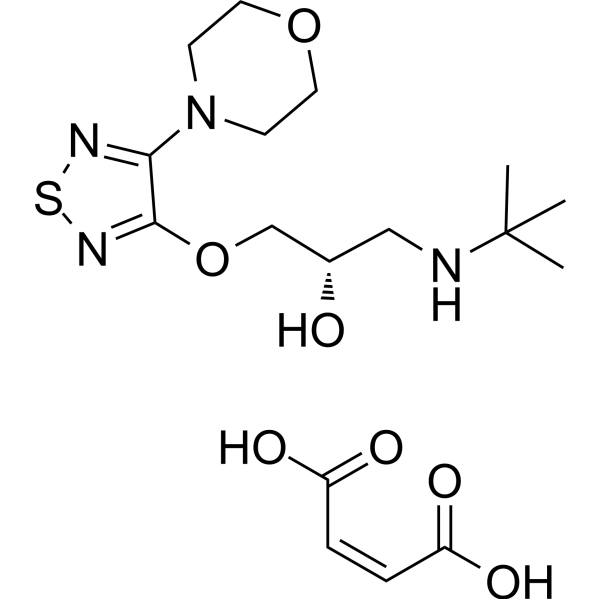
    (S)-Timolol maleate
    5 Publications Verification

    (S)-L-714,465 maleate; MK 950

    Adrenergic Receptor Cardiovascular Disease Neurological Disease Cancer
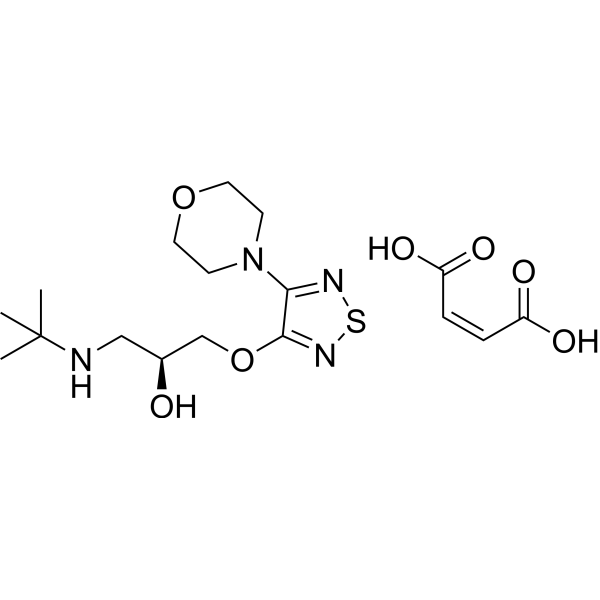
    (S)-Timolol Maleate (L-714,465 Maleate) is a non-cardioselective hydrophilic β-adrenoceptor blocker. (S)-Timolol Maleate is widely used as standard medication for intraocular pressure (glaucoma) by preventing the production of aqueous humor. (S)-Timolol Maleate can be used for hypertension, angina pectoris and myocardial infarction .
    (S)-Timolol maleate
  • HY-B1640
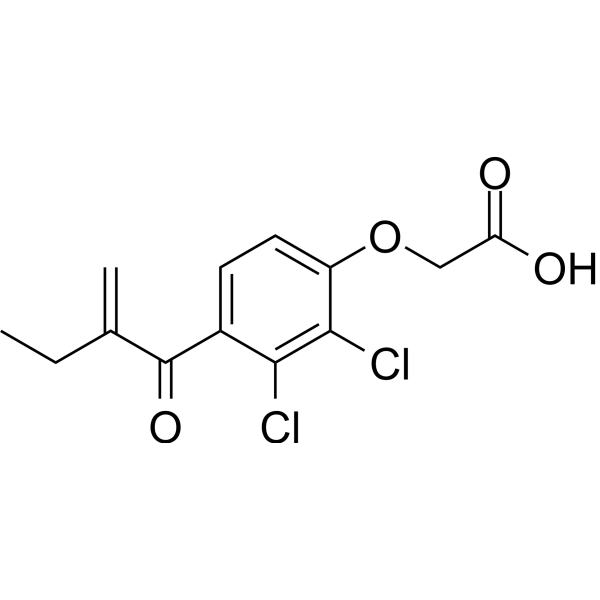
    Ethacrynic acid
    Maximum Cited Publications
    9 Publications Verification

    Etacrynic acid

    Wnt Glutathione S-transferase NF-κB Calcium Channel NO Synthase Cardiovascular Disease Inflammation/Immunology Cancer
    Ethacrynic acid has anti-inflammatory and anticancer activity. Ethacrynic acid is an orally active diuretic. Ethacrynic acid is an inhibitor of glutathione S-transferase (GSTs) and Wnt signaling pathways. Ethacrynic acid is a radiosensitizer. Ethacrynic acid can inhibit airway smooth muscle (ASM) contraction in mice. Ethacrynic acid can increase the outflow of aqueous humor from the eye for the study of glaucoma .
    Ethacrynic acid
  • HY-B0577
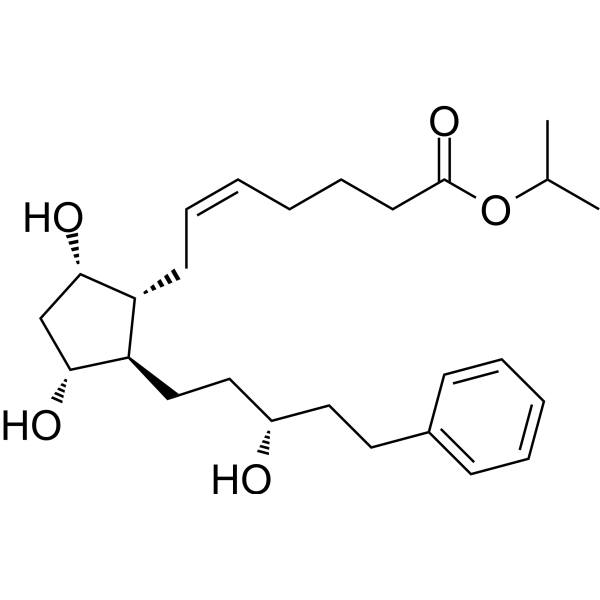
    Latanoprost
    4 Publications Verification

    PHXA41

    Prostaglandin Receptor Cardiovascular Disease Others
    Latanoprost (PHXA41) is a prostaglandin F2α analogue and can be used for glaucoma research. Latanoprost can effectively pass through cornea and be hydrolyzed by esterase to latanoprost acid. latanoprost acid is an F-prostaglandin (FP) receptor agonist, and can effectively reduce intraocular pressure (IOP) by increasing the outflow of aqueous humor through uvea .
    Latanoprost
  • HY-12798
    Netarsudil
    1 Publications Verification

    AR-13324

    Monoamine Transporter ROCK Cardiovascular Disease Neurological Disease
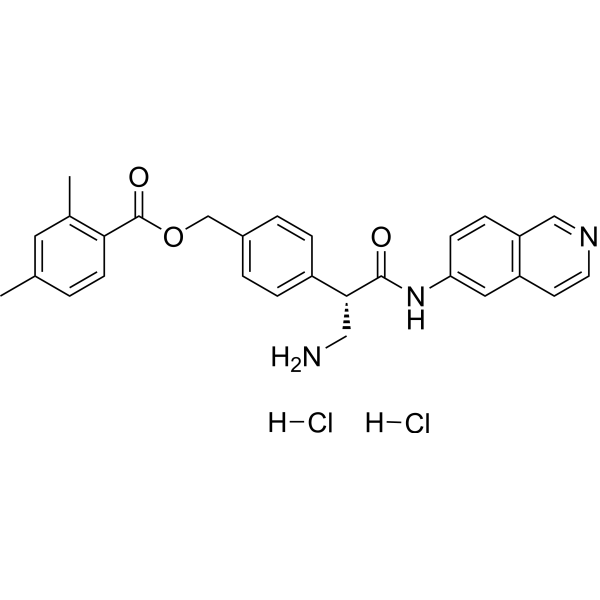
    Netarsudil (AR-13324) is a competitive inhibitor of Rho-associated protein kinases (ROCK I and ROCK II) and a reversible inhibitor of the norepinephrine transporter (NET). Netarsudil reduces intraocular pressure by inhibiting ROCK, causing relaxation of trabecular meshwork cells and dilation of episcleral veins, thereby increasing the ease of aqueous humor outflow, while inhibiting NET to reduce aqueous humor production. Netarsudil is mainly used in the study of ocular hypertension and primary open-angle glaucoma .
    Netarsudil
  • HY-12798B
    Netarsudil hydrochloride
    1 Publications Verification

    AR-13324 hydrochloride

    ROCK Cardiovascular Disease Neurological Disease
    Netarsudil (AR-13324) hydrochloride is a competitive inhibitor of Rho-associated protein kinases (ROCK I and ROCK II) and a reversible inhibitor of the norepinephrine transporter (NET). Netarsudil hydrochloride reduces intraocular pressure by inhibiting ROCK, causing relaxation of trabecular meshwork cells and dilation of episcleral veins, thereby increasing the ease of aqueous humor outflow, while inhibiting NET to reduce aqueous humor production. Netarsudil hydrochloride is mainly used in the study of ocular hypertension and primary open-angle glaucoma .
    Netarsudil hydrochloride
  • HY-134633

    EV 06 chloride; UNR 844 chloride

    Drug Intermediate Neurological Disease
    Alpha-lipoic acid choline ester (EV 06) chloride is choline ester of alpha-lipoic acid. Alpha-lipoic acid choline ester chloride reduces the disulfide bond level of lens proteins. Alpha-lipoic acid choline ester chloride improves lens elasticity. Alpha-lipoic acid choline ester chloride is hydrolyzed by ocular esterases to release alpha-lipoic acid and choline. Alpha-lipoic acid choline ester chloride is used for the research of presbyopia .
    Alpha-lipoic acid choline ester chloride
  • HY-19518

    NCX116; LBN

    Prostaglandin Receptor Neurological Disease
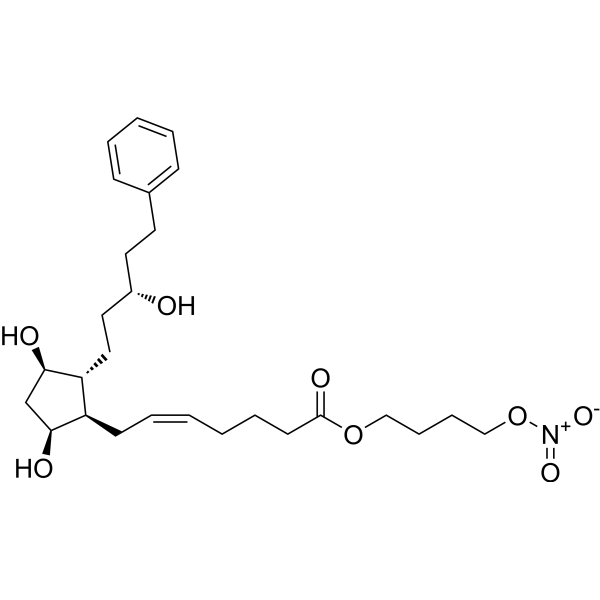
    Latanoprostene bunod (NCX116; LBN) is a nitric oxide-releasing prostaglandin F2α analog. Latanoprostene bunod is a prodrug that, upon instillation into the eye, is hydrolyzed by corneal esterases into two active metabolites: Latanoprost (HY-B0577) and NO. Latanoprost activates the prostaglandin FP receptor to increase the outflow of aqueous humor through the uveoscleral pathway. NO increases aqueous humor drainage through the trabecular meshwork pathway, achieving synergistic enhancement targeting the dual pathways of aqueous humor outflow. Latanoprostene bunod can be used in research related to open-angle glaucoma and ocular hypertension .
    Latanoprostene bunod
  • HY-12798A
    Netarsudil dimesylate
    1 Publications Verification

    AR-13324 dimesylate

    ROCK Cardiovascular Disease Neurological Disease
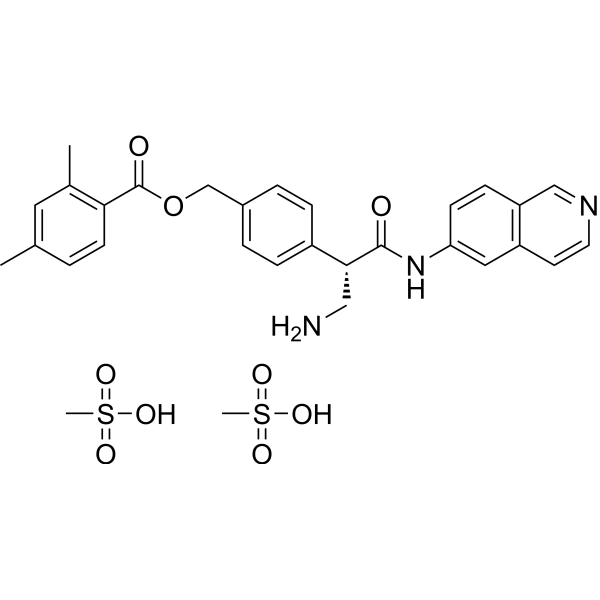
    Netarsudil (AR-13324) dimesylate is a competitive inhibitor of Rho-associated protein kinases (ROCK I and ROCK II) and a reversible inhibitor of the norepinephrine transporter (NET). Netarsudil dimesylate reduces intraocular pressure by inhibiting ROCK, causing relaxation of trabecular meshwork cells and dilation of episcleral veins, thereby increasing the ease of aqueous humor outflow, while inhibiting NET to reduce aqueous humor production. Netarsudil dimesylate is mainly used in the study of ocular hypertension and primary open-angle glaucoma .
    Netarsudil dimesylate
  • HY-12720A
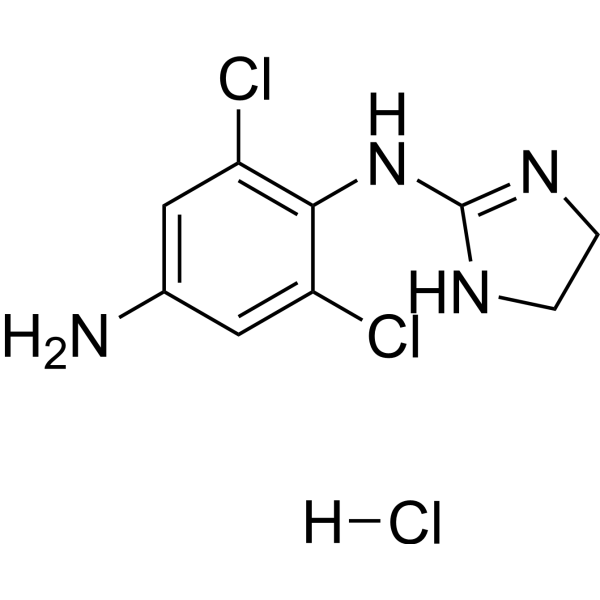
    Apraclonidine hydrochloride
    3 Publications Verification

    ALO 2145

    Adrenergic Receptor Neurological Disease
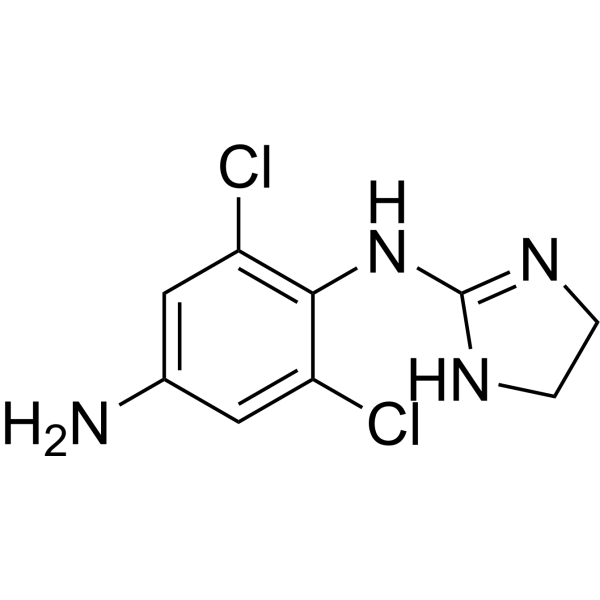
    Apraclonidine hydrochloride (ALO 2145), a selective α2 and weak α1 receptor agonist activity, effectively lowers intraocular pressure (IOP) in human eyes. Apraclonidine hydrochloride is a topical ophthalmic solution and has the ability to elevate the eye lid .
    Apraclonidine hydrochloride
  • HY-108648A

    2-Methylthioadenosine diphosphate; 2-Methylthio-ADP

    P2Y Receptor Neurological Disease
    2-MeSADP is a P2Y receptor agonist, with an EC50 of 5 nM for human P2Y12, EC50 values of 19 nM and 13 nM for human P2Y13, and an EC50 of 6.2 nM for mouse P2Y13. It shows slightly higher selectivity for P2Y12 over human P2Y13. 2-MeSADP triggers increases in intracellular calcium levels, Gi-mediated cAMP inhibition, adenylate cyclase inhibition and downstream signal transduction. 2-MeSADP can be used in research related to glaucoma .
    2-MeSADP
  • HY-17380R

    (S)-L-714,465 maleate (Standard); MK 950 (Standard)

    Reference Standards Adrenergic Receptor Cardiovascular Disease Neurological Disease
    (S)-Timolol (maleate) (Standard) is the analytical standard of (S)-Timolol (maleate). This product is intended for research and analytical applications. (S)-Timolol Maleate (L-714,465 Maleate) is a non-cardioselective hydrophilic β-adrenoceptor blocker. (S)-Timolol Maleate is widely used as standard medication for intraocular pressure (glaucoma) by preventing the production of aqueous humor. (S)-Timolol Maleate can be used for hypertension, angina pectoris and myocardial infarction .
    (S)-Timolol maleate (Standard)
  • HY-128538

    ONO-9054

    Prostaglandin Receptor Neurological Disease
    Sepetaprost (ONO-9054) is a dual agonist of the prostaglandin E3 receptor and prostaglandin F receptor. Sepetaprost reduces intraocular pressure in animal models. Sepetaprost is applicable for research on ocular hypertension and open-angle glaucoma .
    Sepetaprost
  • HY-116420

    ROCK Neurological Disease
    ROCK2-IN-8 (Compound 1) is an orally active ROCK2 inhibitor, with an IC50 of 7.2 nM. ROCK2-IN-8 can be used for the research of aqueous humor outflow in porcine eyes and myosin light chain phosphorylation .
    ROCK2-IN-8
  • HY-W707056

    Biochemical Assay Reagents Others
    Latanoprost acid-d4 is used as the internal standard in the HPLC-MS/MS analysis to determine the level of Latanoprost acid (HY-113756A) in aqueous humor samples of eyes .
    Latanoprost acid-d4
  • HY-19518R

    NCX116 (Standard); LBN (Standard)

    Reference Standards Prostaglandin Receptor Neurological Disease
    Latanoprostene bunod (NCX116; LBN) (Standard) is the analytical standard of Latanoprostene bunod. This product is intended for research and analytical applications. Latanoprostene bunod is a nitric oxide-releasing prostaglandin F2α analog. Latanoprostene bunod is a prodrug that, upon instillation into the eye, is hydrolyzed by corneal esterases into two active metabolites: Latanoprost (HY-B0577) and NO. Latanoprost activates the prostaglandin FP receptor to increase the outflow of aqueous humor through the uveoscleral pathway. NO increases aqueous humor drainage through the trabecular meshwork pathway, achieving synergistic enhancement targeting the dual pathways of aqueous humor outflow. Latanoprostene bunod can be used in research related to open-angle glaucoma and ocular hypertension.
    Latanoprostene bunod (Standard)
  • HY-117272A

    Endogenous Metabolite Others
    (2R,3R)-2,3,4-Trihydroxybutanoic acid, also known as erythronic acid, is a naturally occurring organic acid found in the aqueous humor of the eye, as well as in urine, plasma, cerebrospinal fluid, and synovial fluid, prevalent in both healthy adults and children; it is produced through the oxidation of GlcNAc.
    (2R,3R)-2,3,4-Trihydroxybutanoic acid
  • HY-12720

    ALO 2145 free base

    Adrenergic Receptor Infection Neurological Disease
    Apraclonidine (ALO 2145 (free base)), a selective α2 and weak α1 receptor agonist activity, effectively low intraocular pressure (IOP) in human eyes. Apraclonidine hydrochloride is a topical ophthalmic solution .
    Apraclonidine
  • HY-N15301

    ROCK Myosin Others
    Nocarnickelamide B (Compound 2) is a linear peptide and ROCK1/2 inhibitor. Nocarnickelamide B exhibits dual inhibitory activity against ROCK1 and ROCK2 with IC50s of 14.9 μM and 21.9 μM, respectively. Nocarnickelamide B binds to the ATP-binding site. Nocarnickelamide B inhibits the activation of ROCK-regulated cytoskeletal contraction markers such as the myosin light chain. Nocarnickelamide B is potential for glaucoma reasearch .
    Nocarnickelamide B
  • HY-B1035C

    (R)-Bunolol hydrochloride

    Adrenergic Receptor Cardiovascular Disease
    ent-Levobunolol ((R)-Bunolol) hydrochloride is a competitive β-adrenergic receptor blocker. ent-Levobunolol hydrochloride inhibits the transmission of sympathetic nerve impulses, reduces the production of aqueous humor, and constricts blood vessels in the eye, thereby reducing intraocular pressure. ent-Levobunolol hydrochloride is promising for research of ocular hypertension diseases such as glaucoma .
    ent-Levobunolol hydrochloride
  • HY-106037

    Prostaglandin Receptor Others
    PGF2α-isopropyl ester is a Prostaglandin F2α (HY-12956) derivative, which is active in lowering the intraocular pressure (IOP) through increased uveoscleral outflow of aqueous humor. PGF2α-isopropyl ester causes side effects of conjunctival hyperemia and ocular irritation .
    PGF2α-isopropyl ester
  • HY-12720AR

    ALO 2145 (Standard)

    Reference Standards Adrenergic Receptor Neurological Disease
    Apraclonidine (hydrochloride) (Standard) is the analytical standard of Apraclonidine (hydrochloride). This product is intended for research and analytical applications. Apraclonidine hydrochloride (ALO 2145), a selective α2 and weak α1 receptor agonist activity, effectively lowers intraocular pressure (IOP) in human eyes. Apraclonidine hydrochloride is a topical ophthalmic solution and has the ability to elevate the eye lid .
    Apraclonidine hydrochloride (Standard)
  • HY-17494S

    (Rac)-L-714,465 maleate; (Rac)-MK 950-d5

    Isotope-Labeled Compounds Adrenergic Receptor Cardiovascular Disease Neurological Disease
    rac Timolol-d5 (maleate) is a labelled racemic (S)-Timolol maleate. (S)-Timolol Maleate (L-714,465 Maleate) is a non-cardioselective hydrophilic β-adrenoceptor blocker. (S)-Timolol Maleate is widely used as standard medication for intraocular pressure (glaucoma) by preventing the production of aqueous humor. (S)-Timolol Maleate can be used for hypertension, angina pectoris and myocardial infarction .
    (Rac)-Timolol-d5 maleate
  • HY-17380S

    (S)-L-714,465-d9 maleate; MK 950-d9

    Isotope-Labeled Compounds Adrenergic Receptor Cardiovascular Disease Neurological Disease
    (S)-Timolol-d9 (maleate) is deuterium labeled (S)-Timolol (Maleate). (S)-Timolol Maleate (L-714,465 Maleate) is a non-cardioselective hydrophilic β-adrenoceptor blocker. (S)-Timolol Maleate is widely used as standard medication for intraocular pressure (glaucoma) by preventing the production of aqueous humor. (S)-Timolol Maleate can be used for hypertension, angina pectoris and myocardial infarction .
    (S)-Timolol-d9 maleate
  • HY-178030

    Carbonic Anhydrase Adrenergic Receptor Neurological Disease
    CAXII-IN-3 is an effective carbonic anhydrase (CA XII) inhibitor with a Ki of 53 nM. CAXII-IN-3 exhibits selective inhibition against multiple human CA subtypes with Kis of 5.3 μM, 75 nM, 1.9 μM, > 10 μM against CA I, CA II, CA IV and CA IX. CAXII-IN-3 mainly inhibits CA II and XII, and reduces aqueous humor production. CAXII-IN-3 exhibits β3-AR agonistic activity, can dilate retinal blood vessels, and improve optic nerve perfusion. CAXII-IN-3 can be used in the research of ocular disorders such as glaucoma .
    CAXII-IN-3
  • HY-W342458

    Biochemical Assay Reagents Others
    Betamethasone 17-Propionate is a compound used to study its effects on endotoxin-induced uveitis in rats. It has the activity of inhibiting the infiltration of cells into the aqueous humor in endotoxin-induced uveitis by eye drops and systemic administration at a certain dose. However, its inhibitory effect is relatively weak compared with some other compounds. At the same time, the dose for systemic administration is 1mg/kg. In addition, Betamethasone 17-Propionate has a weaker inhibitory effect on the release of IL-8 from rat peritoneal exudate cells in an in vitro interleukin-8 (IL-8) release assay than betamethasone. Moreover, the simultaneous addition of betamethasone dipropionate and betamethasone 17-Propionate reduces the inhibitory effect of betamethasone on cell infiltration and IL-1β gene expression.
    Betamethasone 17-Propionate
  • HY-182473

    Prostaglandin Receptor Neurological Disease
    AL-6556 is a full agonist of the DP receptor and a partial agonist of the EP2 receptor. AL-6556 has an EC50 of 799 nM for bovine DP, a Ki of 3200 nM for human DP, and an EC50 of 1180 nM for human EP2, with selectivity over EP3, FP, IP, TP and 19 non-prostaglandin receptors. AL-6556 stimulates cAMP production via receptor activation and reduces intraocular pressure through aqueous humor inflow and outflow mechanisms. AL-6556 can be used in research related to ocular hypertension and glaucoma .
    AL-6556

Inquiry Online

Your information is safe with us. * Required Fields.

Salutation


Country or Region *

Applicant Name *


Organization Name *

Department *


Email Address *


Product Name *

Cat. No.


Requested quantity *

Phone Number *


Remarks

Inquiry Online

Inquiry Information

Product Name:
Cat. No.:
Quantity:
MCE Japan Authorized Agent:

