
1. Search Result
Search Result
Results for "

biofilms

" in MedChemExpress (MCE) Product Catalog:

411

Inhibitors & Agonists

2

Screening Libraries

5

Fluorescent Dyes

17

Biochemical Assay Reagents

38

Peptides

105

Natural
Products

31

Isotope-Labeled Compounds

1

Click Chemistry

1

Oligonucleotides

Cat. No. Product Name Target Research Areas Chemical Structure
  • HY-114816
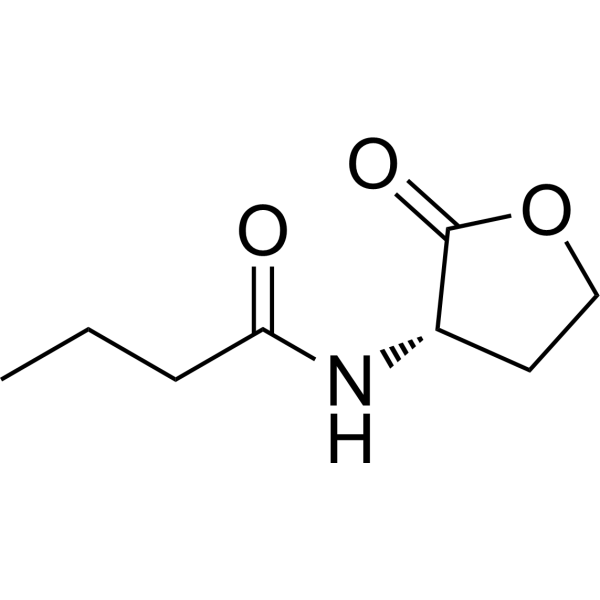
    N-Butanoyl-L-homoserine lactone
    3 Publications Verification

    C4-HSL; N-Butyryl-L-homoserine lactone

    ADC Linker Bacterial Infection Inflammation/Immunology
    N-Butanoyl-L-homoserine lactone (C4-HSL) is a cleavable ADC linker used in the synthesis of antibody-drug conjugates (ADCs). N-Butanoyl-L-homoserine lactone has antibacterial activity and is used in antibacterial biofilm . N-Butanoyl-L-homoserine lactone aptamers blocks qurom sensing and inhibits biofilm formation in Pseudomonas aeruginosa .
    N-Butanoyl-L-homoserine lactone
  • HY-W001132
    Indole
    2 Publications Verification

    Environmental Pollutants Endogenous Metabolite Infection
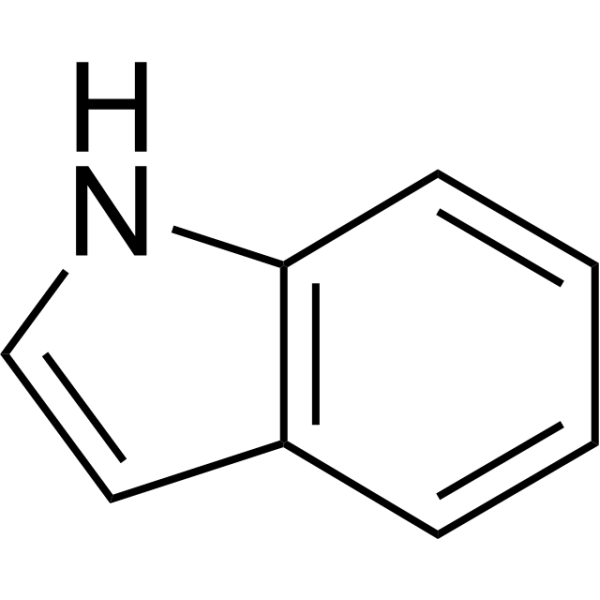
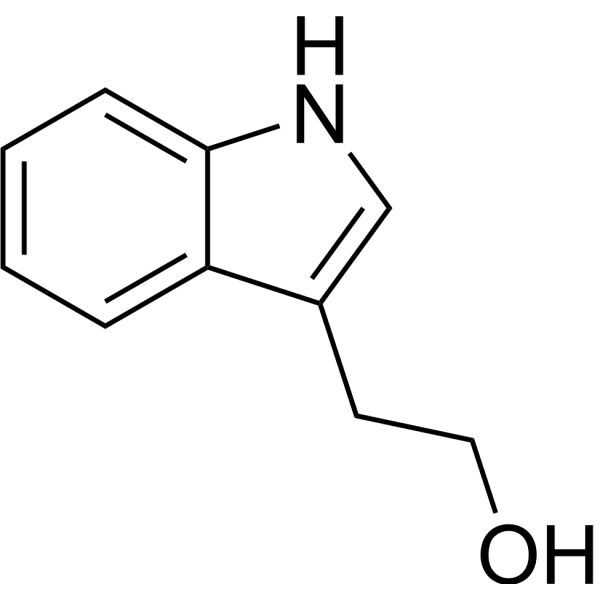
    Indole is an aromatic, heterocyclic, organic compound which widely distributed in the natural environment and can be produced by a variety of bacteria. Indole regulates various aspects of bacterial physiology, including spore formation, plasmid stability, resistance to drugs, biofilm formation, and virulence as an intercellular signal molecule .
    Indole
  • HY-W062216

    Bacterial Arginase Infection
    2-Aminoimidazole is a potent antibiofilm agent that can be used as an adjuvant to antimicrobial. 2-aminoimidazoles disrupts the ability of bacteria to protect themselves by inhibiting biofilm formation and genetically-encoded antibiotic resistance traits. 2-Aminoimidazole is also a weak noncompetitive inhibitor of human arginase I with a Ki of 3.6 mM .
    2-Aminoimidazole
  • HY-W133898

    Environmental Pollutants Biochemical Assay Reagents Others
    Tryptone is a peptide-rich bacterial culture medium component that can regulate bacterial cell surface proteins and biofilm-related genes. Tryptone promotes the expression and assembly of bacterial adhesion proteins (such as LapA and LapF) by providing peptide substances as structural factors, enhancing cell surface hydrophobicity and intercellular adhesion, thereby stabilizing the biofilm matrix and supporting the maturation and maintenance of bacterial biofilms. The peptide mixture contained in Tryptone can specifically regulate the transcription of bacterial adhesion-related genes (such as activating LapA and inhibiting LapF), affecting the synthesis and localization of biofilm structural proteins .
    Tryptone
  • HY-Y0444

    Tyrosinase Metabolic Disease
    D-Tyrosine is the D-isomer of tyrosine. D-Tyrosine negatively regulates melanin synthesis by inhibiting tyrosinase activity. D-Tyrosine inhibits biofilm formation and trigger the self-dispersal of biofilms without suppressing bacterial growth .
    D-Tyrosine
  • HY-13212

    cis-2-Decenoic acid

    Bacterial Cancer
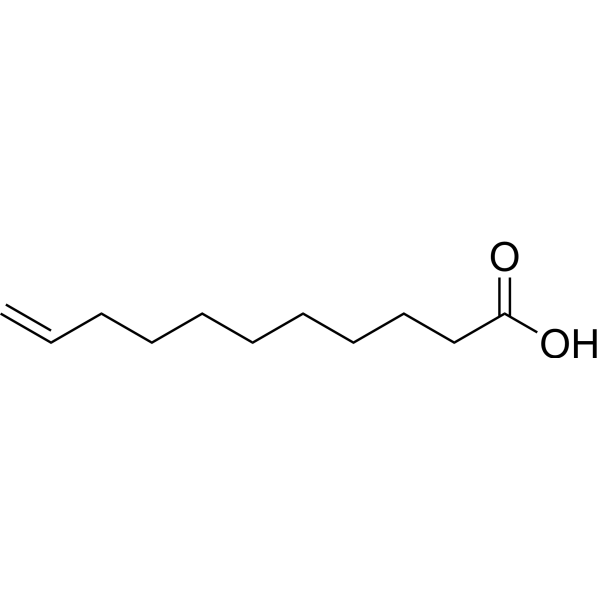
    (Z)-2-decenoic acid (cis-2-Decenoic acid) is an unsaturated fatty acid produced by Pseudomonas aeruginosa. (Z)-2-decenoic acid induces a dispersion response in biofilms formed by a range of gram-negative bacteria, including P. aeruginosa, and by gram-positive bacteria. (Z)-2-decenoic acid inhibits biofilm development .
    (Z)-2-Decenoic acid
  • HY-30236

    Bacterial Infection
    5-Bromoindole is an antibacterial agent with a MIC of 200 μg/mL. 5-Bromoindole inhibits biofilm and curli formation, reduces swarming motility and swimming motility. 5-Bromoindole can be used for the research of enterohemorrhagic escherichia coli o157:h7 infection .
    5-Bromoindole
  • HY-N4104
    Agaric acid
    1 Publications Verification

    Agaricinic Acid

    Mitochondrial Metabolism Bacterial Calcium Channel Infection Metabolic Disease
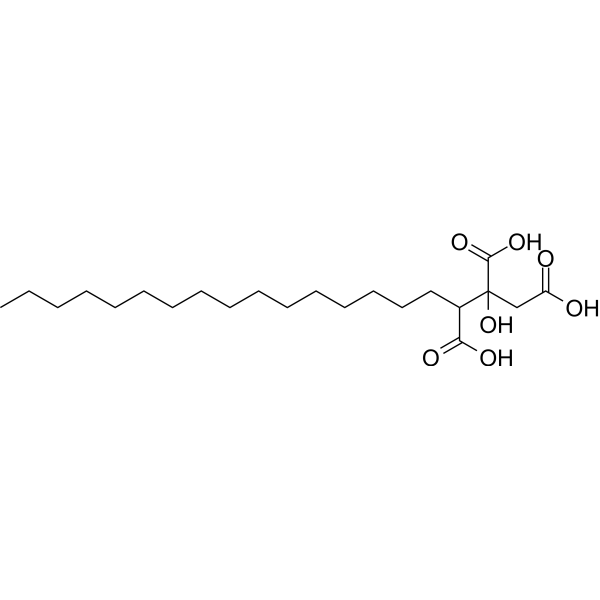
    Agaric acid (Agaricinic Acid) is an orally active inhibitor of adenine nucleotide translocase found in specific fungi. Agaric acid can inhibit the biofilm formation of various bacteria such as Salmonella. Agaric acid can also induce mitochondrial permeability transition, prompting mitochondria to release Ca 2+, disrupting the transmembrane potential, and causing mitochondrial swelling. In addition, Agaric acid can also inhibit citrate transport in liver mitochondria and participate in the inhibition of fatty acid synthesis, affecting multiple metabolic processes .
    Agaric acid
  • HY-Y1718
    Tridecanoic acid
    1 Publications Verification

    N-Tridecanoic acid

    Endogenous Metabolite Bacterial Infection
    Tridecanoic acid (N-Tridecanoic acid) is a medium-chain saturated fatty acid and inhibitor with no antibacterial activity against enterohemorrhagic E. coli (EHEC). When used in combination with Ciprofloxacin (HY-B0356) or Ampicillin (HY-B0522), Tridecanoic acid suppresses persister formation in exponentially growing E. coli and EHEC, but exerts no inhibitory effect on persister formation induced by Kanamycin (HY-16566) or in stationary-phase cells. Tridecanoic acid inhibits biofilm formation in EHEC. It can be used in the research of bacterial infections .
    Tridecanoic acid
  • HY-W037825

    Bacterial Infection Cancer
    Pterin is a Pteridine with antibacterial activity, which is found in C. croceus. Pterin reduces the proliferation and biofilm production in E. coli, P. aeruginosa, and S. mutans. Pterin is promising for research of cancers and infections .
    Pterin
  • HY-77785
    2-Amino-5-chlorobenzophenone
    1 Publications Verification

    5-Chloro-2-aminobenzophenone

    Drug Intermediate Infection Neurological Disease
    2-Amino-5-chlorobenzophenone (5-Chloro-2-aminobenzophenone) is a chemical intermediate. Derivatives of 2-Amino-5-chlorobenzophenone serve as skeletal muscle relaxants. 2-Amino-5-chlorobenzophenone acts as a starting material for the synthesis of anti-biofilm 2-amino-5-chlorobenzophenone Schiff bases. 2-Amino-5-chlorobenzophenone is applicable to research related to bacterial infections .\n

    2-Amino-5-chlorobenzophenone
  • HY-20349

    Bacterial Infection
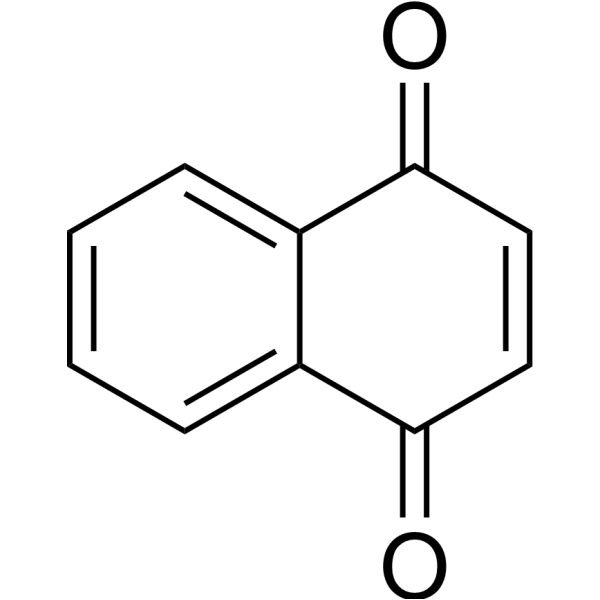
    Monobehenin, an bacterial biofilm formation inhibitor, has strong inhibitory activity toward bacterial biofilm formation of S. mutans, X. oryzae, and Y. enterocolitica in a strain specific manner .
    Monobehenin
  • HY-127041

    Bacterial Infection
    Virstatin inhibits the pili system synthesis and prevents A. baumannii biofilm formation. Virstatin also inhibits dimerization of the transcriptional activator ToxT .
    Virstatin
  • HY-W412175
    Coproporphyrin III dihydrochloride
    2 Publications Verification

    Zincphyrin dihydrochloride

    Bacterial Infection
    Coproporphyrin III dihydrochloride is a bioactive molecule excreted by nostril- and skin-associated Propionibacterium species that induces aggregation of Staphylococcus aureus (conditions: during early stationary phase growth, low pH: 4-6). Coproporphyrin III dihydrochloride also induces plasma-independent biofilm formation on abiotic surfaces by Staphylococcus aureus. Coproporphyrin III dihydrochloride may be an important mediator of S. aureus accumulation and/or biofilm formation in the nostrils or other sites where Propionibacterium and S. aureus inhabit .
    Coproporphyrin III dihydrochloride
  • HY-W001132R
    Indole (standard)
    2 Publications Verification

    Reference Standards Endogenous Metabolite Infection
    Indole (Standard) is the analytical standard of Indole. This product is intended for research and analytical applications. Indole is an aromatic, heterocyclic, organic compound which widely distributed in the natural environment and can be produced by a variety of bacteria. Indole regulates various aspects of bacterial physiology, including spore formation, plasmid stability, resistance to drugs, biofilm formation, and virulence as an intercellular signal molecule .
    Indole (standard)
  • HY-134215

    Bacterial Fungal Infection
    cis-11-Methyl-2-dodecenoic acid is a quorum sensing (QS) signal that acts as a diffusion signaling factor (DSF) in extracellular microbial and fungal communication systems. DSF is involved in the regulation of virulence and biofilm formation of a variety of bacterial pathogens .
    cis-11-Methyl-2-dodecenoic acid
  • HY-169331

    Bacterial Infection
    H2S scavenger 1 triflate (Compound 7b) is a selective H2S scavenger and antibacterial adjuvant. H2S scavenger 1 triflate consumes hydrogen sulfide produced by H2S-producing bacteria via chemical scavenging, and does not act on H2S synthases. H2S scavenger 1 triflate enhances the clearance of H2S-producing bacteria mediated by macrophages and polymorphonuclear neutrophils. H2S scavenger 1 triflate inhibits the biofilm formation of H2S-producing bacteria and eliminates pre-formed biofilms. H2S scavenger 1 triflate can be used for the research of Pseudomonas aeruginosa-infected pneumonia and Pseudomonas aeruginosa-infected skin wounds .
    H2S scavenger 1 triflate
  • HY-149734

    Bacterial Infection
    MA220607 is a FtsZ protein inhibitor with activity against both Gram-positive and Gram-negative bacteria. MA220607 inhibits bacterial growth and shows low bacterial resistance frequency. MA220607 increases bacterial membrane permeability and alters proton gradients. MA220607 blocks the formation of bacterial biofilms. MA220607 can be used in studies of bacterial infections .
    MA220607
  • HY-178732

    Fungal Acetolactate Synthase (ALS) Endothelin-Converting Enzyme (ECE) Infection
    AB-22, a vinyl sulfate compound, is an orally active antifungal agent. AB-22 inhibits hyphal growth and biofilm initiation by inhibiting the gene expression of ALS3, HWP1, and ECE1 in Candida albicans SC5314 cells. AB-22 can be used for the research of infrction, such as systemic candidiasis .

    AB-22
  • HY-B2170

    Bacterial Infection
    Octenidine is a potent antibacterial agent, possessing activity against multidrug-resistant Gram-negative pathogens. Octenidine can inhibit the expression of biofilm genes and destroy the formation of biofilms .
    Octenidine
  • HY-N16657

    LI-F 04b

    Bacterial Infection
    Fusaricidin B (LI-F 04b) is one of the components of a lipopeptide biosurfactant extracted from the marine bacterium Paenibacillus polymyxa. Fusaricidin B can significantly inhibit the formation of multiple single species biofilms, including Gram positive and Gram negative bacteria. Fusaricidin B also has inhibitory effects on complex biofilms and can effectively destroy mature biofilms that have already formed. Fusaricidin B can be used for research on bacterial infections .
    Fusaricidin B
  • HY-179389

    Bacterial Glutathione S-transferase Elastase Infection
    XDS-23 is a selective biofilm inhibitor with an IC50 of 1.26 µM against Pseudomonas aeruginosa. XDS-23 exerts a dual inhibitory effect on the LasI/LasR System (las) and Pseudomonas Quinolone Signal System (pqs). XDS-23 suppress the production of key virulence factors including elastase, pyocyanin, and extracellular polysaccharides. XDS-23 exhibits synergistic antibacterial activity and can enhance the efficacy of multiple antibiotics in both in vitro and in vivo models, while maintaining a favorable safety profile. XDS-23 can be employed for research in combating biofilm-mediated drug-resistant P. aeruginosa infections .
    XDS-23
  • HY-143326

    Bacterial Infection
    Antibacterial agent 83 (compound 17h) displays potent antibacterial activity against various vancomycin-resistant Enterococcus faecalis (VRE) and methicillin-resistant Staphylococcus aureus (MRSA). Antibacterial agent 83 can significantly reduce the biofilm formation of MRSA and exhibited promising selectivity. Antibacterial agent 83 is metabolically stable in human liver microsomes .
    Antibacterial agent 83
  • HY-123087

    N-(3-oxodecanoyl)-homoserine lactone

    Bacterial Infection
    N-(3-Hydroxytetradecanoyl)-DL-homoserine lactone (N-(3-oxodecanoyl)-homoserine lactone) is a member of N-Acyl homoserine lactone (AHL) from V. alginolyticus strains. N-(3-Hydroxytetradecanoyl)-DL-homoserine lactone is used for biofilm formation and has antibacterial activity .
    N-(3-Hydroxytetradecanoyl)-DL-homoserine lactone
  • HY-145814

    HSP Fungal Infection
    HSP90-IN-9 is a potent and selective HSP90 inhibitor. HSP90-IN-9 displays a fungicidal effect in a dose-dependent manner. HSP90-IN-9 inhibits fungal biofilm formation and fungal morphological changes after being combined with FLC. HSP90-IN-9 recovers FLC resistance by down-regulating the expression of related genes (ERG11, CDR1 and CDR2) .
    HSP90-IN-9
  • HY-B1159S

    8-Hydroxy-5-nitroquinoline-d4; 5-Nitro-8-quinolinol-d4

    Bacterial Autophagy Antibiotic Infection Cancer
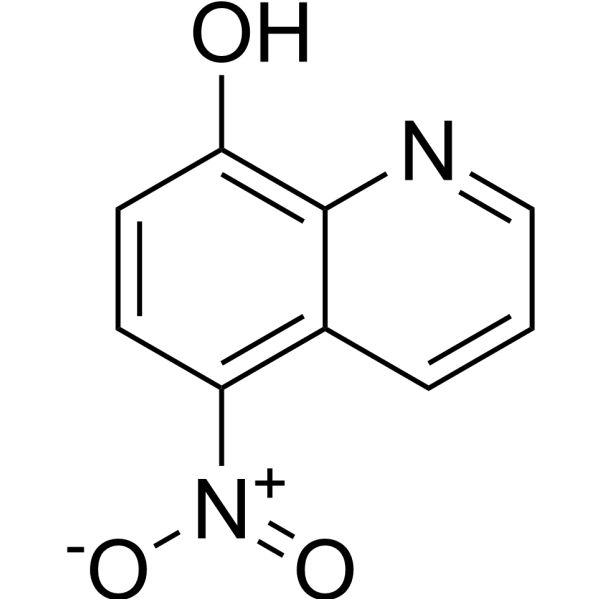
    Nitroxoline-d4 is the deuterium labeled Nitroxoline. Nitroxoline is an antibiotic that has proven to be very effective at combating biofilm infections. Nitroxoline functions by chelating Fe 2+ and Zn 2+ ions from the biofilm matrix .
    Nitroxoline-d4
  • HY-B2170B

    Bacterial Infection
    Octenidine saccharin is a potent antibacterial agent, possessing activity against multidrug-resistant Gram-negative pathogens. Octenidine saccharin can inhibit the expression of biofilm genes and destroy the formation of biofilms .
    Octenidine (saccharin)
  • HY-178781

    Bacterial Infection
    Antibacterial agent 297 (Compound A40), an antibacterial agent, is a Lsrk inhibitor (IC50: 0.40 μM; KD: 3.79 μM). Antibacterial agent 297 inhibits biofilm formation and bacterial motility and changes biofilm morphology through AI-2 QS inhibition rather than direct antibacterial effects. Antibacterial agent 297 has favorable oral PK properties .
    Antibacterial agent 297
  • HY-142695

    Bacterial Infection
    Antibacterial synergist 1 (compound 20P) is a bacterial biofilm inhibitor. Antibacterial synergist 1 inhibits the production of pyocyanin and biofilm formation with IC50s of 8.6 and 4.5 μM, respectively. Antibacterial synergist 1 has the potential for the research of P. aeruginosa infections .
    Antibacterial synergist 1
  • HY-168900

    Bacterial Infection
    Antibiofilm agent-15 (Compound 17) is an antibacterial agent. Antibiofilm agent-15 inhibits biofilm formation in Gram-positive and Gram-negative bacteria .
    Antibiofilm agent-16
  • HY-155716

    Bacterial Glucosylceramide Synthase (GCS) Infection
    G43-C3-TEG is a glycosyl-transferase inhibitor. G43-C3-TEG reduces the biofilm formation by decreasing the production of EPS (extracellular polysaccharides) .
    G43-C3-TEG
  • HY-149330

    Bacterial Infection
    HA5 inhibits Streptococcus mutans biofilm with an IC50 value of 6.42 μM, without affecting its growth. HA5 also inhibits Streptococcus mutans glucan production and eDNA levels .
    HA5
  • HY-149286

    Bacterial Infection
    Antibacterial agent 142, an aromatic hydrazidesis, has antibacterial activity. Antibacterial agent 142 has bacteriostatic and inhibits biofilm formation .
    Antibacterial agent 142
  • HY-N10572

    Bacterial Infection
    Antibacterial synergist 2 (compound 27) is a biofilm inhibitor. Antibacterial synergist 2 shows inhibitory effects to S. enterica, S. aureus, P. aeruginosa and C. albicans. Antibacterial synergist 2 can be used for the research related to biofilm-forming pathogens .
    Antibacterial synergist 2
  • HY-151167

    Bacterial Infection
    LasR-IN-4 is a potent LasR inhibitor. LasR-IN-4 can inhibit Pseudomonas aeruginosa and its biofilm formation, pyocyanin production, and rhamnolipids production .
    LasR-IN-4
  • HY-N12723

    Fungal Infection
    Talaroderxine D (compound 4) has biofilm inhibitory effect. Talaroderxine D shows antimicrobial activities against Bacillus subtilis and Staphylococcus aureus with MIC values of 2.1 and 8.3 μg/mL .
    Talaroderxine D
  • HY-N7788

    Bacterial Infection
    cis-2-Dodecenoic acid, originally discovered in Burkholderia cenocepacia, can interfere with the bacterial quorum sensing system and inhibit bacterial biofilm formation and virulence factor production .
    cis-2-Dodecenoic acid
  • HY-N6931R

    Reference Standards Bacterial Infection
    Usaramine (Standard) is the analytical standard of Usaramine. This product is intended for research and analytical applications. Usaramine is a pyrrolizidine alkaloid isolated from seeds of Crolatalaria pallida. Usaramine demonstrates a highlighted antibiofilm activity against Staphylococcus epidermidis by reducing more than 50% of biofilm formation without killing the bacteria .
    Usaramine (Standard)
  • HY-149762

    Bacterial Infection
    IMBI (compound 32) is an antibacterial agent that inhibits quorum sensing (QS) against drug-resistant pathogens. IMBI inhibits biofilm formation of Salmonella marcescens and restores or increases its susceptibility to antimicrobial drugs .
    IMBI
  • HY-151440

    Fungal Infection
    Antifungal agent 42 is an antifungal agent. Antifungal agent 42 has an inhibitory effect on lanosterol 14α-demethylase (CYP51) of C.alb.. Antifungal agent 42 inhibits biofilm formation .
    Antifungal agent 42
  • HY-151442

    Fungal Infection
    Antifungal agent 43 (compound B05) is an antifungal agent. Antifungal agents 43 has antifungal activity by inhibiting biofilm formation. Antifungal agent 43 has low toxicity in human cancer cell lines .
    Antifungal agent 43
  • HY-163111

    Bacterial Infection
    Antibacterial agent 170 (compound 6b) is a potent antibacterial agent which inhibits the formation of P. aeruginosa PAO1 biofilm. Antibacterial agent 170 exhibits quorum sensing inhibitor effect by the las system. Antibacterial agent 170 can used in study microbial resistance .
    Antibacterial agent 170
  • HY-162113

    Bacterial Infection
    Antibacterial agent 174 (Compound 5g) is a antibacterial agent. Antibacterial agent 174 has potent anti-infective potential in vivo and appreciable pharmacokinetic profiles. Highly active antibacterial agent 174 has favorable biofilm removal performance, low hemolysis and acceptable mammalian cell toxicity .
    Antibacterial agent 174
  • HY-139971

    Bacterial Infection
    Antibacterial agent 64 (compound 62) is a potent YycG inhibitor (IC50=6.1 µM) and an antibacterial agent. Antibacterial agent 64 combines with ampicillin could synergistically eradicate the biofilm-embedded viable bacteria .
    Antibacterial agent 64
  • HY-151437

    Fungal Infection
    Antifungal agent 40 is an antifungal agent which extends into the narrow hydrophobic pocket II of C.alb. CYP51. Antifungal agent 40 has an inhibitory effect on lanosterol 14α-demethylase (CYP51). Antifungal agent 40 inhibits biofilm formation .
    Antifungal agent 40
  • HY-156439

    Bacterial Infection
    Antibiofilm agent-2 (compound 4T) is a potent biofilm inhibitor with an IC50 of 3.6 μM. Antibiofilm agent-2 inhibits the quorum sensing system and iron homeostasis as antibacterial synergists against Pseudomonas aeruginosa .
    Antibiofilm agent-2
  • HY-P10546

    pALA

    Bacterial Infection
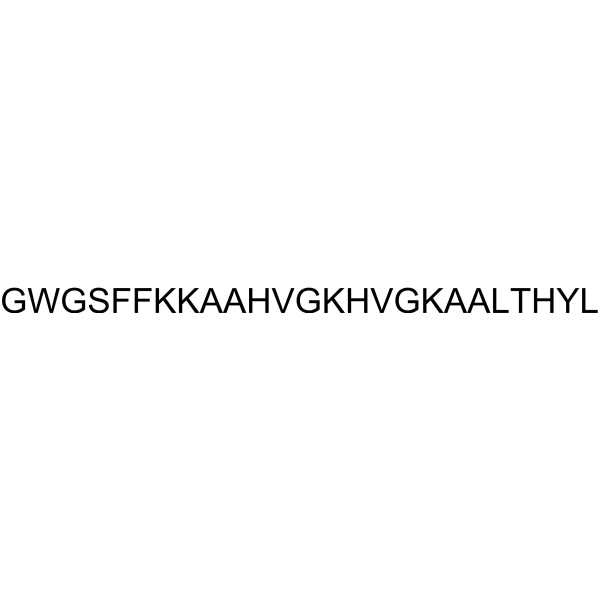
    Polyalanine peptide (pALA) is an antimicrobial peptide that targets biofilms and Gram-negative bacteria and is non-toxic to mammalian cells. Polyalanine peptide forms an α-helical conformation that effectively permeabilizes Gram-negative bacterial membranes, thereby inducing lethal cell leakage. Polyalanine peptide can be used in anti-infection research .
    Polyalanine peptide
  • HY-N0535R

    Magnoflorine chloride (Standard); α-Magnoflorine chloride (Standard); Thalictrine chloride (Standard)

    Reference Standards Fungal Infection Metabolic Disease
    (+)-Magnoflorine (chloride) (Standard) is the analytical standard of (+)-Magnoflorine (chloride). This product is intended for research and analytical applications. Magnoflorine chloride (Magnoflorine chloride), an aporphine alkaloid found in Magnolia or Aristolochia, reduces the formation of C. albicans biofilm . Magnoflorine chloride has anti-fungal, anti-antidiabetic and anti-oxidative activity .
    (+)-Magnoflorine chloride (Standard)
  • HY-13212R

    cis-2-Decenoic acid (Standard)

    Bacterial Reference Standards Cancer
    (Z)-2-Decenoic acid (Standard) is the analytical standard of (Z)-2-Decenoic acid. This product is intended for research and analytical applications. (Z)-2-decenoic acid (cis-2-Decenoic acid) is an unsaturated fatty acid produced by Pseudomonas aeruginosa. (Z)-2-decenoic acid induces a dispersion response in biofilms formed by a range of gram-negative bacteria, including P. aeruginosa, and by gram-positive bacteria. (Z)-2-decenoic acid inhibits biofilm development[1].
    (Z)-2-Decenoic acid (Standard)
  • HY-N12606

    Fungal Infection
    Neodidymelliosides A (compound 1)It is a secondary metabolite of fungi and has a significant inhibitory effect on Staphylococcus aureus and Candida albicans biofilms. Neodidymelliosides AIt also has anti-cancer activity and can inhibit KB3.1 (cervix),PC-3 (prostate),MCF-7(breast),SKOV-3 (ovary),A431 (skin )and A549 (lung )Cell viability of cell lines .
    Neodidymelliosides A

Inquiry Online

Your information is safe with us. * Required Fields.

Salutation


Country or Region *

Applicant Name *


Organization Name *

Department *


Email Address *


Product Name *

Cat. No.


Requested quantity *

Phone Number *


Remarks

Inquiry Online

Inquiry Information

Product Name:
Cat. No.:
Quantity:
MCE Japan Authorized Agent:

