71 Results for "

brain endothelial cells

" in MedChemExpress (MCE) Product Catalog:
Products (71)

71 Results for "brain endothelial cells" in MCE Product Catalog:

13
13 Publications Verification
Cat. No.: HY-N0784
CAS No.: 15291-77-7
Synonyms: BN-52021
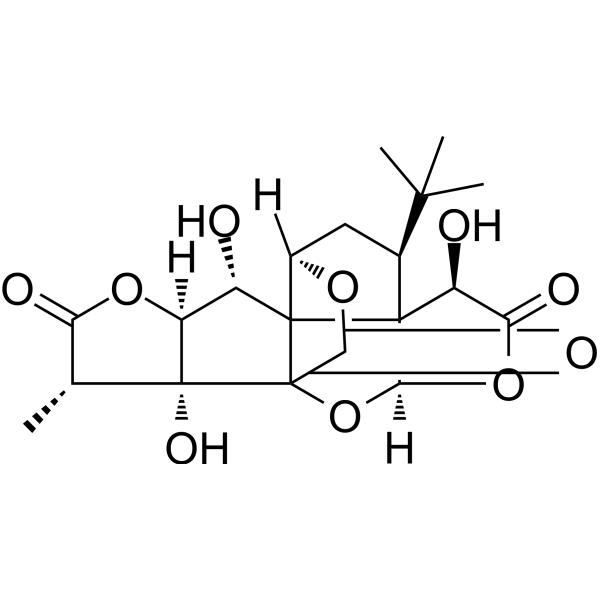
Ginkgolide B (BN-52021), a terpene lactone, is a potent platelet activating factor antagonist. Ginkgolide B protects endothelial cells via the activation of PXR from injuries induced by xeno- and endobiotics. Ginkgolide B can pass through the brain-blood barrier. Ginkgolide B has anti-oxidant, anti-inflammatory, anti-tumor, and anti-apoptotic activity. Ginkgolide B has marked neuroprotective effects against ischemia-induced impairments .
loading...
    loading...
10
10 Cited Publications
Cat. No.: HY-B1135
CAS No.: 3562-84-3
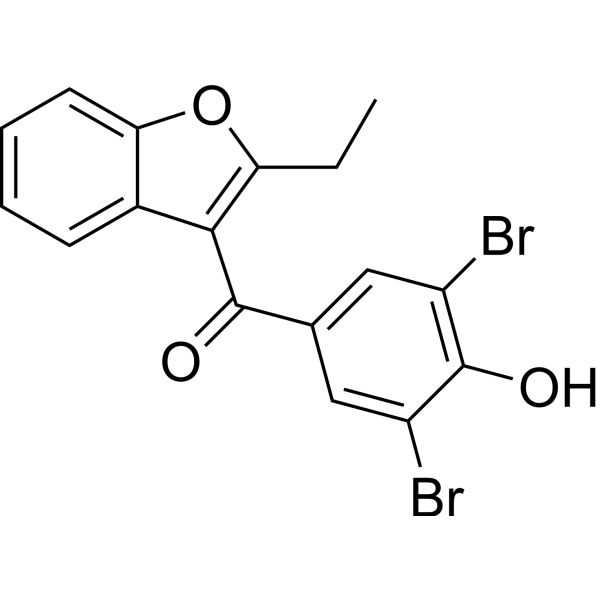
Benzbromarone is an orally active anti-gout agent. Benzbromarone has anti-infammatory, anti-oxidative stress and nephroprotective effects. Benzbromarone can be used for the research of hyperuricemia and gout .
loading...
    loading...
5
5 Cited Publications
Cat. No.: HY-P1290
CAS No.: 121932-06-7
Synonyms: PKI-(6-22)-amide
Target:  

PKA

Research Areas:  

Neurological Disease

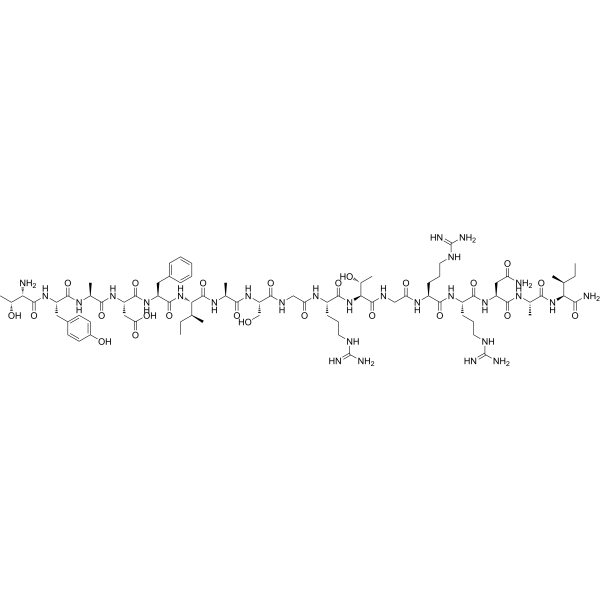
PKA Inhibitor Fragment (6-22) amide is a highly potent and specific competitive inhibitor of PKA, with Ki values of 1.7 nM and 1.6 nM against human and bovine PKA catalytic subunits, respectively. The IC50 of PKA Inhibitor Fragment (6-22) amide targeting bovine PKA is 8.6 nM. PKA Inhibitor Fragment (6-22) amide effectively abolishes PKA activity in mouse brain and spinal cord, and exerts in vivo efficacy via intracerebroventricular administration. PKA Inhibitor Fragment (6-22) amide significantly reverses low-dose morphine analgesic tolerance in mice and blocks photoaffinity labeling of cAMP-dependent protein kinase. PKA Inhibitor Fragment (6-22) amide can be applied to research in fields related to the mechanism of morphine analgesic tolerance and skin wound healing .
loading...
    loading...
2
2 Cited Publications
Cat. No.: HY-N0419
CAS No.: 491-50-9
Synonyms: Quercetin-7-O-β-D-glucopyranoside
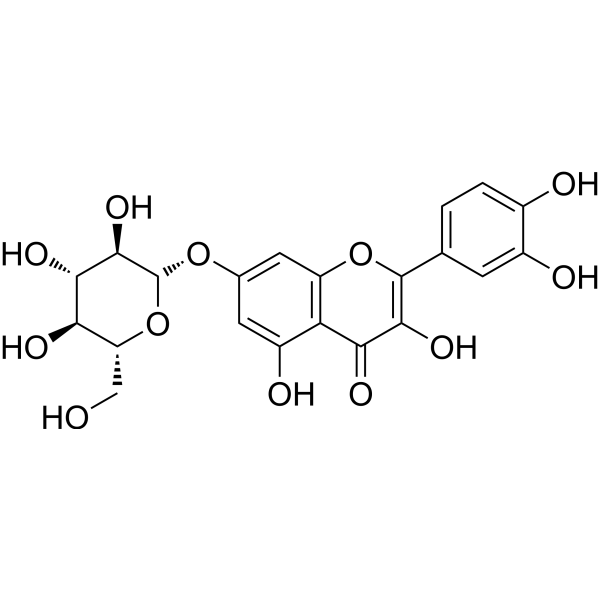
Quercimeritrin (Quercetin-7-O-β-D-glucopyranoside) is an orally active α-glucosidase inhibitor (with an IC50 of 79.88 μM against the Saccharomyces cerevisiae enzyme) and a P-gp substrate, with anti-angiogenic and antioxidant activities. Quercimeritrin does not cross the blood-brain barrier and does not inhibit cytochrome P450 enzymes. Quercimeritrin precisely binds to and inhibits the active sites of c-Kit, MMP-2, Aurora-A kinases and α-glucosidase, thereby disrupting target functions. Quercimeritrin effectively regulates postprandial blood glucose and also exhibits significant anti-angiogenic activity, which inhibits endothelial cell proliferation and microvascular growth. Quercimeritrin can be used in the research of diabetes and breast cancer .
loading...
    loading...
1
1 Cited Publications
Cat. No.: HY-B0708
CAS No.: 1743-60-8
Synonyms: 1,3,5(10)-Estratriene-3,17β-diol 17-acetate
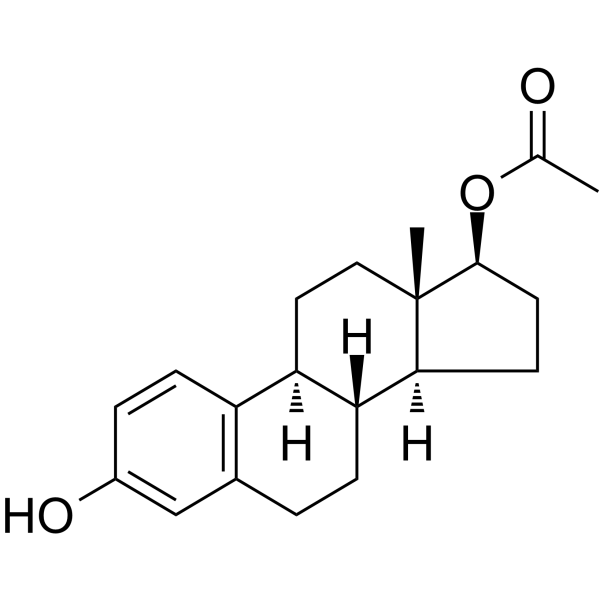
β-Estradiol 17-acetate (1,3,5(10)-Estratriene-3,17β-diol 17-acetate) is a long-acting endogenous estrogen precursor and also a cell viability and proliferation enhancer. β-Estradiol 17-acetate promotes the adhesion and proliferation of freshly isolated and revived female-derived human brain microvascular endothelial cells, and reverses the decreased viability of revived male-derived human brain microvascular endothelial cells. β-Estradiol 17-acetate exerts the microvascular protective effect of estrogen, enabling non-tumor human brain microvascular endothelial cells to be cultured in vitro for 2 months after cryopreservation. β-Estradiol 17-acetate is biotransformed into β-estradiol via hydrolase action in the in vitro skin of humans, hairless dogs, rats and hairless mice .
loading...
    loading...
Cat. No.: HY-171306
Target:  

Liposome

Research Areas:  

Others

MK16 is a lipid material that can be used to construct blood-brain barrier penetrable lipid nanoparticles for mRNA delivery. MK16 facilitates blood-brain barrier crossing via γ-secretase-mediated and caveolae-mediated transcytosis. MK16 can be used for drug delivery research .
loading...
    loading...
Cat. No.: HY-NP203
Synonyms: HDL (human)
High density lipoprotein (human) (HDL (human)) is a human-derived high-density lipoprotein. High density lipoprotein can cross the blood-brain barrier, and partially acts on endothelial nitric oxide synthase (eNOS) by activating surface receptors such as SR-B1 and S1P3R, as well as intracellular signaling cascades involving Akt, PI3K and MAPK, thereby inducing the production of NO in endothelial cells. High density lipoprotein (human) can be used in research related to type 2 diabetes, Alzheimer's disease, cancer and atherosclerosis .
loading...
    loading...
Cat. No.: HY-N0859
CAS No.: 69363-14-0
Synonyms: Schizanhenol; Gomisin-K3
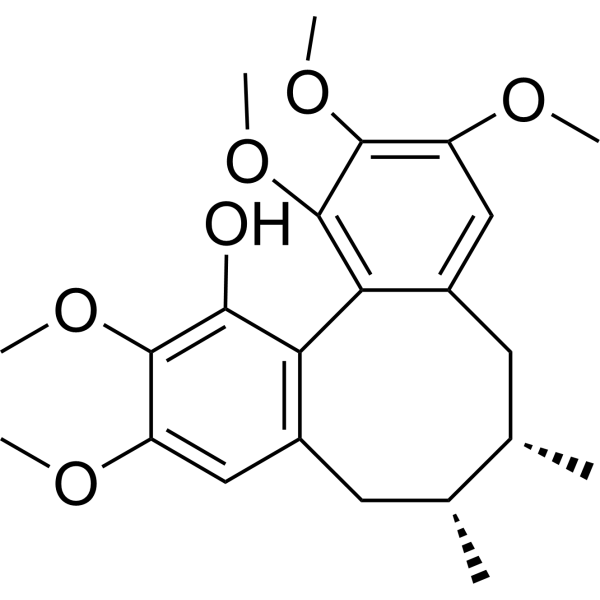
Schisanhenol (Schizanhenol), a lignan, is an orally active antioxidant. Schisanhenol reduces AChE activity, increases SIRT1 and PGC-1α expression, and decreases phosphorylated Tau (Ser 396) levels. Schisanhenol increases SOD and glutathione peroxidase activity, decreases malondialdehyde (MDA) content, and inhibits UGT2B7 activitY. Schisanhenol attenuates ox-LDL-induced apoptosis, intracellular reactive oxygen species generation, and cytotoxicity in endothelial cells. Schisanhenol inhibits LDL oxidation, brain mitochondrial and membrane peroxidative damage, and brain mitochondrial swelling and disintegration. Schisanhenol can be used for the research of Alzheimer’s disease, atherosclerosis, brain ischemia, and age-related brain deterioration .
loading...
    loading...
Cat. No.: HY-150314
CAS No.: 1685273-57-7
Purity:  99.74%
Research Areas:  

Cancer

MCT-IN-1 (Compound 2) is a potent MCT inhibitor, with IC50 values of 9 nM and 14 nM against MCT1 and MCT4, respectively. MCT-IN-1 can be used in research related to solid tumors .
loading...
    loading...
Cat. No.: HY-P5558
CAS No.: 917760-16-8
Target:  

VEGFR

Research Areas:  

Neurological Disease

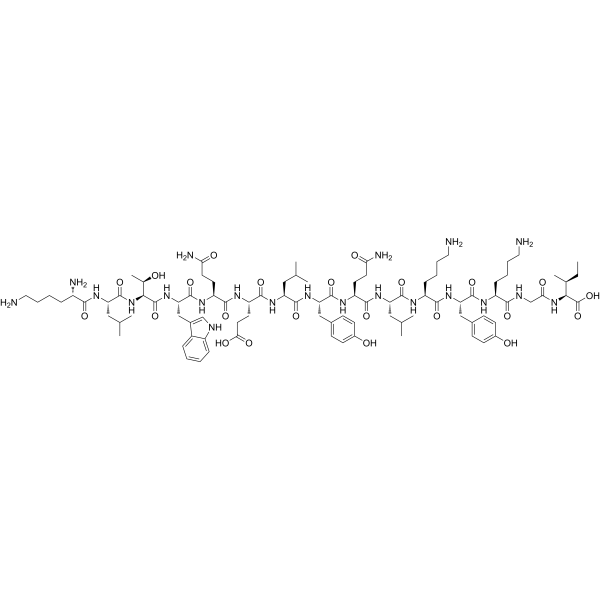
KLTWQELYQLKYKGI is a VEGF mimetic peptide designed based on the VEGF helix sequence 17-25, with the ability to activate VEGF receptors and exert pro-angiogenic biological activity. KLTWQELYQLKYKGI effectively promotes the attachment, spreading and proliferation of human umbilical vein endothelial cells. KLTWQELYQLKYKGI enhances the proliferation, migration and osteogenic differentiation of bone marrow stromal cells (BMSCs). KLTWQELYQLKYKGI synergistically accelerates angiogenesis and bone regeneration in rat cranial defect models. KLTWQELYQLKYKGI can be used for the research of brain tissue engineering and traumatic brain injury repair and biomaterials for bone tissue engineering and bone repair .
loading...
    loading...
Cat. No.: HY-W002199
CAS No.: 647-42-7
Synonyms: 6:2 FTOH; 1H,1H,2H,2H-Perfluoro-1-octanol; 2-(Perfluorohexyl)ethanol
6:2 Fluorotelomer alcohol (6:2 FTOH) is an orally active, blood-brain barrier-permeable modulator of cyclin D1 and ETS1. 6:2 Fluorotelomer alcohol downregulates cyclin D1 expression, upregulates ETS1 via the TNF-α/ERK 1/2 pathway, impairs mitochondrial membrane potential and respiratory function, increases reactive oxygen species levels, disrupts calcium homeostasis and activates endoplasmic reticulum stress markers, and induces cell proliferation inhibition and endothelial-mesenchymal transition. Furthermore, 6:2 Fluorotelomer alcohol induces morphological abnormalities in zebrafish embryos and liver developmental damage, while disrupting the brain immune microenvironment in mice, causing systemic toxicity and delayed pup maturation in CD-1 mice. 6:2 Fluorotelomer alcohol also induces cortical neuron apoptosis, glial cell activation, synaptic abnormalities, colonic barrier damage, intestinal dysbiosis and autism spectrum disorder-like symptoms in mice. 6:2 Fluorotelomer alcohol shows no mutagenic, clastogenic, primary skin/eye irritation or skin sensitizing effects, exhibits no selective reproductive toxicity in CD-1 mice, and is classified as GHS Category 4 for acute oral toxicity. 6:2 Fluorotelomer alcohol can be used in studies of neurodevelopmental disorders and autism spectrum disorders .
loading...
    loading...
Cat. No.: HY-P10502
CAS No.: 2378836-93-0
Target:  

LDLR

Research Areas:  

Infection

L57 is a low-density lipoprotein receptor-related protein 1 (LRP1)-binding peptide. L57 exhibits high affinity for LRP1, with an EC50 of 45 nM. L57 possesses blood-brain barrier (BBB) permeability and plasma stability. L57 can serve as a carrier for central nervous system drug delivery .
loading...
    loading...
Cat. No.: HY-N6745
CAS No.: 25425-12-1
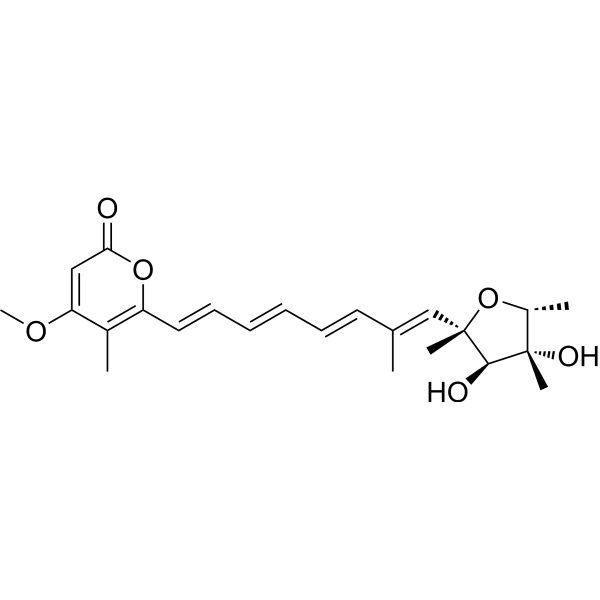
Citreoviridin, a toxin from Penicillium citreoviride NRRL 2579, inhibits brain synaptosomal Na +/K +-ATPase whereas in microsomes, both Na +/K +-ATPase and Mg 2+-ATPase activities are significantly stimulated in a dose-dependent manner . Citreoviridin inhibits cell proliferation and enhances apoptosis of human umbilical vein endothelial cells .
loading...
    loading...
Cat. No.: HY-133016
CAS No.: 1464842-09-8
Purity:  99.36%
Target:  

MetAP

Research Areas:  

Cardiovascular Disease Cancer

M8891 is an orally active, reversible and brain penetrant Methionine Aminopeptidase-2 (MetAP-2) inhibitor with an IC50 of 54 nM and a Ki of 4.33 nM. M8891 does not inhibit MetAP-1 (IC50>10 µM) . M8891 inhibits growth of primary endothelial cells as well as tumor cells and demonstrates antiangiogenic and antitumoral activity .
loading...
    loading...
Cat. No.: HY-P10580
CAS No.: 1359657-45-6
Vasculotide is a blood-brain barrier (BBB)-penetrant Tie2 agonist. Vasculotide binds to a unique domain of Tie2, induces receptor clustering to drive phosphorylation, activates downstream PI3K/Akt and eNOS pathways, enhances inter-endothelial cell junctions (such as VE-cadherin and claudin-5), and inhibits inflammatory adhesion molecules, ultimately stabilizing the vascular endothelial barrier and reducing its permeability . Vasculotide alleviates pulmonary microvascular leakage and microcirculatory dysfunction caused by cardiopulmonary bypass, acts as an adjuvant radioprotective agent to reduce acute radiation dermatitis, and promotes BBB recovery after focused ultrasound (FUS). Combination of Vasculotide with antibiotics reduces lung injury .
loading...
    loading...
Cat. No.: HY-N8210
CAS No.: 446-71-9
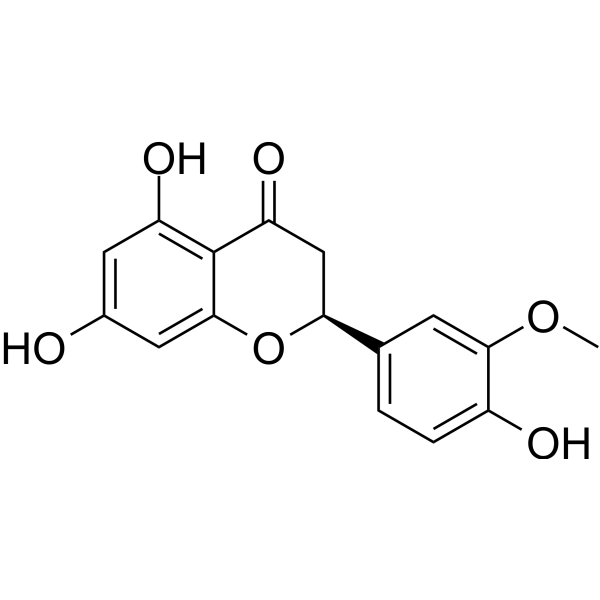
Homoeriodictyol is an orally active, bitter-tasting flavanone that can penetrate the blood-brain barrier. Homoeriodictyol enhances synaptic-related protein expression through NCOA4-mediated ferritin autophagy. Homoeriodictyol improves memory impairment in mice by inhibiting the NLRP3 inflammasome. Homoeriodictyol protects human endothelial cells from oxidative damage by activating Nrf2 and inhibiting mitochondrial dysfunction. Homoeriodictyol enhances ROS activity and induces apoptosis, exhibiting anticancer effects. Homoeriodictyol inhibits the survival and migration of androgen-resistant prostate cancer cells in vitro. Homoeriodictyol exerts antinociceptive activity in mice in vivo .
loading...
    loading...
Cat. No.: HY-124314
CAS No.: 1620582-23-1
Target:  

MAGL DAGL

Research Areas:  

Metabolic Disease

LEI-106 is a dual ABHD6 and DAGL-α inhibitor, with a Ki of 0.8 μM for ABHD6, and an IC50 of 18 nM and a Ki of 0.7 μM for DAGL-α. LEI-106 blocks the synthesis of 2-arachidonoylglycerol, reduces the level of endothelial cell-derived 2-arachidonoylglycerol, without altering the levels of cannabinoids and diacylglycerol. LEI-106 is applicable to research related to diet-induced obesity and metabolic syndrome .
loading...
    loading...
Cat. No.: HY-W015777
CAS No.: 105-13-5
Synonyms: P-Methoxy-benzyl alcoho; (4-Methoxyphenyl)methanol
4-Methoxybenzyl alcohol (P-Methoxy-benzyl alcoho; (4-Methoxyphenyl) methanol) is a naturally derived volatile aromatic compound. 4-Methoxybenzyl alcohol upregulates the phosphorylation level of PI3K/Akt pathway proteins, downregulates the expression of pro-inflammatory factors, increases the content of tight junction proteins occludin and claudin-5, and alleviates structural damage to the blood-brain barrier. 4-Methoxybenzyl alcohol improves the decrease in viability and NO level of cerebral microvascular endothelial cells induced by oxygen-glucose deprivation/reperfusion, and reduces the release of lactate dehydrogenase. 4-Methoxybenzyl alcohol serves as a substrate in the two-phase persulfate-mediated electro-oxidation system, where it is directionally oxidized to p-anisaldehyde. 4-Methoxybenzyl alcohol acts as a substrate for wild-type fungal aryl alcohol oxidase. 4-Methoxybenzyl alcohol can be used in studies related to ischemic stroke, as well as in research across various fields such as chemical synthesis, including the synthesis of fragrances and flavorings .
loading...
    loading...
Cat. No.: HY-172163
FITC-dextran sulfate (MW 4kDa) is a dextran sulfate labeled with FITC (HY-66019), with an average molecular weight of 4 kDa. FITC-dextran sulfate (MW 4kDa) serves as an anionic macromolecular tracer. FITC-dextran sulfate (MW 4kDa) can be used for permeability studies .
loading...
    loading...
Cat. No.: HY-172705
DSPE-PEG2000-RVG29 is a PEG conjugate composed of DSPE and rabies virus glycoprotein 29 (RVG29). RVG29 specifically binds to nicotinic acetylcholine receptors (nAChR) at the blood-brain barrier (BBB), crosses the BBB, and mediates receptor-dependent transcytosis. DSPE-PEG2000-RVG29 can be used for brain-targeted drug delivery, surface modification of nanocarriers, as well as gene and nucleic acid delivery. DSPE-PEG2000-RVG29 is applicable to research related to hypoxic-ischemic brain injury, Parkinson's disease, and other conditions .
loading...
    loading...

