


1. Search Result
Search Result
Results for "

brain function

" in MedChemExpress (MCE) Product Catalog:

208

Inhibitors & Agonists

5

Screening Libraries

1

Fluorescent Dye

1

Biochemical Assay Reagents

17

Peptides

3

Inhibitory Antibodies

37

Natural
Products

24

Isotope-Labeled Compounds

2

Oligonucleotides

Cat. No. Product Name Target Research Areas Chemical Structure
  • HY-B0315
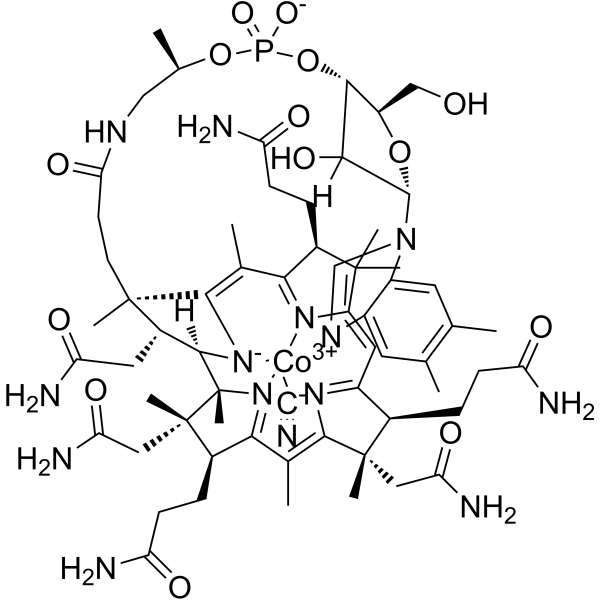
    Vitamin B12
    3 Publications Verification

    Cyanocobalamin

    Environmental Pollutants Endogenous Metabolite Infection Neurological Disease Metabolic Disease Inflammation/Immunology Cancer
    Vitamin B12 is a vitamin that can pass through the blood-brain barrier. Vitamin B12 plays a key role in the normal functioning of the brain and nervous system, and for the formation of blood. Vitamin B12 is beneficial for many inflammatory diseases and also provides protection in oxidative-stress-associated pathologies .
    Vitamin B12
  • HY-17552
    sn-Glycero-3-phosphocholine
    3 Publications Verification

    Choline Alfoscerate; Alpha-GPC; L-α-GPC

    Cholinesterase (ChE) Endogenous Metabolite Neurological Disease
    sn-Glycero-3-phosphocholine (Choline Alfoscerate) is a precursor in the biosynthesis of brain phospholipids and increases the bioavailability of choline in nervous tissue. sn-Glycero-3-phosphocholine (Choline Alfoscerate) has significant effects on cognitive function with a good safety profile and tolerability, and is effective in the treatment of Alzheimer's disease and dementia .
    sn-Glycero-3-phosphocholine
  • HY-113354
    Anserine
    5 Publications Verification

    Endogenous Metabolite Neurological Disease
    Anserine, a methylated form of Carnosine, is an orally active, natural Histidine-containing dipeptide found in skeletal muscle of vertebrates. Anserine is not cleaved by serum carnosinase and act as biochemical buffers, chelators, antioxidants, and anti-glycation agents. Anserine has blood-brain barrier permeability, and improves memory functions in Alzheimer's disease (AD)-model mice .
    Anserine
  • HY-B0030
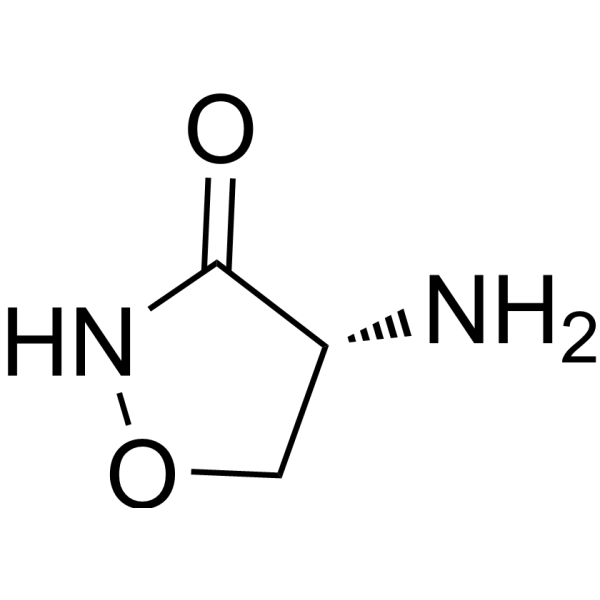
    D-Cycloserine
    Maximum Cited Publications
    7 Publications Verification

    iGluR Bacterial Antibiotic Infection Neurological Disease Cancer
    D-Cycloserine is an antibiotic which targets sequential bacterial cell wall peptidoglycan biosynthesis enzymes, with blood-brain barrier permeability. D-Cycloserine is a partial NMDA agonist that can improve cognitive functions. D-Cycloserine can be used for multidrug-resistant tuberculosis research .
    D-Cycloserine
  • HY-111475
    Mitochondrial fusion promoter M1
    2 Publications Verification

    Mitochondrial Metabolism Cardiovascular Disease
    Mitochondrial fusion promoter M1 is a mitochondrial dynamic modulator. Mitochondrial fusion promoter M1 preserves the mitochondrial function and promotes cellular respiration. Mitochondrial fusion promoter M1 alleviates cardiac and brain damage in rats with cardiac ischemia/reperfusion injury .
    Mitochondrial fusion promoter M1
  • HY-B0762
    Acetyl-L-carnitine hydrochloride
    2 Publications Verification

    O-Acetyl-L-carnitine hydrochloride; ALCAR hydrochloride

    Caspase Apoptosis Neurological Disease
    Acetyl-L-carnitine (O-Acetyl-L-carnitine; ALCAR) hydrochloride is an orally active mitochondrial energy metabolism regulator and neuroprotectant that can penetrate the blood-brain barrier. Acetyl-L-carnitine hydrochloride selectively enters cells and the brain through the organic cation transporter OCTN2. Acetyl-L-carnitine hydrochloride can participate in fatty acid β-oxidation, promote acetylcholine synthesis, regulate mitochondrial function and inhibit oxidative stress as an acetyl donor. Acetyl-L-carnitine hydrochloride exerts its activity by enhancing energy metabolism, protecting neurons and improving synaptic plasticity. Acetyl-L-carnitine hydrochloride is mainly used in the study of neurodegenerative diseases and metabolic disorder-related diseases such as neonatal hypoxic-ischemic brain damage, Alzheimer's disease, and depression .
    Acetyl-L-carnitine hydrochloride
  • HY-17001A
    Flupirtine
    1 Publications Verification

    D 9998

    Potassium Channel iGluR GABA Receptor Neurological Disease Inflammation/Immunology
    Flupirtine (D 9998) is an orally active, blood-brain barrier-crossing non-opioid analgesic and neuroprotective agent. Flupirtine is a neuronal potassium channel opener (Kv7 activator), a NMDA receptor antagonist and a GABA receptor activator. Flupirtine stabilizes blood-brain-barrier integrity, reduces oxidative stress and brain leukocyte infiltration, enhances angioneurogenesis, suppresses calcium influx, stabilizes neuronal resting membrane potential, and counteracts focal cerebral ischemia. Flupirtine exhibits analgesic, muscle relaxant properties, protects neurons from excitotoxic, ischemic, or cytokine-mediated death. Flupirtine functions as a non-opioid analgesic without antipyretic or antiphlogistic properties, shows no relevant affinity to opiate receptor. Flupirtine can be used for the research of focal cerebral ischemia, pain, Alzheimer’s disease, or multiple sclerosis .
    Flupirtine
  • HY-N10528
    3-Fucosyllactose
    1 Publications Verification

    3-Fucosyl-D-lactose

    Bacterial Enterovirus Infection Neurological Disease Inflammation/Immunology
    3-Fucosyllactose (3-Fucosyl-D-lactose) is one of the major fucosylated oligosaccharides found in human breast milk. 3-Fucosyllactose shows prebiotic, immunomodulator, neonatal brain development, and antimicrobial function .
    3-Fucosyllactose
  • HY-W040821
    DL-Homocysteine
    4 Publications Verification

    Endogenous Metabolite Neurological Disease
    DL-Homocysteine is a weak neurotoxin, and can affect the production of kynurenic acid in the brain. DL-Homocysteine is correlated with Vitamin B12, renal functions and folate levels, affects the cross-sectional cognition indirectly through white matter microstructural integrity .
    DL-Homocysteine
  • HY-113218
    Acetyl-L-carnitine
    2 Publications Verification

    O-Acetyl-L-carnitine; ALCAR

    Caspase Apoptosis Neurological Disease
    Acetyl-L-carnitine (O-Acetyl-L-carnitine; ALCAR) is an orally active mitochondrial energy metabolism regulator and neuroprotectant that can penetrate the blood-brain barrier. Acetyl-L-carnitine selectively enters cells and the brain through the organic cation transporter OCTN2. Acetyl-L-carnitine can participate in fatty acid β-oxidation, promote acetylcholine synthesis, regulate mitochondrial function and inhibit oxidative stress as an acetyl donor. Acetyl-L-carnitine exerts its activity by enhancing energy metabolism, protecting neurons and improving synaptic plasticity. Acetyl-L-carnitine is mainly used in the study of neurodegenerative diseases and metabolic disorder-related diseases such as neonatal hypoxic-ischemic brain damage, Alzheimer's disease, and depression .
    Acetyl-L-carnitine
  • HY-17001
    Flupirtine Maleate
    1 Publications Verification

    D 9998 Maleate

    Potassium Channel iGluR GABA Receptor Neurological Disease Inflammation/Immunology
    Flupirtine (D 9998) Maleate is an orally active, blood-brain barrier-crossing non-opioid analgesic and neuroprotective agent. Flupirtine Maleate is a neuronal potassium channel opener (Kv7 activator), a NMDA receptor antagonist and a GABA receptor activator. Flupirtine Maleate stabilizes blood-brain-barrier integrity, reduces oxidative stress and brain leukocyte infiltration, enhances angioneurogenesis, suppresses calcium influx, stabilizes neuronal resting membrane potential, and counteracts focal cerebral ischemia. Flupirtine Maleate exhibits analgesic, muscle relaxant properties, protects neurons from excitotoxic, ischemic, or cytokine-mediated death. Flupirtine Maleate functions as a non-opioid analgesic without antipyretic or antiphlogistic properties, shows no relevant affinity to opiate receptor. Flupirtine Maleate can be used for the research of focal cerebral ischemia, pain, Alzheimer’s disease, or multiple sclerosis .
    Flupirtine Maleate
  • HY-102020
    RG3039
    3 Publications Verification

    PF-06687859

    DNA/RNA Synthesis Neurological Disease
    RG3039 (PF-06687859) is an orally active, blood-brain barrier-permeable DcpS inhibitor with an IC50 of 4.2 nM against hDcpS. RG3039 inhibits the decapping activity of DcpS and maintains DcpS in a catalytically inactive conformation in the central nervous system and other tissues. RG3039 extends survival and improves function in spinal muscular atrophy mice. RG3039 is applicable to research related to spinal muscular atrophy .
    RG3039
  • HY-148195

    NNZ-2591

    Biochemical Assay Reagents Neurological Disease
    Ercanetide (NNZ 2591) is a synthetic analogue of a small peptide of cyclic glycine proline (cGP). Ercanetide shows orally active and cross the blood-brain barrier. Ercanetide shows neuroprotective after ischemic brain injury. NNZ 2591 improves motor function in a rat model of Parkinson's disease. Ercanetide has the potential for the research of ischemic brain injury and angelman syndrome .
    Ercanetide
  • HY-116673

    Histone Acetyltransferase Neurological Disease
    TTK21 is an activator of the histone acetyltransferases CBP/p300. TTK21 passes the blood–brain barrier, induces no toxicity, and reaches different parts of the brain when conjugated to glucose-based carbon nanosphere (CSP). TTK21 has beneficial implications for the brain functions of neurogenesis and long-term memory .CSP-TTK21 can ameliorate Aβ-impaired long-term potentiation (LTP). CSP-TTK21 may enhance the transcription of genes that promote synaptic health and cognitive function . CSP-TTK21 is orally effective and leads to improvements in motor functions, histone acetylation dynamics in a spinal injury rat model .
    TTK21
  • HY-76201
    Dexrazoxane hydrochloride
    15+ Cited Publications

    ICRF-187 hydrochloride; ADR-529 hydrochloride; NSC-169780 hydrochloride

    Apoptosis Ferroptosis Cardiovascular Disease Neurological Disease Inflammation/Immunology Cancer
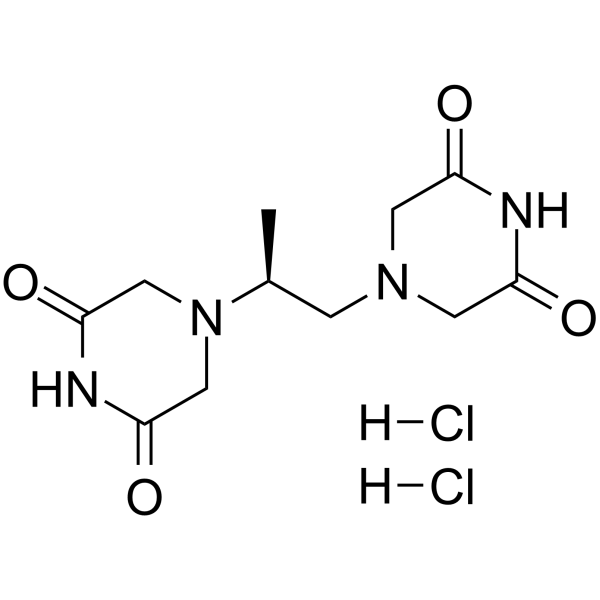
    Dexrazoxane hydrochloride (ICRF-187 hydrochloride) is a heart protectant that can help preserve ovarian function and fertility. Dexrazoxane hydrochloride has antioxidant and anti-inflammatory properties, can cross the blood-brain barrier, improves motor function disorders, and offers neuroprotective effects, making it useful in the study of neurodegenerative diseases .
    Dexrazoxane hydrochloride
  • HY-B0315R

    Cyanocobalamin (Standard)

    Reference Standards Endogenous Metabolite Metabolic Disease Cancer
    Vitamin B12 (Standard) is the analytical standard of Vitamin B12. This product is intended for research and analytical applications. Vitamin B12 is a vitamin. Vitamin B12 plays a key role in the normal functioning of the brain and nervous system, and for the formation of blood .
    Vitamin B12 (Standard)
  • HY-B2167R

    DHA (Standard); Cervonic acid (Standard)

    Reference Standards Endogenous Metabolite Neurological Disease Cancer
    Docosahexaenoic acid (Standard) is the analytical standard of Docosahexaenoic acid. This product is intended for research and analytical applications. Docosahexaenoic Acid (DHA) is an omega-3 fatty acid abundantly present brain and retina. It can be obtained directly from fish oil and maternal milk. In Vitro: Docosahexaenoic acid (DHA) is essential for the growth and functional development of the brain in infants. DHA is also required for maintenance of normal brain function in adults. The inclusion of plentiful DHA in the diet improves learning ability and memory . DHA is an essential requirement in every step of brain development like neural cell proliferation, migration, differentiation, synaptogenesis. The multiple double bonds and unique structure allow DHA to impart special membrane characteristics for effective cell signaling. Many development disorders like dyslexia, autism spectrum disorder, attention deficit hyperactivity disorder, schizophrenia etc. are causally related to decreased level of DHA . DHA is a potent RXR ligand inducing robust RXR activation already at low micro molar concentrations. The EC50 for RXRα activation by DHA is about 5-10 μM fatty acid . In Vivo: Docosahexaenoic acid administration over 10 weeks significantly reduces the number of reference memory errors, without affecting the number of working memory errors, and significantly increases the docosahexaenoic acid content and the docosahexaenoic acid/arachidonic acid ratio in both the hippocampus and the cerebral cortex . DHA treatment exerts neuroprotective actions on an experimental mouse model of PD. There is a decrease tendency in brain lipid oxidation of MPTP mice but it does not significantly .
    Docosahexaenoic acid (Standard)
  • HY-16969
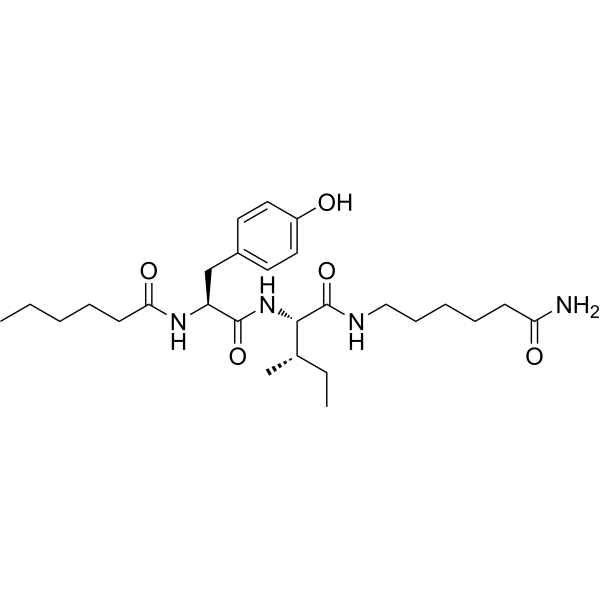
    Dihexa
    5+ Cited Publications

    PNB-0408; N-hexanoic-Try-Ile-(6)-amino hexanoic amide; Hexanoyl-Tyr-Ile-Ahx-NH2

    c-Met/HGFR Neurological Disease
    Dihexa, an oligopeptide drug, is an orally active and blood-brain barrier-permeable angiotensin IV analog. Dihexa binds to hepatocyte growth factor (HGF) with high affinity (Kd=65 pM) and potentiates its activity at its receptor, c-Met. Dihexa exhibits excellent antidementia activity and improves cognitive function in animal models. Dihexa may have therapeutic potential as a treatment Alzheimer’s disease .
    Dihexa
  • HY-15649
    UNC1215
    4 Publications Verification

    Histone Methyltransferase Apoptosis Cancer
    UNC1215, a chemical probe, is a potent and selective inhibitor for the methyllysine (Kme) reading domain function of L3MBTL3 with a Kd value of 120 nM and an IC50 of 40 nM. UNC1215 has the potential to treat malignant brain tumor.
    UNC1215
  • HY-B0315A

    Biotin-Cyanocobalamin B12

    Endogenous Metabolite Metabolic Disease
    Biotin-Vitamin B12 (Biotin-Cyanocobalamin B12) is the biotinylated Vitamin B12 (HY-B0315). Vitamin B12 is a vitamin that can pass through the blood-brain barrier. Vitamin B12 plays a key role in the normal functioning of the brain and nervous system, and for the formation of blood. Vitamin B12 is beneficial for many inflammatory diseases and also provides protection in oxidative-stress-associated pathologies. Biotin-Vitamin B12 can be used in researches on vitamin B12 transport, cellular uptake, targeted delivery, analytical detection, and other areas .
    Biotin-Vitamin B12
  • HY-B0762S

    O-Acetyl-L-carnitine-d3 hydrochloride

    Isotope-Labeled Compounds Caspase Apoptosis Neurological Disease
    Acetyl-L-carnitine-d3 (O-Acetyl-L-carnitine-d3) hydrochloride is the deuterium labeled Acetyl-L-carnitine hydrochloride (HY-B0762). Acetyl-L-carnitine (O-Acetyl-L-carnitine; ALCAR) hydrochloride is an orally active mitochondrial energy metabolism regulator and neuroprotectant that can penetrate the blood-brain barrier. Acetyl-L-carnitine hydrochloride selectively enters cells and the brain through the organic cation transporter OCTN2. Acetyl-L-carnitine hydrochloride can participate in fatty acid β-oxidation, promote acetylcholine synthesis, regulate mitochondrial function and inhibit oxidative stress as an acetyl donor. Acetyl-L-carnitine hydrochloride exerts its activity by enhancing energy metabolism, protecting neurons and improving synaptic plasticity. Acetyl-L-carnitine hydrochloride is mainly used in the study of neurodegenerative diseases and metabolic disorder-related diseases such as neonatal hypoxic-ischemic brain damage, Alzheimer's disease, and depression .
    Acetyl-L-carnitine-d3 hydrochloride
  • HY-160236

    Drug Metabolite Neurological Disease
    3-(3-Sulfooxyphenyl) propanoic acid is a metabolite of Echinacoside (HY-N0020). It promotes neural, psychological and brain health, enhances the proliferation, function and activity of brain cells, and facilitates extinction learning. 3-(3-Sulfooxyphenyl) propanoic acid can be used in research related to anxiety disorders, post-traumatic stress disorder, extinction learning deficits, autism, as well as neurodegenerative diseases including Parkinson's disease and Alzheimer's disease .
    3-(3-Sulfooxyphenyl)propanoic acid
  • HY-11029

    Melanocortin Receptor Neurological Disease Metabolic Disease Cancer
    SNT-207707 is a selective, potent and orally active melanocortin MC-4 receptor antagonist with an IC50 of 8 nM (binding) and 5 nM (function) on the MC-4 receptor. SNT-207707 can cross blood-brain barrier .
    SNT-207707
  • HY-P5883

    tatM2NX

    TRP Channel Cardiovascular Disease Neurological Disease
    TAT-M2NX (tatM2NX) is a selective inhibitor targeting human TRPM2 channels and exerts inhibitory effects on ischemic stroke. TAT-M2NX reduces H2O2-induced calcium influx via TRPM2 channels. After traumatic brain injury in mice, TAT-M2NX preserves hippocampal long-term potentiation, improves memory function, and reduces infarct volume after middle cerebral artery occlusion, but it shows no effect on female mice. TAT-M2NX can be used in studies related to traumatic brain injury and ischemic stroke .
    TAT-M2NX
  • HY-148165

    Nucleoside Antimetabolite/Analog Neurological Disease
    L-Cytidine is an L-configurational form of Cytidine (HY-B0158). L-Cytidine is a pyrimidine nucleoside, a component of RNA. Cytidine can control the glial glutamate cycle, affect brain phospholipid metabolism, catecholamine synthesis and mitochondrial function .
    L-Cytidine
  • HY-B0315S

    Cyanocobalamin-13C7

    Endogenous Metabolite Metabolic Disease
    Vitamin B12- 13C7 is the 13C-labeled Vitamin B12. Vitamin B12 is a vitamin. Vitamin B12 plays a key role in the normal functioning of the brain and nervous system, and for the formation of blood .
    Vitamin B12-13C7
  • HY-11030A

    Melanocortin Receptor Metabolic Disease Endocrinology Cancer
    SNT207858 free base is a selective, blood brain barrier penetrating, potent and orally active melanocortin-4 (MC-4) receptor antagonist. SNT207858 free base has an IC50 of 22 nM (binding) and 11 nM (function) on the MC-4 receptor .
    SNT-207858 free base
  • HY-N2125

    5-HT Receptor iGluR Caspase Interleukin Related TNF Receptor SOD NF-κB Neurological Disease Inflammation/Immunology
    Parishin C is a brain-penetrant major bioactive component found in Gastrodia elata Blume. Parishin C is a 5-HT1A receptor agonist with an EC50 of 34 nM. Parishin C has antipsychotic and neuroprotective effects. Parishin C protects against Aβ-induced long-term potentiation damage and NMDA receptor current impairment. Parishin C reduces oxidative stress, pro-inflammatory cytokine levels, caspase activity, brain water content, and cerebral infarct volume; increases antioxidant enzyme activity and BDNF levels; improves nerve function and histopathological brain damage. Parishin C attenuates phencyclidine-induced immobility time increases, sociability deficits, and visual recognition memory impairment. Parishin C can be used for the research of ischemic stroke, Alzheimer's disease, and schizophrenia-like psychosis .
    Parishin C
  • HY-B0315B
    Vitamin B12 hydrate
    3 Publications Verification

    Cyanocobalamin hydrate

    Endogenous Metabolite Metabolic Disease Inflammation/Immunology Cancer
    Vitamin B12 (Cyanocobalamin) hydrate is a vitamin that can pass through the blood-brain barrier. Vitamin B12 plays a key role in the normal functioning of the brain and nervous system, and for the formation of blood. Vitamin B12 hydrate is beneficial for many inflammatory diseases and also provides protection in oxidative-stress-associated pathologies .
    Vitamin B12 hydrate
  • HY-125039
    N-Acetyl lysyltyrosylcysteine amide
    2 Publications Verification

    Glutathione Peroxidase Cardiovascular Disease Neurological Disease
    N-Acetyl lysyltyrosylcysteine amide is a potent, reversible, specific, and non-toxic tripeptide inhibitor of myeloperoxidase (MPO). N-Acetyl lysyltyrosylcysteine amide effectively inhibits MPO generation of toxic oxidants in vivo. N-Acetyl lysyltyrosylcysteine amide reduces neuronal damage and preserves brain tissue and neurological function in the stroked brain. N-Acetyl lysyltyrosylcysteine amide inhibits MPO-dependent hypochlorous acid (HOCl) generation, protein nitration, and LDL oxidation .
    N-Acetyl lysyltyrosylcysteine amide
  • HY-163565

    Btk Neurological Disease
    BIIB129 is a covalent, selective, small molecule inhibitor of Bruton's tyrosine kinase (BTK) capable of penetrating the blood-brain barrier. BIIB129 inhibits the activity of BTK by covalently binding to Cys481 in BTK, thereby affecting the function of B cells and myeloid cells. BIIB129 can be used in multiple sclerosis (MS) research .
    BIIB129
  • HY-159509

    Claziprotamide; BBP-671

    PANK Neurological Disease Metabolic Disease
    Claziprotamidum (Claziprotamide; BBP-671) is a panthothenate kinase (PANK) activator with oral activity and blood-brain barrier permeability. Claziprotamidum binds to and activates all PANK isoforms, with the highest affinity for PANK3 (KD = 97 pM; IC50 = 1.39 nM). Claziprotamidum increases the intracellular biosynthesis of Coenzyme A (HY-128851) and restores mitochondrial function. Claziprotamidum can be used in the research of pantothenate kinase-associated neurodegeneration and propionic acidemia .
    Claziprotamidum
  • HY-108295

    CXB-722

    GABA Receptor Neurological Disease
    Pivagabine (CXB 722) is a hydrophobic 4-aminobutyric acid derivative with neuromodulatory activity. Pivagabine penetrates the blood-brain barrier in rats. Pivagabine antagonizes the effects of foot shock on both GABAA receptor function and corticotropin-releasing factor (CRF) concentrations in rat brain .
    Pivagabine
  • HY-N2530

    Others Neurological Disease
    Notoginsenoside Fa, a protopanaxadiol (ppd)-type saponin isolated from P. notoginseng, could possibly activate and recover the function of degenerated brain .
    Notoginsenoside Fa
  • HY-E70074

    Monoamine Oxidase Neurological Disease
    Monoamine oxidase (EC 1.4.3.4) is an enzyme composed of different polypeptides. Monoamine oxidation catalyzes the oxidative deamination of various biological amines in brain and peripheral tissues by producing hydrogen peroxide. Monoamine oxidase plays an important role in maintaining the regulation of synaptic transmission, emotional behavior and other brain functions .
    Monoamine oxidase, plasma
  • HY-P1238A

    Neuromedin U (rat) TFA; Rat neuromedin U-23 TFA

    Neuromedin U Receptor (NMUR) Neurological Disease
    Neuromedin U, rat TFA is a 23-amino acid brain-gut peptide. Neuromedin U (NMU), through its cognate receptor NMUR2 in the central nervous system, regulates several important physiological functions, including energy balance, stress response, and nociception.
    Neuromedin U, rat TFA
  • HY-B0762S1

    O-Acetyl-L-carnitine-d3-1 hydrochloride

    Isotope-Labeled Compounds Caspase Apoptosis Neurological Disease
    Acetyl-L-carnitine-d3-1 (O-Acetyl-L-carnitine-d3-1) hydrochloride is the deuterium labeled Acetyl-L-carnitine hydrochloride (HY-B0762). Acetyl-L-carnitine (O-Acetyl-L-carnitine; ALCAR) hydrochloride is an orally active mitochondrial energy metabolism regulator and neuroprotectant that can penetrate the blood-brain barrier. Acetyl-L-carnitine hydrochloride selectively enters cells and the brain through the organic cation transporter OCTN2. Acetyl-L-carnitine hydrochloride can participate in fatty acid β-oxidation, promote acetylcholine synthesis, regulate mitochondrial function and inhibit oxidative stress as an acetyl donor. Acetyl-L-carnitine hydrochloride exerts its activity by enhancing energy metabolism, protecting neurons and improving synaptic plasticity. Acetyl-L-carnitine hydrochloride is mainly used in the study of neurodegenerative diseases and metabolic disorder-related diseases such as neonatal hypoxic-ischemic brain damage, Alzheimer's disease, and depression .
    Acetyl-L-carnitine-d3-1 hydrochloride
  • HY-124609

    AMPK Acetyl-CoA Carboxylase Neurological Disease
    CAD031 is an orally active AMPK/ACC1 signaling pathway activator and a derivative of the Alzheimer's disease (AD) targeted agent J147 (HY-13779) (more active than J147 in human neural stem cell assays). CAD031 can cross the blood-brain barrier, activate AMPK and inhibit ACC1, thereby increasing ac-CoA levels, improving mitochondrial function and reducing free fatty acid synthesis. CAD031 has neuroprotective, neurogenesis-promoting and memory-improving activities and can be used in the study of Alzheimer's disease and aging-related neurodegenerative diseases. CAD031 effectively enhances the memory of mice, improves dendritic structure, and stimulates cell division in the germinal zone of the brain of elderly mice .
    CAD031
  • HY-P10862

    Exosomes Virus Protease Infection Cancer
    AH-D peptide is a brain-penetrant antiviral agent disrupting highly curved lipid membranes. AH-D peptide exhibits broad-spectrum antiviral activity against ZIKV, Dengue virus, Chikungunya virus, yellow fever virus and Japanese encephalitis virus, with
    IC50
    values of 11.9, 12.5, 35.7, 206 and 136 nM, respectively. AH-D peptide reduces the viral load in the brain, suppresses inflammation, protects neurons, and does not damage the blood brain barrier. AH-D peptide restores antitumor immunity by decreasing circulating PD-L1 + exosomes, reducing intratumoral immunosuppressive cells (regulatory T cells, myeloid-derived suppressor cells), and enhancing T cell function. AH-D peptide inhibits membrane-enveloped viruses and cancer cell metastasis in vivo. AH-D peptide exhibits no immunogenicity and has negligible effects on normal tissues. AH-D peptide can be used for research in Zika virus and other mosquito-borne viruses, cancer immunotherapy and metastasis .
    AH-D peptide
  • HY-P11005

    Dynamin ATP Synthase Neurological Disease
    P259 is a Drp1-Mff inhibitor. P259 distinguishes physiological from pathological fission by specifically inhibiting Drp1-Mff interaction. P259 elongates cell mitochondria and disrupts mitochondrial function and motility. P259 reduces ATP levels and alters mitochondrial structure in the brain, resulting in behavioral deficits in wild-type mice and a short lifespan in Huntington's disease (HD) mice model .
    P259
  • HY-120965

    Endogenous Metabolite Metabolic Disease
    Several different arachidonoyl amino acids, including N-arachidonoyl dopamine (NADA) and N-arachidonoyl serine (ARA-S), have been isolated and characterized from bovine brain.1 During mass spectral lipidomic analysis of rat brain, a series of fatty acyl amides of a third amino acid, taurine, is discovered. N-Palmitoyl taurine is a prominent amino-acyl endocannabinoid isolated from rat brain during lipidomics profiling. Its function is currently under investigation.
    N-Palmitoyl Taurine
  • HY-W987949

    Others Neurological Disease
    Z-4105 is an orally active nootropic agent. Z-4105 reverses the amnesic effects of electroconvulsive shock (ECS) and methylazoxymethanol acetate (MAM), and improves learning and memory functions. Z-4105 enhances the activity of the brain cholinergic system without affecting other neurotransmitter systems. Z-4105 significantly alleviates neuropathic pain in rats. Z-4105 can be used in the research of neuropathic pain and brain dysfunction .
    Z-4105
  • HY-131688

    PARP Caspase Inflammation/Immunology
    2-Chlorohexadecanoic acid, an inflammatory lipid mediator, interferes with protein palmitoylation,induces ER-stress markers, reduced the ER ATP content, and activates transcription and secretion of IL-6 as well as IL-8.2-Chlorohexadecanoic acid disrupts the mitochondrial membrane potential and induces procaspase-3 and PARP cleavage.2-Chlorohexadecanoic acid can across blood-brain barrier (BBB) and compromises ER- and mitochondrial functions in the human brain endothelial cell line hCMEC/D3 .
    2-Chlorohexadecanoic acid
  • HY-106809

    BMS-181168

    Drug Derivative Neurological Disease
    BMY-21502 (BMS-181168) is a pyrrolidinone derivative with memory- and cognition-enhancing activities. BMS-181168 attenuates hypoxia-induced deterioration in brain function, as delta/theta decreases, alpha activity increases and the centroid of the combined delta/theta waves is accelerated .
    BMY-21502
  • HY-149584

    Estrogen Receptor/ERR Cancer
    CIDD-0149897 is a potent, selective and brain-penetrant ERβ agonist. CIDD-0149897 exert antitumor functions in glioblastoma .
    CIDD-0149897
  • HY-120596

    PPAR Neurological Disease
    PPARδ/γ agonist 1 sodium is a chemically unique and brain penetrant dual PPAR delta/gamma agonist. PPARδ/γ agonist 1 sodium can be used for the research of Alzheimer’s disease .
    PPARδ/γ agonist 1 sodium
  • HY-P1238

    Neuromedin U (rat); Rat neuromedin U-23

    Neuromedin U Receptor (NMUR) Neurological Disease
    Neuromedin U, rat is a 23-amino acid brain-gut peptide. Neuromedin U (NMU), through its cognate receptor NMUR2 in the central nervous system, regulates several important physiological functions, including energy balance, stress response, and nociception.
    Neuromedin U, rat
  • HY-14397S

    Indometacin-d4

    Isotope-Labeled Compounds COX Autophagy Inflammation/Immunology Cancer
    Indomethacin-d4 (Indometacin-d4) is a deuterium labeled Indomethacin. Indomethacin is a potent, blood-brain permeable and nonselective inhibitor of COX1 and COX2, with IC50s of 18 nM and 26 nM for human COX-1 and COX-2, respectively, in CHO cells . Indomethacin disrupts autophagic flux by disturbing the normal functioning of lysosomes .
    Indomethacin-d4
  • HY-110230

    D 9998-d4 hydrochloride

    Isotope-Labeled Compounds Potassium Channel iGluR GABA Receptor Neurological Disease Inflammation/Immunology
    Flupirtine-d4 (D 9998-d4) hydrochloride is the deuterium labeled Flupirtine hydrochloride (HY-W709349). Flupirtine hydrochloride is an orally active, blood-brain barrier-crossing non-opioid analgesic and neuroprotective agent. Flupirtine hydrochloride is a neuronal potassium channel opener (Kv7 activator), a NMDA receptor antagonist and a GABA receptor activator. Flupirtine hydrochloride stabilizes blood-brain-barrier integrity, reduces oxidative stress and brain leukocyte infiltration, enhances angioneurogenesis, suppresses calcium influx, stabilizes neuronal resting membrane potential, and counteracts focal cerebral ischemia. Flupirtine hydrochloride exhibits analgesic, muscle relaxant properties, protects neurons from excitotoxic, ischemic, or cytokine-mediated death. Flupirtine hydrochloride functions as a non-opioid analgesic without antipyretic or antiphlogistic properties, shows no relevant affinity to opiate receptor. Flupirtine hydrochloride can be used for the research of focal cerebral ischemia, pain, Alzheimer’s disease, or multiple sclerosis .
    Flupirtine-d4 hydrochloride
  • HY-117251

    Amino acid Transporter Neurological Disease
    LP-403812 is a high affinity proline transporter (PROT) inhibitor that produces dose-dependent inhibition of hPROT (IC50=0.11 μM; Ki=0.12 μM) and also inhibits the activity of mouse brain synaptosomal mPROT with the same potency (IC50=0.23 μM). LP-403812 can be used to study the function of PROT in the brain .
    LP-403812

Inquiry Online

Your information is safe with us. * Required Fields.

Salutation


Country or Region *

Applicant Name *


Organization Name *

Department *


Email Address *


Product Name *

Cat. No.


Requested quantity *

Phone Number *


Remarks

Inquiry Online

Inquiry Information

Product Name:
Cat. No.:
Quantity:
MCE Japan Authorized Agent:

