194 Results for "

c-Kit

" in MedChemExpress (MCE) Product Catalog:
Products (194)

194 Results for "c-Kit" in MCE Product Catalog:

  • Targets Recommended:
307
307 Publications Verification
Art. -Nr.: HY-10201
CAS. Nr.: 284461-73-0
Reinheit:  99.92%
Synonyms: Bay 43-9006
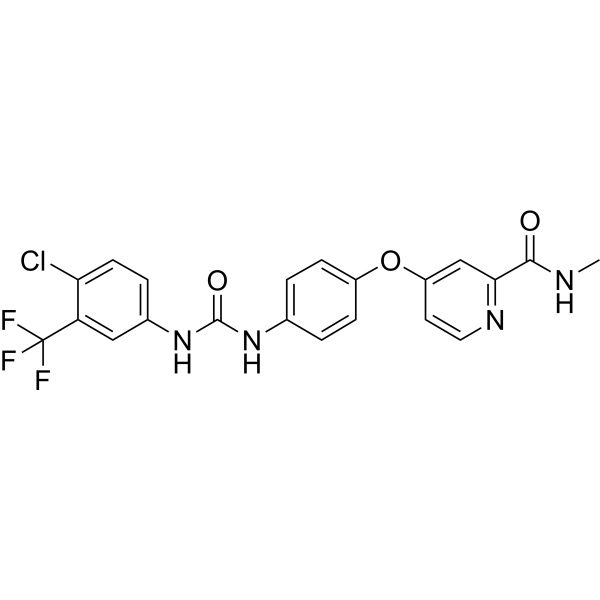
Sorafenib (Bay 43-9006) is a potent oral active multikinase inhibitor. Sorafenib blocks autophosphorylation and activity of receptor tyrosine kinases (VEGFR-2, VEGFR-3) and RAF family kinases, thereby suppressing the RAF/MEK/ERK and PI3K/Akt pathways, inhibiting STAT3 phosphorylation, and selectively inhibiting the MAPK pathway in cancer cells. Sorafenib induces cell cycle arrest, autophagy, apoptosis, and PARP cleavage, reduces Bcl-2, Bcl-XL, cyclin D1 levels, and activates Bak and Bax. Sorafenib inhibits tumor growth and metastasis in mouse and rat models. Sorafenib can be used for cancer research, such as colon, breast, non-small-cell lung cancer (NSCLC), ovarian, pancreatic, melanoma, colorectal and hepatocellular carcinoma .
loading...
    loading...
307
307 Publications Verification
Art. -Nr.: HY-10201A
CAS. Nr.: 475207-59-1
Reinheit:  99.75%
Synonyms: Bay 43-9006 tosylate
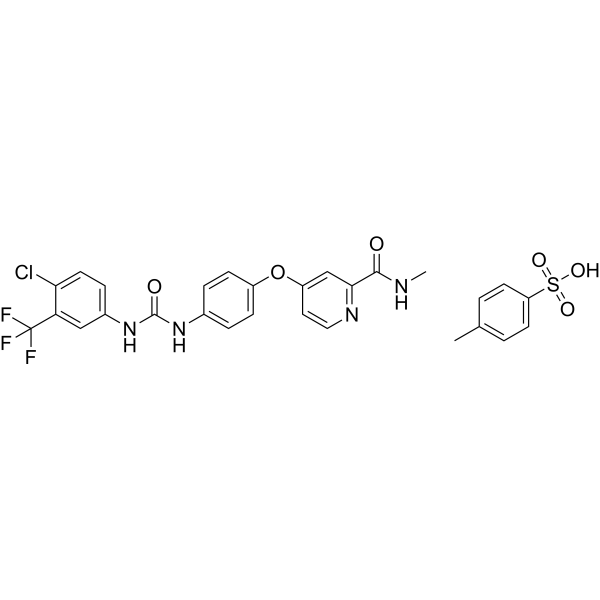
Sorafenib (Bay 43-9006) tosylate is a potent oral active multikinase inhibitor. Sorafenib blocks autophosphorylation and activity of receptor tyrosine kinases (VEGFR-2, VEGFR-3) and RAF family kinases, thereby suppressing the RAF/MEK/ERK and PI3K/Akt pathways, inhibiting STAT3 phosphorylation, and selectively inhibiting the MAPK pathway in cancer cells. Sorafenib tosylate induces cell cycle arrest, autophagy, apoptosis, and PARP cleavage, reduces Bcl-2, Bcl-XL, cyclin D1 levels, and activates Bak and Bax. Sorafenib tosylate inhibits tumor growth and metastasis in mouse and rat models. Sorafenib tosylate can be used for cancer research, such as colon, breast, non-small-cell lung cancer (NSCLC), ovarian, pancreatic, melanoma, colorectal and hepatocellular carcinoma .
loading...
    loading...
161
161 Cited Publications
Art. -Nr.: HY-16749
CAS. Nr.: 1029044-16-3
Synonyms: PLX-3397
Target:  

c-Fms c-Kit Apoptosis

Forschungsgebiete:  

Cancer

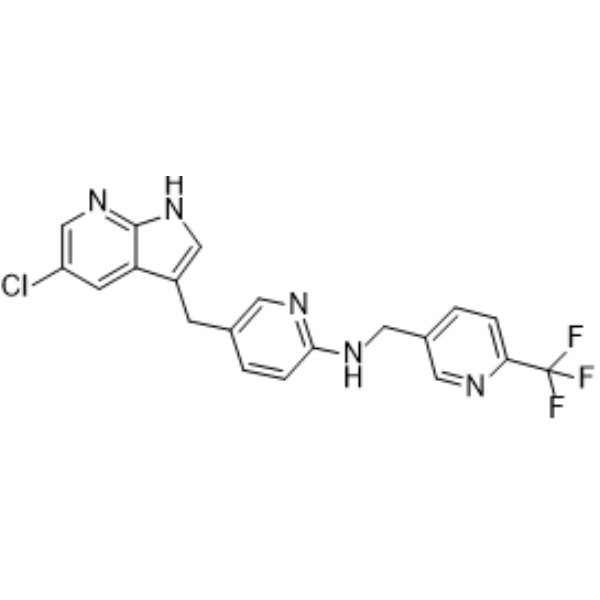
Pexidartinib (PLX-3397) is a potent, orally active, selective, and ATP-competitive colony stimulating factor 1 receptor (CSF1R or M-CSFR) and c-Kit inhibitor, with IC50s of 20 and 10 nM, respectively. Pexidartinib (PLX-3397) exhibits 10- to 100-fold selectivity for c-Kit and CSF1R over other related kinases. Pexidartinib (PLX-3397) induces cell apoptosis and has anti-tumor activity. Pexidartinib has limited permeability to the blood-brain barrier, primarily through ABCB1 .
loading...
    loading...
161
161 Cited Publications
Art. -Nr.: HY-16749A
CAS. Nr.: 2040295-03-0
Synonyms: PLX-3397 hydrochloride
Target:  

c-Fms c-Kit Apoptosis

Forschungsgebiete:  

Cancer

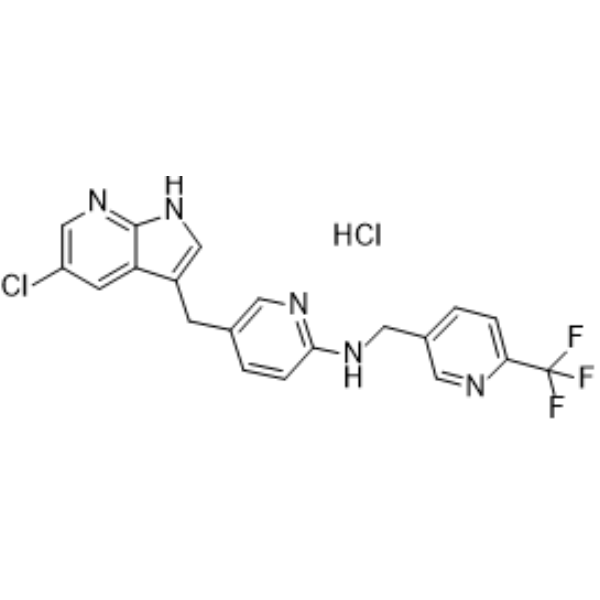
Pexidartinib hydrochloride (PLX-3397 hydrochloride) is a potent, orally active, selective, and ATP-competitive colony stimulating factor 1 receptor (CSF1R or M-CSFR) and c-Kit inhibitor, with IC50s of 20 and 10 nM, respectively. Pexidartinib hydrochloride exhibits 10- to 100-fold selectivity for c-Kit and CSF1R over other related kinases. Pexidartinib hydrochloride induces cell apoptosis and has anti-cancer activity .
loading...
    loading...
127
127 Cited Publications
Art. -Nr.: HY-50946
CAS. Nr.: 220127-57-1
Synonyms: STI571 Mesylate; CGP-57148B Mesylate
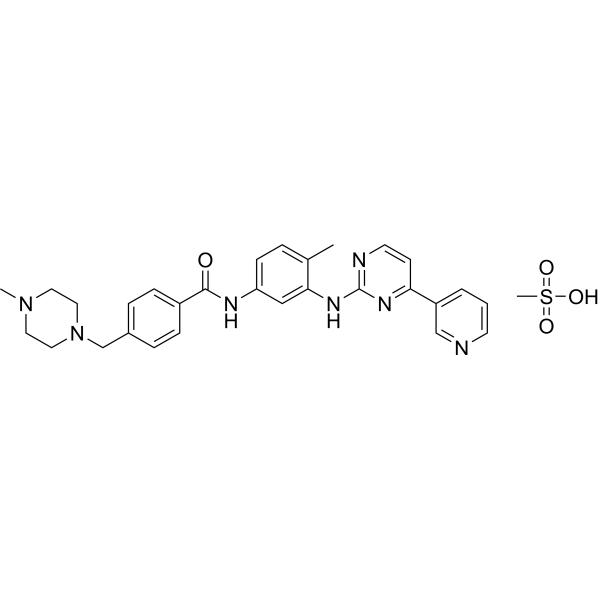
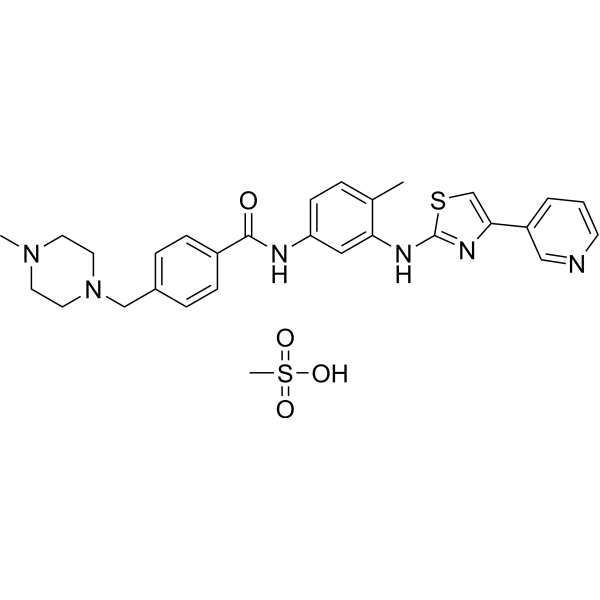
Imatinib Mesylate (STI571 Mesylate) is an orally active tyrosine kinases inhibitor that inhibits c-Kit, Bcr-Abl, and PDGFR (IC50=100 nM) tyrosine kinases.
loading...
    loading...
127
127 Cited Publications
Art. -Nr.: HY-15463
CAS. Nr.: 152459-95-5
Reinheit:  99.95%
Synonyms: STI571; CGP-57148B
Forschungsgebiete:  

Cancer

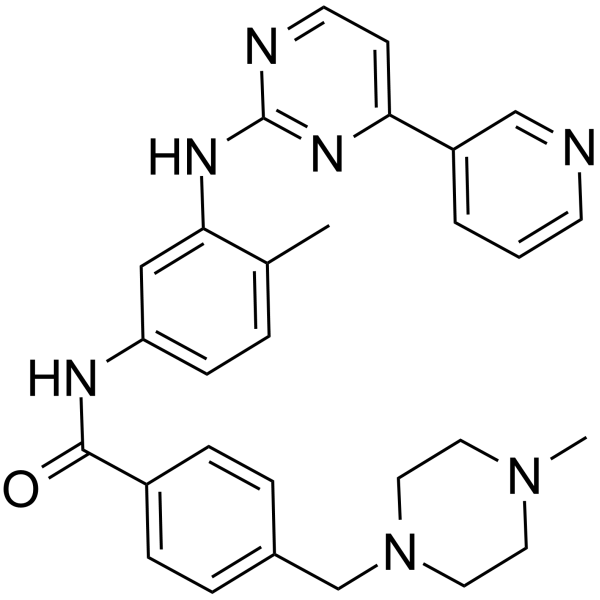
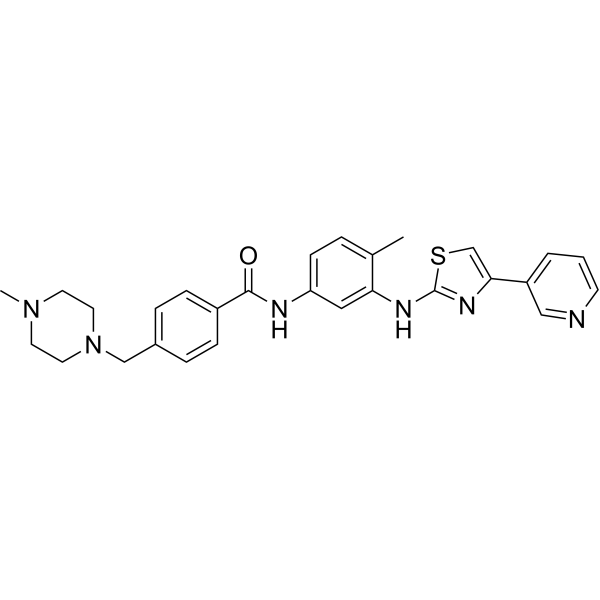
Imatinib (STI571) is an orally bioavailable tyrosine kinases inhibitor that selectively inhibits BCR/ABL, v-Abl, PDGFR and c-kit kinase activity. Imatinib (STI571) works by binding close to the ATP binding site, locking it in a closed or self-inhibited conformation, therefore inhibiting the enzyme activity of the protein semicompetitively . Imatinib also is an inhibitor of SARS-CoV and MERS-CoV .
loading...
    loading...
48
48 Cited Publications
Art. -Nr.: HY-13001
CAS. Nr.: 950769-58-1
Reinheit:  99.08%
Synonyms: AC220
Target:  

FLT3 Apoptosis PDGFR c-Kit

Forschungsgebiete:  

Cancer

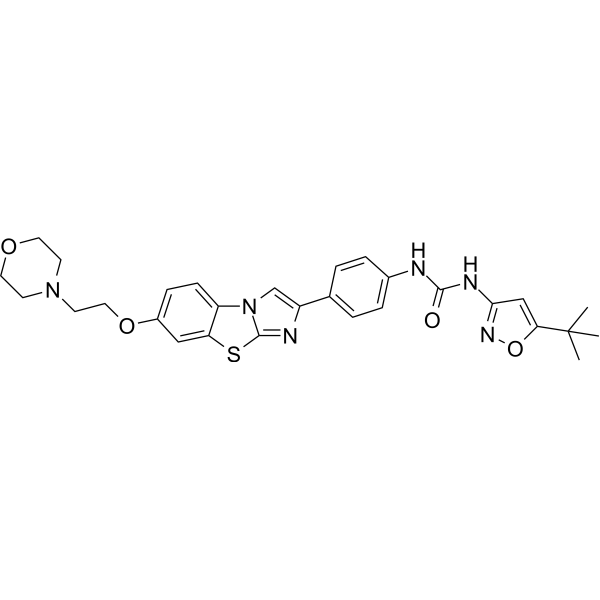
Quizartinib (AC220) is an orally active, potent and selective FLT3 inhibitor. Quizartinib inhibits kinase activity of mutant-FLT3, -PDGFRA and -KIT isoforms and inhibits autophosphorylation. Quizartinib inhibits cellular proliferation, induces apoptosis in cancer cells. Quizartinib can be used for the research of cancer .
loading...
    loading...
41
41 Cited Publications
Art. -Nr.: HY-10514
CAS. Nr.: 702675-74-9
Reinheit:  99.84%
Target:  

PDK-1 IKK Autophagy

Forschungsgebiete:  

Cancer

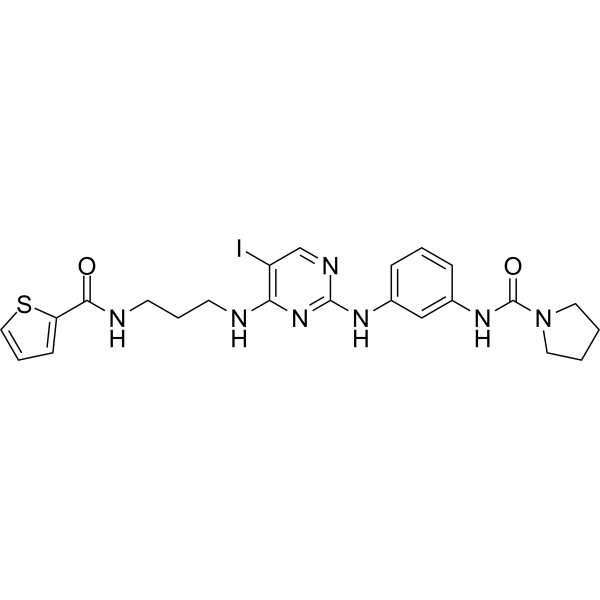
BX795 is a potent and selective inhibitor of PDK1, with an IC50 of 6 nM. BX795 is also a potent and relatively specific inhibitor of TBK1 and IKKε, with an IC50 of 6 and 41 nM, respectively. BX795 blocks phosphorylation of S6K1, Akt, PKCδ, and GSK3β, and has lower selectivity over PKA, PKC, c-Kit, GSK3β etc. BX795 modulates autophagy .
loading...
    loading...
39
39 Cited Publications
Art. -Nr.: HY-10230
CAS. Nr.: 120685-11-2
Reinheit:  99.91%
Synonyms: PKC412; CGP 41251
Forschungsgebiete:  

Cancer

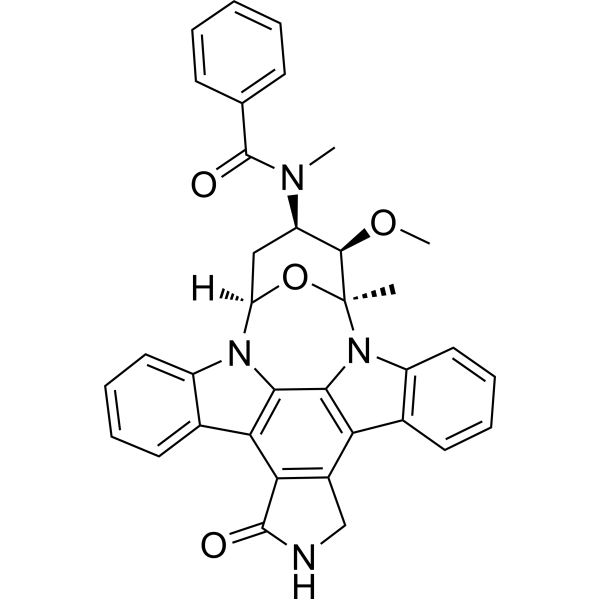
Midostaurin (PKC412; CGP 41251) is an orally active, reversible multi-targeted protein kinase inhibitor. Midostaurin inhibits PKCα/β/γ, Syk, Flk-1, Akt, PKA, c-Kit, c-Fgr, c-Src, FLT3, PDFRβ and VEGFR1/2 with IC50s ranging from 22-500 nM . Midostaurin also upregulates endothelial nitric oxide synthase (eNOS) gene expression. Midostaurin shows powerful anticancer effects .
loading...
    loading...
25
25 Cited Publications
Art. -Nr.: HY-10208
CAS. Nr.: 444731-52-6
Reinheit:  99.91%
Synonyms: GW786034
Forschungsgebiete:  

Cancer

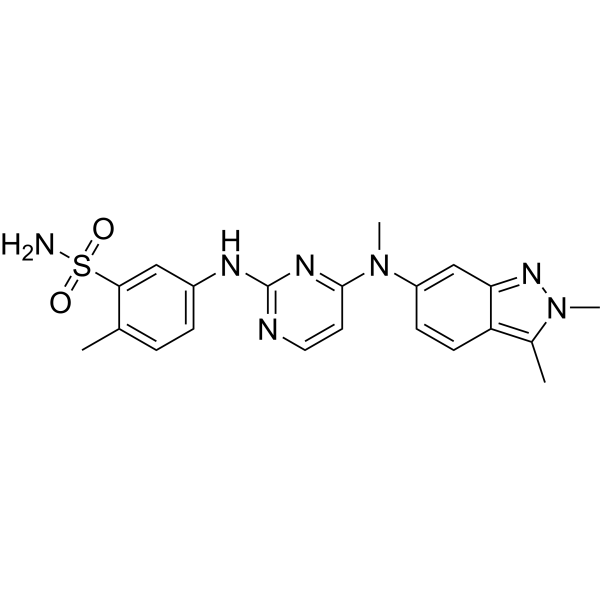
Pazopanib (GW786034) is a novel multi-target inhibitor of VEGFR1, VEGFR2, VEGFR3, PDGFRβ, c-Kit, FGFR1, and c-Fms with IC50s of 10, 30, 47, 84, 74, 140 and 146 nM, respectively.
loading...
    loading...
25
25 Cited Publications
Art. -Nr.: HY-12009
CAS. Nr.: 635702-64-6
Reinheit:  99.99%
Synonyms: GW786034 Hydrochloride
Forschungsgebiete:  

Cancer

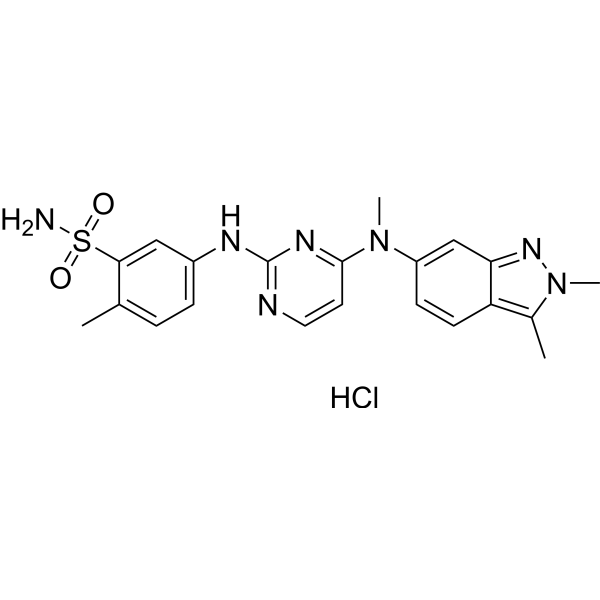
Pazopanib Hydrochloride (GW786034 Hydrochloride) is a novel multi-target inhibitor of VEGFR1, VEGFR2, VEGFR3, PDGFRβ, c-Kit, FGFR1, and c-Fms with an IC50 of 10, 30, 47, 84, 74, 140 and 146 nM, respectively.
loading...
    loading...
14
14 Cited Publications
Art. -Nr.: HY-13049
CAS. Nr.: 857036-77-2
Reinheit:  99.95%
Synonyms: AZD-2171 maleate
Target:  

VEGFR Autophagy PDGFR

Forschungsgebiete:  

Cancer

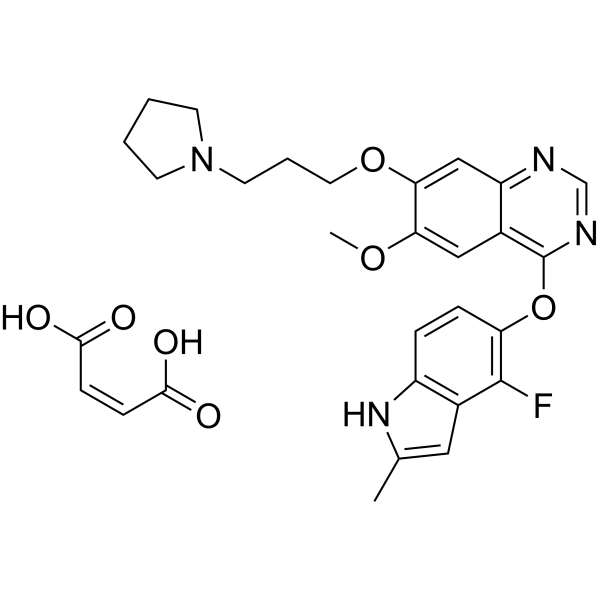
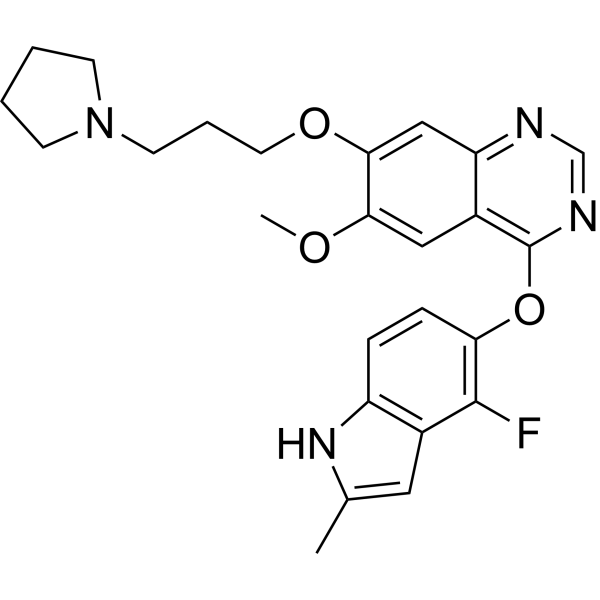
Cediranib maleate (AZD-2171 maleate) is a highly potent, orally available VEGFR inhibitor with IC50s of <1, <3, 5, 5, 36, 2 nM for Flt1, KDR, Flt4, PDGFRα, PDGFRβ, c-Kit, respectively.
loading...
    loading...
14
14 Cited Publications
Art. -Nr.: HY-10205
CAS. Nr.: 288383-20-0
Reinheit:  99.87%
Synonyms: AZD2171
Cediranib (AZD2171) is a highly potent, orally available and blood-brain barrier permeability VEGFR tyrosine kinase inhibitor with IC50s of <1, <3, 5, 5, 36, 2 nM for Flt1, KDR, Flt4, PDGFRα, PDGFRβ, c-Kit, respectively.
loading...
    loading...
13
13 Cited Publications
Art. -Nr.: HY-13024
CAS. Nr.: 1020172-07-9
Reinheit:  99.91%
Synonyms: DCC-2036
Target:  

Bcr-Abl FLT3 Src Apoptosis

Forschungsgebiete:  

Cancer

Rebastinib (DCC-2036) is an orally active, non-ATP-competitive Bcr-Abl inhibitor for Abl1 WT and Abl1 T315I with IC50s of 0.8 nM and 4 nM, respectively. Rebastinib also inhibits SRC, KDR, FLT3, and Tie-2, and has low activity to seen towards c-Kit.
loading...
    loading...
11
11 Cited Publications
Art. -Nr.: HY-10207
CAS. Nr.: 692737-80-7
Reinheit:  99.75%
Synonyms: CHIR-258 lactate; TKI-258 lactate
Target:  

FLT3 c-Kit FGFR VEGFR PDGFR

Forschungsgebiete:  

Cancer

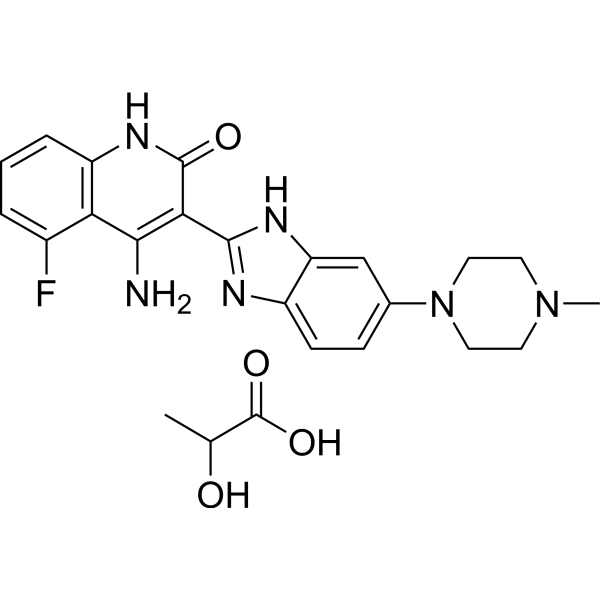
Dovitinib lactate (TKI258 lactate) is a multi-targeted tyrosine kinase inhibitor with IC50s of 1, 2, 8/9, 10/13/8, 27/210 nM for FLT3, c-Kit, FGFR1/3, VEGFR1/2/3 and PDGFRα/β, respectively .
loading...
    loading...
11
11 Cited Publications
Art. -Nr.: HY-50905
CAS. Nr.: 405169-16-6
Synonyms: CHIR-258; TKI258
Target:  

FLT3 c-Kit FGFR VEGFR PDGFR c-Fms

Forschungsgebiete:  

Cancer

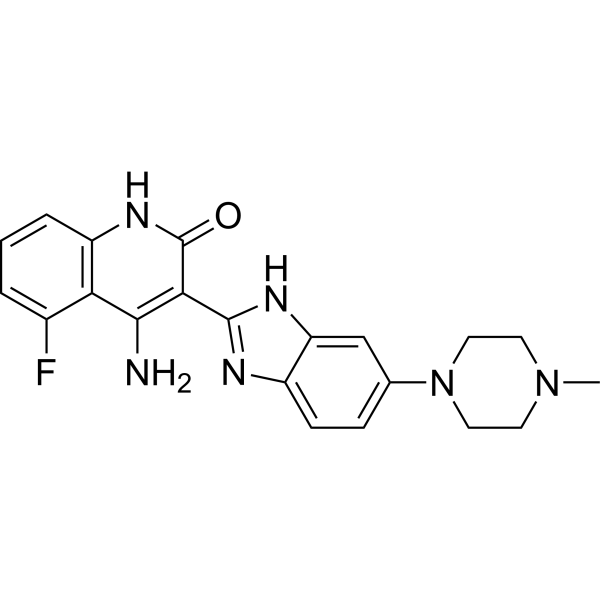
Dovitinib (CHIR-258) is an orally active, potent multi-targeted tyrosine kinase (RTK) inhibitor with IC50s of 1, 2, 36, 8/9, 10/13/8, 27/210 nM for FLT3, c-Kit, CSF-1R, FGFR1/FGFR3, VEGFR1/VEGFR2/VEGFR3 and PDGFRα/PDGFRβ, respectively. Dovitinib has potent antitumor activity .
loading...
    loading...
6
6 Cited Publications
Art. -Nr.: HY-10209
CAS. Nr.: 790299-79-5
Reinheit:  99.95%
Synonyms: AB1010
Forschungsgebiete:  

Cancer

Masitinib (AB1010) is a potent, orally bioavailable, and selective inhibitor of c-Kit (IC50=200 nM for human recombinant c-Kit). It also inhibits PDGFRα/β (IC50s=540/800 nM), Lyn (IC50= 510 nM for LynB), Lck, and, to a lesser extent, FGFR3 and FAK. Masitinib (AB1010) has anti-proliferative, pro-apoptotic activity and low toxicity .
loading...
    loading...
6
6 Cited Publications
Art. -Nr.: HY-10209A
CAS. Nr.: 1048007-93-7
Reinheit:  99.51%
Synonyms: AB-1010 mesylate
Target:  

c-Kit PDGFR Src FGFR Apoptosis

Forschungsgebiete:  

Cancer

Masitinib mesylate (AB-1010 mesylate) is a potent, orally bioavailable, and selective inhibitor of c-Kit (IC50=200 nM for human recombinant c-Kit). It also inhibits PDGFRα/β (IC50s=540/800 nM), Lyn (IC50= 510 nM for LynB), Lck, and, to a lesser extent, FGFR3 and FAK. Masitinib mesylate (AB-1010 mesylate) has anti-proliferative, pro-apoptotic activity and low toxicity .
loading...
    loading...
6
6 Cited Publications
Art. -Nr.: HY-101443
CAS. Nr.: 945526-43-2
Reinheit:  98.92%
Target:  

c-Kit

Forschungsgebiete:  

Inflammation/Immunology

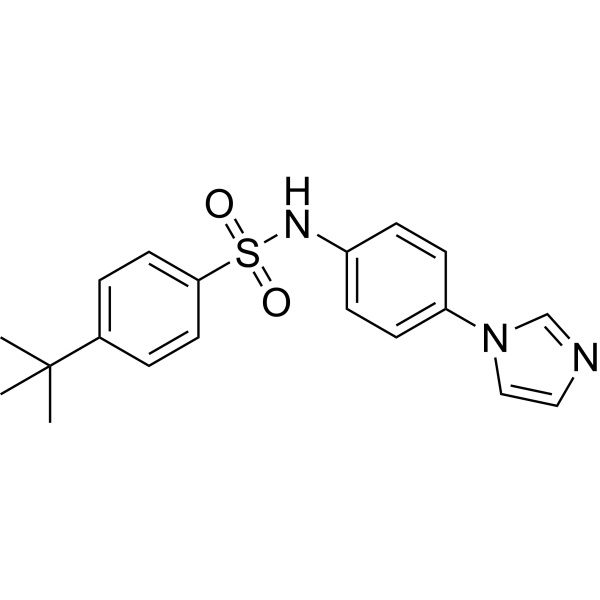
ISCK03 is a SCF/c-Kit and CD117-specific inhibitor. ISCK03 significantly inhibits c-Kit phosphorylation at 10 μM .
loading...
    loading...
6
6 Cited Publications
Art. -Nr.: HY-10206
CAS. Nr.: 850879-09-3
Reinheit:  99.40%
Synonyms: MP470; HPK 56
Forschungsgebiete:  

Cancer

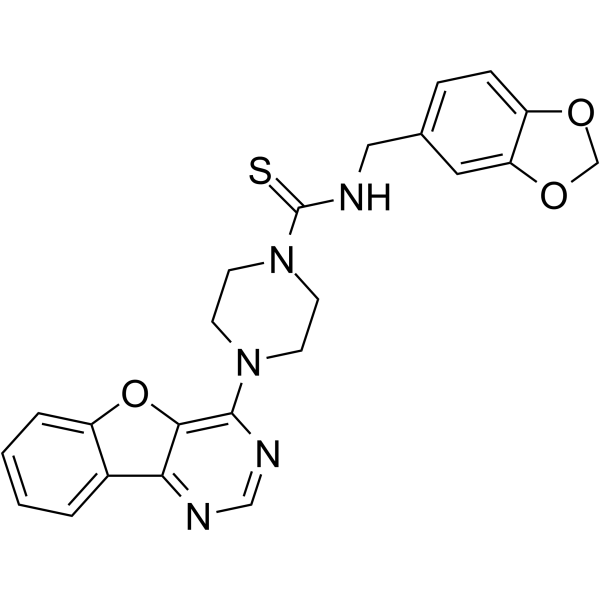
Amuvatinib (MP470) is an orally bioavailable multi-targeted tyrosine kinase inhibitor with potent activity against mutant c-Kit, PDGFRα, Flt3, c-Met and c-Ret. Amuvatinib (MP470) is also a DNA repair suppressor through suppression of DNA repair protein RAD51, thereby disrupting DNA damage repair . Antineoplastic activity .
loading...
    loading...

