1. Search Result
Search Result
Results for "

cAMP (GMP)

" in MedChemExpress (MCE) Product Catalog:

7

Inhibitors & Agonists

4

Fluorescent Dyes

4

Biochemical Assay Reagents

5

GMP Molecules

Targets Recommended:
Cat. No. Product Name Target Research Areas Chemical Structure
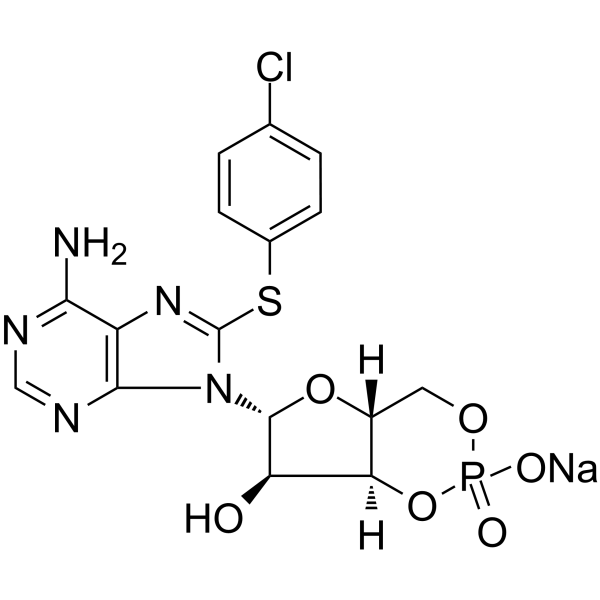
  • HY-111673

    8-CPT-cAMP sodium; 8-(p-Chlorophenylthio)-cAMP sodium

    PKA Phosphodiesterase (PDE) Inflammation/Immunology
    8-CPT-Cyclic AMP (8-CPT-cAMP) sodium is a selective activator of cyclic AMP-dependent protein kinase (PKA). 8-CPT-Cyclic AMP sodium is also a potent inhibitor of the cyclic GMP-specific phosphodiesterase (PDE VA) with an IC50 of 0.9 μM. 8-CPT-Cyclic AMP sodium also inhibits PDE III and PDE IV with IC50Epac and is a potent Epac activator .
    8-CPT-Cyclic AMP sodium
  • HY-B0764G

    Dibutyryl cAMP sodium; DBcAMP sodium

    PKA Reactive Oxygen Species (ROS) Apoptosis Neurological Disease Inflammation/Immunology Cancer
    Bucladesine (Dibutyryl cAMP; DBcAMP) sodium (GMP) is a Bucladesine sodium (HY-B0764) produced by using GMP guidelines. Bucladesine (Dibutyryl cAMP; DBcAMP) is a membrane-permeable 3′, 5′-cyclic adenosine monophosphate (cAMP) analog. Bucladesine selectively activates cAMP dependent protein kinase (PKA) by increasing the intracellular level of cAMP. Bucladesine significantly attenuates MDMA-induced increases in hippocampal mitochondrial ROS formation, mitochondrial outer membrane damage, cytochrome c release, and hippocampal ADP/ATP ratio, thereby improving spatial learning and memory impairments. Bucladesine exhibit anti-nociceptive and anti-inflammation effect. Bucladesine can inhibit cancer cells proliferation, induce apoptosis. Bucladesine can be used for the researches of neurological disease, cancer, inflammation .
    Bucladesine sodium
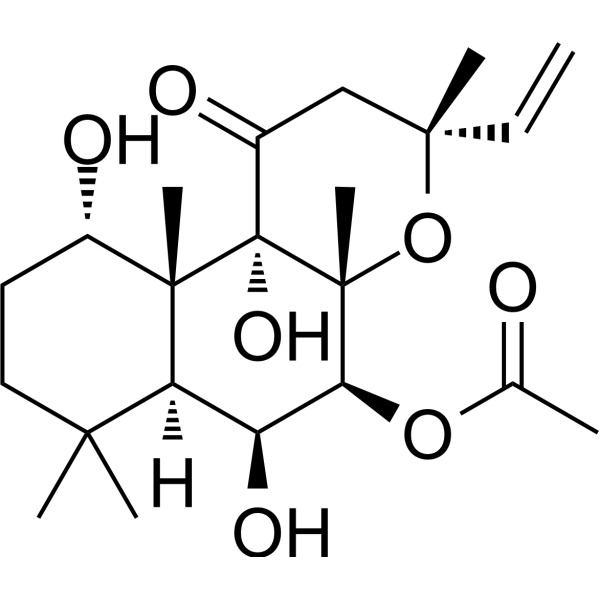
  • HY-15371G

    Coleonol; Colforsin; HL 362

    Adenylate Cyclase FXR Autophagy PKC Metabolic Disease Inflammation/Immunology Endocrinology Cancer
    Forskolin (Coleonol) (GMP) is a potent adenylate cyclase activator with an IC50 of 41 nM and an EC50 of 0.5 μM for type I adenylyl cyclase . Forskolin (GMP) is also an inducer of intracellular cAMP formation . Forskolin (GMP) induces differentiation of various cell types and activates pregnane X receptor (PXR) and FXR . Forskolin (GMP) exerts a inotropic effect on the heart, and has platelet antiaggregatory and antihypertensive actions. Forskolin (GMP) also induces autophagy .
    Forskolin
  • HY-131764

    2′-O-Monobutyryl-cGMP sodium

    Phosphodiesterase (PDE) Others
    2'-O-MB-cGMP (2′-O-Monobutyryl-cGMP) sodium is a cyclic GMP-specific phosphodiesterase inhibitor with an I50 value of 35 µM. 2'-O-MB-cGMP (2′-O-Monobutyryl-cGMP) sodium inhibits Ca 2+ dependent phosphodiesterase hydrolysis using cAMP or cGMP as substrate .
    2'-O-MB-cGMP sodium
  • HY-B1511G

    Cyclic adenosine monophosphate; Adenosine cyclic 3', 5'-monophosphate; cAMP

    Endogenous Metabolite Neurological Disease Metabolic Disease Cancer
    Cyclic AMP (GMP) (Cyclic adenosine monophosphate (GMP)) is Cyclic AMP (HY-B1511) produced by using GMP guidelines. GMP small molecules works appropriately as an auxiliary reagent for cell therapy manufacture. Cyclic AMP (Cyclic adenosine monophosphate), adenosine triphosphate derivative, is an intracellular signaling molecule responsible for directing cellular responses to extracellular signals. Cyclic AMP is an important second messenger in many biological processes .
    Cyclic AMP
  • HY-B1505G

    Theophyllineacetic acid; Theophylline-7-acetic acid

    Adenosine Receptor Protein Arginine Deiminase Phosphodiesterase (PDE) Cardiovascular Disease Neurological Disease Inflammation/Immunology
    Acefylline (Theophyllineacetic acid) (GMP), a xanthine derivative, is an Adenosine Receptor antagonist. Acefylline (GMP) is a peptidylarginine deiminase (PAD) activator. Acefylline (GMP) is also a bronchodilator and cardiac stimulant that inhibits rat lung cAMP phosphodiesterase isoenzymes. Acefylline (GMP) can be used in asthma research .
    Acefylline
  • HY-16900G

    Phosphodiesterase (PDE) Epigenetic Reader Domain Amyloid-β Neurological Disease Inflammation/Immunology Cancer
    Rolipram GMP is Rolipram (HY-16900) produced by using GMP guidelines. GMP small molecules works appropriately as an auxiliary reagent for cell therapy manufacture. Rolipram is a PDE4 inhibitor, with blood-brain barrier permeability, that reverses β-amyloid-induced learning and memory impairment in rats. Rolipram elevates intracellular cAMP and clevels and regulates the cAMP/CREB signaling pathway, thereby alleviating neuroinflammation and apoptotic responses. Rolipram promotes neuronal differentiation of human bone marrow mesenchymal stem cells and inhibits Methamphetamine- and morphine-induced hyperlocomotion in mice. Rolipram also reduces the viability of glioblastoma stem-like cells and enhances Bevacizumab (HY-P9906)-induced cell death. Rolipram inhibits the expression of proinflammatory cytokines and enhances central noradrenergic transmission. Rolipram is mainly used in studies related to various central nervous system diseases including Alzheimer's disease, major depressive disorder, glioblastoma multiforme, and multiple sclerosis .
    Rolipram

Inquiry Online

Your information is safe with us. * Required Fields.

Salutation


Country or Region *

Applicant Name *


Organization Name *

Department *


Email Address *


Product Name *

Cat. No.


Requested quantity *

Phone Number *


Remarks

Inquiry Online

Inquiry Information

Product Name:
Cat. No.:
Quantity:
MCE Japan Authorized Agent:

