
1. Search Result
Search Result
Results for "

carboxylic acids

" in MedChemExpress (MCE) Product Catalog:

195

Inhibitors & Agonists

2

Screening Libraries

32

Fluorescent Dyes

47

Biochemical Assay Reagents

3

Peptides

14

Natural
Products

4

Click Chemistry

3

Oligonucleotides

2

GMP Molecules

Cat. No. Product Name Target Research Areas Chemical Structure
  • HY-128851
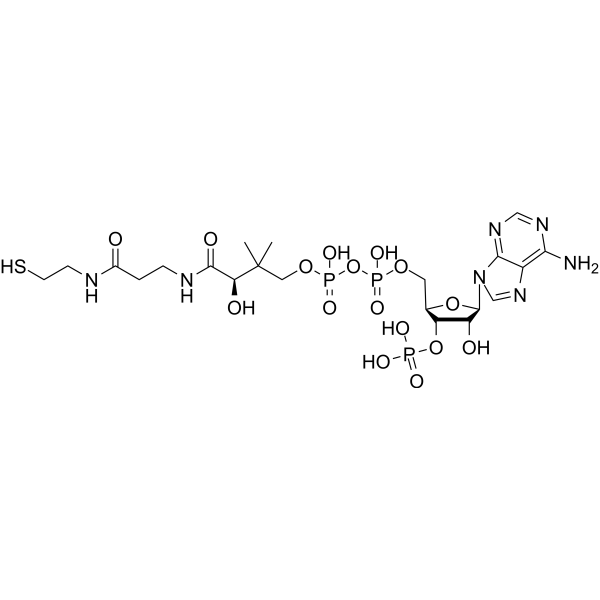
    Coenzyme A
    2 Publications Verification

    Endogenous Metabolite Fatty Acid Synthase (FASN) Metabolic Disease Cancer
    Coenzyme A (CoASH) is a ubiquitous and essential cofactor, which is an acyl group carrier and carbonyl-activating group for the citric acid cycle and fatty acid metabolism. Coenzyme A plays a central role in the oxidation of pyruvate in the citric acid cycle and the metabolism of carboxylic acids, including short- and long-chain fatty acids .
    Coenzyme A
  • HY-Z0275

    Biochemical Assay Reagents Bacterial Infection
    HOAT is a peptide bond-forming reagent. HOAT is utilized to affect formation of peptide bonds by coupling carboxylic acids with amines. HOAt is not mutagenic in the bacterial reverse mutation test .
    HOAT
  • HY-W127715
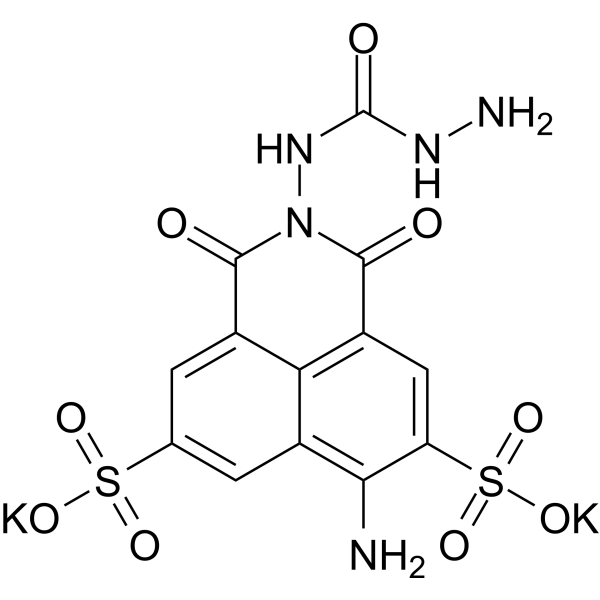
    Lucifer Yellow CH dipotassium salt
    5 Publications Verification

    Fluorescent Dye Others
    Lucifer Yellow CH dipotassium is a high-intensity fluorescent probe containing free hydrazyl groups. Lucifer Yellow CH can react with fatty aldehydes at room temperature. Lucifer Yellow CH serves as a biological tracer to monitor neuronal branching, regeneration, gap junction detection and characterization, and selective ablation of cells after aldehyde fixation. Lucifer yellow CH displays the maximum excitation/emission of 430 nm/540 nm, respectively .
    Lucifer Yellow CH dipotassium salt
  • HY-128851B
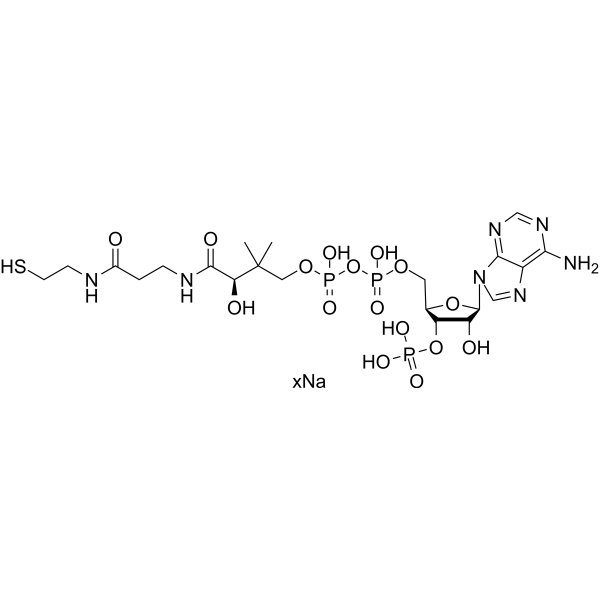
    Coenzyme A sodium
    2 Publications Verification

    Endogenous Metabolite Fatty Acid Synthase (FASN) Metabolic Disease Cancer
    Coenzyme A (CoASH) sodium is a ubiquitous and essential cofactor, which is an acyl group carrier and carbonyl-activating group for the citric acid cycle and fatty acid metabolism. Coenzyme A plays a central role in the oxidation of pyruvate in the citric acid cycle and the metabolism of carboxylic acids, including short- and long-chain fatty acids .
    Coenzyme A sodium
  • HY-79494
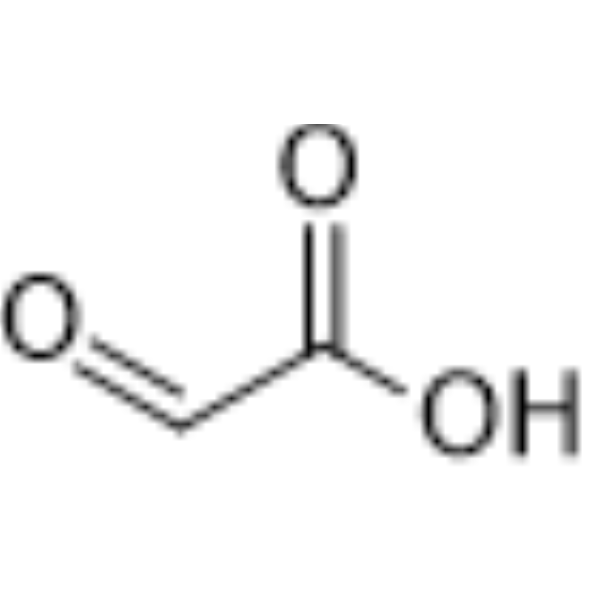
    Glyoxalic acid (50%w/w in water)
    3 Publications Verification

    NSC 27785; Formylformic acid; Oxalaldehydic acid

    Endogenous Metabolite Neurological Disease
    Glyoxalic acid (NSC 27785) (50%w/w in water) is an organic compound that is both an aldehyde and a carboxylic acid. Glyoxalic acid (50%w/w in water) induces fluorescence. Glyoxalic acid (50%w/w in water) is used to study neurons .
    The product has a content (w/w) of 50%, meaning that the mass of Glyoxalic acid in a 250 g Size is 125 g.
    Glyoxalic acid (50%w/w in water)
  • HY-P2831
    Esterase, pig liver
    2 Publications Verification

    CESs

    Endogenous Metabolite Metabolic Disease
    Esterase, pig liver (CESs), namely carboxylate hydrolases, are widely distributed in nature, commonly found in mammalian liver, and often used in biochemical research. Esterase catalyzes the hydrolysis of a variety of endogenous and exogenous substrates, including esters, thioesters, carbamates, and amides, hydrolyzing carboxylic acid esters to the corresponding alcohols and carboxylic acids .
    Esterase, pig liver
  • HY-P2947

    Aldehyde dehydrogenase (NAD(P))

    Aldehyde Dehydrogenase (ALDH) Others Cancer
    ALDH (Aldehyde dehydrogenase (NAD(P))) catalyzes the oxidation of aldehydes into their corresponding carboxylic acids with the concomitant reduction of the cofactor NAD(P) into NAD(P)H, is often used in biochemical studies. The ALDHs are one of many enzyme systems the body utilizes to alleviate aldehyde stress .
    ALDH
  • HY-128851A
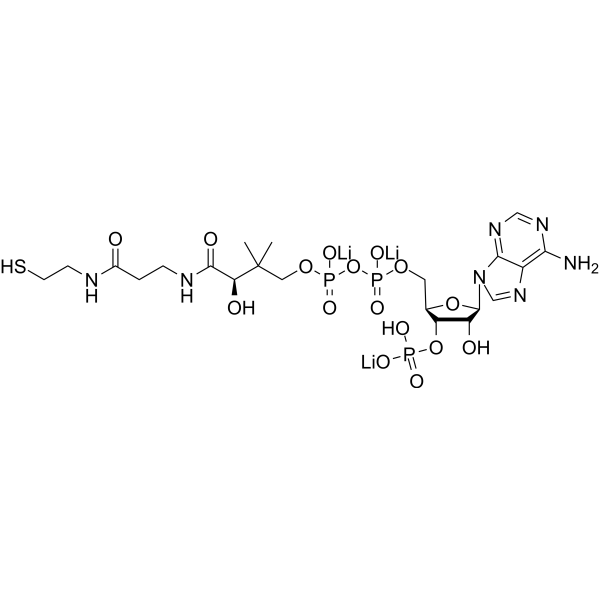
    Coenzyme A trilithium
    2 Publications Verification

    Endogenous Metabolite Fatty Acid Synthase (FASN) Metabolic Disease Cancer
    Coenzyme A (CoASH) is a ubiquitous and essential cofactor, which is an acyl group carrier and carbonyl-activating group for the citric acid cycle and fatty acid metabolism. Coenzyme A plays a central role in the oxidation of pyruvate in the citric acid cycle and the metabolism of carboxylic acids, including short- and long-chain fatty acids .
    Coenzyme A trilithium
  • HY-W090940

    ADC Linker Cancer
    H-Gly-Gly-Phe-OH is a tripeptide linker that may be used in the creation of antibody drug conjugates (ADCs). The N-terminal of the glycine tripeptide is free to perform a variety of reactions such as couplings with carboxylic acids or NHS esters.
    H-Gly-Gly-Phe-OH
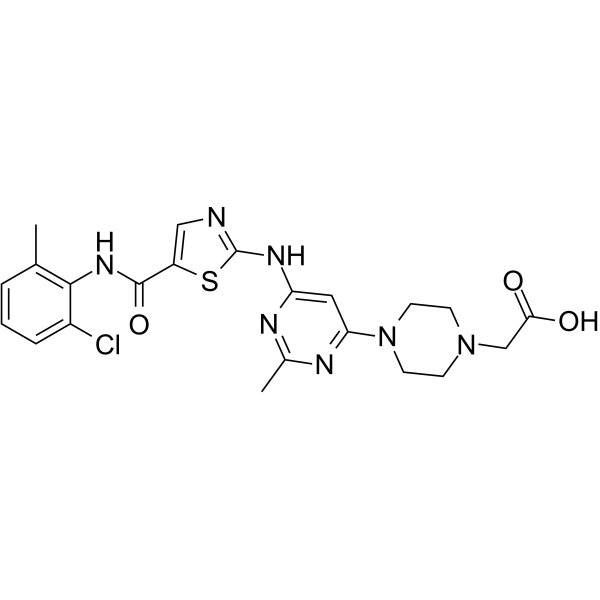
  • HY-131669

    Dasatinib carboxylic acid

    Drug Metabolite Cancer
    Dasatinib metabolite M6 (Dasatinib carboxylic acid) is a circulating metabolite of Dasatinib (HY-10181). Dasatinib exhibits potent anti-tumor activity .
    Dasatinib metabolite M6
  • HY-W588704

    Biochemical Assay Reagents Others
    4-Azidobutyric acid is a small molecule featuring an azide and a carboxylic acid. Carboxylic acids can be linked with alcohols or amides while azides can be used as click chemistry handles to react with terminal alkynes or strained cyclooctynes.
    4-Azidobutyric acid
  • HY-W073501A

    2-Pentenedioic acid

    Drug Derivative Others
    Glutaconic acid is an organic compound with two carboxylic acid groups .
    Glutaconic acid
  • HY-W590569

    Biochemical Assay Reagents Others
    Azido-PEG12-amine is a water soluble PEG compound. The azide group enables Click Chemistry. The amine group is reactive with carboxylic acids, activated NHS esters, carbonyls (ketone, aldehyde), etc. The hydrophilic PEG arm increases solubility in aqueous media.
    Azido-PEG12-amine
  • HY-W011412

    Biochemical Assay Reagents Others
    TSTU is used as a coupling reagent in peptide chemistry. TSTU can convert carboxylic acids into the corresponding N-hydroxysuccinimidyl (NHS) esters. TSTU can be applied to the attachment of labels to peptides, proteins, etc .
    TSTU
  • HY-W012971

    Biochemical Assay Reagents Others
    5-Amino-1-pentanol is a linker containing a hydroxyl group and amine group. The hydroxyl group enables further derivatization or replacement with other reactive functional groups. The amine group is reactive with carboxylic acids, activated NHS esters, carbonyls (ketone, aldehyde) etc.
    5-Amino-1-pentanol
  • HY-42773

    1-Boc-1,8-diaminooctane

    PROTAC Linkers Cancer
    tert-Butyl (8-aminooctyl)carbamate (1-Boc-1,8-diaminooctane) can be used as a PROTAC linker in the synthesis of PROTACs. tert-butyl (8-aminooctyl)carbamate is an alkane chain with terminal amine and Boc-protected amino groups. Amine group is reactive with carboxylic acids, activated NHS esters, carbonyls (ketone, aldehyde) etc. The Boc group can be deprotected under mild acidic conditions to form the free amine.
    tert-Butyl (8-aminooctyl)carbamate
  • HY-P3188

    Biochemical Assay Reagents Others
    Nitrilase is able to hydrolyze nitriles into their corresponding carboxylic acids and ammonia. Nitrilase is a green biocatalyst for the production of high value-added products .
    Nitrilase
  • HY-W440827
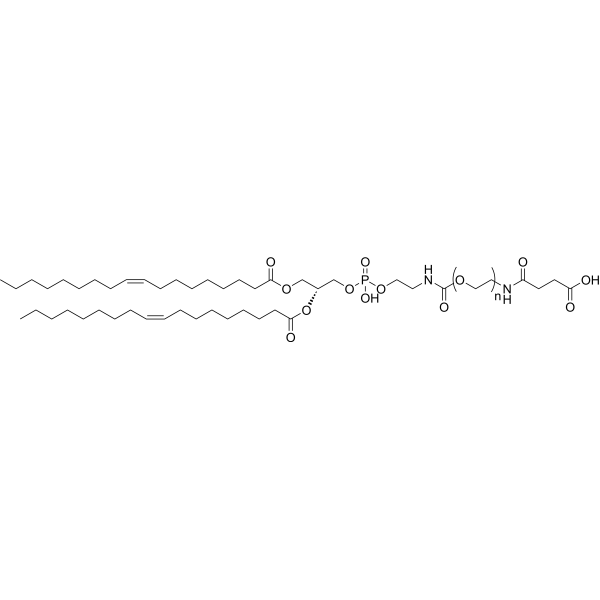
    DOPE-PEG2000-COOH
    1 Publications Verification

    Liposome Others
    DOPE-PEG2000-COOH is a PEG polymer containing unsaturated DOPE phospholipids and carboxylic acids. DOPE-PEG2000-COOH can be used to prepare liposomes or other nanoparticles for drug delivery .
    DOPE-PEG2000-COOH
  • HY-D1319A

    Cy5 acid bromide

    Fluorescent Dye Others
    Cyanine5 carboxylic acid (bromide) is a fluorescent dye containing a non-activated carboxylic acid (Ex=646 nm, Em=662 nm). Cyanine5 carboxylic acid chloride is an non-reactive dye that can be used in control samples .
    Cyanine5 carboxylic acid bromide
  • HY-W775306

    CBDVA

    Cannabinoid Receptor Neurological Disease Inflammation/Immunology
    Cannabidivarinic acid (CBDVA), the carboxylic acid precursor of Cannabidivarin(CBDV), is a non-psychoactive cannabinoid found in Cannabis with anti-inflammatory properties .
    Cannabidivarinic acid
  • HY-128851R

    Reference Standards Fatty Acid Synthase (FASN) Endogenous Metabolite Metabolic Disease Cancer
    Coenzyme A (Standard) is the analytical standard of Coenzyme A. This product is intended for research and analytical applications. Coenzyme A (CoASH) is a ubiquitous and essential cofactor, which is an acyl group carrier and carbonyl-activating group for the citric acid cycle and fatty acid metabolism. Coenzyme A plays a central role in the oxidation of pyruvate in the citric acid cycle and the metabolism of carboxylic acids, including short- and long-chain fatty acids[1].
    Coenzyme A (Standard)
  • HY-W105744

    PROTAC Linkers Cancer
    10-Aminodecanoic acid is an alkane chain with terminal carboxlic acid and amine groups. 10-Aminodecanoic acid can be used as a PROTAC linker in the synthesis of PROTACs and other conjugation applications. The amino group (NH2) is reactive with carboxylic acids, activated NHS esters, carbonyls (ketone, aldehyde) etc. The terminal carboxylic acid can react with primary amine groups of activated NHS ester to form a stable amide bond.
    10-Aminodecanoic acid
  • HY-D0036

    4-Bromomethyl-7-methoxycoumarin

    Fluorescent Dye Others
    Br-Mmc (4-Bromomethyl-7-methoxycoumarin) is often used as fluorescent label for the determination of compounds possessing a carboxylic group. Br-Mmc is used for the determination fatty acids by TLC or HPLC .
    Br-Mmc
  • HY-P2827

    ACS

    Acetyl-CoA synthetase Cancer
    Acetyl-CoA synthetase (ACS) is a key enzyme that catalyzes the conversion of acetate to acetyl-CoA (Ac-CoA). Acetyl-CoA synthetase catalyzes the formation of thioester bonds between coenzyme A and carboxylic acids, while simultaneously hydrolyzing ATP into AMP and pyrophosphate .
    Acetyl-CoA synthetase
  • HY-W190915

    Biochemical Assay Reagents Others
    4,7,10,13,16–Pentaoxanonadecane-1,19-diamine is a PEG based linker with two terminal amine groups. The amine group is reactive with carboxylic acids, activated NHS esters, carbonyls (ketone, aldehyde) etc.
    4,7,10,13,16-Pentaoxanonadecane-1,19-diamine
  • HY-W074953

    Biochemical Assay Reagents Others
    tert-Butyl Hydrogen Tetradecanedioate is a short linker featuring a carboxylic acid and a tert-butyl ester. Carboxylic acids can be reacted with alcohols or amines, while the tert-butyl ester can be selectively deprotected to allow for reactivity as a carboxylic acid to form esters or amides.
    tert-Butyl hydrogen tetradecanedioate
  • HY-W039458

    Biochemical Assay Reagents Others
    10-(tert-Butoxy)-10-oxodecanoic acid is a short linker featuring a carboxylic acid and a tert-butyl ester. Carboxylic acids can be linked with alcohols or amines, while the tert-butyl ester can be selectively deprotected to allow for reactivity as a carboxylic acid to form esters or amides.
    10-(tert-Butoxy)-10-oxodecanoic acid
  • HY-D1830

    VF 680 carboxylic acid(free acid)

    Fluorescent Dye Others
    Vari Fluor 680 Carboxylic acid (VF 680 Carboxylic acid) free acid is a carboxylic acid derivative of Vari Fluor. Vari Fluor carboxylic acid derivatives are unactivated labeled fluorescent dyes for protein, antibody, and polysaccharide labeling that require carboxylic acid activation for use .
    Vari Fluor 680 Carboxylic acid(free acid)
  • HY-P2736

    Endogenous Metabolite Metabolic Disease
    Amidases, a member of nitrilase superfamily, catalyzes the hydrolysis of an amide, leading to the formation of carboxylic acid and ammonia. Amidases contain a conserved stretch of approximately 130 amino acids known as the AS sequence, and play a role in important metabolic processes .
    Amidase
  • HY-W105727

    PROTAC Linkers Cancer
    9-Aminononanoic acid can be used as a PROTAC linker and other conjugation in the synthesis of PROTACs. 9-Aminononanoic acid is an alkane chain with terminal carboxlic acid and amine groups. The amino group (NH2) is reactive with carboxylic acids, activated NHS esters, carbonyls (ketone, aldehyde) etc. The terminal carboxylic acid can react with primary amine groups of activated NHS ester to form a stable amide bond.
    9-Aminononanoic acid
  • HY-W1048553A

    Biochemical Assay Reagents Others
    Mal-PEG2000-NH2TFA is a linear heterobifunctional PEG product with maleimide and NH2 groups. The maleimide can react with thiols, SH, sulfhydryls or sulfhydryls, and the amine can react with carboxylic acids or activated NHS esters .
    Mal-PEG2000-NH2 TFA
  • HY-W269179

    Fluorescent Dye Cancer
    4-Bromomethyl-6,7-dimethoxycoumarin is a fluorescent label for carboxylic acids in chromatographic detection .
    4-Bromomethyl-6,7-dimethoxycoumarin
  • HY-130695

    ADC Linker Cancer
    N-(Amino-PEG5)-N-bis(PEG4-acid) is a PEG derivative containing an amino group with two terminal carboxylic acids. The amino group is reactive with carboxylic acids, activated NHS esters. The terminal carboxylic acids can react with primary amine groups in the presence of activators to form a stable amide bond. N-(Amino-PEG5)-N-bis(PEG4-acid) can be useful in the development of antibody drug conjugates (ADCs) .
    N-(Amino-PEG5)-N-bis(PEG4-acid)
  • HY-W998707

    Fluorescent Dye Others
    TAMRA amine, 5-isomer hydrochloride is a rhodamine dye with excitation/emission maximum 553/575 nm. The amine group is reactive with carboxylic acids, activated NHS esters, carbonyls (ketone, aldehyde) etc.
    TAMRA amine, 5-isomer hydrochloride
  • HY-133022

    (E)-2-Undecenoic acid; (E)-Undec-2-enoic acid

    Drug Isomer Metabolic Disease
    trans-2-Undecenoic acid ((E)-2-Undecenoic acid) is an α,β-unsaturated carboxylic acid and is characterized by acid dimers. The corresponding dimers are connected via intermolecular hydrogen bonds of the carboxylic groups C=O···H-O .
    trans-2-Undecenoic acid
  • HY-42222

    Biochemical Assay Reagents Others
    N1,N5-Bis-Boc-spermidine is a linker containing an amino group with two Boc-protected amino groups. The amino group is reactive with carboxylic acids, activated NHS esters, carbonyls (ketone, aldehyde) etc. The Boc group can be deprotected under mild acidic conditions to form the free amine.
    N1,N5-Bis-boc-spermidine
  • HY-W1048553B
    Mal-PEG3400-NH2 TFA
    1 Publications Verification

    Biochemical Assay Reagents Others
    Mal-PEG3400-NH2TFA is a linear heterobifunctional PEG product with maleimide and NH2 groups. The maleimide can react with thiols, SH, sulfhydryls or sulfhydryls, and the amine can react with carboxylic acids or activated NHS esters .
    Mal-PEG3400-NH2 TFA
  • HY-W1048553C

    Biochemical Assay Reagents Others
    Mal-PEG5000-NH2TFA is a linear heterobifunctional PEG product with maleimide and NH2 groups. The maleimide can react with thiols, SH, sulfhydryls or sulfhydryls, and the amine can react with carboxylic acids or activated NHS esters .
    Mal-PEG5000-NH2 TFA
  • HY-D0115

    DNA Stain Others
    7-Hydroxycoumarin-3-carboxylic acid N-succinimidyl ester is the amine-reactive succinimidyl ester of 7-Hydroxycoumarin-3-carboxylic acid. 7-Hydroxycoumarin-3-carboxylic acid N-succinimidyl ester is a blue fluorescent dye for labeling proteins and nucleic acids .
    7-Hydroxycoumarin-3-carboxylic acid N-succinimidyl ester
  • HY-135500

    Endothelin Receptor Endocrinology
    ACT-373898 is an inactive carboxylic acid metabolite of Macitentan. Macitentan is an orally active, non-peptide dual ETA and ETB (endothelin receptor) antagonist .
    ACT-373898
  • HY-P11243

    Ephrin Receptor Neurological Disease
    EphA4 agonist compound 23 is a novel EphA4 agonist peptide mimic. EphA4 agonist compound 23 exhibits high affinity, high selectivity, and significant receptor activation ability. EphA4 agonist compound 23 is commonly used in the study of neurodegenerative diseases .
    EphA4 agonist compound 23
  • HY-W101722

    PROTAC Linkers Cancer
    tert-Butyl (9-aminononyl)carbamate is an alkane chain with terminal amine and Boc-protected amino groups. The compound can be used as a PROTAC linker in the synthesis of PROTACs and other conjugation applications. Amine group is reactive with carboxylic acids, activated NHS esters, carbonyls (ketone, aldehyde) etc. The Boc group can be deprotected under mild acidic conditions to form the free amine.
    tert-Butyl (9-aminononyl)carbamate
  • HY-W190918

    Biochemical Assay Reagents Others
    endo-BCN-PEG4-amine is a click chemistry crosslinker reagent. The BCN groupis very reactive with azide-tagged molecules. The amino group is reactive with carboxylic acids, activated NHS esters, carbonyls (ketone, aldehyde) etc.
    endo-BCN-PEG4-amine
  • HY-D2176

    Fluorescent Dye Others
    AF 555 carboxylic acid is a derivative of the orange fluorescent dye AF 555. AF 555 carboxylic acid is widely used in cell dyes, biological dyes, biomolecules and particle fluorescent labeling. AF 555 exhibits average excitation wavelengths under green laser and red laser of 510 nm and 610 nm, respectively .
    AF 555 carboxylic acid
  • HY-W1048553

    Biochemical Assay Reagents Others
    Mal-PEG1000-NH2TFA is a linear heterobifunctional PEG product with maleimide and NH2 groups. The maleimide can react with thiols, SH, sulfhydryls or sulfhydryls, and the amine can react with carboxylic acids or activated NHS esters .
    Mal-PEG1000-NH2 TFA
  • HY-W879032

    Biochemical Assay Reagents Others
    Endo-BCN-PEG4-Pomalidomide is a PEG derivative composed of BCN, PEG4 and Pomalidomide (HY-10984). The BCN groupis very reactive with azide-tagged molecules. The amino group is reactive with carboxylic acids, activated NHS esters, carbonyls (ketone, aldehyde) etc .
    Endo-BCN-PEG4-Pomalidomide
  • HY-W098280

    Biochemical Assay Reagents Others
    Phenylglycine methyl ester is a chiral anisotropic reagent. Phenylglycine methyl ester can be used for absolute configuration determination of various chiral carboxylic acids .
    Phenylglycine methyl ester
  • HY-D0035

    Fluorescent Dye Others
    MPAC-Br is a highly sensitive fluorescent derivatization reagent for carboxylic acids in HPLC .
    MPAC-Br
  • HY-W800846

    Biochemical Assay Reagents Others
    Fmoc-Amido-Tri-(carboxyethoxymethyl)-methane is a multifunctional reagent containing three carboxylic acids and a primary amine that is Fmoc-protected. The carboxylic acids can react with primary amine groups to form stable amide bonds. The Fmoc protecting group can be removed using piperidine, freeing up the amine for a variety of uses such as coupling with carboxylic acids to form amide bonds.
    Fmoc-Amido-Tri-(carboxyethoxymethyl)-methane
  • HY-W440820

    Liposome Cancer
    Bis(bis(2-carboxyethyl)aminopropyl)methylamine is a symmetrical branched linker featuring three tertiary amines and four carboxylic acids. Each carboxylic acid is open to forming esters or amides. It can be used in developing lipid nanoparticles.
    Bis(bis(2-carboxyethyl)aminopropyl)methylamine

Inquiry Online

Your information is safe with us. * Required Fields.

Salutation


Country or Region *

Applicant Name *


Organization Name *

Department *


Email Address *


Product Name *

Cat. No.


Requested quantity *

Phone Number *


Remarks

Inquiry Online

Inquiry Information

Product Name:
Cat. No.:
Quantity:
MCE Japan Authorized Agent:

