14 Results for "

cholesterol sulfate

" in MedChemExpress (MCE) Product Catalog:
Products (14)

14 Results for "cholesterol sulfate" in MCE Product Catalog:

Cat. No.: HY-111355
CAS No.: 1256-86-6
Cholesterol sulfate is a naturally occurring, orally active cholesterol derivative that is widely distributed in various tissues and body fluids. Cholesterol sulfate acts as a DOCK2 inhibitor, with IC50 values of 2 μM and 2.9 μM against mouse and human targets, respectively. Cholesterol sulfate restricts excessive neutrophil infiltration and alleviates intestinal inflammation and damage. Cholesterol sulfate serves as an activator of protein kinase C (PKC), which promotes squamous cell differentiation and inhibits skin carcinogenesis. Cholesterol sulfate regulates cholesterol homeostasis and cellular metabolism by activating the AMPK-Sirt1 pathway. Cholesterol sulfate can be used in research related to actinic keratitis, ulcerative colitis, skin cancer, and other conditions .
loading...
    loading...
5
5 Cited Publications
Cat. No.: HY-N0430A
CAS No.: 1198398-71-8
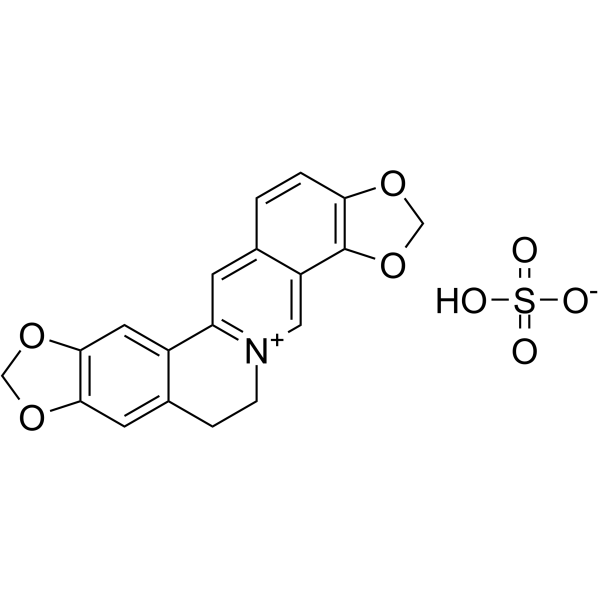
Coptisine Sulfate is an orally active and brain-penetrant alkaloid found in Coptis chinensis. Coptisine Sulfate is a reversible, uncompetitive IDO inhibitor with a Ki of 5.8 μM and an IC50 of 6.3 μM. Coptisine Sulfate suppresses neuroinflammation, reduces Aβ plaque burden and shows neuroprotective activity. Coptisine Sulfate shows anti-inflammation activity by blocking NF-κB, MAPK, and PI3K/Akt activation. Coptisine Sulfate inhibits cancer cells proliferation, induces DNA damage, G2/M phase cell cycle arrest, apoptosis, ROS production and mitochondrial dysfunction. Coptisine Sulfate inhibits Rho/ROCK pathway activation, reduces arrhythmia, limits cardiac injury marker release, reduces infarct size, and preserves cardiac function in rat myocardial ischemia/reperfusion models. Coptisine Sulfate downregulates HMGCR and upregulates LDLR and CYP7A1 to modulate cholesterol metabolism, reduces abnormal serum lipid levels, and promotes fecal bile acid excretion. Coptisine Sulfate be used for the research of cancer, hypercholesterolemia, Alzheimer’s disease, inflammatory disorders and cardiovascular disease .
loading...
    loading...
1
1 Cited Publications
Cat. No.: HY-113315
CAS No.: 5255-17-4
Purity:  99.93%
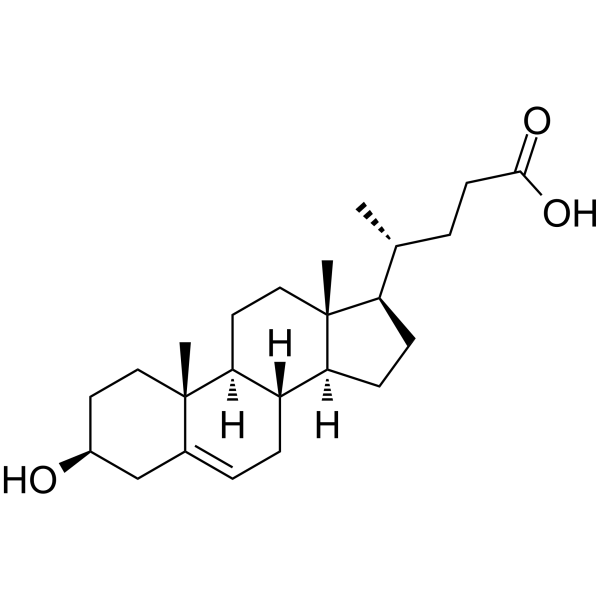
3β-Hydroxy-5-cholenoic acid is a steroidal monohydroxy bile acid and serves as a substrate for sulfation reactions. It is applicable to the research of extrahepatic biliary atresia and recurrent intrahepatic cholestasis of pregnancy .
loading...
    loading...
Cat. No.: HY-111355B
CAS No.: 2864-50-8
Purity:  98.22%
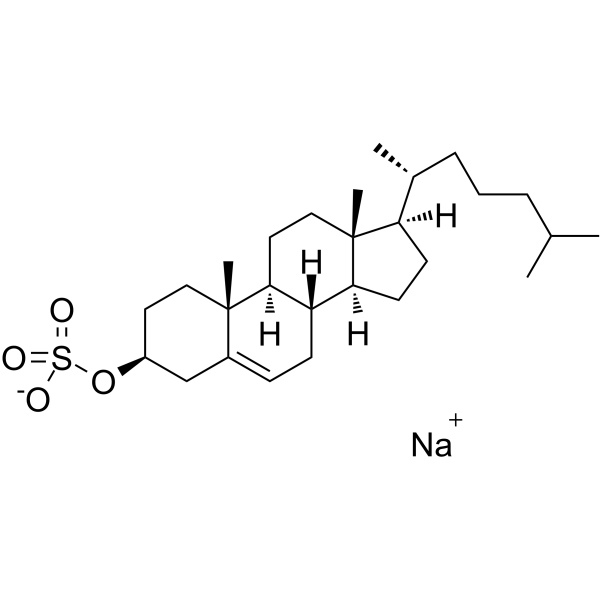
Cholesterol sulfate sodium is a naturally occurring, orally active cholesterol derivative that is widely distributed in various tissues and body fluids. Cholesterol sulfate sodium acts as a DOCK2 inhibitor, with IC50 values of 2 μM and 2.9 μM against mouse and human targets, respectively. Cholesterol sulfate sodium restricts excessive neutrophil infiltration and alleviates intestinal inflammation and damage. Cholesterol sulfate sodium serves as an activator of protein kinase C (PKC), which promotes squamous cell differentiation and inhibits skin carcinogenesis. Cholesterol sulfate sodium regulates cholesterol homeostasis and cellular metabolism by activating the AMPK-Sirt1 pathway. Cholesterol sulfate sodium can be used in research related to actinic keratitis, ulcerative colitis, skin cancer, and other conditions .
loading...
    loading...
Cat. No.: HY-W127558
CAS No.: 69068-97-9
Target:  

Amyloid-β

Research Areas:  

Neurological Disease

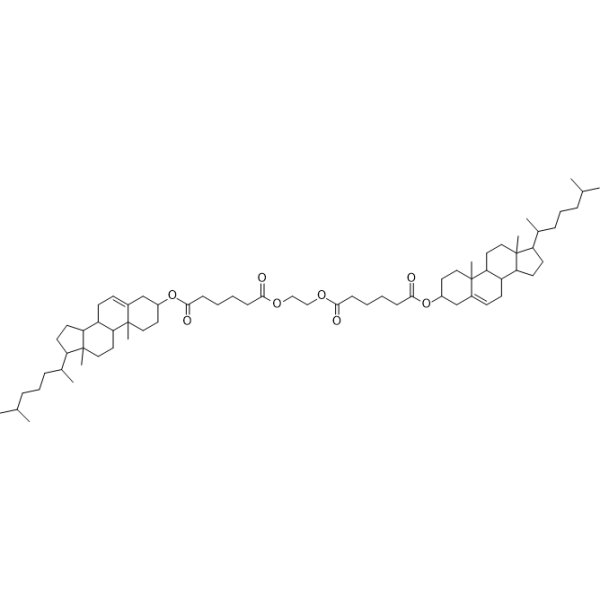
Cholesterol-PEG 600 is a synthetic cholesterol derivative and also a Aβ (1-42) binder. Cholesterol-PEG 600 promotes the fibrillogenesis of Aβ (1-42). Cholesterol-PEG 600 is applicable to the research of Alzheimer's disease .
loading...
    loading...
Cat. No.: HY-100401A
CAS No.: 608510-47-0
Purity:  ≥98.0%
Synonyms: CS-505
Target:  

Acyltransferase

Research Areas:  

Cardiovascular Disease

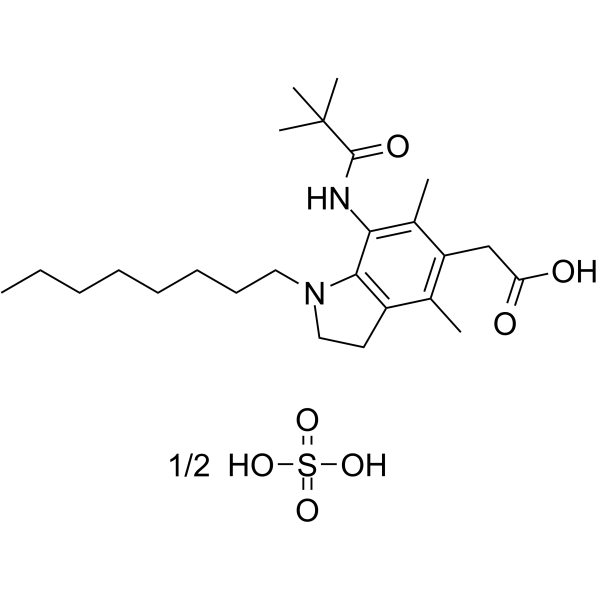
Pactimibe sulfate (CS-505) is a dual ACAT1/2 inhibitor with IC50s of 4.9 μM and 3.0 μM, respectively. Pactimibe sulfate (CS-505) inhibits ACAT with IC50s of 2.0 μM, 2.7 μM, 4.7 μM in the liver, macrophages and THP-1 cells, respectively . Pactimibe sulfate (CS-505) noncompetitively inhibits oleoyl-CoA with a Ki value of 5.6 μM. Moreover, Pactimibe sulfate (CS-505) obviously inhibits cholesteryl ester formation with an IC50 of 6.7 μM. Pactimibe sulfate (CS-505) possesses anti-atherosclerotic potential with lowering plasma cholesterol activity .
loading...
    loading...
Cat. No.: HY-137318
CAS No.: 86621-94-5
Purity:  98.20%
Target:  

Drug Derivative

Research Areas:  

Metabolic Disease

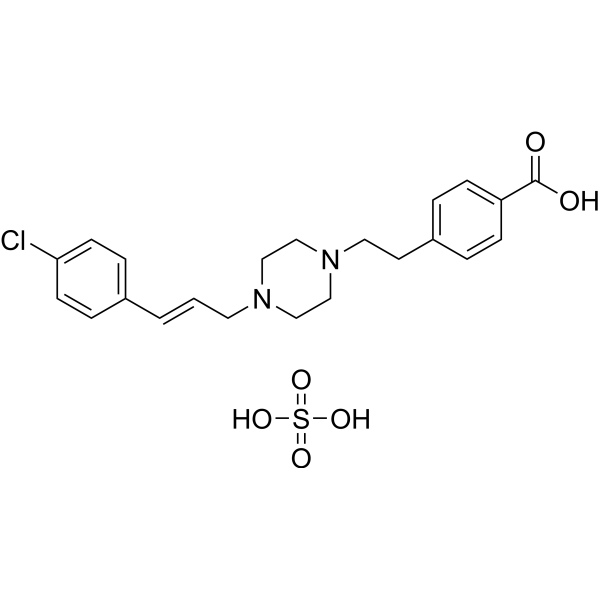
BM 15766 sulfate is an inhibitor of 7-dehydrocholesterol δ7-reductase and reduces plasma cholesterol levels. BM 15766 sulfate is a hypolipidemic agent .
loading...
    loading...
Cat. No.: HY-111355S
CAS No.: 2687961-01-7
Purity:  ≥98.0%
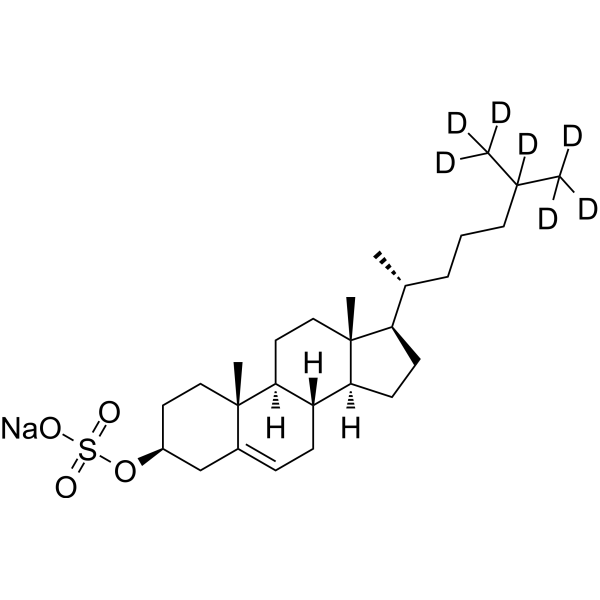
Cholesterol sulfate sodium-d7 is the deuterium labeled Cholesterol sulfate sodium. Cholesterol sulfate sodium is a naturally occurring, orally active cholesterol derivative that is widely distributed in various tissues and body fluids. Cholesterol sulfate sodium acts as a DOCK2 inhibitor, with IC50 values of 2 μM and 2.9 μM against mouse and human targets, respectively. Cholesterol sulfate sodium restricts excessive neutrophil infiltration and alleviates intestinal inflammation and damage. Cholesterol sulfate sodium serves as an activator of protein kinase C (PKC), which promotes squamous cell differentiation and inhibits skin carcinogenesis. Cholesterol sulfate sodium regulates cholesterol homeostasis and cellular metabolism by activating the AMPK-Sirt1 pathway. Cholesterol sulfate sodium can be used in research related to actinic keratitis, ulcerative colitis, skin cancer, and other conditions.
loading...
    loading...
Cat. No.: HY-185474
Target:  

Drug Derivative

Research Areas:  

Cancer

Chondroitin sulfate-cholesterol is a cholesterol derivative. Chondroitin sulfate-cholesterol can form reduction-responsive shell-sheddable micelles via disulfide bond linkage and be used to efficiently encapsulate hydrophobic drugs and achieve intracellular triggered release. Chondroitin sulfate-cholesterol can be used for cancer research .
loading...
    loading...
Cat. No.: HY-157161
Target:  

11β-HSD

Research Areas:  

Cancer

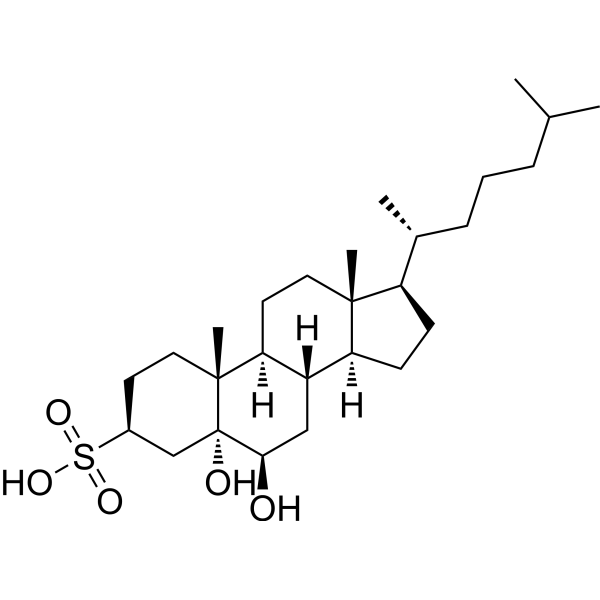
11β-HSD2-IN-1 (compound CDSN) is a potent inhibitor of 11β-HSD2, inhibiting the metabolism of Cholestane-3β,5α,6β-triol (CT) in cells by 11β-HSD2 into the tumor promoter, carcinosterone. 11β-HSD2-IN-1 inhibits testosterone biosynthesis, thereby inhibiting MCF-7 cell proliferation. 11β-HSD2-IN-1 has immune activity and antiviral infection effects .
loading...
    loading...
Cat. No.: HY-100401AR
CAS No.: 608510-47-0
Synonyms: CS-505 (Standard)
Pactimibe (sulfate) (Standard) is the analytical standard of Pactimibe (sulfate) (HY-100401A). This product is intended for research and analytical applications. Pactimibe sulfate (CS-505) is a dual ACAT1/2 inhibitor with IC50s of 4.9 μM and 3.0 μM, respectively. Pactimibe sulfate (CS-505) inhibits ACAT with IC50s of 2.0 μM, 2.7 μM, 4.7 μM in the liver, macrophages and THP-1 cells, respectively . Pactimibe sulfate (CS-505) noncompetitively inhibits oleoyl-CoA with a Ki value of 5.6 μM. Moreover, Pactimibe sulfate (CS-505) obviously inhibits cholesteryl ester formation with an IC50 of 6.7 μM. Pactimibe sulfate (CS-505) possesses anti-atherosclerotic potential with lowering plasma cholesterol activity .
loading...
    loading...
Cat. No.: HY-P2752A
Target:  

Endogenous Metabolite

Research Areas:  

Metabolic Disease

Lipoprotein lipase, Bovine (EC 3.1.1.34) belongs to the lipase gene family and is a water-soluble enzyme that hydrolyzes triglycerides in lipoproteins (such as those in chylomicrons and very low-density lipoproteins (VLDL)) into two free fatty acid molecules and one monoacylglycerol molecule. Lipoprotein also participates in promoting cellular uptake of chylomicron remnants, cholesterol-rich lipoproteins, and free fatty acids. Lipoprotein requires ApoC-II as a cofactor. Lipoprotein attaches to the luminal surface of capillary endothelial cells via glycosylphosphatidylinositol high-density lipoprotein-binding protein 1 (GPIHBP1) and heparan sulfate proteoglycan.
loading...
    loading...
Cat. No.: HY-P2752B
Target:  

Endogenous Metabolite

Research Areas:  

Metabolic Disease

Lipoprotein Lipase, Burkholderia sp. (EC 3.1.1.34) belongs to the lipase gene family and is a water-soluble enzyme that hydrolyzes triglycerides in lipoproteins (such as those in chylomicrons and very low-density lipoproteins (VLDL)) into two free fatty acid molecules and one monoacylglycerol molecule. Lipoprotein also participates in promoting cellular uptake of chylomicron remnants, cholesterol-rich lipoproteins, and free fatty acids. Lipoprotein requires ApoC-II as a cofactor. Lipoprotein attaches to the luminal surface of capillary endothelial cells via glycosylphosphatidylinositol high-density lipoprotein-binding protein 1 (GPIHBP1) and heparan sulfate proteoglycan.
loading...
    loading...
Cat. No.: HY-N13266
CAS No.: 6127-75-9
5β-Cholestane-3α,7α,12α,25,27-pentol is a bile alcohol found in amphibian bile. 5β-Cholestane-3α,7α,12α,25,27-pentol serves as a principal or sole constituent of sulfate-conjugated bile salts in gallbladder bile of the caecilian Dermophis mexicanus. 5β-Cholestane-3α,7α,12α,25,27-pentol appears as a minor constituent in bile of the toad Bufo b. formosus. 5β-Cholestane-3α,7α,12α,25,27-pentol may represent the end product of cholesterol metabolism in the caecilian, as bile acids remain undetected in this organism .
loading...
    loading...
  • 1

