1. Search Result
Search Result
Results for "

chronic cough

" in MedChemExpress (MCE) Product Catalog:

30

Inhibitors & Agonists

2

Screening Libraries

2

Natural
Products

Cat. No. 상품명 Target 연구분야 Chemical Structure
  • HY-101588
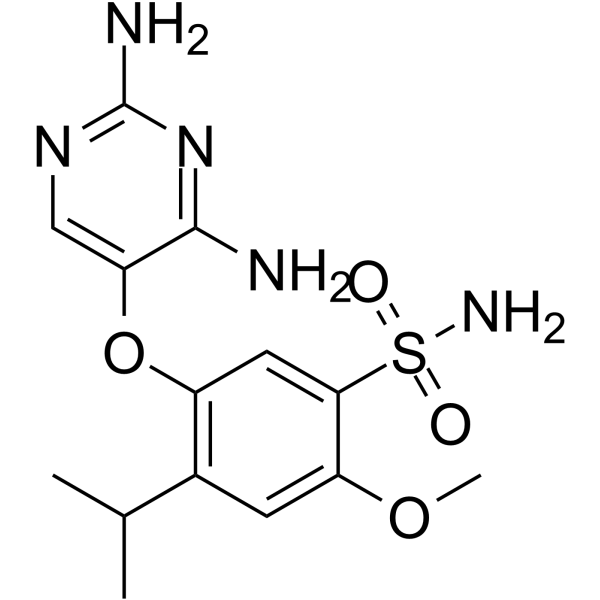
    Gefapixant
    2 Publications Verification

    MK-7264; AF-219

    P2X Receptor Inflammation/Immunology
    Gefapixant is an orally active and potent purinergic P2X3 receptor (P2X3R) antagonist, with IC50 values of ~30 nM versus recombinant hP2X3 homotrimers and 100-250 nM at hP2X2/3 heterotrimeric receptors. Gefapixant can be used for the research of chronic cough and knee osteoarthritis .
    Gefapixant
  • HY-109170

    BAY 1817080

    P2X Receptor Inflammation/Immunology
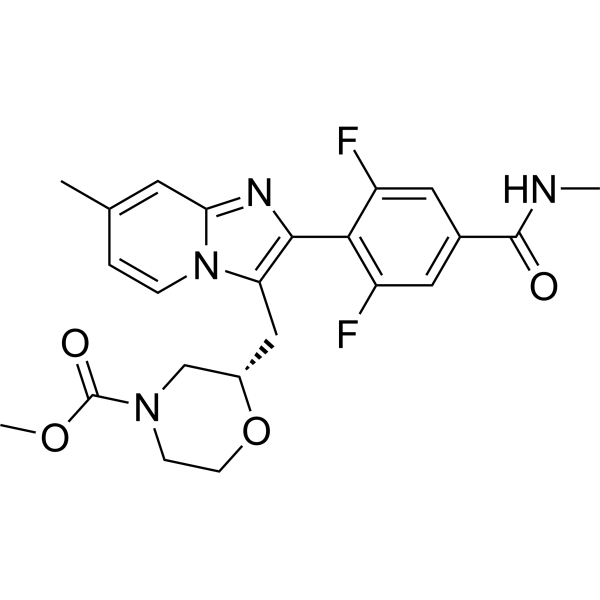
    Eliapixant (BAY 1817080) is a potent and selective antagonist of P2X3 receptor, with an IC50 of 8 nM. Eliapixant can be used for the research of refractory chronic cough .
    Eliapixant
  • HY-136026

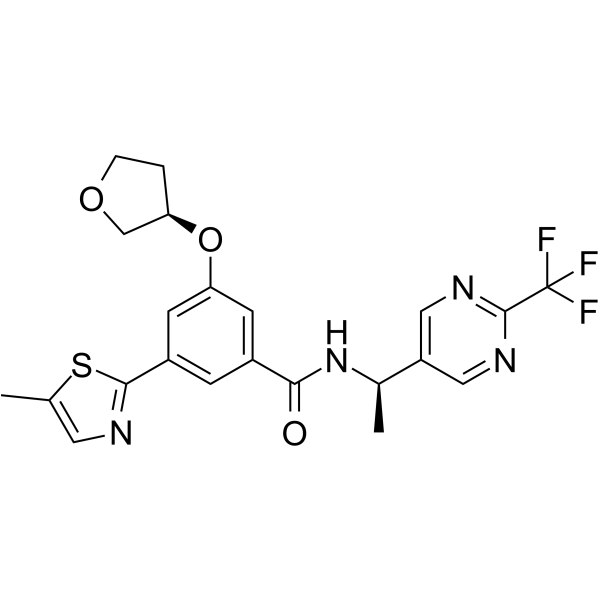
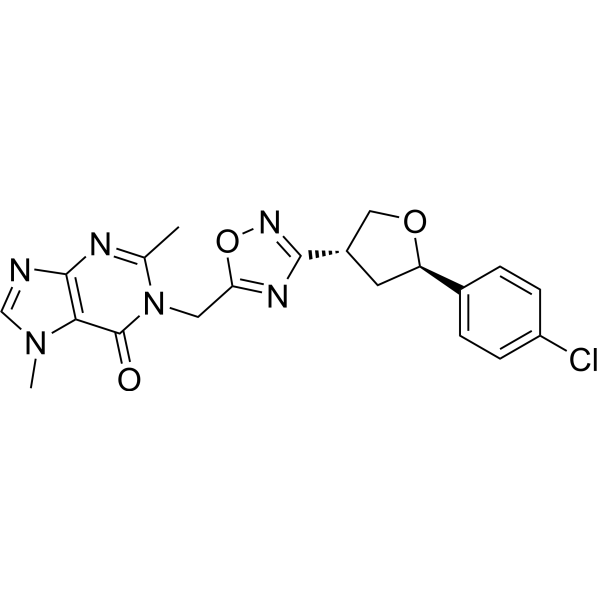
    BLU-5937

    P2X Receptor Inflammation/Immunology
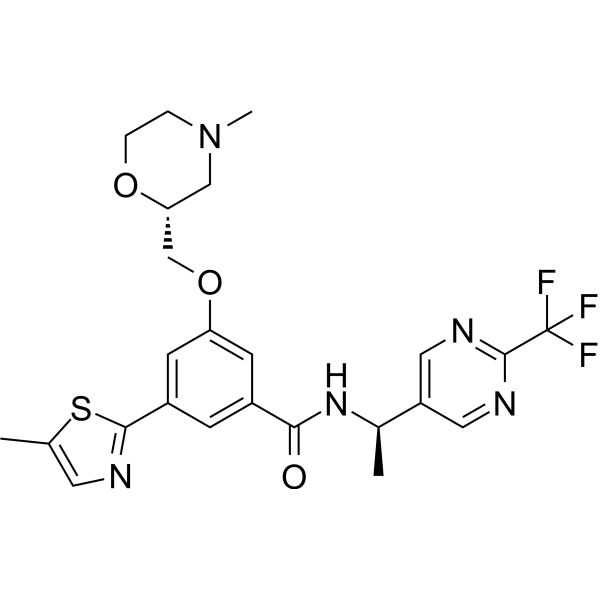
    Camlipixant (BLU-5937) a potent, selective, non-competitive and orally active P2X3 homotrimeric receptor antagonist with an IC50 of 25 nM against hP2X3 homotrimeric. Camlipixant shows potent anti-tussive effect and no taste alteration. Camlipixant can be used for the research of unexplained, refractory chronic cough .
    Camlipixant
  • HY-101588A
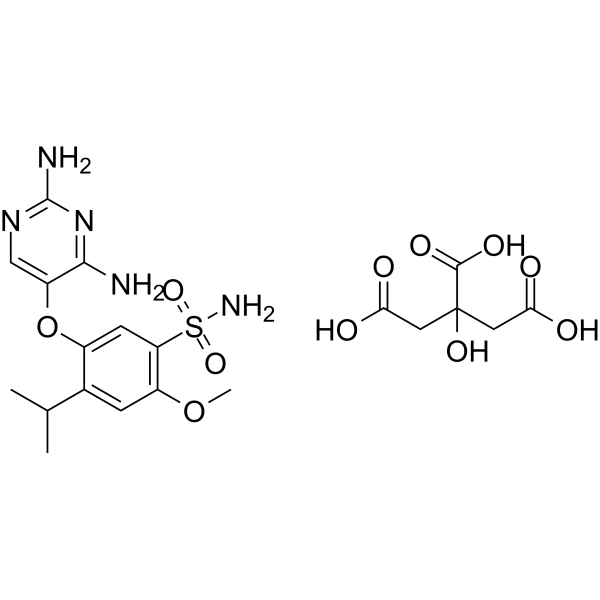
    Gefapixant citrate
    2 Publications Verification

    MK-7264 citrate; AF-219 citrate

    P2X Receptor Inflammation/Immunology
    Gefapixant citrate is an orally active and potent purinergic P2X3 receptor (P2X3R) antagonist, with IC50 values of ~30 nM versus recombinant hP2X3 homotrimers and 100-250 nM at hP2X2/3 heterotrimeric receptors. Gefapixant citrate can be used for the research of chronic cough and knee osteoarthritis .
    Gefapixant citrate
  • HY-122575
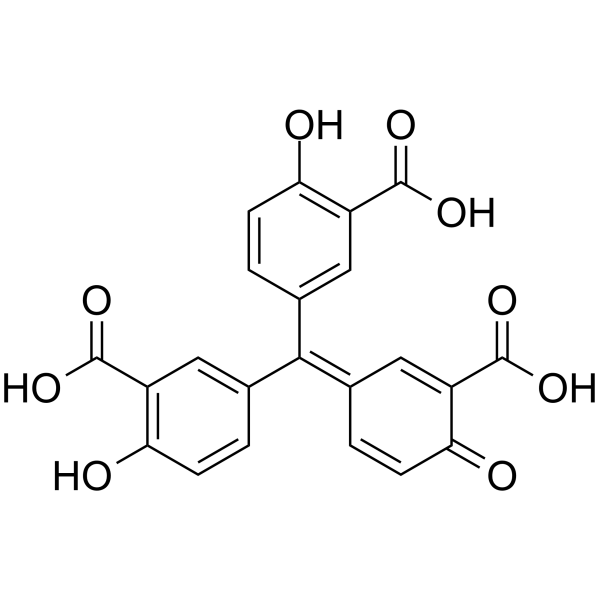
    Aurintricarboxylic acid
    3 Publications Verification

    P2X Receptor Influenza Virus Topoisomerase MicroRNA Apoptosis Infection Neurological Disease Inflammation/Immunology
    Aurintricarboxylic acid is a nanomolar-potency, allosteric antagonist with selectivity towards αβ-methylene-ATP-sensitive P2X1Rs and P2X3Rs, with IC50s of 8.6 nM and 72.9 nM for rP2X1R and rP2X3R, respectively . Aurintricarboxylic acid is a potent anti-influenza agent by directly inhibiting the neuraminidase . Aurintricarboxylic acid is an inhibitor of topoisomerase II and apoptosis . Aurintricarboxylic acid is a selective inhibitor of the TWEAK-Fn14 signaling pathway . Aurintricarboxylic acid also acts as a cystathionine-lyase (CSE) inhibitor with an IC50 of 0.6 μM . Aurintricarboxylic acid is a modifier of miRNAs that regulate miRNA function, with an IC50 of 0.47 µM .
    Aurintricarboxylic acid
  • HY-A0191

    (+)-Brompheniramine; (S)-Brompheniramine

    Endogenous Metabolite Histamine Receptor TRP Channel Neurological Disease Metabolic Disease Inflammation/Immunology
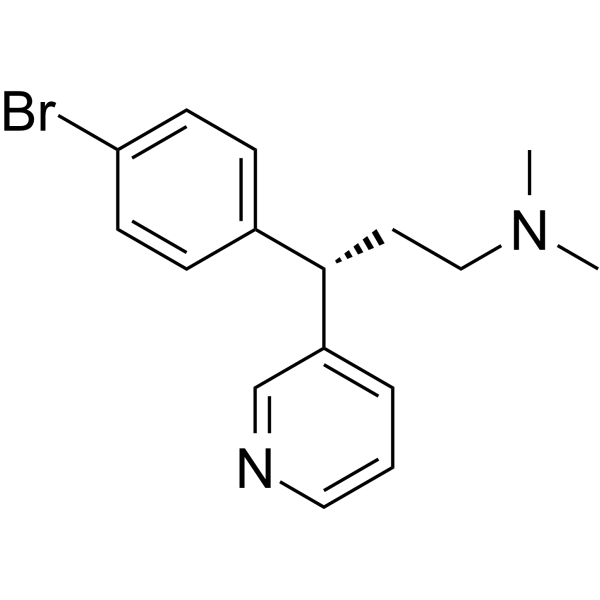
    Dexbrompheniramine ((+)-Brompheniramine; (S)-Brompheniramine) is a dual inhibitor of histamine H1 receptor and TRPV1 receptor that can cross the blood-brain barrier. Dexbrompheniramine exerts its effects by functionally blocking H1 receptor activity and dose-dependently inhibiting TRPV1-mediated calcium responses, including Capsaicin (HY-10448)-induced responses. The combination of Dexbrompheniramine with Cimetidine (HY-14289) eliminates histamine-induced and sham-feeding-induced drinking behavior, whereas Dexbrompheniramine alone does not induce thirst or alter sham-feeding behavior in rats. Dexbrompheniramine can be used in the research of chronic cough and related pathological mechanisms .
    Dexbrompheniramine
  • HY-148802

    Sodium Channel Inflammation/Immunology
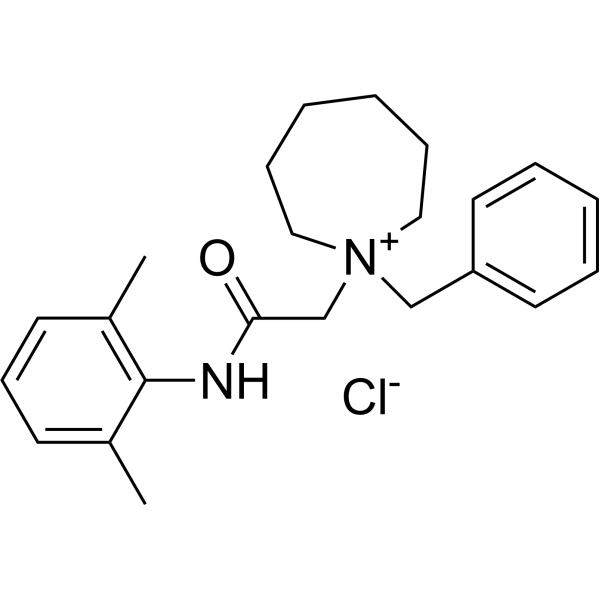
    Taplucainium chloride is a sodium channel blocker. Taplucainium chloride selectively inhibits nociceptors in an activated or inflammatory state. Taplucainium chloride may be used in research on chronic cough .
    Taplucainium chloride
  • HY-101765

    Cannabinoid Receptor Neurological Disease Inflammation/Immunology
    GW 833972A is a selective CB₂ receptor agonist with pEC₅₀ of the human CB₂ receptor for GW 833972A of 7.3, and its selectivity for the CB₂ receptor is approximately 1000 times higher than that for the CB₁ receptor. GW 833972A inhibits induced neuronal depolarization and suppresses coughing caused by citric acid in guinea pig models. GW 833972A can be used for the study of chronic cough .
    GW 833972A
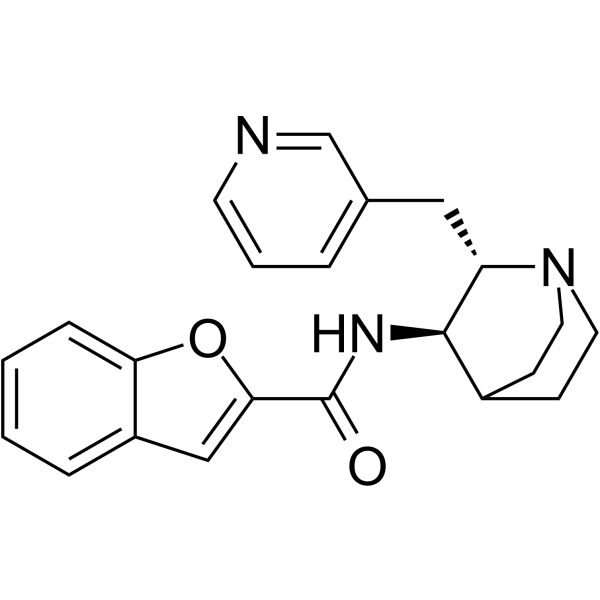
  • HY-18060

    TC-5619

    nAChR Neurological Disease
    Bradanicline (TC-5619) is an orally active agonist of α7 nAChR with moderate blood-brain barrier penetration. Bradanicline exhibits high affinity and subtype selectivity for human α7 nAChR. Bradanicline possesses antitussive activity that depends on sustained receptor binding and activation. Bradanicline requires systemic administration to dose-dependently inhibit cough induced by citric acid, bradykinin and inhaled nicotine. Bradanicline is well tolerated in preclinical studies and is widely used in research related to chronic refractory cough .
    Bradanicline
  • HY-156684

    GDC-6599

    TRP Channel Neurological Disease
    GDC-6599 is an orally active TRPA1 inhibitor, with IC50 values of 5.3 nM in humans, 6.6 nM in rats, 9.3 nM in dogs, 7.2 nM in monkeys, and 15 nM in guinea pigs. GDC-6599 can be used in the research of neuropathic pain and respiratory diseases such as asthma and chronic cough .
    Nedizantrep
  • HY-143481

    Sodium Channel Neurological Disease Inflammation/Immunology
    Nav1.8-IN-2 (compound 35A) is a Nav1.8 voltage-gated sodium ion inhibitor with an IC50 of 0.4 nM (HEK 293 cells). Nav1.8-IN-2 inhibits the activity of Nav1.8 voltage-gated sodium ion channels, mediates sodium ion influx in excitable cells, and is associated with the initiation and conduction of action potentials. Nav1.8-IN-2 can be used for research related to pain, cough, itching, etc .
    Nav1.8-IN-2
  • HY-122347A

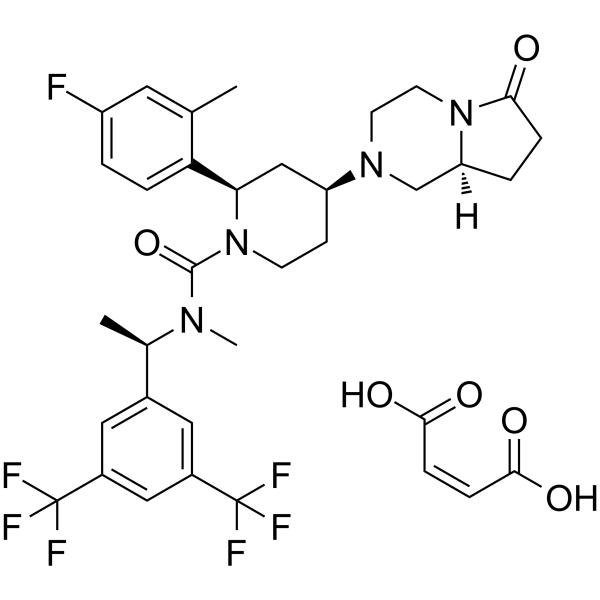
    GW823296 maleate

    Neurokinin Receptor Neurological Disease Inflammation/Immunology
    Orvepitant maleate (GW823296 maleate) is potent, selective, orally active and well-tolerated neurokinin-1 receptor (NK-1) antagonist with a pKi of 10.2 for human neurokinin-1 receptor. Orvepitant maleate can across the blood-brain barrier. Orvepitant maleate has the potential for depressive disorder and chronic refractory cough (CRC) treatment .
    Orvepitant maleate
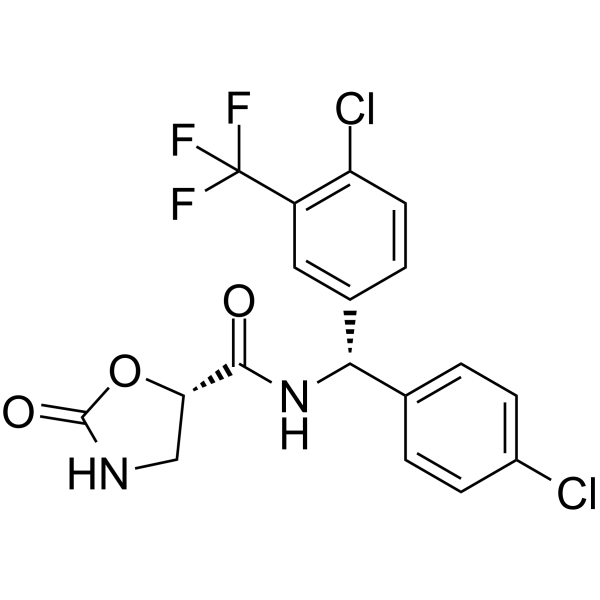
  • HY-135976

    P2X Receptor Neurological Disease Inflammation/Immunology
    P2X3 antagonist 34 is a potent, selective and orally active P2X3 homotrimeric receptor antagonist with IC50s of 25 nM, 92 nM and 126 nM for human P2X3, rat P2X3 and guinea pig P2X3 receptors, respectively. P2X3 antagonist 34 is less active against human, rat and guinea pig P2X2/3 heterotrimeric receptors. P2X3 antagonist 34 has strong anti-tussive effect .
    P2X3 antagonist 34
  • HY-109173

    BAY 1902607

    P2X Receptor Cytochrome P450 Inflammation/Immunology
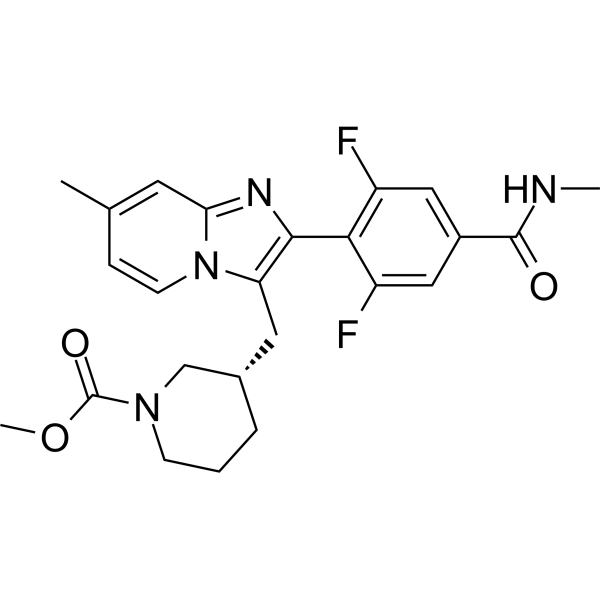
    Filapixant (BAY 1902607) is an orally active and selective P2X3 receptor antagonist. Filapixant is applicable to the research of refractory chronic cough .
    Filapixant
  • HY-178450

    P2X Receptor Neurological Disease
    HW091077 is a highly selective P2X3 receptor antagonist with an IC50 of 17 nM. HW091077 blocks ATP-induced calcium influx and cell depolarization to inhibit cough reflex pathways. HW091077 is promising for research of chronic cough .
    HW091077
  • HY-B0372
    Bromhexine
    3 Publications Verification

    Antibiotic Bacterial Inflammation/Immunology
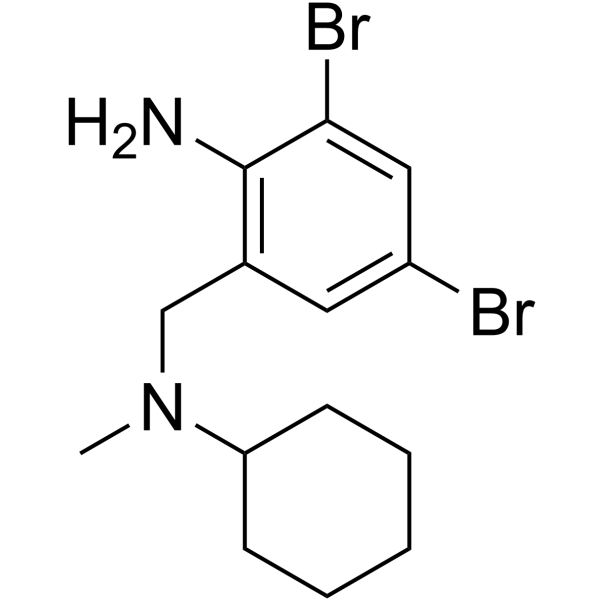
    Bromhexine is a potent expectorant. Bromhexine increase mucociliary clearance and reduces cough. Bromhexine can be used in study various respiratory diseases .
    Bromhexine
  • HY-A0191A

    (+)-Brompheniramine maleate; (S)-Brompheniramine maleate

    TRP Channel Histamine Receptor Inflammation/Immunology
    Dexbrompheniramine ((+)-Brompheniramine; (S)-Brompheniramine) maleate is a dual inhibitor of histamine H1 receptor and TRPV1 receptor that can cross the blood-brain barrier. Dexbrompheniramine maleate exerts its effects by functionally blocking H1 receptor activity and dose-dependently inhibiting TRPV1-mediated calcium responses, including Capsaicin (HY-10448)-induced responses. The combination of Dexbrompheniramine maleate with Cimetidine (HY-14289) eliminates histamine-induced and sham-feeding-induced drinking behavior, whereas Dexbrompheniramine maleate alone does not induce thirst or alter sham-feeding behavior in rats. Dexbrompheniramine maleate can be used in the research of chronic cough and related pathological mechanisms .
    Dexbrompheniramine maleate
  • HY-101588R

    MK-7264 (Standard); AF-219 (Standard)

    Reference Standards P2X Receptor Inflammation/Immunology
    Gefapixant (Standard) is the analytical standard of Gefapixant. This product is intended for research and analytical applications. Gefapixant is an orally active and potent purinergic P2X3 receptor (P2X3R) antagonist, with IC50 values of ~30 nM versus recombinant hP2X3 homotrimers and 100-250 nM at hP2X2/3 heterotrimeric receptors. Gefapixant can be used for the research of chronic cough and knee osteoarthritis .
    Gefapixant (Standard)
  • HY-18060A

    TC-5619 hydrochloride

    nAChR Neurological Disease
    Bradanicline (TC-5619) tosylate is an orally active agonist of α7 nAChR with moderate blood-brain barrier penetration. Bradanicline hydrochloride exhibits high affinity and subtype selectivity for human α7 nAChR. Bradanicline hydrochloride possesses antitussive activity that depends on sustained receptor binding and activation. Bradanicline hydrochloride requires systemic administration to dose-dependently inhibit cough induced by citric acid, bradykinin and inhaled nicotine. Bradanicline hydrochloride is well tolerated in preclinical studies and is widely used in research related to chronic refractory cough .
    Bradanicline hydrochloride
  • HY-122347

    GW823296

    Neurokinin Receptor Neurological Disease Cancer
    Orvepitant (GW823296) is potent, selective, orally active and well-tolerated neurokinin-1 receptor (NK-1) antagonist with a pKi of 10.2 for human neurokinin-1 receptor. Orvepitant can across the blood-brain barrier. Orvepitant has the potential for depressive disorder and chronic refractory cough (CRC) treatment .
    Orvepitant
  • HY-124270

    AR-C68397AA

    Dopamine Receptor Adrenergic Receptor Inflammation/Immunology
    Sibenadet hydrochloride (AR-C68397AA) is a dual D2 dopamine receptor, beta2-adrenoceptor agonist with bronchodilator activity. Investigation in animal models of key chronic obstructive pulmonary disease (COPD) symptoms has demonstrated that Sibenadet hydrochloride effectively inhibits sensory nerve activity, thereby reducing reflex cough, mucus production and tachypnoea.
    Sibenadet hydrochloride
  • HY-172135

    p38 MAPK Phosphodiesterase (PDE) Inflammation/Immunology
    PDE4-IN-26 (Compound A5) is an orally active and highly selective PDE4 inhibitor. PDE4-IN-26 has anti-inflammatory activity and can inhibit the phosphorylation of p38 MAPK. In mouse models of acute lung injury and chronic obstructive pulmonary disease, PDE4-IN-26 can improve pulmonary inflammation, injury and fibrosis, promote sputum secretion and relieve cough in mice. PDE4-IN-26 can be used for the research of lung injury-related diseases .
    PDE4-IN-26
  • HY-101588AR

    MK-7264 citrate (Standard); AF-219 citrate (Standard)

    P2X Receptor Reference Standards Inflammation/Immunology
    Gefapixant (citrate) (Standard) is the analytical standard of Gefapixant (citrate) (HY-101588A). This product is intended for research and analytical applications. Gefapixant citrate is an orally active and potent purinergic P2X3 receptor (P2X3R) antagonist, with IC50 values of ~30 nM versus recombinant hP2X3 homotrimers and 100-250 nM at hP2X2/3 heterotrimeric receptors. Gefapixant citrate can be used for the research of chronic cough and knee osteoarthritis .
    Gefapixant citrate (Standard)
  • HY-18060B

    TC-5619 tosylate

    nAChR Inflammation/Immunology
    Bradanicline (TC-5619) tosylate is an orally active agonist of α7 nAChR with moderate blood-brain barrier penetration. Bradanicline tosylate exhibits high affinity and subtype selectivity for human α7 nAChR. Bradanicline tosylate possesses antitussive activity that depends on sustained receptor binding and activation. Bradanicline tosylate requires systemic administration to dose-dependently inhibit cough induced by citric acid, bradykinin and inhaled nicotine. Bradanicline tosylate is well tolerated in preclinical studies and is widely used in research related to chronic refractory cough .
    Bradanicline tosylate
  • HY-N18663

    Others Inflammation/Immunology
    Lavandula officinalis extract is widely used in research on complex respiratory diseases, such as chronic cough and asthma.
    Lavandula officinalis extract
  • HY-186112

    P2X Receptor Inflammation/Immunology
    PSFL2915 is a selective, orally active P2X receptor inhibitor with oral effectiveness, with an IC50 of 0.319 μM for human P2X3, 0.261 μM for rat P2X2/3, and 13.3 μM for human P2X2. PSFL2915 exhibits ~42-fold selectivity over human P2X2. PSFL2915 can be used for the research of chronic cough .
    PSFL2915
  • HY-180365

    Cannabinoid Receptor Neurological Disease Inflammation/Immunology
    GW 833972A free base is a selective CB₂ receptor agonist with pEC₅₀ of the human CB₂ receptor for GW 833972A free base of 7.3, and its selectivity for the CB₂ receptor is approximately 1000 times higher than that for the CB₁ receptor. GW 833972A free base inhibits induced neuronal depolarization and suppresses coughing caused by citric acid in guinea pig models. GW 833972A free base can be used for the study of chronic cough .
    GW 833972A free base
  • HY-101765R

    Reference Standards Cannabinoid Receptor Neurological Disease Inflammation/Immunology
    GW 833972A (Standard) is the analytical standard of GW 833972A (HY-101765). This product is intended for research and analytical applications. GW 833972A is a selective CB₂ receptor agonist with pEC₅₀ of the human CB₂ receptor for GW 833972A of 7.3, and its selectivity for the CB₂ receptor is approximately 1000 times higher than that for the CB₁ receptor. GW 833972A inhibits induced neuronal depolarization and suppresses coughing caused by citric acid in guinea pig models. GW 833972A can be used for the study of chronic cough .
    GW 833972A (Standard)
  • HY-183056

    P2X Receptor Others Neurological Disease Inflammation/Immunology
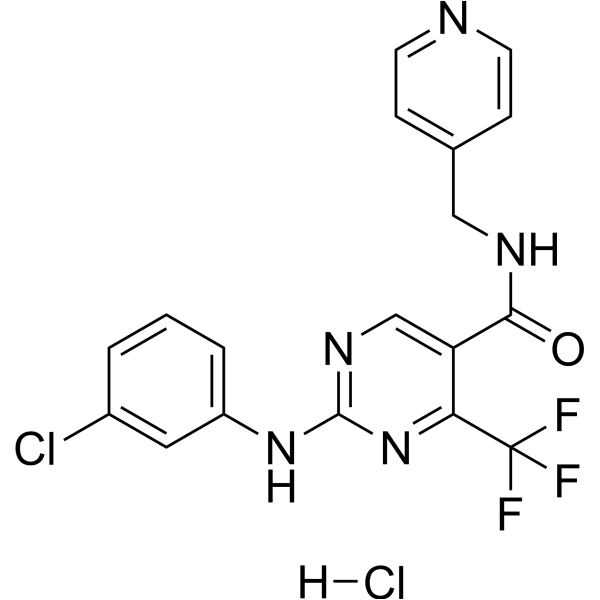
    P2X3 antagonist 40 is a P2X3 antagonist with a human P2X3 receptor pIC50 < 4.52. P2X3 antagonist 40 can be used for research on ATP-mediated proinflammatory fingerprint, including overactive bladder, pain, and chronic cough .
    P2X3 antagonist 40
  • HY-185006

    TRP Channel Others
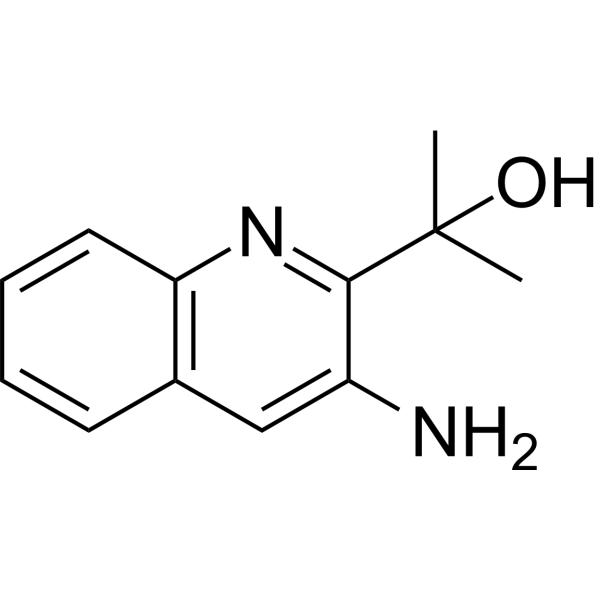
    TRPV4 antagonist 5 (Example 21) is a TRPV4 antagonist .
    TRPV4 antagonist 5

온라인 문의

Your information is safe with us. * Required Fields.

호칭


Country or Region *

고객명 *


회사명 *

Department *


메일주소 *


상품명 *

Cat. No.


Requested quantity *

전화번호 *


비고

온라인 문의

Inquiry Information

상품명:
Cat. No.:
수량:
MCE Japan Authorized Agent:

